June 20, 1852

Lemon

Sunday June 20th  Have been to meeting all day Mother

went this afternoon and returned home  Mr Sanger

of Dover preached  Since meeting have been to 

Alsons with Edwin & wife & Oakes Angier.

Called at Mr Pools  Was treated with strawberries

& ice cream at Alsons and with lemonade

at Mr Pools  Frank went to a sing at Cohassett

Father gave me quite a lecture on cooking stoves

says we have had a dozen and we have had four


No Mr. Whitwell at church today. Instead, Rev. Ralph Sanger of the First Church of Dover led the service. Dr. Sanger was an older minister in the area, having graduated from Harvard in 1808, a year before Evelina was born. He had spent his entire ministerial life in Dover where he was well regarded. He also served several terms in the Massachusetts Legislature and was the chaplain for the Massachusetts State Senate.

After church came an afternoon of sweet sensations. Strawberries, ice cream and lemonade were served at two different homes where Evelina, Oakes Angier, and the young Gilmore couple called. The fresh fruit was a seasonal treat, and the ice cream and lemonade no doubt delightful as well.

Not all was sweet at home, however. Old Oliver got cross with his daughter-in-law and gave Evelina “quite a lecture” about her cooking stove. She was about to get a new one in her kitchen, certainly with her husband’s approval, but her father-in-law had no patience for it.  He didn’t see the need to update the kitchen equipment. We might remember that Oliver had grown up watching his own mother cook over a hearth, a style of cooking that had served for generations.  And here was his daughter-in-law planning to install another stove under his roof.

Even the little bit of rain that fell around sunrise didn’t cheer Old Oliver up.

June 19, 1852

manx40rimwh


A “Visite”

Sat June 19th  Have been weeding in the garden and

transplanting   Spent the afternoon in 

Olivers with Mother  Mrs Witherell & Augusta

were there awhile  Finished Susans visite

quite late in the evening  It has not been

much of a job to make if I could have sat

down steady

Evelina worked in her garden today, weeding and moving some of her plants around. After midday dinner, she and her mother, who was visiting, “spent the afternoon” next door “in Olivers,” meaning at Sarah Lothrop Ames’s. In citing Oliver rather than Sarah as the owner of the house, Evelina was only following the norm of the time, whose patriarchal laws prevented women from owning property. Sarah and Evelina lived in homes that belonged solely to the males in the family.

Old Oliver, Ames patriarch above all the rest, reported that “this was a fair day wind southerly + quite warm we have bought two yoke of cattle this weeke one yoke of N Warrin of Stoughton, 6 years old for $110 and one yoke of Thomas Ames 9 or 10 years old for $100.” He was probably buying cattle to help with the approaching hay harvest.

Once indoors, perhaps even after others had gone to bed, Evelina finished a mantle for her daughter Susie. Also known as a visite or paletot or pardessus, a mantel (or mantilla, as Evelina labeled it the previous day) was a three-quarter length cloak with pagoda or cape-like sleeves. It was often adorned with lace, ruching, and especially fringe, which was very big about this time. Many visites were unlined, which no doubt simplified the process of making them. That may be why Evelina thought the garment had “not been much of a job.”


June 18, 1852

servants


June 18 Friday Have to be around with the new girl

to show her which hinders a great deal about

my sewing  Mrs Holmes & Richardson came this morning

to get some plants and I worked a long while

in the garden and did not sew but very little 

before dinner  Abby & Miss Gurney passed

the afternoon here and carried home plants


It’s hard to tell if Hannah Murphy or Catharine Middleton, both new to the household, is “the new girl” whom Evelina accuses of hindering her sewing. After firing Jane McHanna, Evelina had to train someone new, a process for which she evidently had limited patience. She would have preferred to be working on her own projects; such was one consequence of letting Jane go.

The plus side was that Evelina had the opportunity to establish expectations and guidelines for the new servants. If she would take the time to train them, she might get excellent help around the house. She certainly hoped that the new girls would work out better than Jane had.

If the continued hot weather didn’t help her mood, at least it didn’t keep Evelina out of her flower beds. Her garden had seemed neglected of late, but the plants were growing just fine and she had many to give away. Her niece Abby Torrey and a friend, Miss Gurney, visited for a few hours and went home with a few flowers, as did Mrs. Holmes and Mrs. Richardson earlier in the day.

June 17, 1852

image004

June 17th Thursday  Have cut Susan a mantilla this

morning and basted it ready to make and 

have been mending some.  Mother is at Mr

Torreys to day staid there last night  It

is rather cooler to day and this afternoon

had a fine shower  Catharine Middleton

here but she is not worth much to sew

A new servant, Catharine Middleton, was proving a disappointment to Evelina. Catharine’s sewing skills were “not worth much;” Evelina wanted someone with more ability.  Evelina was hard to satisfy in the sewing arena. She was so very good at it herself that most young women of average ability would have fallen short, unable to survive the scrutiny of a woman famous for her buttonholes.

Outside the busy house, construction ran apace. Men moved stones for the new Long Shop across the street, and even closer to home, “Mr Arnold finishd sleighting the cariage hous to day.”* This new building would soon be ready to house the three or so carriages belonging to Ames family members.

The best news of all was the lowered temperature and arrival of a little rain “towards night when we had a shower of about a quarter of an inch .”* Every drop of water was needed.

June 16, 1852

Calamanco2-1

Calamanco fabric

June 16th Wednesday  The hottest day we have had

Julia has been here again to day have

finished Susans brilliant dress and cut

my muslin & purple cambric print and altered

the waist to green gingham and now they are

to finish  when will they be done  Mother has

gone to Augustus.  Catharine Middleton came

about nine or ten to sew for me

gentleman from New York to dine


The mercury rose to 96 degrees, and the women stayed inside out of the heat.  Even out of direct sunlight, however, the indoor air had to be stifling, so the women are to be admired for working with layers of fabric in their laps as they sewed. The ladies weren’t nearly as warm, however, as the men outside on the building lot, moving stones, or the men making shovels inside the factory. Everyone baked.

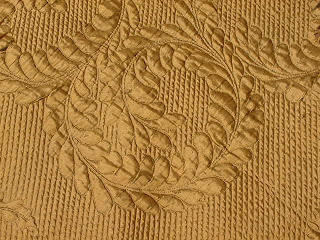
A new servant, Catherine Middleton, arrived to help with the sewing and, as she had been for the past few days, dressmaker Julia Mahoney was present to help Evelina. The women worked on several projects, including a “brilliant” dress for young Susie Ames. Brilliant was a pretty, shiny cloth, recognizable for its glazed and, often, patterned surface. It was a fabric that had been especially popular in the 18th century, but still had its admirers in the 19th.

Known by other names, including calamanco, the cloth originated in Norwich, England,  a center for textiles. Its origins make us wonder if the cloth Evelina was using had been made locally, in Lowell, Mass., say, or Rhode Island, or had been imported.


June 15, 1852

LongShop

Recent image of Long Shop 

June 15th  Tuesday  Julia here and I have been sewing

some but have not had much time […] I

t’s very hot weather mother spent the

day at Edwins I called there awhile and 

ripped my green gingham dress to have 

it made over.  had quite a heavy shower 

this morning which was needed very much

Everyone agreed that this day was “verry warm” and that rain was needed.* Evelina, looking up from her sewing, reported that they had “quite a heavy shower.” Her father-in-law, however, described the rain as “a small shower in the forenoon about an eighth of an inch.” Her glass was half-full, his was half-empty when it came to considering the benefit bestowed by this particular rainfall.

Such quick rain wouldn’t have been enough to interfere with the building of the new stone shops at the factory. Workers had begun to arrive on Saturday and, surely, some initial construction was already underway.  Old Oliver would have made sure of that. This first building on the new site, which was much closer to where the Ames family lived, was dubbed the Long Shop.

Industrial historian Greg Galer describes the Long Shop as “a simple, narrow, gable-roofed, two story building 525 feet long and 35 feet wide with a 60 by 50 foot ell and an additional 30 by 10 foot engine house. “**  This sturdy, less flammable facility would be up and running by the end of the year, and soon include a 60 hp steam engine.

Residents of North Easton today know the Long Shop as one of several shovel factory buildings repurposed for residential use. Along with others, Mr. Galer was instrumental in the successful effort to preserve the historic character of the Long Shop as the site was developed.

* Oliver Ames, Journal, Stonehill College Archives, Arnold Tofias Collection

** Gregory Galer, Forging Ahead, 2002, p. 150

June 14, 1852

FullSizeRender

June 14th

1852 Monday  Am 43 this day quite an old woman

Julia Mahoney came to work on my dresses

Hannah Murphy commenced working for me

this day & Mrs Patterson is here and it

has been about as much as I can attend to

to wait upon the rest  If I had two or 

three more it would be all I could attend to


Hannah Murphy, replacing the departed Jane McHanna, donned an apron this morning and “commenced working.”  Mrs. Patterson was still on the premises and the three women proceeded with the Monday chores, laundry included. Evelina was very busy tending to it all.

Yet today was Evelina’s birthday and she felt old.  We in the U.S. might scoff at the notion that 43 feels old; our current life expectancy for females is 81.  In Massachusetts in 1850, however, it was no more than 45. Who knew how long Evelina would live?  While she had the hopeful example of her hardy, octogenarian mother to emulate, she also would have remembered her two older sisters, both dead in their thirties. She may have considered the possibility that, like her mother, she could live to an advanced age. In fact, she would live to be 73; on this birthday, she had thirty more years in front of her.

At the shovel factory, Oliver Ames took his mind off his concern for the crops and focused instead on the arrival of Clark S. Manchester, who “came here to day from Fall River to build our stone shop.”* Mr. Manchester, 37 years old, was a native of Little Compton, Rhode Island, who had only recently moved to Fall River with his wife and two children. His expertise with stone work had led him to the Ameses, or they to him.

So the new building began, on the west side of Shovel Shop Pond. This location was different from the original and recently rebuilt factory, which sat at a lower edge of the pond in order to maximize the drop in water level. Water still powered the factory machines, and the new location to the west would still rely on water power from “just above where the Queset entered Shovel Shop Pond.”** But different from the old factory, this new Long Shop would accommodate a modern steam engine, a huge advance in technology. A new era in production was waiting to begin, and the stone buildings would reflect the change.

Oliver Ames, Journal, Stonehill College Archives, Arnold Tofias Collection

** Gregory Galer, Forging Ahead, 2002, p. 250


June 13, 1852

Lobster

June 13

1852 Sunday  Went to meeting this morning & returned

at noon and mother came with me to make

a visit  Did not go back this afternoon on

account of getting tea  Mr Patterson is here

came last night  Edwin & wife stoped to 

tea from meeting had lobster.  Read to

mother in  [entry incomplete]


The Sabbath was another “fair day + pritty warm + verry dry.”* Old Oliver had to be getting edgy about the prospects for this year’s hay crop, not to mention the potentially poor output from the cornfields and the crop gardens all around town.

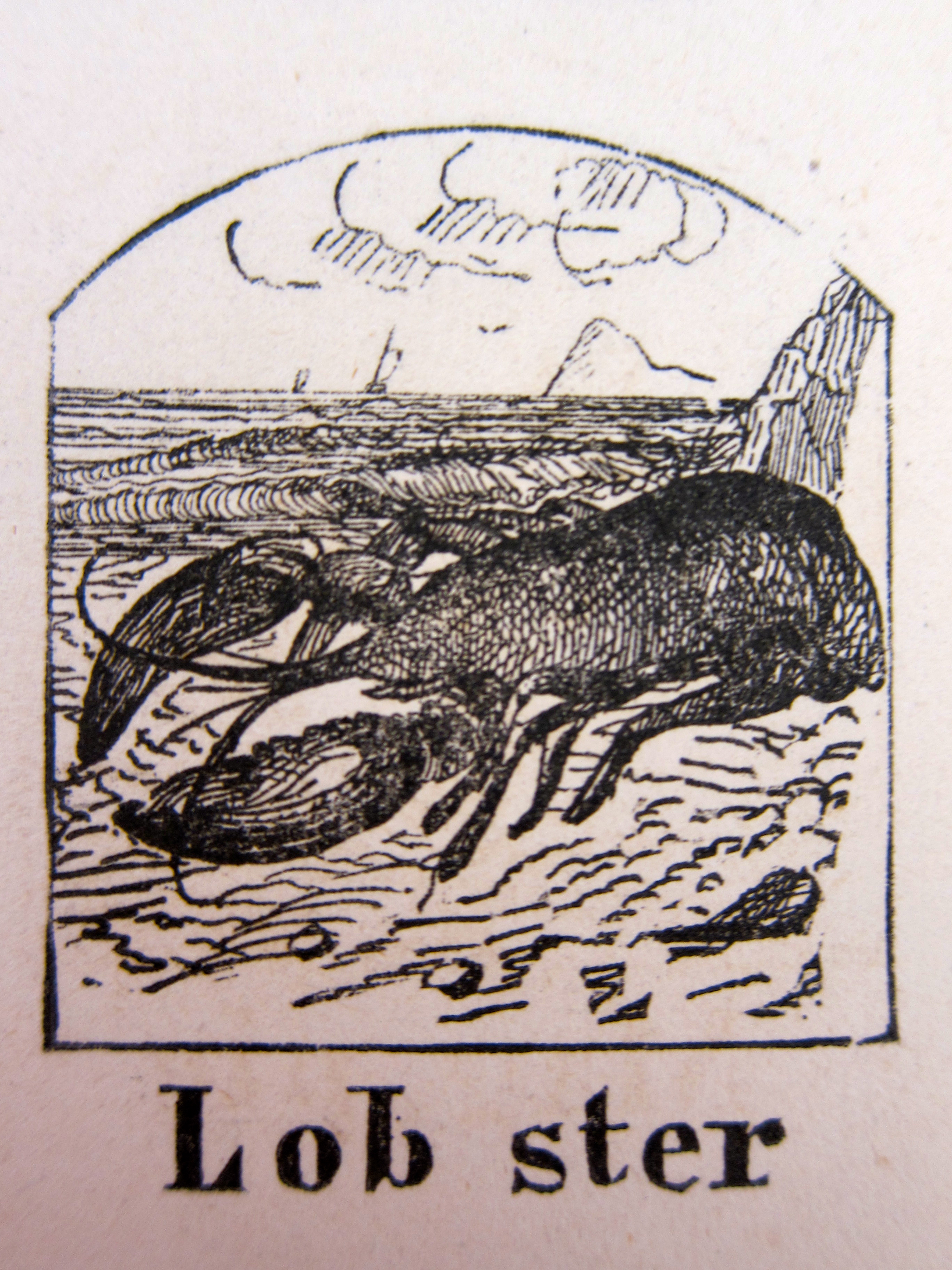
The family all trooped to church for the morning service, but Evelina, bringing her eighty-year old mother home with her, skipped the afternoon sermon “on account of getting tea.” She had to prepare lobster for Edwin and Augusta Gilmore. We might assume that on the previous day, Oakes Ames picked up a lobster (probably quite fresh, although cooked and canned were available) in Boston on his usual Saturday visit. Lobsters were plentiful, inexpensive and, as a rule, larger than those we dine on today. He was probably familiar enough with the crustacean to buy one that was fresh.

The well-known household advisor Lydia Maria Church approved of lobsters, and offered advice on buying them:

‘A female lobster is not considered so good as a male.  In the female, the sides of the head, or what look like cheeks, are much larger, and jut out more than those of the male. The end of the lobster is surrounded with what children call ‘purses,’ edged with a little fringe.  If you put your hand under these to raise it, and find it springs back hard and firm, it is a sign the lobster is fresh; if they move flabbily, it is not a good omen.’

Moving flabbily could never be considered a good omen.


*Oliver Ames, Journal, Stonehill College Archives, Arnold Tofias Collection

** Lydia Maria Church, The American Frugal Housewife 


June 12, 1852

 3124164293_b3d771db50Lace bonnet

June 12th Sat  Jane has left and gone to Mr Savages

Mrs Patterson is here yet  Cousin Susan Orr

and Harriet Mitchell came to the other part

of the house this morning  I have spent the

afternoon there and Augusta stoped there awhile

Have finished my bonnet & lined & trimmed

Susans last summer bonnet

Jane McHanna, the Irish servant whom Evelina had fired the previous day, found immediate employment in the village at the home of William and Hannah Savage. Mr. Savage worked at the shovel factory; Mrs. Savage was a homemaker with a teenage daughter, Abby.  Mrs. Savage, unfortunately, was ailing, and needed help around the house.

That Jane found another position so quickly speaks not just to the circumstances of the Savage family, but also to her own capabilities.  She may have been more adept than Evelina had lately given her credit for, and others knew it. By 1855, Jane would be working for Oliver Ames Jr. and his wife Sarah Lothrop Ames, a couple with high standards. How would that play out for the two sisters-in-law?

But meanwhile, Evelina had Mrs. Patterson to depend on, and a whole afternoon in which to finish her – and Susan’s – latest bonnets.  She also got to sit and visit in the other part of the house with Sarah Witherell, where both were visited by Susan Orr, Harriett Mitchell and the young bride, Augusta Pool Gilmore.  Did Augusta share the information that she was now in her first trimester of pregnancy? Probably not, and impossible to know, but fun to imagine the conversation if she did.

June 11, 1852

Coffeepot


June 11th Friday  This morning had quite a fuss with

Jane about her coffee & beef &c and cannot put

up with such work and to night have engaged

a new girl  Helen & self carried Mr & Mrs

Orr to the Stoughton cars this afternoon […]

We went to the shops this morning & called

on Augustus Abby & Mrs Witherell


A red letter day for Evelina: She fired Jane McHanna. In Evelina’s mind, Jane’s work had fallen off – particularly when compared to the accomplishments of Mrs. Patterson – and today, after a “fuss” about breakfast, Jane had to go. Their relationship had ever had its ups and downs; today it ended.

The kerfuffle between Evelina and Jane must have been observed, or overheard, by houseguests Robert and Melinda Orr. Perhaps their presence influenced Evelina’s decision to dismiss Jane, Evelina wanting to exhibit higher standards of domestic efficiency than Jane was used to producing. However it came about, the result was that Jane would go. Evelina found a replacement by nightfall, but would Jane be equally lucky?  A lone woman without means, could she find a new position quickly?

The morning’s upset may have lingered in Evelina’s mind throughout the day, but she continued to entertain her Boston guests according to the means at her disposal. Besides calling on various family members, they walked around the shovel works, a tour which would have interested Robert Orr.  He lived in Boston, but his family in Bridgewater and elsewhere had worked with iron for many years.

In the afternoon, Evelina and her niece Helen Angier Ames “carried” the Orrs to the railroad stop in Stoughton and bid them goodbye. It was one month ago today that George Witherell died.