February 8, 1852

Spool

1852

Feb 8th  Sunday,  Have been to meeting to day and at 

noon went into Mrs J Howards with Mrs E Howard &

others  had a pleasant call   Augustus called this evening

and staid untill quite late and I have

not read but very little to day  Mr Ames

came in about eight but too late to go out as 

intended  Mr Ames brought me 12 spools of cotton

yesterday

It was an ordinary winter Sunday for the Ames family. They went to church and visited with friends during the intermission between the morning and afternoon services. Back home, Evelina’s nephew Augustus came to call and seems to have overstayed his welcome; Evelina barely got to read. She probably sat looking at the new spools of cotton thread that Oakes had brought her the day before and wished that she could at least do some sewing. But sewing and other work was forbidden on the Sabbath.

The laws that the Puritans had established in the 17th century that forbid work or play on the Sabbath still held sway in Massachusetts in 1850. Businesses weren’t open, mail wasn’t delivered, and many people wouldn’t travel. People in Evelina’s generation had been taught to put down their daily work – except for chores which were essential, such as milking the cows – and spend Sundays quietly, at church and at home in contemplation and worship. No sewing, no housework, no shovel-making was permissible.

As the tempo of 19th century life picked up, however, that restrictive pattern was changing. Rail travel, for instance, was impossible to harness to a Puritan timetable. Many of the old ways were beginning to break down, and the advent of the Civil War would effectively demolish most of the lingering vestiges of Puritanism. The “blue laws,” however (so named by Connecticut preacher Samuel Peters) would continue to influence state laws, especially around commerce.  For much of the 20th century, retail stores could not open on Sundays, and in many places, alcohol couldn’t be sold.  Even today, in 2015, several states – Maine and Colorado, for two – forbid car dealerships to operate on Sundays.


I


February 7, 1852

dickens12_2084187b


Charles Dickens, ca. 1852

(1812 – 1870)


1852  Sat  Feb 7th  Orinthia Miss Burill Susan & self called this

morning on Mrs J Howard, Whitwell & E Howards

left Susan at Mr Howards, came home with Frank

from a sing this evening.  Abby Augusta & Helen were

here awhile this afternoon  Helen went out to Bridgewater

last night and came up with Mr & Mrs James Mitchell this

forenoon  Orinthia went home about five and this

evening we have been into Olivers.  Mr Mitchell returned at nine.


This was a non-stop sociable Saturday for Evelina; she, her daughter Susan, dear companion Orinthia Foss, and another young schoolteacher, Miss Burrell, made calls all morning long. In the afternoon, she entertained three of her nieces and in the evening, visited next door at Oliver Jr and Sarah Lothrop Ames’s house. Chat, chat, chat.

In the larger world of letters, Charles Dickens turned 40 years old today. Even at mid-career, he was known as “The Inimitable,” so great was his talent, so voracious his readers. Evelina loved his work and benefited from his prolificacy.

By this point in Dickens’ life, among the books he had already published were The Pickwick Papers, Nicholas Nickleby, various Christmas novellas including A Christmas Carol, Dombey and Son, and David Copperfield, which Evelina had read the previous year. At this time he was composing Bleak House which, like most of his novels, was published in serial form over many months. Its first episode would come out in March, 1852, and run through September, 1853.

Still waiting to be born were future classics such as Hard Times (which targeted Unitarianism, among other entities), Great Expectations, A Tale of Two Cities, Our Mutual Friend – and more. Dickens wrote articles, made speeches, toured, and even acted. He was a high-profile tour de force with a fertile imagination and a thirst for success. Ralph Waldo Emerson, who heard Dickens speak in Boston, compared the author’s ability to “a fearful locomotive to which he is bound and can never be free from it nor set to rest.”*

*Ralph Waldo Emerson, quoted in Annie Field’s diary, 1868.


February 6, 1852

Write

Feb 1852

Friday Feb 6  Jane has baked some mince to day of

meat that was left last week and has done

very well.  Cut out a shirt for Oliver to day

and intended to finish it tomorrow but this

afternoon Miss Foss came and Miss Burrell

from W Bridgewater  We called at Edwins

this evening  commenced raining about five

Domestic tranquility reigned today as Jane McHanna made some fine mincemeat and Evelina cut cloth for a shirt, until interrupted by the arrival of Orinthia Foss and her friend Miss Burrell. For Evelina, chores gave way to social intercourse.

Besides keeping a record of various domestic details such as her sewing, Evelina often lists in her daily diary entries the names of the friends and relatives who come to call – in this case, Orinthia Foss and Miss Burrell. She writes of the women with whom she spends time, in fact, more often than she is apt to describe interactions with her immediate family (unless, of course, her husband forgets to pick her up to go out on a social call.) She includes the names of female friends, including her sisters-in-law, as much if not more often than she mentions the names of her children. Her social life, as in “We called at Edwins this evening,” is terribly important to her. She narrates it to her diary in order to remember it and savor it. It doesn’t mean that she doesn’t care about her family; she does. But looking after her almost-grown children is not noteworthy.

Evelina’s diary is simple, even for the nineteenth century, when the “practice” of keeping a diary was “to record personal feelings and explore intellectual growth.”* Eveline doesn’t concern herself with external events the way Mary Chesnut of South Carolina did in her diary of the Civil War, nor does she describe or question the secondary status of women as other Bostonians such as Caroline Healey Dall did in her diary. The intellectual pursuits and considerations of the brilliant Margaret Fuller never interested her – it was beyond her ken.  Evelina was literate and engaged in her life, but in a diffident and unsophisticated way. She wrote in a manner that more closely resembled her father-in-law, Old Oliver; her brother-in-law, Oliver Ames, Jr.; and, eventually, her son, Oliver (3). She simply wrote down whom she saw and what she did.


Steven Stone, Making Sense of Letters and Diaries, http://www.historymatters.gmu.edu

Other resources for information about diaries in the nineteenth century:

Schlesinger Library, Harvard University, http://ocp.hul.harvard.edu/ww/diaries.html

http://www.victorianpassage.com/2007/02/19th_century_diaries_and_scrap.php

February 5, 1852

imgres

Jenny Lind 

(1820- 1887)

Thursday  Feb 5th  Have not been very well to day after being

out last evening.  Have put a new bosom into

an old shirt of Olivers  Passed part of the

afternoon at Edwins and part of the evening in

Olivers was also there about two hours this forenoon

It is a delightful evening and fine sleighing


A celebrity wedding took place in Boston on this date. Opera singer Jenny Lind married her accompanist, Otto Goldschmidt, at the home of banker Samuel Gray Ward in Louisburg Square.* There was no People Magazine, Entertainment Tonight or The Daily Beast to herald the occasion, but the newspapers of the day carried the story.  “The Swedish Nightingale” was big news.

Originally from Sweden, Jenny Lind was discovered at the age of nine when the maid of a dancer at the Royal Opera overheard her singing. Though untrained, Lind soon rose to prominence on the strength of her beautiful soprano voice and became court singer to the King of Sweden and Norway. She almost damaged her vocal cords in the process, but rest and proper training set her to rights. She became world-famous in operas such as Der Freischutz  and Lucia di Lammermoor.  

In 1850, showman P. T. Barnum brought Jenny Lind to the United States, where she gave 93 performances over two years. When she married in Boston, she was nearing the end of her American tour and would soon to return to Europe. At 32, she would retire from touring and become the mother of three, yet she would continue to perform occasionally and teach for the remainder of her life. Many of us in the 21st century know of Jenny Lind as much for a style of spool bed that carries her name as for her acclaim as an early international opera star.


* Jim Vrabel, It Happened in Boston, p. 61

February 4, 1852

8mmIdeas_instagram

Mending

1852

Wednesday 4th Feb  Have been mending shirts and have

done up some collars & sleeves &c This evening

have been to Alsons with Mr Ames, met the 

Pools Mr & Mrs A Howard & Harvey  had a 

pretty lively time.  Edwin & Augustus with their

wives were also there  It is a beautiful moonshiny

night and have had a pleasant ride.  O A & Oliver

went to a ball to Canton.

Evelina sat with her sewing and mending for most of the day, catching up on some of the more ordinary aspects of keeping her family well-clothed. She was motivated in part by the need to prepare her son Oliver (3)’s clothes for his return to college.  Her diligence was rewarded; she got a lot of work done, and at the end of the day she and Oakes went out for the evening. Right next door, in the other part of the house, Oakes’s youngest brother William Leonard was visiting, yet Evelina doesn’t mention him.

She and Oakes rode south to her brother’s farm, where they met with family and friends for “a pretty lively time.” They saw some of the Pools, an extended family in the area, and Asa and Henrietta Howard, another farming family. (A year earlier, Evelina had sewn a shroud for one of the Howard’s children.) The Harveys, from whom Evelina bought butter, were present as well.

The beautiful moon, not quite full, shone down from a starry sky on other winter gatherings.  Oliver Ames (3) turned 21 years old today, after all; he celebrated the occasion with his older brother, Oakes Angier, by attending a dance in Canton. One imagines that they had a good time, too.


February 3, 1852


playingcards

Union soldiers playing whist, circa 1861

1852 Feb

Tuesday 3d Have been looking over the boys shirts and 

have mended some of them.  Fred carried me

to call on Augustus’s wife, called at Mr Torreys

an[d] Mrs J Williams engaged her to make some shirts

for Oliver  Mr & Mrs Williams passed the evening

here.  Have done but very little sewing

The boys & Joshua played cards.

Chess wasn’t the only game that people played in the 19th century.  As Evelina noted today, her sons and a friend named Joshua played cards. Perhaps Fred Ames played, too. The game they preferred was whist, a precursor of today’s contract bridge.

Whist was played according to rules established by the accepted authority, Edmond Hoyle, an Englishman in the 18th century who had codified explicit guidelines for various card games.  Whist followed “a rigid set of rules, etiquette and techniques.”** Like bridge, it required four players, one deck of 52 cards (then known as a French deck), a bidding process, and trick taking.  Trump was determined by the last card laid down and, unlike bridge, there was no dummy hand.

The Ames family loved playing whist.  Oliver (3) often writes in his early journals of playing whist with his grandfather, Old Oliver. Night after wintry night, the men would play, the grandsons occasionally beating their grandfather.  Evelina seldom writes of playing herself; she and her sisters-in-law usually sat to the side, conversing, sewing or reading.


www13thmass.org/1861/williamsport

** http://www.kristenkoster.com/2012/02/a-regency-primer-on-how-to-play-whist/

February 2, 1852

grhog

1852

Monday Feb 2d  Worked about house untill about twelve

and went into Olivers to dine with my whole family

and mother.  Alson came this afternoon & carried

mother home.  All took tea at Olivers.  Mrs S Ames

Oliver Fred & self passed the evening at Mr Swain

Worked some on flannel skirt this afternoon […]

carried Susans stocking to Mr Swains.


We know about February 2; it’s Groundhog’s Day.  In 1852, it was no such thing, at least not in New England. In the Pennsylvania Dutch communities of the mid-Atlantic states, however, some folks had begun to claim that the behavior of a groundhog on this date could prognosticate the weather for the remainder of the winter. This practice was first formally celebrated in 1887, in Punxsutawny, Pennsylvania, and continues today.

More common for this date was the celebration of Candlemas, a holy day in the Christian Church that honored the presentation by Mary of Jesus at the temple. Roman Catholics called it the fourth Joyful Mystery of the Rosary. Unitarians had no name for it because Unitarians, like some other Protestant sects, didn’t acknowledge ecclesiastical feast days.

Yet there was a saying regarding this time of year that New England farmers – Old Oliver, a Unitarian, included – would have been familiar with:

“Half your wood and half your hay, You should have on Candlemas Day”

Candlemas falls between winter solstice and vernal equinox. It’s a day that turns the corner on winter, and heads for spring. It’s a day to take stock and hope you have enough wood left to keep warm and enough hay remaining to feed your animals for the rest of the winter.


February 1, 1852

images-1

Feb 1st 1852

Sunday  A very stormy day of snow & not one

of the family have been to meeting and Mother could

not go home as she intended.  Have written a letter to

Louisa J Mower and have been reading  Went into the

office awhile to sit with Mr Ames  The boys came

near tearing the house down while I was gone.  Fred

& Oliver accused Oakes A of stealing fruit cake


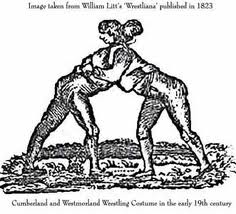
Oliver (3) and his cousin, Fred Ames, ganged up on Oliver’s older brother, Oakes Angier, while their parents were next door at the office. In a fight over fruit cake, the three young men yelled and pummeled and wrestled. Evelina came home to the disarray and certainly reprimanded them all.  The twenty-something brothers were lucky that their mother, not their father, was the parent who returned first. Oakes Ames was known to mete out severe physical punishment.

Wrestling was a popular sport in the 19th century, one that the Ames men were expert at, according to tales that have come down through the family. The legend is writ large. Winthrop Ames describes it best:

“In Oliver’s time wrestling was as popular a sport as baseball or football is today,” he wrote in 1937, ” It was not considered beneath the dignity of anyone to engage in it, and local champions were […] highly esteemed[…]  Oliver senior was the acknowledged champion of the neighborhood, and though often challenged by contestants who sometimes came long distances to meet him, was never defeated […]

“He was not only immensely strong – he once knocked down a horse that bit him with a single blow, and lifted a wrestling opponent much heavier than himself clear of the ground and tossed him across the ring in protest against some unfair trick – but he was also agile and expert in all the technical grips, holds and falls of the sport.  He taught his sons to wrestle scientifically; and Horatio, the mighty of bulk, and Oliver junior became so proficient that they succeeded him as town champions […]

“[T]he old gentleman once said to one of them (according to some this was Horatio, to others Oliver junior) ‘Son, neither you nor I have ever been beaten.  Old as I am I may still be the better man.  Let’s have it out.’ So, forbidding anyone to follow them, father and son went to a secluded clearing in the woods and had a private bout. But neither would ever tell which was the victor.”*

Wrestling was clearly an outlet for the Ames men. Other than today’s rough-housing by the young men, it was a quiet Sunday at the Ames compound. Evelina wrote a letter and read.  No one went to church, the weather being too stormy even to carry old Mrs. Gilmore back to the farm.  Small wonder that the young men displayed a little cabin fever.

*Winthrop Ames, The Ames Family of Easton, Massachusetts, pp.115-116.