June 10, 1851

url

June 10th 

Tuesday  Worked all the forenoon and part of the afternoon

weeding the flowers.  Got some Petunias at Mr Savages

The gardener has been to work in my flower

garden most all day weeding and fixing the

beds, has made them wider  This afternoon have

been mending Franks & Olivers pants

Mrs Witherell & Mitchell & Miss Eaton walked

up to Edwins garden.  Abby & Miss Smith called

Bridget ONeil here to work to day


The weather was fine enough that sisters Sarah Ames Witherell and Harriett Ames Mitchell took a long walk north toward Stoughton with their houseguest, Miss Eaton. They headed to Edwin Manley’s garden, a much-visited spot, to see what he had growing. Being on foot, it’s doubtful that they purchased anything to bring home. They may have ordered something to be delivered, however.

In the morning, Evelina went out to look at flowers, too, at the nearby home of William Savage, a shovelworker, and brought home some petunias.  Petunias, a great garden favorite in the latter half of the nineteenth century, originated in South America, appeared in Europe by 1800, but had only recently become available in the United States. Petunias were still so exotic, in fact, that they didn’t appear in the list of annuals in Breck’s Book of Flowers, published in Boston in 1851. How did Mr. Savage come upon them?

The Ames’s new gardener, who had been with the family for almost a month, weeded the flower beds today and worked at making them wider. Evelina’s parlor garden was becoming more and more ambitious. And for some reason, Bridget O’Neil, a servant, worked at Evelina’s today. She had been working next door at Oliver and Sarah Lothrop Ames’ house.  Where was Jane McHanna?

June 9, 1851

imgres

*

June 9th Mon,  Another cold stormy day  have a fire in the

furnace  Ann had gone & I made the fire

Jane has washed her clothes & put them out

in the suds to let the rain rinse them  I have 

worked about home all the forenoon.  Swept &

 dusted the parlour partially, and the front entry

Sitting room &c.  Was invited into Olivers this afternoon

Did not go untill after tea

Servant Jane McHanna borrowed the rain again this Monday and let it rinse the soapy clothes that she placed outdoors.  Evelina did housework most of the day and even had to start up the coal fire in the furnace, a task she neither enjoyed nor did well.  Ann Orel, the young Irish woman who worked for Sarah Witherell, usually did that job.

Being a “cold stormy day,” Evelina did no gardening.  She probably looked out the window at her flower beds and saw the rain pelt her tender young plantings.  She couldn’t have known that even as she gazed out at the bad weather, her favorite author, Charles Dickens, was giving a speech in front of the Gardeners Benevolent Institution in London on the topic of gardening.

“I feel an unbounded and delightful interest in all the purposes and associations of gardening,” he began. “Probably there is no feeling in the human mind stronger than the love of gardening.[…]at all times and in all ages gardens have been amongst the objects of the greatest interest to mankind.” The Gardeners Royal Benevolent Society, which began in 1839,  still exists in the UK today. It’s a charity dedicated to helping horticulturalists in need.

Evelina had no such resource to turn to, had she needed the help.


* Logo of the Gardeners Royal Benevolent Society 

June 8, 1851

IMG_0139 2

June 8th  Have been to meeting all day  Heard Mr Dogget

of Ashby did not like him near as well as Mr.

Whitwell.  Came home at noon with Alson & wife.

Oakes Angier & Orinthia went to night to call on

Miss Perkins at Mr J Kimballs.  Mr Ames & self

called at Mr Peckhams.  It has been a cold cloudy

day for the season and to night rains some.


Today was a normal Sunday in Easton, which the Ames family spent at church listening to Mr. Dogget, a visiting preacher who probably had no chance of being as good as Reverend Whitwell, at least in Evelina’s eyes. After church Evelina and Oakes called on John Peckham, a clerk at the shovel works, and his wife Susan.

Things may have been more lively next door at the home of Sarah Lothrop and Oliver Ames, Jr. Their oldest child and only son, Frederick Lothrop Ames, turned 16 years old today. He may have been at home to celebrate, or he may still have been away at school.  Fred was just finishing a year of college preparatory study at Phillips Exeter Academy. Prior to that, he had studied at Concord Academy.  Young as he was, he and his parents expected his next year to be spent at college.

A brilliant business career lay ahead for Fred Ames. By all accounts, but best described by his personal friend Leverett Saltonstall, Frederick Lothrop Ames, “distinguished by his high character, was well known as one of the largest capitalists in the country.”* Not only was Fred a capable member of the management team of O. Ames & Sons, he was, like his father, an active investor and eventual director of the Union Pacific Railroad. He became a strong, competitive railroad man. At the time of his death in 1893, he was “officially connected to some seventy-five railroads,” and held oversight or investment positions in many other enterprises: banks, coal mines, elevators, and an innovative young company called General Electric.

Clearly capable in the world of business, Fred Ames was also a likeable fellow. “No one ever met him without being impressed by his uprightness, intelligence, and good judgment.” “A most kind and generous man,” he donated to and oversaw various charities and hospitals. He reportedly led a happy family life in North Easton and Boston, and created a lasting legacy through his support of the architecture of H. H. Richardson. “A devoted lover of horticulture,” also, he had a famous collection of orchids.

A star among the grandchildren of Old Oliver and Susannah Angier Ames, Frederick Lothrop Ames died too early, dropping of apoplexy – what we would now call a stroke – on the overnight train to New York. He was 58 years old. His legacy would live on.


* Leverett Saltonstall, Memoir of the Hon. Frederick Lothrop Ames, A.B.,  The Colonial Society of Massachusetts

June 7, 1851

images-1

1851

June 7th Saturday  We have had a powerful

rain all day  Orinthia & self have been sitting

sewing most of the time  Orinthia has made a

pair of overalls for Frank  I have trimmed &

lined or rather Harriet trimmed the bonnet

and I feel very well satisfied about it.  The

school did not keep to day or yesterday

Susan has turned a sheet  Horatio Ames Jr &

Mr Scoval came to father Ames.  Mr Ames

brought a lobster that weighed 15 lbs.


No gardening today, but it wasn’t a bad day, despite the rain.  Evelina and Orinthia got to visit for hours over sewing, Oakes Ames brought home lobster – a big lobster – from Boston and, best of all, Evelina was finally “very well satisfied” about her bonnet.

Harriett Ames Mitchell visited, too, and trimmed Evelina’s bonnet. She might have used ribbons or cloth flowers or even a feather or two to adorn the summer headdress. Nine-year old Susie sewed as well.  Either the bad weather kept her indoors, or her mother finally made good on her threat from a few weeks ago to make Susan play less and learn to sew.  Susie “turned a sheet,” which means she did some hemming.

Old Oliver had a rare visit from one of his grandsons, Horatio Ames, Jr., who must have travelled up from Connecticut with a Mr. Scoval.  Horatio Jr. was a first cousin to Oakes Angier, Oliver (3), Frank Morton, and Susan.  The eldest son of Horatio and Sally Hewes Ames, and a recent student at Rensselaer Polytechnic Institute, he would prove to have a difficult life.  Closer to his mother than to his father, he was incensed when his parents divorced. According to some sources, he actually tried to kill his father during an argument in 1856.* His father, who was no saint himself, described his eldest son as “the worst hardened villain I have ever seen.”*

Still, Horatio Jr. was family, and Old Oliver welcomed him to his home more than once over the course of Evelina’s diary.


*John Mortimer, Zerah Colburn: The Spirit of Darkness, 2005

June 6, 1851

images

*

1851

June 6 Friday  Worked in the garden an hour or two this morning

mended some cotton stockings swept & dusted &c

About three or four Oclock went with Olivers wife

& Mrs Mitchell to North Bridgewater called at

Mr Summers to take Frank Mitchell home & at Mrs

Carrs & Susan Copelands to get my bonnet  The bonnet

is done well  When I returned home found Orinthia

here.  Jane Howard brought her up. 

At last, a bonnet to take home and trim.  Evelina was clearly pleased.  She picked it up in North Bridgewater (today’s Brockton) with her sisters-in-law Sarah Lothrop Ames and Harriett Ames Mitchell.  The ladies retrieved Harriett’s eldest son, Frank Ames Mitchell, in the process. Not yet ten years old, whom had he been visiting?

Otherwise, Evelina’s day was full of quotidian activities: mending, sweeping, dusting. Nothing out of the ordinary popped up in the domestic department. Gardening, too, continued. On this day, Evelina may have planted the asters she picked up yesterday at the Howards’, compliments of a Howard daughter, Louisa.

Joseph Breck in his Breck’s Book of Flowers, 1851, admired the China Aster: “The varieties are now very numerous, and possess exceeding beauty, some of them being almost as large as a small Dahlia, and much more graceful.”

Breck warned against letting the asters “degenerate in to inferior flowers,” and recommended sowing the seeds in May, “in patches,” and transplanting them to “a bed well prepared the last of June.” It may be that Evelina was transplanting the seedlings a little early.  Time would tell.

* Image from edenbrothers.com


June 5, 1851

e_gg_hook_organ2-291x440

*

1851

June 5th Thursday  To day I have been to Mothers, stoped at Orinthias

school and staid about an hour, left Susan there

and got to Mothers about noon.  Met A Augustus & wife

and her sister Elizabeth, John Pool & wife.  On my way

home stoped to Miss Louisa Howards & got some Asters

and at the meeting house to hear Elizabeth Clark play

Met Oliver & wife & Harriet, Mr Clark and

two daughters  A beautiful pleasant day


Several Ameses gathered this afternoon with others for a concert at the meeting house. Presumably, the new organ was featured again, played this time by a more proficient organist than Mr. Rotch from a few Sundays ago. Miss Elizabeth Clark, daughter of Daniel and Elvira Clark and barely 19 years old, treated the listeners to a recital. The Clarks were Unitarians, and Daniel was a capable carpenter who did occasional work for the Ames family. Elizabeth was evidently a fine pianist.

The new organ was possibly made by E. G. and G. Hook of Boston, whose factory was later in Weston, Massachusetts. Known by 1885 as Hook and Hastings, their firm was prominent in the 19th century in the production of church organs. Their first concert hall organ, no longer extant, was installed in the Tremont Temple across from the Boston Common. Their largest was placed in Boston’s Cathedral of the Holy Cross.  More common were smaller organs such as the one in the illustration that were installed in more modest meeting houses, like the Easton one used by the Unitarians in 1851.

The occasion for this particular recital is unknown, and how it came to be held on a weekday afternoon is also a puzzle.  It made sense to the townspeople, however, who turned out in full for the occasion.

*E. G. and G. Hook organ, Boston, Mass., circa 1848.  Athol Historical Society

June 4, 1851

Thread

1851

June 4th Wednesday  This morning Mr Lothrop

brought me a calf head and as Jane was Ironing it has

taken me some time to prepare it  Went in to Olivers

to assist Sarah about making her cake for the sewing

Circle.  It met there this afternoon and they had a

goodly number  I have cut two shirts

for Mr Ames and put them into the sewing circle to

make  We have had a pleasant meeting

Even as cows all around town and country were giving birth, some of their calves were slated for slaughter.  In sheer numerical, if unfortunate, terms, not all calves had a place on a farm. Females, once grown, could breed and produce milk, but the males had less of a role, unless they had the lines and build to become fine steers or oxen.  Male calves in particular had good market value as veal and thus were often culled. The arrival of a calf’s head for the dinner table signaled that some culling was going on.  Mr. Lothrop may have been DeWitt “Clinton” Lothrop, a farming brother of Sarah Lothrop Ames and manager of the Lothrop property.

The cook rooms at both houses on Main Street were bustling today. Not only was Evelina preparing the calf’s head, but Jane McHanna was ironing near the stove, keeping her irons hot and using the kitchen table as the ironing surface. In Sarah Lothrop Ames’s kitchen, there was much preparation for the afternoon meeting of the Sewing Circle. Evelina went next door to help Sarah with a cake.

No memory of her own failed meeting back in February seemed to cloud Evelina’s enjoyment of today’s Sewing Circle, even when her sister-in-law’s parlor welcomed “a goodly number.” She was able to put a couple of shirts into the pile of work and had a pleasant time.


June 3, 1851

barege2


1851 

June 3rd Tuesday  Have finished Susans green plaid gingham

and have cut the sleeves to her green borage Delaine

Have been mending some, but realy I have done

so little sewing of late that I can scarcely sit myself

to work.  Jane has cleaned the boys chamber in 

the other part of the house

We are having very fine weather and I feel much better

than I have for a few days past


When sewing, Evelina often mentioned using borage, more properly spelled “barege.” Barege is a fabric with a sheer, gauzy weave that features a worsted warp and a silk weft. Warp is the longitudinal thread in a roll of cloth; weft, also known as woof, is the transverse or horizontal thread that is woven through the warp with a shuttle. Using two different types of thread creates a cloth with some texture to it.

Barege was quite popular for dress material in the mid-19th century, even taking prizes at shows. At London’s Great Exhibition of 1851, a medal in the “Worsted Class” went “for a great variety of light goods of the barege class, plain, checked, and brocaded, of excellent combinations.”*  Although most of the fabric that Evelina used was made in New England, it’s possible that the green barege for her daughter’s dress had come from abroad.  The example illustrated above features a barege dress from the early 1860’s.

Getting back to dressmaking, her favorite kind of sewing, may have contributed to Evelina’s improved spirits today. The “very fine weather” probably helped, too.


June 2, 1851

Neal_Dow_daguerreotype

*

1851

June 2d Monday  This morning being washing day I had to

work about house and have not sewed much

all day  Miss Linscott returned this morning

(I think her to be a very pleasant girl)

Worked in the flower garden a couple hours

this afternoon  Have carried my bonnet to

S Copeland to have it sewed over.  Spent most

of the afternoon in the other part of the house. Very pleasant


Pleasant skies and a light breeze made for easy drying of the Monday laundry.  Old Oliver reported that “it was cloudy + cool in the fore noon + fair + warm in the afternoon wind southwest + west.” He also noted that “Mr Buck went to Ohio.” Who was Mr. Buck? There were many by that name in Easton at the time.

In nearby Maine, something historic happened today, something that surely pleased Oakes Ames and Oliver Ames Jr..  Maine became the first state to enact a statewide prohibition on the sale or manufacture of alcoholic beverages.  Known as the “Maine Law,” the legislation was spearheaded by Neal Dow, the mayor of Portland, and signed by John Hubbard, governor of the state.  The men became known respectively as the “Napoleon of Temperance” and the “Father of Prohibition.”  Neal Dow, a Temperance Whig, was particularly prominent in his life-long campaign to rid the country of drink.

The vote in Maine was a result of an aggressive effort by temperance advocates across the country to stop the sale of alcohol. No headway had been made on the national level, so activists had organized to effect change at the state and county level, an effort that resulted in some short-term success and much long-term failure.  They had their work cut out for them.  During the 19th century, the average American consumed at least three times more alcohol than the average American in the 21st.**

Dow’s legislation didn’t hold up. Enforcement was inadequate, bootlegging became rampant and the law was repealed in 1858. The sale of alcohol resumed. The battle in Maine had ended, but the national war over alcohol would last well into the 20th century.

* Neal Dow (1804 – 1897), the “Napoleon of Temperance”

** Wikipedia


June 1, 1851

imgres

*

1851

June 1st Sunday  We have all been to church to day.

The young people went to walk to the hoe shop

& [illegible] before meeting.  Mr Ames Miss Linscot

Orinthia, Susan & self came home at noon.  After

meeting Lavinia came home with us  Oakes A

carried them to a sing to our meeting house

and then O & L home  I feel rather down

hearted to night & have been for two or three days

The young people gathered today for a sing at the meeting house.  Oakes Angier and his brothers, perhaps, accompanied Orinthia, her friend Frances, and Cousin Lavinia to the church for an evening that was probably more lively and joyous than the two sermons they had listened to earlier. They sang and socialized.

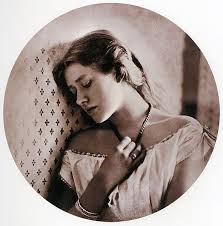
Evelina was neither lively nor joyous. She was “down hearted,” and no singing or June sunshine seemed to make it better. Where did her blues come from? Was she upset with Oakes for some reason? Did she reconsider her friendship with Orinthia and find their age difference suddenly unbridgeable? Was she tired from the spring cleaning? She doesn’t mention a particular instance that could have set off a mild depression.

In 1851, Evelina was in her early forties, an age subject to the physical effects of “change of life,” a condition that 19th century women wouldn’t have known much about, much less admitted to if they did. The formal and fastidious norms of the day abhorred words that alluded to specific female conditions. The word “pregnancy,” for instance, was indelicate; if they said anything at all, it was that a woman was “in the family way.” Some described childbirth as “being taken ill.” Menopause, a word that even some 21st century women are reticent to use, was not in Evelina’s vocabulary.

Yet a lack of understanding and the absence of social acceptance couldn’t obviate a real female condition.  Evelina was at a stage in her life when the onset of menopause could begin to influence her mental and physical state. The chemistry of her body could have made her feel down-hearted without her knowing why.

*  “Sadness” evoked by 19th century actress Ellen Terry.  Photograph by Julia Margaret Cameron.