May 11, 1851

photo

*

Sun May 11th  Have been to church this afternoon. Did

not feel like going in the morning It rained

this forenoon but cleared off quite pleasant

after dinner and after church Oakes A, Orinthia

and I called at Mothers, carried her a poplin

dress that I purchased in Boston.

Have not read any to day. Oakes Lavinia & Orinthia

called on Ann Pool

One item that Evelina brought back from Boston was a poplin dress – ready-made, presumably, or perhaps made to order – that she bought for her mother. It had to have been an item that her mother, an elderly country woman, would never have purchased for herself. Hannah Lothrop Gilmore had spent a lifetime sewing her own garments.  She was also unlikely to board a wagon or carriage to go into Boston to shop. The ride from the farmhouse to church on Sundays was about as adventurous as she got. How kind of Evelina to treat her mother in this extravagant way.

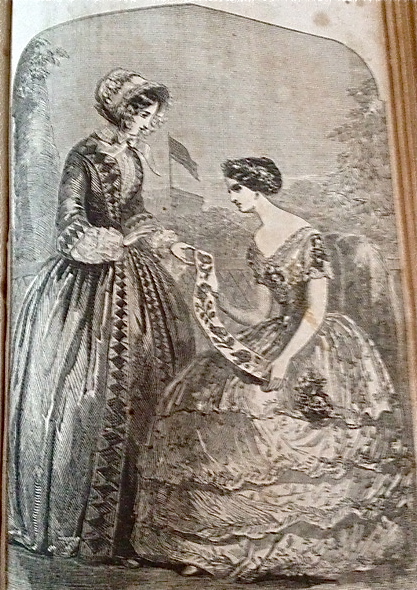
Poplin was a popular cotton fabric in the nineteenth century. It was smooth, lightweight and finely woven, more refined than broadcloth, although they were not dissimilar in weave. Both were sturdy and today both are often used for men’s shirts. The dress on the left in the illustration above was a day-dress and probably similar in shape and weight to the poplin dress Evelina bought, perhaps with less trim. The undersleeves were a particular feature of women’s dresses right before the Civil War.

The dress on the right was not something that Evelina would have purchased for her mother, or even for herself at this stage in her life. It was an evening dress with a stylish flounced skirt that would have been entirely too “jeune fille” for old Mrs. Gilmore.

* Spring fashions from Godey’s Lady’s Book, 1851
 

May 10, 1851

7411thumb2

Sat May 10th  My bonnet does not fit me at all.  Mr Ames

called to see if they would take it back & make

me another I shall have another journey into

Boston for a bonnet. I have not felt like

doing much to day and never do after being

in Boston. Orinthia came home to night in

fine spirits. feels rather better satisfied with

her purchases that I do. The weather tolerably pleasant.

The bonnet that Evelina ordered from Alfred Remick & Company in Boston didn’t fit, so Evelina asked her husband Oakes to return it for her while he was in Boston.  He always went into the city on business on Saturdays.  The idea of Oakes Ames, a tall, large-chested man with a charismatic but somewhat rough-hewn manner, standing at a millinery counter negotiating the fine points of his wife’s headware, is a mental image to be treasured. This man, who could build shovels, advise a president, and imagine a continental railroad, could also cajole a store clerk and convince him or her to take back the hat his wife just bought. Oakes Ames was a force to be reckoned with, a force who also loved his wife.

Evelina, having dispensed her husband on that important errand, puttered around the house in desultory fashion as she was wont to do after a trip to Boston.  Schoolteacher and boarder Orinthia Foss returned to the house from the city happy and light-hearted, pleased with her shopping.  She must have brightened Evelina’s flagging spirits – or made her more disappointed with her own acquisitions.

May 9, 1851

champney2-thumb

*

May 9th Friday  Went out shopping about eight Oclock

and at ten met Mrs George Ames at Mr Daniels

She walked around with me looking for a dress

and other things, likewise met Abby & her cousins

and about 5 Oclock came across Orinthia She

said she should certainly be at home, but missed

of the cars. Mrs Ames left at half past 5 for N.Y.

with Mr Peckham. Returned home much fatigued


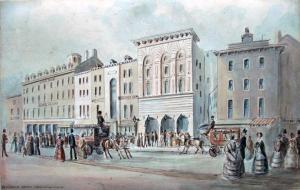
In Boston, stores opened so early that Evelina could start shopping at eight in the morning. She had ordered a bonnet the day before which she was able to pick up later in the day, so today’s shopping was more leisurely. She and her cousin-in-law, Almira Ames, stepped along “looking for a dress and other things.”  They probably walked along Washington Street and its side streets. Others from Easton were in town, too: her niece Abby Torrey and her own boarder, Orinthia Foss. The women were breaking out of their little town to find goods in the big city. The weather must have been especially cooperative.

Evelina finally returned to Easton “much fatigued.” Almira Ames, meanwhile, left for New York accompanied by the head clerk for O. Ames & Sons, John Peckham. They would have traveled by stagecoach or train from Boston or Stoughton. They were not running off together.  Rather, Mr. Peckham had shovel business in the city and, like a gentleman, accompanied the Widow Ames on what otherwise would have been a solo journey for each of them. Presumably, Almira lived in New York at this point in her life, although previously, she had lived in North Easton.


*Benjamin Champney (1817-1901), New Boston Theater, Washington Street, 1850

WC GC031/Benjamin Champney Watercolors Collection, Princeton University Library


May 8, 1851


image


Thursday May 8  Went to Boston and walked around

all day trying to find a bonnet but could not get

one to fit me ready made. Engaged to have one

made of blue plaid silk at Alfred Remick & Co.

Went with Oakes Angier to call on Mrs Stevens

She spent the night with me at Mr Orrs

Julia was at home and a Miss Orr a cousin or hers,

was there & Miss Foule dress making


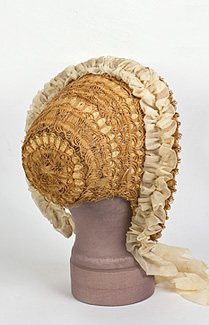
Evelina left off gardening today to go bonnet-hunting in Boston, for it was the season to switch from winter to summer headware.  She searched from store to store and must have visited a range of establishments running from small millinery shops to larger dry goods stores.  She would have seen bonnets displayed on mannequin heads such as the one in the illustration above.  Try as she might, however, she couldn’t find one she liked, so she ordered one instead.

Alfred Remick & Co was one of many dry goods merchants in the city. In 1851, Boston was a premiere center for the dry goods trade, according to the Boston Board of Trade, which reported years later that “according to our extensive New England domestic manufactures, Boston was from 1830 to 1850 the chief Dry Goods market of the country.” * Boston had lost that dominance by the outbreak of the Civil War and, with the ongoing and rapid settlement of the west, the competitive reach of rail freight traffic, and the impetus to widespread manufacturing brought on by the war, Boston never regained its preeminence.

Such concerns were not in Evelina’s mind, however, because she needed a new bonnet and couldn’t find one. After finally placing her order, she and Oakes Angier, the eldest son who carried her into town, called on a family friend, Mrs. Stevens.  As usual when staying in Boston, Evelina spent the night at the Orrs’ house.

*Annual Report of the Boston Board of Trade, Merchants Exchange, 1881, Vol. 128

May 7, 1851

Thread

Wednesday May 7th  Orinthia went to Boston this morning

with Abby Torrey after she left I went into Olivers

on an errand and stopt a long while as I am

sure to do when I ought not and then went into the

other part of the house to bid Mrs Stetson good

by (as Mrs S Ames and Frank went with her to Bridgewater)

and Mrs Lincoln Drake rode up and saw me by

the window and I was obliged to see her, thus the day passed

and I accomplished very little Went with Mrs Witherell

to the sewing circle at Daniel Clarkes


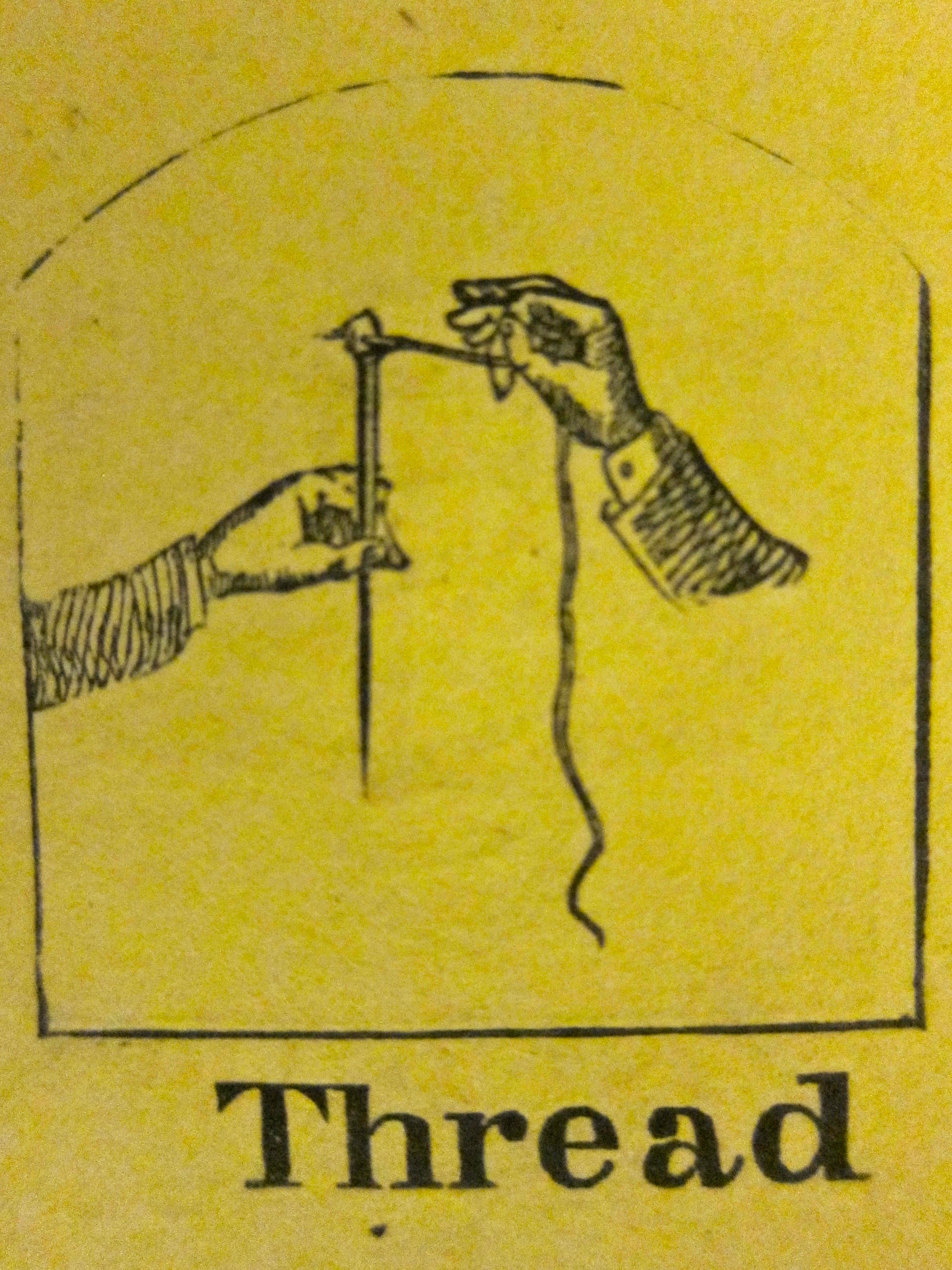
The Sewing Circle held its monthly meeting today, this time at the home of Daniel and Elvira Clark.  Roughly contemporary in age to Oakes and Evelina, the Clarks were members of the Unitarian Church.  Daniel was a carpenter who occasionally did work for the Ames family. Elvira, like Evelina, was a housewife with teenaged children.  She and Evelina visited together last Sunday during the intermission between sermons.

So much socializing went on today that Evelina had to chastise herself – “I am sure to do what I ought not” – when she spent too much time next door visiting her sister-in-law, Sarah Lothrop Ames. Sarah must have been feeling better; although she didn’t go with Evelina and Sarah Witherell to the Sewing Circle, she had improved enough not only to have a good, long chat with Evelina, but also to have an outing to Bridgewater, which she was “carried to” by her nephew Frank Morton Ames.

Evelina stopped in at Sarah Witherell’s to say goodbye to Mrs. Stetson, a friend of the family who was departing for Bridgewater, too. She then was spotted by Caroline Torrey Drake, a friend who stopped in for a visit. Mrs. Drake, a woman in her early fifties, was the mother of eight children: five girls followed by three boys.  Her first child was born when she was 20, her last child when she was 45.  Now that’s childbearing!


May 6, 1851

sweet-peas

*

May 6th Tuesday  Orinthia & I went into the flower garden

and worked some time on the beds but the

ground was very wet as it rained last night.

Robinson has painted the bedroom up stairs

over the first time. This afternoon we planted

some sweet peas and have got the beds ready for

the seeds Had Mr Swain to dine with us

Orinthia finished her school Saturday […]


Mr. Robinson was back doing work for Evelina.  He was the handyman who, earlier in the year, had spilled varnish on the parlor carpet and taken too long to paint the mantels. Either he was an affable favorite of the family or his price was right, or both, for he was back at the Ames’s, this time painting an upstairs bedroom.  Jane McHanna must have been at work, too, keeping busy with meals and chores while she waited for the sun to dry yesterday’s wash. John Swain, the new clerk at O. Ames & Sons, came for dinner.

Despite the wet ground, Evelina and Orinthia, the young teacher who had become her friend, planted sweet peas and worked the ground for seeds yet to come. Sweet peas were a popular flower in the 19th century; John Keats praised them in a stanza of his 1817 poem “I stood tip-toe upon a little hill:”

Here are sweet-peas, on tip-toe for a flight:

With wings of gentle flush o’er delicate white,

And taper fingers catching at all things,

To bind them all about with tiny rings.

The flowers were fragrant, delicate-looking but hardy, and slow to germinate.  Evelina and Orinthia probably placed them in a sunny spot in the beds. Did they need a trellis? Did the ladies wear gloves as they worked, or did they just dig into the dirt? Evelina, at least, probably wore some kind of protection, as she wasn’t at all fond of chaffing her hands.


*sweetpeas, landlund.com

May 5, 1851

Laundry


Monday May 5th  Made some sponge cake this morning

& swept & dusted rather more than usual Jane washed

the clothes and put them out without rinsing & let

the hard rain come on them. Has been a driving

storm all the […] day Mrs Stetson & Mrs

George [Ames] were here to tea Harriet was taken sick

and went to bed. Charles Mitchell came to see

her in the stage[…]

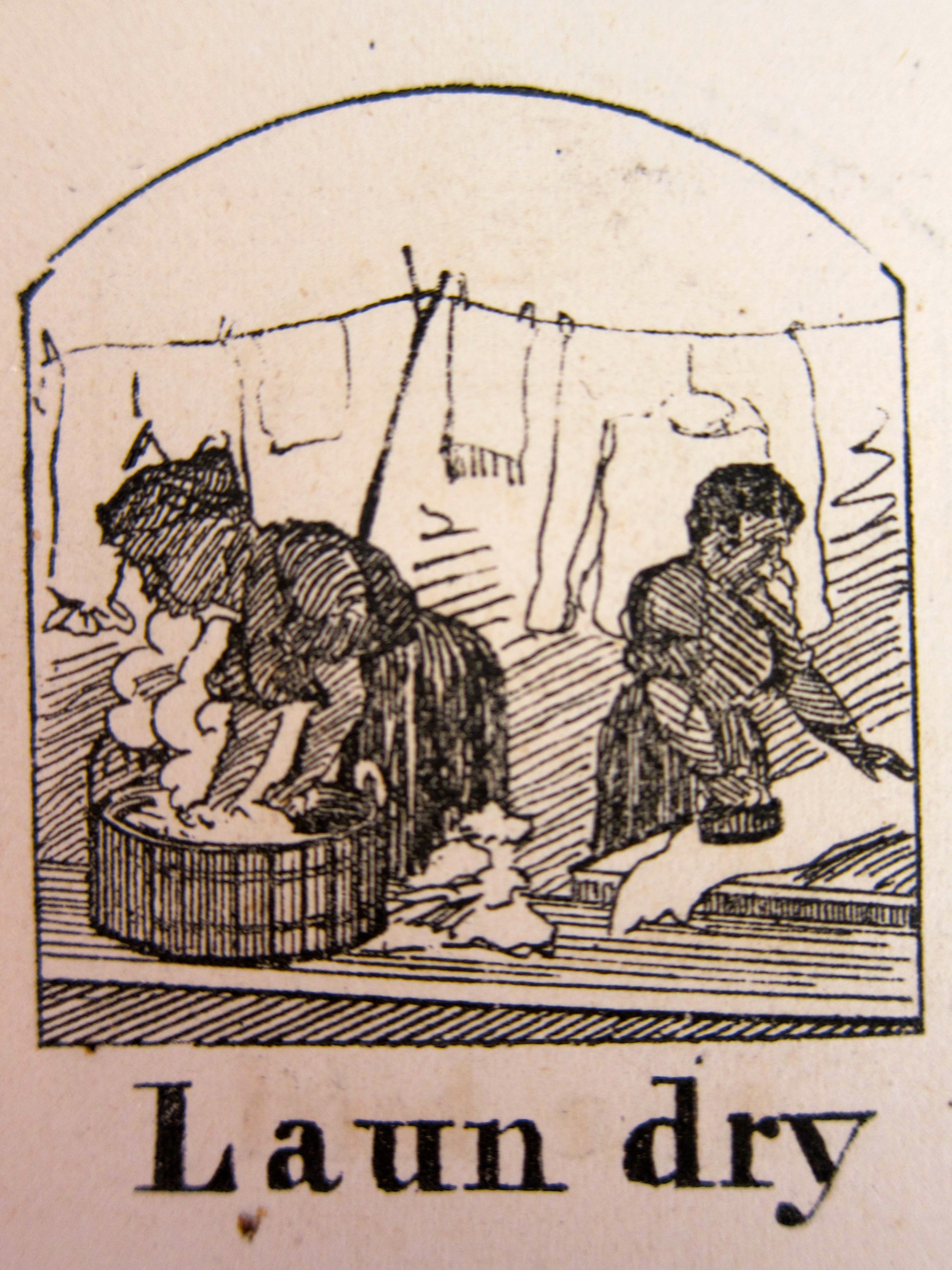
Jane McHanna had an idea this morning.  If nature was going to keep throwing stormy weather at her on Laundry Day, she’d make it work for her rather than against her. Instead of rinsing them herself, she hung those towels, shirts and all else outside and let the rain rinse the suds off. The “hard rain” saved her some tub time, although hanging those heavy clothes with the suds still on them couldn’t have been easy work.

Meanwhile, Evelina stayed indoors sweeping, dusting and doing some light baking.  Instead of firing up the brick oven, she probably baked her sponge cake right in a tin stove that she most likely had in her kitchen.

Sponge cake was a dessert whose recipe the Puritans brought over from England.  In western cooking, it was one of the earliest iterations of a yeastless batter. Mary Peabody Mann wrote in her 1858 cookbook, Christianity in the Kitchen, that sponge cake “if made right, is the least injurious of any form of cake, because it contains no butter.”  She cautioned, however, that “it is very difficult to make it good.  Eggs must be perfectly fresh, in the first place. They should be kept in cold water the night previous, and the whites should be beaten in a cool place, separately, and to a thick froth, with a cork stuck cross-wise upon a fork, and without stopping once.” Sarah Josepha Hale, meanwhile, in her 1841 The Good Housekeeper, offered her own admonishment that cakes, “those tempting but pernicious delicacies [,are]…to be partaken of as a luxury.”

The man who called on the ailing Harriett Ames Mitchell was her brother-in-law, Charles, who had once lived with Harriett and Asa in Cambridge, before they moved to western Pennsylvania. Charles, younger by several years, was a good friend of the family. Mrs. Stetson was also a friend of the family and Almira Ames was a cousin. Everyone sipped tea while rain fell on the roof, the road, the garden and the white, wet laundry.


May 4, 1851


Vintage Ad for 1887 Brecks Seed Catalog (Original)

*

May 4th Sunday  Went to church this morning and at

intermission called with Mother at Mr Whitwells

Mrs Daniel Clark went with us Heard two good

sermons from Mr Whitwell. Orinthia went

in the afternoon, staid at home this morning

Have been reading since church in the book of

flowers & called in the other part of the house

to see Mrs Stetson who came Friday night


The Flower Garden or Breck’s Book of Flowers is probably the book to which Evelina gravitated on her return home from church.  Its subtitle was “In which are described all the various hardy herbaceous perennials, annuals, shrubby plants, and evergreen trees, desirable for ornamental purposes, with directions for their cultivation” and it probably took her mind away from Reverend Whitwell’s sermons. Written by Joseph Breck, head of an eponymous gardening firm, the “book of flowers” was published by J. P. Jewett of Boston and was immediately popular. It met a need among a burgeoning population of female gardeners like Evelina who were happily creating “parlor gardens” for their homes.

Naturally, women had gardened before the nineteenth century, but earlier gardens, at least of the kitchen variety, were generally planted for culinary or medicinal purposes. Flower gardens existed, certainly, but tended to be presented within a larger landscape that was most often designed by men. Female participation in gardening was a more recent phenomenon, promoted assiduously by landscape designers like Andrew Jackson Downing, authors such as Englishwoman Jane Loudon, taste-setters such as Sarah Josepha Hale, and commercial gardeners like Breck. All were guided by “the nineteenth century urge for the beautification of the American home and its surroundings.”**

The Church, too, latched on to the fashion for flower gardening. As Godey’s Lady’s Book counseled, women needed to “[s]tudy the flowers and behold the wisdom, the goodness and mercy of the Almighty.” *** According to a diary kept by Oliver Ames, Jr., Easton’s own Reverend William Chaffin, a few years later, drew an appreciative “analogy between the cultivation of the Garden and of the Spiritual nature.” Religion was to be found among the pinks and pansies.


* Catalogue for Joseph Breck & Sons, 1887

** Ann Leighton, American Gardens of the Nineteenth Century, 1987

*** Godey’s Lady’s Book, May 1851


May 3, 1851

_O7J0613


*

May 3d Saturday  Early Orinthia & I went to work on the flower

beds to lower them.  We cut the center bed down

about three or four inches and have got some of

the others done I worked most all the forenoon

moving plants Have been to N Bridgewater this

afternoon with O A & Frank Have engaged 

a new bedstead for my chamber and a small one

or a lounge in the dark bedroom  


Although we don’t know how Evelina arranged the flowers in her garden, she gives us a clue today about the overall formation of her plantings.  She and Orinthia Foss worked on a central bed with other beds placed around it.  This kind of design was very common in the 18th century and into the 19th. It could well have been the pattern of a garden that Evelina’s mother-in-law, Susannah Angier Ames, might have started in the yard.  Susannah had died five years earlier; Evelina could have inherited the design and was in the process of making it her own. Sarah Witherell, her sister-in-law who lived in “the other part of the house,” was apparently less interested in gardening than Evelina, so Evelina made most of the decisions about the flower beds on the property.

Any good gardener knows that personal flower gardens are as unique as snowflakes.  No one is exactly alike. Even a repetitious scheme with a central bed surrounded by a formation of other beds will differ from gardener to gardener.  Some central bed gardens have each bed replicate the plantings in the other beds, so that a particular pattern of flowers is repeated.  Other central gardens, such as the John Jay garden in the illustration above, feature different groupings in each square.

How did Evelina approach her garden?  We might guess that her taste was broad and reactive rather than predetermined.  She planted a wide variety of flowers, so her garden undoubtedly featured a sampler of colors, shapes and textures.  Certainly, her taste was less formal than her sister-in-law, Sarah Lothrop Ames.  At their property next door, particularly after they built their new house in 1863, Oliver Jr and his wife hired a gardener and cultivated more modern Victorian plantings. Their gardens were probably less rambunctious than Evelina’s, featuring formal walkways, lengthy borders and other haute designs.  Anyone who knows their house, Unity Close (which still stands today), will know that later generations of Ameses, under the guidance of landscape architect, Fletcher Steele, built upon that landscape.

On another front entirely, Ralph Waldo Emerson gave a speech today in Concord on abolition.  That speech is in the collection of the Concord Library, should anyone care to track it down.**


*18th-19th c. garden at John Jay Homestead Historic State Park, New York, from themarthablog.com

**concordlibrary.org/scollect.Emerson_Celebration/Em_Con_39.htm/ 

May 2, 1851

1528

Globe Amaranth

1851

May 2nd Friday.  Susan started with several other children

about 6 Oclock maying and did not get back

untill half past nine.  They went over three miles

to the “West Shire”  I made cake & ginger snaps to

bake with Mrs Witherell. Jane made some pies and 

bread.  Mr & Mrs Whitwell and Mrs William Reed

called. Afterward planted some globe seed and 

carried my stockings to mend in the other part of the house

Today’s good weather gave Susie Ames and her friends the opportunity they missed yesterday. Leaving early in the morning, they walked west to deliver May baskets to friends and family, or perhaps even to strangers. It sounds as if the children walked a long way on their little legs. Readers in Easton, where exactly is the “West Shire?”  By the Bay Road?

Baking was in order today. Evelina and her sister-in-law Sarah Witherell baked cake and ginger snaps, while Jane McHanna prepared the usual pies and brown bread. Did the children get any ginger snaps when they returned home? Certainly, Reverend and Mrs. Whitwell would have been offered some to eat, as would Abigail Reed, wife of the Reverend William Reed. Guests who dropped in, whether or not they were expected, were always offered refreshments such as tea and fruit or biscuits. Cider was a common refreshment, too, but not at the Ames’s house; it was too close to alcohol.

Once the guests had departed, Evelina went out to her garden and began to plant globe seed. Did she have a specific plan in mind for the garden, or was her planting haphazard and spontaneous? If she consulted any of the publications she read, like The Massachusetts Ploughman, or the ladies’ periodicals, she probably found suggestions for arranging her flower beds.