July 27, 1851


220px-CaptureOfKingPhillipsFort

*

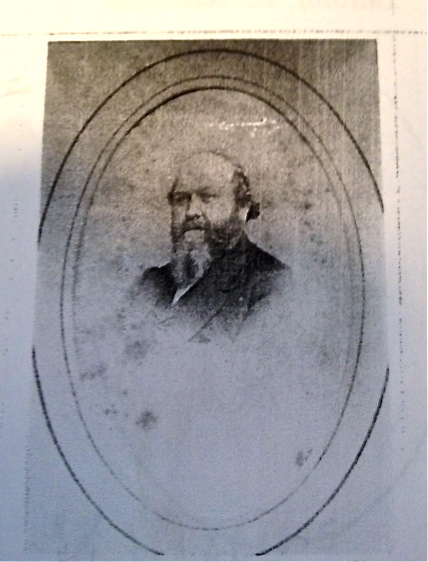
Saturday July 27th  Mr Ballou of Stoughton preached to day

Two young men natives of Nova Scotia were drowned

last night in the Hockemock Meadow  They were […]

working for brother Alson and at night went to the

river to bathe and it is supposed got into deep water

and could not swim  Oliver went to Stoughton for Mr Whitwell

to be in season for the funeral at 5 Oclock  We all went

to the funeral and carried Mr Whitwell

The Hockomock Swamp is a vital wetland of some 17,000 acres in southeastern Massachusetts, a minor portion of which occupies a southernmost section of land in Easton – land not far from the Gilmore farm.  It’s an ill-omened, storied spot, known today as part of the”Bridgewater Triangle,” so-named in the 20th century as a location for UFO sightings, ghost lights, foxfire, animal mutilations and the like. A “place where spirits dwell,” the Wampanoag Indians called it, and they would know. Much of King Philip’s War, in the late 17th century, was fought in the environs of the Hockomock. Metacomet hid there.

In the late 18th and 19th century, when it was known by many as The Great Cedar Swamp, some people were less superstitious about the area, eyeing it for its potential as arable land. The towns of Raynham and Easton butted heads over the construction of a road through it. According to historian William Chaffin, Evelina’s own father, Joshua Gilmore, “was going on a footpath through the swamp one day with his wife, carrying a little child in his arms[.] Mrs Gilmore was speaking of the difficulty of the passage, and her husband replied that some day the child would ride through the swamp in a carriage; and the idea struck her as so essentially preposterous that she had a hearty laugh over it.”** (It would be wonderful if the child in the story were Evelina, but the likelihood is that the child was an older sibling.)

It’s ironic that in 1851, two young farm hands who were working for Evelina’s own brother, Alson Gilmore, went for a swim in the “Hockemok Meadow” after work and drowned, adding their tragic story to the swamp’s paranormal reputation.


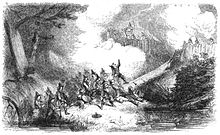
* Engraving of the Great Swamp Fight in 1675, the colonists versus the Narragansett Indians

** William Chaffin, History of Easton, 1866, pp. 454-455.


June 29, 1851

portrait of yoiung man yawning

 *

1851

June 29th Sunday  Went this forenoon to meeting

came home again did not feel like going

back again as it [was] very warm and I was very

sleepy and thought I might as well sleep at 

home as at church  After meeting at night

Mr Ames & I walked to Mr Peckhams to see

Mrs Swain.  She is a very pleasant woman I

should judge.

Small wonder that Evelina nearly fell asleep in church this morning. Reverend Whitwell’s sermons usually held her attention, but she was tired. She’d been busy all week, augmenting her usual chores and interests with a visit from her brother, John. On top of the emotional excitement of that rare reunion, she went to Boston yesterday, an excursion that typically delighted and exhausted her at the same time. She needed a nap.

Late in the day, evidently refreshed, Evelina and Oakes walked to the home of John and Susan Peckham. Mr. Peckham served as clerk for the Ames Shovel works, but was preparing to move away with his young family.  Replacing him, apparently, was the new clerk, John H. Swain. Evelina had already met Mr. Swain when he dined with them back in May. Tonight she met his wife, Ann, who made a favorable impression. The two families would become close over the years.

 * Photographer Unknown; portrait of a young man, yawning; ambrotype; ca. 1854; George Eastman House, Donald Weber Collection


June 22, 1851


strawberry

1851

Sunday 22nd June  Have been to meeting to day Heard two

very good sermons from Mr Whitwell  Mother came

home with us to spend a few days.  Since meeting

mother Mr Ames & myself rode to the ponds and to 

Mr Manlys garden  Mother was delighted with her ride

seemed to enjoy it as much as a child  When we

returned we found Emily sick  She is very much

out of her head  Dr Deans called but did not come in

Went to Mr Horace Pools at noon for strawberries


“Doubtless, God could have made a better berry, but doubtless God never did,” was a well-known remark about strawberries made in the 17th century by William Butler. Unlike today, when modern agriculture has developed a system that brings us strawberries any time of year, in 1851, the fruit was still strictly seasonal and short-lived. Strawberry season was much looked forward to.

Horace and Abby Pool evidently had a good strawberry patch at their home in south Easton, to which they invited a few fellow parishioners during the intermission at church.  Had the strawberries already been picked, or did folks wander through a strawberry patch in their Sunday finest, a la Emma Woodhouse at Donwell Abbey? Was the fruit served with cream and sugar, or taken home to be eaten later?

The fine day continued after church when Oakes and Evelina took old Mrs. Gilmore for a ride north to see the ponds and visit Edwin Manley’s garden. On a less delightful note, Sarah Witherell’s daughter, Emily Witherell, suddenly took sick. “Out of her head,” Evelina described her, suggesting perhaps that Emily had a high fever. The doctor was called.

June 20, 1851

OLYMPUS DIGITAL CAMERA

20 June Friday.  Worked in the garden after breakfast until

half past eight.  After getting things in order for

dinner went to work on the hair cloth cover again

untill about two Oclock when Amelia & Samuel

came.  Mr Whitwell called and we had quite

a pleasant chat  Sent Samuel for Abby and

she came to tea and staid untill nine

The last few days have been very pleasant


As previously noted, Evelina was one of eight children.  Five of her siblings were deceased by the time she was writing in this diary, including her younger brother, Joshua Gilmore Jr.  He had died about two years earlier at age 35.  Today, his widow Amelia and one of their two living sons, Samuel Gilmore, came to visit.

No longer having a home of their own, assuming they had had one before Joshua died, Amelia and Samuel boarded with the Algers, a farming family in the south eastern quadrant of Easton, near the Gilmore farm.  They stayed with the Gilmores, too, from time to time while an older son, Charles (all of twelve years old,) may have hired out to another farm.  Amelia, presumably left without much income after her husband died, worked occasionally as a nurse, staying with families in households where someone was chronically or terminally ill.

What happened to young widows, or old widows, for that matter, when they found themselves bereft? For many, the former assurance of house or farm was threatened and lost. Some women remarried and regained footing and security with a new husband and his relatives.  Those women who didn’t remarry had to rely on their own relatives, their late husband’s relatives, and their own skills. In an age when few women were employed outside the home, survival could become a real challenge.


June 17, 1851

DSCF1590small

1851 June 17th  Worked untill about nine Oclock in

the flower garden  Then cut the tick to the mattress

a[nd] basted it ready to make  Jane was ironing and 

I assisted about dinner  After dinner made three button

holes in Mrs S Ames dress.  Went to Mr

Wm Reeds to tea with Mr Ames, Oliver & wife

Mrs W, Mitchell & Mr & Mrs Whitwell & Alson & wife


Gardening, sewing, ironing and cooking made up today’s housework at the Ames’s home on Main Street.  Buttonholes, too, which could be challenging, were a particular specialty of Evelina; many people brought her their buttonholes.  The fact that Sarah Lothrop Ames took her buttonholes to Evelina rather than to a hired dressmaker underscores Evelina’s talent in this department.

William and Abigail Reed must have enjoyed Evelina’s company on Sunday between services, for they invited her back to a small tea party.  The whole Ames family was invited, in fact, and then some. Minus Old Oliver, and the young people, naturally, siblings Oakes, Oliver Jr., Sarah Witherell, and Harriett Mitchell, with wives Evelina and Sarah Ames, gathered at the old professor’s home for a “cuppa.” Reverend William Whitwell and his wife, Eliza, went too, as did Alson and Henrietta Gilmore. That was a good crowd for a 19th century parlor.

Tea was generally the most sociable meal of the day.


June 12, 1851

photo

Alson Augustus Gilmore

June 12th Thursday  Jane quite unwell and went off to

bed after breakfast, after dinner quite smart

Bridget came about nine & we finished our

ironing  Howard & Clark sent over my cottage

bedstead &  put Castors on the bedroom chamber

bedstead  I have made my front chamber 

bed clean & put clean window curtains &

valance  Mr Whitwell called.  I called at Mrs Lakes


Evelina did housework today, with qualified help from an ailing Jane McHanna and a big hand from Bridget O’Neil, who had been working for Evelina quite a bit lately.  On the social scene, reliable Mr. Whitwell paid a visit, and Evelina went out to see a friend, Mrs. Lake.

This day marked the birthday of Alson Augustus Gilmore, son of Alson Gilmore and his late, first wife, Rachel Alger Gilmore. Known as Augustus, the 29-year-old was a frequent visitor to the home of his Aunt Evelina and Uncle Oakes. As we have seen throughout this winter of 1851, he had worked periodically for the Ames brothers – Oakes and Oliver Jr. – and taken many a midday meal at Evelina’s dining room table.

In 1851, Augustus appeared to be settling back into life in Easton, after having taught school elsewhere for several years. He brought with him his expectant wife, Hannah, and two-year old son, Eddie; the family settled into temporary quarters while Augustus scouted for some property on which to build a house.  He, his cousin Oakes Angier Ames, and another man, Elisha Andrews, started a boot-making factory.

A successful small-town life lay ahead for Augustus. Not only would he be involved for twenty years in the shoe-making trade, but he would continue to work for his Uncle Oakes as well.  A valued ally, he would courier important documents and mail for the Ames enterprises. Well known around town, Augustus served as a “model moderator […] in twenty-four annual town meetings, and seventeen special town meetings, besides other public assemblies.”*  He was also active in the Unitarian Church and remained close to his Ames cousins throughout his life.

* William Chaffin, History of Easton, 1886

June 8, 1851

IMG_0139 2

June 8th  Have been to meeting all day  Heard Mr Dogget

of Ashby did not like him near as well as Mr.

Whitwell.  Came home at noon with Alson & wife.

Oakes Angier & Orinthia went to night to call on

Miss Perkins at Mr J Kimballs.  Mr Ames & self

called at Mr Peckhams.  It has been a cold cloudy

day for the season and to night rains some.


Today was a normal Sunday in Easton, which the Ames family spent at church listening to Mr. Dogget, a visiting preacher who probably had no chance of being as good as Reverend Whitwell, at least in Evelina’s eyes. After church Evelina and Oakes called on John Peckham, a clerk at the shovel works, and his wife Susan.

Things may have been more lively next door at the home of Sarah Lothrop and Oliver Ames, Jr. Their oldest child and only son, Frederick Lothrop Ames, turned 16 years old today. He may have been at home to celebrate, or he may still have been away at school.  Fred was just finishing a year of college preparatory study at Phillips Exeter Academy. Prior to that, he had studied at Concord Academy.  Young as he was, he and his parents expected his next year to be spent at college.

A brilliant business career lay ahead for Fred Ames. By all accounts, but best described by his personal friend Leverett Saltonstall, Frederick Lothrop Ames, “distinguished by his high character, was well known as one of the largest capitalists in the country.”* Not only was Fred a capable member of the management team of O. Ames & Sons, he was, like his father, an active investor and eventual director of the Union Pacific Railroad. He became a strong, competitive railroad man. At the time of his death in 1893, he was “officially connected to some seventy-five railroads,” and held oversight or investment positions in many other enterprises: banks, coal mines, elevators, and an innovative young company called General Electric.

Clearly capable in the world of business, Fred Ames was also a likeable fellow. “No one ever met him without being impressed by his uprightness, intelligence, and good judgment.” “A most kind and generous man,” he donated to and oversaw various charities and hospitals. He reportedly led a happy family life in North Easton and Boston, and created a lasting legacy through his support of the architecture of H. H. Richardson. “A devoted lover of horticulture,” also, he had a famous collection of orchids.

A star among the grandchildren of Old Oliver and Susannah Angier Ames, Frederick Lothrop Ames died too early, dropping of apoplexy – what we would now call a stroke – on the overnight train to New York. He was 58 years old. His legacy would live on.


* Leverett Saltonstall, Memoir of the Hon. Frederick Lothrop Ames, A.B.,  The Colonial Society of Massachusetts

May 25, 1851

Cemetery


25 May Sunday  Have been to church all day. Went to Mr

Whitwells at noon with Mother and Mrs Whitwell

made us take a cup of tea Also Mrs Elijah Howard & Miss

Louisa H.  Had quite a spirited chat about Mr

Wm Reed & Mr Dean. After meeting Mr Ames & Oliver

& wife rode to the burying grounds  Cannot 

feel reconciled to having it where it is. Oakes A Susan

& Orinthia went to a sing & Oakes carried Orinthia home.


A cup of tea and good, “spirited chat” among the women during intermission brightened Evelina’s Sunday.  Who were Mr. Reed and Mr. Dean that they evoked such consideration from the female population?  There were several men of either name who lived in Easton at the time.

When church was over, Evelina, Oakes, Oliver Jr. and Sarah Lothrop Ames drove together to look at the new cemetery in South Easton. Created by the Easton Cemetery Corporation, it was one of almost thirty graveyards in the town.  For reasons lost to history, this newest burial-ground had been deemed desirable and consequently established by men well-known to the Ameses, including Elijah Howard and Dr. Caleb Swan.  Perhaps their intention had been to create at burial place that would be tended to as time passed, as many smaller, family graveyards throughout the town were not. Perhaps they were responding to personal inclinations to group Unitarians together for eternity.

Whatever the thinking behind the new burial-ground, Evelina was dubious.  Did she look at it and think she and Oakes might be buried there someday?  Did she wish instead to be buried near her son Henry, wherever that was? Or did she think of another graveyard where her father and certain siblings were buried? Little could she imagine that twenty-five years hence, the Village Cemetery of North Easton would be created behind a Unitarian Church that hadn’t yet been built, both projects funded by Oliver Jr, and that there she, her husband, and all her children would eventually be laid to rest.


May 4, 1851


Vintage Ad for 1887 Brecks Seed Catalog (Original)

*

May 4th Sunday  Went to church this morning and at

intermission called with Mother at Mr Whitwells

Mrs Daniel Clark went with us Heard two good

sermons from Mr Whitwell. Orinthia went

in the afternoon, staid at home this morning

Have been reading since church in the book of

flowers & called in the other part of the house

to see Mrs Stetson who came Friday night


The Flower Garden or Breck’s Book of Flowers is probably the book to which Evelina gravitated on her return home from church.  Its subtitle was “In which are described all the various hardy herbaceous perennials, annuals, shrubby plants, and evergreen trees, desirable for ornamental purposes, with directions for their cultivation” and it probably took her mind away from Reverend Whitwell’s sermons. Written by Joseph Breck, head of an eponymous gardening firm, the “book of flowers” was published by J. P. Jewett of Boston and was immediately popular. It met a need among a burgeoning population of female gardeners like Evelina who were happily creating “parlor gardens” for their homes.

Naturally, women had gardened before the nineteenth century, but earlier gardens, at least of the kitchen variety, were generally planted for culinary or medicinal purposes. Flower gardens existed, certainly, but tended to be presented within a larger landscape that was most often designed by men. Female participation in gardening was a more recent phenomenon, promoted assiduously by landscape designers like Andrew Jackson Downing, authors such as Englishwoman Jane Loudon, taste-setters such as Sarah Josepha Hale, and commercial gardeners like Breck. All were guided by “the nineteenth century urge for the beautification of the American home and its surroundings.”**

The Church, too, latched on to the fashion for flower gardening. As Godey’s Lady’s Book counseled, women needed to “[s]tudy the flowers and behold the wisdom, the goodness and mercy of the Almighty.” *** According to a diary kept by Oliver Ames, Jr., Easton’s own Reverend William Chaffin, a few years later, drew an appreciative “analogy between the cultivation of the Garden and of the Spiritual nature.” Religion was to be found among the pinks and pansies.


* Catalogue for Joseph Breck & Sons, 1887

** Ann Leighton, American Gardens of the Nineteenth Century, 1987

*** Godey’s Lady’s Book, May 1851


May 2, 1851

1528

Globe Amaranth

1851

May 2nd Friday.  Susan started with several other children

about 6 Oclock maying and did not get back

untill half past nine.  They went over three miles

to the “West Shire”  I made cake & ginger snaps to

bake with Mrs Witherell. Jane made some pies and 

bread.  Mr & Mrs Whitwell and Mrs William Reed

called. Afterward planted some globe seed and 

carried my stockings to mend in the other part of the house

Today’s good weather gave Susie Ames and her friends the opportunity they missed yesterday. Leaving early in the morning, they walked west to deliver May baskets to friends and family, or perhaps even to strangers. It sounds as if the children walked a long way on their little legs. Readers in Easton, where exactly is the “West Shire?”  By the Bay Road?

Baking was in order today. Evelina and her sister-in-law Sarah Witherell baked cake and ginger snaps, while Jane McHanna prepared the usual pies and brown bread. Did the children get any ginger snaps when they returned home? Certainly, Reverend and Mrs. Whitwell would have been offered some to eat, as would Abigail Reed, wife of the Reverend William Reed. Guests who dropped in, whether or not they were expected, were always offered refreshments such as tea and fruit or biscuits. Cider was a common refreshment, too, but not at the Ames’s house; it was too close to alcohol.

Once the guests had departed, Evelina went out to her garden and began to plant globe seed. Did she have a specific plan in mind for the garden, or was her planting haphazard and spontaneous? If she consulted any of the publications she read, like The Massachusetts Ploughman, or the ladies’ periodicals, she probably found suggestions for arranging her flower beds.