July 2, 1852

VN-24.3L


Friday July 2d  Sewed on Susans clothes & new strung

her coral necklace then went to transplanting

moss pinks and work untill noon  The gardener

has hoed & weeded my flower garden  This afternoon 

went into school with Mrs Witherell.  Mr Brown & Miss 

Clark have closed  The school appeared well.

After school went into Edwins to tea  Augustus

& wife were there came home & made a boquet of flowers


The day was sunny and windy and Evelina took advantage of practically the whole morning to work in her flower beds. She transplanted flowers with relative ease because a hired gardener had “hoed and weeded” everything for her. Wasn’t she lucky! Plus she had blossoms enough at the end of the day to arrange a “boquet” for the house.

Evelina also did some sewing for her daughter. Of particular interest is that Evelina restrung a coral necklace belonging to the girl. Susie was fortunate to own such a necklace; coral was a popular gemstone, and had been for centuries. It was colorful, exotic and could hold a high polish. By this era in fashion, such a necklace was usually sold as part of a set, suggesting that Susie may have owned a pair of coral earrings or a brooch as well. Earrings had increased in popularity as hair styles were lifted off the ears to expose the lobes, but Susie seems a little young to wear a set. Perhaps not. Having jewelry to wear was, obviously, a sign of wealth and status.

Yet Susie was still a schoolgirl, coral necklace or no, and this afternoon, school let out for summer. Susie and her cousin, Emily Witherell, were free of lessons for the time being, and they were probably happy about it. Evelina and Sarah Witherell went to the school, perhaps to get a report from the teachers or simply to acknowledge the occasion with their daughters and bring them home.


June 29, 1852

22633861_126751003919

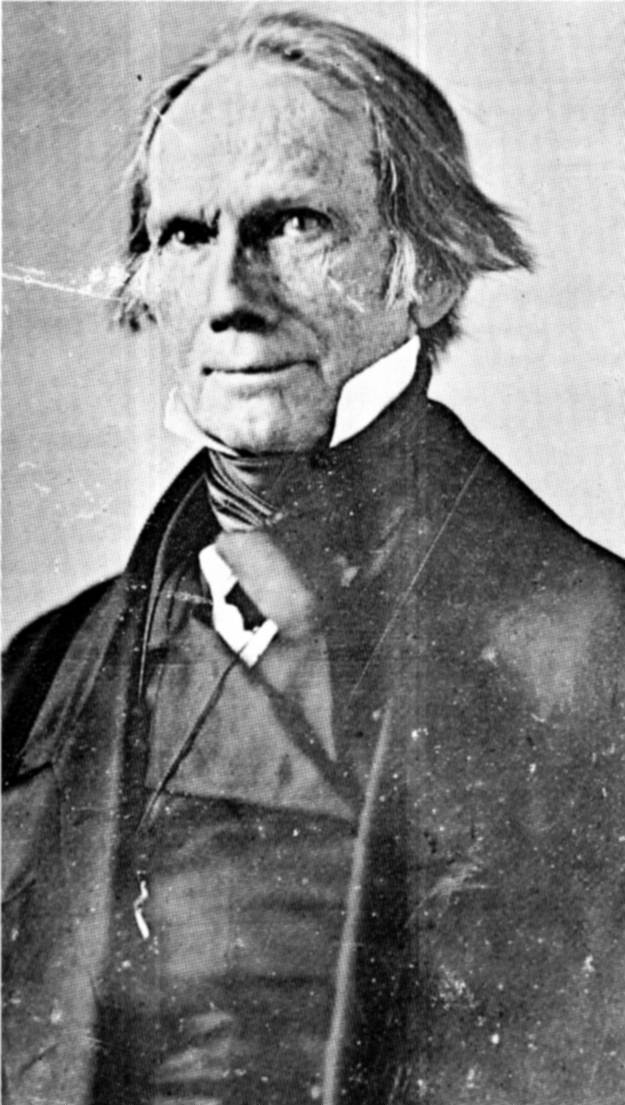
Henry Clay

(1777 – 1852)

1852

Tuesday June 29th  Have had a quiet […] sick day  have

a bad cold & cough and sick head ache

A gentleman here from Pennsylvania

to dine but I did not go to the table

Mr Bartlett here to tea from Maine

Augusta came in and cut her out a

visite & I have written to Melinda to

get some trimming for it  Ottomans came

from Boston

Evelina was sick and probably spent most of the day in bed. She didn’t eat much, missing midday dinner – with company – and possibly skipping tea, too. Perhaps she took a tray of food in her room. She must have begun to feel a bit better, however, as she eventually roused herself to cut out a “visite” for Augusta Gilmore, who came over at the end of the day.  She even wrote to her friend Melinda Orr, in Boston, to find some trim. She could get animated about a sewing project, though not much else appealed to her today.

It was “a fair warm day + verry dry,”* and probably “verry” good for the haying that was underway. Old Oliver and a team of hands would have been outdoors from sunup to sundown.

In the world beyond North Easton, a consummate, outspoken and controversial politician passed away today: Senator Henry Clay of Kentucky, aged 75, died in Washington D. C., of consumption. The Ameses wouldn’t have known this, however, until they read the next day’s newspapers. But most likely they admired Clay, the “Star of the West,” and the founder of the Whig Party. Clay’s biggest opponent back in the day had been Andrew Jackson, who called Clay “the Judas of the West.”  One imagines that Oakes Ames had probably been on the side of Clay’s admirers.

*Oliver Ames, Journal, Stonehill College Archives, Arnold Tofias Collection

June 28, 1852

Haymaking

1852

Monday June 28th  Have been about the house at

work most of the day  Swept most of the 

house except the parlour.  washed the

front stairs and have the house in pretty

good order  Mrs S Ames came in with her 

work and stoped an hour or two something

unusual for her  Hannah came to spend 

the evening but I had gone into Edwins and

she went in to see Mrs Witherell


Either Evelina felt better this morning, or her habit of working simply wouldn’t let her be idle. In the course of the morning, she swept most of the rooms and washed the stairs while her servant – Hannah Murphy, most likely- did the laundry and prepared the midday dinner. In the afternoon, Evelina at last sat down. Sarah Lothrop Ames came over – “something unusual for her” – and they visited and sewed together. Evelina was usually the one who went next door, not the other way around. In the evening, Evelina even felt well enough to go across the street to see Edwin and Augusta Gilmore.

The highlight of the day, however, had to be the commencement of haying. Old Oliver reported that “this was a fair warm day wind south west + verry dry We begun haying to day.”*  The calendar may have indicated that summer had barely begun, but everyone knew that fall and winter lay ahead. That hay would be essential. And now that haymaking had begun, perhaps Old Oliver would be less irritable with his family members.


Oliver Ames, Journal, Stonehill College Archives, Arnold Tofias Collection

June 25, 1852

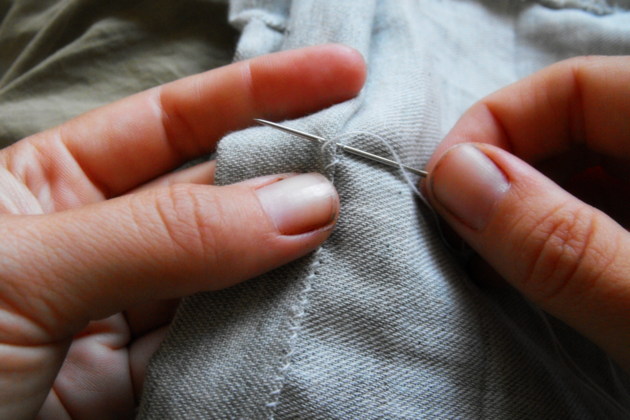
hand-sewing-color-grown-cotton-pajama-pants-for-a-toddler

1852

June 25 Friday  Worked about house all the forenoon 

but can scarcely tell what I was doing but

know I wasnt idle. This afternoon have

been mending different articles Hannah

mended the stockings.  I hope she is going 

to be a pretty good girl.  Mr Whitwell called

Called at Edwins this evening  Augustus & wife

Edwin & Elisha Andrews gone to Alsons


New servant Hannah Murphy was “pretty good” today helping Evelina mend the family stockings. Mending was never Evelina’s favorite duty.  She often put it off, preferring instead to head for the garden or slip next door to chat with one of her sisters-in-law. But what she seemed to prefer most of all was to sew. Cutting cloth for a new dress, or refashioning a waist in an old one, finding just the right trim for her sleeves, or making multiple buttonholes, such was her passion. Evelina loved to sew.

If Evelina had lived today rather than in the 19th century, would sewing still have been her favorite occupation? Freed from her domestic obligations as a 19th century housewife, and no longer in the thrall of the patriarchal laws and mores of the day, what could she have accomplished?  She was so tactile that it’s hard to imagine her abandoning her needle, or not using her hands. Might she have become a textile artist? A craftsperson? Or had a career in fashion?

We know that Evelina was hardworking; as she herself points out, “I wasnt idle.” Whatever career we might imagine for her to excel in, she would have committed to it as surely as she did to her domestic agenda in the 1850s. Yet the fantasy of transporting Evelina to the 21st century ultimately falls flat.  She was too much a creature of her own time and place, as we all tend to be, and not unhappy with her lot in life – even while mending.


June 22, 1852

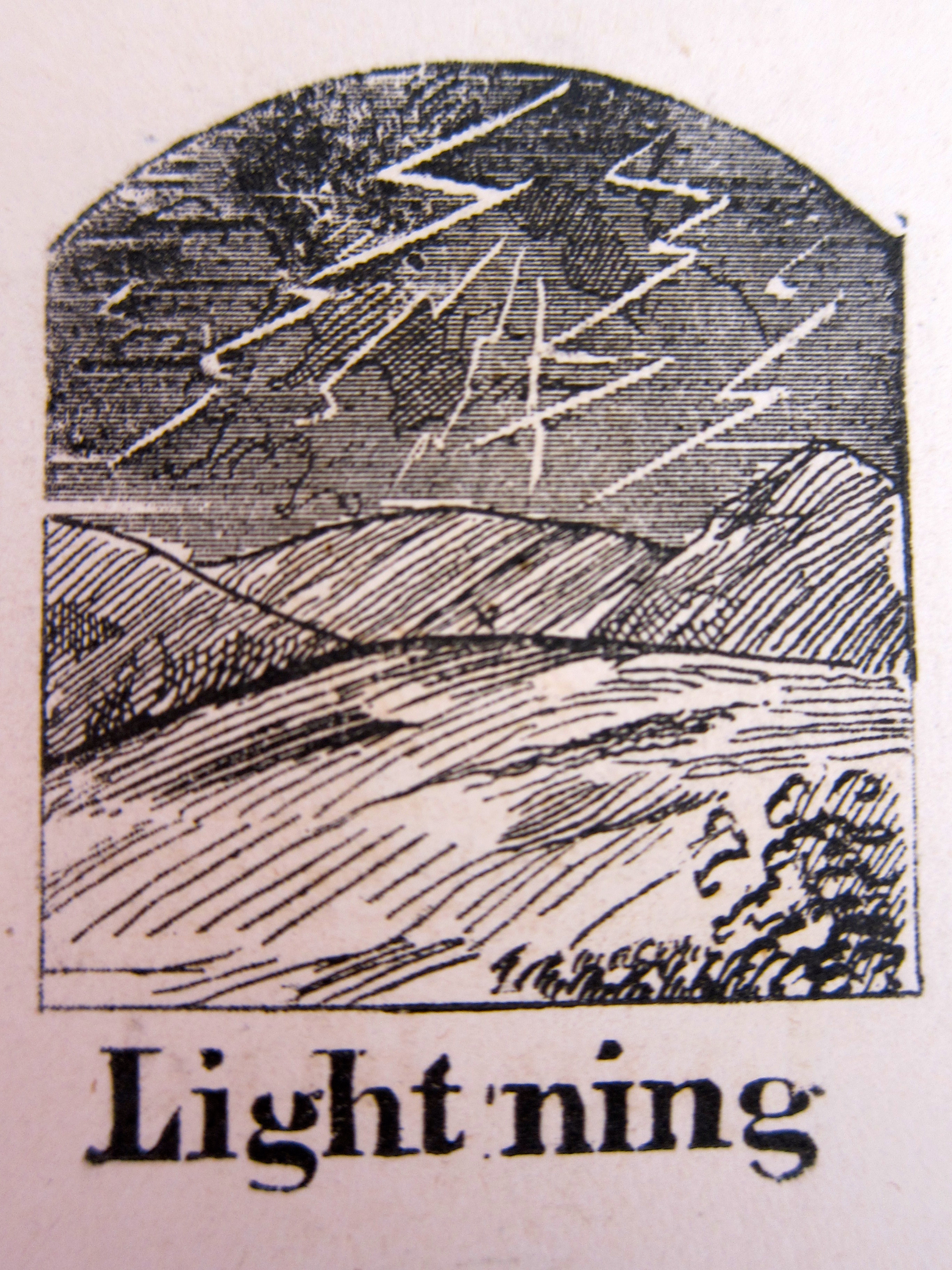
Lightning

1852

Tuesday June 22d  Worked in the garden again this

morning untill about ten.  My garden

takes up quite too much of my time.  This afternoon

carried my work into Olivers.  Sewed the skirt

on to my brown muslin and worked some on the waist

of my purple cambric dress  Catharine here again

to day but it is of no use for me to have her.  Have had

a very heavy shower with thunder & lightning


Evelina complained that gardening “takes up quite too much” of her time, but she did seem to love it. It and sewing were her especial interests. From the two occupations, we can derive the fact that she loved many colors. She didn’t just choose one or two colors, she chose all of them. In her garden we see blossoms of pink, purple, red and yellow in many shades and sizes. In her wardrobe, too, the spectrum is broad. On this day she worked on both a brown muslin and a purple cambric dress.  Just recently, she had finished a green gingham dress, and before that there was a black silk. She had sewn pink aprons, blue silks and plaid skirts, and many of her outfits had bonnets or ribbons to match. Her taste was all-encompassing, it would seem. Did her color selection reflect the styles of the day, or her personal preferences, or both?

While the colorful garden was apparently thriving under Evelina’s careful attention, her sewing projects were not. The new servant, Catharine Middleton, who had been hired primarily to assist with sewing, was not working out. She was “of no use.”

Old Oliver, the family weatherman, was unusually chatty about today’s weather.  He was excited about the rain, but feared it had come too late for certain patches of hay. He wrote: “it was fair this forenoon + cloudy in the afternoon the wind was very high all day from the South west + towards night + in the evening there was a shower of nearly half an inch, but the grass on gravely land is to far gone to be helpt.”


June 21, 1852

images-1

1852 Monday  June 21st  Mrs Patterson & Hannah washed and 

I worked in the garden untill about ten

and was about house until two or three

Oclock  Catharine Middleton here sewing

Father has given me another jawing about

my leaving some old coats on the grass


Here in the early 21st century, a dictionary of slang defines “jawing” as being saucy or speaking disrespectfully. Not so in the 1850s, when “jawing” was slang for moralizing, or giving a lecture.  “Father Ames,” as he was known to the Ames wives, gave Evelina “another jawing” today, this time about her “leaving some old coats” outside on the lawn.  She or Mrs. Patterson or Hannah Murphy must have washed the items and left them out to dry in the sunshine without hanging them on a line.  Perhaps the women had run out of clothespins. But Old Oliver would have been concerned about possible damage to the grass, which was already vulnerable due to drought. Or perhaps he was just cross.

Old Oliver described this Monday as “a fair warm day wind south west.”  What he didn’t mention was that it was summer solstice, the longest day of the year. The earth in its orbit tilted its northern hemisphere closest to the sun at around 7:30 in the morning.  If Oliver knew it, he didn’t care, or just didn’t record it. He was watching the ground and planning to cut the hay.


June 19, 1852

manx40rimwh


A “Visite”

Sat June 19th  Have been weeding in the garden and

transplanting   Spent the afternoon in 

Olivers with Mother  Mrs Witherell & Augusta

were there awhile  Finished Susans visite

quite late in the evening  It has not been

much of a job to make if I could have sat

down steady

Evelina worked in her garden today, weeding and moving some of her plants around. After midday dinner, she and her mother, who was visiting, “spent the afternoon” next door “in Olivers,” meaning at Sarah Lothrop Ames’s. In citing Oliver rather than Sarah as the owner of the house, Evelina was only following the norm of the time, whose patriarchal laws prevented women from owning property. Sarah and Evelina lived in homes that belonged solely to the males in the family.

Old Oliver, Ames patriarch above all the rest, reported that “this was a fair day wind southerly + quite warm we have bought two yoke of cattle this weeke one yoke of N Warrin of Stoughton, 6 years old for $110 and one yoke of Thomas Ames 9 or 10 years old for $100.” He was probably buying cattle to help with the approaching hay harvest.

Once indoors, perhaps even after others had gone to bed, Evelina finished a mantle for her daughter Susie. Also known as a visite or paletot or pardessus, a mantel (or mantilla, as Evelina labeled it the previous day) was a three-quarter length cloak with pagoda or cape-like sleeves. It was often adorned with lace, ruching, and especially fringe, which was very big about this time. Many visites were unlined, which no doubt simplified the process of making them. That may be why Evelina thought the garment had “not been much of a job.”


June 18, 1852

servants


June 18 Friday Have to be around with the new girl

to show her which hinders a great deal about

my sewing  Mrs Holmes & Richardson came this morning

to get some plants and I worked a long while

in the garden and did not sew but very little 

before dinner  Abby & Miss Gurney passed

the afternoon here and carried home plants


It’s hard to tell if Hannah Murphy or Catharine Middleton, both new to the household, is “the new girl” whom Evelina accuses of hindering her sewing. After firing Jane McHanna, Evelina had to train someone new, a process for which she evidently had limited patience. She would have preferred to be working on her own projects; such was one consequence of letting Jane go.

The plus side was that Evelina had the opportunity to establish expectations and guidelines for the new servants. If she would take the time to train them, she might get excellent help around the house. She certainly hoped that the new girls would work out better than Jane had.

If the continued hot weather didn’t help her mood, at least it didn’t keep Evelina out of her flower beds. Her garden had seemed neglected of late, but the plants were growing just fine and she had many to give away. Her niece Abby Torrey and a friend, Miss Gurney, visited for a few hours and went home with a few flowers, as did Mrs. Holmes and Mrs. Richardson earlier in the day.

June 17, 1852

image004

June 17th Thursday  Have cut Susan a mantilla this

morning and basted it ready to make and 

have been mending some.  Mother is at Mr

Torreys to day staid there last night  It

is rather cooler to day and this afternoon

had a fine shower  Catharine Middleton

here but she is not worth much to sew

A new servant, Catharine Middleton, was proving a disappointment to Evelina. Catharine’s sewing skills were “not worth much;” Evelina wanted someone with more ability.  Evelina was hard to satisfy in the sewing arena. She was so very good at it herself that most young women of average ability would have fallen short, unable to survive the scrutiny of a woman famous for her buttonholes.

Outside the busy house, construction ran apace. Men moved stones for the new Long Shop across the street, and even closer to home, “Mr Arnold finishd sleighting the cariage hous to day.”* This new building would soon be ready to house the three or so carriages belonging to Ames family members.

The best news of all was the lowered temperature and arrival of a little rain “towards night when we had a shower of about a quarter of an inch .”* Every drop of water was needed.

June 16, 1852

Calamanco2-1

Calamanco fabric

June 16th Wednesday  The hottest day we have had

Julia has been here again to day have

finished Susans brilliant dress and cut

my muslin & purple cambric print and altered

the waist to green gingham and now they are

to finish  when will they be done  Mother has

gone to Augustus.  Catharine Middleton came

about nine or ten to sew for me

gentleman from New York to dine


The mercury rose to 96 degrees, and the women stayed inside out of the heat.  Even out of direct sunlight, however, the indoor air had to be stifling, so the women are to be admired for working with layers of fabric in their laps as they sewed. The ladies weren’t nearly as warm, however, as the men outside on the building lot, moving stones, or the men making shovels inside the factory. Everyone baked.

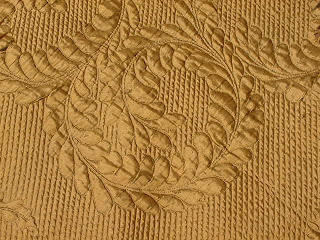
A new servant, Catherine Middleton, arrived to help with the sewing and, as she had been for the past few days, dressmaker Julia Mahoney was present to help Evelina. The women worked on several projects, including a “brilliant” dress for young Susie Ames. Brilliant was a pretty, shiny cloth, recognizable for its glazed and, often, patterned surface. It was a fabric that had been especially popular in the 18th century, but still had its admirers in the 19th.

Known by other names, including calamanco, the cloth originated in Norwich, England,  a center for textiles. Its origins make us wonder if the cloth Evelina was using had been made locally, in Lowell, Mass., say, or Rhode Island, or had been imported.