July 24, 1851

Duck

Thurs July 24th  Have been sewing on some of Susans

clothes, altering some skirts &c  Have been thinking

over my visit yesterday  Mrs Mitchell will have

a fine place in a few years if she keeps on as

she has begun  They have a fine lot of Turkeys

Ducks & Chickens and their garden looks finely

but not many flowers.


The visit that Evelina and her sisters-in-law made to East Bridgewater yesterday was enjoyable enough to preoccupy Evelina’s mind today.  As she sat sewing she thought over the home she had visited and considered its domestic arrangements. She liked the yard she had seen.  Casting her knowledgeable, farmer’s-daughter’s eye over the property in her mind, she assessed the “fine lot” of poultry and admired the garden.  Not enough flowers for her, though.

The house in question belonged to James Mitchell, son of Nahum and Nabby Mitchell, and his wife, whose name was Harriet Lavinia Angier Mitchell.  As fate would have it, Harriet Angier Mitchell was a friend of Harriett Ames Mitchell.  The two visited one another when Harriett Ames was in town and, presumably, worked out any confusion the similarity of their names occasioned.  As they were usually referred to as Mrs. James Mitchell and Mrs. Asa Mitchell, they may have encountered less confusion than there would be today, when first name usage is so prevalent.  Terms of address were definitely more formal in 1851.
 

July 23, 1851

7505761_119709544472

*

Wednesday July 23  Have been sewing before noon to day working on

different articles among the rest have made

Susan a pair of short cuffs of cambric

trimed with a wide insertion and edging

Aaron Hobart & Charles Mitchell came to the other part

of the house & dined When they returned Mrs Witherell

Mitchell, Mrs S Ames & self went to Mr James Mitchells to tea

Met Mr & Mrs Judge Mitchell Mrs & Miss Hyde & Aunt Orr there

Sewing was in the forefront of Evelina’s activities lately while gardening seemed to disappear.  Perhaps the heat and the weeding were too much, perhaps her favorite blooms had gone by and she had lost interest. Then, too, she simply may have neglected to record the time she did spend in the flower beds. Whatever the cause, Evelina was back indoors in the mornings, needle in hand.

Her social life, always a little more active in the summer, continued to thrive. She noted that Charles Mitchell, younger brother-in-law of Harriett Mitchell, and Aaron Hobart dined with Old Oliver and Sarah Witherell. This entry is the first mention of the Hobarts, a family that would become intimately involved with the Ameses in the future.  Aaron was the eldest son and namesake of Judge Hobart, a former congressman, and his wife Maria, who lived in East Bridgewater. Recently returned from working in New Orleans, Aaron became “actively identified” with the local Carver Cotton Gin Company**. His youngest sister, Catherine, was at school with Helen Angier Ames in Dorchester.

It was to East Bridgewater that the ladies went today for tea. Evelina and her sisters-in-law met with Judge Nahum Mitchell, also a former congressman and a contemporary of Old Oliver, his wife Nabby, and others.  The Mitchells were related to the Orr family, and one of their daughters (Mary Orr Mitchell Ames) was married to an Ames cousin in Springfield. Needless to say, many of the long-established families in southeastern Massachusetts had intermarried over time and thus were related in long-distance ways.

*Judge Nahum Mitchell
** Plymouth County Massachusetts Archives


July 19, 1851

Lightning


1851

July 19 Saturday  To day I have been sitting with mother

sewing on muslin & cambric insertion mending &c

It has been very showery accompanied with heavy

thunder and very sharp lightning  Oakes Angier

went to Mr Algers after some butter to night and

carried Mother home  Orinthia is here to day

called this afternoon to see Abby Torrey 

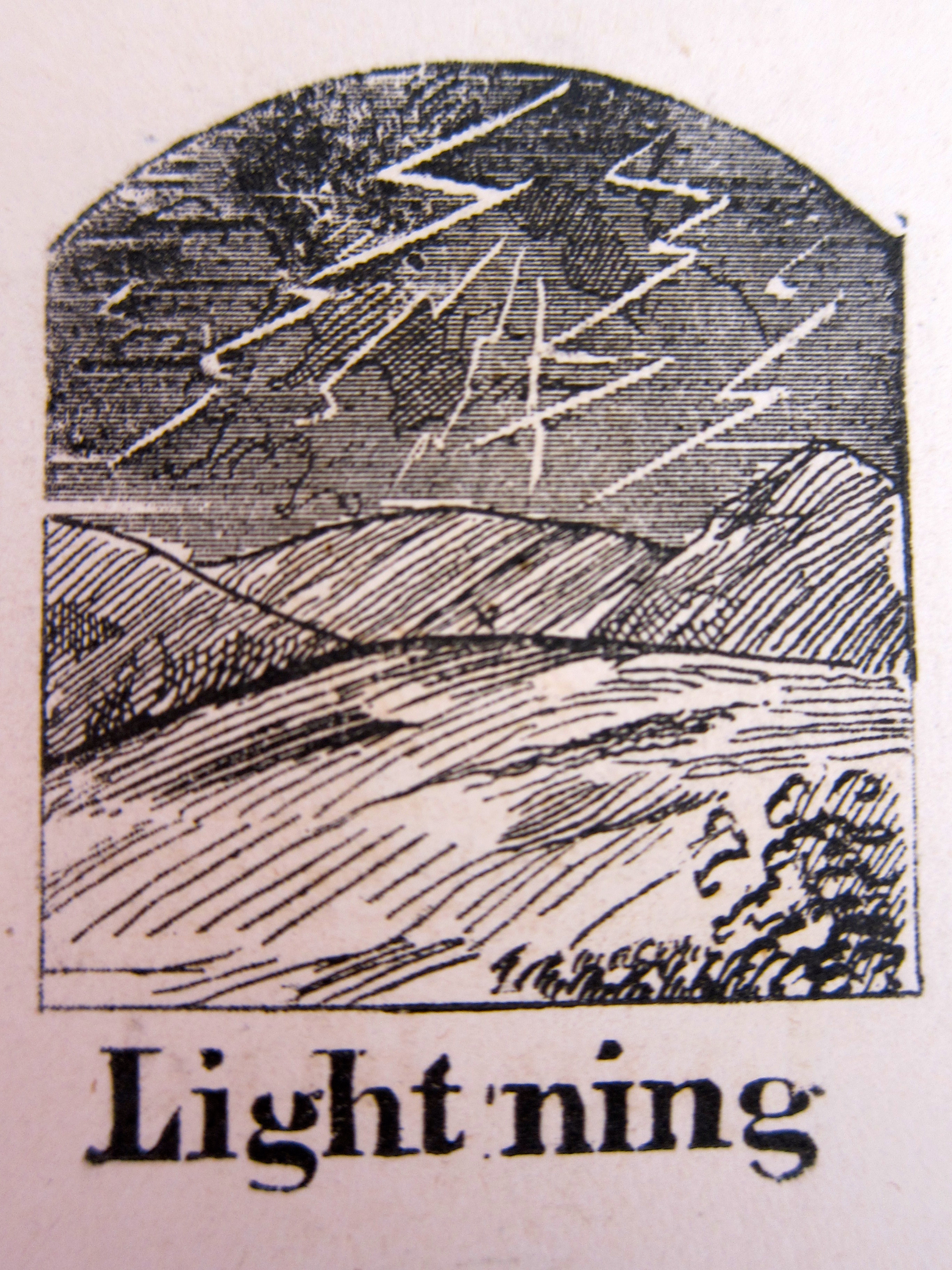
Yesterday’s hot, sticky weather gave way to thunderstorms today, with “very sharp lightning.”

Hannah Lothrop Gilmore returned to the family farm, driven there by her grandson Oakes Angier Ames.  He went on to pick up some butter at the farm of Bernard and Vesta Alger, who lived not far from the Gilmores on the turnpike road.  It’s curious that Evelina was buying butter this summer, because earlier in the year she had been selling it.

Orinthia Foss was back at the Ames’s for a visit, up from the home of Elijah and Nancy Howard where she was boarding. She went into the village to pay a call on Evelina’s niece, Abigail Williams Torrey. Evelina, meanwhile, spent her Saturday mending everyone’s clothes, and working on an “insertion” for one of her dresses.

July 18, 1851

large-1053

1851

Friday July 18  This forenoon finished my Silk Muslin dress

made a chimisette for it  Mother is not at all well

and is not easy cannot stay in one place a great while

Oliver went with Mrs S Ames after Helen.  Got to

Dorchester about 5 Oclock and home about half past nine

The weather is hot and uncomfortable.  Fred returned

to night having passed a good examination


Fred Ames was accepted at Harvard!  He shared the good news with his relatives when he returned to North Easton this evening. He did well on his examination, which perhaps constituted some combination of interview and oral or written test of the depth of his knowledge. How proud his parents must have been, and what relief he must have felt to have the entrance hurdle behind him.

Fred’s life was now moving in a fresh direction but otherwise, things in North Easton were much the same as he had left them the day before. Under a hot and humid sky, Evelina was sewing and looking after her mother, Hannah Lothrop Gilmore, who wasn’t feeling well.  Fred’s parents, Oliver Jr. and Sarah Lothrop Ames, meanwhile, had driven off to fetch his sister, Helen, from school in Dorchester.

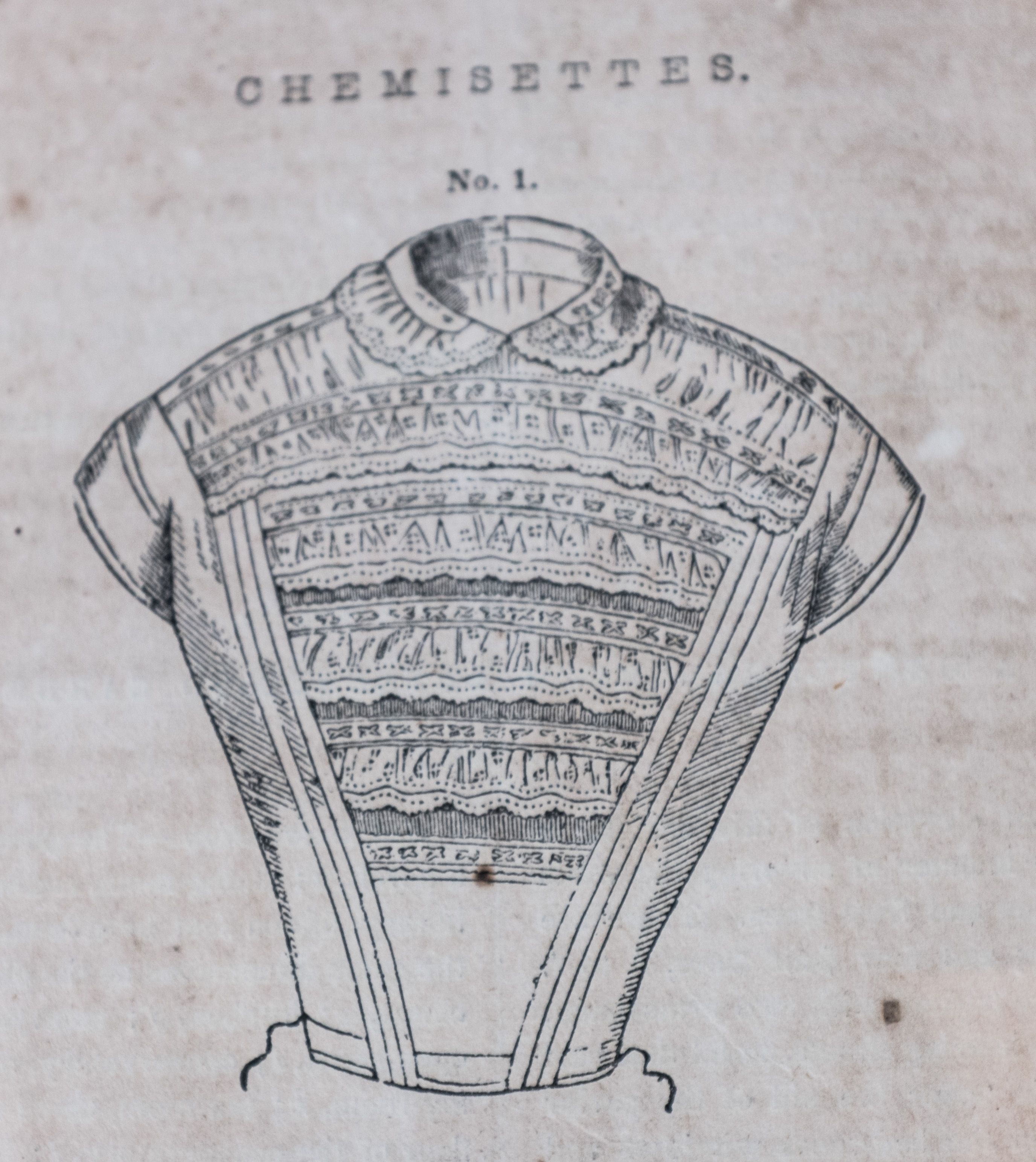
Today’s sewing project was a chemisette for Evelina’s newest dress, the silk muslin that she and dressmaker Julia Mahoney had been working on this week.  The chemisette was a light blouse designed to be worn under the jacket bodice of the dress.  Hers probably wasn’t as elaborate as the chemisette in the illustration.


July 16, 1851


Shovel Storage_1 Nov 2010

*

1851

July 16th  Wednesday  Mrs H Ames left this morning.  Will stop

a day or two at Mr Hinckleys and then venture

home  Gustavus was to meet her in Boston

Have been to work on my silk muslin dress

Julia has been here cutting the waist and it

is so near done that it will not take long 

to finish it.  Edwin & Oliver went to S. Bridgewater

to get patterns for shovel press & Back strap Machine

Evelina seldom referred to the shovel business in her diary.  The factory, the employees, the machines, the products, the day-long sounds that emanated from the shovel shops right across the street from her home went essentially unmentioned. Despite the fact that six days a week, life in North Easton revolved around O. Ames and Sons, the factory that her husband, father-in-law, and brother-in-law owned, and at which her three sons worked, Evelina was mum about the business.

Instead, she kept her attention on the domestic and social events of her own life, recording the tame goings-on of the household, which was, naturally, her sphere of interest and influence. Her focus begs the question, however, of how much of her record was consciously restricted to the quotidian. Did she hear about events at the shovel shop and choose not to include them, or were business details never discussed at the dinner table?  Were shovels excluded from pillow talk at day’s end? Or was she so familiar with the many facets of the shovel business that she took them for granted, dismissed them and looked solely at her own concerns? Was she disinterested or discrete?

That aside, shovel-making slipped into Evelina’s record today.  Her middle son, Oliver (3), and his cousin, Edwin Williams Gilmore, headed to South Bridgewater to fetch patterns and a back-strap machine for the shovel factory. The patterns were probably “dies used in a drop hammer/press that give the curved shape to the previously flat, partially formed blade.”**  The back strap was an object that facilitated the process of attaching the handle to the blade. Oliver and Edwin must have used a wagon to tote the goods back to North Easton.

* Ames shovels, Stonehill College Archives, with thanks to Nicole Casper, CRM, Director of Archives and Historical Collections

** Per Gregory Galer, PhD.

July 15, 1851

Wring

1851

July 15 Tuesday  Jane washed this forenoon and about

nine or ten Mother Henrietta Rachel and her

babe came  They went home about 11 Oclock

mother will stop a few days  Gustavus left

yesterday morning  The afternoon Mrs H Ames

passed here  Mrs S Ames had a dress maker & did

not come in

Laundry was done today, a day later than normal because of the extra work involved in tidying up after a weekend of houseguests.  It’s not hard to imagine that such a disruption in the routine made Evelina or Jane McHanna or other members of the household think today was Monday instead of Tuesday.

Just as things were getting back to normal, however, more visitors arrived. Evelina’s sister-in-law, Henrietta Gilmore (Mrs. Alson Gilmore), arrived with Evelina’s mother, Hannah Lothrop Gilmore. As often happened, the senior Mrs. Gilmore came to spend “a few days” with Evelina, her only living daughter.  With them was Henrietta’s daughter, Rachel Howard (Gilmore) Pool (Mrs. John M. Pool or Poole) and her little girl, Ella. Ella, barely one year old, was Hannah Gilmore’s great-granddaughter. Four generations of Gilmore women visited together in the Ames parlor.

In the afternoon, Evelina had yet another sister-in-law pay a call, this one from the Ames side of the family.  Sally Hewes Ames came to visit one last time before leaving; she planned to return to Connecticut the next day. The women likely sat and sewed together; Evelina almost always had sewing or mending in her hands when socializing at home.  As was her wont, she probably gave something to Sally to work on while they talked. Perhaps even old Mrs. Gilmore sewed with them.

July 8, 1851

Buttonhole


1851

July 8th Tuesday  Julia has been here to day and we

have been to work on my borage Delaine  Have worked

very slowly  Julia has been to work on the waist

all day and it is not near done yet.  The waist

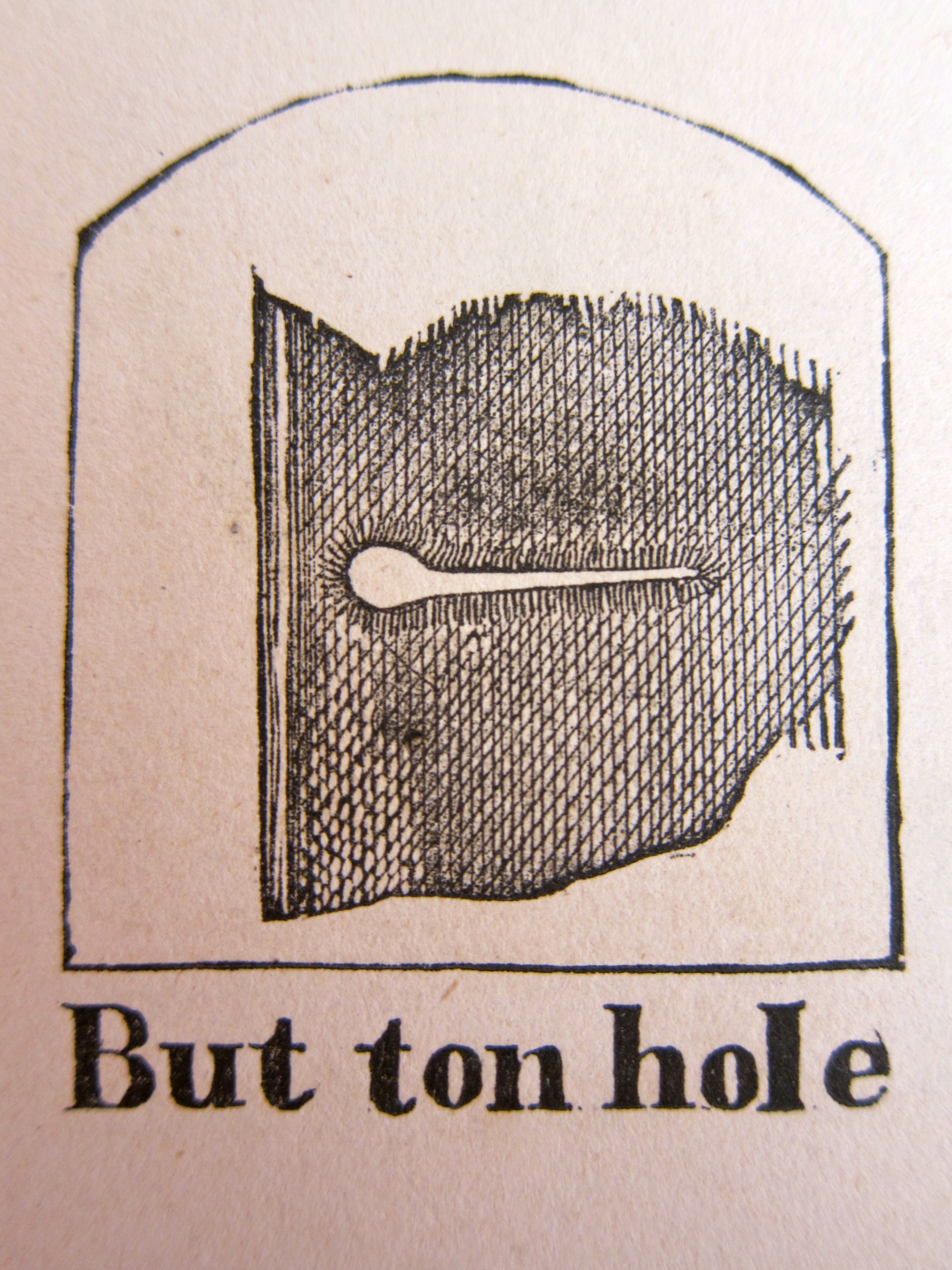
is made plain & I have made the button holes myself

This dressmaking is discouraging business with such

slow dressmakers.

Evelina was none too pleased with Julia Mahoney, the dressmaker whose fingers never flew as fast as her own when it came to stitching.  She wanted the new dress finished, and Julia was working too slowly for Evelina’s taste – and wallet, perhaps.

It’s worth noting that Evelina didn’t garden today or, if she did, she didn’t mention it. Her focus was not on her pinks and petunias, it was indoors on her barege delaine. Perhaps the weather was too warm to spend much time outside in her yard.

What was going on outdoors, beyond the flower beds?  On the larger canvas of the town, the vegetable crops, the corn and the hayfields should have been growing well, the latter two important food for the oxen and other domestic animals over the next winter. Haying was due to begin soon.  No doubt Old Oliver and other farmers were paying close attention to the weather and the readiness of all their crops.

July 7, 1851


large-003500

*

1851 July 7th  This morning being washing day had to do the

house work and see about the dinner  My finger

is still very tender and I find it difficult to sew

but I have cut of the skirt of my borage Delaine

for Harriet to make and this afternoon have been

working the sleeves to it  Expect Julia here tomorrow

It was Monday, so Jane McHanna washed and hung out the laundry while Evelina swept, dusted and cooked the midday dinner.  Her finger may still have been sore – what had she done to it? – but she did her chores.

She did some sewing, too, or at least she prepared to sew with Julia Mahoney, the dressmaker who was expected the next day.  She cut the cloth for the skirt of a new dress, no small task. The barege she used, as noted in a previous post, was an open weave wool, lightweight and popular at mid-century.

In 1851, dresses were styled with very full skirts, some with flounces, that required upwards of 25 yards of fabric. Knowing Evelina’s instinct for thrift, we may believe that she probably settled for fewer flounces and less material. Still, even the simpler dresses with all their parts – skirt, lining, bodice, sleeves, undersleeves, pocket, collar, and any decorative element such as piping, ribbon or fringe – consumed significant yardage.  Cutting out all the pieces took expertise and room to maneuver. Imagine the project spread out across the dining room table.

How did she convince her sister-in-law Harriett to help sew the skirt?

* Fashion plate from Godey’s Ladys Magazine, July 1851


June 27, 1851

weedy flower bed

*

June 27 Friday  John left here this morning

Worked a long time in the garden

this morning for the weeds were very plenty

afterwards finished picking over the hair and

a long job it has been.  This afternoon put the hair

into the hair cloth cover and just commenced tying

it when Mrs Clark and Mrs Stetson came from

Sharon and of course had to leave it and go

into the other house house to see them. Mother & I stoped to tea

Pigweed, thistle, crabgrass, and purslane: Such weeds – and more – are the collective bane of the flower gardener. Evelina tackled some of them this morning as she addressed the “very plenty” weeds that were pushing into her flower beds. Perhaps she ruminated about her brother John and his short visit while her fingers dug into the soil.

After midday dinner she turned to her sewing, as usual, going right to her haircloth slipcover project, but abandoned it with alacrity when an opportunity for socializing turned up.  “Had to leave it and go..” she noted, when two friends from nearby Sharon arrived next door.  She and her mother, Hannah Lothrop Gilmore, went over for tea.

Frank Ames Mitchell, a nephew of Oakes and Evelina, turned ten years old today.  One of two grandsons of Old Oliver named Frank (the other being Frank Morton Ames,) he was the eldest son of Oakes’ sister, Harriett Ames Mitchell. He, his mother, and two younger siblings were living temporarily in Bridgewater while their father, Asa Mitchell, was working in coal in western Pennsylvania.

Our knowledge about Frank Mitchell is limited, as he never married or had any known issue. We do know that he was the only Ames grandson to fight in the Civil War.  He served in both the 44th and the 56th Massachusetts Regiments, and ultimately made captain.  In 1864, he was wounded at Cold Harbor.  Hospitalized in Washington DC, where his mother rushed to his side, he eventually recovered but remained in indifferent health for the rest of his life.

After the war, Frank bought a plantation in Tallullah, Louisiana, an effort that was underwritten and ultimately bought out by his Uncle Oliver Ames, Jr.  Family records show that Frank subsequently depended on financial support from his cousin Fred Ames. The remainder of his life consisted of traveling from one healthful climate or resort to another in search of good health.


* A modern flower garden, full of weeds, from canoecorner.blogspot

June 25, 1851

14 Fanny Palmer (American artist, 1812-1876) Published by N Currier American Farm Scenes 3 1853

*

1851

June 25th Wednesday  Worked awhile in the garden and 

then sit down to sewing with mother

After dinner Francis came after mother […]

John & wife and Miss Wait (Otis Howards lady)

arrived there about nine  I went home with

mother and Mr Ames came after me Had

a very pleasant visit  By what they say I 

should judge the west point students had rather

a hard time


Beyond today’s normal work load of gardening and sewing lay a very special event. Evelina traveled south to the family farm where she had grown up, something she often did.  The farm was now owned and worked by her older brother, Alson; it was there that her mother usually resided.  But today, another brother, John, came to visit and joined her there.  The three siblings, John, Alson, and Evelina, were the only survivors of a brood of eight. It was a rare family reunion for them and their mother.

Most historical accounts place John and his wife, Huldah Alger Gilmore, in South Leeds, Maine.  This was probably accurate, as no evidence exists otherwise. Gilmore is not an uncommon name, however, and the postmaster John Gilmore in Leeds, Maine may not be Evelina’s brother.  Evelina’s reference to a discussion about West Point suggests a possibility that John and his wife could have lived there.

Regardless, Evelina seemed very happy to see her two brothers.  Her husband, Oakes, came along eventually to see his in-laws and fetch his wife back home to North Easton.

* Currier & Ives, Farm Yard, ca. 1853