August 22, 1851

1024px-The_Yacht_'America'_Winning_the_International_Race_Fitz_Hugh_Lane_1851

*

Friday Aug 22nd Aug  This morning stormy and Pauline sat with me

sewing made the button holes in Susans pink apron

This afternoon went with Pauline to mothers to

tea.  Called at Col Whites & at Orinthias school.

Mr Pratt & White and several ladies at the examination

On our return home found Cousin Jerry &

Warren Lothrop here  Pauline & Warren were very sociable with each other

Morning sewing and afternoon socializing were the order of the day, with houseguest Pauline Dean demonstrating a marked preference for the latter. The weather in the morning was “stormy”; Old Oliver reported a tornado in Cambridge. But the afternoon was calm, so Evelina and Pauline went out. When they returned, Pauline zeroed in on a visiting Lothrop cousin named Warren, and the two flirted.

Meanwhile, Orinthia Foss’s performance as a teacher was reviewed by the local school superintending committee. Amos Pratt, a fellow teacher, and Col. Guilford White, a shoe manufacturer who eventually became a lawyer in Boston, evidently led the examination.  They were accompanied by several unnamed ladies.

On this very same day, across the pond and around the Isle of Wight, a new yacht, “America,” that had been commissioned by members of the New York Yacht Club raced against 15 other boats in the Royal Yacht Squadron’s annual regatta.  “America” won, and from that victory sprang a competition known as the America’s Cup that now boasts the world’s oldest international sporting trophy. Doubtless, the race was reported in the papers; perhaps Oakes and Evelina read about it.


* Fitz Henry Lane, “The Yacht ‘America’ Winning the International Race,” 1851


August 19, 1851

4gbhistory


*

Tues 19th Aug  Sat down quite early to fix some work for

Ellen, about 11 Oclock Mrs Norris and a Mr Young from

Bridgewater came  Dined here and left about three

they wanted the boys to go Fishing Thursday but Clinton Lothrop

is not expected to live through the day and they

thought it best to defer going untill Monday

Mrs Witherell & Mitchell & myself went into

school this afternoon  Very warm

Melinda Orr Norris and a Mr. Young had midday dinner with the Ameses, during which they invited the Ames sons to go fishing. The boys accepted but deferred the trip to the following week.  Clinton Lothrop, their Aunt Sarah Lothrop Ames’s younger brother, was deathly ill and they wanted to wait until after his anticipated passing.

It was a hot summer day, with no such thing as air conditioning or window fans. In their full-skirted dresses, the Ames women surely were hot as they chored around the house or sat with visitors. They possibly opened their parlor windows to let in some air, but would have let in the insects, too, if they did so.  “Wove wire” had appeared here and there on the market as an alternative to horsehair weaves, but wouldn’t be commonplace until the Civil War. Around 1861, Gilbert & Bennet, a sieve-making firm in Georgetown, Connecticut, lost its southern customers and began to manufacture window screens as a way to use its surplus wire mesh cloth. Window screens took off. Before then, how did people cope?

Evelina and her sisters-in-law, Sarah Witherell and Harriett Mitchell, left the closed air of their homes and went to the local school house in the afternoon. Evelina doesn’t explain the purpose of the trip. Surely the hot sun beat down on them outdoors, but their bonnets kept their heads protected, at least.

* Gilbert & Bennet’s Red Mill on the Norwalk River where woven wire cloth was first developed as a commercial substitute for horsehair. Photo from historyofredding.com.  

August 14, 1851

IMG_2478

Thursday 14th  Worked about house awhile and then went

to sewing & fixing some work for Ellen cut a 

chimise for self &c. Charles Mitchell brought

Sister Harriet and Johnny from Bridgewater

Harriet has gone back to attend a party 

at Robbins pond tomorrow.  We all have an

invitation but I think I had best not go though

it would give me pleasure

Evelina put out some fabric today for the new girl, Ellen, to cut into pattern pieces. She noted that her sister-in-law, Harriett Ames Mitchell, came over briefly from Bridgewater with her middle child, John Ames Mitchell, but soon went back to prepare for a party.

Although his birthday went unmentioned in the diary, Frank Morton Ames, the third child of Evelina and Oakes Ames, turned 18 today. Taking his place in a patriarchal society behind two bright older brothers, Frank had to vie for recognition almost from the beginning. Like Oakes Angier and Oliver (3), Frank attended local and boarding school, in the latter case Andover, and had just completed his schooling the year before Evelina took up her diary.

Unlike Oakes Angier and Oliver (3), Frank was a troublemaker “who needed more discipline.”  According to historian William Chaffin, Frank and a friend once sneaked out of their respective homes, took a horse and buggy to a dance in Canton, and returned “very late.” When Oakes Ames learned about it, he and the other father, William S. Andrews, took their sons down to the shop where they “were horsewhipped in the presence of the workmen.”  As Chaffin notes, “Discipline was apt to be severe in those days.”*

One of the pleasures of Frank’s life was his participation in the local militia, a company of which was formed in 1852.  Again he had to stand behind a brother, in this case Oliver (3), who was made captain while he was appointed quartermaster, but eventually Frank made major. He resigned that position in 1860, by which time he was married and living in Canton.  Neither he nor his brothers served in the Civil War.

Frank would go on to have checkered success in several fields away from the shovel factory. With his brothers, he worked to rebuild his father’s reputation.  Despite the severity of treatment he had experienced from his father, he remained devoted to Oakes’s memory.

* William Chaffin, “Oakes Ames 1804-1873”, private publication


May 19, 1851

330px-Mainelupin

May 1851

Monday 19th  Orinthia left here to commence her school in

No 2 district  I shall miss her very much

this morning had to wash the dishes and clean 

the sitting room &c which she has done for

some time.  Afterward worked in the garden

untill noon, planted some Pansy & Lupin seeds

Called in Olivers awhile  We have a gardener

commenced work to day.  Pleasant weather

Orinthia Foss left today to board with another family.  She had lived with the Ameses since February when she arrived from Maine to teach a small group of students in North Easton. Evidently, she had done her job well, and as a consequence had been hired by the school superintending committee to teach elsewhere in town. She would be missed by the Ames family, as she had made herself at home there, helping Evelina with sewing and chores and joining in various social activities with the Ames sons. Evelina especially would miss her, and not just because Orinthia had been so helpful in the house. The two had become good friends.

So, all by herself, Evelina worked in the garden this morning, planting pansy and lupin seeds. Pansy, also known in the 19th century as “heart’s ease,” was relatively easy to plant and grow. Lupin, on the other hand, was (and still is) trickier.  Though “found, frequently, in large masses,” “this fine perennial”, according to Joseph Breck in his 1851 Book of Flowers, is “very difficult, even impossible, to transplant, with success.” Seed, and seed alone, must be used. Evelina needed her green thumb today.

That said, Evelina wrote in her diary that a gardener had “commenced work to day.” Who hired him, and what was his job?  Was he hired just for the flower beds? Did he also work for Sarah Witherell, or next door for Oliver Jr. and Sarah Lothrop Ames? Whatever his job, he wasn’t going to be as much fun to work with as Orinthia had been.


May 13, 1851

dried-apples

*

Tues May 13  Mrs Witherell heat her oven and I baked

a loaf of brown bread & some cake & tarts with

her  Orinthia made some sifted dried apple pies

Mr Robinson here to paper the dark bedroom

chamber. Mr Pratt called this morning for Orinthia

to go to meet him & Brown for an examination

We went to Mr Pratts this afternoon and

called at Mr Whitwells


Mr. Robinson, all-purpose painter-and-paperer, was back at Evelina and Oakes’s house today to paper one of the bedrooms. It may be the one that Frank Morton Ames had to move out of some days ago while it was being refurbished.

Orinthia Foss, meanwhile, underwent some kind of scholastic examination.  Evidently, she was being considered to teach at the town’s public school system for which she had to undergo at least an interview.  Her interviewer was Amos Pratt, a former school teacher himself, and member of the Easton school superintending committee (the one on which Oakes Angier had hoped to serve, but had missed by one vote.)  Her other interviewer was Erastus Brown, a butcher by trade who also served on the school committee and taught. Not unlike today, some folks from 160 years ago had to pursue more than one trade to make ends meet. Pratt, who lived in the Furnace Village area of Easton, some miles south and west of North Easton, eventually gave up his teaching career to run a mill.

Before being escorted by Mr. Pratt to her interview, Orinthia helped Evelina and Sarah Witherell with baking.  Evelina made brown bread, cake and tarts; Orinthia made an unseasonal apple pie from dried apples. The apples were remnants of last fall’s harvest, and ordinarily Orinthia would have had to plump them up with hot water or cider or some other liquid in order to form the pie.  How the apples would have been “sifted” is a puzzle; did this mean that the apples were in powder form?  All you cooks out there: what is a sifted dried apple pie?

*jeremy.zawodny.com


April 25, 1851

Coat

1851

Friday April 25  Have done some mending and been putting

things in order about the house Made Mrs

S Ames bed and stoped with her awhile

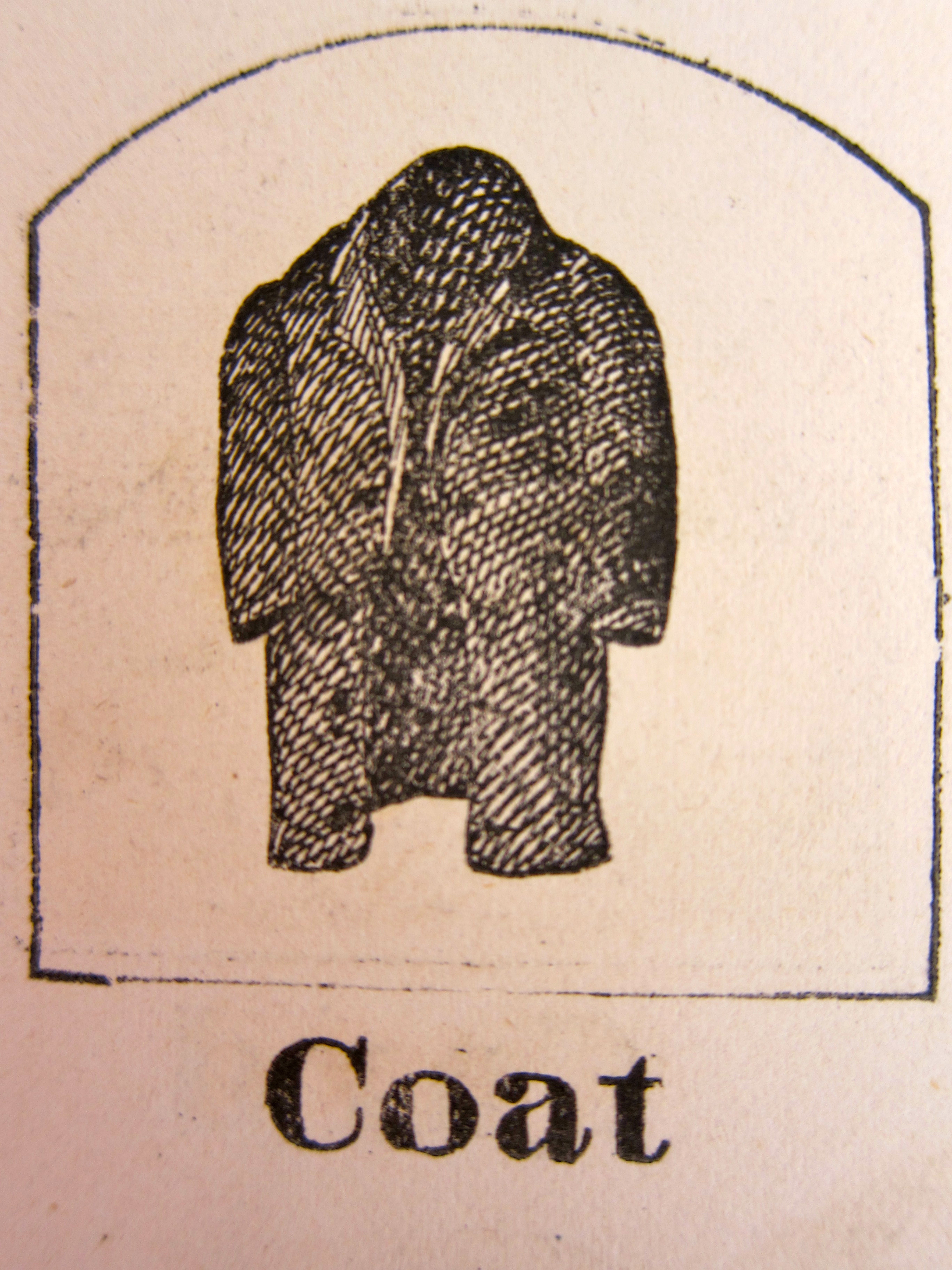
This afternoon mended Oakes Angier two coats.

dirty things they were! Met Mis[s] Foss coming from

school and called with her at Mrs Holmes & Mrs 

Connors spent the evening with Mrs S Ames

Mr Harrison Pool & wife & Mrs Horace Pool called

Sarah Lothrop Ames was still sick and unable to get up and around. Once again, Evelina went next door to visit and helped out by making Sarah’s bed up fresh.  Later in the day, Sarah had a companion, Mrs. Connors, sit with her. Was she being “watched” or was she on the mend? Who made the decision to have someone sit with her?  Her husband or her female relatives?

Mending and housework otherwise took up Evelina’s time today. She and Jane McHanna were still carrying on with spring cleaning, but the effort was sporadic lately, with mending taking over much of Evelina’s time. In the transition from cold to warm weather, all the spring and summer wardrobes had to be brought up to snuff, “dirty things” that some of them were.

The Pools came to call this evening.  Harrison and Horace Pool were brothers, fifteen years apart in age, who lived in the south eastern section of Easton, near the Raynham line and the Gilmore farm.  They made mathematical instruments: surveyors’ tools, levels, compasses and thermometers, among other items. Harrison’s wife was Mary J Pool, a young wife close in age to Oakes Angier.  Horace’s wife was Abby A. Pool, identical in age (43) to Evelina.  Mary and Abby were members of Evelina’s Sewing Circle, two of the women who didn’t attend the meeting that Evelina held back in February. Evelina would have grown up knowing the Pool (also sometimes spelled Poole) family.

March 15, 1851

Rein

1851

March 15th Saturday  This morning Orinthia & myself gave the sitting

room &c a thourough cleaning & afterwards sat down to 

sewing.  Mended a number of articles  Orinthia put some

new sleeves into an old shirt of Franks that were small

This afternoon Orinthia Susan & I went down to Mothers with Charley,

called at Mr Guilds & Howards to see about her school and at Major Sebas & Mrs R

Howards.  Mr Ames brought from Boston Velvet chalk.  Pleasant

Charley was a horse, one of several that the Ames family owned.  Today Charley was put to work pulling Evelina, her daughter Susan and the new teacher, Orinthia Foss, in a carriage along the rough road from North Easton to the Gilmore farm near the Raynham town line. This, after Evelina’s mentioning only the day before the “bad traveling” on the local roads. They must have had a bumpy ride.  The weather was nice, though, so on they went.

Coming back from the Gilmore farm, they made several calls, the first two at Mr. Guild’s and at Elijah and Nancy Howard’s on school matters.  Evelina continued to act with or for Orinthia Foss “about her school.”  The ladies were on a roll with their visiting and stopped in at Seba and Eleuthera Howard’s farm.  Their last stop was a visit to Mrs. Roland Howard, a widow who was also a member of the Sewing Circle.

Evelina, Orinthia and Susan weren’t the only travelers out this day.  Oakes Ames made his usual Saturday trip into Boston on shovel business and brought back some “Velvet chalk” for dressmaking.

March 6, 1851

Thread

March 6th  Thursday.  This morning Orinthia cleaned the sitting room

and I sat down to work quite Early on Mr Ames shirt

and finished it about ten Oclock  I then went to

mending some old shirts & colars &c  Sarah Witherell

brought me the fourth bosom that she has stiched for

me.  Jane went to Mrs Willis to get her dress  Miss Foss

and myself called to see Mr Guild about the school & on

Ellen Howard  A[u]gustus here to dine  Morning pleasant  storm at night

More men’s shirts.  If we’re getting tired of reading about them, imagine how tired Evelina must have been sewing them – and she had many more to go. She evidently had a method to her sewing, in that she worked on the same kind of clothing in succession until she had finished.  She didn’t make just one shirt for her boys or husband, she made several in a row.  She didn’t just make one apron for her daughter, she made three or four in a row.  Perhaps the cutting of the fabric and the arrangement of the pattern components were made easier when addressed as multiples.  The economy of cloth-cutting trumped the tedium of repetition.

Leaving the shirt bosoms and collars behind, Evelina went out with Orinthia Foss in the afternoon.  They paid a call on a Mr. Guild on a school-related matter, showing that Evelina continued to be involved with some aspect of the private school.  It was unusual for a married woman to be so active in this way.

Their second call was on Ellen Howard, daughter of Nancy (Johnson) Howard and Elijah Howard.  Mr. Howard was a sometime business partner of the Ames men and a prominent citizen of Easton.  Mrs. Howard was his third wife, he having buried his first two.  He had twelve children, of whom seven were with Nancy; Ellen was in the latter group.  In 1851, Ellen was seventeen, the same age as Frank Morton Ames, and she often socialized with the Ames sons.  In introducing Orinthia to Ellen, Evelina was perhaps hoping the two young women might become friends.  In the future, Orinthia would board with the Howards.  In Ellen’s future, in 1860, she would marry George Withington, a young minister who came to town to replace the departed William Whitwell.

The fine weather that allowed Evelina and Orinthia to travel around town disappeared by evening and ushered in a storm.  Such variability was to be expected this time of year.  It was March, after all.

March 5, 1851

Village

1851 March 5th  Wednesday  Early in the morning worked about

house.  About nine Oclock called at Mr Holmes 

to see Mrs Wright and to enquire for Miss Eaton

She is comfortable but failing  Went into school

and staid until dinner time  like the appearance 

of the school very much & think Orinthia a good

teacher, calculated to gain the good will of the Scholars

This afternoon working on a shirt for Mr Ames.   A[u]gustus here

Abby spent the evening here  Very pleasant

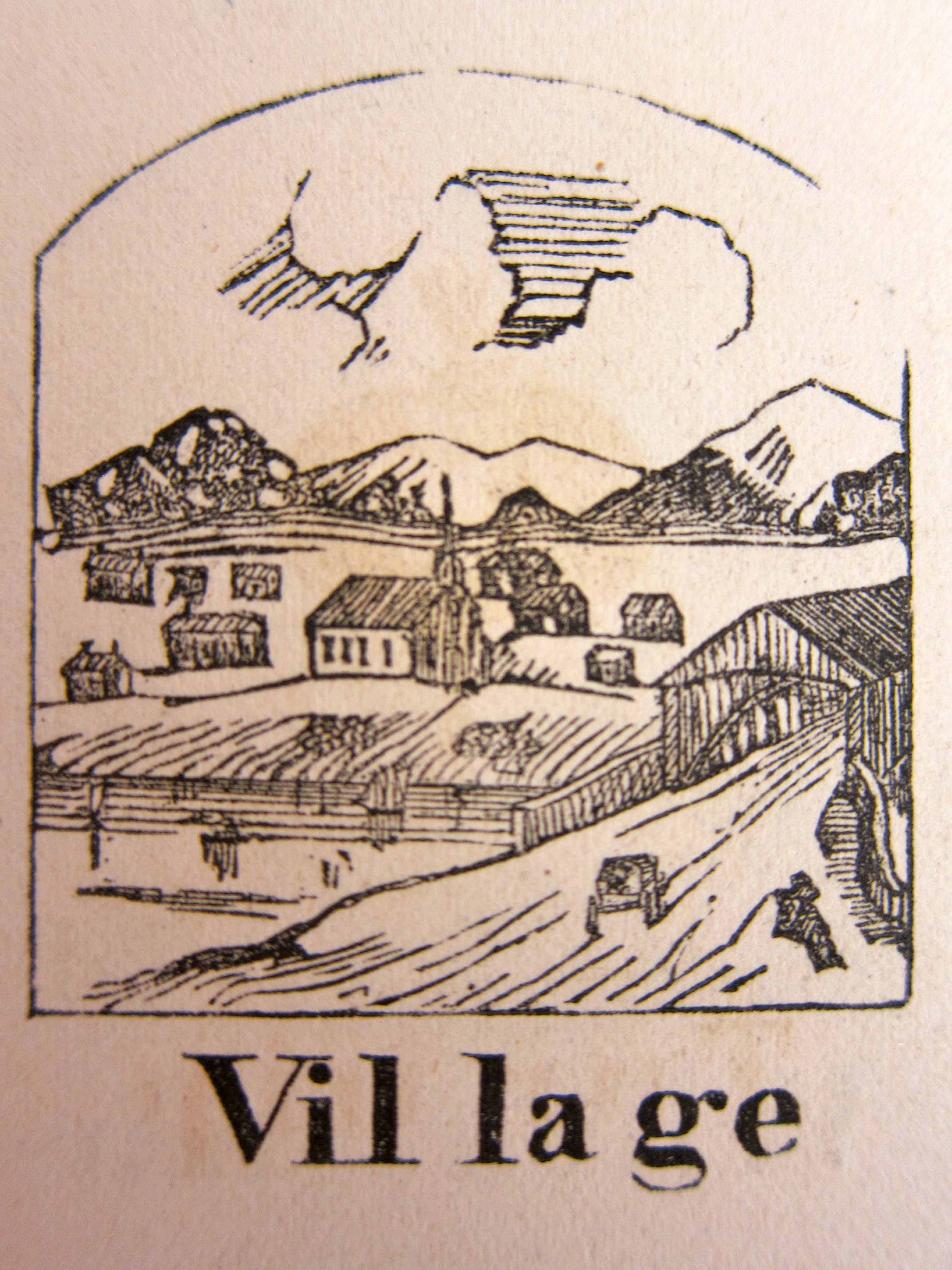
A “very pleasant” day pulled Evelina out of doors this morning at a time when she ordinarily would be choring or sewing. Fresh air and sunshine were too welcome to resist.  She walked the short distance to the village and called at the Holmes’s to ask after the two invalid women there, Mrs. Wright and Miss Eaton.

This is the last point in the diary when Mrs. Wright is mentioned, which begs the question of whether or not she survived her bout with pleurisy.  Probably not, even though Evelina didn’t mention her demise or her funeral.  Based on Evelina’s continued, if periodic, interaction with the Holmes household without ever again mentioning the presence of Mrs. Wright, it makes sense that the latter passed away about this time.  Additionally, an 1855 census confirms her absence.

Interesting to note that Evelina wrote of calling at “Mr. Holmes”, even though she clearly went by to see the women of the house.  The patriarchal culture – and laws – of the day saw men, and men alone, as heads of any household.  A house belonged to a husband, not to a wife.  Unless Mrs. Holmes were widowed, the proper reference to her abode would acknowledge her husband’s tenancy, not hers.  This was a dictate that Evelina almost always practiced; even when she went next door to see her sister-in-law, Sarah Lothrop Ames, she wrote that she had gone to Oliver’s.  It was his house, not Sarah’s.

The little schoolhouse where Orinthia Foss taught was also in the village, and it was here that Evelina spent the rest of the morning, watching the young teacher and approving of her way with the children. Meanwhile, back at the house, Jane McHanna was preparing the midday dinner, for which all family members returned at noon.  Evelina stayed home after her morning out, and took up the inevitable sewing.  Her niece Abby Torrey visited, and may have helped with some of the stitching.

February 24, 1851

School

Feb 24th Monday.  This morning Orinthia commenced a

private school at the school house had twenty

scholars.  Was choring about house all the forenoon

This afternoon made over a valance for

Franks bed and did some mending.

Martin Guild was burried at two Oclock.  None

of us attended the funeral  Helen & Sarah Ames

called a few moments this evening.  Heavy rain.

Looks like little Susie was back in school today, this time under the tutelage of Orinthia Foss, the new teacher.  Not only would Susie see Miss Foss in the school room every day, but also at home for breakfast, dinner, and tea. During her tenure in Easton, Orinthia would take turns boarding with different families in town beginning with the Oakes Ameses. The exact location of the schoolhouse where she taught is undetermined, but it may have been located right in the heart of the village, at the Rockery.*

As usual, Evelina spent this busy Monday doing housework, or “choring,” as she called it, in the morning, or “forenoon,” while Jane McHanna labored with the weekly washing. What do you suppose was served for midday dinner on Mondays, when the women of the house were preoccupied with everything except cooking?  Perhaps the family ate one of those mincemeat pies that had been prepared days in advance and kept very cold somewhere. Yankee housewives were known to keep some baked goods frozen for months, either by placing them on shelves in an ice house, or simply by storing them in unheated spaces not far from the kitchen. A risky practice, one might think, especially with the varied temperatures and rainy weather that has characterized this particular February.

Also as usual, Evelina turned in the afternoon to her mending and sewing. She refurbished a valance for Frank Morton’s bed.  Although his brothers Oakes Angier and Oliver (3) shared a bedroom, Frank had a space, if not a room, to himself.  A valance was an essential component of his bedstead, naturally offering some warmth and privacy that might otherwise be lacking.

* Information from Frank Mennino, Curator of the Easton Historical Society.  Thank you, Frank.