April 7, 1852

images-2

Five Dollar Gold Piece, 1850

1852

April 7th  Mother is 80 years old this day and notwithstanding

the snow banks have been down to see her and made

her a present of a five dollar gold piece.  She is

not very smart to day but is generaly very well and

capable for one of her years.  Orinthia Abby & Augusta

went with me and we have had a very pleasant visit

Augustus stoped the evening here  Helen came

home this afternoon with her father.

Evelina’s mother, Hannah Lothrop Gilmore, turned 80 years old. She was the grandmother of Oakes Angier, Oliver (3), Frank Morton and Susan Eveline Ames – among other grandchildren –  and first cousin-once-removed of Sarah Lothrop Ames. She was born in Bridgewater in 1772, the fifth child and only daughter of Daniel and Hannah (Howard) Lothrop.  Her mother died soon after she was born and her father remarried two times more and had six additional children.

In 1789, at age 17, Hannah married Joshua Gilmore of Easton. They had a large family, too, producing eight children, of whom Evelina was seventh. By this 80th birthday in 1852, Hannah was a widow with only three offspring still alive. As we have seen, she lived on a farm with a son, Alson Gilmore, but often visited her daughter, Evelina.

Beyond these genealogical facts, little is known of the life of Hannah Lothrop Gilmore. When she was barely twenty, however, and already a mother of her first baby, John, she walked on a trail one day with her husband in an area of Easton known at the Great Cedar Swamp. Town historian William Chaffin recorded the tale:

“There was then no road through Cedar Swamp. Trees were however felled, and on these by hard work pedestrians at certain seasons could pick their way through from Easton to Raynham, or return.

“In 1792 […] Raynham had petitioned the Court of General Sessions for Bristol County to require Easton to build a road through the swamp to connect the two towns. The advantages of such a road were obvious. But Easton stood aghast at the prospect of incurring the expense of building a causeway such a distance and in such depths of mire.  The difficulty is illustrated by the fact that as Joshua Gilmore was going on the footpath through the swamp one day with his wife, carrying a little child in his arms, Mrs. Gilmore was speaking of the difficulty of the passage, and her husband replied that some day the child would ride through the swamp in a carriage; and the idea struck her as so essentially preposterous that she had a hearty laugh over it. However, the Court of Sessions did not, it would seem, share her skepticism, for it ordered Easton to construct the road.”*

The road, known then as the Turnpike Road or Street, was built, and Hannah Gilmore lived to ride it in a carriage.

*William L. Chaffin, History of Easton, Massachusetts, 1886, pp. 454-455
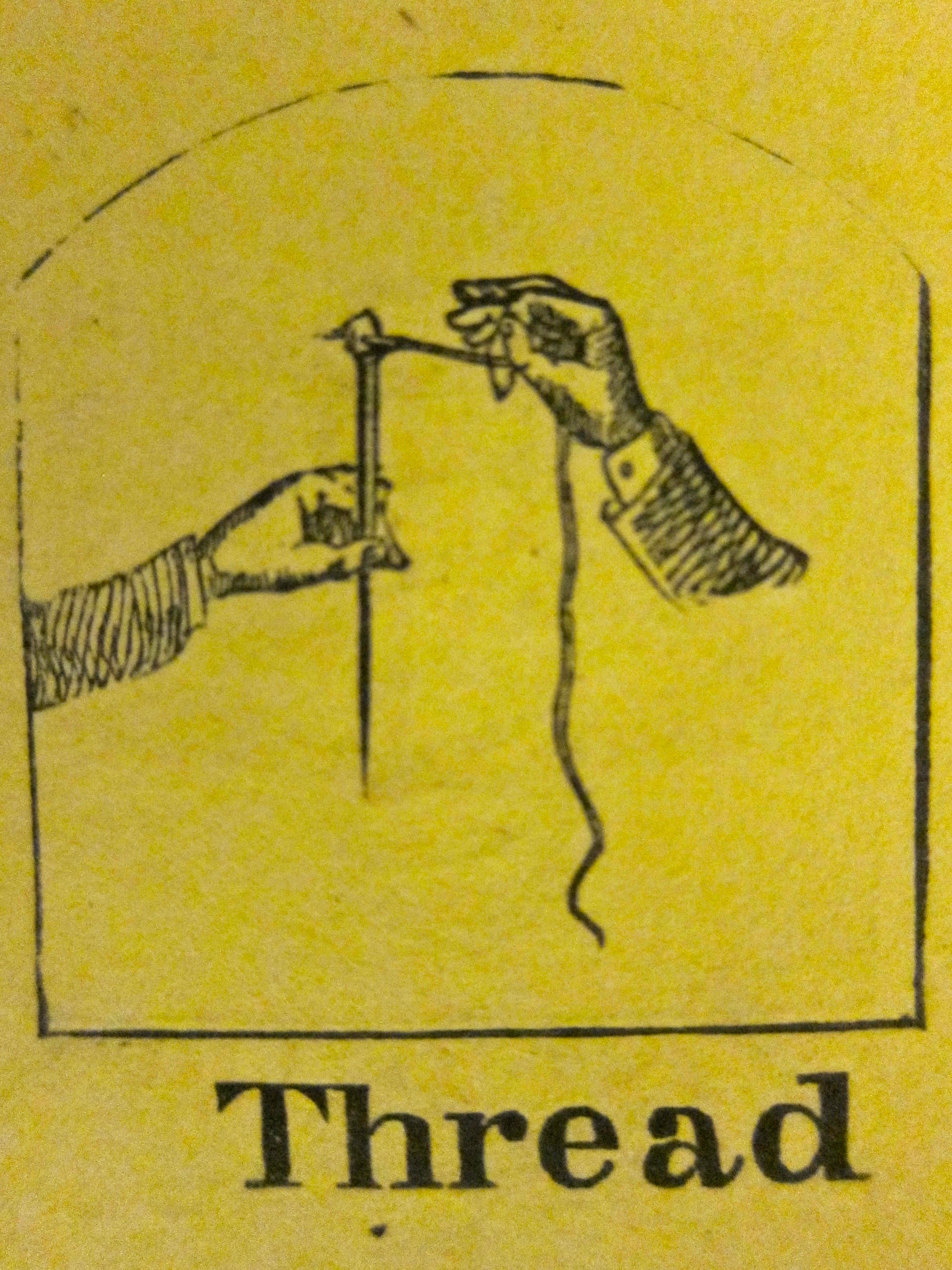
March 31, 1852

Thread

1852

March 31st Wednesday  Have been to the sewing circle

at Mr Harrison Pools.  Mrs S Ames & Augusta

went and we took Orinthia with us from Mrs Howard

Mother Henrietta Lavinia Rachel Mrs Nahum & Horace Pool

& Ann Pool were there   It rained very fast as we were

coming home  I left two shirts to be made that I

put in the circle last fall

The Sewing Circle was back.  Female parishioners from the Unitarian Church had begun once again to meet on a monthly basis to sew. Like other sewing circles around the country, they met for fellowship, guidance from the local clergy, and the sewing of clothes and linens for one another or others. They hadn’t met – officially, anyway – since December.

On this weekday the group met at the home of Mary and Harrison Pool in southeastern Easton. From North Easton came Evelina, Sarah Lothrop Ames, and Augusta Pool Gilmore, the young bride who was returning to the area of town where she had grown up. The women stopped en route at Nancy and Elijah Howard’s to pick up Orinthia Foss. Hostess Mary Pool, who had three young children underfoot, welcomed them. Others who attended included Evelina’s mother, Hannah Lothrop Gilmore; Henrietta Williams Gilmore, Lavinia Gilmore, Rachel Gilmore Pool, Lidia Pool, Abby Pool and Ann Pool. It was a veritable family reunion.  Except for Orinthia Foss, every women present was related by blood or marriage to at least one other woman there.

Such a gathering must have been good amusement, with less formality than the social calls that some of the women had paid the day before. But spirits may have been dampened by the “very fast” rain that pummeled the carriages when the meeting ended and the women returned home.

March 30, 1852

Exif_JPEG_PICTURE

1852

March 30th  Tuesday  Spent the forenoon puttering about

the house doing nothing at all.  Have been to

carry Orinthia to Mrs John Howards.  Mrs S Ames

went with us and we called at Mrs Reed, Whitwell

J. Howard  Mrs Merrill and Mrs Hills  Mrs Ames

stoped here to tea and spent the evening.  Louisa

Swan was at home and Ann Johnson.  Augusta called

Hannah called for a moment this forenoon

Apparently, there was no sewing today; perhaps Evelina’s fingers were sore from working the heavy moreen fabric the day before. She hardly seemed to mind “doing nothing at all,” however, and gave the afternoon over entirely to calling, an occupation she enjoyed. She, her sister-in-law Sarah Lothrop Ames, and guest Orinthia Foss called on Caroline Howard, Abigail Reed, Eliza Whitwell, Mrs. Merrill and Mrs. Hills. They may have called on some younger fellow Unitarians, too: Louisa Swan (daughter of Dr. Caleb Swan) and Ann Johnson.

Calling was an essential component of social life in the 19th century, as we’ve noted before.  Some women thrived on it, others only tolerated it, but just about every woman exercised the obligation to call on their friends and neighbors, as due. In Louisa May Alcott’s classic novel, “Little Women,” an entire chapter is devoted to two of the March sisters, Amy and Jo, making calls. Amy enjoyed them, but had to persuade Jo to join her:

“Now put on all your best things, and I’ll tell you how to behave at each place, so that you will make a good impression.  I want people to like you, and they would if you’d only try to be a little more agreeable. Do your hair the pretty way, and put the pink rose in your bonnet; its becoming, and you look too sober in your plain suit.  Take your light kids and the embroidered handkerchief. […]

“Jo […] sighed as she rustled into her new organdie, frowned darkly as she tied her bonnet strings in an irreproachable bow, wrestled viciously with pins as she put on her collar, wrinkled up her features generally as she shook the handkerchief, whose embroidery was as irritating to her nose as the present mission was to her feelings; and when she had squeezed her hands into tight gloves with two buttons and a tassel, as the last touch of elegance, she turned to Amy with an imbecile expression of countenance, saying meekly, –

“‘I’m perfectly miserable; but if you consider me presentable, I die happy.'”*

*Louisa May Alcott, Little Women

March 28, 1852

Ames-Shovel-Handle-2

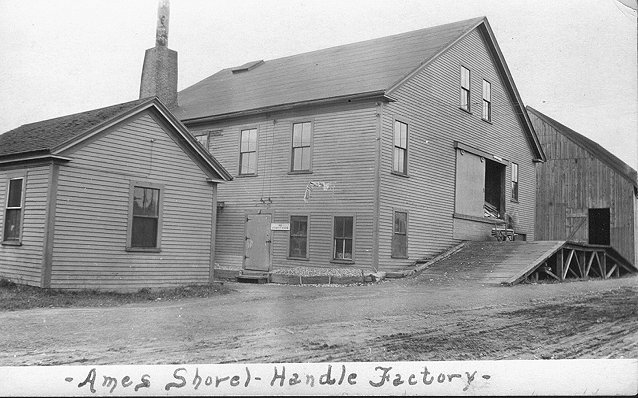
Ames Shovel Handle Factory, Oakland, Maine*


March 28 Sunday  Went to church this morning and

at noon called at Mrs Wm Reeds with Henrietta

Hannah came at noon but was faint and

I carried her home and got back to church about

the time the services were over  After went down

to the new shops with Mrs W, S Ames Augusta Orinthia

found Mr. Ames, Oliver & Cyrus L there returned by Edwins

and all called there  Mr Ames & self went to Augustus’ this evening

The new shops were up, and various family members rode by to see them after church. No more “dismal ruin”, as reported by Evelina only three weeks earlier. Risen like a phoenix from the ashes of the old shops, the shovel works were about to begin operations in new, if temporary, quarters.

It was a large group that gathered to consider the new buildings. Evelina, who had missed the afternoon service in attending to her ailing niece, Hannah Lincoln Gilmore, nonetheless rode back from church to the site. Accompanying her were her sisters-in-law, Sarah Witherell and Sarah Ames; another niece, Augusta Pool Gilmore; and sometime boarder and frequent companion, Orinthia Foss.  At the site, by accident or design, they found Oakes Ames and his brother, Oliver Ames Jr., and Cyrus Lothrop, a brother of Sarah Lothrop Ames who often resided with his sister. The group must have marveled at the swift reincarnation of the shovel works.

Perhaps a celebratory spirit inspired the crowd to assemble en masse at the nearby home of newlyweds Augusta and Edwin Gilmore.

*Image of Ames Shovel Handle Factory, Oakland, Maine courtesy of the Oakland Maine Area Historical Society. Included to illustrate what the rebuilt shovel factory could have resembled.

March 27, 1852

north-bridgewater-mass-1844-sm

1852

March 27  Sat  Have been mending again to day and painted

some spots in the back entry chamber  Mrs Witherell

& Mrs Lovell from Bridgewater came to see Mrs Witherell

& spent the day.  Mrs Lovell called on Hannah.

Mrs S Ames came in soon after dinner and staid

most of the afternoon  We called to see Mrs

Witherell & Lovell  Have read in the papers this

evening

Sarah Ames Witherell, Evelina’s sister-in-law, had visitors today from Bridgewater. Sarah’s mother-in-law, Lydia Witherell, and a Mrs. Lovell called. Mrs. Witherell was a recent widow, more recent even than her daughter-in-law, Sarah, who had been widowed three years earlier. Where Sarah’s late husband, Nathaniel Witherell, Jr. had died in October, 1848, his father, Nathaniel Witherell, Sr., had passed away in January of this year. Sarah and her two children, George and Emily, had traveled through a snowstorm to attend the funeral.

The Mrs. Lovell who came to call may have been Emeline Perry Creasy Lovell,  wife of Reverend Stephen Lovell, former resident of Easton and one-time pastor of the recently defunct Protestant Methodist church in Easton. But the clergyman and his wife possibly lived in Boston, too, so this Mrs. Lovell “from Bridgewater” may have been someone else. Yet her extra visit to see Hannah Lincoln Gilmore, who was still ailing, suggests that this Mrs. Lovell was familiar with at least some of the residents of North Easton.

While this visiting was going on, Evelina stayed on her side of the house with her other close sister-in-law, Sarah Lothrop Ames.  How did it work to have two separate social conversations going on under one roof, one on each side of divided parlor walls? One imagines that Evelina and Sarah Ames were curious about the nature of the call in “the other part of the house.”

March 26, 1852

imgres


1852.

Friday March 26  Mrs S Ames returned from Boston last

night, had unpleasant weather for two days.  She called

at Mr Orrs found them all well. Julia is there

yet with her little one  Mrs S Ames & Witherell

called on Mrs Elizabeth Lothrop and invited me

to go with them but I felt it more my duty to call

on Mrs Swain, did so, and was prevailed upon to 

spend the afternoon & evening.  She has weaned her

babe, has been quite unwell but is now better

Two young women closely connected to Evelina recently weaned their babies. Hannah Lincoln Gilmore, wife of Evelina’s nephew Augustus, had just weaned her seven month old son, Willie. Ann Swain, wife of the head clerk of the shovel works, John Swain, had done the same with her five month old boy, John.

Weaning was an anxious time for both babies and mothers, although in this circumstance it appears the babies came through the ordeal better than their mothers, at least at first. Both Hannah and Ann had been unwell during the process. Evelina, in her attentive way, had spent time with the two young mothers while they ailed. As a practiced mother who had nursed and weaned five babies of her own, she may have offered advice and provided significant comfort to the younger women.

In Boston on this day in 1852, far from the concerns of the nursery, a new house of worship, the Temple Ohabei Shalom, the first synagogue in Boston, was consecrated. Although the temple, built on Warren Street, is no longer standing, we know that was architecturally handsome and well-appointed. It could seat 400 worshipers and also offered an area for a Hebrew School, a meeting room, and a bath, known as a mikveh.* A temple by the same names exists today on Beacon Street in Brookline.

Although Easton now has a synagogue, the Temple Chayai Shalom, it did not have one, nor did it have a visible Jewish community, in 1852.


* Jim Vrabel, When in Boston, Boston, 2004, p. 160

March 23, 1852

SurvChain

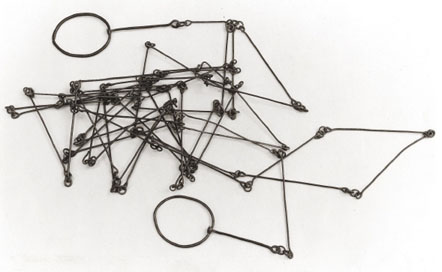
 Gunter’s Chain**

March 23

1852 Tuesday. Alson and wife dined here and spent

the afternoon at Edwins  He has been running

out lines for Edwin & Melvin Randall  Orinthia

went home with them.  Was at tea in Edwins

& this evening with Augusta at Augustus’

Augustus has gone to New York.  Susan is staying

there to night went just after dinner.  Oliver & wife

went to Boston this morning   Rained untill early night.

The Gilmore clan was moving around today. Evelina’s nephew, Alson “Augustus” Gilmore, was headed for New York City on business for his boot company or the Ames shovels, or both. Evelina’s brother (and Augustus’s father), Alson Gilmore, and his wife, Henrietta Williams Gilmore, had midday dinner at the Ames house. Alson was in the village helping another son, Edwin Williams Gilmore, and an Easton man, Melvin Randall, run out lines.

The phrase “running out lines” is open to interpretation (ice fishing is a possibility!), but the most likely meaning is that ground was being measured, perhaps for the new factory buildings soon to be built. A running measure is the cumulative distance in a straight line from a fixed point. The standard instrument used to get a running measure, at least in the 18th and 19th centuries, was a Gunter’s chain. It was used in conjunction with a compass and a transit (for establishing straight lines) to measure ground.

Invented by an English clergyman and mathematician, Edmund Gunter, around 1620, the Gunter’s chain “played a primary role in mapping out America.”** The Army Corps of Engineers would have owned such chains in bulk. The chain’s 100 lines measure 4 poles, or 66 feet, or 22 yards, depending on how you care to count it. Eighty chains equal one mile.

The Gunter’s chain, however, helpful as it was, was apt to be hand-made and thus subject to variation. It was eventually replaced by the more accurate surveyor’s tape.

By the way, for those readers who follow the game (or watch Downton Abbey), the length of a cricket pitch is exactly one chain.

*Thank you, Frank Mennino, for your assistance on today’s blog.

**Image from Colonial Williamsburg, courtesy of http://www.history.org

March 20, 1852

faces


from The Philosophy of Laughter and Smiling , 1877

1852

March 20th Saturday  Have cut and basted a purple print

apron for Susan of a pattern that Lavinia

brought from Mary  Abby & Edwin & wife were

here to tea  Orinthia dressed in Franks clothes

and paraded around here awhile.  Send for Mrs

Witherell & Mrs S Ames to see her  We have had

a pretty lively time  Orinthia brought over

Edwin & wife.

The ladies laughed today.  After sewing for hours, breaking only for midday dinner, Evelina and her young friend Orinthia Foss laid down their needles to have tea. Orinthia got it into her head to put on nineteen-year-old Frank Morton Ames’s clothes “and paraded around.” She donned his shop pants, perhaps, and shop coat over one of his white muslin shirts. Evelina and her guests were so amused at the sight that they called in Sarah Ames and Sarah Witherell to see the fun. Cross-dressing was a novelty for these women, and Orinthia’s daring act generated hilarity.

All things considered, these women were probably due for some laughter.  It was the first day of spring, and everyone had been pretty well cooped up for months, excepting the occasional trip into town. More recently, they had suffered through a major fire. Some innocent amusement was a good release.

Evelina’s favorite author, Charles Dickens, knew all about laughter: “It is a fair, even-handed adjustment of things, that while there is infection in disease and sorrow, there is nothing in the world so irresistibly contagious as laughter and good humor.”**

While the women amused themselves at home,  the best-selling novel of the 19th century was published in book form today, in Boston.  We’ll soon find Evelina reading Uncle Tom’s Cabin.


* Clockwise: “The Giggling Laugh, excited by Boisterous Fun and Nonsense.” “The Obstreperous Laugh, instigated by Practical Jokes or Extreme Absurdities.” “The Hearty Laugh of the Gentler Sex.” “The Stentorian Laugh of the Stronger Sex.” “The Superlative Laugh, or Highest Degree of Laughter.“ From The Philosophy of Laughter and Smiling, George Vesey, 1877. Courtesy New York Historical Society, courtesy of CABINET: The Art of Laughter, Issue 17, Spring 2005

**Charles Dickens, A Christmas Carol

March 16, 1852

130705-A-DS407-001

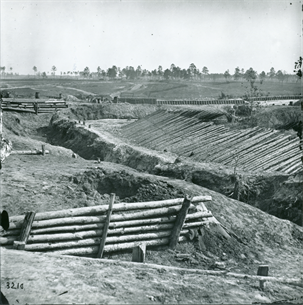
Defensive breastworks dug by Army Corps of Engineers outside of Petersburg, Virginia during the Civil War – probably using Ames shovels

March 16th

1852 Tuesday  Sewed on my waist very quietly

with Amelia this forenoon and this afternoon

have been into Edwins  Julia Pool came

there & tomorrow is going into Boston  Mrs S

Ames was there and this evening Mrs Witherell

Amelia is in fine spirits and am having

a very pleasant visit from her.

A quiet day was this, and “not verry cold.”*  Evelina and her sister-in-law, Amelia Gilmore, sat and sewed for hours and visited with Augusta Pool Gilmore, Sarah Lothrop Ames and Sarah Ames Witherell.  The reconstruction of the shovel shops continued.

Although Evelina was unlikely to have known it, today happened to be the 50th anniversary of the founding of the Army Corps of Engineers. Officially organized  by President Thomas Jefferson on this date in 1802, the Corps was headquartered at West Point, where it established and led the military academy until after the Civil War. For many years, West Point was the major engineering school in the country.

In addition to its oversight of West Point, the Corps was tasked for much of the 19th century with exploration of America’s vast lands and waterways. As the country moved westward, the Corps surveyed road and canal routes.  During the Civil War, it built bridges, railways, forts, batteries and roads – often using Ames shovels.

In 1852, in particular, the Corps was focused on waterways.  In Detroit, one group of engineers conducted and published a survey of the Great Lakes. In Utah, an engineer named Lieutenant James W. Gunnison, for whom the Gunnison River is named, explored the Salt Lake area and spent time with the Mormons. He published a report entitled, “The Mormons or Latter-Day Saints, in the Valley of The Great Salt Lake. A History of their Rise and Progress, Peculiar Doctrines, Present Condition, and Prospects, Derived from Personal Observation During a Residence Among Them.”

A year later, Gunnison and several members of his team would be massacred by Indians from the Pahvant Ute tribe.  Gunnison’s widow, Martha, always believed that the Mormons were the actual perpetrators. The Army Corps of Engineers kept right on going, continuing its work and eventually expanding its original mission to include flood control, dam construction, and environmental cleanup.


Oliver Ames, Journal, Stonehill College Archives, Arnold Tofias Collection

March 11, 1852

Build

1852

March 11 Thursday.  Cut out another waist of stout

bleached cotton cloth  Have been to Mr

Horace Pools with Mrs Witherell & Mrs

S Ames.  Met Henrietta Rachel & Mrs Harrison

Pool there, got home about eight Oclock

finished writing a letter to Harriet Ames.

Amelia went to Mr Torreys.

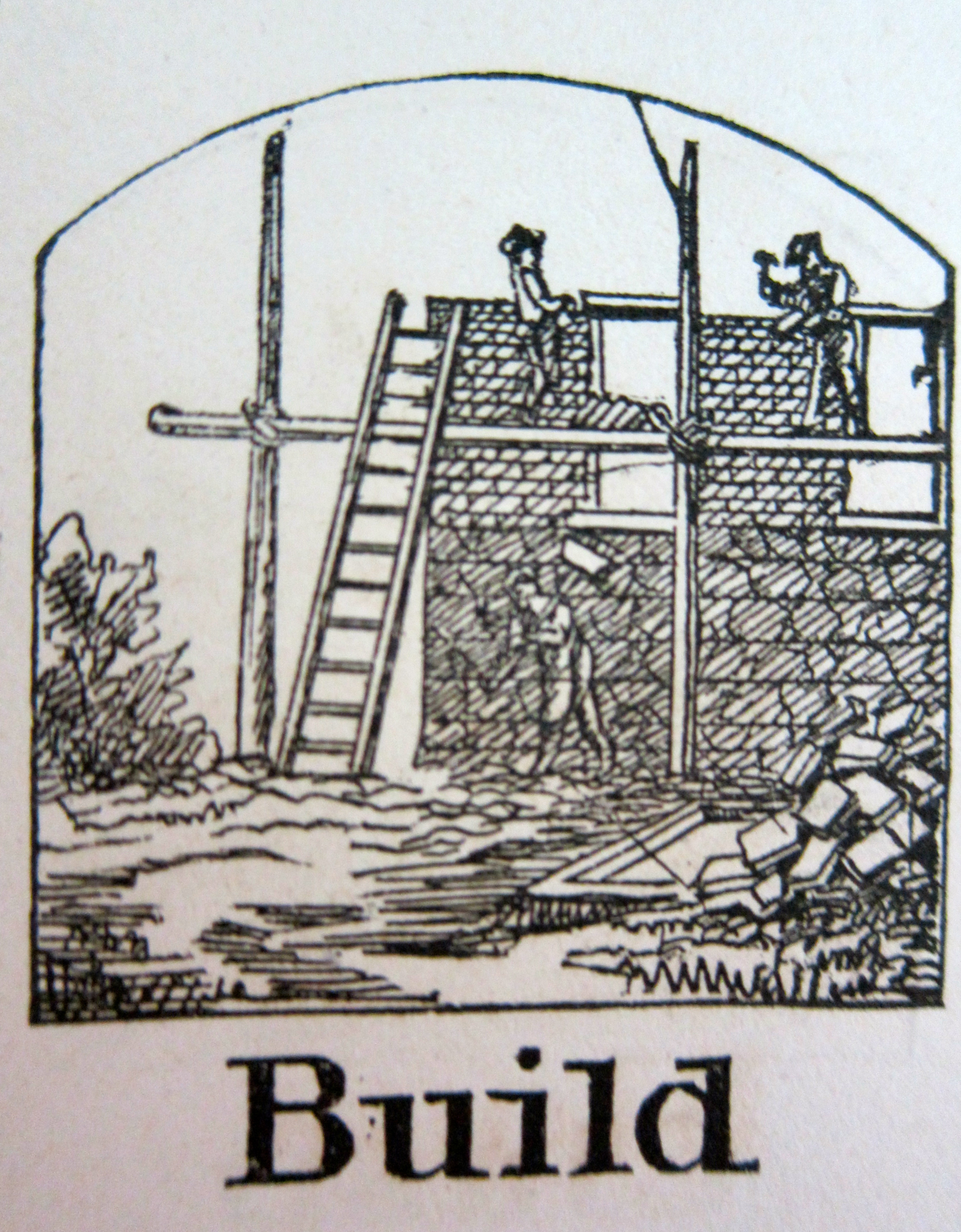
Old Oliver made his daily report:“the ground froze pritty hard last night – wind north in the morning butt southerly in the afternoon + pritty warm. it was a still day butt little wind – we began to rais the hammer shop to day.”  If ever there was an instance of Yankee industry, this cold, windy March in North Easton was it. Whatever the weather, all hands were on deck for the rebuilding of the shovel shops, which had burned to the ground less than ten days earlier.

While the men hammered, the women sewed – at least at the Ames compound. Evelina, anticipating warmer weather, worked on a new cotton dress. She had been fiddling with the waist lines on her dresses lately, suggesting that her waist might have altered. Larger or smaller?

With her sisters-in-law, Sarah Ames and Sarah Witherell, Evelina rode to the home of Horace and Abby Pool, where they met Henrietta Gilmore, Rachel Pool, and Mary Pool. This sounds like a gathering of the Sewing Circle, which we haven’t heard about since December when they temporarily disbanded. Now that spring had arrived, they might have started meeting again.