August 27, 1852

Locomotive

Friday Aug 27th  Left Burlington at 1/4 before eleven on

our return home  They were very unwilling that we

should leave before next week and it was a sudden

start our leaving at last  It rained most of the 

way which made it much more pleasant as it

laid the dust  Arrived at Boston about

eight passed the night at Mr Orrs. Mrs Ames

Helen & Fred went to the Adams House

Somewhat precipitously, Evelina departed Burlington today with Sarah Lothrop Ames and her children Fred and Helen. Almira Ames didn’t return with her nor, more important, did Oakes Angier Ames. He would stay behind to rest and try to get the better of his pulmonary ailment.

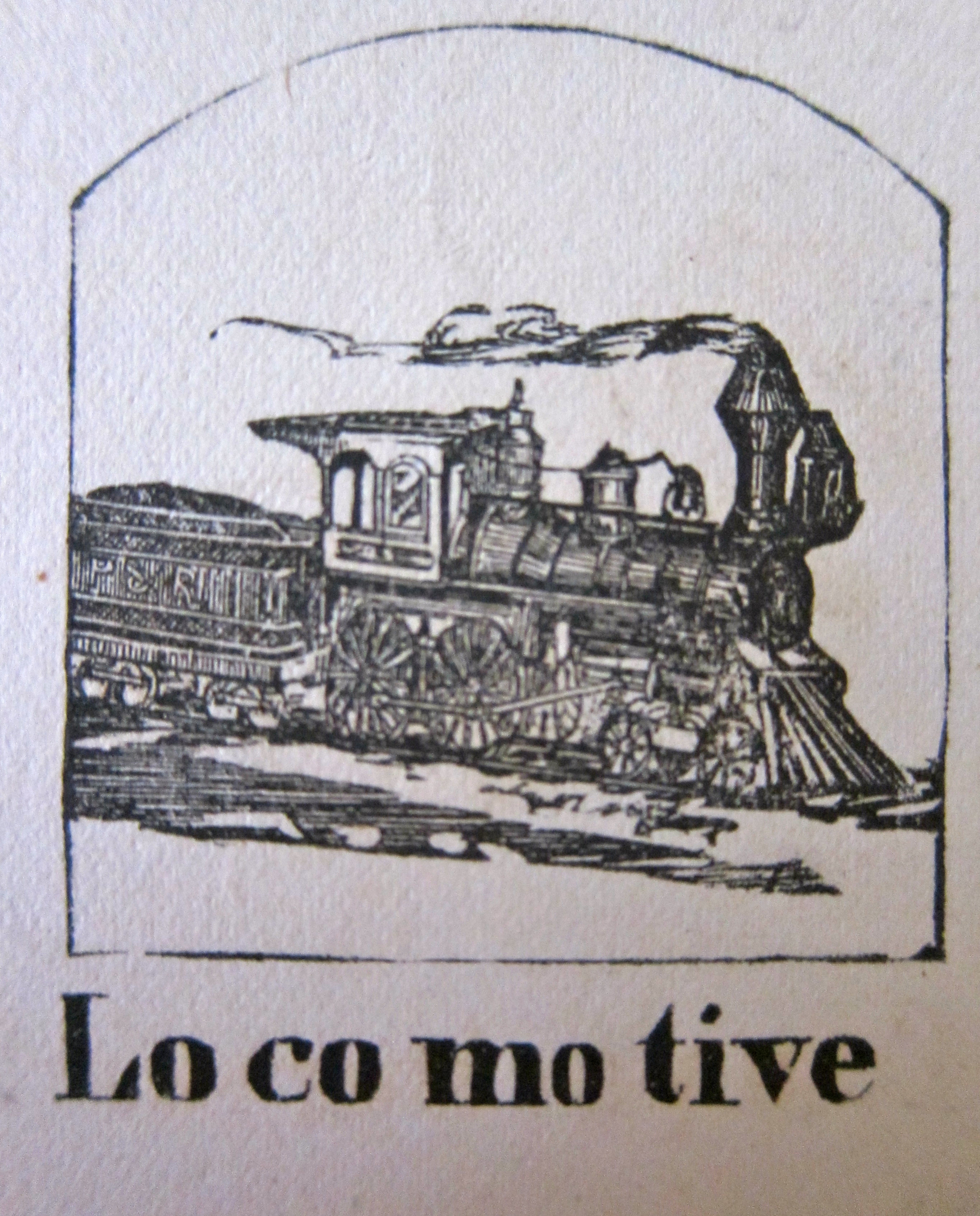
After a nine hour train trip, which proved to be “much more pleasant” than the ride they had taken eight days earlier, Evelina and company arrived “at Boston.”  Light rain had fallen throughout the journey, which helped lay the dust, but was a precursor of more wet weather to come. This was hurricane season, after all.

Evelina says nothing about shopping in Boston. She may have been too fatigued by the journey to follow her favorite pursuit in the city.  Instead, she went right to the home of Robert and Melinda Orr, her usual headquarters when there. Sarah Lothrop Ames and her children stayed elsewhere.

August 26, 1852

Champlain-02

The Steamboat Oakes Ames, ca. 1868*

Thursday 26th Aug  This morning Mrs Mills got a hack and

carried us all out to ride.  We had a fine view

of the Lake and town, was riding over an hour

and returned to Mrs Stetsons and all dined there

Called into a shop to see stone ware made

Passed the afternoon at Mrs Mowers and there

we had a very pleasant time  Charades & Tableaux

got home about twelve

Evelina filled her last full day in Burlington with social activity. She and a group – Almira Ames, Sarah Lothrop Ames, Fred and Helen, and Oakes Angier, too, presumably – were “carried” out for a ride, during which they admired the “fine view” they got of Lake Champlain and the town itself. It was a pretty place. But no amount of imagination in the mind of anyone in the hired carriage could have foretold that one day a steamboat named for Oakes Ames would be plying the waters they were gazing at.

In 1868, in fact, the 244′ Oakes Ames, built in the Napoleon B. Proctor Shipyard, would be launched from Burlington. Designed to ferry railroad cars from Burlington across the lake to Plattsburgh, New York, the steamship was commissioned by the Rutland Railroad, for whom Oakes Ames was a director and one of the line’s “firmest friends.”** In 1874, the ship would be renamed and repurposed for passenger service. Yet the newly christened Champlain II would last in service only until running aground in July, 1875. Although the incident produced no fatalities, the ship’s hull would be dashed beyond repair. Today, the boat is a famous wreck in the water.

Steamship and railroad deals being in the future, Evelina and the group continued to enjoy themselves on this pleasant day. They dined at a friend’s house and visited a stoneware shop. In the evening they all played charades and tableaux, popular parlor games in which participants acted out words or situations, or created still scenes of familiar subject matter, respectively. Such games were particularly popular at Christmastime.

*Image courtesy of the Lake Champlain Maritime Museum

** Burlington Free Press, August 20,1868, p.4.  For an exhaustive narrative about the Champlain II, ex-Oakes Ames, please see a thesis by Elizabeth Robinson Baldwin, May 1997, Texas A & M

August 22, 1852

1835sketch

Unitarian Church, Burlington, Vermont, circa 1835*

Sunday Aug 22  We went with Mrs Stetson to the

Unitarian church & heard Mr Rich in the morning

dined at Mrs Mills and all went to the

Episcopal church this afternoon  This is a

beautiful church but I did not think much

of the preaching or singing.  Returned

to Mrs Stetsons to tea and had a quiet evening


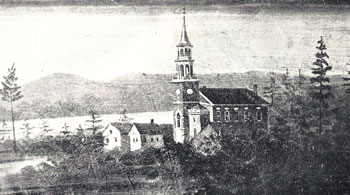
Naturally, Evelina attended church on Sunday, just as she would have done had she been at home. In this case, she went to Burlington’s Unitarian Church with her hostess, Mrs. Stetson,and “heard Mr Rich” preach. But for the afternoon service, she went to an Episcopalian church with a group of women with whom she had dined.

She liked the looks of the Episcopal Church but, as she often did when attending any church but her own, she didn’t approve of the service, sniffing at the poor “preaching and singing.”  Evelina invariably preferred her own church in Easton – and her own preacher. No one could ever equal Mr. Whitwell.

The family (still minus Sarah Lothrop Ames and her two children, who had stopped at a town further south) kept a pretty low profile in the evening. Keeping quiet, after all, was the point of this vacation for Oakes Angier Ames. It was hoped that his staying in Vermont would improve his health.


*Courtesy of the First Unitarian Universalist Church, Burlington, http://www.uusociety.org


August 20, 1852

1024px-1879_CV_map_only

Map of the Central Vermont Railroad, circa 1879

1852

Friday Aug 20th  Left Bellows Falls at 1/2 past 7 and

arrived at Burlington about two. Went

to Mrs Stetsons found the house shut up

At the house opposite they told us she had

gone to Mrs Mills and went there and had

some dinner and all went to Mrs Stetsons to

tea  Mrs S Ames Fred & Helen stopt at Pittsford

Willie Gilmore died this afternoon

Evelina would not learn of it for several days, but her young great-nephew, William Lincoln Gilmore, died today of dysentery. (She added the information later.) Barely a year old, Willie had been ill for several weeks, and Evelina had visited his parents, Augustus and Hannah Gilmore, a few times before she left North Easton. His death was sad news.

Not knowing about it, however, and full of her own worry for her own son, Evelina was open to the journey she and other family members were on. By way of the Vermont Central Railroad, presumably, she, Oakes Angier, and Almira Ames traveled another 100+ miles today from Bellows Falls to Burlington, Vermont, while Sarah Lothrop Ames and her two children, Fred and Helen, got off at Pittsford. Although the map in the illustration above dates from 1879, the line itself was first developed in the 1840’s.

Burlington was Oakes Angier’s destination, the place where he would stay for several weeks to rest and, it was hoped, recuperate from his pulmonary illness. The threesome spent the night with Mrs. Stetson, a friend of the family.

August 19, 1852

PC+Bellows+Falls01VT

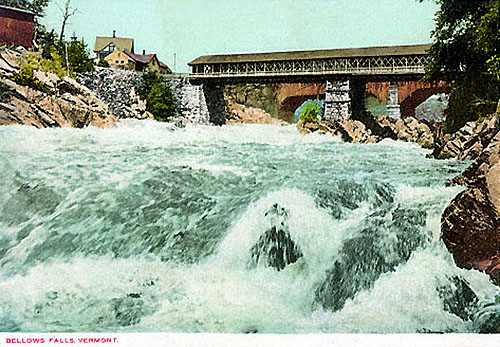
Bellows Falls, Vermont, late 19th century

Aug 19th Thursday.  Started with Mrs A L Ames

S Ames Fred Helen & Oakes A for Burlington

Left Boston at 12  Stopt for the night

at Bellows Falls much fatigued & covered

with dust.  It is a very romantic place and […]

very good accommodations at the Island house

Walked out after tea to view the place & falls

Off they went! Half the family, it would seem, exited North Easton to accompany Oakes Angier on his trip to Burlington, Vermont. Obviously, the group traveled first from North Easton to Boston, where they boarded a train, most likely, and departed at noon. Six or so hours and about 100 miles later, “much fatigued and covered with dust,” they disembarked at Bellows Falls, Vermont, a small village on the state line between New Hampshire and Vermont.

The village may have been small, but its location on the Connecticut River and its powerful falls made it a fine industrial site. Two railroads already met there, and a mill industry thrived. The bridge across the water – a later version of which is featured in the postcard illustration above – added to the picturesque quality of the town.  Evelina found it “very romantic.” Today the village is part of the larger town of Rockingham, whose population boasts a little over 5,300.


August 17, 1852

Flatiron

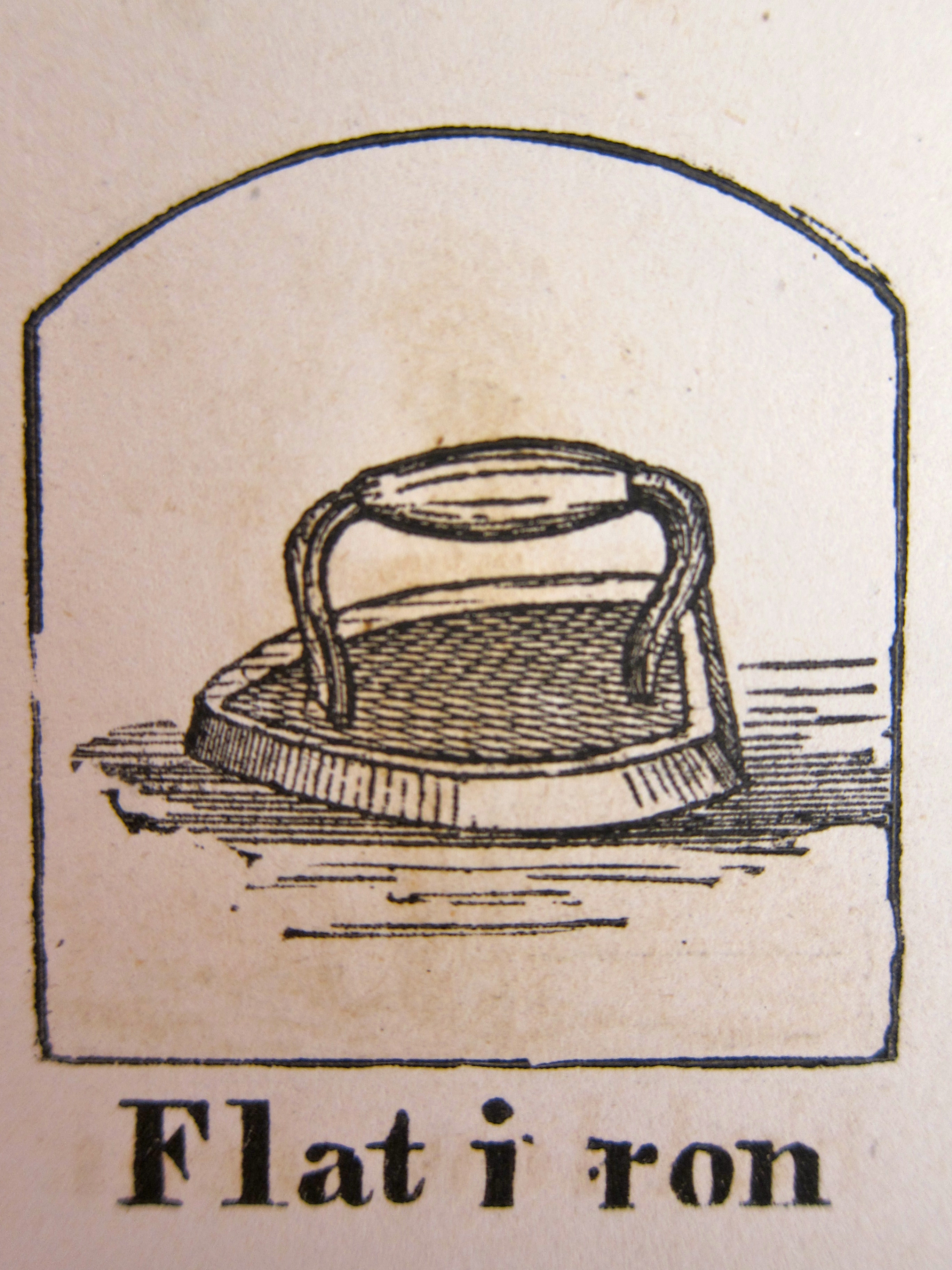
Aug 17th Tuesday  Starched my clothes and about

eleven Oclock was setting the table to iron

when Mother & Alsons wife came and

I put them by.  Have ironed them this after

noon in the dining room with Mrs Stevens

Henrietta Augusta & Abby sitting around

Mrs Ames & Witherell called

The Ameses had made a decision to send Oakes Angier to Vermont for a rest, and Evelina was to accompany him on the trip. Also accompanying them would be Sarah Lothrop Ames and her two teenaged children, Fred and Helen, as well as the visiting Almira Ames.

Gathered around Evelina in the afternoon were many of her usual companions: her sister-in-law Henrietta Williams Gilmore, her nephew’s wife, Augusta Pool Gilmore, her niece Abigail Williams Torrey, her guest Mrs. Stevens, and her nearest sisters-in-law, Sarah Witherell and Sarah Ames. The looming expedition must have been the topic of conversation among the women as they sat and watched Evelina iron her clothes on the dining room table. (No ironing boards yet!) The conversation might have roamed from concern for Oakes Angier to curiosity about the travel arrangements.

That the travel ahead of Evelina was serious is indisputable; it involved the well-being of her eldest son. Yet there had to be an element of adventure in the plans.  They’d be traveling across Vermont, visiting places that Evelina may never have seen. They’d be seeing relatives and friends, too, which may be the element that enticed Sarah Lothrop Ames and her two children to join the expedition.

August 14, 1852

440px-Henry_Jacob_Bigelow_c1854


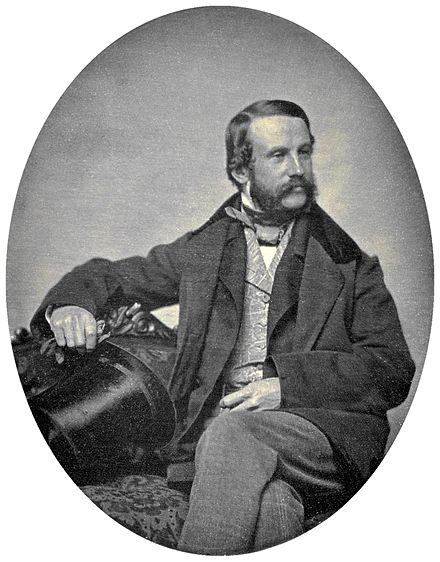
Dr. Henry Jacob Bigelow

(1818 – 1890)

Aug 14th

1852 Saturday  Oakes A went to see Dr Bigelow

He agrees with Dr Swan that the blood

comes from the lungs and that he must leave the

shop and be very quiet.  Returned from

Boston to night.  Mrs Stevens came here in

the Cars  Mrs Witherell A L Ames & Mrs

S Ames called

Oakes Angier saw a doctor in Boston today about his bad cough and bloody sputum.  He went to a Dr. Bigelow, who could have been either of two well-regarded medical men: Jacob Bigelow or his son, Henry Jacob Bigelow. The son, only a decade older than Oakes Angier himself, was a Harvard grad who was becoming famous for his role in introducing ether into the operating room. Without the modern diagnostic equipment to which we 21st century readers have become accustomed, Dr. Bigelow was nonetheless able to give an informed opinion about Oakes Angier’s pulmonary condition. If the doctor used the word “consumption,” Evelina didn’t write it down.

The illness was serious and Oakes Angier was ordered to ” leave the shop and be very quiet.” Rest and fresh air, in other words, were the treatment. If diagnostic ability was limited, treatments were even more so. Oakes Angier would have to go away and rest and hope for the best.

Back in Easton, the women of the family gathered in the sitting room or parlor to hear what the Boston physician had said, and perhaps to take a look at Evelina’s new bonnet. We can imagine that each member had a notion of what should happen next: where Oakes Angier should go, how he might travel, and what needed to be done to get him ready. In all likelihood, however, the decision on what to do would be decided by Oakes Angier’s father.


August 13, 1852

Chaise

Friday Aug 13th  Went to Boston with Oakes A and

Susan in Mr Whites Buggy chaise

Mrs S Ames went in the Cars. Met her at

12 Oclock at Mr Daniells  Ran around most

all day to get a bonnet  Mrs Norris went

with me in the afternoon and at last just

at night found one such as I wanted


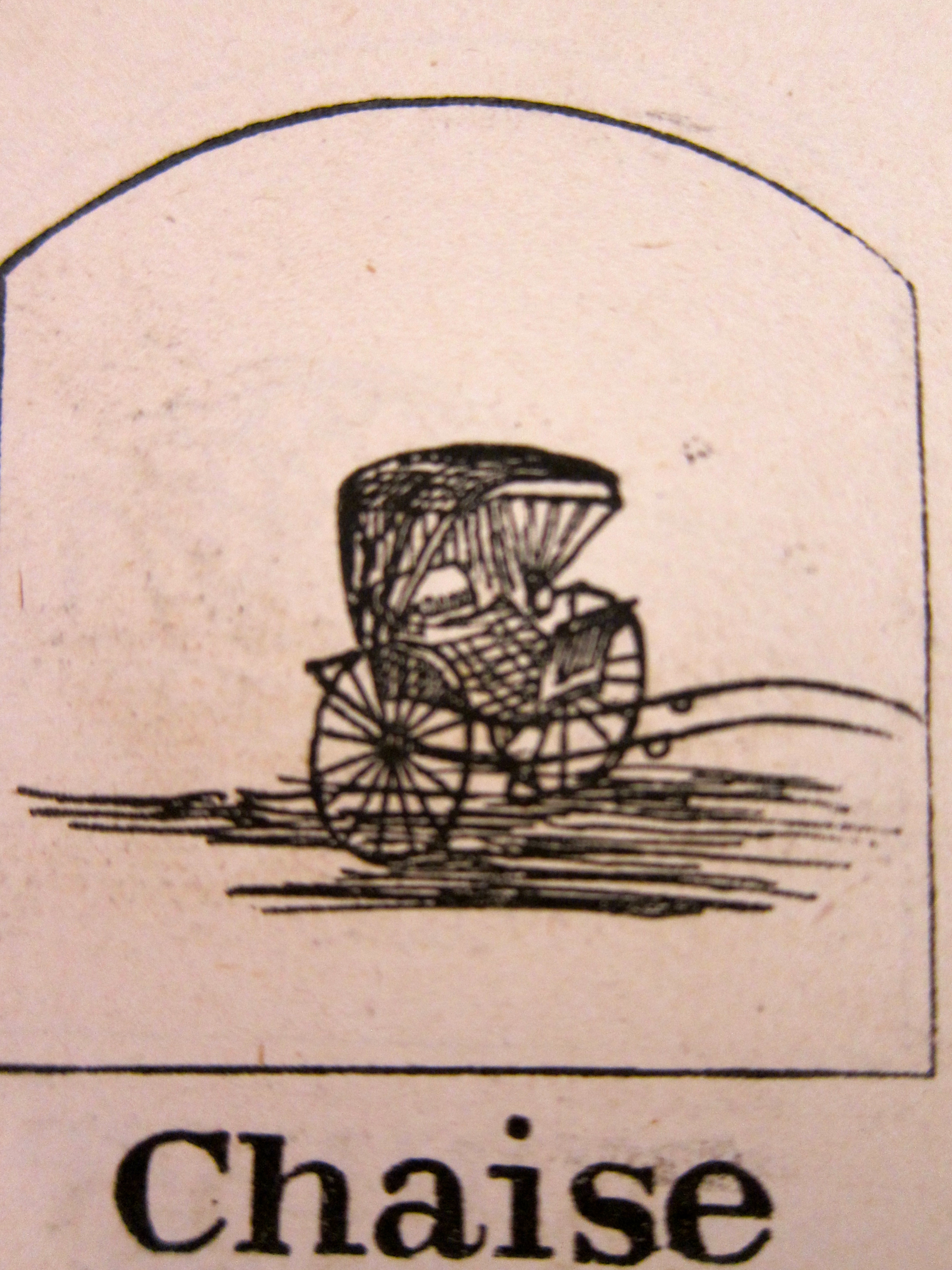
Evelina had a bonnet to buy in Boston; Oakes Angier had a medical appointment to make. So, sitting snugly in a chaise borrowed from Col. Guilford White, Evelina, Oakes Angier, and little Susie Ames rode into Boston. Most likely, Oakes Angier drove while the females sat beside him and examined the passing countryside. This trip would have been a big adventure for Susie, who didn’t move beyond Easton very often.

Sarah Lothrop Ames, meanwhile, took the train into town. The two women met up at noon at a familiar haunt, Mr. Daniell’s Dry Goods store on Washington Street. From there they “ran around most all day,” Evelina looking everywhere for the right bonnet – at the right price, no doubt. She secured one at the end of the day and presumably went to the home of Robert and Melinda Orr to spend the night, probably with Susan. Whether Oakes Angier joined her there isn’t recorded.

The Ames family didn’t own a chaise, evidently, though such two-wheeled vehicles were quite common. One hears of chaises, known colloquially as shays, being the definitive carriage for rural doctors and country parsons – men who had to move around frequently to see their patients and parishioners, respectively. In 1858, Oliver Wendell Holmes Sr. wrote a satirical poem about a well-built chaise entitled the “The Deacon’s Masterpiece or The Wonderful One-Hoss Shay” that was quite popular in its day.


August 9, 1852

06_01_002623.LARGE

Map of Bristol County, Massachusetts, 1852*

1852

Aug 9th Monday  Part of the forenoon was working

about the house & cut out some work.

This afternoon started to go to Taunton

and got as far as brother Alsons when it rained

poringly and we were obliged to ride into

the barn untill it slacked a little so that we

could get into the house  Spent the afternoon 

there.  It was quite pleasant when we came 

home.  Mrs Witherell A L Ames & S Ames were with me


On the 1852 map of Bristol County, illustrated above, the town of Easton sits at the very top. Its eastern border abuts Plymouth County, which was the home of Bridgewater (today’s Brockton), West Bridgewater, and more. On Easton’s northern line sits Stoughton in Norfolk County. To its immediate south lies Raynham, home of many Gilmore cousins. We often read of Evelina traveling to these three vicinities – Bridgewater, Stoughton and Raynham –  to see family, friends, and vendors.

To the west of Easton lies Mansfield – where Oakes and Oliver (3) caught the stagecoach for Providence – and Norton. Further south, on a NNW/SSE axis, is the somewhat bow-tie-shaped town of Taunton. Taunton in the 19th century was known locally as “Silver City,” for its silver manufacturing, being the home of Reed & Barton, F. B. Rogers and others. We seldom hear of Evelina heading there, but for some reason, she and her sisters-in-law were traveling there this afternoon.

The ladies never got to Taunton, however, as an abrupt rain shower came down “poringly” while they were en route. “Good showers,”**too, according to Old Oliver, the kind of showers he’d been looking for most of the summer. When the rain commenced, the women drove their vehicle into Alson Gilmore’s barn and waited, then hurried into the house when “it slacked a little.” And there they sat, visiting with the Gilmores.

With the notable exception of Boston, to which Evelina traveled several times a year, this map pretty well represents the geographic scope of Evelina’s life to date. The northern portion of Bristol County and its abutting towns constituted her largest neighborhood, her network of friends and family, her travel pattern, her home. That was her world. It would soon get larger.


*Courtesy of the Norman B. Leventhal Map Center, Boston Public LIbrary

** Oliver Ames, Journal, Stonehill College Archives, Arnold Tofias Collection

August 2, 1852

Rain

Aug 2d 1852

Monday  Was about house most of the forenoon and this

afternoon have been to work on my traveling

dress again had to let out the front & widen

the arm it was so tight  Helen spent the

afternoon here  Mrs G & Mrs S Ames called

in the furnace neighborhood and coming home 

got caught in a heavy shower

Evelina and her father-in-law, Old Oliver, had a different perspective on the afternoon’s rainfall. She called it “a heavy shower,” while he wrote that it was “a small shower.”* Because her female relatives, Almira Ames and Sarah Lothrop Ames, “got caught” in it and probably arrived home soaked, Evelina would have seen the rainfall as torrential. Old Oliver, on the other hand, would only have considered the rain in terms of the measure of water it delivered, whether he was indoors or out. From his dual position as farmer and shovel manufacturer, he considered today’s rainfall as modest. As often happened, the two in-laws differed on details.

While the rain fell in Easton, important politics were getting underway about a thousand miles to the west. In Iowa and Missouri on this date, elections to the 33rd session of the U.S. House of Representatives were being held. It was the beginning of the campaign season, something that might sound familiar to today’s readers. Between them, these two states (which, except for California to the far west and Texas to the far south, were perched on what was then the frontier between the eastern states and the western territories) would send nine representatives to Washington, the majority of them Democrats.

As we have mentioned previously, this 1852 election would be won by the Democrats, in sufficient strength to sound the death knell of the old Whig party. From its ashes would rise the new Republican party.


*Oliver Ames, Journal, Stonehill College Archives, Arnold Tofias Collection