July 10, 1852

DSC_0383

Lace doily

July 10th Saturday  Have finished Susans 5th pair of

pantletts & Mrs Witherell has given her three

more so she is pretty well off in the pantlett line

Have been marking some clothes and Mrs

Witherell marked 6 gentlemans hdkfs & 6 for

me and doylies & other things  Mary has sewed

some but does not accomplish much is better at

housework than sewing  Oakes A has gone to a

sing near Jonas Hartwells with other gentlemen

and ladies

Evelina and her sister-in-law, Sarah Witherell, sewed today: pantletts, handkerchiefs, and an item new to the repertoire: doilies.  A maid named Mary did some sewing, too, but wasn’t up to the standards set by the older women.

In the 21st century, we know doilies as decorative paper mats that are typically used to present special baked goods. Doilies can also be made from cloth or lace, however, and once had a broader range of applications than just accompanying tea cakes. Designed in the 17th century by a London draper named Mr. Doiley, the original item was an inexpensive woolen cloth that was used to ornament a dress. It developed into a napkin used to protect the material under it. It might be seen on a tablecloth, a sideboard, or even on the back of an armchair (where it became known as an antimacassar.) Beautifully-made doilies were a housewife’s source of pride, specially stored in the linen closet.

Old Oliver, no doubt entirely disinterested in the women’s sewing agenda, reported that this “was a a fair warm day wind south west. + has bin all the week.”* Oakes Angier Ames took advantage of the good weather and, after work, headed to Bridgewater to attend a sing near the farm of Jonas Hartwell “with other gentlemen and ladies.” Who were they? Did he run into anyone of interest?

*Oliver Ames, Journal, Stonehill College Archives, Arnold Tofias Collection

July 8, 1852


IMG_7790

1852

July 8th Thursday  This forenoon cut out a night dress

from Mrs Ames pattern and was busy in my 

chamber made some cake & ginger snaps and 

baked them in Mrs Witherells oven  This

afternoon Mrs Witherell S Ames & A Ames were

here & Helen & Emily  The gentlemen came to 

tea  Mrs Augustus Gilmore passed the evening

This was a hot day for baking, but Evelina nonetheless made “cake & ginger snaps” in her sister-in-law’s brick oven. No doubt she served some of the goodies later in the day when the Ames clan gathered for tea. There didn’t seem to be any special occasion for the tea, except that a cousin, Almira Ames, was visiting. Rather, it was perhaps Evelina’s turn to entertain the family. As Evelina’s grandson, Winthrop Ames, later pointed out, “[e]very week at least, and usually oftener, one household would invite the others and their visitors to tea; and the whole Ames family might assemble…”*

Ginger snaps were pretty standard fare at such occasions. Evelina baked them regularly. In recipes from that time, they’re often referred to as hard gingerbread. Sarah Josepha Hale includes a “receipt” for them in The Good Housekeeper from 1841:

Rub a half a pound of butter into a pound of flour; then rub in half a pound of sugar, two table-spoonfuls of ginger, and a spoonful of rose water; work it well; roll out, and bake in flat pans in a moderate oven. It will take about half an hour to bake. This gingerbread will keep good some time.**


Winthrop Ames, The Ames Family of Easton, Massachusetts, 1937, p. 128

**  Sarah Josepha Hale, The Good Housekeeper, 1841, p, 99


July 6, 1852

500px-Illinoisoldcapitol

Old State Capitol Building, Springfield, Illinois, built 1839

1852

July 6th Tuesday  Was very busy sewing this forenoon

Mary made the sleeves to my purple cambric

calico and sewed the drugget for the sitting

room  This afternoon have been into Olivers

to tea with Mrs Witherell & Mrs Ames &c &c

Mr Jones from Foxboro called.

Received a note from Cassander Gilmore that 

Henry died this morning requesting us to attend the funeral 


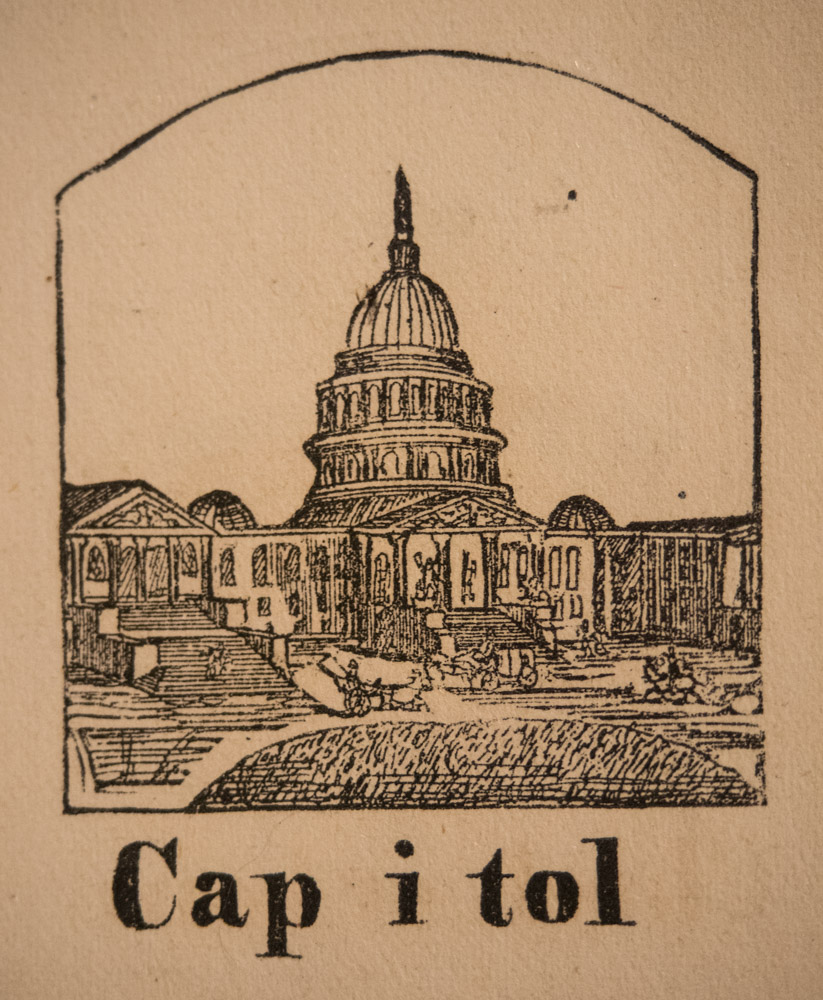
In the statehouse in Springfield, Illinois, a practicing lawyer and former U. S. Representative named Abraham Lincoln gave a eulogy today for Henry Clay, the Senator from Kentucky who had just passed away. Clay had been Lincoln’s idol, his “beau ideal of a statesman.”* In 1832, Lincoln cast his first presidential vote for Clay; in 1844, he campaigned for Clay and served as an elector from Illinois. Clay’s influence on Lincoln would be life-long.

On the occasion of Clay’s death, Lincoln spoke for some time, quoting at length a laudatory editorial which lamented “that never again that majestic form shall rise again in the council-chambers in his country to beat back the storms of anarchy which may threaten, or pour the oil of peace upon the troubled billows as they rage and menace around…” Lincoln then moved on to his own simpler words. He praised Clay for his wisdom, eloquence, and perseverance, noting that “Mr. Clay’s predominant sentiment, from first to last, was a deep devotion to the cause of liberty – a strong sympathy with the oppressed everywhere, and an ardent wish for their elevation.”*

In the town of Easton, Massachusetts, on this same day, Evelina received a letter asking for her presence at a different funeral. Her cousin Henry Gilmore of Raynham had died this very morning, as his brother Cassander Gilmore wrote to say, and she and her family were pressed to attend the funeral the next day.


* henryclay.org

July 3, 1852


500

Catharine Hayward Copeland Ames and Frank Morton Ames*


July 3d Sat  Was about house the greater part of the 

forenoon.  Made cake Mrs Ames Tumbler rule

After dinner helped do up the work for Hannah

to go to Bridgewater afterwards mending Susans

dresses.  Was expecting Augustus wife here & Orinthia

but they did not come.  About 5 Oclock went

into Mrs Witherells & stoped to tea.  Frank has

gone a ride to Middleboro with Cate Copeland

The bad news today was that “this was a fair cold day wind verry high a verry bad day to git in hay.”** Evelina’s father-in-law, Old Oliver, was clearly not pleased with this year’s haymaking, at least not to date. Not enough rain in the beginning to have the hay grow well and, today, too much cold wind to bring it in properly.

The regular news today included mending and baking. Evelina evidently tried a new cake recipe, using the “Tumbler rule” that she got from Mrs. Ames – probably Almira Ames, who was visiting. A tumbler was a common word for a drinking glass, which suggests that at least one of the cake’s ingredients – flour, perhaps – was measured by filling a tumbler.  Hard to say, but it must have been fun to try a new recipe for an old standard.

We get a peek into the family’s future with Evelina’s notation that her 18-year-old son, Frank Morton, went “a ride” with a girl named Cate Copeland. Cate was Catharine Hayward Copeland, daughter of Hiram Copeland, a farmer, and his wife Lurana – and a future daughter-in-law to Evelina. Cate was all of 15, but not too young to be of interest to Frank. Four years later, the couple would marry. Over the course of their lives together, in North Easton, Canton, and Boston, they would produce seven children, six of whom would survive to adulthood.

* Image of Catharine Hayward Copeland Ames and Frank Morton Ames courtesy of ancestry.com

**Oliver Ames, Journal, Stonehill College Archives, Arnold Tofias Collection


July 2, 1852

VN-24.3L


Friday July 2d  Sewed on Susans clothes & new strung

her coral necklace then went to transplanting

moss pinks and work untill noon  The gardener

has hoed & weeded my flower garden  This afternoon 

went into school with Mrs Witherell.  Mr Brown & Miss 

Clark have closed  The school appeared well.

After school went into Edwins to tea  Augustus

& wife were there came home & made a boquet of flowers


The day was sunny and windy and Evelina took advantage of practically the whole morning to work in her flower beds. She transplanted flowers with relative ease because a hired gardener had “hoed and weeded” everything for her. Wasn’t she lucky! Plus she had blossoms enough at the end of the day to arrange a “boquet” for the house.

Evelina also did some sewing for her daughter. Of particular interest is that Evelina restrung a coral necklace belonging to the girl. Susie was fortunate to own such a necklace; coral was a popular gemstone, and had been for centuries. It was colorful, exotic and could hold a high polish. By this era in fashion, such a necklace was usually sold as part of a set, suggesting that Susie may have owned a pair of coral earrings or a brooch as well. Earrings had increased in popularity as hair styles were lifted off the ears to expose the lobes, but Susie seems a little young to wear a set. Perhaps not. Having jewelry to wear was, obviously, a sign of wealth and status.

Yet Susie was still a schoolgirl, coral necklace or no, and this afternoon, school let out for summer. Susie and her cousin, Emily Witherell, were free of lessons for the time being, and they were probably happy about it. Evelina and Sarah Witherell went to the school, perhaps to get a report from the teachers or simply to acknowledge the occasion with their daughters and bring them home.


July 1, 1852


OLYMPUS DIGITAL CAMERA


Thursday July 1st  Transplanted some in the garden

this morning but there came up a shower

and put a stop to it  I then went to

mending on some of Susans clothes  Susan

was quite sick last night and not well

enough to go to school to day.  This afternoon 

Mrs Witherell S Ames A Ames rode to make calls

found all the ladies that we were to call on at Mr E Howards


In Washington, D. C., Senator Henry Clay of Kentucky became the first person ever to lie in state in the Capitol rotunda.  A giant in his day, he had served in the House of Representatives, the Senate, and as Secretary of State. He was the man who had created the Whig Party and aspired to the presidency, who always spoke passionately for the Union and was willing to compromise to preserve it. As he himself noted in a speech in 1844, “It has been my invariable role to do all for the Union. If any man wants the key of my heart, let him take the key of the Union, and that is the key to my heart…”* He had dedicated his life to public service and the country thanked him.

The next such person to lie in state in the rotunda would be Abraham Lincoln.

Less august (but no less meaningful to Evelina) events transpired in North Easton today. Evelina, Almira Ames, Sarah Ames and Sarah Witherell “rode to make calls.” This activity marks the first time that Sarah Witherell had ventured out socially since the death of her son, George, six weeks earlier.

Old Oliver made note of the rain that had interrupted Evelina’s early morning work in the garden: “It raind a little last night + there was a little rain this forenoon it was a warm day + cloudy most of the time.”**

*Henry Clay, from 1844 speech, as quoted in “Henry Clay,” by Robert V. Rimini, New York, 1991

** Oliver Ames, Journal, Stonehill College Archives, Arnold Tofias Collection

June 30, 1852

Stage

Wednesday June 30th  Mr Ames left home this morning

for New York and Conn  Mrs James Mitchell

her mother & Grace came to father Ames & I

called into see them  Mrs Mitchell made 

quite a long call in here and at Olivers

Mrs Almira Ames came by the stage

to night from Conn she left New York

about four weeks since

Oakes Ames went to New York and Connecticut today on shovel business, as his father and wife each noted in their diaries. He wasn’t the only Ames on the road, either. Almira Ames, widow of cousin George Ames, arrived in North Easton from Connecticut and New York. Oakes probably went by “the cars,” as they called the railroad, while she definitely traveled in a stagecoach. Their separate modes of travel demonstrate the transformation that was taking place in transportation.

The railroad was moving in and would shortly become the dominant mode for long-distance transportation for the rest of the century and beyond. As Mrs. Penlimmon, a character developed by popular author Fanny Fern, opined only two years later:

‘The days of stage coaches have gone by.  Nothing passes for muster now but comets, locomotives and telegraph wires. Our forefathers and foremothers would have to hold the hair on their heads if they should wake up in 1854. They’d be as crazy as a cat in a shower-bath, at all our whizzing and rushing. Nice old snails!”*

How life was changing.

In more local traffic, Harriet Lavinia Angier Mitchell came to call with her mother and daughter on Old Oliver and Sarah Witherell in the other part of the house, on Evelina, and on Sarah Lothrop Ames next door. Mrs. Mitchell was a cousin of Old Oliver’s late wife, Susannah Angier Ames.

Fanny Fern, Fern Leaves from Fanny’s Port-Folio, ca. 1854, p. 50

June 28, 1852

Haymaking

1852

Monday June 28th  Have been about the house at

work most of the day  Swept most of the 

house except the parlour.  washed the

front stairs and have the house in pretty

good order  Mrs S Ames came in with her 

work and stoped an hour or two something

unusual for her  Hannah came to spend 

the evening but I had gone into Edwins and

she went in to see Mrs Witherell


Either Evelina felt better this morning, or her habit of working simply wouldn’t let her be idle. In the course of the morning, she swept most of the rooms and washed the stairs while her servant – Hannah Murphy, most likely- did the laundry and prepared the midday dinner. In the afternoon, Evelina at last sat down. Sarah Lothrop Ames came over – “something unusual for her” – and they visited and sewed together. Evelina was usually the one who went next door, not the other way around. In the evening, Evelina even felt well enough to go across the street to see Edwin and Augusta Gilmore.

The highlight of the day, however, had to be the commencement of haying. Old Oliver reported that “this was a fair warm day wind south west + verry dry We begun haying to day.”*  The calendar may have indicated that summer had barely begun, but everyone knew that fall and winter lay ahead. That hay would be essential. And now that haymaking had begun, perhaps Old Oliver would be less irritable with his family members.


Oliver Ames, Journal, Stonehill College Archives, Arnold Tofias Collection

June 23, 1852

1852 Stove Ad 002

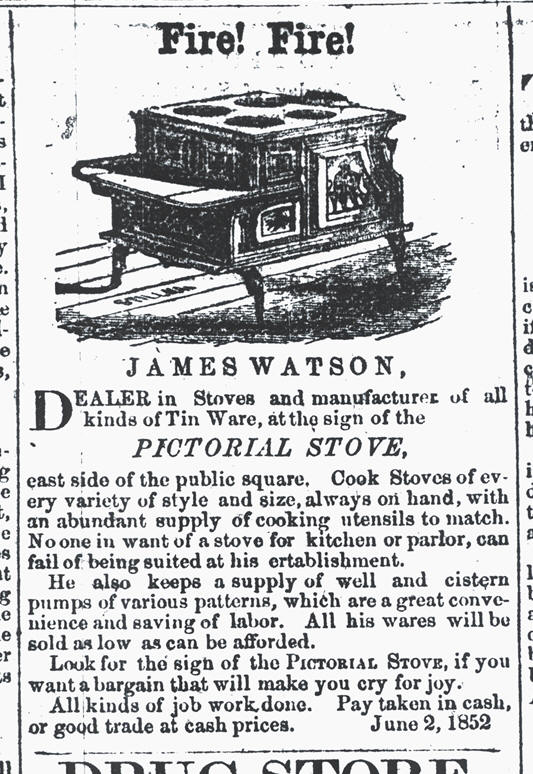
Advertisement for cook stove, June 1852*


Wednesday June 23d  Work again weeding the garden

untill nine or ten and then about house

attending to the new stove that was put up

last night  Passed the afternoon at Mr

Howard Lothrops with Mrs Witherell, S Ames

& Helen.  Got 4lbs of butter of Mrs Harvey &

Eggs of Mrs Howard & Pratt


Evelina had a new, cast-iron stove, a high-tech appliance in the new, industrial age. Cast iron was “the wonder material of the 19th century and led to a prolific industry in making stoves for cooking as well as heating. Cast iron could take the repeated temperature swings of hot and cold, and it was an ideal medium for casting into complex, prefabricated parts, as well as for decorative surface ornament.”** Coal and iron mines were kept busy providing the raw material as middle-class households bought cook stoves for their transformed kitchens.

The new stoves had various brand names, naturally; one model was even named for everyone’s favorite opera star: the Jenny Lind Double Oven Stove. The dominant design for cookstoves was called “step-top,” which allowed two separate levels for cooking on. The choice of cooking surface facilitated the preparation of several dishes. Evelina could be confident that her kitchen was state-of-the-art, whatever her father-in-law had to say about it.

Evelina may even have talked about her new stove as she was out and about this afternoon, picking up butter and eggs, and visiting with her two sisters-in-law at the elder Lothrops’ home.


*Advertisement from Charleston, Illinois newspaper, 

** http://www.oldhouseonline.com/history-of-the-kitchen-stove

June 11, 1852

Coffeepot


June 11th Friday  This morning had quite a fuss with

Jane about her coffee & beef &c and cannot put

up with such work and to night have engaged

a new girl  Helen & self carried Mr & Mrs

Orr to the Stoughton cars this afternoon […]

We went to the shops this morning & called

on Augustus Abby & Mrs Witherell


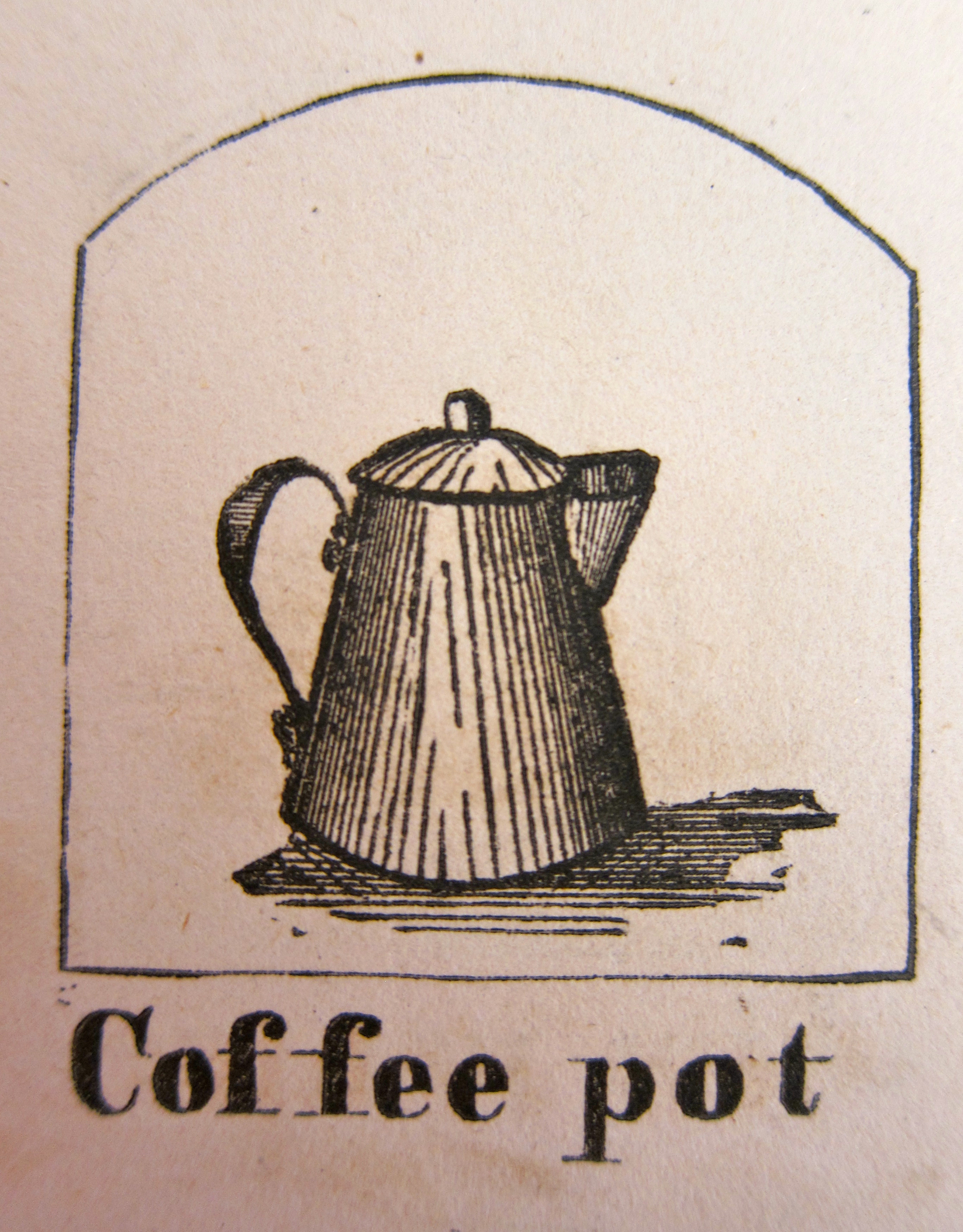
A red letter day for Evelina: She fired Jane McHanna. In Evelina’s mind, Jane’s work had fallen off – particularly when compared to the accomplishments of Mrs. Patterson – and today, after a “fuss” about breakfast, Jane had to go. Their relationship had ever had its ups and downs; today it ended.

The kerfuffle between Evelina and Jane must have been observed, or overheard, by houseguests Robert and Melinda Orr. Perhaps their presence influenced Evelina’s decision to dismiss Jane, Evelina wanting to exhibit higher standards of domestic efficiency than Jane was used to producing. However it came about, the result was that Jane would go. Evelina found a replacement by nightfall, but would Jane be equally lucky?  A lone woman without means, could she find a new position quickly?

The morning’s upset may have lingered in Evelina’s mind throughout the day, but she continued to entertain her Boston guests according to the means at her disposal. Besides calling on various family members, they walked around the shovel works, a tour which would have interested Robert Orr.  He lived in Boston, but his family in Bridgewater and elsewhere had worked with iron for many years.

In the afternoon, Evelina and her niece Helen Angier Ames “carried” the Orrs to the railroad stop in Stoughton and bid them goodbye. It was one month ago today that George Witherell died.