May 30, 1852

OLYMPUS DIGITAL CAMERA

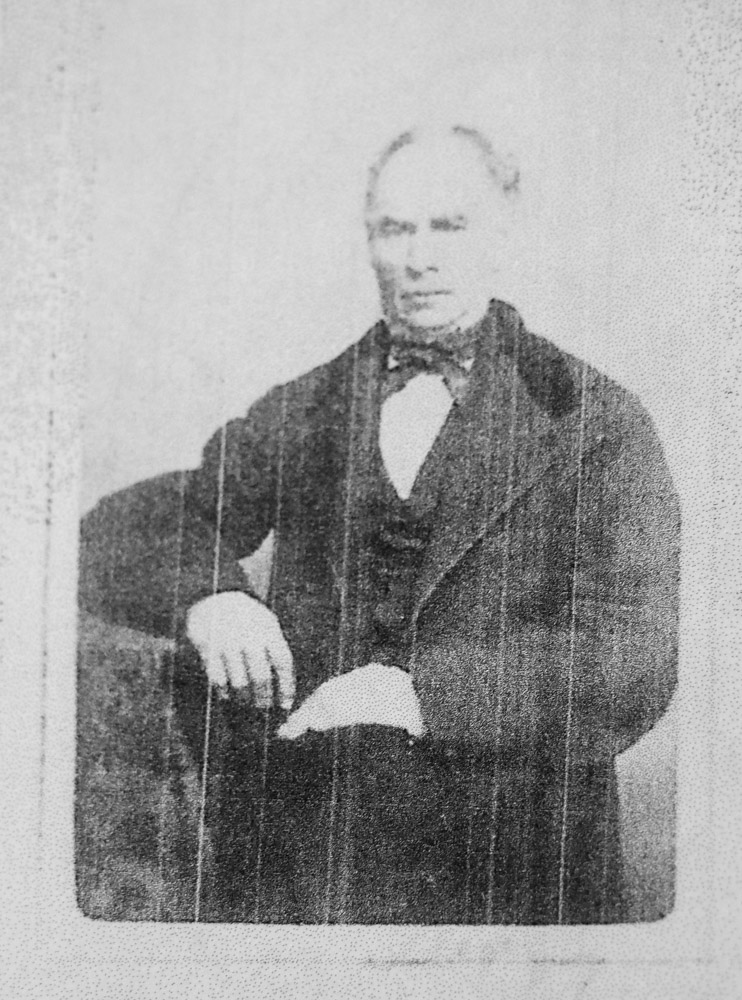
Alson Gilmore  (1798 – 1888)*

 1852

May 30  Sunday  Have been to church as usual  Mr Briggs

of Boston gave us two very excellent sermons

Alson mother & Helen came home with us

at noon.  Augusta has gone home on a 

visit and is going to Foxboro before she returns

Have been reading since meeting and 

called in Olivers and on Mrs Witherell


Evelina’s older brother, Alson Gilmore, turned 54 years old today. He was a farmer – a good one – in the southeastern section of Easton.  He had inherited the property from his father Joshua, probably when the older man passed away in 1836. By that time, older brothers had moved away or passed on, so even as the fourth of five sons, Alson was the heir who took over from his father.

Other than being a productive farmer, Alson was not the most high-profile man in town,  His eldest son, Alson “Augustus” Gilmore, a perennial moderator for town meetings, was more active in civic matters, and his second son, Edwin Williams Gilmore, matured to become the outstanding entrepreneur of a hinge factory. His third son, Francis E. Gilmore, would, in time, take over the family farm as his father had. Alson’s daughters, Rachel, Lavinia, Helen and Hattie, would live theirs lives in Easton, too, two of them marrying.

Alson did play a civic role now and again. For fifteen years, he served as clerk for the Taunton- North Purchase Company, a complicated affiliation based on a seventeenth century acquisition of land that became the towns of Norton, Easton and Mansfield.** He was a selectman for one term in 1849-1850 and also was one of the last treasurers of a toll road that ran between Boston and Taunton, a road that was close to his property. That turnpike, unpopular at best, had only recently closed down.

On occasion, Alson Gilmore ran up against the Ames clan.  His sister may have been been married to one of its most popular and powerful members, but that didn’t prevent Alson from disagreeing with them in a divisive argument over church politics in the 1830s. Alson had been on the side of preserving the familiar Congregational service and Calvinist beliefs, while the Ameses had argued for Unitarianism. With one or two other parishioners, Alson had been threatened with having to bear the cost of paying the minister, Luther Sheldon, while the controversy wore on. In Chaffin’s words, “the situation was very peculiar,”* and ultimately, it was resolved to no one’s complete satisfaction.

With Evelina, Alson shared the responsibility for looking after their elderly mother. It was a duty they both took seriously. He seems to have been a decent man.

Image of Alson Gilmore courtesy of the Easton Historical Society

** William Chaffin, History of Easton, Massachusetts, 1886, pp. 19 – 38

**Ibid., p. 354.

April 14, 1852

Washing

1852

April 14th Wednesday  Jane washed yesterday and put

her clothes out to day […] and it is very pleasant and

most like spring of any day we have had.  Made two

toilet cushions and covers for them of plaid muslin

Mrs Sarah Ames brought in her work this afternoon

awhile and I put a bosom into a shirt for

Mr Ames.  Read this evening in Night & Morning

The rain and snow of the preceding two days had disrupted domestic routine, meaning that servant Jane McHanna washed the weekly laundry on Tuesday instead of Monday and hung clothes out today. Evelina didn’t seem to mind, given how “most like spring” the day turned out to be. She seemed to have recovered from having gone without much sleep the day before.

Sarah Lothrop Ames came over from next door and the two sisters-in-law sat and sewed. Evelina sewed a shirt front for her husband and made two toilet cushions. The word “toilet” in the nineteenth century referred to personal grooming, as in getting dressed or cleaning one’s teeth or sitting at a dressing table.  A toilet cushion, then, was most likely a seat for a stool or small chair for a bedroom or dressing area. Evelina made both the pillow itself and its cover of “plain muslin.”

Night and Morning was, presumably, a work of fiction. Evelina must have found it in one of the periodicals she liked to read, such as Gleason’s Pictorial, or in a book she or Oakes had purchased in Boston.  Any readers out there familiar with this work?


April 6, 1852

330px-Harriet_Beecher_Stowe_c1852

Harriet Beecher Stowe

(1811 – 1896)

1852

April 6th  Tuesday  We have had one of the driving

snow storms of the season  the snow is very

much banked.  We have been reading Uncle

Toms Cabin  Susan has read to us most of the

time  have been sewing & mending.  Orinthia hemmed

a black cravat for O Angier and sewed some

on Susans pink apron.  Have made a little needle

book for mother

Yesterday, Evelina and Orinthia had been in Evelina’s garden planting flowers. Today the two women sat indoors “sewing & mending” because the unstable spring weather had brought on “one of the driving snow storms of the season.” According to Old Oliver, the snow “was all in heaps and the wind blowing verry hard from northeast” *

Yet the women weren’t disconsolate. While they sewed, Evelina’s daughter Susan read aloud to them from Uncle Tom’s Cabin, a popular new novel. Originally published in serial form in the National Era, an abolitionist periodical out of Washington, D. C.,  the full book had just been published in Boston by John P. Jewett and was on its way to becoming the best selling work of fiction of the 19th century.

Written by Harriet Beecher Stowe, Uncle Tom’s Cabin, or a Tale of Life Among the Lowly tells the story of two Kentucky slaves, Tom and Eliza, who are forced to leave their home plantation and make their way in a hostile society, one sold south, the other escaping north. It was a tale that gripped readers north and south, within the country and abroad, and provoked various imitations, interpretations and theatrical iterations. It has never been out of print.

Mrs. Stowe was not only an author, mother of seven children and wife of a Biblical scholar and educator; she and her husband were also active abolitionists. For a number of years they had lived in Cincinnati, Ohio, an active depot for escaping slaves, where they were participants in the Underground Railroad and personally helped hide slaves on the run. When the Fugitive Slave Act was enacted in 1850, Mrs. Stowe was distraught. She wrote Uncle Tom’s Cabin in protest.

How might Evelina have liked Uncle Tom’s Cabin?  Very much, one suspects. Though hardly an active abolitionist, Evelina was sympathetic to the slaves. After the Civil War, she even tried to hire some freed black women to come work for her but, according to her grandson Winthrop Ames, the plan never worked out.

*Oliver Ames Journal, Stonehill College Archives, Arnold Tofias Collection

March 24, 1852

1024px-Robert_Koch_BeW

Robert Heinrich Herman Koch

(1843 – 1910)

1852

March 24th  Wednesday  This morning made a call in the other

part of the house, while there I was sent for  Augusta came here

and staid untill half past eleven.  this afternoon

she came again and we went into Mrs Witherells for

an hour or two.  We went into the office when Mr Swain

went to his tea, brought some Ploughmans from the office

chamber to look over  Spent the evening at Mr Joel Randalls

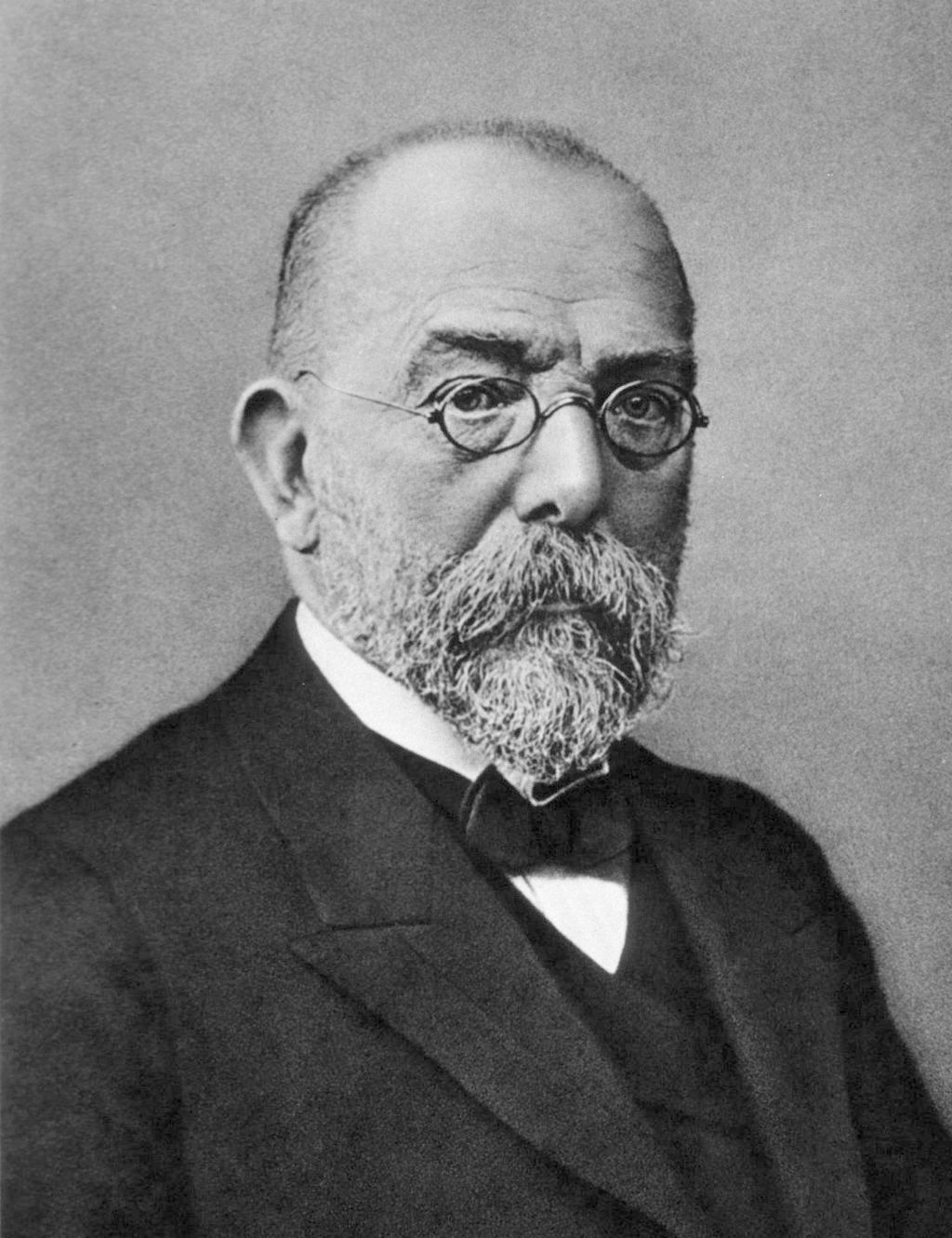
Since 1992, March 24 has been commemorated around the globe as World Tuberculosis Day. The date commemorates the discovery of the cause of a disease that has scourged the world since ancient times. On March 24, 1882, thirty years after Evelina wrote about her day in her diary, the brilliant German microbiologist Dr. Robert Koch presented to the medical community his finding that tuberculosis – also known as “consumption,” the “white plague,” and phythsis – was caused by the Mycobacterium tuberculosis. His discovery changed the world, and earned him a Nobel Prize.

In 1852, no one knew what caused consumption.  If anything, people believed that it was a hereditary disease that attacked those with weak constitutions. No one realized that it was contagious, an ignorance that lead to its spread everywhere, especially in urban areas with crowded living conditions. The disease was often, but not invariably, fatal.

Easton may have been a country town, but it was just as vulnerable to tuberculosis as any urban area. In fact, in Easton, just the day before Evelina’s diary entry, a 55 year-old housewife named Silence Macomber died of the disease. Of 47 deaths in Easton in 1852, consumption led the list; Mrs. Macomber was one of eight residents that year to die from it. All but one of the eight were women.

Tuberculosis has not been eradicated. Third World countries, especially, are still vulnerable despite great advances in prevention and treatment. In the 21st century, it’s still a disease to fear, just as Evelina and her contemporaries did.


February 15, 1852

 lilliam_wald2

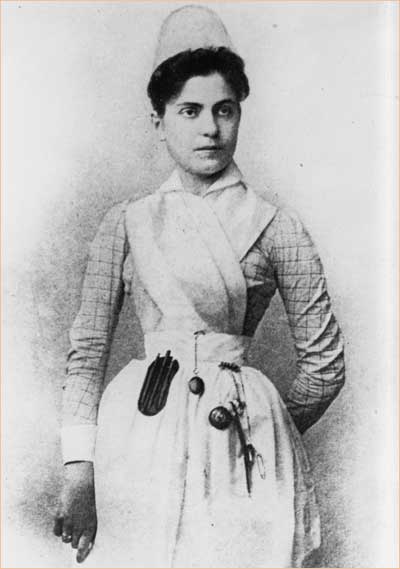
Nursing uniform from the late 19th c.*

1852

Sunday Feb 15th  Have been to church and at

noon went to Mr Baileys to see sister Amelia

who is nursing there  Mother went with me

Have been reading since meeting  Edwin & wife came

in to spend the evening but Mr Ames & self were

just going to Mr Swains and they would not let 

us stop for them so they went to Augustus  Had a 

pleasant call or rather visit at Mr Swains  came away

about nine Oclock  Very pleasant

The sun came out today, so despite it being “pritty cold,”** the Ames family went to church. During the intermission between morning and afternoon services, Evelina and her elderly mother, Hannah Lothrop Gilmore, rode out to visit Amelia Gilmore.  Amelia was the widow of Evelina’s brother, Joshua Gilmore, Jr. Joshua had died three years earlier, at age 35, leaving Amelia with two sons to raise.

In order to support herself and her boys, Amelia hired out as a nurse.  In this instance, she was looking after a Mr. Bailey, who must have lived near the Unitarian church. He may have lived alone, been ill and needed paid help; otherwise the convention of the day would have meant his female relatives looked after him. When Amelia wasn’t working, she and her youngest son, Samuel, lived with the Alger family near the Gilmore farm. The older son, Charles, had hired out somewhere but would soon come to reside with his uncle Alson Gilmore.

In 1852, nursing was not a formal profession.  Women (nursing was considered the exclusive province of women at the time) undertook nursing because they needed to work and this was one of very few avenues open to them. They based their protocol on personal experience in caring for ill members of their own families. There were no training programs or certification venues available, in no small part because there were so few hospitals. People were cared for at home. It would take the Crimean War in Europe and the Civil War in the U.S. to change attitudes and formalize medical care.

*Courtesy of http://www.nursinglink.monster.com

**Oliver Ames, Journal, Stonehill College Archives, Arnold Tofias Collection


February 14, 1852

 history

Detail of Cover of Gleason’s Pictorial, February, 1852

Sat Feb 14th  Finished Olivers shirt before dinner and did

some mending  About three went into Edwins and trimmed

a black silk cravat for Oliver  Mrs S Ames & Frederic

returned from New Bedford to night where they have been

since Tuesday  I spent most of the evening there

Evelina’s favorite periodicals, such as Gleason’s Pictorial, Godey’s Lady’s Magazine, and Graham’s, were full of allusions to Valentine’s Day this week. Gleason’s featured a valentine on its cover, in fact.  And while commercial Valentine cards hadn’t yet developed in the United States – that would happen in the 1870s – special letters and personal poems were popular on February 14. Yet Evelina makes no mention of receiving or sending a valentine, nor does she suggest that any of her children did, either.

Perhaps when Evelina went over to see Augusta Pool Gilmore, young bride of Evelina’s nephew Edwin Williams Gilmore, she found evidence of a valentine exchange between the newlyweds. Besides being in love and – presumably – open to sentimental expression, Augusta and Edwin were young enough to adopt new approaches to holidays that older Yankees like Evelina and Oakes ignored.

Meanwhile, winter was still very much present. As Old Oliver noted: “there was about half an inch of snow last night and it is cloud[y] + cold to day wind north west”

February 7, 1852

dickens12_2084187b


Charles Dickens, ca. 1852

(1812 – 1870)


1852  Sat  Feb 7th  Orinthia Miss Burill Susan & self called this

morning on Mrs J Howard, Whitwell & E Howards

left Susan at Mr Howards, came home with Frank

from a sing this evening.  Abby Augusta & Helen were

here awhile this afternoon  Helen went out to Bridgewater

last night and came up with Mr & Mrs James Mitchell this

forenoon  Orinthia went home about five and this

evening we have been into Olivers.  Mr Mitchell returned at nine.


This was a non-stop sociable Saturday for Evelina; she, her daughter Susan, dear companion Orinthia Foss, and another young schoolteacher, Miss Burrell, made calls all morning long. In the afternoon, she entertained three of her nieces and in the evening, visited next door at Oliver Jr and Sarah Lothrop Ames’s house. Chat, chat, chat.

In the larger world of letters, Charles Dickens turned 40 years old today. Even at mid-career, he was known as “The Inimitable,” so great was his talent, so voracious his readers. Evelina loved his work and benefited from his prolificacy.

By this point in Dickens’ life, among the books he had already published were The Pickwick Papers, Nicholas Nickleby, various Christmas novellas including A Christmas Carol, Dombey and Son, and David Copperfield, which Evelina had read the previous year. At this time he was composing Bleak House which, like most of his novels, was published in serial form over many months. Its first episode would come out in March, 1852, and run through September, 1853.

Still waiting to be born were future classics such as Hard Times (which targeted Unitarianism, among other entities), Great Expectations, A Tale of Two Cities, Our Mutual Friend – and more. Dickens wrote articles, made speeches, toured, and even acted. He was a high-profile tour de force with a fertile imagination and a thirst for success. Ralph Waldo Emerson, who heard Dickens speak in Boston, compared the author’s ability to “a fearful locomotive to which he is bound and can never be free from it nor set to rest.”*

*Ralph Waldo Emerson, quoted in Annie Field’s diary, 1868.


January 18, 1852

$T2eC16JHJHQE9nzEyP!zBRVGZ!!IT!~~60_35

/52

Jan 18 Sunday  Has snowed quite hard all day.  The

gentlemen all went to meeting & Mrs S Ames & Emily,

Mrs Witherell staid at home because she looks so bad

& Susan & self on account of a cold & cough  Have

read The Vale of Cedars by Grace Aguilar & have

written a letter to Pauline Dean.  Made a long

call in the other part of the house this evening.  Mrs

S Ames there with me

Feeling under par, Evelina and her daughter stayed home from church today while the men of the house pushed through the “fine cold dry snow”** to get to meeting. Sarah Witherell stayed home, too, still recovering from having had her teeth pulled.  It was a luxurious opportunity for Evelina – and Susie and Sarah, perhaps – to sit and read in relative quiet.

Evelina’s choice (which she probably read in serialized form in a periodical, as the tale wasn’t published in book form until 1853) was The Vale of Cedars or The Martyr’s Tale by Grace Aguilar. It was a tale of a Jewish father and daughter trying to hide from the Spanish Inquisition in 1479. The “Vale of Cedars” was their hideout. Eventually discovered and imprisoned, the daughter resisted the church’s demand that she convert to Catholicism.  Thus, the “Martyr’s Tale.”  The dramatic plot with its medieval overtones, exotic location, and anti-catholicism probably captivated Evelina, just as the author meant it to. Aguilar included these words from Byron’s [Oh! Weep for Me] in her introduction to the book:

“The wild dove hath her nest – the fox her cave –

Mankind their country – Israel but the grave.”

George Gordon, Lord Byron

**Oliver Ames, Journal, Stonehill College Archive, Arnold Tofias Collection

January 15, 1852

330px-Charles_Wentworth_Upham

Charles Wentworth Upham

(1802 -1875)

1852

Jan 15 Thursday  Spent some time this forenoon in reading

the papers and fixing Susans work & pasted some pictures on

a mahogany box.  Called on Mr Whitwell, Reed & 

Howard with Mrs S Ames.  Evening to a lecture on

education by Mr Upham of Salem at the meetinghouse

hall. a very good lecture and a goodly number

present for a snowy evening.  Had two tripes from father.

The guest lecturer at the meetinghouse was, presumably, Charles Wentworth Upham. A minister and politician from Salem, on the north shore of Boston, Upham had traveled no small distance to deliver a “lecture on education.”  Well spoken and well read, he had written, some years before, a history of the witch trials in Salem. Lately, however, Upham had been speaking on the progress of normal schools, which were schools that taught teachers. Education was on his mind.

Also on Upham’s mind was politics. He was a Whig, which may have been his connection to the Ames family and Unitarian congregation in Easton. Previously Upham had been a member of the Massachusetts State Senate, and within the year would become Mayor of Salem. From 1853 to 1855, he would be a representative to the U.S. Congress, but would fail to be reelected.

Upham was married to Ann Holmes, a sister of Oliver Wendell Holmes, Sr. He had been at Harvard with Ralph Waldo Emerson with whom he corresponded later in life.  Their friendship faltered, however, over Transcendentalism, which Upham disliked. Upham also famously acted against Nathaniel Hawthorne, leading the local fray in getting Hawthorne, a Democrat, fired from his politically-appointed job at the Salem Custom House.

Some disliked Upham; Charles Sumner called him “that smooth, smiling oily man of God.”* What did the Ameses think?


*Carlos Baker, Emerson Among the Eccentrics, New York, 1996.

January 11, 1852


images-1


Jan 11  Sunday  Have been to meeting although it has

been stormy  Mrs Witherell did not go which is

unusual  Henrietta Mrs Clarke & self called on

Mrs Witherell at noon.  She burned her foot and

cannot go out but it is getting better.  Have written

a letter to Oliver this morning and have been reading

Sarah Witherell burned her foot and couldn’t go to church, probably because she couldn’t put her shoe on. How had she burned it?  Fallen against a coal stove? Stepped on a live ember? Spilled hot tea or scalded it stepping into a tub? If the possible sources of the burn are multiple, so were the potential remedies.

“Cotton wool and oil are the best things for a burn,” declared Lydia Maria Child in The American Frugal Housewife.* Dusting a burn with flour and wrapping it in cotton flannel was another common practice. Like today, the application of a salve was soothing.  We might apply cold water; they might have applied butter, assuming they had any on hand to spare. Home treatments for minor burns are still variable, despite today’s over-the-counter ointments and sprays.

Sarah Witherell, we learn here, always went to meeting.  Her absence today surprised even Evelina, who came back from church at intermission to check on her sister-in-law.  Evidently reassured that Sarah would be fine, Evelina settled into her more normal routine for Sunday, which included reading after church and, today, writing a letter to her middle son, Oliver, who was away at college.


*Lydia Maria Child, The American Frugal Housewife, 1846, p. 17