June 1, 1851

imgres

*

1851

June 1st Sunday  We have all been to church to day.

The young people went to walk to the hoe shop

& [illegible] before meeting.  Mr Ames Miss Linscot

Orinthia, Susan & self came home at noon.  After

meeting Lavinia came home with us  Oakes A

carried them to a sing to our meeting house

and then O & L home  I feel rather down

hearted to night & have been for two or three days

The young people gathered today for a sing at the meeting house.  Oakes Angier and his brothers, perhaps, accompanied Orinthia, her friend Frances, and Cousin Lavinia to the church for an evening that was probably more lively and joyous than the two sermons they had listened to earlier. They sang and socialized.

Evelina was neither lively nor joyous. She was “down hearted,” and no singing or June sunshine seemed to make it better. Where did her blues come from? Was she upset with Oakes for some reason? Did she reconsider her friendship with Orinthia and find their age difference suddenly unbridgeable? Was she tired from the spring cleaning? She doesn’t mention a particular instance that could have set off a mild depression.

In 1851, Evelina was in her early forties, an age subject to the physical effects of “change of life,” a condition that 19th century women wouldn’t have known much about, much less admitted to if they did. The formal and fastidious norms of the day abhorred words that alluded to specific female conditions. The word “pregnancy,” for instance, was indelicate; if they said anything at all, it was that a woman was “in the family way.” Some described childbirth as “being taken ill.” Menopause, a word that even some 21st century women are reticent to use, was not in Evelina’s vocabulary.

Yet a lack of understanding and the absence of social acceptance couldn’t obviate a real female condition.  Evelina was at a stage in her life when the onset of menopause could begin to influence her mental and physical state. The chemistry of her body could have made her feel down-hearted without her knowing why.
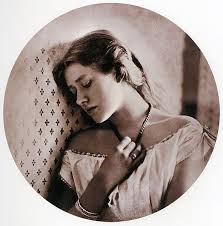
*  “Sadness” evoked by 19th century actress Ellen Terry.  Photograph by Julia Margaret Cameron.

May 31, 1851

IMG_0004

*

1851

May 31st Saturday  This morning baked in Mrs Witherells oven

brown bread & cake  Mrs S Ames went to Boston

Returned to night with Harriet & a Miss Eaton

from Pittsburgh.  Miss Linscot Orinthia & I […]

have been walking & riding about all day.  have

been to all the shops, ponds, Mr Manley & Claps

flower gardens, & called at Mr Torreys

It has been a beautiful day, rather cold.  A A not here

gone to Boston

Evelina used her sister-in-law’s brick oven early this morning and afterwards ventured outside to enjoy the “beautiful day” with her young house guests. She gave them the standard tour of much that North Easton offered: shovel shops, large ponds, full streams, two farms with extensive flower gardens, and a stop at Col. John Torrey’s, in the village. The latter was probably a sociable occasion that included tea with Abby Torrey.

Sarah Lothrop Ames, meanwhile, went into Boston for the day and returned with Harriett Ames Mitchell and a friend from Pittsburgh, where Harriett had lately been living. There was still no sign of Harriett’s husband, Asa Mitchell, who was, presumably, yet in Pennsylvania on business. Oakes Ames would have been in Boston today, too, perhaps with Augustus Gilmore.

The Ames boys wouldn’t have been pleasuring about – they were at the shovel shops, working.

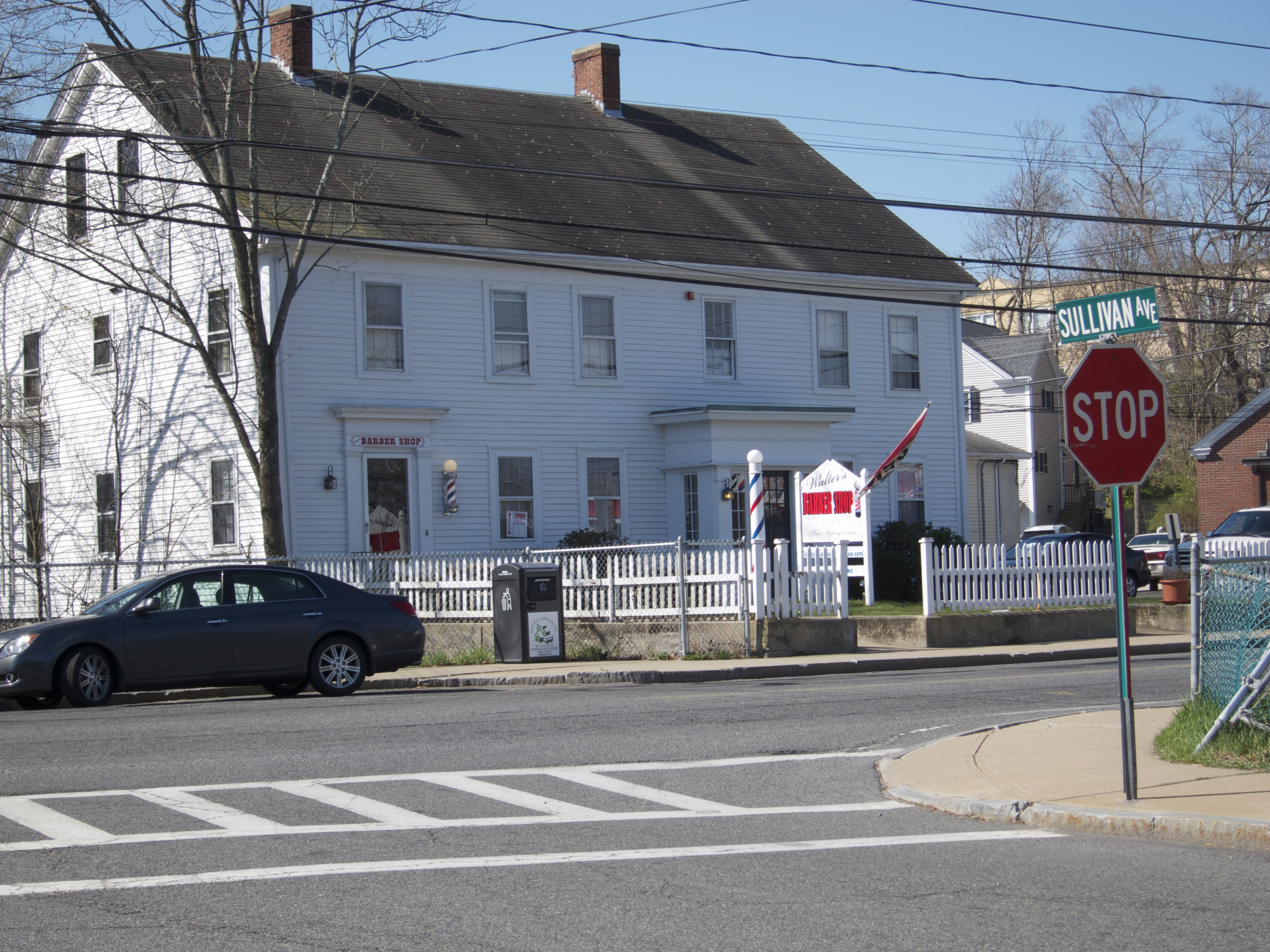
* Building in modern-day North Easton that once belonged to Col. John Torrey


May 30, 1851


Funeral


1851

May 30th Friday  Have been sweeping & dusting the

chambers put things in order in the shed chamber 

again.  Jane has cleaned the boys chamber  Frank left

their room last night.  Have sewed a very little

Frances Linscott came to see Orinthia in the 

stage to night and Frank went to Mr Howards

after her  It was past nine when they got

here  It is very cold for the season

Mrs Johnson buried to day in the new Cemetery


The first burial in the new cemetery in South Easton took place today. Catherine Lothrop Johnson, the wife of Thomas J. Johnson of Newtonville, and their infant son were buried there.  Catherine was 35 years old.  She would not have had a service in a church; rather, there would have been a gathering of friends and relatives at the Johnson home, after which some or all would have ridden or walked to the burial site for the committal ceremony.  To bury a mother and her baby was a double sorrow, obviously, but not all that unusual in a period when childbirth carried such risk.

Orinthia, meanwhile, came back to the Ames’s for a visit, bringing along a friend from out of town, Miss Frances Linscott.  The two young women arranged to stay at the Ames’s house. Certainly part of the reason for this was Orinthia’s fondness for the Ames family, especially Evelina.  Is it possible, however, that the Ames sons were also an attraction?

The three Ames sons who had been sharing one bedroom returned to previous sleeping arrangements today.  Oakes Angier and Oliver (3) stayed in the room they shared and Frank Morton Ames returned to his own smaller quarters.  After tea, Frank took a carriage south to Elijah Howard’s home, where Orinthia had been staying, to carry her and her friend to North Easton.


May 25, 1851

Cemetery


25 May Sunday  Have been to church all day. Went to Mr

Whitwells at noon with Mother and Mrs Whitwell

made us take a cup of tea Also Mrs Elijah Howard & Miss

Louisa H.  Had quite a spirited chat about Mr

Wm Reed & Mr Dean. After meeting Mr Ames & Oliver

& wife rode to the burying grounds  Cannot 

feel reconciled to having it where it is. Oakes A Susan

& Orinthia went to a sing & Oakes carried Orinthia home.


A cup of tea and good, “spirited chat” among the women during intermission brightened Evelina’s Sunday.  Who were Mr. Reed and Mr. Dean that they evoked such consideration from the female population?  There were several men of either name who lived in Easton at the time.

When church was over, Evelina, Oakes, Oliver Jr. and Sarah Lothrop Ames drove together to look at the new cemetery in South Easton. Created by the Easton Cemetery Corporation, it was one of almost thirty graveyards in the town.  For reasons lost to history, this newest burial-ground had been deemed desirable and consequently established by men well-known to the Ameses, including Elijah Howard and Dr. Caleb Swan.  Perhaps their intention had been to create at burial place that would be tended to as time passed, as many smaller, family graveyards throughout the town were not. Perhaps they were responding to personal inclinations to group Unitarians together for eternity.

Whatever the thinking behind the new burial-ground, Evelina was dubious.  Did she look at it and think she and Oakes might be buried there someday?  Did she wish instead to be buried near her son Henry, wherever that was? Or did she think of another graveyard where her father and certain siblings were buried? Little could she imagine that twenty-five years hence, the Village Cemetery of North Easton would be created behind a Unitarian Church that hadn’t yet been built, both projects funded by Oliver Jr, and that there she, her husband, and all her children would eventually be laid to rest.


May 24, 1851

Calf


May 24th Saturday.  Have been about the house at work

most of day.  After dinner carried my old sitting

room carpet out on the grass to wash the spots

and worked awhile in the garden  About two

Oclock Orinthia came.  She walked to Mr Elijah

Howards before breakfast and he brought her up 

She stoped to dine with Abby.  We called at the

store and at Mr Holmes.  Cow calved.

Housework and gardening informed most of Evelina’s day until a visit from Orinthia in the afternoon, at which point Evelina put down the stained carpet pieces or sat up from weeding to welcome back her young friend. The two women went shopping in the village at the Ames company store, and called on Harriet Holmes.  They must have been glad to be back together, even though Orinthia had only left a week earlier. Perhaps Abby Torrey joined them on their errands and calls.

Evelina’s work on the old carpet took place out of doors, somewhere in the yard of the house on Main Street. It only made sense to wash a large piece of rug outside in good light with a place for the water to run off.  The job was messy by definition, but needed to be done and to Evelina, how the project might have looked to passersby was perhaps less important than how effectively the spots were removed. Front yards were becoming more formal, so perhaps Evelina worked on the carpet in the back of the house where the laundry, presumably, was hung, out of sight of the street. We might imagine that Sarah Lothrop Ames, next door, would certainly be discreet in her management of a similar task, a task, in fact, she would most likely delegate to others.

Old Oliver had to have been pleased today. One of his cows calved, adding to his herd. It’s curious that Evelina, who rarely mentions the agricultural side of their lives, made mention of what must have been a predictable springtime event. She wasn’t often engaged by the external activities of either the farm or the factory.  She stayed focused on her house and her yard, but today something about the new calf drew her attention.

May 22, 1851

stock-footage-senior-women-planting-a-flower

1851

Thursday May 22d  The first thing after breakfast set out

a plant that Orinthia sent me last night.  Then

went to work in the sitting room taking up the 

carpet cleaning the closets &c  have finished cleaning

the room and the carpet partly down.  Aunt Orr

& Harriet, James Mitchell came to visit Mrs

Witherell about two Oclock and I left my work to

see them  Quite pleasant

Ordinarily, Evelina was tired and listless after a day in Boston, but not today. Orinthia Foss sent her a plant, a sweet token of friendship and thanks, and “the first thing” Evelina did was head to the garden to plant it. Before doing her chores! The plant meant a lot to her and the gesture from her young friend buoyed the day.

Carpet cleaning, closet cleaning, &c, &c, as Evelina would say, took up the morning and some of the afternoon. Guests arrived in the other part of the house, making a welcome interruption from housework.

The Orrs and Mitchells were old connections from Bridgewater, and their families had long been intertwined with the Ameses. Some of the earliest Ameses had settled in Bridgewater and, as a young man, Old Oliver had lived there. As we’ve noted before, Evelina boarded with one branch of the Orr family whenever she stayed over in Boston.  Aunt Orr was probably Susan Orr, a close friend who could remember when Oakes Ames was a baby.

There were many Mitchells in Bridgewater. James Mitchell, who ended up as a merchant in Philadelphia, was one of them.  He was married to a woman from Belfast, Maine named Harriett Lavinia Angier (possibly a distant relative in the Angier line.) He and his wife didn’t appear often in the Ames written records, but they were among the few non-family members who, years after this, would attend the funeral of Horatio Ames.  Perhaps James Mitchell and Horatio Ames had been friends growing up.

Mrs. James Mitchell’s married name was Harriett Angier Mitchell, almost the same as Harriett Ames Mitchell, Oakes’s youngest sister who was married to Asa Mitchell. The Harriett who accompanied James Mitchell today was most likely his wife, not Oakes’s sister. Confusing to us, certainly, but straightforward to them. Otherwise, a pleasant day in all respects.


May 19, 1851

330px-Mainelupin

May 1851

Monday 19th  Orinthia left here to commence her school in

No 2 district  I shall miss her very much

this morning had to wash the dishes and clean 

the sitting room &c which she has done for

some time.  Afterward worked in the garden

untill noon, planted some Pansy & Lupin seeds

Called in Olivers awhile  We have a gardener

commenced work to day.  Pleasant weather

Orinthia Foss left today to board with another family.  She had lived with the Ameses since February when she arrived from Maine to teach a small group of students in North Easton. Evidently, she had done her job well, and as a consequence had been hired by the school superintending committee to teach elsewhere in town. She would be missed by the Ames family, as she had made herself at home there, helping Evelina with sewing and chores and joining in various social activities with the Ames sons. Evelina especially would miss her, and not just because Orinthia had been so helpful in the house. The two had become good friends.

So, all by herself, Evelina worked in the garden this morning, planting pansy and lupin seeds. Pansy, also known in the 19th century as “heart’s ease,” was relatively easy to plant and grow. Lupin, on the other hand, was (and still is) trickier.  Though “found, frequently, in large masses,” “this fine perennial”, according to Joseph Breck in his 1851 Book of Flowers, is “very difficult, even impossible, to transplant, with success.” Seed, and seed alone, must be used. Evelina needed her green thumb today.

That said, Evelina wrote in her diary that a gardener had “commenced work to day.” Who hired him, and what was his job?  Was he hired just for the flower beds? Did he also work for Sarah Witherell, or next door for Oliver Jr. and Sarah Lothrop Ames? Whatever his job, he wasn’t going to be as much fun to work with as Orinthia had been.


May 17, 1851

Plant

1851

May 17  About eight Oclock this morning

Orinthia & I rode to Mr Manlys to get some plants for

our garden  He kept us there a long while talking

about them and calling over the long names untill we

almost despaired of getting any  At last we got a few

and come home & set them out & called at Mr

Savages, got a few there  This afternoon we have had

a shower.  I mended the stockings &c &c


With help from her boarder and young friend, Orinthia, Evelina was making headway everyday in her garden. Early this Saturday morning, the two women rode once again to Edwin Manley’s for plants. Mr. Manley, a knowledgeable and somewhat eccentric fellow, kept the ladies “there a long while” discussing the selection of plants, going over their Latin names and properties. Let’s hope that Evelina’s impatience to be on her way didn’t spoil his clear appreciation of the flowers he could offer her.

From Mr. Manley’s, the eager gardeners went on to yet another source for plants. William Savage was an employee at the shovel shop. Unlike Mr. Manley and Mr. Clapp, he lived in the neighborhood of North Easton. He grew petunias, which were a fairly new flower for the home gardener, among other plants. Evelina was collecting all kinds of specimens for her parlor garden.

Other growers were less sanguine than Evelina about the prospect of the coming growing season.  Old Oliver, Evelina’s crusty father-in-law, noted in his daily journal that  “this was a fair day in the forenoon with a strong south west wind it was cloudy in the afternoon + a verry little rain and rather cool. the ground is verry wett + the season backward about doing the planting”.  Backward season or not, the planting – and gardening – had to go forward.

May 16, 1851

330px-Carpet_beater

1851

May Friday 16th  We have been working in the chambers again

to day  I have put a straw carpet down in the 

dark bedroom chamber and moved the bed from

the sitting room chamber into it.  Have taken

the carpet from the sitting room chamber and

cleaned the room.  Orinthia & I have been working

in the garden awhile this afternoon Susan past

the afternoon at Mr Torreys

The tail end of spring cleaning was going on as carpets were laid back down and furniture rearranged. Imagine the energy it took for Evelina, Jane McHanna and, maybe, Orinthia Foss to move furniture, take up carpet, beat carpet, clean floors, put carpet back down and move furniture back into place.  The men didn’t help them with this, as the men all had their own work.  The women did this housework themselves.

Many will recognize the household “appliance” pictured in the illustration.  It’s a rug beater, used to thwack the dust out of carpet as it hung out-of-doors being aired.  Until Bissell’s carpet sweeper appeared in the 1880’s, and the electric vacuum cleaner came around the turn of the century, this is how rugs were cleaned.

The garden probably looked pretty good to Evelina and Orinthia after the dust and dirt of the morning. A different kind of soil. The women must have planted some things that Evelina picked up yesterday on her trip to Mr. Manley and Mr. Clapp in Stoughton.  Her garden was taking shape.

May 14, 1851


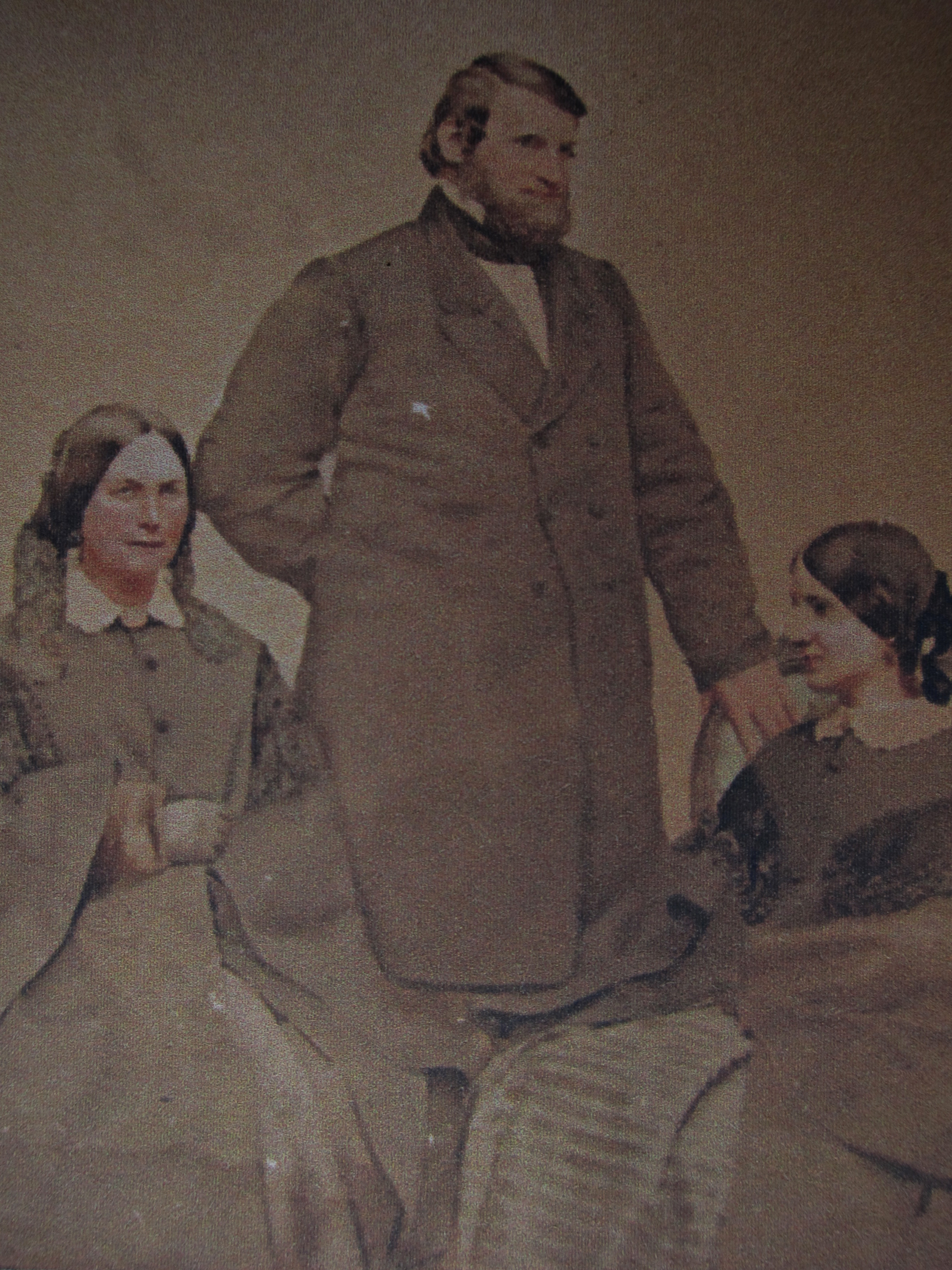
Evelina, Oakes and Susan Ames, ca. 1860 Archives at Stonehill College, Easton, Massachusetts

Evelina, Oakes and Susan Ames, ca. 1860
Archives at Stonehill College, Easton, Massachusetts

Wednesday May 14  Susans birth day and she has had a little

party.  Julia has been here to work on Orinthias

dresses.  Ellen Howard called this evening

came from Jasons. Mrs Holmes called a 

few moments this morning.  I have swept

and dusted the front chamber and taken the 

carpet from the stairs and painted them It

has been a confused day. Pleasant this afternoon

Augustus gone to Boston


Another interruptious day, filled by “confused” and overlapping events: Susie Ames’s birthday party, Julia Mahoney’s work on dresses for Orinthia Foss, calls from Ellen Howard and Harriet Holmes, the usual choring in the downstairs rooms, not to mention Evelina’s removing the carpet from the stairs and painting the treads. What commotion.

Susan Eveline Ames, the only daughter and youngest child of Evelina and Oakes Ames, turned nine years old today and was treated to a little party. Did she have friends over or was the party strictly en famille? Did she have cake? Ginger snaps? Presents? What was a nine-year-old’s birthday party like in 1851?

Born in 1842, Susie Ames came along several years after all her big brothers were born. From the beginning, she was raised differently from them. While they were slated to work, earn and provide, her education and training were oriented toward a future of domestic responsibilities. Like most girls of the time, she was brought up assuming that she would marry and raise a family. If she failed to marry, she would have to make her way as a spinster aunt living with one or more of her brothers, or become a schoolteacher like Orinthia Foss. Which route was hers?  Marriage.

On January 1, 1861, Susan married Henry W. French, a wool merchant. She was 18 years old; he was 27. For many years, the couple lived in the Ames house with her parents, and possibly looked after the house during the periods when congressman Oakes and Evelina were in Washington. For a time, Susan and Henry lived in their own home on Main Street, on the site where the Oakes Ames Memorial Hall came to be built circa 1880.

As Evelina moved into widowhood and grappled with illness and age, Susan looked after her. She and Henry never had any children, so the particulars of her story weren’t passed on to interested offspring. She only comes to life in her mother and brother Oliver’s journals.