October 15, 1851

Thread

Wednesday Oct 15.  Julia has been here again to day and fitted

the waist to Susans dress and got my dress so

that I can finish it  Have been to the sewing

Circle to Mrs Elijah Howards.  Lavinia came

home with us and went back with Oakes A.

and Frank to spend the evening   Mrs J Willis

buried in the new cemetery funeral in the 

meeting house  I did not attend it


In Worcester today, some fifty miles north and west of Easton, the National Women’s Rights Convention opened in the same Brinley Hall that it had been held in the previous year. A roster of high profile figures, including Lucy Stone, Lucretia Mott and Pauline Kellogg Wright Davis, oversaw the two-day event which covered such topics as suffrage, equal pay and marriage reform. Guest speakers included abolitionists Wendell Phillips and Lloyd Garrison, and feminist Ernestine Rose, who spoke passionately against the secondary legal and emotional status of married women:

“At marriage she loses her entire identity, and her being is said to have become merged in her husband. Has nature thus merged it? Has she ceased to exist and feel pleasure and pain? When she violates the laws of her being, does her husband pay the penalty? When she breaks the moral law does he suffer the punishment? When he satisfies his wants, is it enough to satisfy her nature?…What an inconsistency that from the moment she enters the compact in which she assumes the high responsibility of wife and mother, she ceases legally to exist and becomes a purely submissive being. Blind submission in women is considered a virtue, while submission to wrong is itself wrong, and resistance to wrong is virtue alike in women as in man.”*

Was Evelina aware of this potent gathering in Worcester? Did she have any interest in the issues being debated? Did she ever resent her secondary legal status, or wish to vote? At no point in her diary did she write about women’s rights; she made no mention of the convention. She was not a feminist and yet, by participating in the monthly Sewing Circle, which she did today, she and others inadvertently proved the point that women could meet independent of men and, on their own accord, do work that addressed existing social concerns. In her generation, she was doing something her mother never would have done. In a modest way, she helped strike a path for women to move outside their strict, domestic realm. As modern historian Carolyn Lawes has stated, “Through the sewing circle women laid claim to the right to participate in the political and social development of the community, the nation, and the world.” **

Meanwhile, far from the foment in Worcester, Old Oliver “finisht the dam to day at the great pond.”


Brandeis University. Women’s Studies Research Center.Ernestine Rose’s speech at the Women’s Rights Convention in Worcester, Massachusetts in October 15, 1851. Retrieved on April 1, 2009. 

**Carolyn Lawes, Women and Reform in a New England Community 1815 – 1860, University Press of Kentucky, Lexington, KY, 1999
October 13, 1851

OLYMPUS DIGITAL CAMERA

Oct 13th  Susan washed the […] dishes this morning and 

went to sewing quite early made the sleeves

to my cashmere dress and pocket made and

have got all ready for Julia to cut the waist in 

the morning.  Spent most of the afternoon in the

other part of the house  Mrs Willis died about

one or two Oclock this afternoon


“[V]erry warm and sultry like dog days” was Old Oliver’s assessment of today’s unseasonal weather. Evelina didn’t complain about it, nor did she mention any discomfort from the nettlerash that had plagued her for the last ten days.  Perhaps the burning and itching was finally subsiding.

Mrs J. Willis died today. There were a few women in North Easton who might have been this person; a possible candidate was a 44-year-old woman named Hannah Willis who lived in the Pauper’s House with her probable father-in-law, James Willis, and a child named James W. Willis. She had done some sewing for Jane McHanna back in March.

Evelina herself spent the morning with a needle and thread, making the sleeves and pocket for a cashmere dress.  She planned to use the services of Julia Mahoney to sew the waist. In the afternoon she went to the other part of the house, presumably to visit with her sister-in-law Sarah Witherell and a guest, Susan Orr. Given the heat and her slow recovery, Evelina moved around surprisingly well.

October 12, 1851

OLYMPUS DIGITAL CAMERA

Sunday Oct 12th  Had a Catholic meeting at 8 Oclock  Jane went

Have not been to meeting to day on account of the

humour was affraid that I could not sit still.  Susan

went & all the rest of the family  Read in Goodeys

Ladys Book .  Quite stormy & could not go to

Augustus’ as I intended  Have had a very quiet 

day

For the third Sunday in a row, Evelina missed church.  Her nettlerash, or “humour,” still bothered her to such an extent that she had trouble sitting still. She stayed home and by her own admission, “had a very quiet day” while the rest of her family went to meeting. Even the servant, Jane McHanna, left the house to go to a service in the new Catholic Church on Pond Street.

Her father-in-law, Old Oliver Ames, who kept a daily record of the weather, reported that “this was a cloudy warm day and there was 2 or 3 small showers in all about one 4th or 3/8 of an inch southerly.” Evelina evidently studied the raindrops from her perch in the house and decided to postpone her intended visit to the village to see her nephew and his family. Instead she read from Godey’s Lady’s Book, the popular monthly periodical to which she subscribed.

Published in Philadelphia by Louis Godey and edited by Sarah Josepha Hale (a high-profile writer who, among many other accomplishments, wrote Mary Had a Little Lamb), Godey’s Lady’s Book was, as its title suggests, targeted at women. It featured domestic fiction and household hints, sentimental poetry and architectural plans.  It showcased contemporary writing by authors such as Nathaniel Hawthorne and Washington Irving, yet also published three editions in which women, and only women, wrote the articles.  A testy Hawthorne actually complained to his publisher about the influx of female authors, calling them “a damned mob of scribbling women.”

By 1855, the magazine even carried a feature entitled Employment for Women. Each monthly volume of Godey’s contained various illustrations and at least one fashion plate, imperative for home-seamstresses everywhere who wanted to stay abreast of the styles in dress. It was a magazine perfectly aimed at Evelina, and she followed it loyally.

October 11, 1851


Hog

Sat Oct 11th  Baked in the brick oven  brown bread cake & seed

cakes Squash & apple pies  Miss S. Orr, Mrs Witherell

and her children here to tea  Helen came home last

night and Julia is at Olivers making her silk dress.

Mrs Elizabeth Lothrop is there assisting them.  I have

mended Mr Ames a vest and made the skirt

to Susans striped Delaine dress


Today many baked goods came out of the brick oven that Sarah Witherell and Evelina shared. It was getting to be pie season, so Evelina made squash and apple pies, along with more usual fare like brown bread and cake. Special on the menu was seed cake, something that Evelina hasn’t mentioned baking before.  She probably used caraway seeds from some roots she “set out” last April.

Next door Helen Angier Ames, briefly home from boarding school, met with the family’s favorite dressmaker, Julia Mahoney. Only fourteen, Helen was having a silk dress made; perhaps it was a party dress she might use in Boston. Helping Helen and her mother, Sarah Lothrop Ames, was Sarah’s young sister-in-law, Elizabeth Howard Lothrop. Only 22-years-old, Elizabeth was the mother of two very young sons and the recent widow of Sarah’s brother Clinton.

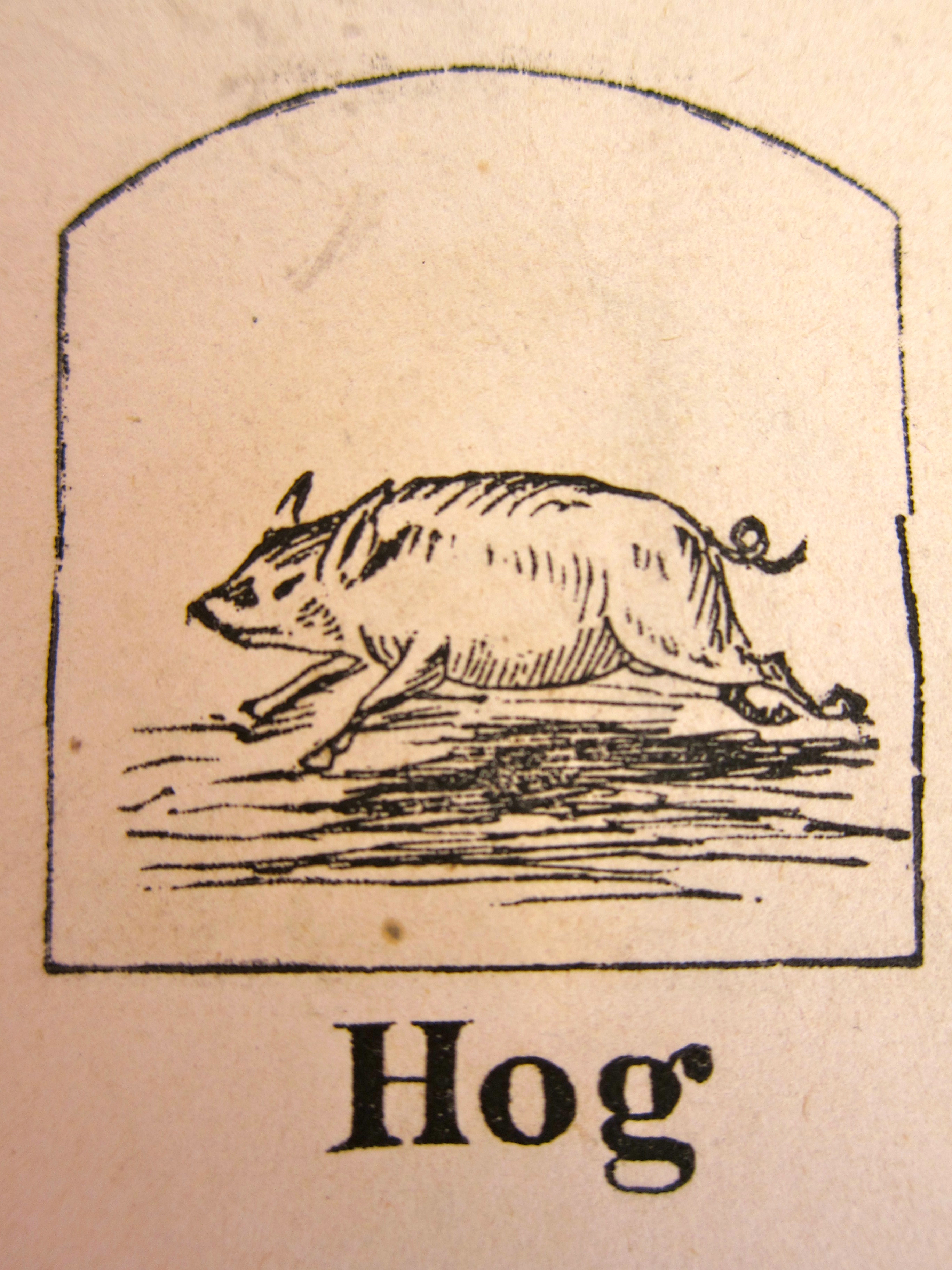
Old Oliver had to be pleased with life at this particular time. Only the day before, “Mr Phillips finisht his work at the great pond,” meaning that the new flume at Great Pond was in place. This was a good achievement for the shovel business which relied on water power to run the factory. Old Oliver was still active in the business he had started and passed on to his sons, yet never took his eye off of the family farm, either. Today he “bought 12 pigs that weighd 1330 pound at 6 ½ cents a lb average weight 112 pounds – cost $86:45.” He would raise those pigs, eventually selling some and slaughtering others to feed his large family. The factory and the farm continued to engage Old Oliver as he grew old.


October 7, 1851

Broom

Tuesday Oct 7th  Have been at work on the dark french

print  This forenoon swept the chambers and put Franks

chamber in order that he left.  Carried my work

into the other part of the house while  My humour

troubles me so that I can scarcely sit still.  Was quite 

sick awhile this evening  We have had very cold

weather for the season for a number of days


Whatever powdered medicine Dr. Swan gave Evelina on Sunday wasn’t working. Her “humour” troubled her all day and she was especially ill in the evening. Her nettlerash made her uncomfortable and sick. With some asperity, she noted the recent “very cold weather,” which wouldn’t have helped her frame of mind.  It’s interesting to note that her father-in-law, Old Oliver described this very same day as “a fair warm day wind northerly part of the day + southerly part of the day.” It’s likely that Evelina’s perception was colored by her overwhelming personal discomfort.

Does any reader think Evelina that might be suffering from shingles?

Nonetheless, she kept busy.  She swept the house and tidied up after her youngest son, Frank. She sat down to sew, though must have found it difficult to concentrate when her skin itched and burned.  She went into the other part of the house, where Miss Susan Orr, an elderly friend (or relative?) from Bridgewater was visiting. No doubt she sought conversation to take her mind off of her own troubles. Perhaps she wished her nephew, George Oliver Witherell, a happy birthday. He turned 14 on this date.


September 29, 1851

330px-Open_drawers_-_Garments_for_girls

Monday Sept 29  Cut out three prs of cotton Drawers

for self for Ellen to make & have done some

sewing  Augustus came with his family about

4 Oclock are going to move into a part of Mr

Torreys house  Hector & Susan Orr came to

the other part of the house this afternoon.  Susan

will stop awhile  Not very pleasant has rained some

Rain arrived but the day, according to Old Oliver, was “pritty warm.” The wet weather and her cold must have kept Evelina indoors.  She may not have felt well, but as long as she could sit up, she would have found something useful to do.  Sewing some underwear for herself was the mundane chore waiting in her workbasket. Meanwhile, Jane McHanna, the family servant, washed the weekly laundry, perhaps doing her trick of letting the rain do the rinsing. She would have been challenged to figure out how to dry it, though.

Visitors arrived in the other part of the house; the Orrs, a family with whom the Ameses had been connected since early days in Bridgewater, came to visit. Susan Orr, a spinster, had known Oakes Ames when he was a baby. Today she and Hector – her brother, perhaps? – came to see Old Oliver and Sarah Ames Witherell.

On Evelina’s side of the family, nephew Alson “Augustus” Gilmore, his wife Hannah and their two sons, toddler Eddie and infant Willie, began to move into temporary quarters at Col. John Torrey’s building in the village.  Eventually, they would build a home, but for now they were going to rent.


September 26, 1851

PICT0150

*

Friday 26th  Mrs S Ames & Mrs Mitchell went into Boston & Cambridge

Wednesday & returned last night  Julia is to work

for Helen to day  they talk of sending her to Boston

to school  I have been to work on my dresses some

to day and have varnished my desk & beaureau

& some other things, taken up some plants 

from the garden  It is very cold and we had 

some frost last night

It had been a week ago today that Evelina, Oakes, and other Ameses had stood in Boston for hours watching a grand parade celebrating the railroad.  Since that time, Evelina had returned home, rearranged furniture and nursed her daughter through an uncomfortable spell of sickness.  She must have finally felt that her life was getting back to normal.

Evelina sewed a bit today, of course, and continued to redecorate, varnishing two pieces of furniture. Even more pressing, however, was her garden. She brought some plants into the house in hopes that they would winter over and, most likely, pulled out other annuals that she had planted months earlier.  She was feeling the cold and noted the frost, although her father-in-law, Old Oliver, contradicted her in his assessment of today’s weather as “cloudy most of the day but not cold.”

Old Oliver also noted that “Horatio was here to day, ” something that Evelina neglected to mention. Horatio and Oakes Ames didn’t get along, so the men would have avoided one another if possible. Perhaps Evelina didn’t see Horatio, although, given his great size and odd voice, he would have been hard to miss. As described by Winthrop Ames, Horatio “was an enormous man, so large that when he walked beside his father he made the latter appear of almost ordinary stature; but with a piping voice which seemed especially incongruous with his great frame.”**

Evelina did quickly see sisters-in-law Sarah Lothrop Ames and Harriett Ames Mitchell who returned from an overnight in the city. Sarah may have been scouting boarding schools for her daughter, Helen.


* Courtesy of cherrycroft.blogspot.com

** Winthrop Ames, The Ames Family of Easton, Massachusetts, 1937, p.107

September 25, 1851

DSCF1693small

Thursday Sept 25th  Julia has been here to day and has

cut two french print dresses.  She had but

very little trouble with them and I think they

sett very well  she also cut Susans doll a frock

Susan had a very comfortable night & appears

quite smart to day  The Dr came here to day

which makes the third visit says it is not necessary

for him to come again

Julia Mahoney, a young dressmaker who had recently immigrated from Ireland, worked at Evelina’s today.  She immediately set about cutting sections for two dresses to be made from the French print fabric that Evelina had just bought in Boston. Evelina was pleased with Julia’s work today, which wasn’t always the case.  To help keep little Susie Ames occupied as she recovered from a terrible case of nettle rash, Julia cut “a frock” for Susie’s doll.

The doctor – we don’t know which one in Easton had been called – visited today and confirmed Susie’s imminent recovery.  The little girl was appearing “quite smart,” a phrase that Evelina occasionally used to note marked improvement in someone’s appearance, health, or wits.

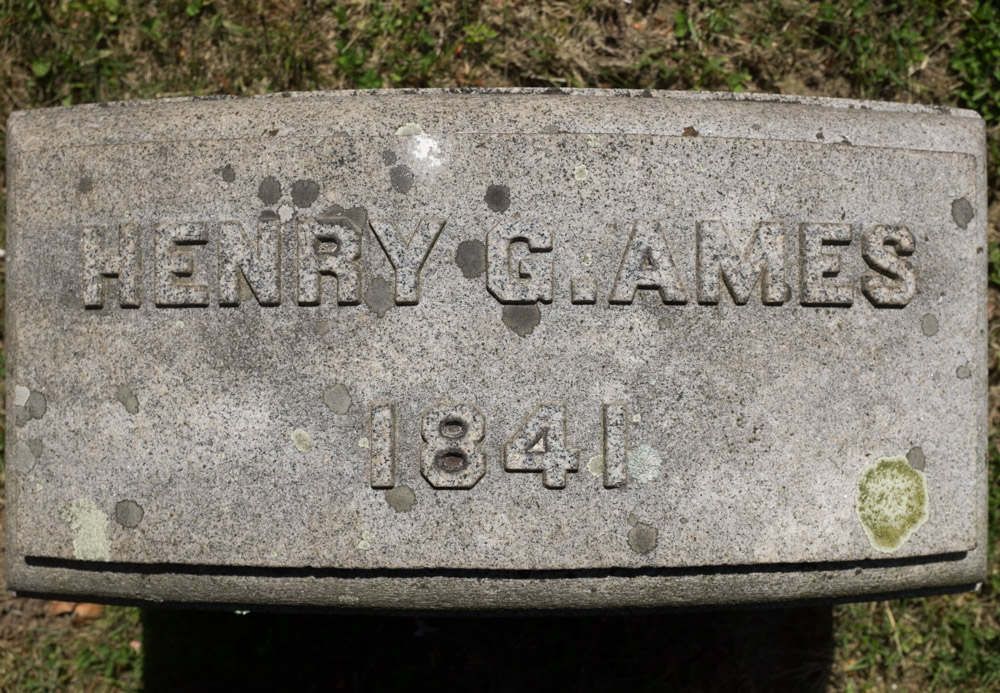
There was no question that fall had arrived.  Not only had the autumnal equinox occurred, officially ushering in the season, but Old Oliver had recorded several small frosts recently, including “a large frost last night.”  Daylight was shrinking slightly every day. As she quilted today, Evelina must have been turning her thoughts toward winter.  She may also have paused to remember that ten years ago on this date, her fourth son, Henry Gilmore Ames, had died at age 2 1/2.

September 24, 1851

imgres

Wedns Sept 24th  Susan has had another night of

suffering and has not slept but little if any but this

morning she appeared better and has had a more

comfortable day than I expected she would have  Helen

brought in her doll for her to play with and she

has had three to play with which has taken […] her

mind from her sickness in a great measure.

Francis dined here carried home Mr & Mrs Whitwell


The nettle rash, or hives, that had attacked Susie Ames began to subside this morning, surely bringing relief not only to the little girl, but to her mother and everyone else interested in her welfare. As Susie began to feel better, she became agreeably occupied with an extra doll brought in for her to play with by her older cousin from next door, Helen Angier Ames.

Helen’s mother, Sarah Lothrop Ames, and Harriett Ames Mitchell left Easton today to go into Boston and Cambridge for a night. Perhaps they visited Sarah’s sixteen-year-old son Fred Ames at Harvard, where he was a new sophomore. Fifteen-year-old Francis E. Gilmore, the youngest son of Evelina’s brother Alson Gilmore, came to the Ames’s for midday dinner.  Was he visiting the construction site of his older brother, Edwin Williams Gilmore, who was building a home close to Ames compound? Francis lived down on the family farm, and was able to give a ride south to William and Eliza Whitwell, who had been visiting Sarah Witherell.

Meanwhile, focused and persistent, Old Oliver continued to supervise construction of a new flume from Great Pond near Stoughton south to the waterflow in North Easton. He noted in his daily journal that “this was a fair day with a strong wind from the north west and pritty cold. we got on the top stone to our floom to day.”


September 21, 1851

1525-105430-a-flumere

*

Sunday Sept 21st  Have been to meeting  Mr Ames & self came

home at noon and Horace Pool came with us

and they rode up to the great pond where they are

building a new floom.  Brought Abby Torrey from

meeting & carried her back  She & Malvina are spending 

a week at Alsons  Miss Latham & her brother Edward

came to our meeting this morning and to the other 

part of the house after  I called into see them

The new flume going in at Great Pond was attracting local attention. After church, Oakes Ames and Horace Pool rode up to see it. Oakes had been in Boston when his father, Old Oliver, had begun the work, and no doubt he was curious to see the progress.  No one would have been working on it today, as it was Sunday.

The flume was intended to harness water power for the shovel factory. It was basically an inclined ditch lined with stones and boulders to shunt the water along. Some flumes – such as those used in lumbering – are lined with wood, but that wasn’t likely to be the case here, given the scarcity of wood, the availability of stones, and the expectation of longevity. Old Oliver’s oxen must have been used to haul the many stones, and man-power used to put each one in place.  The channel itself would have been dug with Ames shovels, naturally.

Evelina, perhaps moving about slowly on sore feet, went to church and caught up with various friends and family members, including nieces Abby and Malvina Torrey. She popped into the other part of the house – the section lived in by Old Oliver and his daughter Sarah Witherell – to greet some visitors there.  She was settling back into her routine after the Boston holiday.

Photograph of an old flume, blogoteca.com/afonsoxavier, courtesy of Hadrian