January 23, 1852


images-1

Currier & Ives, Winter in the Country: Getting the Ice1864

1852

Jan 23d Friday  Have had a hard days work.  Heat the

brick oven 4 times.  Baked mince & dried apple

pies brown bread cup cake & ginger snaps.

Had quite a fright about Oliver & Fred being

away at tea time was affraid they had got into the

pond where they had been cutting ice for the ice house

found them at Edwins.  Mrs S Ames went with me

about 8 Oclock into Edwins


There are few things scarier for a parent than having a child – whatever the age – not come home when expected. Evelina and her sister-in-law Sarah Lothrop Ames had “quite a fright” when their sons, Oliver (3) and Fred Ames, respectively, didn’t return home from a day spent outside, harvesting ice at a family pond. The pond was some distance from the family compound, out of earshot. At tea time, no one was able to report on their whereabouts. The boys might have fallen in.

The worried mothers went out after dark to search for their sons and found them practically next door. They were fine. Oliver and Fred had stopped to call on Oliver’s cousin, Edwin Gilmore, and were presumably unaware that their absence had alarmed anyone. How relieved Evelina and Sarah must have been.

For the young men, the day spent working outdoors in the cold sunshine must have been an invigorating change from their college studies, and for their grandfather, Old Oliver, their participation in the important annual harvest of ice must have been gratifying.
January 22, 1852

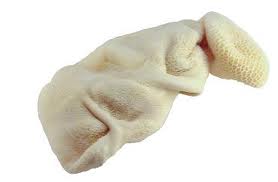
Tripe

Tripe

1852

Jan 22  Thursday  Have been cutting some apples & chopping

meat for mince pies, have it ready for baking

was about it all the forenoon, boiled tripe

This afternoon have been quilting the lining

for my hood. Julia Pool & Augusta spent the

afternoon. Augusta went home to get tea for Edwin &

in the evening they both came in and staid until

nearly ten Oclock. Mrs S Ames was here about an hour

Evelina was the recipient of the tripe from the two oxen that Old Oliver had butchered a few days earlier. Tripe is the stomach.

Lydia Maria Child offered advice on its preparation: “Tripe should be kept in cold water, or it will become too dry for cooking. The water in which it is kept should be changed more or less frequently, according to the warmth of the weather. Broiled like a steak, buttered, peppered, &c., some people like it prepared like souse.”*

Souse, also known as head-cheese, is a terrine made with meat from the head of a cow, calf or pig, often pickled, and set in a meat jelly or aspic. Mrs. Child was suggesting that the tripe be served in aspic, which Evelina might have done once she boiled it.  It’s not a dish one sees anymore on the American dinner table.

Out of the kitchen, Evelina welcomed visitors from the Pool family. The bride, Augusta Pool Gilmore, and her sister, Julia Pool, spent the afternoon at the Ames house and in the evening, the newlyweds themselves visited until ten o’clock.


Lydia Maria Child, The American Frugal Housewife, p. 38

January 21, 1852

OLYMPUS DIGITAL CAMERA

1852

Jan 21st  Wednesday.  Had quite a job to thaw out the boiler

in the bathing room which was left Saturday evening

for Mr Ames to take a bath which he chose not

to take & was forgotten.  A tin pail of water was frozen

so hard as to burst out the bottom, so much

for forgetfulness & carelessness.  Oliver came home

this evening and brought me a picture a present from my 

sons.  Mrs. Witherell & Ames spent part of the evening

Bathing in 19th century America was an improvement over the hygiene practices on the 18th century, but still less frequent than today. Where we might shower once a day, people like the Ameses might bathe once a week, often on a Saturday night in order to be clean for Sunday service.  Others bathed less, or differently. For some, sponging off was preferable to full immersion in a tub.

Oakes Ames had his Saturday night bath lined up to go, but decided against it and left the water behind to the mercy of the cold bathing room, where it froze.  Evelina had to clean up the consequent spill, tsk-tsking all the while about “forgetfulness & carelessness.” This small vignette does suggest just how cold the room was where they bathed. Regardless of the temperature of the water, stepping in or out of the tub was chilly. No wonder they didn’t bathe every day.

The day wasn’t all bad, however. Evelina’s sons, led by middle child Oliver (3), gave her a gift, a picture.  What was the occasion? Not her birthday, not Christmas. Perhaps just a spur-of-the-moment thank you for being their mother. The gesture seems sweet, thoughtful and generous.

January 19, 1852

d44daf6476649bfb638e3038c8f2221c

Fashion illustration from Godey’s Lady’s Book, 1850


1852

Jan 19th Monday  Susan washed the dishes and after doing

my usual mornings work commenced sewing some pieces

of fur that was taken off my cloak for Susan a muff

to carry to school.  Finished it before dark and in

the evening made over her best muff and it looks

as well if not better than when new. feel very well

satisfied with my days work  Very cold.


The snow continued today. According to Old Oliver Ames, “it snowd all last night + more than half the day to day and it was a verry cold storm – it did not snow fast any part of the time and all that has come now will not measure more than 6 inches on a level. it drifted considerable and is dry + light.”*

Susan Ames probably would appreciate the muff that her mother was making for her to keep her hands warm.  She already had one for “best” to wear to church, but this one would be for everyday. Made from recycled pieces of fur off her mother’s cloak, Susie would be making quite a fashion statement for a nine-year-old school child, most of whose classmates would likely have worn mittens.  Even Meg and Jo March had to walk to their jobs without muffs, holding instead warm popovers fresh from the oven to keep their fingers from numbing up.

At day’s end, Evelina was “very well satisfied” with the muffs she had reworked.  The household today appears to have been running well which would have amplified Evelina’s happy mood. Jane McHanna must have worked some magic to get the laundry done despite the snow storm.

*Oliver Ames, Journal, Stonehill College Archives, Arnold Tofias Collection

January 13, 1852

images-1


Jan 13 Tuesday  Have not done much work to day

can scarcely tell what I have been doing  Have

been trying to fix Susan some work to learn her to sew

Have got out an apron and commenced a stocking

for her to knit.  This afternoon called on Mrs Richards

Holmes, Torrey Savage & Hannah  Spent the evening with

Augustus and wife at Olivers.  Mrs Witherell been to Dr Washburns

& had her teeth out.  Mrs S Ames George & Emily went with her.  Father

& Oliver dined here & the others when they came back from Bridgewater

This was not Sarah Witherell’s best week. Limping from a bad burn on her foot, she kept an appointment with a dentist, Dr. Nahum Washburn, to have her teeth pulled. Dr. Washburn had his office in Bridgewater, in an historic building known as “the Tory House.”  It was the same office that Evelina had been to several months earlier to have her own teeth worked on.

Modern historian Jack Larkin has noted that “[h]undreds of thousands of Americans had at least some of their teeth badly rotted, a source of chronic pain and foul breath to many, with extraction its only cure […] Dentistry, which most rural American physicians practiced, was by far the most effective form of surgery; extraction was a decisive and relatively safe procedure (although infection always posed some risk).”*

While Sarah Witherell suffered today, her family united to support her. Her children and sister-in-law accompanied her to the dentist’s office.  Evelina (with Jane McHanna in the kitchen, of course) fed the entire family, which made for twelve around the dining table. Old Oliver, whose midday meal was usually prepared by Sarah Witherell, came over from the other part of the house. The Ameses from next door were there, too. Everyone came together for Sarah Witherell.

Evelina managed to socialize today, too.  She called on various friends and relatives around town, perhaps sharing the news of poor Sarah’s painful dentistry.


*Jack Lardin, The Reshaping of Everyday Life, 1988, pp. 92 – 93

January 11, 1852


images-1


Jan 11  Sunday  Have been to meeting although it has

been stormy  Mrs Witherell did not go which is

unusual  Henrietta Mrs Clarke & self called on

Mrs Witherell at noon.  She burned her foot and

cannot go out but it is getting better.  Have written

a letter to Oliver this morning and have been reading

Sarah Witherell burned her foot and couldn’t go to church, probably because she couldn’t put her shoe on. How had she burned it?  Fallen against a coal stove? Stepped on a live ember? Spilled hot tea or scalded it stepping into a tub? If the possible sources of the burn are multiple, so were the potential remedies.

“Cotton wool and oil are the best things for a burn,” declared Lydia Maria Child in The American Frugal Housewife.* Dusting a burn with flour and wrapping it in cotton flannel was another common practice. Like today, the application of a salve was soothing.  We might apply cold water; they might have applied butter, assuming they had any on hand to spare. Home treatments for minor burns are still variable, despite today’s over-the-counter ointments and sprays.

Sarah Witherell, we learn here, always went to meeting.  Her absence today surprised even Evelina, who came back from church at intermission to check on her sister-in-law.  Evidently reassured that Sarah would be fine, Evelina settled into her more normal routine for Sunday, which included reading after church and, today, writing a letter to her middle son, Oliver, who was away at college.


*Lydia Maria Child, The American Frugal Housewife, 1846, p. 17

January 10, 1852

Oakes_Ames_-_Brady-Handy

 Portrait of Oakes Ames by Matthew Brady 

1852

Jan 10th Saturday  Mr Whitwell & Ames have not met again

to day  Mr W called just as Augusta Helen Susan

& self were in the sleigh to take a ride  We have

called at mothers  Mr Horace & John Pool, Edwin

& wife here to tea  Swept the parlor this morning

and put the house in order partially frosted a loaf of cake

for Augusta having made one of hers carried the frosting

over and made her a call while heating it

The boys presented their Father a gold pen & pencil

Oakes Ames turned 48 years old today, as did the local Unitarian minister, William Whitwell.  Last year and again this year, Evelina was unsuccessful in getting the two men together to celebrate. Oakes Angier and Frank Morton gave their father a gold pen and pencil to mark the occasion, a fine gesture.

As Oakes closed in on the half-century mark, he presumably began to look beyond the confines of the work he and his brother Oliver Jr. did for the shovel company. The next generation, in fact, was being groomed to run O. Ames & Sons; Oakes Angier, as eldest son of the eldest son, was on deck to superintend the company whenever Oakes and Oliver Jr. decided to step down. He was learning every aspect of the manufacturing process. Oliver (3) and Fred Ames were at college, Oliver presumably honing the skills he would need to take over his father’s role in managing sales, while Fred was on a path to being the financial clerk or CFO we might say today. Frank Morton Ames was learning a variety of skills, too, although he was seen more as a spare man waiting to step in should his cousin or either older brother fail somehow.

What could Oakes do with his tremendous talent and energy? Clearly, the roiling politics of the day interested him. By 1860, his gregarious nature, quick comprehension and thirsty ambition led him to accept the nomination and election to Massachusetts Governor Andrew’s Council as representative from Bristol County. Two years later, by “a large popular vote,”* Oakes Ames was then elected to the Thirty-Eighth U. S. Congress, where he would serve for four terms.

In 1872, according to circumspect historian, Reverend William L. Chaffin, Oakes “declined a renomination.”* He died in May, 1873, shortly after the conclusion of Credit Mobilier, a national political scandal for which many held Oakes culpable. At the time, his natural candor and fearlessness worked against him and he was unable to dodge the political manuevering that placed most of the blame on him. That same brave honesty, coupled today with calmer, historical perspective, has since served to cast Oakes Ames in a better light.

William L. Chaffin, History of Easton, Massachusetts, 1886, p. 654


January 8, 1852

OLYMPUS DIGITAL CAMERA

*

1852

Jan 8th Thursday

Frosted the cake over the second time

this morning and it was quite dry at three when

Edwin took it away  they are married this evening

Have invited their parents uncles aunts and cousins

here tomorrow. Have presented them with an hour

glass table  Mr & Mrs Reed have passed the afternoon

in the other part of the house  Two shovel handlers from

Maine to spend the night here

Had a quarter of Beef of fathers  The

Ox weighed over 14 hundred

Edwin Williams Gilmore and Augusta Pool were married today in what would have been a small ceremony, probably at the home of Augusta’s parents, Lavarna and John Pool, Jr. Presided over by a minister – Reverend William Whitwell, most likely – the event would have been attended only by close family members. The couple took no honeymoon or “bridal tour,” but moved right into the new house that Edwin had built in the village, barely a stone’s throw away from the Ames compound.

The new house had been furnished not only by Edwin, but also by Augusta herself, who probably brought along household goods as part of what was called her “marriage portion.” Items such as dishes, cutlery, and linens would have been at least some of what Augusta and her new sister-in-law, Lavinia, had labored to put into place over the last two days.

Evelina spent her time preparing for the party she was giving the next day for members of the Gilmore and Pool families.  Her domestic routine wasn’t too overwhelmed, however; she was still able to cope with more pedestrian matters, such as accommodating two shovel handlers from Maine for an overnight visit, even as she set up for thirty guests.


Currier & Ives, The Marriage, 1847


January 6, 1852


OLYMPUS DIGITAL CAMERAOLYMPUS DIGITAL CAMERA

Augusta Pool                                       Lavinia Gilmore
                    

1852

Tues Jan 6 th

A heavy snow storm commenced about

10 Oclock  Mrs Witherell & her children have been

to the funeral in a waggon had a hard time getting

home.  Augusta and Lavinia have been at Edwins

house getting it in order for housekeeping.  This

evening have helped me stone raisons for cake  Edwin

came with them to tea

The bad weather continued, bringing snow that Sarah Witherell and her children, George and Emily, had to fight their way through as they returned from a funeral in a wagon. As Sarah Witherell’s father, Old Oliver, noted, it “snowd all day and in the evening. it was a damp snow and fell level.

Evelina was safe inside, out of the weather. With her were her 19-year-old niece, Lavinia Gilmore, and Augusta Pool, a 22-year-old who was about to marry Lavinia’s brother, Edwin. The two young women had been at Edwin’s house for much of the day, “getting it in order.” How exciting, and perhaps a little scary, for Augusta to be getting married and moving into a new house in the village of North Easton.  She had always lived out in the country, not far from the Gilmore farm, which is how she got to know Edwin.  In fact, Augusta’s older brother, John Pool, was married to Rachael Gilmore, Lavinia and Edwin’s older sister. They would be double-siblings-in-law. (There must be a more official word for the relationship when a brother and sister from one family marry a sister and brother, respectively, from another family.)

When they finished today’s work at Augusta’s new home, the two girls walked over to Evelina’s to help her stone raisins for the wedding cake.  Evelina may have put the raisins in a little warm water to plump them up before popping the seeds out.  Edwin, groom-to-be, joined the women and the rest of the family for tea once the men all arrived home from work.


* Photographs courtesy of The Easton Historical Society, with thanks to Frank Mennino, curator


January 5, 1852

Abbott H. Thayer, Angel, 1887, oil Smithsonian American Art Museum Gift of John Gellatly

Abbott H. Thayer, Angel, 1887, oil
Smithsonian American Art Museum
Gift of John Gellatly


/52

Monday Jan 5 th

Another stormy Monday and we have not been 

able to put our clothes out  Susan washed the

dishes this morning and Jane has done the rest

of the work.  I have finished Susans hood and 

it looks very nice  Mrs Witherell came from

Boston to night  Mr Witherell died about six

yesterday morning


Old Oliver was keeping track of the stormy weather, noting that “it raind + snowd all last night. the snow fell about 2 inches deep + is a snowing now wind north east but it does not blow so hard as it did yesterday. it snowd untill about 3 O clock but was cloudy all day.” One imagines that he had his face close to the window panes of his sitting room – or accounting office, perhaps – as the snow fell outside.

Sarah Witherell returned from Boston in that same snow and wind, having managed to reach her father-in-law’s bedside before he passed away. She would gather her children and return to the city for the funeral.

Evelina, meanwhile, sewed and supervised household chores. “Another stormy Monday” meant that wet laundry was dried in the kitchen and around the house, near heat registers and the air tight stove that helped keep Evelina’s plants from freezing. Parts of the house were draped with white sheets and garments, the floors or carpets wet beneath them. Susie Ames helped some by doing the dishes, a chore that was becoming her regular responsibility. Jane McHanna, of course, bore the lion’s share of the work, with the laundry and “the rest.”