July 17, 1852

Wine glass

July 17th Sat  Hannah & Mary picked some currants

yesterday and to day I have made some

currant wine had four quarts of juice

Have done but very little sewing. Have

mended some.  Oliver returned from

school to night He is not looking very well

He brought home his pictures & all his things

is in hopes to go back again but it is uncertain

Evelina’s diary entry today poses two questions for us readers. First, why was she, wife of a strict tee-totaler, making wine? The answer is that from time to time, even a temperance household needed wine for medicinal purposes. It may be, also, that the occasional dish, such as mincemeat, required some alcohol as an ingredient. Even Lydia Maria Child, who abhorred liquor, nonetheless included a recipe for currant wine in her household guide:

Break and squeeze the currants, put three pounds and a half of sugar to two quarts of juice and two quarts of water. Put in a keg or barrel. Do not close the bung tight for three or four days, that the air may escape while it is fermenting.  After it is done fermenting, close it up tight…It should not be used under a year or two. Age improves it.*

The second question is almost unanswerable. Why wasn’t Oliver (3) able to return to Brown University? He wanted to, but clearly the decision wasn’t his to make, nor did it appear to be the school’s choice. Rather, the decision to cease attendance lay with Oliver (3)’s father, Oakes Ames, who had been against his son attending college in the first place. Oakes was once described as having “inherited some measure of that Puritanical contempt for the liberal arts…”**. He had first put his foot down against Oliver going, finally relented for one year, and now was again saying no.

If we can move past Oakes’s prejudice against higher education, we can imagine that he wanted his middle son back at the factory. So much had happened at the shovel works during Oliver (3)’s absence. The old factory had burned down and a temporary one had been quickly rebuilt. A new, state-of-the-art stone factory was being raised, requiring extra supervision. And the manufacture and sale of shovels had had to continue as if nothing had happened. Quite likely, Oakes needed his son’s help. Studying was over.

It’s also possible that an additional factor may have influenced Oakes’s decision, a factor that he couldn’t yet share – at least not with Evelina. Oakes may have been privy to a concern about his son Oakes Angier’s health, a condition that would soon be apparent to all.


*Lydia Maria Child, The American Frugal Housewife, p. 59

** Hon. Hosea M. Knowlton, Address at the Dedication Ceremony for the Oliver Ames High School, December 12, 1896, published  Boston, 1898, p.98
 

July 14, 1852

1852

P1070606-X2

High water (flood level) mark in canal in Lowell, Massachusetts


Wedns July 14th  Julia came again this morning

but we have not got along very fast

on my dress  Have no trimming for the

sleeves have written for Mrs Stevens to

get me some   There is a great deal to

do to finish my dress  Hannah & Mary 

have both been ironing all day and 

have it all done

Evelina was indoors, sewing a new dress with the help of dressmaker Julia Mahoney. Old Oliver was out haying, “jawing” orders at local men gathering up this year’s meager crop. Oakes Angier, Frank Morton and probably Oliver (3), now that he was home from college, were each posted in some area of the factory, making shovels alongside the workers. Oakes and Oliver Jr. were supervising, perhaps striding around the shovel complex watching the new building go up or sitting in the office looking at accounts.

If we modern readers want to find a day that typifies life in North Easton in the middle of the 19th century, we couldn’t do better than this ordinary summer day in 1852. In other years and in other places, July 14th has hosted more momentous events: the storming of the Bastille, the first ascent of the Matterhorn, the shooting of Billy the Kid, the day Jane Goodall arrived in Tanzania to study chimpanzees. Nonesuch in North Easton; according to Old Oliver’s record, July 14, 1852 was simply a “warm good hay”* day. Routine ruled.

This is not to say that history wasn’t happening. It was. Yet as Evelina noted, “we have not got along very fast,” a phrase that is applicable to so much of history. Change often quietly accumulates, transforming what we know in a stealthy fashion. Evelina’s hand-sewing, Old Oliver’s oxen-driven hay-wagons, Oakes’ and Oliver Jr.’s water-powered shovel machinery: all have since disappeared, replaced by modern equipment invented over time. The life that the Ameses lived was already altering, irrevocably, bit by bit.

Oliver Ames, Journal, Stonehill College Archives, Arnold Tofias Collection


July 10, 1852

DSC_0383

Lace doily

July 10th Saturday  Have finished Susans 5th pair of

pantletts & Mrs Witherell has given her three

more so she is pretty well off in the pantlett line

Have been marking some clothes and Mrs

Witherell marked 6 gentlemans hdkfs & 6 for

me and doylies & other things  Mary has sewed

some but does not accomplish much is better at

housework than sewing  Oakes A has gone to a

sing near Jonas Hartwells with other gentlemen

and ladies

Evelina and her sister-in-law, Sarah Witherell, sewed today: pantletts, handkerchiefs, and an item new to the repertoire: doilies.  A maid named Mary did some sewing, too, but wasn’t up to the standards set by the older women.

In the 21st century, we know doilies as decorative paper mats that are typically used to present special baked goods. Doilies can also be made from cloth or lace, however, and once had a broader range of applications than just accompanying tea cakes. Designed in the 17th century by a London draper named Mr. Doiley, the original item was an inexpensive woolen cloth that was used to ornament a dress. It developed into a napkin used to protect the material under it. It might be seen on a tablecloth, a sideboard, or even on the back of an armchair (where it became known as an antimacassar.) Beautifully-made doilies were a housewife’s source of pride, specially stored in the linen closet.

Old Oliver, no doubt entirely disinterested in the women’s sewing agenda, reported that this “was a a fair warm day wind south west. + has bin all the week.”* Oakes Angier Ames took advantage of the good weather and, after work, headed to Bridgewater to attend a sing near the farm of Jonas Hartwell “with other gentlemen and ladies.” Who were they? Did he run into anyone of interest?

*Oliver Ames, Journal, Stonehill College Archives, Arnold Tofias Collection

July 4, 1852

imgres-1

July 4 Sunday  Have been to meeting  Orinthia & Lavinia

came home with us at noon  Orinthia had a 

toothache and did not return in the afternoon

Since meeting Alson & wife came up and brought Lavinia

for her to go to Boston tomorrow  Mr Ames called with Orinthia

and self to see the rock they are splitting for the shop and we all

walked down to see the new shop  Mr Clark of Norton preached two

excellent sermons  Oakes A & Helen went to E. Bridgewater

Oakes Ames “came home from N. York”* today, having been there on shovel business; he was the company salesman. After church was over he, Evelina, and her friend, Orinthia Foss, walked down to the shovel shop to see the progress on the new stone building, the Long Shop. They checked out rock that was being split.

“[T]his was a fair cool day wind south west and a drying day…” according to Old Oliver.  It was probably perfect for haying, but it was Sunday, so no one went out to the fields. It was also the Fourth of July, but again, being Sunday, the celebration was postponed.  Fireworks would be held the next day.

Modern historian Jack Larkin describes the importance of the Fourth of July in the American calendar:

“Despite its notably awkward timing for a nation so agricultural – it came in the midst of haying in the North, corn and cotton cultivation elsewhere – Americans made the Fourth their most universal holiday. In ‘fifty thousand cities, towns, villages and hamlets, spread over the surface of America’ citizens observed rituals that varied little, firing cannons, watching parades of prominent citizens and listening to endless orations in town commons and courthouse squares. Americans probably seized their national day with particular relish because it was the only sanctioned way of taking a break from the intensive labor of midsummer…”**

And just as we read yesterday of the beginning of a courtship between Frank Ames and Catharine Copeland, so today we readers may be privy to the genesis of yet another courtship.Evelina writes that Oakes Angier Ames drove his cousin Helen Angier Ames to E. Bridgewater, but doesn’t say why. Perhaps Helen was visiting a friend from school who lived there: Catherine Hobart. This Catherine, too, was destined to become part of the family as Oakes Angier’s wife. Was this their first meeting?


Oliver Ames, Journal, Stonehill College Archives, Arnold Tofias Collection

**Jack Larkin,The Reshaping of Everyday Life, 1988, p. 275


June 20, 1852

Lemon

Sunday June 20th  Have been to meeting all day Mother

went this afternoon and returned home  Mr Sanger

of Dover preached  Since meeting have been to 

Alsons with Edwin & wife & Oakes Angier.

Called at Mr Pools  Was treated with strawberries

& ice cream at Alsons and with lemonade

at Mr Pools  Frank went to a sing at Cohassett

Father gave me quite a lecture on cooking stoves

says we have had a dozen and we have had four


No Mr. Whitwell at church today. Instead, Rev. Ralph Sanger of the First Church of Dover led the service. Dr. Sanger was an older minister in the area, having graduated from Harvard in 1808, a year before Evelina was born. He had spent his entire ministerial life in Dover where he was well regarded. He also served several terms in the Massachusetts Legislature and was the chaplain for the Massachusetts State Senate.

After church came an afternoon of sweet sensations. Strawberries, ice cream and lemonade were served at two different homes where Evelina, Oakes Angier, and the young Gilmore couple called. The fresh fruit was a seasonal treat, and the ice cream and lemonade no doubt delightful as well.

Not all was sweet at home, however. Old Oliver got cross with his daughter-in-law and gave Evelina “quite a lecture” about her cooking stove. She was about to get a new one in her kitchen, certainly with her husband’s approval, but her father-in-law had no patience for it.  He didn’t see the need to update the kitchen equipment. We might remember that Oliver had grown up watching his own mother cook over a hearth, a style of cooking that had served for generations.  And here was his daughter-in-law planning to install another stove under his roof.

Even the little bit of rain that fell around sunrise didn’t cheer Old Oliver up.

June 9, 1852


IMG_0582


Example of bonnet frame


June 9th  Wednesday  Mr & Mrs Orr  Mr Ames & self dined

in Olivers and Oakes & Frank came to tea

with us.  Mrs Davidson & two daughters there

Mr Ames & Mr Orr rode to Canton

Mrs Orr brought me a frame for a lace

bonnet and I have fitted it to my head ready

for the trimming

With their guests, Robert and Melinda Orr, Evelina and Oakes ate midday dinner next door. It was a rare occasion to be invited to dine at Oliver Jr.’s and Sarah’s, an indication of how important the houseguests were.  At tea time, they were joined by Betsy Davidson, wife of the postmaster, and her little girls Lizzie and Julia. Oakes Angier and Frank Morton Ames joined the group, too, after finishing work at the shovel shops.

Evelina was given a special bonnet frame by Melinda and got right to the pleasant task of creating a new bonnet, “ready for the trimming.” The two friends probably sat and chatted as Evelina worked on it. Perhaps Melinda had brought some lapwork with her, or perhaps Evelina gave her something to sew. Neither woman would have been apt to sit idly while the other worked.

After dinner, Oakes and Robert rode over to Canton, probably to visit the Kinsley iron works. Back at home, Old Oliver Ames was breathing a bit easier after the much-needed rainfall of the previous day and night, reporting that “the plowd land is wett down considerable.” Just what the farmer asked for.


May 28, 1852

images-1

1852  May 28th

Friday  This forenoon cleaned the shed chamber  Mrs

Patterson assisted me and helped about house

down stairs  I baked cake & brown bread

in Mrs Witherells oven and Mrs McHanna

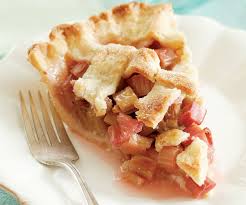
made a custard & some rhubarb pies.

Augusta brought her dress in and I partly

made the button holes  Oakes A went to Boston

yesterday returned to night

Time for rhubarb. The edible plant, with its long red stalks, was coming up in the garden and needed to be harvested and cooked. Household advisor Lydia Maria Child had this to say about it:

“Rhubarb stalks, or the Persian apple, is the earliest in gradient for pies, which the spring offers. The skin should be carefully stripped, and the stalks cut into small bits, and stewed very tender.  These are dear pies, for they take an enormous quantity of sugar.  Seasoned like apple pies Gooseberries, currants, &c., are stewed sweetened and seasoned […] in proportions suited to the sweetness of the fruit; there is no way to judge but by your own taste.  Always remember it is more easy to add seasoning than to diminish it.”*

Jane McHanna made today’s pies and a custard, too. Evelina baked her usual cake and brown bread. Spring cleaning was not forgotten, however, as Evelina and Mrs. Patterson cleaned out the shed. One wonders what they found in there after the long winter.

The younger generation, meanwhile, was stirring. Augusta Pool Gilmore came over from across the street to get Evelina’s help on a dress she was making.  Oakes Angier Ames struck farther afield, going into Boston for the night.  The 23-year-old was there on shovel business, presumably, and, being conscientious, he would have accomplished whatever task he was sent in to do. But he was young, too, and may have enjoyed the freedom of being on his own in the big city.

*Lydia Maria Child, The American Frugal Housewife, 1829, p. 51


May 23, 1852

Preach

Sunday May 23d  Mr Rogers of Canton preached to day

I did not like him any better than Mr Whitwell

Alson Mother & Helen came home with us

at noon.  Oakes A carried Miss Foss to the 

sing and home  Ellen H & Rebecca White went

with them  Mr Ames & self made a long call

at Mr Swains  Mr Rogers made a short call

as he was going to church

Robert P. Rogers, the Unitarian pastor from Canton, led the service in Easton today, presumably switching places with the regular minister, William Whitwell, as the clergy often did in those days. Rogers was only twenty-seven or twenty-eight years old; his post in Canton was his very first.  As yet unmarried, and certainly younger and less seasoned than Mr. Whitwell, Rogers did not impress Evelina. He paid her the compliment of making “a short call” before church, but she was partial to the Whitwells.

Young Mr. Rogers would soon leave Canton for a pulpit in Gloucester where he would serve as minister for the remainder of his ministerial life.  He must have done well there, or they wouldn’t have kept him around for so long. Decades later, however, Mr. Rogers would return to Canton to live out his last days.

Between and after today’s services, folks were moving around town quite a bit. Old Oliver noted that it was “some cloudy” but also “pritty warm,” so it was pleasant to visit.  The dry roadbeds, though dusty, would have been relatively smooth. Evelina brought her brother and mother home after the morning service, Oakes Angier carried three young women to a sing after church, and Evelina and Oakes went over to see John and Ann Swain in the late afternoon. Everyone socialized.


May 20, 1852


Mattress

1852

Thursday May 20th  Went to Bridgewater quite early this

morning and did not get back until

after four Oclock  Bought an oilcloth

carpet for the dining room,  Straw carpet

for O Angiers chamber and engaged some

husk mattress  Called into Edwins after 

I returned  Have a bad head ache.  Very pleasant

Today’s shopping objective: new floor coverings for the dining room and a bedroom, as well as “some husk mattress.”  At least one of the mattresses of the house was due to be restuffed or entirely made over.

By the mid-nineteenth century, mattresses were stuffed with various materials, including cotton batting, wool, horsehair or corn husks. As they had been for centuries, mattresses were placed within a wooden bed frame and set atop a latticed support of rope or leather or wire. The box-spring that we use today would come along a few decades later.

It’s a little curious that Evelina “engaged some husk” for a mattress, when she could have selected cotton or something finer, like down. Feathers would have required poultry, however, which the Ameses didn’t keep, and were expensive to purchase. The husks, probably harvested the previous fall from a corn harvest and dried over the winter, would have been less expensive.

By the end of the day, Evelina had a headache. Perhaps her long day of shopping or a bumpy ride to and from Bridgewater set her off.  With so much time spent outside, a high pollen count could have been the culprit, too, and might also account for Susie Ames’s recent nose bleeds.

May 4, 1852


IMG_0159

Trellis on the door of the home of Oakes and Evelina Ames and extended family, ca. 1860


Tuesday May 4th  Mr Healy & Morse commenced the trellis

for our front door  We had quite a consultation how it should

be made  I[t] was very cold & windy this morning & I fear I

have taken cold in being out so long  Have mended Olivers

sack and cut the pattern and have done some other mending

Augusta made a long call. It is really very pleasant to have

her so near.  Mrs S Ames went to Boston

The trellis that Evelina refers to today could very well be the modest trellis that graces one of the doors in the above photograph. The doorway facing the street in the approximate middle of the photograph was the door that Evelina, Oakes, and their family used for their own. The doorway on the far left, facing the yard, was likely the entry that Old Oliver and his daughter, Sarah Witherell, used. The house on the far right was a separate dwelling that belonged to Oliver Ames Jr. and his wife, Sarah Lothrop Ames.

None of these buildings is still standing. The one on the far right was torn down in 1863 and replaced by a larger, more formal house that is still extant today, with lovely gardens and a well-kept air.  The house in the center, halved on the interior to accommodate the two households of Evelina and Sarah Witherell, was torn down in the 1950s, at the behest of Oakes Angier Ames’s eldest son, Hobart Ames. The site has since been reclaimed by trees and undergrowth.

The trellis was meant to add a fashionable air to Oakes’s and Evelina’s side of the house. Evelina was trying to bring the simple, old Federal dwelling into the Victorian age, inside and out. She had a particular vision for her home, and she worked hard to realize it. Small wonder that the construction required “quite a consultation.”