October 5, 1851

Letter

Oct 5th Sunday  Mr Whitwell has gone to Philadelphia and

we have no meeting and Mr Ames self & Susan

staid at home  Oakes A & Charles Mitchell went

to N Bridgewater to meeting  Wm & Mr B Scott

came to the other part of the house this morning.

Mrs Latham & Aaron Hobart this afternoon.  I have

been writing most all day  Am not at all well

It has been a beautiful day.

Feeling as poorly as she did, Evelina was probably grateful not to attend church. Her rash was so irritating that she had trouble sitting still, yet lacked the vigor to move around much. Too, she had worked hard the day before putting up fruit preserves and may have felt tired from the effort. She wasn’t “at all well.”

Letter writing occupied her, and probably helped take her mind off her discomfort, just as playing with dolls had distracted little Susie when she was ill. Evelina often corresponded with several female friends and relatives, like Louisa Mower and Orinthia Foss in Maine, cousin Harriet Ames in Vermont and Pauline Dean, whose home address we don’t know. Which friends did she write to today?

Other family members were more active, despite the cancellation of the usual church service. Son Oakes Angier Ames rode over to North Bridgewater with Charles Mitchell (a younger brother-in-law of Harriett Ames Mitchell) to attend meeting there. Old Oliver and Sarah Ames Witherell, in the other part of the house, received several visitors, including Aaron Hobart.  Susan Orr was still visiting there, and may have been the draw for some of the new visitors.

October 2, 1851

9904548_1_l


*


Oct 2d Thursday  Helped Ellen quilt some this forenoon 

She seems to do pretty well at it

Mrs Elijah & Ellen Howard & Mrs Abba Leach

spend the day and evening in the other part

of the house  I was there at tea.  Oliver &

wife have been to her fathers  Mr Ames has been

to Boston   Lavinia Williams came in the stage

with him but he did not speak to her

Evelina and her servant, Ellen, worked on the new quilt this morning .  Evelina had set the quilt up in the sitting room using a frame that could be dismantled and stored. The frame would have had four wooden legs at the corners, such as those in the illustration above.  Long boards around which the quilt edge was wrapped would have been fastened into the corners, creating an adjustable rectangle on which the women could work.  When finished the pieces of wood would be stowed away until needed again.

In the other part of the house, Sarah Witherell welcomed Nancy Howard, her daughter Ellen Howard, and Mrs. Abba Leach for the day. The women made a social visit that lasted all day and into the evening. Did they bring any needlework or sewing with them, or was conversation the only occupation? Evelina dropped in for tea, but Sarah Lothrop Ames from next door didn’t join them. She and her husband Oliver Jr were calling on her parents, the Hon. Howard Lothrop and his wife Sally. The Lothrop family may still have been wrestling over how to manage the family farm since the death of Clinton Lothrop, Sarah’s younger brother.

From Boston, where he was probably collecting orders for shovels, Oakes Ames returned home on the stagecoach where he sat with an acquaintance of Evelina, Lavinia Williams.  Mrs. Williams was the wife of Cyrus Williams, a local farmer of some means. Evelina seemed surprised that Oakes and Lavinia didn’t converse en route.

Even as Evelina was looking back at the day’s small social exchanges, she was beginning to feel unwell, something she wouldn’t report for another few entries.


September 29, 1851

330px-Open_drawers_-_Garments_for_girls

Monday Sept 29  Cut out three prs of cotton Drawers

for self for Ellen to make & have done some

sewing  Augustus came with his family about

4 Oclock are going to move into a part of Mr

Torreys house  Hector & Susan Orr came to

the other part of the house this afternoon.  Susan

will stop awhile  Not very pleasant has rained some

Rain arrived but the day, according to Old Oliver, was “pritty warm.” The wet weather and her cold must have kept Evelina indoors.  She may not have felt well, but as long as she could sit up, she would have found something useful to do.  Sewing some underwear for herself was the mundane chore waiting in her workbasket. Meanwhile, Jane McHanna, the family servant, washed the weekly laundry, perhaps doing her trick of letting the rain do the rinsing. She would have been challenged to figure out how to dry it, though.

Visitors arrived in the other part of the house; the Orrs, a family with whom the Ameses had been connected since early days in Bridgewater, came to visit. Susan Orr, a spinster, had known Oakes Ames when he was a baby. Today she and Hector – her brother, perhaps? – came to see Old Oliver and Sarah Ames Witherell.

On Evelina’s side of the family, nephew Alson “Augustus” Gilmore, his wife Hannah and their two sons, toddler Eddie and infant Willie, began to move into temporary quarters at Col. John Torrey’s building in the village.  Eventually, they would build a home, but for now they were going to rent.


September 21, 1851

1525-105430-a-flumere

*

Sunday Sept 21st  Have been to meeting  Mr Ames & self came

home at noon and Horace Pool came with us

and they rode up to the great pond where they are

building a new floom.  Brought Abby Torrey from

meeting & carried her back  She & Malvina are spending 

a week at Alsons  Miss Latham & her brother Edward

came to our meeting this morning and to the other 

part of the house after  I called into see them

The new flume going in at Great Pond was attracting local attention. After church, Oakes Ames and Horace Pool rode up to see it. Oakes had been in Boston when his father, Old Oliver, had begun the work, and no doubt he was curious to see the progress.  No one would have been working on it today, as it was Sunday.

The flume was intended to harness water power for the shovel factory. It was basically an inclined ditch lined with stones and boulders to shunt the water along. Some flumes – such as those used in lumbering – are lined with wood, but that wasn’t likely to be the case here, given the scarcity of wood, the availability of stones, and the expectation of longevity. Old Oliver’s oxen must have been used to haul the many stones, and man-power used to put each one in place.  The channel itself would have been dug with Ames shovels, naturally.

Evelina, perhaps moving about slowly on sore feet, went to church and caught up with various friends and family members, including nieces Abby and Malvina Torrey. She popped into the other part of the house – the section lived in by Old Oliver and his daughter Sarah Witherell – to greet some visitors there.  She was settling back into her routine after the Boston holiday.

Photograph of an old flume, blogoteca.com/afonsoxavier, courtesy of Hadrian


September 20, 1851

Train

Sat Sept 20th  Was out shopping all day purchased a number

of articles among the rest a Cashmere & french print

dress paper for my parlour brought home two chairs

from Bigelowes  We all returned home this evening

Frank came to Stoughton after us & rode back

on the stage.  Went into Olivers awhile this evening.

Have had a great deal of trouble with my feet while

I have bee[n] gone & to night they are very sore.

The Boston spree continued for most of the day as Evelina walked and shopped for everything from fabric to wallpaper to furniture.  She and Oakes brought their purchases home on the train (or “in the cars” as they might have said) to Stoughton. It was, finally, time to return to North Easton.  Son Frank Morton Ames met them at the depot with a carriage – or wagon –  but rode home by himself on the local stagecoach. The conveyance he brought to the group getting off the train was, perhaps, too crowded with goods from town to fit everyone in.

Perhaps not wanting to let go of the many sensations that three exciting days in the city had produced, Evelina went next door to Oliver Jr and Sarah Lothrop Ames’s house. They had returned the day before, and so missed the fireworks. Surely they compared notes on their experiences at various events at the Railroad and Steamship Jubilee.  They may have compared blisters and sore shanks, too.  They did much walking and standing during their junket, and Evelina at least was feeling the effects. Her feet hurt.

Meanwhile, never having bothered to go into town for the celebration, Old Oliver was moving ahead on improvements for the shovel shop.  In his journal he noted that “this was a fair day wind south west and quite warm we put in the bottom stone for the floom at the great pond to day and the 5 foot one on the east side of it.” A flume for the factory was going in at Great Pond.

September 19, 1851

5209548721_5943a65d99_z

Friday Sept 19  Mr Ames went into Boston also Frank

We went to Mr Daniels store to see the procession

They were an hour and a quarter passing and we

were very much fatigued we were in the store about

four hours  We returned to Mr Orrs and dined

In the evening Mr Ames & self Mr Norris Emily & Helen

Mr Wm Harris & sister walked to see the illuminations

Oliver & wife returned home & Frank

The Railroad and Steamship Jubilee concluded today in Boston with a huge parade around the city that moved from School Street through Haymarket Square, down Merchants Row, State and Washington Streets toward Tremont, Park, and the Boston Common. There the procession traveled between a line of schoolchildren, then went along Beacon Street and turned toward Boylston, where they finished. The “civic procession” featured not just the requisite brass bands, waving pennants, dignitaries on horseback, carriages of officials, and marching men. It also offered something new: one whole marching division of selected representatives of industry, intended to showcase the thriving manufacturing of the greater Boston area. Were the Ames shovels included?

Evelina and various family members saw the parade from a shop on Washington Street. They stood for hours, first waiting, then watching as the parade rumbled by. The store owner, Mr. Daniels, was certainly kind to let the group stay for four hours. Perhaps he sold Ames shovels?

An afternoon banquet followed on the Boston Common under a special pavilion. This the Ameses did not attend (nor were they likely to have been invited – their railroad days were yet ahead of them.) The featured after-dinner speaker was Edward Everett, a minister, past president of Harvard, former U. S. Representative and one-time Governor of Massachusetts.  With all those qualifications, he was nonetheless best known for his oratory. In 1863, he would be the featured speaker at the dedication of the Gettysburg Battlefield. On this occasion in Boston, Everett spoke about ” The Beneficial Influence of Railroads.” His fitting summation to the three day celebration of the modern railroad was topped only by the evening display of illuminated buildings around the city and fireworks over Boston Harbor.

Evelina, Oakes, and a group of relatives and friends saw those “illuminations.” How memorable the whole day must have been, and how “fatigued” Evelina must have felt by the time her head hit the pillow.

September 14, 1851

87219f


*

Sunday Sept 14th  Have been to meeting to day,  At noon

brought Miss Eddy home with us.  She walked

with Augustus to church. It is communion day

and Oakes Mrs Stevens & I stoped to bring

Mrs Witherell home.  We rode up to the great

pond and beyond to get some grapes & afterward

called at Mr Torreys

The Ames family attended both morning and afternoon service this Sunday, but instead of staying near church for the intermission, they rode home for a midday break.  Another change in routine may have been that communion was served at the service, which seems out of keeping with modern Unitarian practice.  Does anyone know if Unitarians took communion in the mid-19th century?

After church some of the Ameses rode up to the Great Pond, stopping at Col. John Torrey’s in the village on their way home. Evelina says she, Oakes and Mrs. Stevens brought Sarah Witherell along, a generational grouping that suggests that the “Oakes” in the carriage was her husband rather than her son Oakes Angier. Yet Evelina has, to date, always referred to her husband as “Mr. Ames,” as was the custom.  Did she write his first name unconsciously, or was her son the one in the carriage?  Readers, do you have an opinion? Whoever was in the group, each seemed to have a pleasant late afternoon foraging grapes in the cooler air.

Elsewhere in America on this date, James Fenimore Cooper, author of the popular Leatherstocking Tales, died in Cooperstown, New YorkWhile his Leatherstocking novels secured him fame throughout the western world, Cooper wrote many other novels, some with political overtones to them.  He was not popular with the Whigs. One day shy of his 62nd birthday, he died of dropsy (edema.)

* Baumann’s Rare Books


September 13, 1851

OLYMPUS DIGITAL CAMERA

Sept 13  Mrs Stevens & self sat down quietly to

sewing this morning but it was so warm that

we could not do much  There is quite a

change in the weather this morning.  Had

quite a heavy tempest this afternoon.

Carried our work into the other part of

the house this evening.  Mrs S Ames & Helen

passed the afternoon there

No matter how still Evelina and her guest, Mrs. Stevens, sat this morning, they found themselves enervated by the extreme heat.  They tried to sew but “could not do much,” heavy as the extra cloth must have felt on their laps as they hemmed or mended. Surely they wore their lightest cotton dresses (which were likely to have been somewhat plainer than the morning attire suggested in the illustration above from Godey’s Lady’s Magazine) and probably eschewed wearing caps indoors. Even in their coolest attire, however, they still would have “glowed,” as the old saying goes. Horses sweat, men perspire, women glow.

An afternoon rainstorm – “two showers before sunsett” noted Old Oliver in his daily jounal  – helped clear the air and by evening, Evelina and Mrs. Stevens had joined Sarah Ames Witherell in the other part of the house.  Did Old Oliver sit with them, or was he over in the office with Oakes and Oliver Jr.?  Assuming that Oakes spent the day in Boston on the usual shovel business, did he get caught in the downpour on his way home?

September 11, 1851

Plum


Thursday  Was very busy this forenoon

fixing work for Ellen cut out a corded skirt for her

to make for Susan  Have been this after 

noon to Alsons with Mr Ames & Mrs Stevens

met Augustus & wife & Miss Eddy had quite

a treat of peaches plumbs &c  came home quite

early in the evening  The weather still

continues to be hot

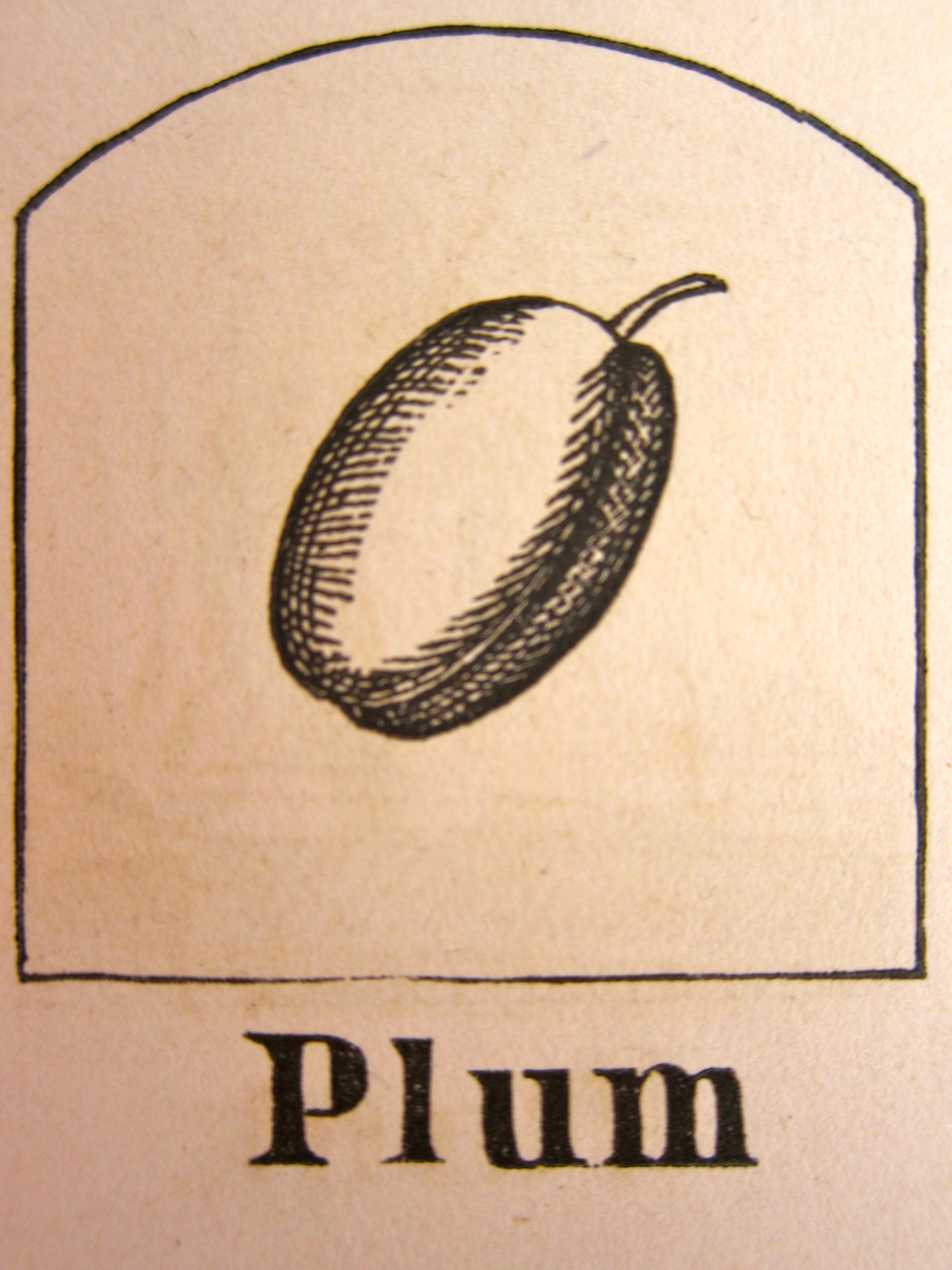
Ah, harvest.  This time of year brought a short-lived abundance of fresh fruit, “peaches, plumbs &c.”  “[Q]uite a treat” Evelina sighed, perhaps with the scent of peaches still on her fingers as she wrote. She, Oakes and guest Mrs. Stevens had met up with nephew Augustus, his wife Henrietta and another visitor, Miss Eddy, at the family farm south of the village. Now run by her brother Alson Gilmore, it was the farm where she grew up. Perhaps the annual harvest from the family orchard reminded her of her childhood.

While the fruit was delightful, the hot weather was not.  It’s difficult to imagine how hot Evelina must have been when she spent much of her morning cutting out corduroy. “Corded” cloth was heavy, and not easy to cut, either. She wanted one of the servant girls, Ellen, to sew the skirt for daughter Susie.  She was already thinking ahead to the fall and winter, perhaps; maybe she thought of winter as she cut along and stayed cool that way.

Evelina’s entry on this date was written exactly 150 years before our modern catastrophe, 9/11/2001. Unimaginable then and still.

September 10, 1851

Thread

Wednes Sept 10th  Cousin Harriet spent the forenoon with

us & dined here.  I cut some shirts this

forenoon for Mr Ames, carried two to be made

at the sewing circle.  Met at John R

Howards this afternoon quite a number

there.  Carried mother down and she went 

home with Henrietta.  Mrs Stevens went into

Olivers with H. Mitchell


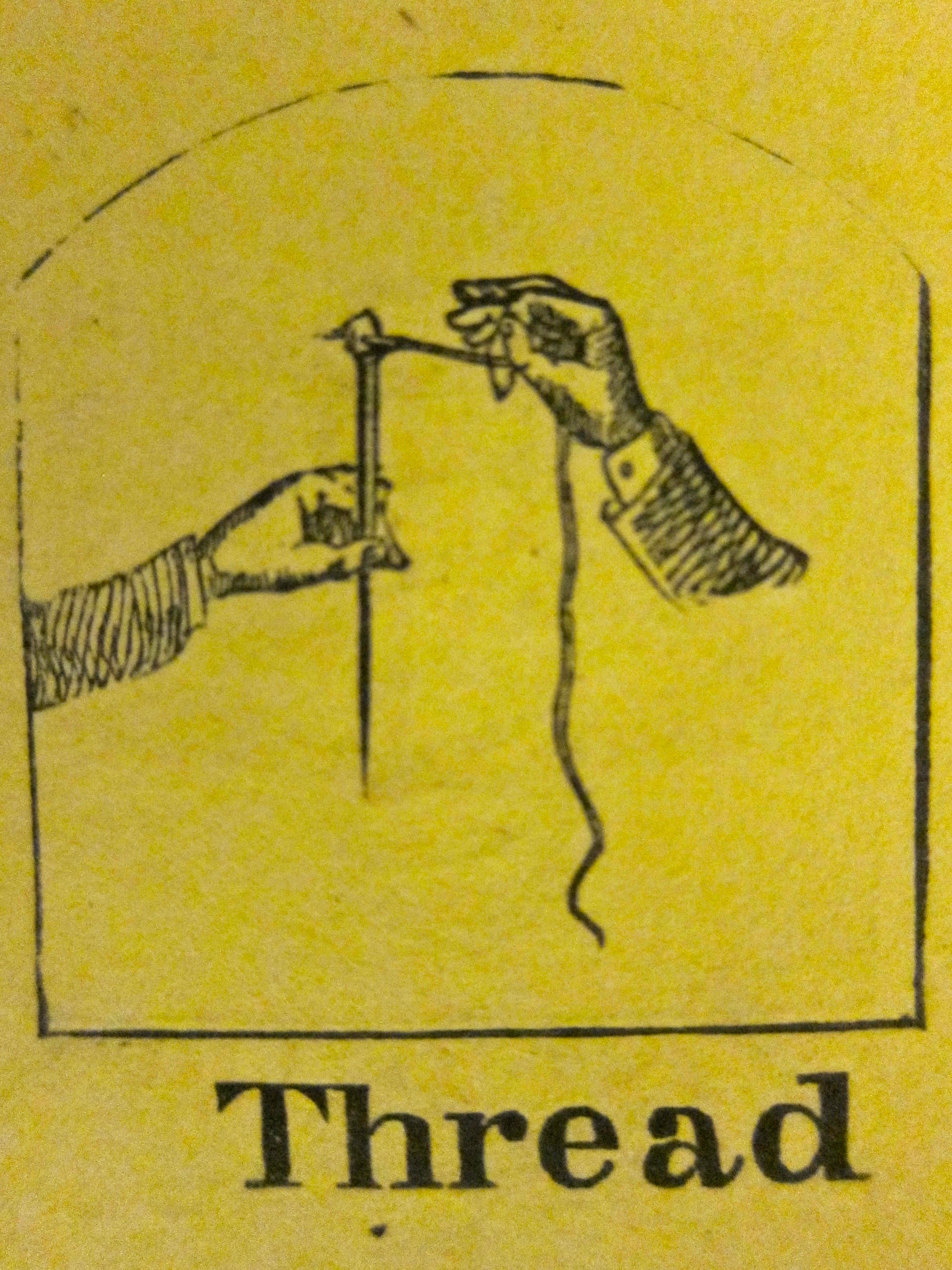
The monthly Sewing Circle, a gathering of women from the Unitarian congregation, met at the home of Caroline Howard, wife of John R. Howard, a book agent who lived near the geographic center of Easton.  Half a year had gone by since Evelina had had her turn hosting the group, back on February 12, when bad weather – and bad feelings, perhaps – prevented anyone from attending. By this time, she seemed to have forgotten that embarrassment and forgiven the friends who had failed to show up.

There was plenty of attendance at today’s meeting, however, including Evelina’s mother, Hannah Gilmore and sister-in-law, Henrietta Gilmore. The Ames sisters-in-law, both named Sarah, probably were there as well. All the women, as the saying went, set great store by these regular gatherings. Did they dress up for the meetings? They might well have, knowing that their fellow females would recognize and appreciate good sewing and fine material better than the men at home were likely to.

The only other regular gathering where women might pay particular attention to their attire would be church, where one’s “Sunday best,” was expected. Surely the Ames women were susceptible to this practice, even if one of the Ames men – Oakes – was not. Yet Evelina, for all the sewing she did, rarely described what she wore on any given day. Did she save her best outfits for Sewing Circle, or church, or both?