September 7, 1851


Ames Home and Office, North Easton, Massachusetts ca. 1852 - 1862

Ames Home and Office, North Easton, Massachusetts
ca. 1852 – 1862

*

Sunday 7th  Have been to meeting all day  Mother

Mrs Stevens & I went to Mr Whitwells at

intermission Mrs Whitwell made a cup of tea

for us, brought mother home with us from meeting

at night  Mr Ames & I called at Mr Swains

Mr & Mrs Peckham are to leave tomorrow for

Taunton & the children & Mrs Metcalf  Thursday

The weather is very warm  Gave Mrs Stevens

some cuff pins it being her birth day.

Despite today’s heat, Evelina and her guest Mrs Stevens, and others of the Ames family, presumably, attended both morning and afternoon sessions of church. When the last service was over, they carried Evelina’s 79-year-old mother, Hannah Lothrop Gilmore, to North Easton to stay for a few days.

An important transition was taking place this week at the shovel works.  John Peckham, former clerk, and his family were leaving for Taunton.  His place in the Counting Office was being taken by John Swain, whom Oakes and Evelina went to visit late in the day.  Swain and his wife, Ann Meader Swain, probably hailed from Nantucket.  They had connections in North Easton, but the move to a new abode was still a big change for the young couple. Oakes, with his wide-armed jocularity and Evelina with her easy, approachable manners, must have made the Swains feel welcome.  Over the years, their friendship would solidify.

Many decades later, when Ann Swain was the only one of the foursome still alive, she told historian and minister William Chaffin about the special relationship between John Swain and Oakes Ames:

“…[H]er husband had his regular salary supplemented by an addition from Mr. Ames. Mr. Swain did more or less work for him, besides the regular office work when he was head clerk. Mr. Ames was not very methodical and his transactions for the day in Boston, jotted down in a notebook rather hastily, would sometimes be in a tangle when he came to the office in the evening (office work in those days always going on in the evening), and he would say to Mr. Swain, ‘Come, John, you help me straighten out these things.’ In common with all the persons who served him Mr. Swain had a strong affection for Mr. Ames.”**


*Ames Homestead with Counting Office on far left.  Residence demolished in 1951.

**William Chaffin, Oakes Ames, private publication                                   


September 4, 1851

800px-Manning_Hall,_Brown_University,_Providence,_Rhode_Island_-_20091108

*

Thurs Sept 4th  This morning Orinthia left for Maine

& Pauline for Roxbury in the stage.  Mr Ames &

Oliver via Mansfield to Providence.  Oliver is

delighted with the idea of going to school & I am

sure he will improve his time  It seems

very lonely to day I have taken the bedstead down from

the boys chamber to clean it swept the parlour & washed

most all the windows in the lower part of the house both sides

Guests and family departed the Ames compound in North Easton today. Schoolteacher Orinthia Foss left to return to Maine, probably to Leeds where her parents and two younger siblings lived.  Houseguest Pauline Dean, left, too, taking the stage with Orinthia as far as Roxbury. Her final destination was unknown.  The most noteworthy departure, however, was that of 20-year-old Oliver Ames, middle son of Oakes and Evelina.  He was going to college.

Oakes Ames, after having resisted giving his son a college education, had evidently made a decision to let Oliver go. Father and son traveled together to Providence.  Perhaps Oakes helped his son find his living quarters, perhaps he explored the campus at Brown in an attempt to know it for himself, if he didn’t know it already. Sarah Lothrop Ames’s brother from Detroit, George Van Ness Lothrop, had once attended the school; Oakes and Oliver must have known that.

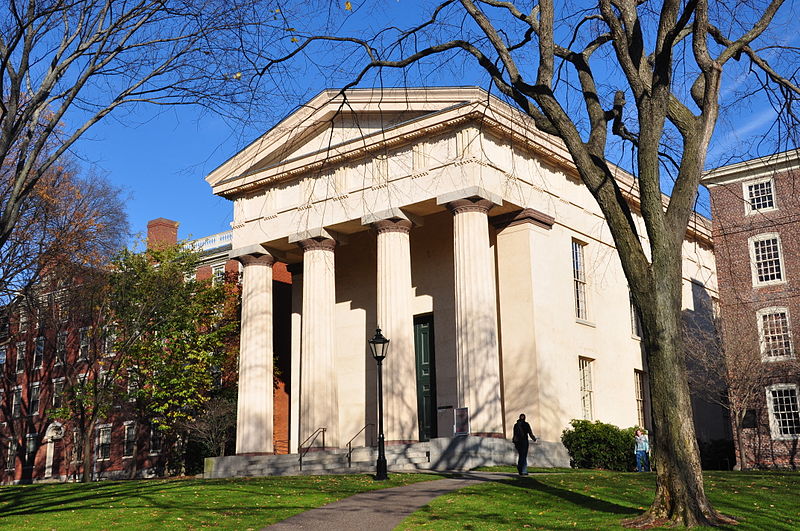
Established in 1764, Brown was the third oldest college in New England. Manning Hall, the neoclassical building shown in the photograph above, was the newest building on campus. No doubt it was a building that Oliver went into often, for it held both the library and the chapel. The president of the college at the time was Francis Wayland, a Baptist minister, who was stern but beloved and progressive.

As Evelina noted, Oliver was immensely pleased to be going to Brown, and she, in turn, seemed pleased for him. She was confident that he would study hard and do well.  Her pride didn’t protect her from feeling
“very lonely” today, though.  Choring was the only antidote she could imagine to liven up the quieter house.


Manning Hall, Brown University, Providence, Rhode Island

September 3, 1851

Trunk

Wednes Sept 3d  Alson came this morning & brought

Orinthia and staid to dinner and carried Mrs Stevens

home with him  Orinthia has been packing her clothes

Mrs Stevens stiched three more collars for me & Mrs

Witherell two that are for Frank.  Abby Torrey called

this afternoon &c and on her return Orinthia & I went

to the store  Pauline passed the afternoon with Helen

Orinthia Foss was packing her clothes, getting ready to return home to Maine. What prompted the departure isn’t clear. Did she lose her job, or was she called home on family matters? She would return to North Easton eventually, but did she know that when she left?  How did she feel about leaving this town where she had lived for six months? How did Evelina feel about the loss of her young friend, even temporarily?

Orinthia wasn’t the only one with a trunk to be packed. Oliver Ames (3), too, was a day away from departure and had a trunk into which his mother – and others, perhaps – were placing his new collars and mended shirts. Last minute sewing was still going on, but by this time the trunk would have been nearly full of the clothes that Oliver would need for a term at college.

That Oliver was going away to study at Brown was just shy of miraculous.  At 20, he was old to be going, for one thing; in the nineteenth century, the average students were teenaged, like Fred Ames at Harvard. But more than that, his father Oakes had not wanted him to go. According to one 19th century acquaintance of Oliver, Oakes “had inherited some measure of that Puritanical contempt for the liberal arts.” After completing prep school, Oliver had been directed to work at the factory, “to learn the trade of shovel-making. But the desire for a higher education remained strong, and when at the end of his five years apprenticeship he had mastered the trade, his father yielded to his solicitations, and allowed him to enter Brown University.” * Oliver had earned his ticket out.

* Hon. Hosea M. Knowlton, “Address,” Oliver Ames Memorial, 1898, pp. 98-99


August 31, 1851

28041868_121522694550

*

Sunday Aug 31st  Went to meeting and at noon Henrietta & Mrs

Stevens came home with us.  Mrs Stevens came with 

us from church at night and Alson carried Orinthia

home  Mrs Stevens & self called at Mr Torreys

The boys went to Dr Swans & Augustus’ to call on 

Miss Eddy who is stopping there  Oliver & wife & George

and family to Mr Lothrops & Pauline went into to stay

with Helen & talk about Warren


Socializing continued today after church, with Evelina welcoming her sister-in-law Henrietta Williams Gilmore and a mutual friend, Mrs Stevens, back to the house. She and the latter went to call on Col John Torrey while the Ames sons rode south to Dr. Caleb Swan’s to call on a Miss Eddy, who must have been special to warrant all three boys coming to visit.

Not forgetting that the Lothrop family had just been through the loss of Sarah Ames’s brother Clinton Lothrop, houseguest Pauline Dean called on young Helen Angier Ames, niece of the deceased.  Evelina was certain that Pauline only went to talk about a new love interest, however. Oliver Jr and Sarah Ames, meanwhile, went with another brother, George Van Ness Lothrop, and his wife Almira to call on their parents and their brother’s widow.

George Van Ness Lothrop, a North Easton son who had moved west a decade earlier, was, in 1851, serving his adopted state of Michigan as State Attorney General. Active in Democratic politics and a general counsel of the Michigan Central Railroad for nearly three decades, he ran unsuccessfully for U.S. Representative and U.S. Senate. He was a great supporter of Stephen Douglas, which would certainly have put him at odds with his brother-in-law, Oliver Jr., who was a Lincoln man. In 1885, he was appointed by Grover Cleveland to be U.S. Minister to Russia.

He died in 1897, and was honored with a road in his name in Grosse Pointe, Michigan, just outside of Detroit.

* George Van Ness Lothrop (1817-1897)

August 3, 1851

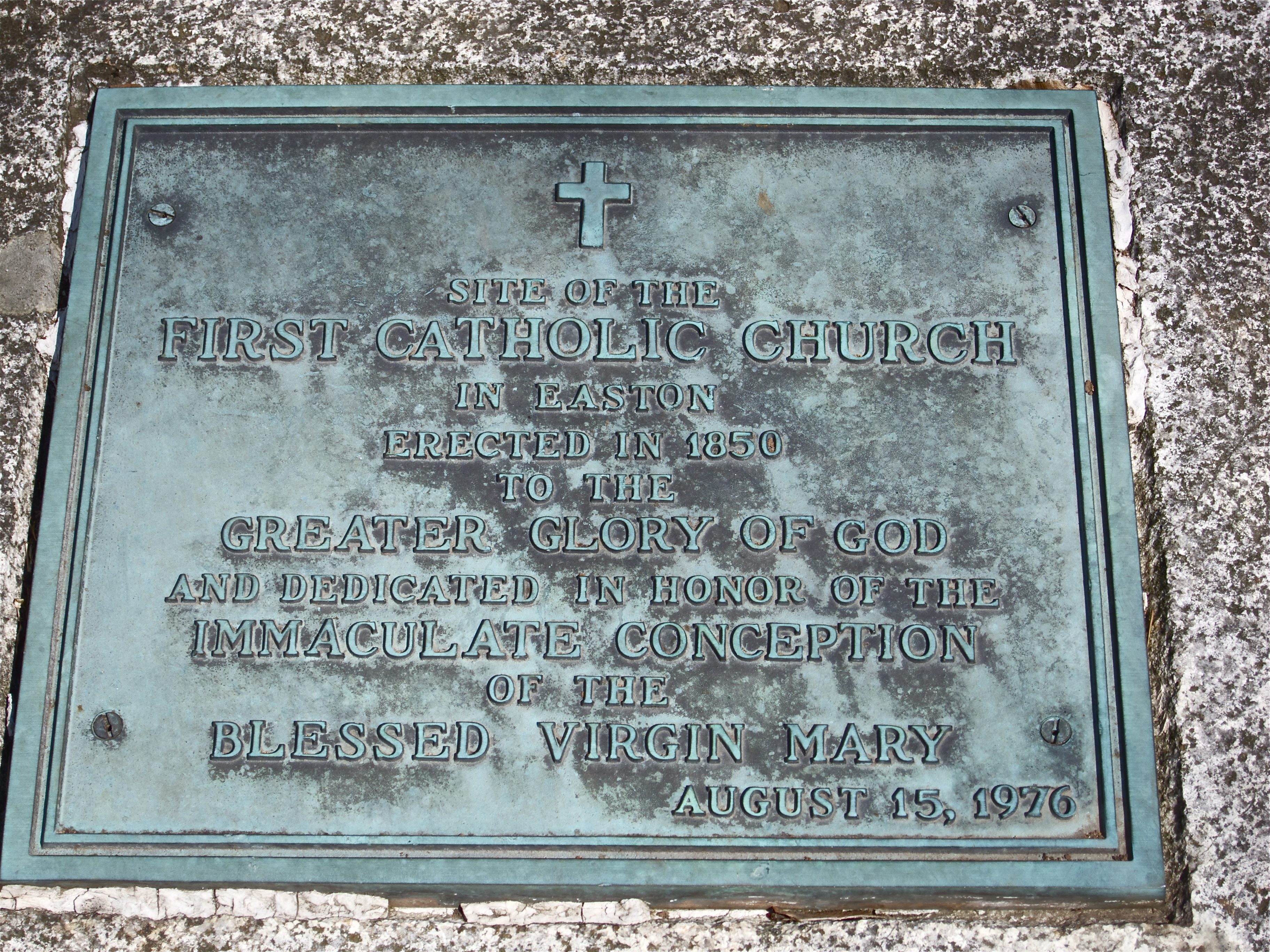
Plaque for Catholic Church

*

1851

Sunday Aug 3d  Went to the consecration of the Catholic

Church dedicated to The virgin Mary. The bishop &

priest took a pail of water and a cedar twig and went

around the house and sprinkled the foundation with the

water and then the aisles & walls and some of the

congregation got a sprinkling. This afternoon went to

our own church.  Frank carried Orinthia home

Oakes A carried Louisa Swan to the hall under our

church to a sing & carried S E Williams & L Kimball

home from it

By 1850, Easton’s Catholic population, which had been almost non-existent before about 1840, now numbered approximately 150, primarily due to the influx of Irish Catholic immigrants, many of whom went to work at the shovel factory.  The Irish had no church of their own, and had been gathering for worship in a hall belonging to the Ames family on those Sundays when an itinerant priest came to town.  The congregation had outgrown that facility, however, and needed their own house of worship.

The Ames family donated a plot of land on Pond Street to the Catholics so that they could build their own church.  The stone plaque in the photograph above commemorates that first church, built in 1850 and consecrated on this very Sunday in 1851.  Evelina and, presumably, other members of the Ames family attended the consecration, a ceremony to which Evelina paid close attention.  They went back to their own Unitarian church in the afternoon.


* SITE OF THE

FIRST CATHOLIC CHURCH

IN EASTON

ERECTED IN 1850

TO THE

GREATER GLORY OF GOD

AND DEDICATED IN HONOR OF THE

IMMACULATE CONCEPTION

OF THE

BLESSED VIRGIN MARY

AUGUST 1976 [date of plaque]

August 1, 1851

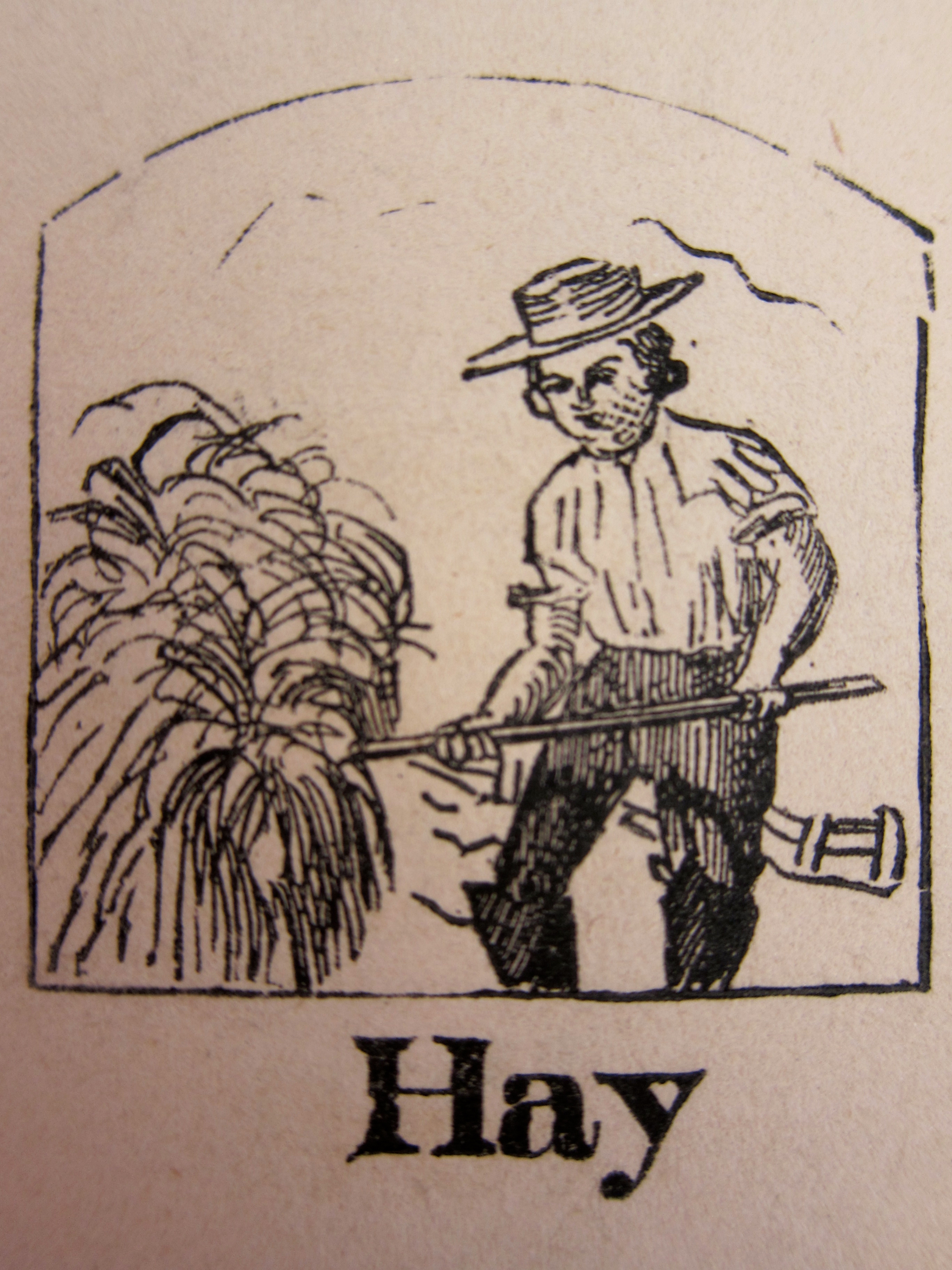
Hay


Friday August 1st  Feel very lazy as usual after a jaunt of

shopping  Have done but very little of any

thing and am too lazy to write and may as

well give it up


Tired after her “jaunt” into town, Evelina was “too lazy” to write an entry in her diary. She often felt that way after a day or two in the city. Considering the distance she had traveled in a rustic conveyance that hadn’t been designed for comfort, behind a horse that jogged along too fast for sightseeing, her fatigue was understandable.

While Evelina had been shopping and sightseeing in Boston, folks back in Easton had been engrossed in one of the most important chores of the year: Haying. Only two days earlier, Old Oliver had noted in his journal: “this was a cloudy day most of the time + pritty cold for the time of year. we had a good deal of hay laying in swath for 2 days past – we opend it + dryed it a little + cockt it up”.

For days to come, haying would be the focus of most of the householders in Easton.  “[Yesterday] was fair in the morning but it clouded up by ten O clock. and there was hardly any sun shine afterwards wind easterly + cold we have 4 or 5 ton of hay out now + 2 ton in the barn to go out again”  Before the haying season had ended, Old Oliver and his workmen would pull in as much as eight tons of hay.  It would be stored to feed the oxen and horses over the winter.


July 31, 1851


images

Thursday 31st July  Was out shopping most all day but

did not purchase a great deal.  Got one of my cuff

pins & marked it at Bigelows  Returned home through

Jamaica plains & by the pond.  passed a number of 

fine place among other[s]  Mrs Greens is a beautiful

situation but Kate went so fast so I could 

not see much of it.  Im told she was a widow Emery

& that her first husband left her the property


Bigelow Bros. & Kennard was a successful store in Boston that ran from ca. 1824 until 1971. Evelina and Oakes were familiar with it, as many of their children, grandchildren and great-grandchildren would be as well.  Evelina took a cuff pin – a women’s version of a cuff-link – to Bigelow’s to be marked.

As the crow flies, the distance from Boston to North Easton is approximately 21 miles. The distance on the available roads was closer to 23 miles. Given the speed at which a wagon might travel along a nineteenth century road with a predictable distribution of hills and curves, a journey in 1851 from one location to the other could conceivably take all day. As already proven yesterday, however, when Oakes and Evelina made the trip in from North Easton in time to shop before lunch, the Ames’s horse Kate could move right along.

Kate (also spelled Cate) was well-known in North Easton. She had a sense of purpose and style all her own.  Oakes had taught her to respond with speed when someone tried to rein her in, and he enjoyed tricking the occasional wagoneer who tried to slow Kate down with a normal tug on the reins. Kate would simply go faster, especially if she were headed for home.

Thus, Evelina wasn’t exaggerating when she wrote that Kate was going too fast for her to see everything.  Evelina wasn’t able to properly scrutinize the fine homes along the road in Jamaica Plains, some of which were quite big and beautiful.


June 12, 1851

photo

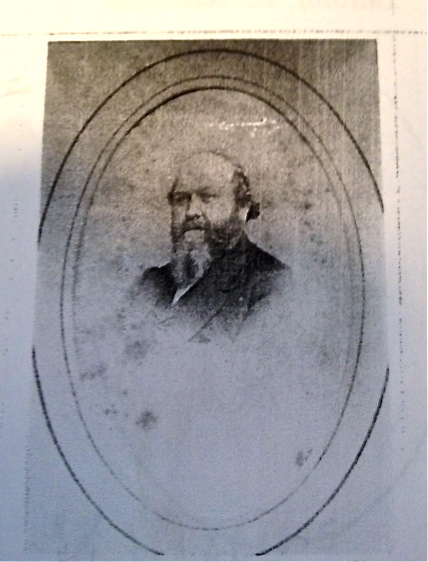
Alson Augustus Gilmore

June 12th Thursday  Jane quite unwell and went off to

bed after breakfast, after dinner quite smart

Bridget came about nine & we finished our

ironing  Howard & Clark sent over my cottage

bedstead &  put Castors on the bedroom chamber

bedstead  I have made my front chamber 

bed clean & put clean window curtains &

valance  Mr Whitwell called.  I called at Mrs Lakes


Evelina did housework today, with qualified help from an ailing Jane McHanna and a big hand from Bridget O’Neil, who had been working for Evelina quite a bit lately.  On the social scene, reliable Mr. Whitwell paid a visit, and Evelina went out to see a friend, Mrs. Lake.

This day marked the birthday of Alson Augustus Gilmore, son of Alson Gilmore and his late, first wife, Rachel Alger Gilmore. Known as Augustus, the 29-year-old was a frequent visitor to the home of his Aunt Evelina and Uncle Oakes. As we have seen throughout this winter of 1851, he had worked periodically for the Ames brothers – Oakes and Oliver Jr. – and taken many a midday meal at Evelina’s dining room table.

In 1851, Augustus appeared to be settling back into life in Easton, after having taught school elsewhere for several years. He brought with him his expectant wife, Hannah, and two-year old son, Eddie; the family settled into temporary quarters while Augustus scouted for some property on which to build a house.  He, his cousin Oakes Angier Ames, and another man, Elisha Andrews, started a boot-making factory.

A successful small-town life lay ahead for Augustus. Not only would he be involved for twenty years in the shoe-making trade, but he would continue to work for his Uncle Oakes as well.  A valued ally, he would courier important documents and mail for the Ames enterprises. Well known around town, Augustus served as a “model moderator […] in twenty-four annual town meetings, and seventeen special town meetings, besides other public assemblies.”*  He was also active in the Unitarian Church and remained close to his Ames cousins throughout his life.

* William Chaffin, History of Easton, 1886

April 27, 1851

Asleep

1851

Sunday April 27th  Have had a bad head ache all day and

was not able to attend church Laid down and

slept until about two Oclock which relieved

me very much After church Miss Foss & self

called into Olivers and met Harriet there.

Sarah Lothrop spent the day there. This

evening commenced a letter to Pauline C Dean

It has been a very pleasant day


Perhaps all that riding around Easton yesterday was responsible for Evelina’s headache today. She had pushed herself on Saturday, and the jostling along the washboard roads in bright sunlight may have been a factor in her feeling ill today. That, or she was catching what Sarah Lothrop Ames had. She felt so poorly that she didn’t even try reading, which was often her refuge on a Sunday. Her remedy, just to lie down and sleep, made her feel much better. Sleep was probably a better cure than the Wistar’s Balsam she took a few weeks ago.

Evelina felt well enough in the afternoon to call next door to check on Sarah Ames. There, she and Orinthia bumped into Harriet Mitchell. Harriett was hopefully feeling more settled after her first week back in North Easton. Who was watching her children? Sarah Witherell?

Who is the Sarah Lothrop that Evelina mentioned as spending the day next door?  She must have been a relative – a niece or cousin – of Sarah Lothrop Ames, who was still ailing.


April 6, 1851


800px-Martin_W._Carr_School_-_Somerville,_MA_-_DSC03412

*

1851

April 6 Sunday.  Have been to meeting all day, and 

as usual heard two excellent sermons from

Mr Whitwell.  It rained very hard while

we were going and has rained fast all day.

Edwin called after meeting & Martin Carr &

a Mr Davenport from Attleborough.  Oakes & Oliver

called at Mr Bisbees with them

The Ames family went to both church services today and, as Evelina had come to expect, heard “two excellent sermons” from Rev. Whitwell. Despite the rain, the Ameses had visitors this afternoon. Friends of Oakes Angier and Oliver (3) called: cousin Edwin Williams Gilmore, and friend Martin Carr, who brought a Mr. Davenport with him. The young men all went out together.

Martin W. Carr was the son of “Uncle Caleb” Carr, a long-time employee of the shovel shop, and brother of Lewis Carr, the young man who died back in January from consumption. The family was descended from Robert Carr, an early governor of Rhode Island.

Martin would find his own claim to fame.  A jeweler by profession, he went on to found M. W. Carr and Company, maker of knick-knacks and souvenirs, including “gold and silver jewelry, hairpins, belt and shoe buckles, button hooks and garter belts […] matchbooks, cigarette cases, ashtrays, hatpin holders, letter openers, souvenir spoons, ink stands, magnifying glasses, lamp shades, bud vases, napkin rings and trays with imprints of the homes of American authors such as Emerson, Longfellow and Hawthorne.”**  The factory was a mainstay of Davis Square in the City of Somerville, and Carr himself a prominent citizen involved in many civic activities.  The city honored him in 1898 by naming an elementary school after him. The Easton boy made good.

* Martin W. Carr School, 1898, Somerville, Massachusetts, National Register of Historic Places, now condos.

**Somerville Journal, 1894/Coldwell Banker