November 2, 1852

490px-William_Rufus_DeVane_King_1839_portrait

William R. King

(1786 – 1853)

Tuesday Nov 2d  Sewed on cambric sleeves for

Susan this forenoon very quietly with

Miss Alger  It has rained since Saturday

morn but this afternoon has cleared 

off Mrs Ames & self have been to Mr

Swains & called at Doct Wales & Augustus

Miss Alger & O Angier took tea in Olivers


Back from her quick day trip into Boston, Evelina spent the morning “very quietly” in her sitting room, sewing. The piano teacher, Miss Alger, was still visiting.  Outside, “it rain[ed] by spells […] wind north east it stormd all the forenoon and was cloudy about all day – there has bin one inch + a quarter of water fell since Sunday”*

After midday dinner, when the storm had stopped, Evelina and her sister-in-law, Sarah Lothrop Ames, went out to check on Ann and John Swain, whose infant son had died on Saturday. Evelina would have taken with her the mourning accoutrements she had purchased for Ann in the city. No doubt the Ames women continued to comfort the forlorn parents. From the Swains they paid other calls in North Easton, to the home of Ephraim and Maria Wales and to see Evelina’s nephew, Alson “Augustus” Gilmore and his wife Hannah. Hannah had lost her infant son Willie back in the summer. The women would have had much to talk about.

On the national scene, the day was momentous. As we have read previously in this blog, General Franklin Pierce, a Democrat, was elected President of the United States, defeating Whig candidate General Winfield Scott (incumbent Whig Millard Fillmore hadn’t been renominated) and Free Soil candidate John P. Hale. Easton historian William Chaffin writes: “In 1852 the vote for President was one hundred and seventy-one for Winfield Scott, one hundred and forty-three for John P. Hale, forty-nine for Franklin Pierce, and four for Daniel Webster, who was dead. This vote shows the political complexion of the town, and confirms the statement of the adoption of the Free Soil position by many Democrats.”**

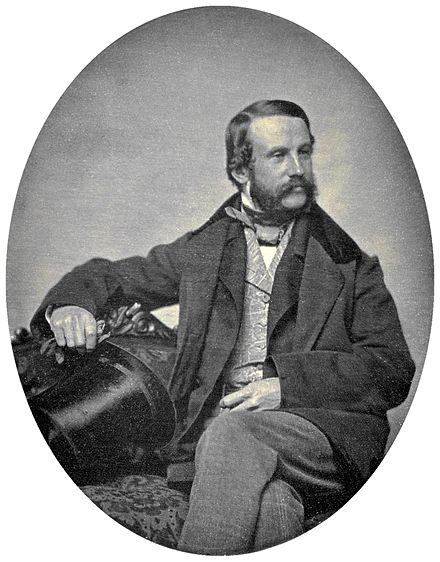
The vice-president-elect was William R. King, a senator from Alabama who believed strongly in the Union. He had helped draft the Compromise of 1850. Unfortunately, King was suffering from tuberculosis and would soon die in office, one of the shortest-termed vice-presidents and the only Alabaman. He was also the only vice-president to take the oath of office on foreign soil; he was in Cuba taking the cure when he was inaugurated.


*Oliver Ames, Journal, Stonehill College Archives, Arnold Tofias Collection

**William L. Chaffin, History of Easton Massachusetts, 1886, p. 630


November 1, 1852

Rain

Monday Nov 1st  Went to Boston for Mrs Swain

to purchase mourning  Dined at Mr Orrs

Julia left there this morning  Miss Alger

came home with me  It is very bad walking

in Boston and my clothes covered with

mud rained all the forenoon  Mrs

S Ames & Helen here this evening


Even on a somber errand, Evelina never seemed to mind going into Boston. Still, given her recent lack of sleep and the rainy weather, she was kind to take on this sad business. Her goal was “to purchase mourning” clothes for her young friend, Ann Swain. Mrs. Swain had just lost her one-year old son and, as per the mores of the day, needed proper black apparel to mark her loss. If she followed convention, she would dress in mourning clothes for one whole year. She could ask advice from Sarah Witherell if she needed, for Sarah would still have been dressing in black or gray from the death of her own son back in the spring.

Different from her usual extended shopping trip into the city, Evelina went in and came out all in the same day, stopping only long enough to take supper with family friends, the Orrs. Surely the bad weather hurried her along on her errand. Evelina is emphatic about the misery wrought by the rain she endured while shopping, her outfit “covered with mud.”  Back home in Easton, her father-in-law Old Oliver was, as usual, less ruffled about the precipitation: “it raind some last night + has bin misty all day. wind north east.”* We should presume that more rain hit Boston than North Easton.

*Oliver Ames, Journal, Stonehill College Archives, Arnold Tofias Collection

October 7, 1852

elm-yellows


Oct 7th Thursday  Have been cutting out some shirts

for bosoms.  Catharine Murphy has made

four window curtains for my front chamber

Mrs Witherell Mrs S Ames & self passed the

afternoon & evening at Mr Swains  Mr Ames 

came to tea and Oliver rode down after us and 

stopt awhile Mr & Mrs Meader are there &

Ellen Meader  Augustus wife went to Boston


There was quite a bit of socializing today, prompted in part by good weather. “[T]he 7th was a fair pleasant day + verry warm,” noted Old Oliver Ames. Henry David Thoreau, some 40 miles to Oliver’s north, was more discursive about the sunshine:

I sit on Poplar Hill. It is a warm Indian-summerish afternoon. The sun comes out of clouds, and lights up and warms the whole scene. It is perfect autumn. I see a hundred smokes arising through the yellow elm-tops in the village, where the villagers are preparing for tea. It is the mellowing year. The sunshine harmonizes with the imbrowned and fiery foliage.**

The elm trees such as the ones that Thoreau mentions would also have been seen by Old Oliver. In fact, they would have been seen across the state and beyond. Once upon a time, American Elms were ubiquitous in the United States.They were tall trees with a wine-glass profile and a graceful green canopy. In the 20th century, however, most of them were wiped out by Dutch Elm disease. The existence of “Elm Streets” in communities around the country attests to the fact that elms were once as common as maples or pines. As Thoreau suggests, many a small town lived under their shade.

*Oliver Ames, Journal, Stonehill College Archives, Arnold Tofias Collection

**Henry David Thoreau, Journal, courtesy of http://hdt.typepad.com/henrys_blog


October 1, 1852

Wax candle


Oct 1st  Friday   Went to Boston with Mrs Witherell to

see our pianos.  Miss Kinsley was going to the 

city and we asked her to try them for us.  She

thinks they are fine toned  Mrs S Ames also went

with us and Helen & Miss Hobart after school

Miss C Hobart is a very pleasant girl

I bought some wax candles at 62 per lb

Mrs Mower & Norris came home with us


Despite last night’s frost, this Friday proved to be “fair” and “pritty warm.”*  Evelina and her sisters-in-law, Sarah Ames Witherell and Sarah Lothrop Ames, took advantage of the pleasant weather to trip into Boston “to see our pianos” and do some shopping. Meeting them at the music store was Lucy Adelaide Kinsley (soon to become Mrs. Francis Howard Peabody) from Canton. A pianist herself, she approved of the purchases.

Joining the sisters-in-law later in the day, after school was over, were teen-agers** Helen Angier Ames and her friend Catharine Hobart. Evelina was growing fond of Helen’s friend; did she imagine that “Miss C Hobart” would one day be her daughter-in-law and mother of her grandchildren?

The two mothers were excited about the pianos. We can imagine that at least one or two of the expensive wax candles that Evelina bought were destined to be placed in candlesticks – or candelabra – near the new instrument. The old homestead was growing more elegant by the week. And it was back to that homestead that the women headed at the end of the day. Ordinarily, they would have stayed over in the city but instead, they returned to North Easton with houseguests in tow.

*Oliver Ames, Journal, Stonehill College Archives, Arnold Tofias Collection

** Teenager was not a term that Evelina would have used – it didn’t become a word until the 20th century.

September 23, 1852

IMG_2471

Sarah Lothrop Ames

(1812 – 1890)


Thursday Sept 23th [sic] Have not sewed at all to day Starch

the clothes and ironed some fine shirts

Lavinia washed the clothes that Oliver brought

from Providence & Mr Rathbourne from 

Providence came this afternoon to visit […]

Oliver  He went to Stoughton after him

Mrs Holmes & sister came after some plants


It’s unusual to read of Evelina and her servants doing a wash on a Thursday, but so it was. Son Oliver (3) had returned from a trip to Providence with dirty laundry in tow and, more than that, a houseguest headed their way. Evelina had to finish up the laundry and prepare for company. She evidently had help from her twenty-year-old niece, Lavinia Gilmore, who, by washing the clothes of her twenty-one-year-old cousin, demonstrates not only the strict division of labor of the day, but the then-unexamined destiny of spinster daughters and nieces to serve the men of their family.

Next door, Sarah Lothrop Ames celebrated her 40th birthday which, in those times, was the front door to old age. It was her destiny to grow up in Easton, the only daughter of the Honorable Howard Lothrop and his wife, Sally Williams Lothrop. She had nine brothers, which makes us wonder if she, as a singleton girl, was doted on, or depended on, or both. On June 11, 1833, Sarah married Oliver Ames, Jr., third son of Old Oliver and Susannah Angier Ames. In social terms, it was a marriage between two of the town’s important families. The couple moved into their own house, built for them by Old Oliver, next door to the family homestead. They would eventually tear that house down and build a grander one, known to us as Unity Close.

Sarah and Oliver Jr had only two children, Frederick Lothrop and Helen Angier, at a time when a larger family was more typical. We can’t know if their decision to stop at two was happenstance, voluntary, or imposed by medical circumstances. Fred, they raised to go into the family shovel business, much as Oakes and Evelina did with their three sons. Fred was given a full college education, however, as his cousins were not. Helen and her younger cousin, Susan, meanwhile, were raised to be proper young ladies with fine dresses, piano lessons, and good schooling. It is doubtful that Helen ever had to wash her brother’s clothes. There were servants for that.

Like her sisters-in-law Evelina and Sarah Ames Witherell, Sarah Lothrop Ames was a regular church-goer and a conscientious neighbor. She did her duty with the elderly and infirm in the village, and she was a loving daughter to the end with her parents. Her mother, once widowed, developed dementia and incontinence, yet Sarah cared for her until her death. She was close to her children and grandchildren, of whom she had five.

A widow herself by 1877, Sarah would live until 1890, outlasting her husband, brothers-in-law, sisters-in-law and all but one brother, Cyrus, to whom she left the use of Unity Close for his lifetime. After his death, it passed to her eldest grandson, Oliver Ames (1865-1929).


September 16, 1852

Flatiron

1852

Thursday Sept 16  Watched with Mrs Savage last night

came home at half past five went to bed

and laid untill past eight  Starched some

more shirts that were washed yesterday  We

have 20 fine shirts this week in the wash

Miss Elizabeth Capen called & Mrs Stevens was

with Mrs Witherell to tea  I was ironing & did not go

Oakes A went to carry Helen & C Hobart to Bridgewater

Today we have proof positive that Oakes Angier Ames, back from his recuperative rest in Vermont, was spending time with Catherine Hobart, the girl who would become his wife. For several days, Catherine had been staying next door with her classmate, Helen Angier Ames, but the time had come to return home to Bridgewater. Whether Oakes Angier volunteered to carry the girls or was assigned the duty, we don’t know, but we can believe that he enjoyed the trip. Was Evelina aware of their mutual attraction? Did Helen stay for a visit with Catherine, or did she return to Easton? Did the two girls discuss Oakes Angier after he left them off?

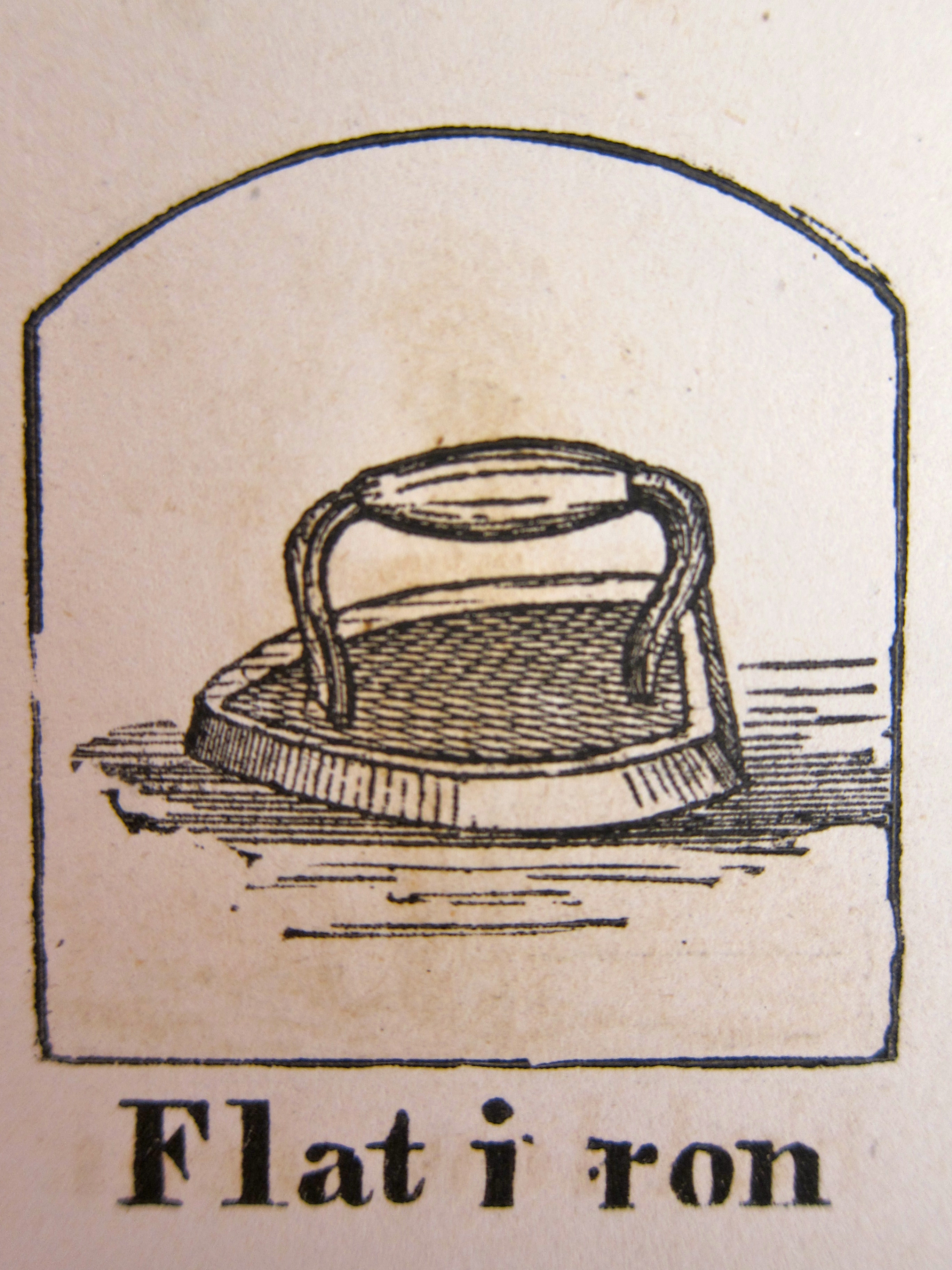
Evelina may have been too busy with all the shirts that needed starching and ironing to attend to her eldest son’s romantic inclination. Having spent most of the night before sitting up with Hannah Savage, she was only operating on three hours sleep. She positioned herself at the kitchen or dining table and covered it with a protective blanket and sheet, kept “on purpose for ironing.”* Using thick cloth to protect her hand from the hot handle, she lifted and pushed the heavy implement across each one of those new cotton shirts. Back and forth, back and forth, putting away one iron when it cooled to pick up another one that had heated up. It was hot, heavy work. She didn’t break her stride, either, not even for tea in the other part of the house.

* Lydia Maria Child, The American Frugal Housewife, 1832, p. 11

September 10, 1852

Conductor

Friday Sept 10th  Mother Mrs Stevens Susan & self rode to

the shops this morning.  Mother seemed as delighted

as a child  we called on Mrs Shepherd also invited 

her to come here Saturday  Have passed the

afternoon at Mr Torreys Augustus & wife were

there  Mr Torrey very sociable & clever

Oakes A returned home from Burlington yesterday

and is looking much better

Oakes Angier Ames returned to Easton today, looking healthier than when he had left three weeks earlier. Family members would have hoped that the 23-year-old had recovered from his lung ailment in the fresh air of Vermont, that his indisposition hadn’t proved to be consumption. No doubt, he hoped that, too.

Another male relative also arrived in town; although not traveling together, both men must have arrived by train at Boston, then Stoughton or Taunton, and then traveled by carriage to North Easton. William Leonard Ames “came here from Minesota the 10th,”* bringing with him his five-year old son, Angier Ames. He had left his wife back in St. Paul with their older son, William Leonard Ames Jr., and their youngest child, Oliver Ames. William visited Easton periodically and always stayed with his father. He and Oakes Ames did not get on well, as we have seen before, and we can perhaps infer from Evelina’s failure to mention his arrival that she wasn’t keen on William, either.

With her friend Mrs. Stevens in tow, Evelina took her mother and daughter out on a number of calls. Her mother enjoyed the ride around the new shop, and all seemed to enjoy an afternoon visiting Col. John Torrey in the village. He was a widower of Evelina’s late older sister, Hannah. Evelina seemed to be planning a special tea for the following day, perhaps in honor of Mrs. Stevens.


*Oliver Ames, Journal, Stonehill College Archives, Arnold Tofias Collection

August 28, 1852

2_6_1_b

Example of Kashmir Shawl Popular at Mid-19th Century*

Sat Aug 28th  Mr Ames called at Mr Orrs this morning said

they were not any of them very well at home.  Went

out to find Mrs S Ames at last met her at

Mr Orrs about noon.  Melinda has not got home

from her journey yet. Bought Mrs Witherell &

self a Cashmere shawl  Have had a pleasant 

visit but am glad to be home again


As he usually did on Saturdays, Oakes Ames traveled from North Easton into Boston on business. Instead of going right to his customers, however, he stopped by the Orrs’ where his wife was staying.  Evelina had been away for over a week and he wanted to report that they – meaning he and two of his sons, Oliver (3) and Frank Morton – had fared ill without her. “They were not any of them very well at home,” he complained.

The fact that Evelina didn’t go rushing home to take temperatures or brew beef tea, but spent the day shopping in the city with her sister-in-law Sarah Lothrop Ames, suggests that she didn’t take her husband’s report too seriously. If she had, she would have headed home right away. She may have felt that Oakes was just expressing dismay over the disorder that had arisen in her absence, a complaint that wouldn’t have been surprising in an era when the majority of men had no role in, skill at, or inclination for the domestic side of life. Evelina hadn’t been there to tend to the household and probably could have related to the words of Elizabeth Cady Stanton, suffragist and mother of seven, who had cause to bemoan “the chaotic conditions into which everything fell without her constant supervision.” Still, Evelina must have been warmed by the thought that she had been missed, and she was glad to get home.

While in Boston, though, Evelina did buy a couple of cashmere shawls, one for herself and one for Sarah Ames Witherell. If the shawls were as beautiful as the one in the illustration, they were two lucky women.  As seen, some shawls during this fashion era were made extra large to fall over the full skirts of the time.


*Image courtesy of Meg Andrews, “The Girton Curtains,” http://www.meg-andrews.com/articles

August 19, 1852

PC+Bellows+Falls01VT

Bellows Falls, Vermont, late 19th century

Aug 19th Thursday.  Started with Mrs A L Ames

S Ames Fred Helen & Oakes A for Burlington

Left Boston at 12  Stopt for the night

at Bellows Falls much fatigued & covered

with dust.  It is a very romantic place and […]

very good accommodations at the Island house

Walked out after tea to view the place & falls

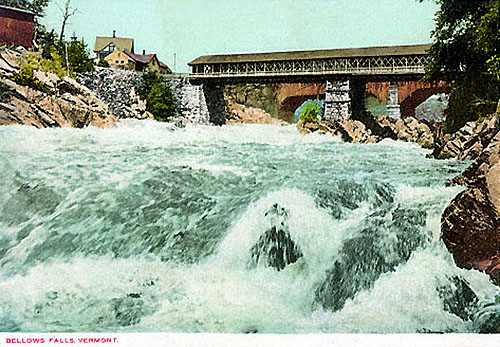
Off they went! Half the family, it would seem, exited North Easton to accompany Oakes Angier on his trip to Burlington, Vermont. Obviously, the group traveled first from North Easton to Boston, where they boarded a train, most likely, and departed at noon. Six or so hours and about 100 miles later, “much fatigued and covered with dust,” they disembarked at Bellows Falls, Vermont, a small village on the state line between New Hampshire and Vermont.

The village may have been small, but its location on the Connecticut River and its powerful falls made it a fine industrial site. Two railroads already met there, and a mill industry thrived. The bridge across the water – a later version of which is featured in the postcard illustration above – added to the picturesque quality of the town.  Evelina found it “very romantic.” Today the village is part of the larger town of Rockingham, whose population boasts a little over 5,300.


August 14, 1852

440px-Henry_Jacob_Bigelow_c1854


Dr. Henry Jacob Bigelow

(1818 – 1890)

Aug 14th

1852 Saturday  Oakes A went to see Dr Bigelow

He agrees with Dr Swan that the blood

comes from the lungs and that he must leave the

shop and be very quiet.  Returned from

Boston to night.  Mrs Stevens came here in

the Cars  Mrs Witherell A L Ames & Mrs

S Ames called

Oakes Angier saw a doctor in Boston today about his bad cough and bloody sputum.  He went to a Dr. Bigelow, who could have been either of two well-regarded medical men: Jacob Bigelow or his son, Henry Jacob Bigelow. The son, only a decade older than Oakes Angier himself, was a Harvard grad who was becoming famous for his role in introducing ether into the operating room. Without the modern diagnostic equipment to which we 21st century readers have become accustomed, Dr. Bigelow was nonetheless able to give an informed opinion about Oakes Angier’s pulmonary condition. If the doctor used the word “consumption,” Evelina didn’t write it down.

The illness was serious and Oakes Angier was ordered to ” leave the shop and be very quiet.” Rest and fresh air, in other words, were the treatment. If diagnostic ability was limited, treatments were even more so. Oakes Angier would have to go away and rest and hope for the best.

Back in Easton, the women of the family gathered in the sitting room or parlor to hear what the Boston physician had said, and perhaps to take a look at Evelina’s new bonnet. We can imagine that each member had a notion of what should happen next: where Oakes Angier should go, how he might travel, and what needed to be done to get him ready. In all likelihood, however, the decision on what to do would be decided by Oakes Angier’s father.