June 12, 1851

photo

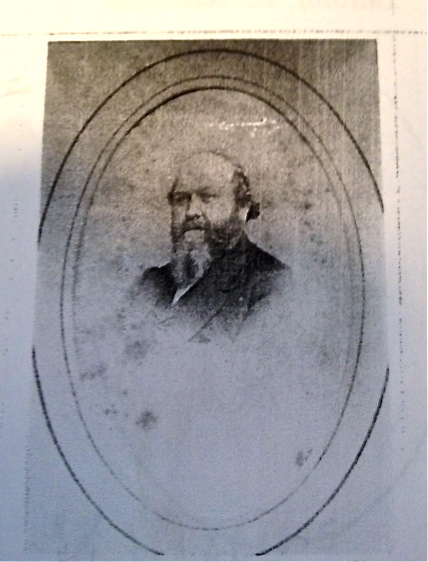
Alson Augustus Gilmore

June 12th Thursday  Jane quite unwell and went off to

bed after breakfast, after dinner quite smart

Bridget came about nine & we finished our

ironing  Howard & Clark sent over my cottage

bedstead &  put Castors on the bedroom chamber

bedstead  I have made my front chamber 

bed clean & put clean window curtains &

valance  Mr Whitwell called.  I called at Mrs Lakes


Evelina did housework today, with qualified help from an ailing Jane McHanna and a big hand from Bridget O’Neil, who had been working for Evelina quite a bit lately.  On the social scene, reliable Mr. Whitwell paid a visit, and Evelina went out to see a friend, Mrs. Lake.

This day marked the birthday of Alson Augustus Gilmore, son of Alson Gilmore and his late, first wife, Rachel Alger Gilmore. Known as Augustus, the 29-year-old was a frequent visitor to the home of his Aunt Evelina and Uncle Oakes. As we have seen throughout this winter of 1851, he had worked periodically for the Ames brothers – Oakes and Oliver Jr. – and taken many a midday meal at Evelina’s dining room table.

In 1851, Augustus appeared to be settling back into life in Easton, after having taught school elsewhere for several years. He brought with him his expectant wife, Hannah, and two-year old son, Eddie; the family settled into temporary quarters while Augustus scouted for some property on which to build a house.  He, his cousin Oakes Angier Ames, and another man, Elisha Andrews, started a boot-making factory.

A successful small-town life lay ahead for Augustus. Not only would he be involved for twenty years in the shoe-making trade, but he would continue to work for his Uncle Oakes as well.  A valued ally, he would courier important documents and mail for the Ames enterprises. Well known around town, Augustus served as a “model moderator […] in twenty-four annual town meetings, and seventeen special town meetings, besides other public assemblies.”*  He was also active in the Unitarian Church and remained close to his Ames cousins throughout his life.

* William Chaffin, History of Easton, 1886

June 9, 1851

imgres

*

June 9th Mon,  Another cold stormy day  have a fire in the

furnace  Ann had gone & I made the fire

Jane has washed her clothes & put them out

in the suds to let the rain rinse them  I have 

worked about home all the forenoon.  Swept &

 dusted the parlour partially, and the front entry

Sitting room &c.  Was invited into Olivers this afternoon

Did not go untill after tea

Servant Jane McHanna borrowed the rain again this Monday and let it rinse the soapy clothes that she placed outdoors.  Evelina did housework most of the day and even had to start up the coal fire in the furnace, a task she neither enjoyed nor did well.  Ann Orel, the young Irish woman who worked for Sarah Witherell, usually did that job.

Being a “cold stormy day,” Evelina did no gardening.  She probably looked out the window at her flower beds and saw the rain pelt her tender young plantings.  She couldn’t have known that even as she gazed out at the bad weather, her favorite author, Charles Dickens, was giving a speech in front of the Gardeners Benevolent Institution in London on the topic of gardening.

“I feel an unbounded and delightful interest in all the purposes and associations of gardening,” he began. “Probably there is no feeling in the human mind stronger than the love of gardening.[…]at all times and in all ages gardens have been amongst the objects of the greatest interest to mankind.” The Gardeners Royal Benevolent Society, which began in 1839,  still exists in the UK today. It’s a charity dedicated to helping horticulturalists in need.

Evelina had no such resource to turn to, had she needed the help.


* Logo of the Gardeners Royal Benevolent Society 

June 4, 1851

Thread

1851

June 4th Wednesday  This morning Mr Lothrop

brought me a calf head and as Jane was Ironing it has

taken me some time to prepare it  Went in to Olivers

to assist Sarah about making her cake for the sewing

Circle.  It met there this afternoon and they had a

goodly number  I have cut two shirts

for Mr Ames and put them into the sewing circle to

make  We have had a pleasant meeting

Even as cows all around town and country were giving birth, some of their calves were slated for slaughter.  In sheer numerical, if unfortunate, terms, not all calves had a place on a farm. Females, once grown, could breed and produce milk, but the males had less of a role, unless they had the lines and build to become fine steers or oxen.  Male calves in particular had good market value as veal and thus were often culled. The arrival of a calf’s head for the dinner table signaled that some culling was going on.  Mr. Lothrop may have been DeWitt “Clinton” Lothrop, a farming brother of Sarah Lothrop Ames and manager of the Lothrop property.

The cook rooms at both houses on Main Street were bustling today. Not only was Evelina preparing the calf’s head, but Jane McHanna was ironing near the stove, keeping her irons hot and using the kitchen table as the ironing surface. In Sarah Lothrop Ames’s kitchen, there was much preparation for the afternoon meeting of the Sewing Circle. Evelina went next door to help Sarah with a cake.

No memory of her own failed meeting back in February seemed to cloud Evelina’s enjoyment of today’s Sewing Circle, even when her sister-in-law’s parlor welcomed “a goodly number.” She was able to put a couple of shirts into the pile of work and had a pleasant time.


May 16, 1851

330px-Carpet_beater

1851

May Friday 16th  We have been working in the chambers again

to day  I have put a straw carpet down in the 

dark bedroom chamber and moved the bed from

the sitting room chamber into it.  Have taken

the carpet from the sitting room chamber and

cleaned the room.  Orinthia & I have been working

in the garden awhile this afternoon Susan past

the afternoon at Mr Torreys

The tail end of spring cleaning was going on as carpets were laid back down and furniture rearranged. Imagine the energy it took for Evelina, Jane McHanna and, maybe, Orinthia Foss to move furniture, take up carpet, beat carpet, clean floors, put carpet back down and move furniture back into place.  The men didn’t help them with this, as the men all had their own work.  The women did this housework themselves.

Many will recognize the household “appliance” pictured in the illustration.  It’s a rug beater, used to thwack the dust out of carpet as it hung out-of-doors being aired.  Until Bissell’s carpet sweeper appeared in the 1880’s, and the electric vacuum cleaner came around the turn of the century, this is how rugs were cleaned.

The garden probably looked pretty good to Evelina and Orinthia after the dust and dirt of the morning. A different kind of soil. The women must have planted some things that Evelina picked up yesterday on her trip to Mr. Manley and Mr. Clapp in Stoughton.  Her garden was taking shape.

May 15, 1851

pond_water

Ames Long Pond

May 15

Thursday  I was intending to go to Boston with Mrs S Ames

this morning but she has the ague in her face

which prevented and lucky for me that I did

not go for about twelve Oclock Lavinia, Ann Pool,

and Francis, came and this afternoon Abby.  We all

rode to Edwins and Mr Clapps garden and to the ponds

Jane cleaned the […] buttery, and I was working

in the chambers when they came


Sarah Ames was sick once again, this time with what was probably a head cold, so a planned outing to Boston was called off. Sarah had been quite ill for much of the spring; perhaps she hadn’t given herself enough time to recover and was now suffering a relapse.

Normally, Evelina would have been disappointed to miss a trip to Boston, especially as she still needed to buy a bonnet, but a visit from a set of young relatives made for a happy alternative.  Her nieces Lavinia Gilmore and Abby Torrey, nephew Francis Gilmore, and a young friend of theirs, Ann Pool, arrived and rescued her from choring. With Francis holding the reins, presumably, the group rode north toward Stoughton, where they stopped at two farms to look at garden plants, one farm belonging to Edwin Manley, the other to Lucius Clapp.

They also rode by the ponds, including Ames Long Pond, which sits on the boundary between Easton and Stoughton. Most likely they also rode by Flyaway Pond which had been created only six years earlier, in 1845, to supply more water power from the Queset River to the shovel factory. Queset, according to historian Ed Hands, was “the most heavily used of all the drainage systems” in the watersheds of Easton.*  The shovel business would never have started in Easton had it not been for the Queset (Brook) River; O. Ames & Sons absolutely relied on it for decades.

Flyaway Pond is no longer configured the way Evelina and her companions would have seen it during their pleasant afternoon ride. It collapsed during a huge flood in March, 1968, wreaking havoc and causing considerable property damage.   As Hands points out, that 20th century flood washed away an important symbol of the Ames period in Easton, that of the control of the Queset River for commercial purposes.  Evelina couldn’t imagine that future for Flyaway Pond, of course; she could only enjoy riding past it and Ames Long Pond – and others, perhaps? –  in the spring air.

*Edmund C. Hands, Easton’s Neighborhoods, 1995


May 5, 1851

Laundry


Monday May 5th  Made some sponge cake this morning

& swept & dusted rather more than usual Jane washed

the clothes and put them out without rinsing & let

the hard rain come on them. Has been a driving

storm all the […] day Mrs Stetson & Mrs

George [Ames] were here to tea Harriet was taken sick

and went to bed. Charles Mitchell came to see

her in the stage[…]

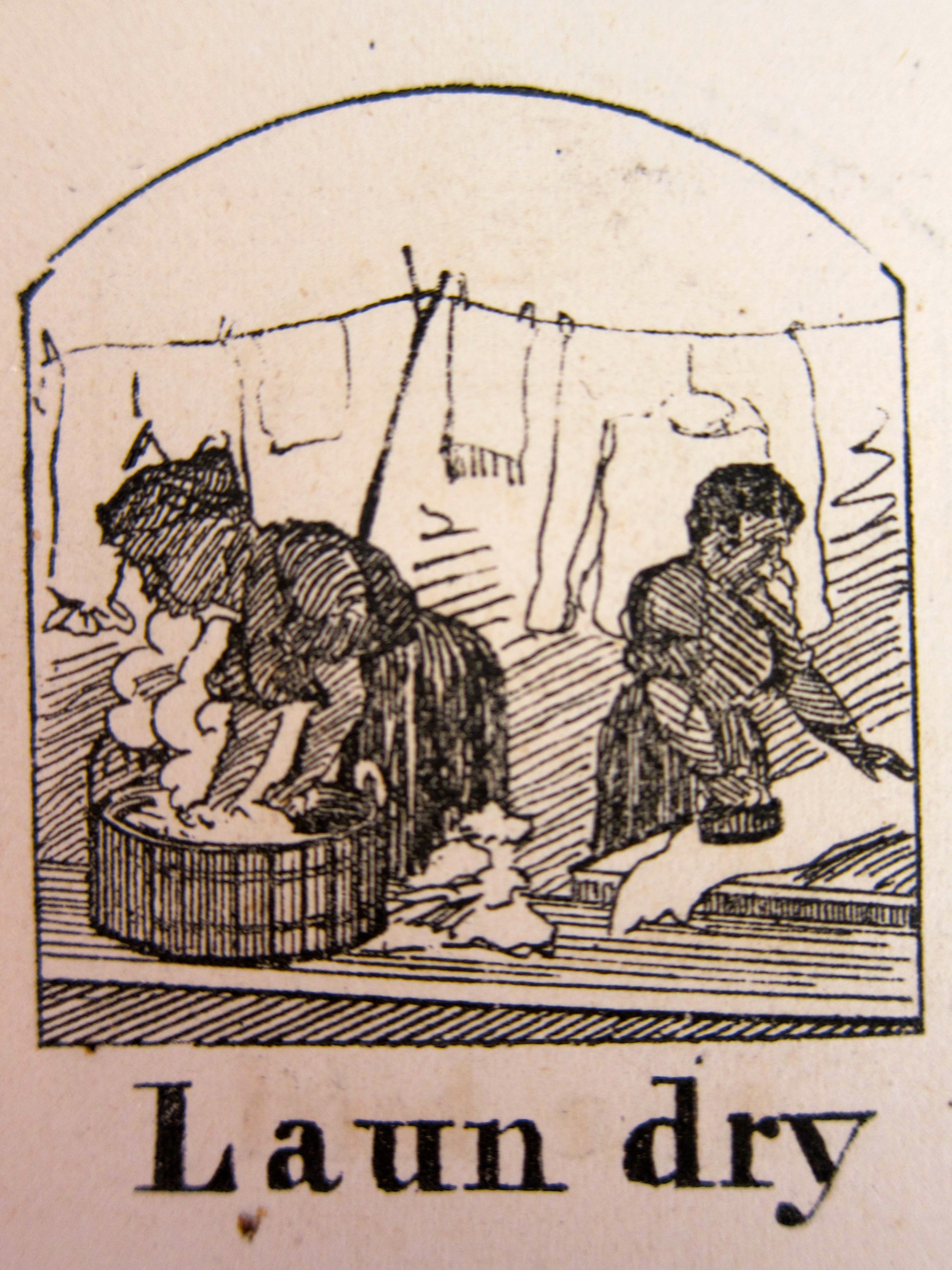
Jane McHanna had an idea this morning.  If nature was going to keep throwing stormy weather at her on Laundry Day, she’d make it work for her rather than against her. Instead of rinsing them herself, she hung those towels, shirts and all else outside and let the rain rinse the suds off. The “hard rain” saved her some tub time, although hanging those heavy clothes with the suds still on them couldn’t have been easy work.

Meanwhile, Evelina stayed indoors sweeping, dusting and doing some light baking.  Instead of firing up the brick oven, she probably baked her sponge cake right in a tin stove that she most likely had in her kitchen.

Sponge cake was a dessert whose recipe the Puritans brought over from England.  In western cooking, it was one of the earliest iterations of a yeastless batter. Mary Peabody Mann wrote in her 1858 cookbook, Christianity in the Kitchen, that sponge cake “if made right, is the least injurious of any form of cake, because it contains no butter.”  She cautioned, however, that “it is very difficult to make it good.  Eggs must be perfectly fresh, in the first place. They should be kept in cold water the night previous, and the whites should be beaten in a cool place, separately, and to a thick froth, with a cork stuck cross-wise upon a fork, and without stopping once.” Sarah Josepha Hale, meanwhile, in her 1841 The Good Housekeeper, offered her own admonishment that cakes, “those tempting but pernicious delicacies [,are]…to be partaken of as a luxury.”

The man who called on the ailing Harriett Ames Mitchell was her brother-in-law, Charles, who had once lived with Harriett and Asa in Cambridge, before they moved to western Pennsylvania. Charles, younger by several years, was a good friend of the family. Mrs. Stetson was also a friend of the family and Almira Ames was a cousin. Everyone sipped tea while rain fell on the roof, the road, the garden and the white, wet laundry.


April 23, 1851

Thumb

1851

Wednesday April 23d  Julila Mahoney here again to day making

Susans dark plaid print & borage delaine dresses.  I have

been sewing with her but have had many interruptions

Mr Whitwell called, Jane has cut her thumb very

bad, the nail is most off  have done it up in

borax  Carried my work awhile & sat with Mrs S Ames

Susans print dress most done It is quite pleasant

after so much bad weather

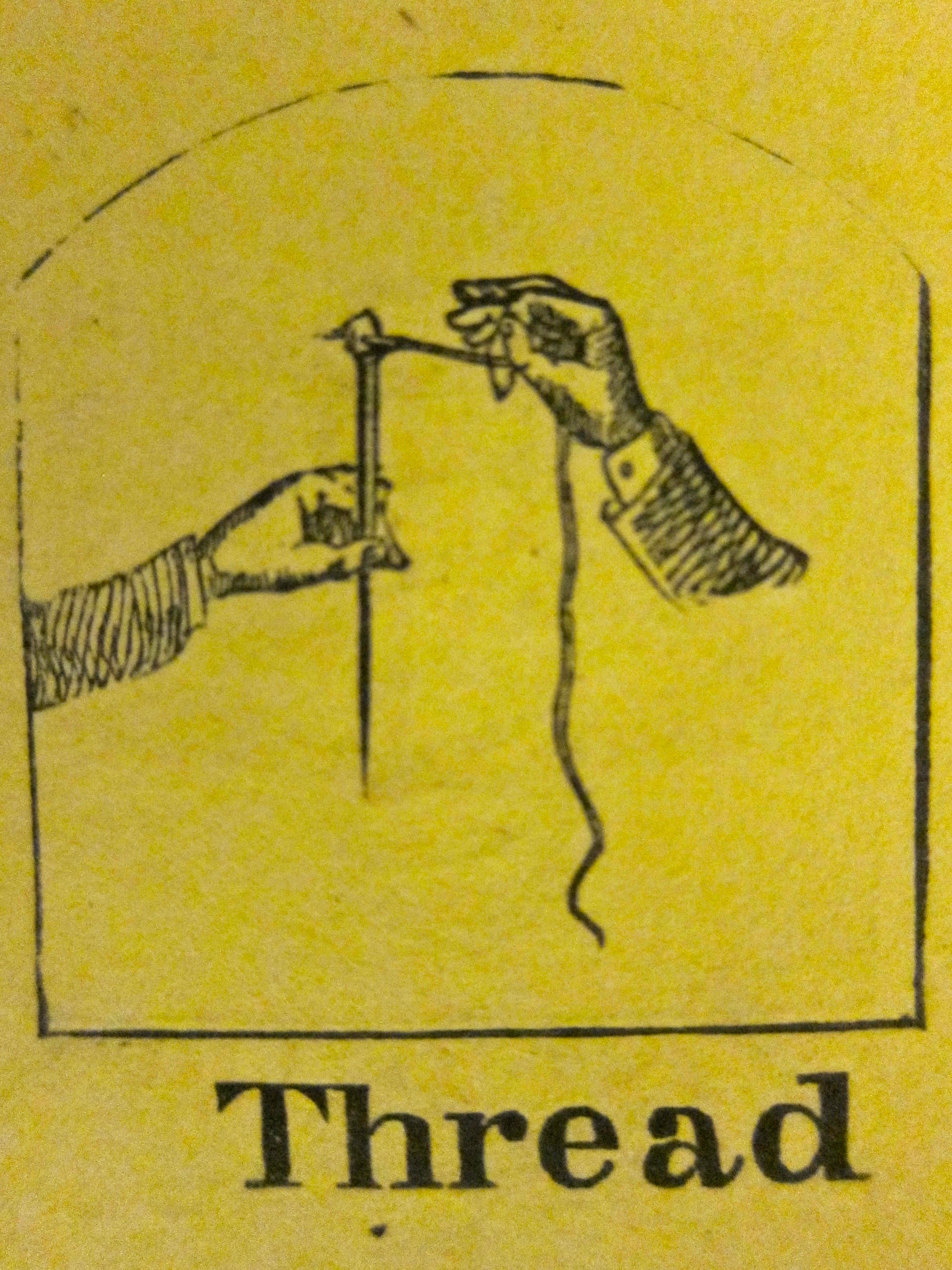
Abraham Lincoln coined an adjective that didn’t outlast his use of it, but it seems apt for the kind of day that Evelina had: “interruptious.”  While wanting only to sew, Evelina had to cope with unanticipated diversions throughout the morning. Julia Mahoney, the dressmaker, sat in a chair and sewed, surrounded by various cuts of cloth from two different dresses. Jane McHanna, probably while in the kitchen preparing food, almost cut the nail off her thumb, causing bleeding that would not have been easy to stop, and putting her out of commission for the day, at least. Reverend Whitwell called – probably instantly wishing he had chosen a different day to pay a visit.  The scene would be farcical were it not for the pain Jane obviously suffered with her thumb.

Evelina treated Jane’s thumb with borax, a mineral that we might think more properly used in detergent. To Evelina, borax was evidently a familiar way to stop bleeding and bind a cut.  Other home remedies for cuts, according to Lydia Maria Child, respected author and consummate advisor on household concerns, suggested treatment with an application of salt or molasses. In her book, The American Frugal Housewife, Child also recommended “Balm-of-Gilead buds bottled up in N.E. rum” as “the best cure in the world for fresh cuts and wounds. Every family should have a bottle of it.”

After the domestic drama of the morning, Evelina had a quieter afternoon. She spent some time with her sister-in-law, Sarah Lothrop Ames, who was still quite sick.  She probably took a deep breath of sweet spring air as she walked next door to see the invalid, welcoming the sunny change from all the recent rain.

April 21, 1851


Doctor

1851

Monday April 21st  I have ripped my blue & orange

Delaine dress & washed & ironed it ready to make over

It was quite pleasant this morning & Jane got her

clothes all dried but this afternoon & evening it storms

again. Frank has been unwell for a few days

with his throat & headache.  Dr Swan called & I paid

him 50 cts.  Mrs S Ames sick and had the Doctor

Frank helped me set out some rhubarb roots

A sunny morning sent Evelina out of doors and into her garden, which must have been muddy after all the recent rain. With the help of son Frank Morton, she put in some rhubarb.  Nearby, Jane McHanna hung the Monday wash and managed to get it dry before more wet weather arrived in the afternoon.

Frank had been unwell, as had Sarah Lothrop Ames next door and each had a call from a doctor. In those days, doctors would typically call on patients in their homes. Physicians kept offices, of course (usually in their own homes,) but generally treated people by traveling to them rather than the other way around. This practice was commonplace well into the 20th century.

Dr. Caleb Swan was Evelina’s physician of choice.  Besides being generally considered quite competent, Swan was “suave, genial and agreeable.”*  His bedside manner must have been calm and attentive. He had studied at Harvard and then apprenticed under a practicing physician, apprenticeships being standard training regimen at that time. A popular man in town, he was involved occasionally with local and state politics.  “Intensely opposed to the Know Nothing” party, he was a “pronounced anti-slavery man.”* He had a large family, and four of his sons became physicians like him.

Elsewhere in the world of shovels, Old Oliver oversaw work on a shop they kept in Bridgewater, where men were “sleighting the roof.”  Slate was the preferred roof material for owners who were concerned with the possibility of fire.

*William Chaffin, History of Easton, 1886


April 14, 1851

Coffin

1851

April 14 Monday  Julia Mahoney has been here to day

to work on my foulard silk It is bad to 

work on and she has not succeeded very well

but is coming again to finish it. Jane has

done the washing and her clothes dry

Orinthia has finished the shirt for Oliver that

was cut out March 31st Weather Pleasant

Mrs Witherell Mrs G Ames & Mrs S Ames called evening

In his journal today, Old Oliver noted that his son, Horatio Ames, was visiting. Although Horatio would have been, literally, under the same roof as Evelina and Oakes, Evelina didn’t mention his visit. She might not have seen him, of course, although she must have known he was in town and probably staying in the other part of the house.  Horatio, like their brother William, was on poor terms with Oakes and it appears that neither wanted to encounter the other.

Another heartfelt topic that found no tongue today was the anniversary of the birth of Henry Gilmore Ames, the son of Evelina and Oakes who did not survive childhood.  Henry would have been twelve years old today, but died at age two-and-a-half of an unrecorded cause.

In the future – 1876 in fact – family graves would be disinterred from their original locations and moved to a dedicated family cemetery behind the new Unitarian church on Main Street. Oakes Angier would oversee the relocation; among the graves moved would be the small one for Henry.  At the time, Oliver (3) made a few observations about the relocation, including one of the little brother they had lost: “Bro Henry was moved to day and his hair was as perfect as when he was buried. His hair was smooth and parted.”  Oliver (3) also noted that his father’s coffin was so heavy that it took seven men to lift it from its original resting place.

If Evelina remembered today’s date, she indicated nothing.  She was busy with overseeing laundry day (not that Jane McHanna needed any direction on what needed to be done,) as well as Orinthia Foss’s completion of one last men’s shirt, and Julia Mahoney’s sewing on her silk dress.  Many needles at work.


April 4, 1851

fc63da74a7d83ab723f4be9af9db4c70

1851

April 4th

Friday  Have been working about house this forenoon

Gave my parlour a thorough sweeping & bedroom

& stairs &c  Have not been at all well and had

hard work to sweep.  Jane finished the ironing

We have had a hard weeks work  This afternoon

I mended the stockings  Called at Olivers awhile

Mrs Peckham called here.  Very Pleasant

Evelina was feeling the effects of a laborious week of domestic duties. Over the past several days, she and Jane McHanna had really turned to in the kitchen, preserving a pig, trying lard, making sausage and doing the bi-weekly baking. On top of that the women had seen to their regular chores, which included ironing and sweeping the rooms free of the spring dust. Evelina managed all this while recovering from the cold of the weekend before. Sitting down to do some mending must have felt good.

She found some compensation by briefly visiting her sister-in-law, Sarah Ames, next door. And at home, Susan Peckham came to call. Mrs. Peckham was the wife of John Peckham, the Ames’s head clerk and bookkeeper. What was the purpose of her call? Susan may simply have desired to be sociable, or she may have had something she needed to communicate. At a time when today’s instantaneous ability to telephone or text someone was unimagined, even the simplest request or slightest inclination to talk to a friend, a relative, or, in this case, the boss’s wife took time and effort. Susan Peckham, whatever her purpose was, had only two options open to her: writing Evelina a note, or calling on her.  She chose the latter.

What might the women have discussed?  Evelina didn’t say.