August 10, 1851

il_570xN.520777977_foe3

*

1851

Aug 10th Sunday  As usual have been to church to day

Mr Whitwell preached.  Went to the

methodist meeting house to a sing at 5 Oclock

got sick of it and went home at recess.

Oakes A Oliver & Helen Ames went with Orinthia to the

sing and carried her home.  Frank went from 

the sing and carried Ellen H & Louisa Swan to 

ride

Her sons clearly enjoyed music, but Evelina’s appreciation was perhaps not up to theirs, if her reaction to today’s musical gathering is any indication. That, or the singing wasn’t very good.  She “got sick of” the sing at the meeting house and left when she could. Perhaps she was just ready to be at home at the end of a long, hot Sunday and already anticipated the choring and sewing ahead of her tomorrow. She may have had a good book waiting for her.

Oakes Angier, Oliver (3) and Frank Morton were regular attendees at the sings; they enjoyed the music.  They also enjoyed the company of a circle of friends who attended the sessions, including Ellen Howard and Louisa Swan. Frank Morton was the son who drove Ellen and Louisa home, while Oakes Angier and Oliver (3), along with their cousin Helen Angier Ames, drove Orinthia back to the Howard house.

Ellen Howard was the tenth of Elijah Howard’s twelve children (by three wives.) Small wonder that the Howards were willing to board Orinthia Foss for a time; Nancy Howard was quite used to setting many places at what must have been a capacious dining room table. Ellen Howard ended up marrying George Withington, a Unitarian minister who came to town about this time. He ultimately left the ministry and served for many years as Easton’s town clerk.

Louisa Swan was the daughter of Dr. Caleb Swan, who had eleven children by his three wives. Louisa never married; she eventually left Easton for Vermont, where she lived with her sister Ruth who was married to U. S. Senator Justin S. Morrill.

* Currier & Ives,The Morning Ride,”  1859

August 9, 1851

Early-Tornado-Drawing_GrazulisBook


*

Aug 9th Sat  Was mending most of the forenoon after doing

my chamber work  This afternoon Helen & I have

been to Mothers found her quite sick with a cold

so that she could not speak aloud.  Called for

Orinthia to carry her with us but she did not go

Brought her home with us at night  Just as we 

got to Mr Howards there came up a tempest &

we stoped untill it was over

Helen Angier Ames, aged 14, accompanied her Aunt Evelina this afternoon to the Gilmore farm, perhaps to see Evelina’s niece, Lavinia Gilmore, aged 19. The two young women were friends. The schoolteacher, Orinthia Foss, was invited to go along as well but declined. Instead, she joined Evelina and Helen on their return trip.

As she often did, Evelina went to visit her mother and family at the farm where she grew up. Hannah Lothrop Gilmore, aged 79, lived most of the time with her son Alson. She was usually in good health, but today she was “quite sick” with a summer cold and laryngitis.  Illness seemed to be all around Evelina in these dog days of summer.

On their ride home, the women encountered a storm violent enough to make them stop off at the Howards’ house. The outburst was, in fact, part of a squall line that produced a tornado in Hartford, Connecticut.  A “tempest,” Evelina called it, using a word that nowadays isn’t often heard in American English.  Modern usage might describe the storm less poetically as a “weather event.”

*U.S. Tornado Early History, http://www.ustornadoes.com  

August 4, 1851

9999008697-l

[No entry]

Evelina made no entry today in her diary, for reasons we’ll never know.  Too hot? Too cross? Too busy? Too much laundry? We can only guess.

Instead of commentary, we’ve posted an image of the Ames family tree familiar to many Ames descendants, especially those who own copies of Winthrop Ames’s 1937 family history, The Ames Family of Easton, which includes a fold-out version of this illustration.  The tree features the lineage of the two Ames brothers who stayed in North Easton: Oakes and Oliver Jr., but doesn’t include the other sons and daughters of Old Oliver and Susannah who also produced issue: Horatio, William Leonard, Sarah Witherell and Harriett Mitchell.

Some readers have asked for clarification on who was who within the family. What follows is a list of the children and grandchildren of Old Oliver and Susannah.  More information about this group and their descendants can be found in a detailed family geneaology produced by William Motley Ames and Chilton Mosely Ames in the late 1980s.

Old Oliver and Susannah’s children and their children in birth order:

Oakes Ames and Evelina Gilmore Ames had five children:

Oakes Angier, Oliver (3), Frank Morton, Henry Gilmore (d. young) and Susan Eveline Ames

Horatio Ames and Sally Hewes Ames had three children:

Susan Angier, Horatio Jr., and Gustavus Ames

Oliver Jr. and Sarah Lothrop Ames had two children:

Frederick Lothrop and Helen Angier Ames

William Leonard Ames and Amelia Hall Ames had seven children:

William Leonard Jr., Angier, Oliver, John Hall, Amelia Hall, Fisher, and Herbert M. Ames

William Leonard Ames and Anna Pratt Hines had one child:

Oakes Keene Ames

Sarah Angier Ames and Nathaniel Witherell, Jr. had three children:

George Oliver, Sarah Emily, and Channing Witherell (d. young)

Harriett Ames and Asa Mitchell had three children:

Frank Ames, John Ames, and Anna Mitchell

Two other children of Old Oliver and Susannah, Angier Ames and John Ames, died without issue.

August 2, 1851

65eb3ab64b1e3e383ab7982a18ea85a1

*

/51 

Saturday Aug 2d  Mrs James Mitchell, Cousin & sister Harriett

Mitchell came to the other part of the house to day

Sister Harriet returned to E Bridgewater with them

Frank went to Boston to see a Dr about his

throat got him a white hat.  We were all 

invited into Mr Bucks to see Miss Lothrop from

Boston  Orinthia & Helen went  Mrs Witherell

& I called after tea the boys went in the evening


Evelina felt better. She was back in the social swing today, going out after tea with her sister-in-law Sarah Witherell to meet a Miss Lothrop. Earlier in the day, Sarah Witherell had entertained two or three women named Harriet in her parlor in “the other part of the house”: sister Harriett Ames Mitchell, friend Harriet Angier Mitchell (Mrs. James Mitchell) and, possibly, cousin Harriet Ames. It’s also possible that Evelina, in writing the word “cousin,” meant to identify Harriet Angier Mitchell as a cousin which, by a stretch of several “removeds,” she was. In the latter case, there was no cousin Harriet Ames present. Confusing to us, certainly, and, perhaps, confusing to them.  Who was visiting in the parlor?

Old Oliver, meanwhile, was in the thick of haying season.  He noted that “this was a fair good hay day wind south west and we got in all the hay we had out some of it had bin out over a week and all of it since last Monday –“

One young man who was neither outside with a pitchfork helping his grandfather nor inside the factory fashioning a shovel was almost-eighteen year old Frank Morton Ames. Frank had been suffering from a sore throat that he evidently couldn’t get the better of, so he took off to Boston to have it looked at. When he returned to Easton, he reported nothing alarming.  Rather, he arrived with a startling new white hat, looking perhaps like one of the young men in the illustrated daguerrotype above. According to some sources, white beaver hats enjoyed a short vogue at this period. Frank must have stood out in the gathering at the Bucks’ house that evening.


* Image from Daguerreian Society, Mark Koenigsberg Collection

July 23, 1851

7505761_119709544472

*

Wednesday July 23  Have been sewing before noon to day working on

different articles among the rest have made

Susan a pair of short cuffs of cambric

trimed with a wide insertion and edging

Aaron Hobart & Charles Mitchell came to the other part

of the house & dined When they returned Mrs Witherell

Mitchell, Mrs S Ames & self went to Mr James Mitchells to tea

Met Mr & Mrs Judge Mitchell Mrs & Miss Hyde & Aunt Orr there

Sewing was in the forefront of Evelina’s activities lately while gardening seemed to disappear.  Perhaps the heat and the weeding were too much, perhaps her favorite blooms had gone by and she had lost interest. Then, too, she simply may have neglected to record the time she did spend in the flower beds. Whatever the cause, Evelina was back indoors in the mornings, needle in hand.

Her social life, always a little more active in the summer, continued to thrive. She noted that Charles Mitchell, younger brother-in-law of Harriett Mitchell, and Aaron Hobart dined with Old Oliver and Sarah Witherell. This entry is the first mention of the Hobarts, a family that would become intimately involved with the Ameses in the future.  Aaron was the eldest son and namesake of Judge Hobart, a former congressman, and his wife Maria, who lived in East Bridgewater. Recently returned from working in New Orleans, Aaron became “actively identified” with the local Carver Cotton Gin Company**. His youngest sister, Catherine, was at school with Helen Angier Ames in Dorchester.

It was to East Bridgewater that the ladies went today for tea. Evelina and her sisters-in-law met with Judge Nahum Mitchell, also a former congressman and a contemporary of Old Oliver, his wife Nabby, and others.  The Mitchells were related to the Orr family, and one of their daughters (Mary Orr Mitchell Ames) was married to an Ames cousin in Springfield. Needless to say, many of the long-established families in southeastern Massachusetts had intermarried over time and thus were related in long-distance ways.

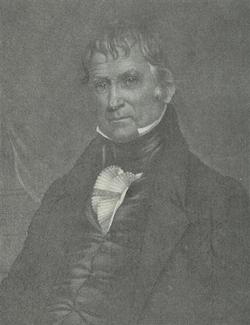
*Judge Nahum Mitchell
** Plymouth County Massachusetts Archives


July 18, 1851

large-1053

1851

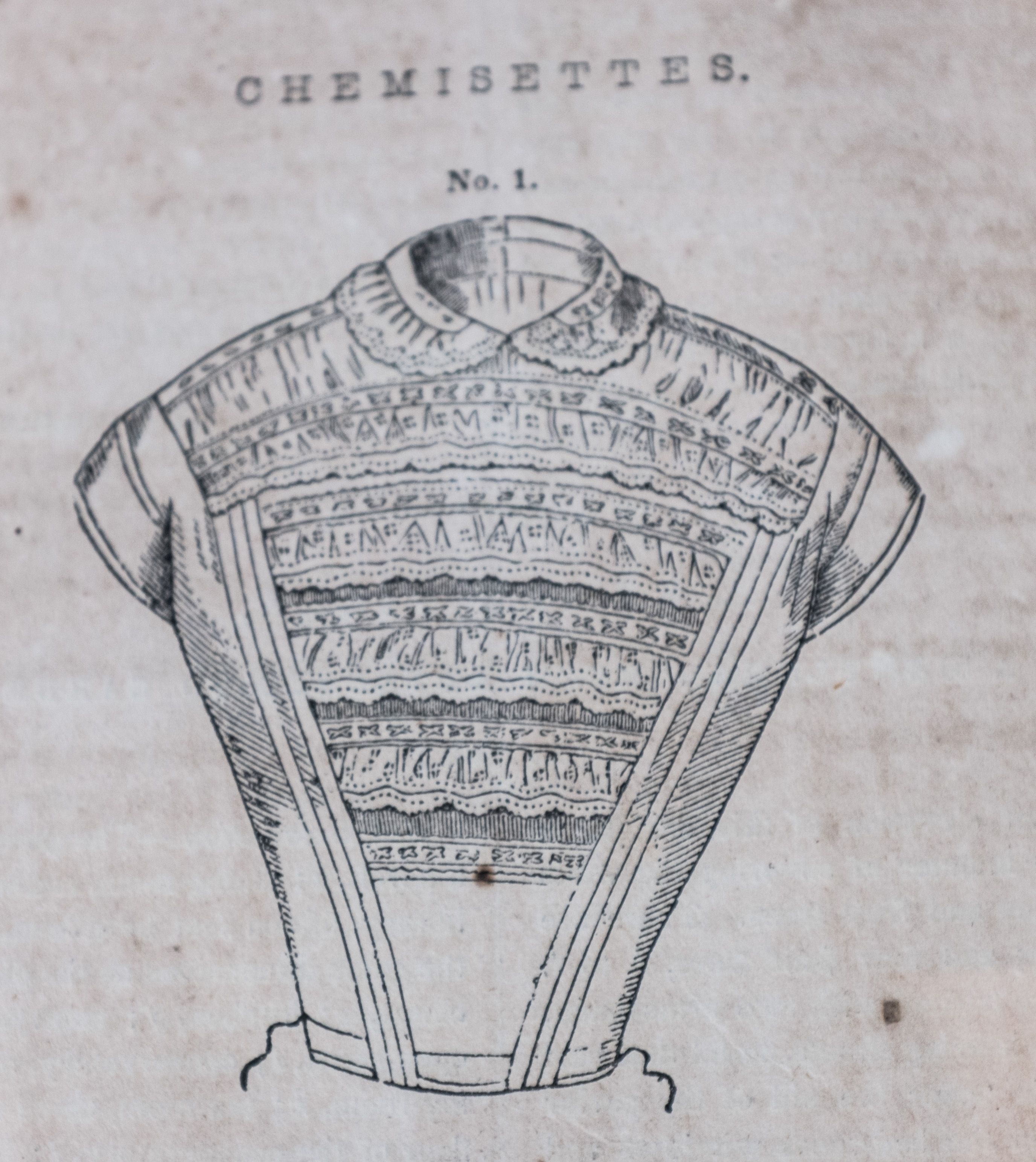
Friday July 18  This forenoon finished my Silk Muslin dress

made a chimisette for it  Mother is not at all well

and is not easy cannot stay in one place a great while

Oliver went with Mrs S Ames after Helen.  Got to

Dorchester about 5 Oclock and home about half past nine

The weather is hot and uncomfortable.  Fred returned

to night having passed a good examination


Fred Ames was accepted at Harvard!  He shared the good news with his relatives when he returned to North Easton this evening. He did well on his examination, which perhaps constituted some combination of interview and oral or written test of the depth of his knowledge. How proud his parents must have been, and what relief he must have felt to have the entrance hurdle behind him.

Fred’s life was now moving in a fresh direction but otherwise, things in North Easton were much the same as he had left them the day before. Under a hot and humid sky, Evelina was sewing and looking after her mother, Hannah Lothrop Gilmore, who wasn’t feeling well.  Fred’s parents, Oliver Jr. and Sarah Lothrop Ames, meanwhile, had driven off to fetch his sister, Helen, from school in Dorchester.

Today’s sewing project was a chemisette for Evelina’s newest dress, the silk muslin that she and dressmaker Julia Mahoney had been working on this week.  The chemisette was a light blouse designed to be worn under the jacket bodice of the dress.  Hers probably wasn’t as elaborate as the chemisette in the illustration.


July 4, 1851

800px-US_flag_31_stars.svg

*

July 4th  Have been transplanting some pinks &c to day We have had several heavy showers  Oakes A & Frank rode to Dr Swans to make a call and carry his chaise home  Oliver & wife Harriet & Helen went to Mr Lothrops this afternoon  Mr Ames & self to mothers.  Orinthia has gone to Cohasset with Mr Brett.  Helen came home last night   On the Fourth of July in 1851, the new 31-star flag was raised over America for the first time.  It recognized the addition of California to the union.  Previously known as the California Military District, and before that as the short-lived California Republic, the new state had been officially added back on September 9, 1850, less than three years after gold was discovered there. California’s statehood had been a political struggle in that age of slavery. Only after significant wrangling by Congress and Presidents Zachary Taylor and Millard Fillmore, did compromise legislation, spear-headed by Senator Henry Clay, finally carry the day. There was to be no slavery in California. The 31-star flag would remain the standard until 1858, when Minnesota joined the union. The nation’s 75th birthday was recognized in Washington, D.C. with a ceremony for the laying of a cornerstone of the new addition to the Capitol. Massachusetts’ own Daniel Webster gave a speech. A long speech it was, in the style of the day, in which, among other things, Webster exhorted his audience to acknowledge that the formation of the United States had wrought “astonishing changes […] in the condition and prospects of the American people” and to advise “ye men of the South” that the progress of the country was worth staying in the union for. Ten years before the Civil War, Webster opined that “the secession of Virginia, whether alone or in company, is the most improbable, the greatest of all improbabilities.”  Webster didn’t live long enough to see how wrong he had been. Back in Easton, the shovel shop was closed. Many employees may have tried to picnic despite the rain. In the Ames family, most everyone had someplace to go. Evelina and Oakes rode to the Gilmore farm to visit Evelina’s mother. Oakes Angier and Frank Morton, no doubt tired from their long day yesterday, took the borrowed chaise back to Caleb Swan. Oliver Ames Jr., his wife Sarah and daughter Helen rode over to Sarah’s parents’s house, taking Harriett Ames Mitchell with them. Where was her husband, Asa? Where were her young children? With the Mitchell in-laws in Bridgewater, perhaps. Why weren’t they all together? Even Orinthia Foss was out and about, gone to Cohasset with a Mr. Brett.   * If you want to see other designs for the 31-star flag, check out the Zaricor Flag collection at flagcollection.com

April 28, 1851

CarumCarvi


1851

April 28th Monday  Have had Mrs Connors here to help

about washing, Janes finger being sore  She came

at half past 6 and left about half past two charged

42 cts.  I helped about the washing  Willard Randall

came this afternoon to work over the earth in the

flower garden.  Frank came from the shop about

five and worked some on the beds.  I have set out

some carraway roots that Alson gave me.  Helen came

home with Cyrus


According to some calculations, the 42 cents that Mrs. Connors was paid to do the Ames’s laundry translates to a labor value of $13.20 today. Mrs. Connors was paid little better than a nickel an hour. Evelina worked on the washing today, too, much as she disliked it.

Once the laundry was set out to dry, Evelina got back to the garden.  Her son Frank Morton helped her when he got home from work; he seemed to enjoy being in the garden as much as she did. That, or helping his mother till the soil was his assigned chore. Willard Randall, another shovel shop employee and member of the extensive Randall clan, came up again to continue working “over the earth.”  Was Willard pleased to walk up to the Ames’s yard to turn over the soil in the boss’s wife’s flower garden? Did he have a garden of his own at home that needing tending?

The caraway roots that Evelina picked up on Saturday at the Gilmore farm went into the ground today, probably in an area close to the kitchen, a time-honored location for every housewife’s herb garden.  The rhubarb and horseradish would go in there too.

Helen Angier Ames, the niece who lived next door, returned home today from boarding school in New Bedford.  Her uncle, Cyrus Lothrop, “carried her” home, as the phrase went.


March 25, 1851

438px-HardTimesComeAgainNoMore1854

/51

March 25  Worked on Olivers shirt this forenoon

In the morning read to Mother awhile

Mrs J Porter spent the day with Mrs Witherell

I called to see her.  Her youngest boy was with

her between three & four years.  Her oldest daughter

15 & her other son 13 years.  Has lost four children

Abby & Malvina were here to tea.  Pleasant

Augustus went to Boston.  I received a letter from Louisa

J. Mower  Oliver went this morning to New Jersey.  Helen to school

A quiet weekday in Easton, punctuated by departures.  Augustus Gilmore went into Boston, perhaps on errands for the new boot factory. Helen Ames returned to school and her father left for New Jersey on shovel business. Pleasant weather facilitated everyone’s travels.

Sarah Witherell had a visitor today, a Mrs. J. Porter, who brought three children with her. Evelina, who “called to see her,” noted that Mrs. Porter had borne four other children who had died, a sorrow Evelina would have been especially sympathetic to, having lost a child of her own. So had Sarah Witherell. Surely there was a tinge of loss hovering on the edges of this modest gathering, “frail forms fainting round the door,” as Stephen Foster’s classic ballad* from 1854 would soon suggest.

In the United States in 1851, average life expectancy was less than 50 years old. No small variable in that number was the high rate of infant mortality. The expectation that an infant might not survive was so prevalent that some parents didn’t name their children until after the child had lived through its first twelve months.  It wasn’t unusual for census records to show entries for two- or six- or nine-month old babies described as “Infant Not Named.”  Children and young adults died, too, from diseases that we have since held at bay, but babies were especially vulnerable.

*Hard Times Come Again No More

March 23, 1851

Bible

1851

March 23 Sunday.  Have been to church to day and 

stoped at noon to hear the bible class

with Alsons wife & others, got some subscriptions

for the blinds.  Mother came home with

us from church to make a visit.

Orinthia & myself read to Mother a story in 

The Boston Museum a long one but not worth

much Edwin called and Fred & Helen

A beautiful day it has been

Not only was Helen home from school for a visit, but her older brother Fred was back, too, from Philips Exeter Academy where he was preparing for college. How pleasant for Oliver Jr and Sarah Lothrop Ames to have their two children home, however briefly. Helen and Fred stopped in to say hello, as did another cousin on the Gilmore side, Edwin Williams Gilmore. Plus, Evelina’s aged mother, Hannah Gilmore, returned from church with the Oakes Ames family to “make a visit” of a few days. The old house was busy toward the end of the day, and tea this evening must have been especially sociable.

Earlier in the day, at the intermission between services, Evelina popped into a Sunday School class – perhaps for adults? She also did a little fund-raising for the church, or for a charity with which the church was affiliated.  She and others raised some “subscriptions for the blinds” (which does not mean they were ordering new window treatment!)  They were hoping to help the sightless.

Although Evelina was both devout and charitable, she was not sanctimonious. In her diary, she never mentions reading the Bible. She loved reading, and made note of various novels, stories and articles, such as today’s story that “was not worth Much.” But the Bible itself went unnamed.  If she did read chapter and verse from time to time, which seems likely, she simply never said so.  Perhaps reading from it may have been as automatic as looking something up in the dictionary might be for us.  She didn’t feel the need to remark on it.