June 30, 1851

photo

1851

June 30 Monday  Jane has been washing to day but I

have done but very little of any thing. having a

very sore finger & thumb it is quite painful

have to let out the matter quite often  It has been

quite painful since Friday.  It is a very warm

uncomfortable day  I have worked some in the 

flower garden

Today was another Monday, another washday ably managed by the Ames’s servant, Jane McHanna. Evelina, who usually undertook other household chores on a Monday, wasn’t up for choring. She had a bad infection on her thumb and finger that prevented her washing the breakfast dishes, sweeping, or helping to prepare dinner. She was in pain and somewhat handicapped.

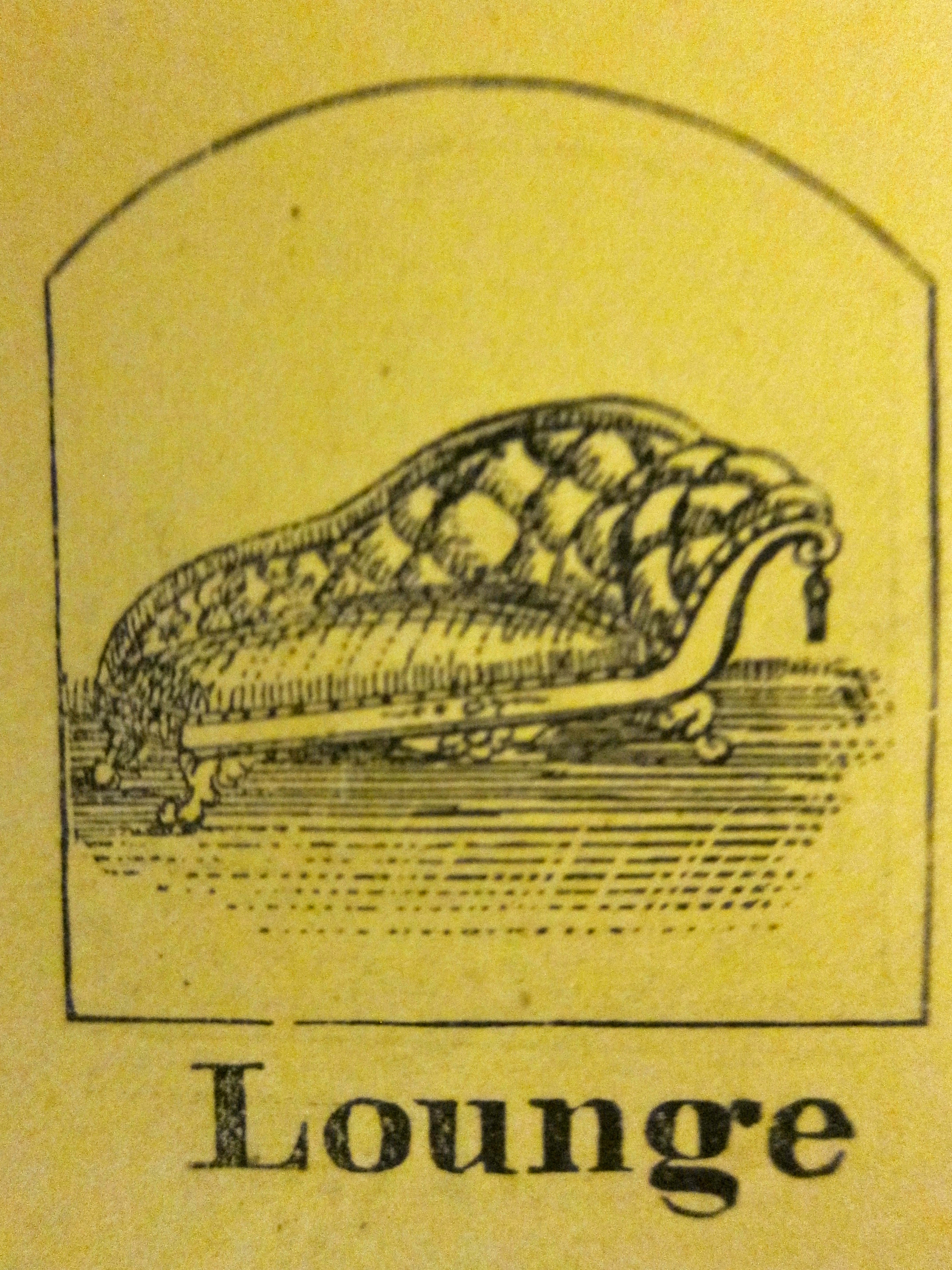
Perhaps she had cut her hand, or had worked up a few blisters, or had a bad scrape.  She could have done something in the kitchen or garden, or while sewing the tough horsehair cover for the new lounge. However she hurt herself, a skin infection was nothing to make light of in 1851.  In that age before antibiotics, Evelina had few remedies at hand beyond keeping her hand clean and perhaps applying a homemade linament or poultice. Her wound was the kind of injury that could turn septic; that she was squeezing “the matter” – or pus – out of it shows that she was conscious of a certain level of risk.

And yet, she found a way to work in the garden, so she couldn’t have been too frightened.


June 28, 1851

Grapes

June 28th Sat  Have been to Boston to day met Alson

& wife at the depot  Went into the horticultural

exhibition  Saw many fine roses and […]

quite a variety of other flowers a very fine

dish of peaches and beautiful bunches of grapes

Henrietta & I dined at Mr Orrs.  We walked

a great deal   went into Hanover St  Whites bonnet

rooms & Mellons Merchants Row

Evelina traveled into Boston today and met her brother Alson and his wife Henrietta. She may have ridden in with Oakes, who usually went to Boston on business on Saturdays. If he was present, however, he didn’t spend the day with her; he would have had his customers to meet.  She, on the other hand, along with Alson and Henrietta, attended a horticultural exhibition. They saw plantings and all sorts of flowers, including “fine roses,” and displays of fruit that were also “very fine.”

It’s possible that this particular exhibition was that year’s annual presentation by the Massachusetts Horticultural Society. Established in 1829, and going strong today, the society, then as now, offered lectures and presented an annual exhibition in order to further their mission to educate the public about “the science and practice of horticulture.”

After midday dinner at the home of friends, Robert and Melinda Orr, Evelina and Henrietta walked around the city.  They looked into the shops along Hanover Street and Merchants Row, the latter a street that bisected Faneuil Hall and Quincy Market. The two women window-shopped for bonnets at White’s store and, given the horticultural theme of the day, they may have poked their heads in Joseph Breck’s floral emporium, too. They had much to think about on their ride back to Easton that evening.

June 21, 1851

1687-Illustration_from_Theosophie_and_Alchemie-Michael_Maier_and_Johann_Theodor_de_Bry-300x282

21 June Saturday  Early this morning Mrs. Seba Howard

brought Orinthia up and found me in the

garden weeding. We worked there an hour or two

and then went to sewing.  Orinthia on her dress

and I on the hair cloth.  Harriet came and sat

with us awhile in the afternoon and while she

was in I worked on the sleeves to my plaid stone

colour borage  Orinthia called on Abby   Pleasant

Weeding continued to be the dominant occupation of Evelina’s early morning hours. On this Saturday morning her young friend, Orinthia Foss, arrived for the day and immediately stepped to the garden to help weed. Orinthia was carried up from the southern part of town by a contemporary of Evelina named Eleutheria Howard, wife of Major Seba Howard.

Today was summer solstice, the official start of summer and the high water mark of daylight; the women probably would have enjoyed being outside in the garden all day long, but sewing and other duties called. Each woman had a dress she was working on, and Evelina was still piecing together a horsehair cover for her new lounge. Just as they had sat on so many days during the late winter, so the two sat today, on chairs near the windows for light, with folds of cloth in their laps. Harriett Ames Mitchell, Evelina’s sister-in-law, joined them in the afternoon.

Later in the day Orinthia went to call on Abby Torrey, Evelina’s niece who lived right in the village of North Easton.

June 17, 1851

DSCF1590small

1851 June 17th  Worked untill about nine Oclock in

the flower garden  Then cut the tick to the mattress

a[nd] basted it ready to make  Jane was ironing and 

I assisted about dinner  After dinner made three button

holes in Mrs S Ames dress.  Went to Mr

Wm Reeds to tea with Mr Ames, Oliver & wife

Mrs W, Mitchell & Mr & Mrs Whitwell & Alson & wife


Gardening, sewing, ironing and cooking made up today’s housework at the Ames’s home on Main Street.  Buttonholes, too, which could be challenging, were a particular specialty of Evelina; many people brought her their buttonholes.  The fact that Sarah Lothrop Ames took her buttonholes to Evelina rather than to a hired dressmaker underscores Evelina’s talent in this department.

William and Abigail Reed must have enjoyed Evelina’s company on Sunday between services, for they invited her back to a small tea party.  The whole Ames family was invited, in fact, and then some. Minus Old Oliver, and the young people, naturally, siblings Oakes, Oliver Jr., Sarah Witherell, and Harriett Mitchell, with wives Evelina and Sarah Ames, gathered at the old professor’s home for a “cuppa.” Reverend William Whitwell and his wife, Eliza, went too, as did Alson and Henrietta Gilmore. That was a good crowd for a 19th century parlor.

Tea was generally the most sociable meal of the day.


June 16, 1851

Lounge

1851

June 16th Monday  Worked about the house awhile

Boiled some curled hair (for the matress

for my lounge) that belonged to the sewing

circle, formerly the pulpit cushion.  Edwin

Manly brought me 5 dahlias and Miss Foss

sent me 20 dahlia slips  This afternoon 

have been fixing the cotton for the matress

have put it in some old cloth

Evelina undertook to fashion a horsehair cushion for the new lounge she just bought in North Bridgewater.  Horsehair was a popular and relatively inexpensive material, so it’s small wonder that Evelina chose it.  That the cloth was “recycled,” to use a word she wouldn’t have recognized, from an old pulpit cushion by way of the Sewing Circle made it all the more attractive. How old that horsehair must have been!

The material may have been cheap, but it would be a bear to cover the new mattress, or cushion, with it. She had to boil it, presumably to both soften and clean it, shape it and sew it onto a cotton covering. She was planning to use some old cotton, too, for the cushion. The work would take several days, but Evelina never minded long or complicated projects when it came to sewing.

Meanwhile, she had 25 dahlias to plant in her garden.

June 14, 1851

Evelina Gilmore Ames

Evelina Gilmore Ames

June 14 Saturday

This is my birth day and it is very pleasant

weather.  Worked in the garden awhile in the

morning then baked in the brick oven.  Made

brown bread sponge & cup cake pies &c.

This afternoon have been to North Bridgewater

and paid Howard & Clark 16 dollars for bed

stead & lounge 50 cts for Castors.  Emily gave

me a box & Harriett a pr of Elastics


The diarist herself celebrated a birthday today, number 42.  She was born in 1809 on a farm in the southeastern quadrant of Easton, not far from the Raynham town line.  She was the seventh of eight children. Her parents, Joshua and Hannah Lothrop Gilmore, named her Evelina Orville after the heroine of Fanny Burney’s popular novel, Evelina, or the History of a Young Lady’s Entrance Into the World. In the book, pretty, fictional Evelina, after various comic travails, wins the heart of handsome, rich Lord Orville; did the real Evelina’s parents hope for similar material success for their youngest daughter?

In birth order, Evelina’s brothers and sisters were John, Arza, Daniel, Alson, Hannah, Rhoda, and Joshua Jr.  By the time Evelina reached 40, only John and Alson, and their mother, were still living. Evelina’s siblings carried mostly family names, meaning that Evelina’s name was a departure. Her grandson, Winthrop Ames, noted in 1937 that “Evelina, in its later form of Evelyn, has been a favorite female first name since Evelina Orville Ames first introduced it into the family when she married Oakes Ames in 1827.”*

As a eighteen-year old bride, Evelina moved to North Easton, right into the Ames homestead, a portion of which had been made over to accommodate the newlyweds. Still living at home at that point were most of her siblings-in-law: Oliver Jr., William Leonard, Sarah Angier Ames (aged 13 and, obviously, not yet married to Nathaniel Witherell), John Ames and Harriett Ames (who was only eight years old.) What a full dinner table they must have had!

The next quarter century flew by, as the years do, full of arrivals and departures.  Her children came into the world, even as family members on both sides departed it.  Only now, it seems, did Evelina lift her head from the home-making tasks that were always at her elbow to consider ways to fill the rare discretionary time that began to open up to her.  Flower gardening became one pleasant elective; writing in a diary was possibly another.


*Winthrop Ames, The Ames Family, 1937

June 10, 1851

url

June 10th 

Tuesday  Worked all the forenoon and part of the afternoon

weeding the flowers.  Got some Petunias at Mr Savages

The gardener has been to work in my flower

garden most all day weeding and fixing the

beds, has made them wider  This afternoon have

been mending Franks & Olivers pants

Mrs Witherell & Mitchell & Miss Eaton walked

up to Edwins garden.  Abby & Miss Smith called

Bridget ONeil here to work to day


The weather was fine enough that sisters Sarah Ames Witherell and Harriett Ames Mitchell took a long walk north toward Stoughton with their houseguest, Miss Eaton. They headed to Edwin Manley’s garden, a much-visited spot, to see what he had growing. Being on foot, it’s doubtful that they purchased anything to bring home. They may have ordered something to be delivered, however.

In the morning, Evelina went out to look at flowers, too, at the nearby home of William Savage, a shovelworker, and brought home some petunias.  Petunias, a great garden favorite in the latter half of the nineteenth century, originated in South America, appeared in Europe by 1800, but had only recently become available in the United States. Petunias were still so exotic, in fact, that they didn’t appear in the list of annuals in Breck’s Book of Flowers, published in Boston in 1851. How did Mr. Savage come upon them?

The Ames’s new gardener, who had been with the family for almost a month, weeded the flower beds today and worked at making them wider. Evelina’s parlor garden was becoming more and more ambitious. And for some reason, Bridget O’Neil, a servant, worked at Evelina’s today. She had been working next door at Oliver and Sarah Lothrop Ames’ house.  Where was Jane McHanna?

June 9, 1851

imgres

*

June 9th Mon,  Another cold stormy day  have a fire in the

furnace  Ann had gone & I made the fire

Jane has washed her clothes & put them out

in the suds to let the rain rinse them  I have 

worked about home all the forenoon.  Swept &

 dusted the parlour partially, and the front entry

Sitting room &c.  Was invited into Olivers this afternoon

Did not go untill after tea

Servant Jane McHanna borrowed the rain again this Monday and let it rinse the soapy clothes that she placed outdoors.  Evelina did housework most of the day and even had to start up the coal fire in the furnace, a task she neither enjoyed nor did well.  Ann Orel, the young Irish woman who worked for Sarah Witherell, usually did that job.

Being a “cold stormy day,” Evelina did no gardening.  She probably looked out the window at her flower beds and saw the rain pelt her tender young plantings.  She couldn’t have known that even as she gazed out at the bad weather, her favorite author, Charles Dickens, was giving a speech in front of the Gardeners Benevolent Institution in London on the topic of gardening.

“I feel an unbounded and delightful interest in all the purposes and associations of gardening,” he began. “Probably there is no feeling in the human mind stronger than the love of gardening.[…]at all times and in all ages gardens have been amongst the objects of the greatest interest to mankind.” The Gardeners Royal Benevolent Society, which began in 1839,  still exists in the UK today. It’s a charity dedicated to helping horticulturalists in need.

Evelina had no such resource to turn to, had she needed the help.


* Logo of the Gardeners Royal Benevolent Society 

June 6, 1851

images

*

1851

June 6 Friday  Worked in the garden an hour or two this morning

mended some cotton stockings swept & dusted &c

About three or four Oclock went with Olivers wife

& Mrs Mitchell to North Bridgewater called at

Mr Summers to take Frank Mitchell home & at Mrs

Carrs & Susan Copelands to get my bonnet  The bonnet

is done well  When I returned home found Orinthia

here.  Jane Howard brought her up. 

At last, a bonnet to take home and trim.  Evelina was clearly pleased.  She picked it up in North Bridgewater (today’s Brockton) with her sisters-in-law Sarah Lothrop Ames and Harriett Ames Mitchell.  The ladies retrieved Harriett’s eldest son, Frank Ames Mitchell, in the process. Not yet ten years old, whom had he been visiting?

Otherwise, Evelina’s day was full of quotidian activities: mending, sweeping, dusting. Nothing out of the ordinary popped up in the domestic department. Gardening, too, continued. On this day, Evelina may have planted the asters she picked up yesterday at the Howards’, compliments of a Howard daughter, Louisa.

Joseph Breck in his Breck’s Book of Flowers, 1851, admired the China Aster: “The varieties are now very numerous, and possess exceeding beauty, some of them being almost as large as a small Dahlia, and much more graceful.”

Breck warned against letting the asters “degenerate in to inferior flowers,” and recommended sowing the seeds in May, “in patches,” and transplanting them to “a bed well prepared the last of June.” It may be that Evelina was transplanting the seedlings a little early.  Time would tell.

* Image from edenbrothers.com


May 28, 1851

il_570xN.460322737_72tp

1851

Wednesday May 28  Another busy day about house and what have

I done  I am sure I cannot tell how I do spend

my time  I have lengthened the valance for the 

new bedstead which took some time  Mrs Witherell

and Mrs S Ames have been to Dr Washburns to

have something done to their teeth.  Mrs Ames had

a new one put in  I have planted some Asters

Alousom & princes feathers &c.  Very pleasant

Either Evelina was getting absent-minded or her work load was so varied today that she just couldn’t keep track of all that she did. “What did I do all day?” she wondered when she sat down in the evening (or the next morning, perhaps) to record the day’s events in her diary.

For one thing, she worked on the textile that was to go with the new bedstead, a task that had to have been more pleasant than what her sisters-in-law, the two Sarahs, faced. They went to see a dentist, Dr. Nahum Washburn in Bridgewater. Dentistry in the nineteenth century was primitive compared to what it is today, and often involved extraction as a solution to toothache. A visit to the dentist was nothing to look forward to. Sarah Ames came home with a new tooth tucked somewhere in her mouth.

Working in her flower garden, of course, was another way Evelina spent her time. Today’s new plants included asters, alyssum, and prince’s feathers, a trio of choices that offered different texture and size.  Was she putting in seeds or seedlings?