February 14, 1852

 history

Detail of Cover of Gleason’s Pictorial, February, 1852

Sat Feb 14th  Finished Olivers shirt before dinner and did

some mending  About three went into Edwins and trimmed

a black silk cravat for Oliver  Mrs S Ames & Frederic

returned from New Bedford to night where they have been

since Tuesday  I spent most of the evening there

Evelina’s favorite periodicals, such as Gleason’s Pictorial, Godey’s Lady’s Magazine, and Graham’s, were full of allusions to Valentine’s Day this week. Gleason’s featured a valentine on its cover, in fact.  And while commercial Valentine cards hadn’t yet developed in the United States – that would happen in the 1870s – special letters and personal poems were popular on February 14. Yet Evelina makes no mention of receiving or sending a valentine, nor does she suggest that any of her children did, either.

Perhaps when Evelina went over to see Augusta Pool Gilmore, young bride of Evelina’s nephew Edwin Williams Gilmore, she found evidence of a valentine exchange between the newlyweds. Besides being in love and – presumably – open to sentimental expression, Augusta and Edwin were young enough to adopt new approaches to holidays that older Yankees like Evelina and Oakes ignored.

Meanwhile, winter was still very much present. As Old Oliver noted: “there was about half an inch of snow last night and it is cloud[y] + cold to day wind north west”

February 3, 1852


playingcards

Union soldiers playing whist, circa 1861

1852 Feb

Tuesday 3d Have been looking over the boys shirts and 

have mended some of them.  Fred carried me

to call on Augustus’s wife, called at Mr Torreys

an[d] Mrs J Williams engaged her to make some shirts

for Oliver  Mr & Mrs Williams passed the evening

here.  Have done but very little sewing

The boys & Joshua played cards.

Chess wasn’t the only game that people played in the 19th century.  As Evelina noted today, her sons and a friend named Joshua played cards. Perhaps Fred Ames played, too. The game they preferred was whist, a precursor of today’s contract bridge.

Whist was played according to rules established by the accepted authority, Edmond Hoyle, an Englishman in the 18th century who had codified explicit guidelines for various card games.  Whist followed “a rigid set of rules, etiquette and techniques.”** Like bridge, it required four players, one deck of 52 cards (then known as a French deck), a bidding process, and trick taking.  Trump was determined by the last card laid down and, unlike bridge, there was no dummy hand.

The Ames family loved playing whist.  Oliver (3) often writes in his early journals of playing whist with his grandfather, Old Oliver. Night after wintry night, the men would play, the grandsons occasionally beating their grandfather.  Evelina seldom writes of playing herself; she and her sisters-in-law usually sat to the side, conversing, sewing or reading.


www13thmass.org/1861/williamsport

** http://www.kristenkoster.com/2012/02/a-regency-primer-on-how-to-play-whist/

February 1, 1852

images-1

Feb 1st 1852

Sunday  A very stormy day of snow & not one

of the family have been to meeting and Mother could

not go home as she intended.  Have written a letter to

Louisa J Mower and have been reading  Went into the

office awhile to sit with Mr Ames  The boys came

near tearing the house down while I was gone.  Fred

& Oliver accused Oakes A of stealing fruit cake


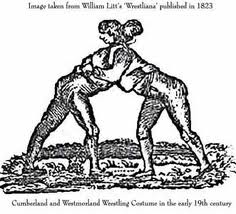
Oliver (3) and his cousin, Fred Ames, ganged up on Oliver’s older brother, Oakes Angier, while their parents were next door at the office. In a fight over fruit cake, the three young men yelled and pummeled and wrestled. Evelina came home to the disarray and certainly reprimanded them all.  The twenty-something brothers were lucky that their mother, not their father, was the parent who returned first. Oakes Ames was known to mete out severe physical punishment.

Wrestling was a popular sport in the 19th century, one that the Ames men were expert at, according to tales that have come down through the family. The legend is writ large. Winthrop Ames describes it best:

“In Oliver’s time wrestling was as popular a sport as baseball or football is today,” he wrote in 1937, ” It was not considered beneath the dignity of anyone to engage in it, and local champions were […] highly esteemed[…]  Oliver senior was the acknowledged champion of the neighborhood, and though often challenged by contestants who sometimes came long distances to meet him, was never defeated […]

“He was not only immensely strong – he once knocked down a horse that bit him with a single blow, and lifted a wrestling opponent much heavier than himself clear of the ground and tossed him across the ring in protest against some unfair trick – but he was also agile and expert in all the technical grips, holds and falls of the sport.  He taught his sons to wrestle scientifically; and Horatio, the mighty of bulk, and Oliver junior became so proficient that they succeeded him as town champions […]

“[T]he old gentleman once said to one of them (according to some this was Horatio, to others Oliver junior) ‘Son, neither you nor I have ever been beaten.  Old as I am I may still be the better man.  Let’s have it out.’ So, forbidding anyone to follow them, father and son went to a secluded clearing in the woods and had a private bout. But neither would ever tell which was the victor.”*

Wrestling was clearly an outlet for the Ames men. Other than today’s rough-housing by the young men, it was a quiet Sunday at the Ames compound. Evelina wrote a letter and read.  No one went to church, the weather being too stormy even to carry old Mrs. Gilmore back to the farm.  Small wonder that the young men displayed a little cabin fever.

*Winthrop Ames, The Ames Family of Easton, Massachusetts, pp.115-116.

January 30, 1852

Chess

Jan 1852

Jan 30th  Friday  Have commenced making a flannel

skirt for self & finished Susans dark print apron.

Mother [and] self passed the afternoon at Edwins.  Mr

Ames came to tea. Mrs S Ames called there with Mrs

Holmes. Mrs Witherell and the others returned to 

night  She has not her teeth but is to send for them

Oliver & Fred went to James Mitchell and called at

several other places  had a fine time Oliver played

chess with Judge Mitchell

Oliver Ames (3), Evelina’s middle son and a future governor of Massachusetts, was still home from college, as was his first cousin, Frederick Lothrop Ames.  The two young men were having “a fine time” on their winter break.  Chess was just one of the games they might have played to while away the dark evenings, another being whist.

Chess had been around for centuries, having first developed in India and the Islamic world.  It had evolved over time; dark and light squares on a chessboard were first introduced in the 10th century, for instance, rules for a stalemate or draw in the 15th, and so on.

By the nineteenth century, chess was really coming into its own.  In 1802, one J. Humphreys published a book called Chess Made Easy.  In 1830, the first known female chess player was acknowledged (though probably not encouraged.)  The first international chess tournament was held in London in 1851, won by Adolf Anderssen, and in 1852, the year we find Oliver Ames (3) playing the game on a winter’s night in Bridgewater, Massachusetts, sandglasses were first used to time a game.

Before the decade was finished, an American prodigy name Paul Morphy came to fame, winning nearly every game he played and defeating most of the older expert players. In the United States, a chess “epidemic” was born.

January 29, 1852

Teeth

1852

Jan 29th Thursday  Mrs Witherell Oliver 3rd & Fred & George went

to Bridgewater this morning for Mrs Witherells temporary

set of teeth.  Father & Mrs S Ames & Emily here to dine

Mrs S Ames came about half past eleven and spent

the rest of the day.  Have written a letter to Harriet

Ames [of] Burlington.  Went after mother in a sleigh to night

Augustus & wife spent the evening Three evenings this week


Sarah Ames Witherell traveled to Bridgewater today to pick up a “temporary set of teeth” to replace the real ones that had been pulled out earlier this month. It turned out that they weren’t ready, so she had to return home without them. As before, she was accompanied by several family members including her son George Oliver Witherell and two of her nephews, first cousins and good friends Oliver (3) and Frederick Lothrop Ames, who were still home on a recess from college.

Evelina, meanwhile, fed midday dinner to all the family members who stayed behind in Easton.  Sarah’s daughter, Emily, didn’t go with her mother this time; unlike Oliver and Fred, she and Susie Ames may well have been back in school. Evelina may have been feeling the strain of so much company.  She notes that her nephew Augustus and his wife, Hannah Lincoln Gilmore, had come to call “Three evenings this week.” Augustus, who did a lot of work for Oakes and Oliver Jr., often made himself at home at the Ames’s.

Harriet Ames of Burlington, Vermont, to whom Evelina wrote today, was a spinster cousin. Her mother was the widow of Old Oliver’s brother, John.*

*not the same John Ames who manufactured paper in Springfield

January 27, 1852

TMM03FOOD10_a_237278c

1852

Jan 27  Tuesday.  Mrs S Ames & Frederick were to dinner  had a roast

goose.  This afternoon Mr & Mrs Whitwell, Mr & Mrs

John Howard & Miss Jarvis    Mrs Witherell Augustus

& Hannah came this evening    Frederick went after the

ladies. Oliver & George carried them all home this

evening.  Baked some tarts in the other house stove

Have sewed but very little  Mr Wm Brown was also here.

Quite a sociable day for the Ameses, full of company.  Midday dinner was attended by Sarah Lothrop Ames and her son Frederick. (The absence of Oliver Jr. and Helen Angier Ames suggests that the former might have been away on business while the latter had returned to school.) Fred, like Oliver (3), was home from the Ivy League; their conversation at the dinner table probably provided some fresh subject matter. Perhaps they entertained family members with a modified description of life on campus.

Evelina served a roast goose (that Jane McHanna had cooked), a dish that normally denoted a special occasion such as Christmas or New Year’s. Were they serving it in anticipation of Oliver (3)’s 21st birthday, or was it just a whim? Either way, serving roast goose on an odd weekday signified wealth behind the larder.

Sarah Josepha Hale offered a recipe for roast goose in her popular household guide, The Good Housekeeper, suggesting that it be stuffed and roasted on a spit over a “brisk” fire for at least two hours. Otherwise, she had a qualified opinion of the dish:

“Geese seem to bear the same relationship to poultry that pork does to the flesh of other domestic quadrupeds; that is, the flesh of goose is not suitable for, or agreeable to, the very delicate in constitution. One reason doubtless is, that it is the fashion to bring it to table very rare done; a detestable mode!”*

Mrs. Hale would likely have approved of the baked tarts, however, that Evelina served for tea later in the day to the Whitwells and others.  It’s a happy note that Sarah Witherell ventured over at the very end of the day; she must have been feeling better after the extraction of her teeth some days back.  She was comfortable enough to let Evelina’s nephew Augustus and his wife Hannah see her face, which had been swollen for days.


*Sarah Josepha Hale, The Housekeeper’s Guide, 1841, p. 52


January 25, 1852

Ice

1852

Jan 25  Sunday  Have had a lovely day although it is somewhat

cold.  The first pleasant sabbath we have had for

a long while  We have all been to church except

Mrs Witherell who still stays at home on account

of her teeth being out. Mother came with us

from church to night. We have had fine sleighing

for a long time  Mr Whitwell gave us a fine 

sermon this afternoon

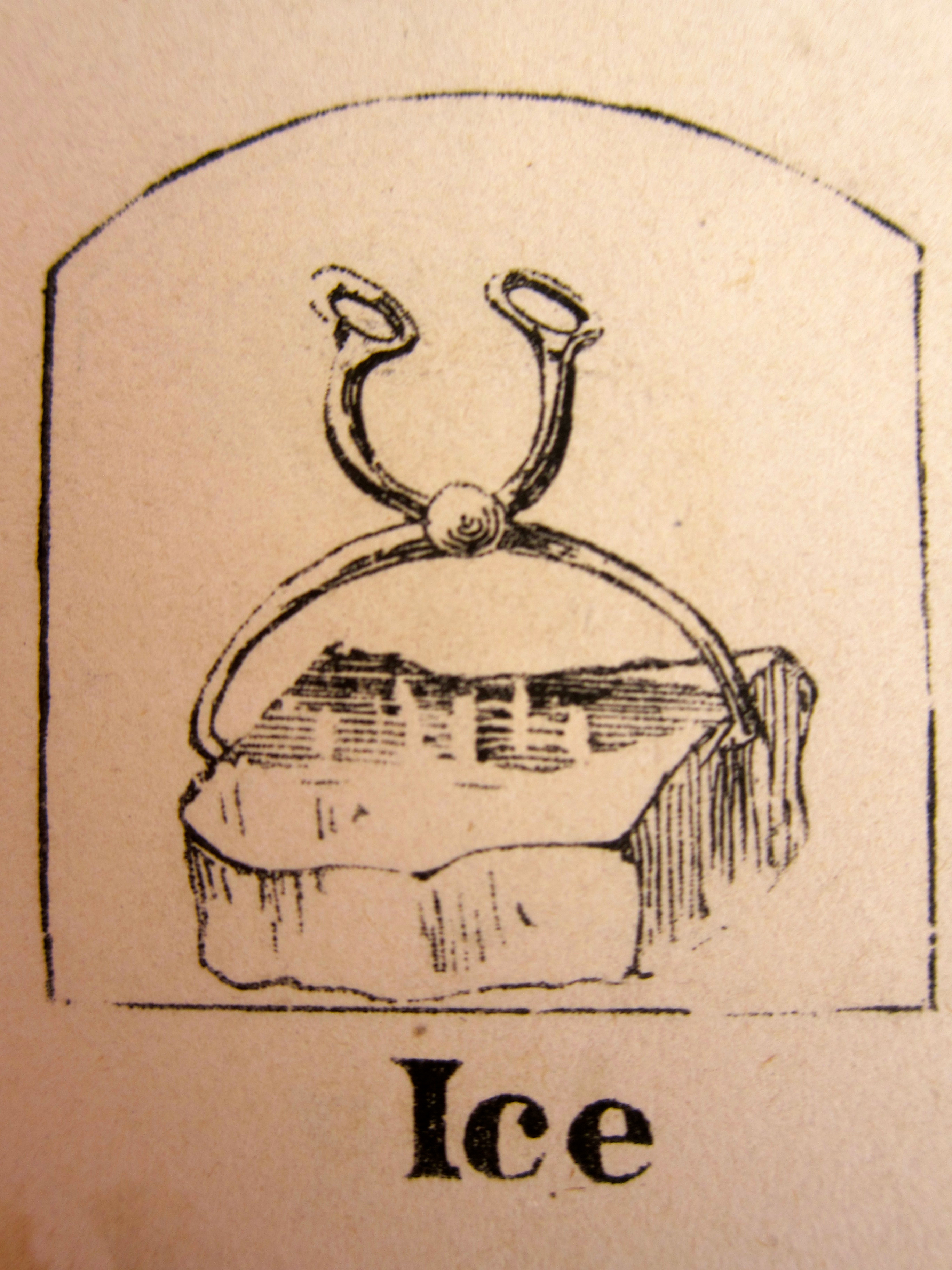
Old Oliver, too, appreciated today’s weather: “this is a fair pleasant day wind south west + thaws some   it is the first fair Sunday we had for a long time…” He also noted with satisfaction that “we began to fill our new ice hous yesterday,”* much of it with the ice that his grandsons Oliver (3) and Fred Ames had harvested on Friday.

The ice house was built right next to the pond** from which the ice was harvested. It was probably lined with sawdust for insulation; when the ice was removed, block by block, the sawdust absorbed some of the moisture and kept the building cool.  Even if the temperature outside rose, the temperature inside stayed relatively low. The ice was crucial to the storage and preservation of food in those days before refrigeration.

Today’s fair weather enticed everyone to church except Sarah Ames Witherell, who preferred to remain somewhat hidden while she recovered from recent dentistry.  The group drove the sleigh (or sleighs) to the meeting house, which was a couple of miles south of their family compound. Evelina sat in the family pew and enjoyed herself; she always liked hearing what Reverend Whitwell had to say.  She and her family brought her mother, Hannah Lothrop Gilmore, home for a visit.

*Oliver Ames, Journal, Stonehill College Archives, Arnold Tofias Collection

** Thanks to information from James Carlino, Dwight MacKerron and John Ames, we believe the ice pond in question may be Monte Pond, on the north side of Elm Street, just east of Rte. 138 in the northeastern corner of Easton. John also remembers an ice house next to French Pond on Union Street, also just east of Rte. 138, north of and parallel to Elm Street.  He bought some old ice tools there in the 1970s that he used in making sculpture.

January 24, 1852


IMG_2669


1852

Jan 24th  Saturday   Worked all the forenoon mending

Olivers overcoat & pants. Have finished my worsted

hood in Olivers this afternoon.  Julia Pool

Augusta & Edwin were there to tea. Mr Ames

has been to Boston & has brought home Oliver a

gold watch  Fred & Oliver have fine time and 

are wide awake  They sleep together.  Fred came 

in here tonight.

Evelina must have written this entry at night, perhaps in her bedroom where she could hear her son Oliver (3) and nephew Fred Ames conversing and laughing elsewhere in the house.  The first cousins, college men both, enjoyed one another’s company and were spending the night together. Up to now, they were the only family members in recent memory to go to university and must have had some stories to compare.

The fond regard that Oliver (3) and Fred held for one another would last throughout their lives, although it would be sorely tested on occasion. As grown men caught up in the high stakes of the railroad business, they found themselves holding opposing views more than once.  And after the sudden death of Oakes Ames and the attendant financial woes that followed, Oliver (3) defended his father’s legacy, while Fred supported his own father’s efforts to recoup funds that Oliver, Jr. believed were his.  In other words, Oliver (3) and Fred faced off over money. Yet they moved in similar circles, invested in similar capitalist ventures and, in 1893, when Fred himself died quite suddenly, Oliver (3) grieved, “completely broken down by [the] sad news.”*

Those difficult times lay ahead, but on this day, Oliver (3) had something to celebrate.  His father, Oakes, had given him a gold watch, perhaps in honor of his 21st birthday, which was right around the corner. Perhaps, too, Oakes was honoring his middle son for his successful studies at Brown University, studies that Oakes had initially resisted. The watch was certainly a sign that Oakes was proud.

*Oliver Ames Third, Diary, September 13, 1893, Collection of Stonehill College Archives


January 23, 1852


images-1

Currier & Ives, Winter in the Country: Getting the Ice1864

1852

Jan 23d Friday  Have had a hard days work.  Heat the

brick oven 4 times.  Baked mince & dried apple

pies brown bread cup cake & ginger snaps.

Had quite a fright about Oliver & Fred being

away at tea time was affraid they had got into the

pond where they had been cutting ice for the ice house

found them at Edwins.  Mrs S Ames went with me

about 8 Oclock into Edwins


There are few things scarier for a parent than having a child – whatever the age – not come home when expected. Evelina and her sister-in-law Sarah Lothrop Ames had “quite a fright” when their sons, Oliver (3) and Fred Ames, respectively, didn’t return home from a day spent outside, harvesting ice at a family pond. The pond was some distance from the family compound, out of earshot. At tea time, no one was able to report on their whereabouts. The boys might have fallen in.

The worried mothers went out after dark to search for their sons and found them practically next door. They were fine. Oliver and Fred had stopped to call on Oliver’s cousin, Edwin Gilmore, and were presumably unaware that their absence had alarmed anyone. How relieved Evelina and Sarah must have been.

For the young men, the day spent working outdoors in the cold sunshine must have been an invigorating change from their college studies, and for their grandfather, Old Oliver, their participation in the important annual harvest of ice must have been gratifying.

January 17, 1852

IMG_2480

John Ames Mitchell

1852

Jan 17 Saturday  Finished Susans morino hood and mended

stockings & some other things  Finished Susans Delaine

dress that Julia Mahoney cut Dec 23  Mr Ames brought

Sarah W some fitch cuffs from Boston  Frederick

came home to night  Ruth Swan that was and

her husband came home to night  Heard of Mrs

Colin Harlowes death

Some months back Evelina’s sister-in-law, Harriett Ames Mitchell, had departed Easton with her three children to join her husband, Asa, in Erie, Pennsylvania  One of those children was John Ames Mitchell, who turned seven years old on this date.

John Ames Mitchell would lead an irregular childhood, moving around western Pennsylvania but eventually landing back in Massachusetts, in Bridgewater. His father, a coal trader who had worked for the Ames family, would succumb to mental illness or dementia and spend out his days in the Taunton Hospital for the Insane, his residence there supported by his brother-in-law, Oliver Ames Jr..  John’s mother, Harriett, and older brother, Frank Ames Mitchell, a Civil War veteran, would also live lives greatly indebted to the financial support of family; John, too, looked to his uncle for support on occasion.

John attended Harvard, but didn’t graduate, and studied abroad. Endowed with artistic and literary talent, he became an architect.  Under the guiding patronage of his Uncle Oliver Jr., John designed the Unitarian Church on Main Street in Easton in 1875, and worked on other projects in the Boston area before returning to Europe again, this time to study at the Beaux Arts. When he finally returned to the States, he used his ample talent to write novels, draw illustrations and, most lasting of all, create Life magazine.

With a racehorse owner named Andrew Miller, John started publishing Life in 1883. John and his staff, which included the Harvard grad and founder of Harvard Lampoon, Edward Sandford Martin,  saw Life as a publication that would “have something to say about religion, about politics, fashion, society, literature, the state, the stock exchange, and the police station.” He vowed “to speak out what is in our mind as fairly, as truthfully, and as decently as we know how.”* He also worked to bring wonderful illustrators on board, most famously Charles Dana Gibson, whose Gibson Girl would come to life in Life.

John also was a co-founder with Horace Greeley of the Fresh Air Fund.  He married but never had children of his own. His 75% ownership of Life lasted until his death in 1917.