August 26, 1852

Champlain-02

The Steamboat Oakes Ames, ca. 1868*

Thursday 26th Aug  This morning Mrs Mills got a hack and

carried us all out to ride.  We had a fine view

of the Lake and town, was riding over an hour

and returned to Mrs Stetsons and all dined there

Called into a shop to see stone ware made

Passed the afternoon at Mrs Mowers and there

we had a very pleasant time  Charades & Tableaux

got home about twelve

Evelina filled her last full day in Burlington with social activity. She and a group – Almira Ames, Sarah Lothrop Ames, Fred and Helen, and Oakes Angier, too, presumably – were “carried” out for a ride, during which they admired the “fine view” they got of Lake Champlain and the town itself. It was a pretty place. But no amount of imagination in the mind of anyone in the hired carriage could have foretold that one day a steamboat named for Oakes Ames would be plying the waters they were gazing at.

In 1868, in fact, the 244′ Oakes Ames, built in the Napoleon B. Proctor Shipyard, would be launched from Burlington. Designed to ferry railroad cars from Burlington across the lake to Plattsburgh, New York, the steamship was commissioned by the Rutland Railroad, for whom Oakes Ames was a director and one of the line’s “firmest friends.”** In 1874, the ship would be renamed and repurposed for passenger service. Yet the newly christened Champlain II would last in service only until running aground in July, 1875. Although the incident produced no fatalities, the ship’s hull would be dashed beyond repair. Today, the boat is a famous wreck in the water.

Steamship and railroad deals being in the future, Evelina and the group continued to enjoy themselves on this pleasant day. They dined at a friend’s house and visited a stoneware shop. In the evening they all played charades and tableaux, popular parlor games in which participants acted out words or situations, or created still scenes of familiar subject matter, respectively. Such games were particularly popular at Christmastime.

*Image courtesy of the Lake Champlain Maritime Museum

** Burlington Free Press, August 20,1868, p.4.  For an exhaustive narrative about the Champlain II, ex-Oakes Ames, please see a thesis by Elizabeth Robinson Baldwin, May 1997, Texas A & M
August 25, 1852

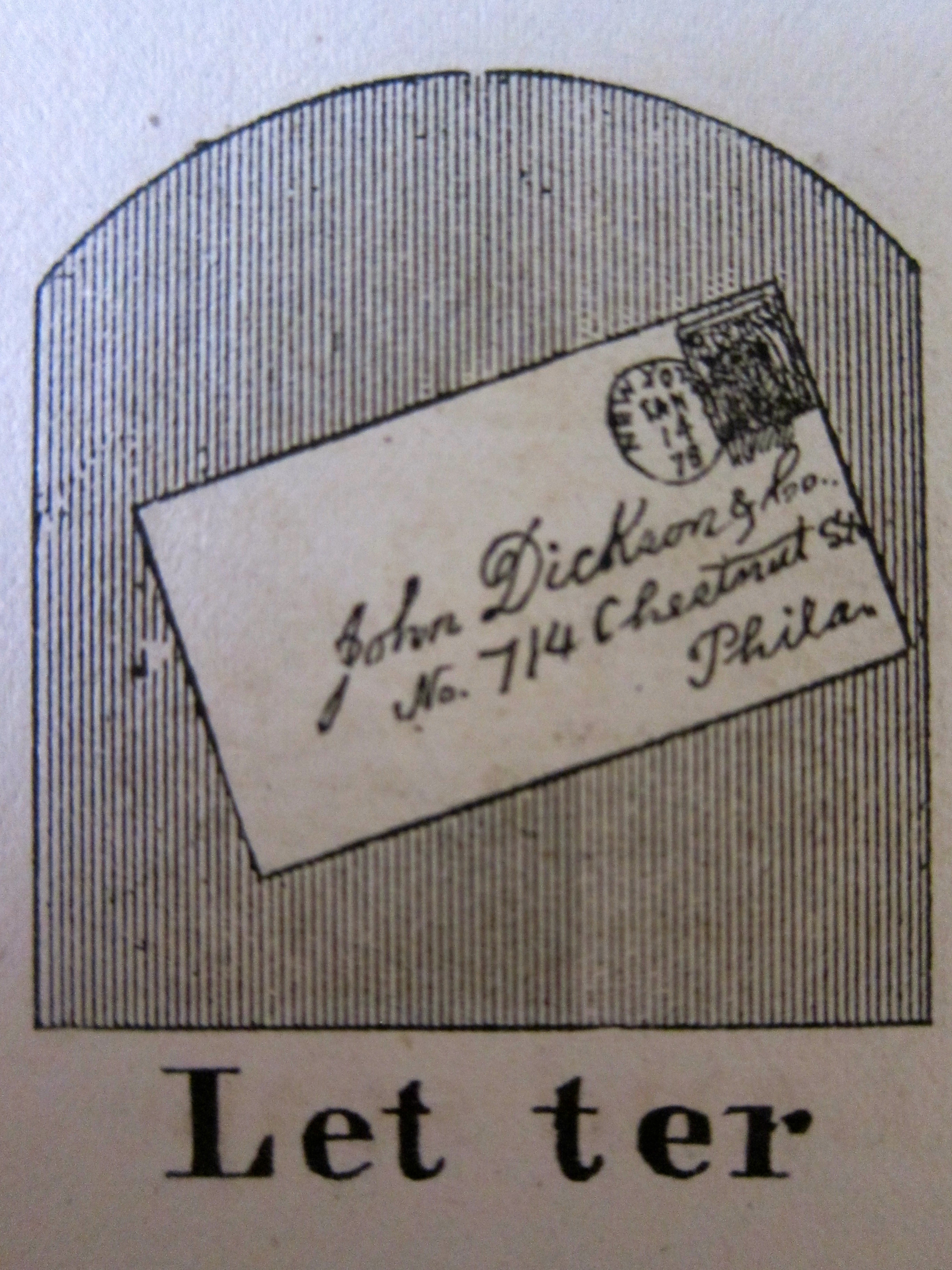
Letter

Wednesday Aug 25th  We were invited to dine again at

Mrs Mills to day.  Fred & Helen called at Mrs

Stetsons and we went home with them to Mrs

Mills. Afternoon went to Mrs Footes had a 

large & pleasant party and quite a treat

In the evening they acted charades and

we had a merry time  Oakes A bears

the excitement pretty well  Received a letter from 

home saying that Willie Gilmore died last Friday

Evelina heard from the folks at home today and found out that her great-nephew had died. This news was unfortunate, but perhaps not entirely a surprise.  She had been concerned about the little boy before she left on her trip; infant mortality was high in those days. Despite the bad news, surely Evelina was glad from her family, even if the tidings were sad.  We can pretty well assume that she had not been so far from home before, and she may have been missing her family and friends. Who wrote her, do you suppose? Her husband? Her nephew? One of her nieces? Oliver (3) or Frank Morton? Or perhaps Sarah Witherell wrote, knowing that Evelina would want to know about little Willie.

Evelina probably learned of other Easton goings-on as well. Even the weather would have been a topic of some interest. Old Oliver was, as ever, keeping an eye on the sky and tracking rainfall. As she opened her letter, he might have been making note that on this Wednesday, it “was cloudy most of the day + one small shower.”*

A game of charades filled the evening – fun for all including Oakes Angier, who seemed to be feeling well.

*Oliver Ames, Journal, Stonehill College Archives, Arnold Tofias Collection

August 22, 1852

1835sketch

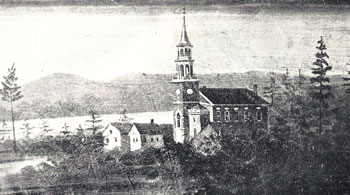
Unitarian Church, Burlington, Vermont, circa 1835*

Sunday Aug 22  We went with Mrs Stetson to the

Unitarian church & heard Mr Rich in the morning

dined at Mrs Mills and all went to the

Episcopal church this afternoon  This is a

beautiful church but I did not think much

of the preaching or singing.  Returned

to Mrs Stetsons to tea and had a quiet evening


Naturally, Evelina attended church on Sunday, just as she would have done had she been at home. In this case, she went to Burlington’s Unitarian Church with her hostess, Mrs. Stetson,and “heard Mr Rich” preach. But for the afternoon service, she went to an Episcopalian church with a group of women with whom she had dined.

She liked the looks of the Episcopal Church but, as she often did when attending any church but her own, she didn’t approve of the service, sniffing at the poor “preaching and singing.”  Evelina invariably preferred her own church in Easton – and her own preacher. No one could ever equal Mr. Whitwell.

The family (still minus Sarah Lothrop Ames and her two children, who had stopped at a town further south) kept a pretty low profile in the evening. Keeping quiet, after all, was the point of this vacation for Oakes Angier Ames. It was hoped that his staying in Vermont would improve his health.


*Courtesy of the First Unitarian Universalist Church, Burlington, http://www.uusociety.org


August 20, 1852

1024px-1879_CV_map_only

Map of the Central Vermont Railroad, circa 1879

1852

Friday Aug 20th  Left Bellows Falls at 1/2 past 7 and

arrived at Burlington about two. Went

to Mrs Stetsons found the house shut up

At the house opposite they told us she had

gone to Mrs Mills and went there and had

some dinner and all went to Mrs Stetsons to

tea  Mrs S Ames Fred & Helen stopt at Pittsford

Willie Gilmore died this afternoon

Evelina would not learn of it for several days, but her young great-nephew, William Lincoln Gilmore, died today of dysentery. (She added the information later.) Barely a year old, Willie had been ill for several weeks, and Evelina had visited his parents, Augustus and Hannah Gilmore, a few times before she left North Easton. His death was sad news.

Not knowing about it, however, and full of her own worry for her own son, Evelina was open to the journey she and other family members were on. By way of the Vermont Central Railroad, presumably, she, Oakes Angier, and Almira Ames traveled another 100+ miles today from Bellows Falls to Burlington, Vermont, while Sarah Lothrop Ames and her two children, Fred and Helen, got off at Pittsford. Although the map in the illustration above dates from 1879, the line itself was first developed in the 1840’s.

Burlington was Oakes Angier’s destination, the place where he would stay for several weeks to rest and, it was hoped, recuperate from his pulmonary illness. The threesome spent the night with Mrs. Stetson, a friend of the family.

August 19, 1852

PC+Bellows+Falls01VT

Bellows Falls, Vermont, late 19th century

Aug 19th Thursday.  Started with Mrs A L Ames

S Ames Fred Helen & Oakes A for Burlington

Left Boston at 12  Stopt for the night

at Bellows Falls much fatigued & covered

with dust.  It is a very romantic place and […]

very good accommodations at the Island house

Walked out after tea to view the place & falls

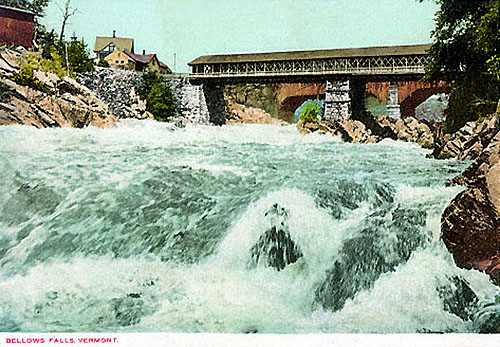
Off they went! Half the family, it would seem, exited North Easton to accompany Oakes Angier on his trip to Burlington, Vermont. Obviously, the group traveled first from North Easton to Boston, where they boarded a train, most likely, and departed at noon. Six or so hours and about 100 miles later, “much fatigued and covered with dust,” they disembarked at Bellows Falls, Vermont, a small village on the state line between New Hampshire and Vermont.

The village may have been small, but its location on the Connecticut River and its powerful falls made it a fine industrial site. Two railroads already met there, and a mill industry thrived. The bridge across the water – a later version of which is featured in the postcard illustration above – added to the picturesque quality of the town.  Evelina found it “very romantic.” Today the village is part of the larger town of Rockingham, whose population boasts a little over 5,300.


August 17, 1852

Flatiron

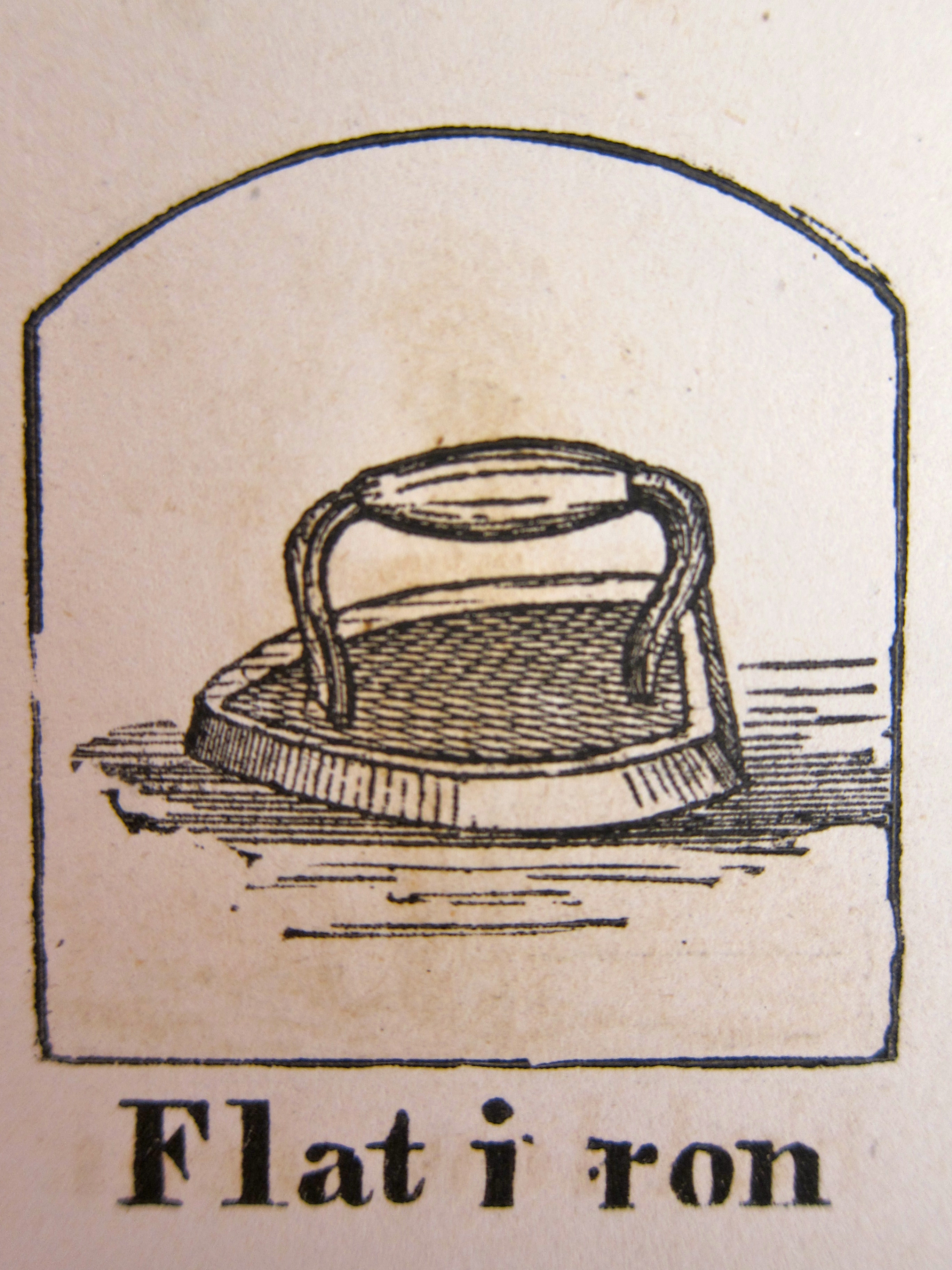
Aug 17th Tuesday  Starched my clothes and about

eleven Oclock was setting the table to iron

when Mother & Alsons wife came and

I put them by.  Have ironed them this after

noon in the dining room with Mrs Stevens

Henrietta Augusta & Abby sitting around

Mrs Ames & Witherell called

The Ameses had made a decision to send Oakes Angier to Vermont for a rest, and Evelina was to accompany him on the trip. Also accompanying them would be Sarah Lothrop Ames and her two teenaged children, Fred and Helen, as well as the visiting Almira Ames.

Gathered around Evelina in the afternoon were many of her usual companions: her sister-in-law Henrietta Williams Gilmore, her nephew’s wife, Augusta Pool Gilmore, her niece Abigail Williams Torrey, her guest Mrs. Stevens, and her nearest sisters-in-law, Sarah Witherell and Sarah Ames. The looming expedition must have been the topic of conversation among the women as they sat and watched Evelina iron her clothes on the dining room table. (No ironing boards yet!) The conversation might have roamed from concern for Oakes Angier to curiosity about the travel arrangements.

That the travel ahead of Evelina was serious is indisputable; it involved the well-being of her eldest son. Yet there had to be an element of adventure in the plans.  They’d be traveling across Vermont, visiting places that Evelina may never have seen. They’d be seeing relatives and friends, too, which may be the element that enticed Sarah Lothrop Ames and her two children to join the expedition.

July 18, 1852

Church

July 18th Sunday  Have been to meeting as usual

Mr Whitwell preached well.  Went to Mr

Whitwells with Mother & Henrietta at noon

When we came from church Mr Ames

& self rode up to the ponds, found Oliver &

Fred there  Called this evening with Mr

Ames at Augustus found him threatened

with a fever & quite unwell.  Called on Lavinia

Williams a moment and Mrs Savage who is quite ill.

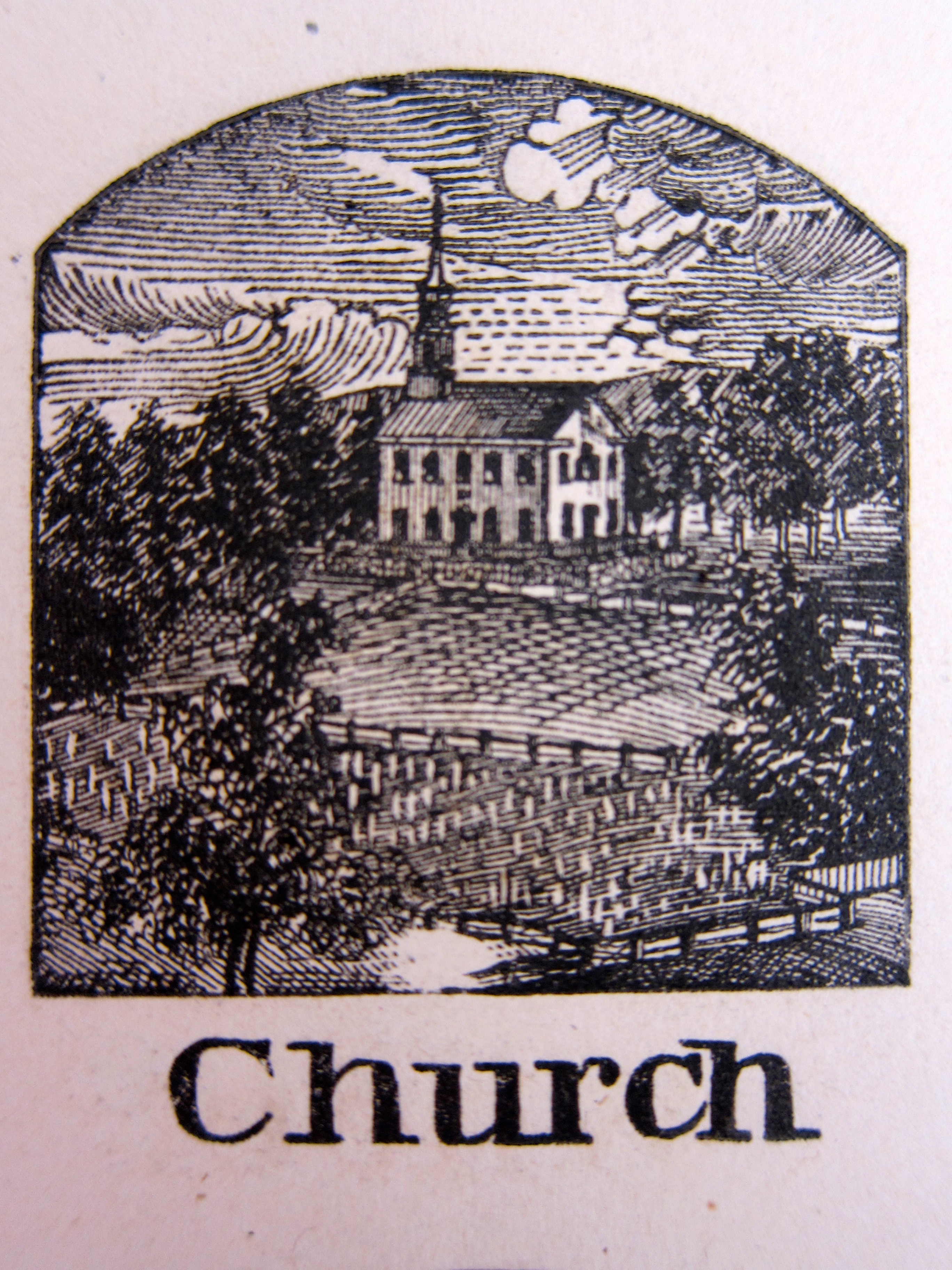
The good news today was that Evelina was comfortably back in her own pew at her own church, listening to her favorite minister preach. During the intermission between sermons, she even took her mother and sister-in-law, Henrietta Williams Gilmore, to the parsonage for tea. After church she and Oakes “rode up to the ponds,” meaning that they may have ridden not just to Shovel Shop Pond, but also beyond to Flyaway or Great Pond. There they ran into Oliver (either their son or Oakes’s brother-in-law) and Fred Ames.*

The not-so-good news was a run of illness among family and friends. Evelina’s nephew, Alson “Augustus” Gilmore, was suffering from some kind of fever. This was not an uncommon ailment during the hottest weeks of summer; many infants, especially, were prone to dehydration when the thermometer went up. Evelina had to be concerned that Augustus was so ill so suddenly. Hannah Savage (her near neighbor for whom her old servant, Jane McHanna, was now working) had been ill for some time. Hannah was thought to be dying; a watch would soon begin for her.

*It seems likely that it was Oliver (3) and not Oliver Jr with  Fred “up to the ponds.”  If it had been Oliver Jr., it’s probable that Sarah Lothrop Ames would have been with them.  She wasn’t. And it’s equally likely that the two young college men would be enjoying their familiar camaraderie, now that each was home from school.

May 17, 1852

180px-Beekman_greenhouse

Mid-19th century American Greenhouse*

1852

Monday May 17  Finished planting my flower seeds

Mr Blodget here to dine from Boston

This afternoon have been to Mr Kinsley with

Mr Ames.  Miss Nevill there from Salisbury.

Brought home twelve pots of flowers from

their green house.  The grapes & flowers look

finely  Had a very pleasant visit got home

about dark

Evelina enjoyed herself today. It was lovely outside, for “the sun shined about half the day + was pritty warm wind west + south west.”** She gardened for much of the morning and in the afternoon, rode with her husband, Oakes, to Canton to call on the Kinsley family.

Lyman and Louisa Kinsley, whom we’ve heard of before in Evelina’s diary, were about the same age as Oakes and Evelina. They had two children, Lucy Adelaide and Edgar Lyman, who were twelve years apart, suggesting that there may have been other children born between the two. Lucy was close in age to Oakes Angier, and Edgar was a year or so younger than Susie.

The Kinsleys were prosperous; Mr. Kinsley ran an iron business that had been started by his father and had long supplied material for Ames shovels. The Kinsley Iron and Machine Company would eventually be bought by the Ameses and managed by Frank Morton Ames. That being some years in the future, the Ameses could sit and admire the Kinsley place with little thought of acquisition – perhaps. Certainly, Evelina was much taken with the Kinsley greenhouse and the “twelve pots of flowers” she got to take home.

Greenhouses such as Mr. Kinsley’s were becoming more popular in the mid-19th century, particularly in England after the government there did away with the heavy tax on window glass. Hothouses had been known previously on this size of the Atlantic, also, appearing in the colonies as early as 1737, when wealthy Bostonian Andrew Faneuil built one. George Washington, too, had one built at Mt. Vernon to grow pineapple. Greenhouses would increase in size, status, and grandeur as the century progressed. Easton would see its share when the next generation of wealthy men reached maturity. Frederick Lothrop Ames, Edwin Williams Gilmore and probably others would raise orchids and more in the glass-walled wonders.

*Greenhouse from Beekman Estate in Manhattan, circa 1850

**Oliver Ames, Journal, Stonehill College Archives, Arnold Tofias Collection

February 27, 1852

Tea kettle


Feb 27

1852  Friday  this morning I invited Mrs Lothrop here

but she went to Mrs Jason Howards to spend the day

came here this evening  Mrs S Ames & Fred dined

here  Mrs & Mr Horace Pool  Mrs W Williams  Abby

Edwin & wife Oliver & wife & Fred & Mrs Witherell

were here to tea  All came unexpectedly.  Had 

a very pleasant visit from them.

Many folks came to call today.  Sarah Ames Lothrop and her son, Frederick Lothrop Ames, joined the Ameses for midday dinner. (Although Oliver (3) had returned to Brown, Fred hadn’t yet gone back to Harvard.) A real crowd arrived “unexpectedly” for tea.  Sarah and Fred returned, bringing Oliver Ames Jr. with them. Sarah Ames Witherell came in from the other part of the house, resulting in all three sisters-in-law being together. Newlyweds Edwin and Augusta Gilmore walked over from their nearby home, and old Mrs. Gilmore – Evelina’s mother – was already on the premises. The family gathered.

From farther away came Horace and Abby Avery Pool, uncle and aunt to the bride, Augusta.  A Mrs. W. Williams arrived, as did Abby Torrey, Evelina’s niece. Abby’s head must have been full of the previous evening’s entertainment, that of Willard Lothrop’s visit and trance. It’s likely that some of this evening’s conversation turned on spiritualism.  One wonders what Oakes and Oliver Jr. thought of the topic.

Perhaps Evelina served some ginger snaps or currant cake from Tuesday’s baking. The tea itself could have been one of any number of types. Lydia Maria Child published her opinion on the subject: “Young Hyson is supposed to be a more profitable tea than Hysons; but though the quantity to a pound is greater, it has not so much strength. In point of economy, therefore, there is not much difference between them. Hyson tea and Souchong mixed together, half and half, is a pleasant beverage, and is more healthy than green tea alone.  Be sure that water boils before it is poured upon tea  A tea-spoonful to each person, and one extra thrown in, is a good rule.  Steep ten or fifteen minutes.”*

*Lydia Maria Child, The American Frugal Housewife, 1846


February 17, 1852

imgres

Example of mid-19th century headdress*

1852

Tuesday Feb 17th  This forenoon made me a headdress of Satin

ribbon of the colour of my hair and lace  Alsons

wife came to Augustus this forenoon and to Edwins this

afternoon  Called here awhile after dinner

Mrs Witherell S Ames & self spent the afternoon & evening

at Mr John Howards with Mr & Mrs Whitwell

Mr & Mrs Reed & Mrs Elizabeth Lothrop  Frederick

carried us down & [came] after us this evening

Bonnets may have been the most common covering for the heads of well-dressed mid-century females, but head gear of other persuasions was not to be ignored.  A fore-runner of today’s fascinators, light, decorative headdresses such as the one in the illustration above were very popular for certain indoor or evening outfits. Evelina must have enjoyed sewing one for herself, taking extra pleasure in how well it matched her own coloring.

Evelina’s father-in-law, Old Oliver, noted that this “was a fair day wind north west + cold.” The wind would have been somewhat behind them when the three sisters-in-law, Sarah Ames Witherell, Sarah Lothrop Ames, and Evelina were driven south in the afternoon by Fred Ames. The women visited a group of friends at the home of fellow Unitarians John and Caroline Howard.  The tea they must have been served there perhaps helped stoke them up for the cold drive back home into the wind.


*Courtesy of Library of Congress