October 21, 1851

scraping-wallpaper-renovation-14163480

Tues Oct 21st  Have been scraping off the paper again

to day and getting ready for the painters

Have been to work some on the sleeves

of my cashmere have sewed part of the 

trimming on.  Hannah called to ask

me to take care of her babe for her to go

to Boston tomorrow  Was in the other part

of the house part of the afternoon 

The house continued to be in some upheaval this morning as Evelina scraped more wallpaper off of the parlor walls in order to get “ready for the painters.” Her arms and hands must have ached with the effort. Soon enough she broke away from that task and turned to her sewing, probably with relief. For some time she had been working on a new wool dress and today sewed some trim on.  Did she add fringe, or piping, or lace? Or did she add the ribbon she’d been looking for lately?

The bad weather from the weekend had disappeared. According to Old Oliver’s daily chronicle “there was a large fog this morning + after it went of[f] it was verry warm wind brisk from south west Mr Arnold came here to day to sleight the shop at great pond.”

Hannah Lincoln Gilmore, wife of Evelina’s nephew Alson “Augustus” Gilmore, came by to ask her aunt to babysit the next day. Evelina, always a friend to younger women, agreed to watch Hannah’s infant son. It’s worth noting that in order to ask that favor, Hannah had to walk over from the village to physically appear at Evelina’s house. That, or she could have written a note and asked someone to deliver it.  There was no phoning, no texting, no emailing, no instant messaging. Instead, there was a knock on the door and a face-to-face request. That’s how it was done in 1851.

Evelina wound up the day with a visit to Sarah Witherell and her houseguest, Susan Orr, in the other part of the house.
 

October 4, 1851

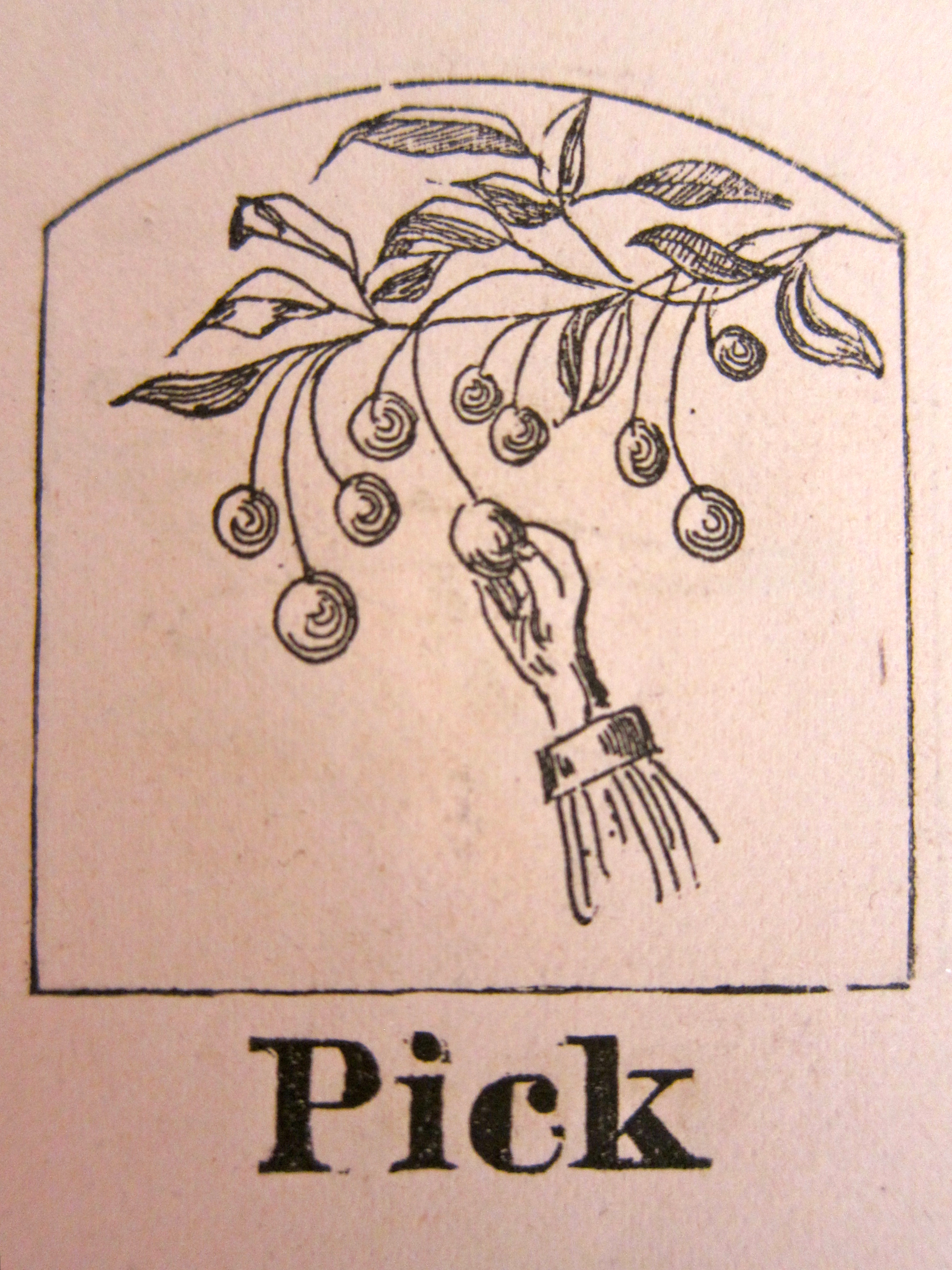
Pick

Oct 4th Sat.  Preserved 25 pounds of peaches and 16 lbs

barbaries & about 23 lbs Apples with them.  Have

been about sick all day  Expect I have taken

the nettlerash from Susan have been troubled

with it three or four days.  Called this afternoon

at Augustus find them quite comfortably settled

Harriet trimmed my Bonnet with the ribbon I

wore last fall  Charles Mitchell came to see Mrs Mitchell


Evelina hadn’t felt very well for several days and began to feel even worse today. She believed she had “taken the nettlerash from Susan,” meaning that she now had hives, just as her daughter had had a week earlier. It made her feel “about sick” yet she stayed upright and worked in the kitchen most of the day. The fruit they had picked or gathered from friends and family wouldn’t keep, so the cooking had to get done.

In the kitchen, Evelina, probably with significant help from Jane McHanna, put up 64 pounds of fruit. She didn’t make jam, which would have consisted of cooked fruit pulp, nor did she make jelly, which would have been made from fruit juice.  She made preserves, which in this instance were pared peaches and apples, the latter mixed with barberries, that were placed whole or in chunks in sugar – lots of sugar – and then boiled down. And because “ingredients in […] loaf sugar are not always very clean,”* most cookbooks of the day strongly urged that the sugar be clarified.

Mrs. Cornelius, in her 1846 The Young Housekeeper’s Friend,* noted that “[t]he chief art in making nice preserves, and such as will keep, consists in the proper preparation of the syrup.  All sugars are better for being clarified.”* Mary Tyler Peabody Mann, more than ten years later in her cookbook, Christianity in the Kitchen, agreed with the necessity of clarifying the sugar The process was labor intensive; even with the help of Jane McHanna, Evelina would have had hours of work if she followed Mrs. Mann’s “receipt”:

“Put half a pint of water to every pound of sugar.  Stir in the white of an egg for every five pounds of sugar, and let it boil; when it rises, put in half a teacup of water and let it boil again, and repeat this process two or three times.  Set the kettle aside for fifteen minutes, then take the scum from the top.  Pout off the syrup; wash the kettle, and put in the fruit you wish to preserve.”**

After sitting at the kitchen table paring the fruit, or standing over the stove clarifying the sugar, or placing the fruit into the stoneware or glass jars, Evelina needed a break. She took a walk to the village to see her nephew Augustus and his family. Even if she wasn’t feeling well, the fresh air must have felt good after the heat and bustle of the kitchen.


Mary Hooker Cornelius, The Young Housekeeper’s Friend, 1846

** Mary Peabody Mann, Christianity in the Kitchen, 1858

September 30, 1851

IMG_0004

21st century view of apartment building owned by Col. John Torrey, which Augustus Gilmore and his young family moved into in 1851

Sept Tuesday 30  Augustus family left this afternoon for

their new place  his wife went this forenoon

and put down two ca[r]pets and put up two beds

I went about four Oclock and helped her

untill night   passed part of the evening in

the other part of the house  I have been to 

work a very little on my dresses and so

has Ellen  Helen left this morning for school in Boston

It was “a fair day + pritty warm”*, so folks who had stayed inside yesterday because of the rain were able to be out and about today. Evelina must have felt better, too, as she helped her nephew’s wife, Hannah Lothrop Gilmore, set up housekeeping in their new quarters in the village. Practiced mothers, they probably kept their eyes on Hannah’s small sons as they worked.

Helen Angier Ames, fourteen-year-old daughter of Sarah Lothrop and Oliver Ames Jr., left for Boston this morning.  She was going to a new school, the third one this year. Clearly she, or her parents, had had difficulty settling on the right situation. Perhaps this one would be the charm. We don’t know which academy or seminary she was headed to; there were probably several schools to chose from. The Auburndale Female Seminary was one that was established about this time (today is exists as Lasell College) though we have no indication that this was the one, among many, that the Oliver Ameses would have settled on for their daughter.

The Girls High and Normal School started up around the mid-19th century as well.  It was focused on training young women to become teachers, and thus was unlikely to be the institution that Helen Ames went to.  Helen didn’t need to be trained to make a living.  A smaller, private outfit was likely to have been the place for her.

* Oliver Ames, Journal

September 29, 1851

330px-Open_drawers_-_Garments_for_girls

Monday Sept 29  Cut out three prs of cotton Drawers

for self for Ellen to make & have done some

sewing  Augustus came with his family about

4 Oclock are going to move into a part of Mr

Torreys house  Hector & Susan Orr came to

the other part of the house this afternoon.  Susan

will stop awhile  Not very pleasant has rained some

Rain arrived but the day, according to Old Oliver, was “pritty warm.” The wet weather and her cold must have kept Evelina indoors.  She may not have felt well, but as long as she could sit up, she would have found something useful to do.  Sewing some underwear for herself was the mundane chore waiting in her workbasket. Meanwhile, Jane McHanna, the family servant, washed the weekly laundry, perhaps doing her trick of letting the rain do the rinsing. She would have been challenged to figure out how to dry it, though.

Visitors arrived in the other part of the house; the Orrs, a family with whom the Ameses had been connected since early days in Bridgewater, came to visit. Susan Orr, a spinster, had known Oakes Ames when he was a baby. Today she and Hector – her brother, perhaps? – came to see Old Oliver and Sarah Ames Witherell.

On Evelina’s side of the family, nephew Alson “Augustus” Gilmore, his wife Hannah and their two sons, toddler Eddie and infant Willie, began to move into temporary quarters at Col. John Torrey’s building in the village.  Eventually, they would build a home, but for now they were going to rent.


September 15, 1851

Peach

Monday Sept 15th  Mrs Stevens & I made our plan

to go to North Bridgewater this afternoon but

could not get a horse in season  Augustus

rode up to his house with us and we brought

Miss Eddy home with us.  Called at Mr Reeds

and got some peaches.  Mr & Mrs Whitwell

called before we went away Ruth & Louisa

Swan called at the other part of the house

Plans to go to North Bridgewater had to be cancelled today when Evelina couldn’t get a horse in time, or “in season,” as she says. The morning hours had been spent on housework and laundry, certainly, and the planned trip to Bridgewater must have been a sweet incentive to get the choring done.  No doubt Evelina and Mrs Stevens were disappointed not to go.

Evelina and Mrs. Stevens did get to call on Evelina’s nephew, Alson Augustus Gilmore and his wife, Hannah Lincoln Gilmore.  Hannah had recently given birth to her second son, Willie, and might well have welcomed the company. The women also secured some peaches at one of the Reeds’ homes, no doubt with plans to make some preserves. Reverend William Whitwell and his wife Eliza called on them and two of Dr. Caleb Swan’s offspring, Ruth and Louisa, called to see Sarah Witherell.  Ruth was about to be married. The social comings and goings of summer continued despite the light frost overnight, a sure sign of approaching autumn.

September 14, 1851

87219f


*

Sunday Sept 14th  Have been to meeting to day,  At noon

brought Miss Eddy home with us.  She walked

with Augustus to church. It is communion day

and Oakes Mrs Stevens & I stoped to bring

Mrs Witherell home.  We rode up to the great

pond and beyond to get some grapes & afterward

called at Mr Torreys

The Ames family attended both morning and afternoon service this Sunday, but instead of staying near church for the intermission, they rode home for a midday break.  Another change in routine may have been that communion was served at the service, which seems out of keeping with modern Unitarian practice.  Does anyone know if Unitarians took communion in the mid-19th century?

After church some of the Ameses rode up to the Great Pond, stopping at Col. John Torrey’s in the village on their way home. Evelina says she, Oakes and Mrs. Stevens brought Sarah Witherell along, a generational grouping that suggests that the “Oakes” in the carriage was her husband rather than her son Oakes Angier. Yet Evelina has, to date, always referred to her husband as “Mr. Ames,” as was the custom.  Did she write his first name unconsciously, or was her son the one in the carriage?  Readers, do you have an opinion? Whoever was in the group, each seemed to have a pleasant late afternoon foraging grapes in the cooler air.

Elsewhere in America on this date, James Fenimore Cooper, author of the popular Leatherstocking Tales, died in Cooperstown, New YorkWhile his Leatherstocking novels secured him fame throughout the western world, Cooper wrote many other novels, some with political overtones to them.  He was not popular with the Whigs. One day shy of his 62nd birthday, he died of dropsy (edema.)

* Baumann’s Rare Books


September 11, 1851

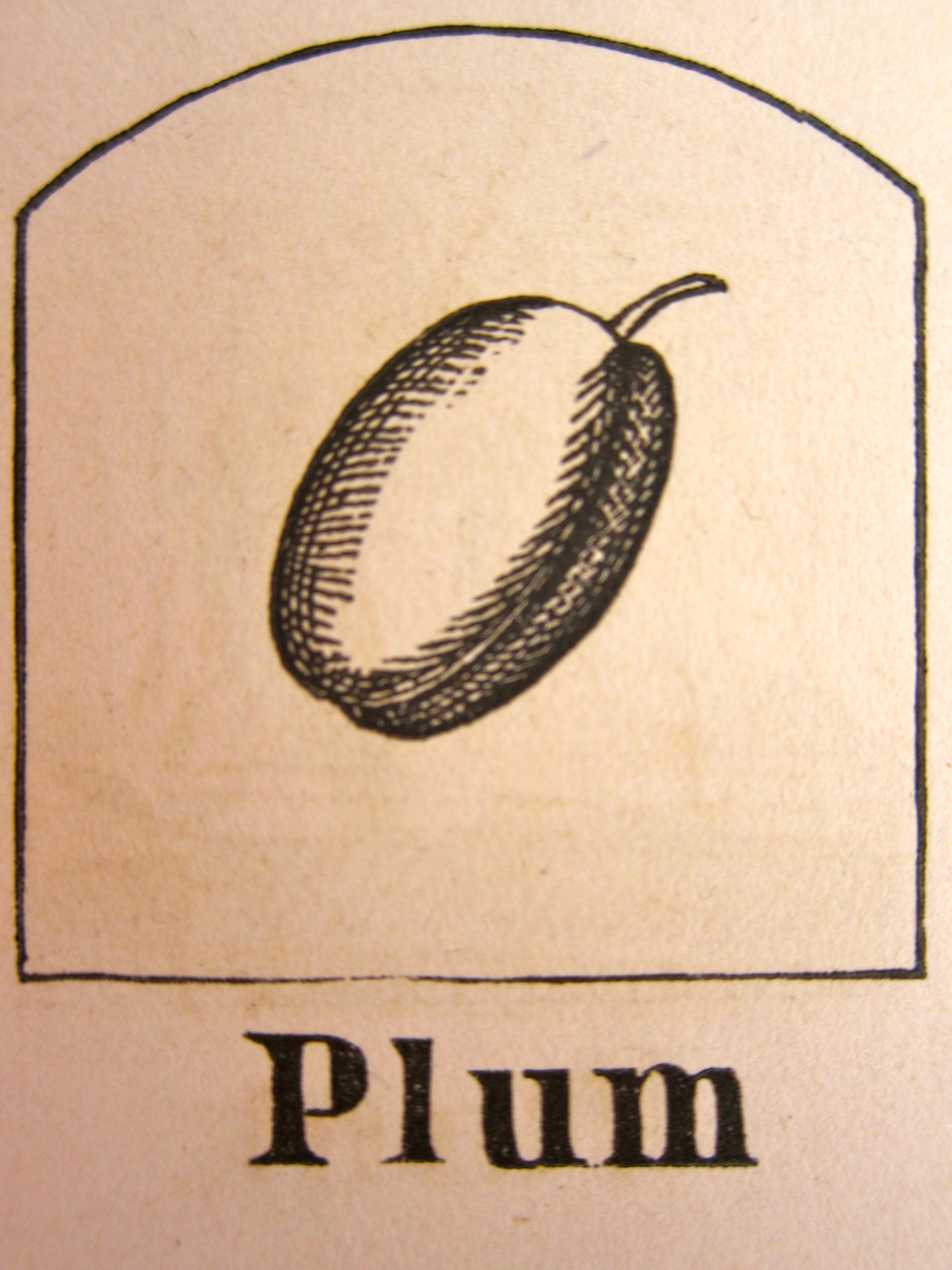
Plum


Thursday  Was very busy this forenoon

fixing work for Ellen cut out a corded skirt for her

to make for Susan  Have been this after 

noon to Alsons with Mr Ames & Mrs Stevens

met Augustus & wife & Miss Eddy had quite

a treat of peaches plumbs &c  came home quite

early in the evening  The weather still

continues to be hot

Ah, harvest.  This time of year brought a short-lived abundance of fresh fruit, “peaches, plumbs &c.”  “[Q]uite a treat” Evelina sighed, perhaps with the scent of peaches still on her fingers as she wrote. She, Oakes and guest Mrs. Stevens had met up with nephew Augustus, his wife Henrietta and another visitor, Miss Eddy, at the family farm south of the village. Now run by her brother Alson Gilmore, it was the farm where she grew up. Perhaps the annual harvest from the family orchard reminded her of her childhood.

While the fruit was delightful, the hot weather was not.  It’s difficult to imagine how hot Evelina must have been when she spent much of her morning cutting out corduroy. “Corded” cloth was heavy, and not easy to cut, either. She wanted one of the servant girls, Ellen, to sew the skirt for daughter Susie.  She was already thinking ahead to the fall and winter, perhaps; maybe she thought of winter as she cut along and stayed cool that way.

Evelina’s entry on this date was written exactly 150 years before our modern catastrophe, 9/11/2001. Unimaginable then and still.

August 26, 1851


Abbott H. Thayer, Angel, 1887, oil Smithsonian American Art Museum Gift of John Gellatly

Abbott H. Thayer, Angel, 1887, oil
Smithsonian American Art Museum
Gift of John Gellatly


Tues Aug 26th  Clinton Lothrop died about ten Oclock

last night  Has been sick a long time with

the Typhus fever  Mrs Witherell & I made the

shroud for him  Mrs Mitchell went to Taunton

to get Bonnets &c for Mrs Lothrop

Rebecca White came after Pauline this morning

Alson here to Dinner and tea is drawing stones for

Edwins cellar.  Oakes A and Frank returned this evening


Dewitt Clinton Lothrop finally died.  He had been suffering from typhus, “an acute infectious disease caused by the parasite Rickettsia prowazekii, transmitted by lice and fleas [,and] marked by high fever, stupor alternating with delirium, intense headache and dark red rash.”* It’s not the same disease as typhoid fever, although the two conditions have some similarities. Clinton, as he was known, had probably been bitten by a flea.

One of nine sons of Howard and Sally Lothrop, Clinton was a brother of Sarah Lothrop Ames. While most of his surviving brothers had moved away from Easton in pursuit of their own lives, Clinton was the duty son who had stayed home with his parents. Only 26 years old and married with two small sons, he had tended the family farm.

Evelina and Sarah Witherell quickly prepared a shroud for the body, while Harriett Mitchell rode off to Taunton to find mourning clothes for the young widow, Elizabeth Howard Lothrop (or for the mother, Sally Williams Lothrop.) That no one had purchased the mourning clothes before now suggests that, despite the probability of death, everyone had hoped that Clinton would recover.

It was a busy day for Evelina.  Besides helping sew the shroud, she saw her friend Pauline Dean depart to visit elsewhere in Easton and welcomed her brother Alson to midday dinner. Alson was working nearby, helping his son, Edwin Williams Gilmore, build a house.  Jane McHanna washed clothes, and she and Evelina probably continued to set the house to rights after a weekend of guests. Oakes Angier and Frank Morton returned home from their fishing trip.

* Craig Thornber, Glossary of Medical Terms Used in the 18th and 19th Centuries, http://www.thornber.net

August 25, 1851

il_570xN.69597337

*

Monday Aug 25  Did not wash this morning on account 

of having so much company  Warren left in the stage

cousin Jerry went to Mr Thesis with Oakes Angier

and Frank on their way fishing.  Alson dined here.

We Ladies all called at Mr Torreys & on Elisha

at the Boot shop.  Mr & Mrs & Miss Kinsley & Miss

Billings from Canton were here to tea – came

about 6 Oclock went to the shop with them

Another Monday and for the second time that summer, washing day got deferred.  Tidying up from “having so much company” took precedence over routine. The young relatives, Jerry and Warren Lothrop, left in the morning.  Another visitor, Pauline Dean, remained.

Oakes Angier and Frank Morton Ames left to go fishing, a trip they had deferred from last week. They had waited then for the imminent death of Dewitt “Clinton” Lothrop, which hadn’t happened.  Clinton, though deathly ill with typhus, was hanging on. The boys decided to wait no further, and departed.

Evelina and “We Ladies” – which could only mean Pauline and probably niece Lavinia – went to see Col. John Torrey in the village and called on Elisha Andrews at the boot factory. Elisha, who was 27 years old and single, had started up the factory with Augustus Gilmore and Oakes Angier Ames. In recounting the visit to the boot shop in her diary, Evelina underlined Elisha’s name. Why? The visit was significant in some way; perhaps one of the women – Lavinia? – was romantically interested in Elisha.

More socializing continued late in the day when the Kinsley family visited.  Lyman Kinsley, his wife Louisa, daughter Lucy Adelaide and a Miss Billings (a niece of Louisa, most likely) came for tea. Mr. Kinsley ran an iron and machine shop in Canton, an enterprise that the Ameses would eventually own. After tea, they all walked over to the factory.

* Currier and Ives, “Starting Out,” print, ca. 1852

August 20, 1851

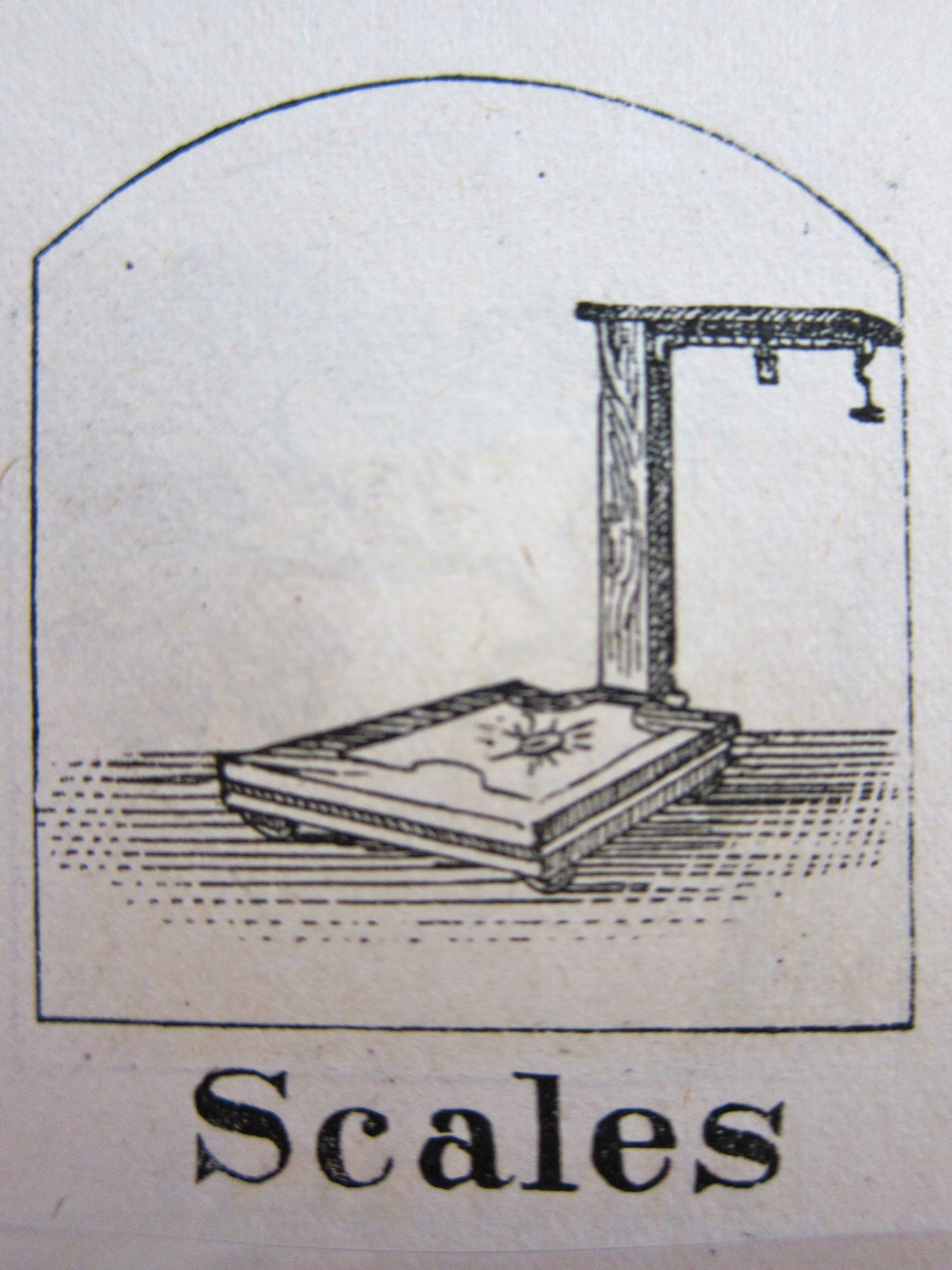
Scales

Weds 20th Aug  Rachel, Lavinia and Augusta Pool spent

the day here  Mr Ames and Augustus went to Boston

Pauline Dean came to night in the stage

appears the same as she did when she left

Went to the store & was weighed  148 lbs

called at the factory to see Edwin work and he came to

tea  Mr Whitwell called while we were gone

Not shy, Evelina stepped on the scale at the company store.  Fully clothed in the voluminous fashion of the day, she weighed 148 pounds. Given that her dress was full-skirted and worn over a chemise, undersleeves and petticoats, and that she wore a bonnet and most likely kept her hose and shoes on, her actual weight was probably several pounds less than she reported.  She likely weighed closer to 140.

Evelina missed a visit from Reverend Whitwell today, as she was out and about with young female company.  Two nieces, Lavinia Gilmore and Rachel Gilmore Pool, came over with Rachel’s sister-in-law, Augusta Pool.  They were ages 19, 21, and 22, respectively. They visited the store, shopped, perhaps, and watched their aunt get weighed. Perhaps they got weighed themselves. It might have been a lively time as they chatted and moved back and forth.

From the store the group traipsed to the shovel factory to watch Evelina’s nephew and Lavinia and Rachel’s brother, Edwin Williams Gilmore, work – an unusual visit to say the least, and one that could only have been accomplished in the company of the boss’s wife. What did the workmen think?

Edwin, nearly 23, would not work at the shovel shop for long. By 1854 he would be manufacturing hinges along with business partners Oakes and Oliver Ames Jr., whom he would eventually buy out. All that was in his future; today he would join his sisters and their friend Augusta for tea at his aunt’s.