December 26, 1851

Stove

Dec 26th Friday  Mr Scott has been here to day and

painted the back entry chamber & stairs leading to my

room & Janes bedroom,  I have been knitting the border

to Susans hood and sewed it together ready for the 

lining  It is a bitter cold day  Augustus called this 

evening to get the direction for things to get me

tomorrow  Came down stairs after I went to bed and

made a fire in the air tight so that my plants should not

freeze


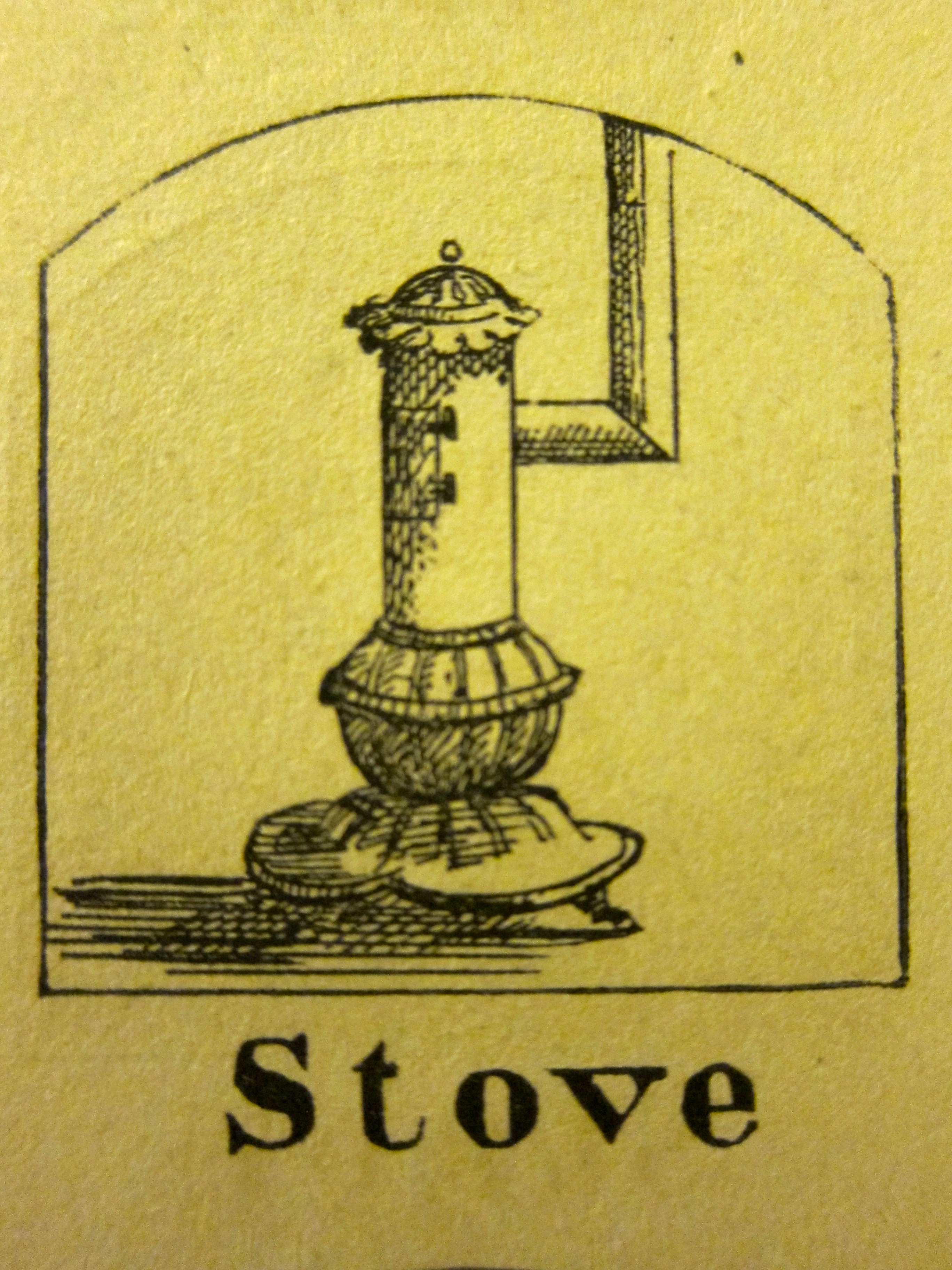
With the wind out of the north “[i]t was a cold day all day,” noted Old Oliver.  So “bitter cold” was it that after bedtime, Evelina slipped downstairs in her nightgown to check on the indoor plants. Determined that they “should not freeze,” she lit a fire in the “airtight” to keep them warm.

The airtight was another word for stove, in this case a coal stove. People often used the words stove and furnace interchangeably, so the air tight that Evelina speaks of may be the same furnace that is often lit by one of the servants. As was customary in many New England homes, it would have been allowed to burn down every night and started fresh each morning. Yet this evening was too cold to risk Evelina’s herbs and other plants being killed off, so the stove was kept going over night.

The presence of this and perhaps other stoves in the house tells us that the Ameses no longer burned wood fires in the original fireplaces, a transition in heating technology that had happened since the 1830s over most of industrialized New England. The change had provided a better, more even heating system, but at a cost. Many lamented the loss, for “the hearth had been the warm, bright center of the household, the provider of cooked food, heat and light and a symbol of the family’s shared life.”* Others, however, of whom Evelina was likely one, cheered for the added warmth and convenience of the furnace.

Jack Larkin, The Reshaping of Everytday Life, New York, 1988, p. 141
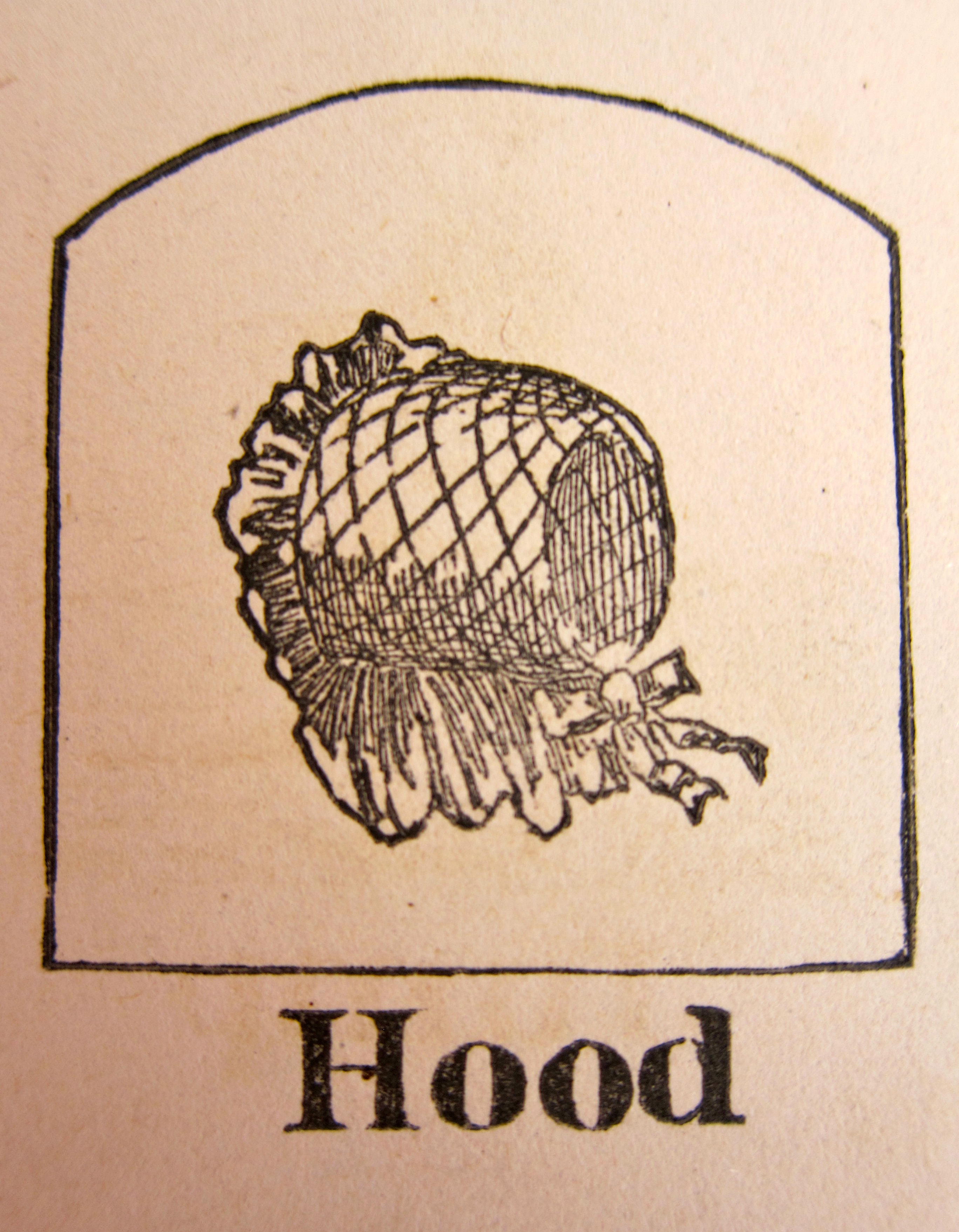
December 15, 1851

Hood

Monday Dec 15  The girls have both been washing to 

day but it was so windy they could not put their clothes

out  Jane has sewed this afternoon the bags for the

sausages  I knit on Susans hood this morning

and this afternoon commenced knitting on a little

hood for the fair  Mrs Witherell & Ames have been

in awhile and are to work for it

While her servants Jane and Mary struggled with the Monday laundry, Evelina began to knit. Her nephew, Augustus Gilmore, had fetched some yarn – or worsted, as she called it – for her on Saturday while in Boston, and she was finally able to get to it today.

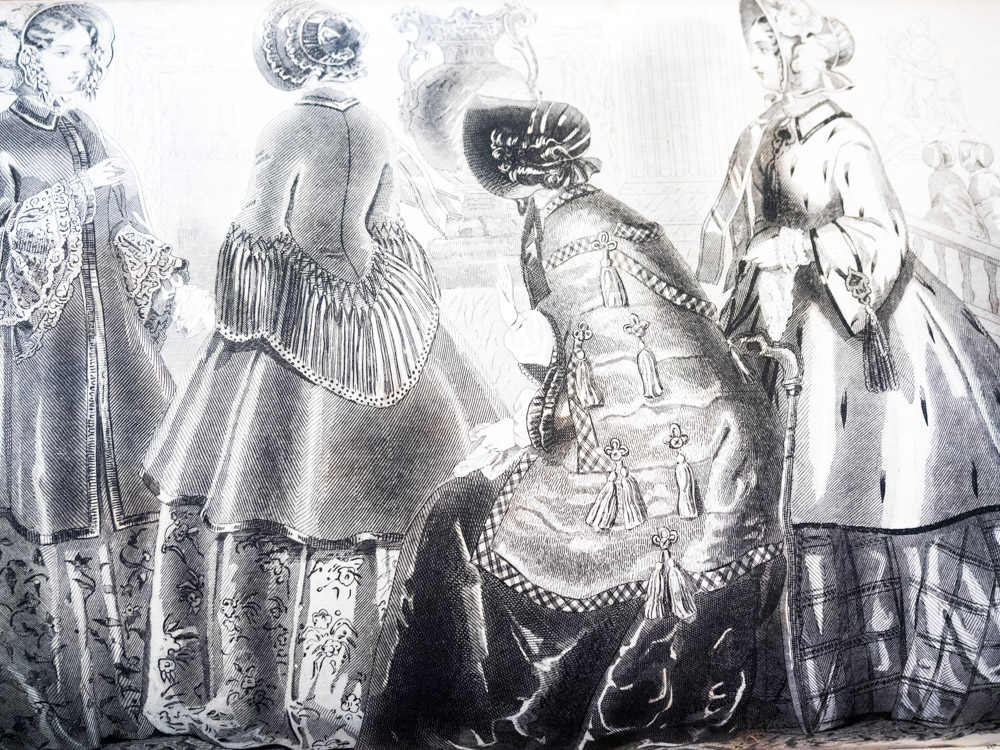
Evelina “knit on” two hoods, one for her daughter Susan and another for a church fair that was coming up. A hood might take a few different shapes, from a fitted piece that covered the top, sides and back of one’s head to one that covered the top and sides only, as in the period illustration above. The one above – which isn’t knitted, but sewn – is really just a variation of a bonnet.

Jane McHanna, too, worked with a needle today once the washing was done. She sewed some cloth bags for the pounds and pounds of sausage that had been produced on Saturday.  Sausage was usually forced into casings made from pig intestines, and this may have been the case with the pork that Evelina and Sarah Witherell produced.  But it may be that an additional cloth covering was desirable for storage or identification.  Hard to know.  Any thoughts from readers who have made their own sausages?


December 13, 1851

$(KGrHqJHJFMFJusCVdz8BSe+hz0oG!~~60_35

Sat Dec 13th  Have tried my lard cleaned hogs head

and fat and the meat ready choped & seasoned 

for filling  Have been to work all day on them

together with Jane & Mary.  Have 78 lbs meat

Mr Ames & Augustus have been to Boston.

Augustus got me some worsteds for hood

Frank & Oakes chopped my meat & Sarahs, she

had 28 lbs.

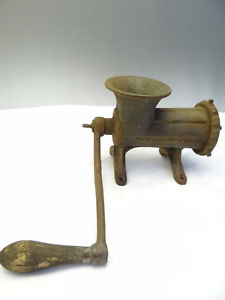
Sarah Witherell and Evelina Ames, sisters-in-law bent on taking care of some pork fresh from the slaughter of a few Ames hogs, had 106 pounds of pork between them to be turned into sausage. In addition to the capable hands of servants Jane McHanna and Mary, they had help from Evelina’s sons Oakes Angier and Frank Morton, who chopped the meat, and probably the fat, too,  into manageable chunks. Together with other ingredients – see below – the meat was forced into a grinder like the one pictured above.

Most likely, the women didn’t need to follow a recipe to make the sausage, having made it countless times before.  But if they did, they could have turned to Sarah Josepha Hale’s instructions in The Good Housekeeper.  They would have had to multiply the recipe times thirty or so:

“TO MAKE SAUSAGE MEAT. — Chop two pounds of lean with one of fat pork very fine – mix with this meat five teaspoonfuls of sale, severn of powdered sage, two of black pepper, and one of cloves.  You can add a little rosemary, if you like it”*

And sausage wasn’t the only product from the pork that Evelina, Sarah, Jane and Mary worked on.  They made lard and dressed a hog’s head. It was a most productive day in the Ames kitchen.

*Sarah Josepha Hale, The Good Housekeeper, Boston, 1841

November 23, 1851

1850-shawl2

*

Sunday Nov 23d  Jane with Michaels sister got the

breakfast this morning but after breakfast Jane 

went to bed  I could not go to church this morning

Augustus came home at noon and brought Mr

Davidson  Mrs Meader Hannah & self went

back with him  This evening sat with my shawl

& bonnet on from 6 to 8 Oclock waiting for Mr

Ames to go to Mr Swains and then took them off did not go


For the second time this month, Oakes Ames forgot to take his wife somewhere. On this occasion, they had planned to visit Ann and John Swain.  Evelina had missed the morning meeting and although they had company at noon, and she made it to the afternoon service, she was still eager to get out and socialize. As night fell, she put on her “shawl & bonnet” and waited for her husband to pick her up. He didn’t show. She “did not go.”

Evelina had been disappointed two weeks earlier when Oakes had forgotten her, but the tone of her diary entry on that day had been tolerant. This time, she was likely less forgiving. Once Oakes finally walked in the door, more than two hours late, Evelina must have let him have it. Surely she got mad. Surely they argued.

Oakes’s excuse would’ve been that he’d been off electioneering, just like the last time he forgot to fetch his wife.  The next day was another town meeting and, in anticipation, he’d obviously gotten sidetracked, probably with friends. At least Evelina could be certain that he hadn’t been out drinking; Oakes was a teetotaler. But she would have been left to wonder what the outcome would be of her husband’s absorption into politics, and how it might alter their relationship.

Jane McHanna, meanwhile, was still sick.  Evelina was not having a great week.

*Image courtesy of wwwVictoriana.com


November 10, 1851

255px-George_Sewall_Boutwell_by_Southworth_&_Hawes,_c1851_restored

George S. Boutwell, Governor of Massachusetts, 1850 – 1852

Daguerreotype by Southworth & Hawes, circa 1851


Monday Nov 10th  Election day and the whigs have got

whiped and look rather down.  It has been very

stormy.  Our new horse came home sick from town

meeting.  Oakes A, Mr Barrows & Augustus went to Taunton

this evening to carry & get the news.  Jane came home

from Mansfield to night.  Bridget is better to day

she has done the housework and I have cleaned

the shed chamber &c &c  Passed the evening at Olivers

There were full-bore politics in Massachusetts today, with the Whigs getting “whiped,” much to the disappointment of the Ames men and others. The politics of the era were untenable as the country cantered toward civil war. The Fugitive Slave Act and the Compromise of 1850, a misguided legislative expression of an unsustainable gulf between north and south, had resulted in upheaval and disarray among the existing political parties.

According to George S. Boutwell, then governor of Massachusetts, the Whigs – a pro-business, market-oriented group – had fallen into two camps over slavery: the Conscience Whigs and the Cotton Whigs.* The Conscience Whigs generally supported, and many eventually became, Free-Soilers (those who opposed the extension of slavery into new states or territories), while the Cotton Whigs held with the pro-slavery policies of the south. By 1855, a new Republican Party had risen from the ashes of the old Whigs, bringing along a few disenchanted Democrats and advocating many of the issues that Conscience Whigs had stood for. Oakes and Oliver Ames, Jr. became Republicans.

Although less well known today than fellow Massachusetts politician Charles Sumner, George Boutwell would go on to have a distinguished career, one that often involved interaction with the Ames brothers. A crackerjack lawyer by profession, an abolitionist by passion, he spent most of his life as a statesman. Besides being governor, he was, over time, the first head of the Internal Revenue Service, a member of the U.S. House of Representatives and the U.S. Senate, and Secretary of the Treasury under President Grant.  While in Congress, he would spearhead the impeachment of Andrew Johnson.

Also while in Congress, Boutwell would be approached by Oakes Ames to buy shares in the Union Pacific but, according to several period sources, he would turn the offer down because he thought it a poor investment. He left Congress in 1869 to serve as Secretary of the Treasury, a position he held during the Credit Mobilier scandal in 1873.  Ten years later, at the dedication of the Oakes Ames Memorial Hall in North Easton, Boutwell would speak in memory of Oakes, describing him as “tolerant of hostility, forgetful of injuries, and persistent in his friendships.”**

All this was ahead for the Ames men, Boutwell, and the nation.

*George S. Boutwell, Reminiscences of Sixty Years of Public Affairs, 1900

**Oakes Ames, A Memoir, 1883


November 6, 1851

OLYMPUS DIGITAL CAMERA

Winter wear from Godey’s Lady’s Book, November, 1851


Thurs Nov 6th  Worked about the house awhile this

morning and about eleven went into the

other part of the house to sit with the ladies

sewed the shirt onto my delaine dress.

Mrs Hubbell & Mrs Ames returned to New York

this afternoon  After they left Mrs S Ames &

self called on Mrs Swain & we went

to Augustus  Mr Bartlett is here will spend the night


After a morning of choring, sewing, and visiting, the Ames women were out and about this afternoon under fair skies. Houseguests Mrs. Hubbell and Almira (Mrs. George) Ames were carried to Mansfield to catch the train for New York.  No doubt they had on their best traveling dresses for the journey. They had been visiting Sarah Witherell and Old Oliver for better than a week.  Servant Jane McHanna traveled with them as far as Mansfield.

After midday dinner, Evelina joined another sister-in-law, Sarah Lothrop Ames, to pay a call on their young friend, Ann Swain.  Mrs. Swain, the wife of the new Ames clerk, John Swain, was a new mother already doting on her first-born son. There would be many visits to ooh and aah over the infant.  Similar oohing and aahing might have been dispensed at their second afternoon call, this one to Augustus Gilmore, his wife Hannah, and her three month old son, Willie.  Even if obligatory, surely these visits were preferable to the calls that the Ames women also made on the sick and the dying.


November 2, 1851

IMG_0540

1851

Sunday Nov 2d  This has been a stormy day, but this evening

has cleared off pleasant  I have been to meeting all

day & went to Mrs John Howards at noon with

Lavinia & Mother  Mr Ames came home at noon and it rained

so hard that he did not go back.  Mr Whitwell

gave us two fine sermons.  Mr Ames & self passed

the evening at Augustus.  Have made an agreement

which I hope we shall both be careful to keep.

At the end of this rainy, chilly Sunday at the start of November, “the most disagreeable month in the whole year,” according to the fictional Margaret March, eldest of Louisa May Alcott’s four sisters in “Little Women,” our non-fictional Evelina and her husband, Oakes, reached an important decision.  Unfortunately, we don’t know what that decision was.

Surely this entry is one of the most tantalizing in Evelina’s diary. She and Oakes “made an agreement” that she hoped they’d “both be careful to keep.”  What did they decide? What promises did they exchange? Oakes had been away from home a great deal lately; did their discussion stem from that? Was this the moment when Oakes determined to become involved in regional politics? Would he have needed Evelina’s approval?  If this was the case, what might he have asked of her, or offered her in exchange?

Or was the decision less historic and more pedestrian? Did their discussion have anything to do with domestic arrangements or the recent spending on the house? Were they going to exercise more prudent care of their “accounts,” as Evelina calls them? Did their agreement have something to do with their children? Did it stem from something Reverend Whitwell said in one of his “fine sermons”? What was this agreement?

And were they able to keep it?


November 1, 1851

OLYMPUS DIGITAL CAMERA

*

1851

Sat Nov 1st  This morning I patched the paper in the

bedroom that Mr Robinson papered last spring

Henrietta came about ten Oclock and left mother 

and her little girls at Augustus.  I went there this P.M.

and staid a couple of hours.  Mr & Mrs Peckham came

to the other part of the house  Mr Scott has finished

painting the parlour and has done here for the present

I paid him 12 dols, 25 cts for graining


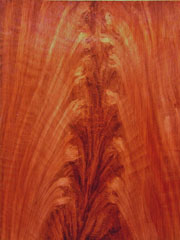
The graining of the woodwork and doors in the downstairs of the house was completed today. As noted earlier, graining is the painting of a surface to resemble wood.  In 1851, popular taste dictated that wood trim from simple pine or ash or other tree be grained to resemble a dressier wood such as mahogany, or curly maple. The illustration above, from a modern decorating company that offers “faux bois,” as graining is also known, shows a hand-painted example of flame mahogany.

The talented Mr. Scott finished his work today, for which Evelina paid him $12.25.  In today’s dollars, the “labor value” of that compensation is $2,680, according to one economic source.** That value is computed using a wage index for unskilled labor; the computation for a production worker compensation would be even higher. That Evelina made note of the expenditure in her personal journal suggests that she thought it was noteworthy – in her own opinion, she either paid too much or she got a good deal.  I suspect the former!

Social life went on as usual today. John and Susan Peckham were back in town and stopped in to see Old Oliver and Sarah Witherell. Evelina’s sister-in-law, Henrietta Williams Gilmore, came into the village from the farm and brought old Mrs. Gilmore to Mr. Torrey’s to visit Alson “Augustus” and Hannah Gilmore.  Henrietta also brought along her two youngest children, eight-year-old Henrietta Hall Gilmore and six-year-old Helen Jane Gilmore.  The two girls were actually half-sisters of 29-year-old Augustus. Their mutual parent, Alson Gilmore, had a spread of seven children from two wives.


Image of mahogany-style graining, Courtesy of http://www.statusfaux.com, Great Neck, New York.

** http://www.measuringworth.com/uscompare/relativevalue.php


October 28, 1851

fig7

*

Tuesday Oct 28.  Have been assisting Mr Scott about papering

again to day and have painted over some things

and places about the house. Finished papering the

sitting room and little entry just after dinner

Hannah called with Eddy a few moments

Mr Ames is still in Boston passed last

night there.  I spent the evening in the other

part of the house.


Yesterday’s unseasonable snow storm departed and left behind “a fair day**”  Evelina seemed not to notice the difference, focused as she was on the repapering and repainting of the downstairs of her part of the house. She was helping with the actual papering. Her husband, Oakes, was away in Boston, so her only responsibility was making sure that meals were on the table for sons Oakes Angier and Frank Morton and daughter Susan Eveline, a task she typically delegated to her servants.

Hannah Lincoln Gilmore, who was married to Evelina’s nephew, Alson “Augustus” Gilmore, paid a call with her older son Eddy. Edward Alger Gilmore was a toddler who had fidgeted more than once in his great-aunt’s parlor. He was only two years old, and probably couldn’t yet pronounce his name.

Eddy’s middle name came from his maternal grandmother, Rachel Howard Alger (1802-1823), the first wife of Alson Gilmore and mother of Hannah’s husband, Augustus.  Rachel died less than a year after Augustus was born; Augustus couldn’t have remembered her, but he clearly wished to honor her by naming his own first-born after her. The Alger family was settled in Bridgewater, Taunton, and Easton, all descendants of a Thomas Alger in the 17th century. Both Evelina and Sarah Lothrop Ames were among the hundreds of descendants in the Thomas Alger line.


* Illustration in “Scientific American”, ca. 1880, of machine production of wallpaper, New York, Courtesy of National Park Service, http://www.cr.nps.gov/history/online_books/tpsd/wallpaper.

** Oliver Ames Journal, courtesy of Stonehill College Archives


October 23, 1851

Brush

Thursday Oct 23rd   Mr Smiley Scot & Holbrook came

to paint to day.  Mr Smiley whitewashed

the parlour & sitting room & painted two

windows in the sitting room  has been to work

all day  Hannah & Eddy called this morning

Augustus & wife & self have been to the funeral

of aunt Alger this afternoon  Have passed

the evening in Olivers  Bridget ONeal came this

morning

Contractors filled the old house again today to paint and continue the refurbishment of the downstairs.  The parlor, where company met, and the sitting room, where Evelina sewed, were both being redecorated. We don’t know who Mr. Smiley and Mr. Scott were, but we believe that Mr. Holbrook’s first name was Randall; of the three men, Mr. Scott and Mr. Holbrook would continue off and on to paint various rooms at the Ames’s from this date until June, 1852.

New to this bustle of repainting was Bridget O’Neil, a servant who only arrived in the morning. She was probably taking the place of the recently departed Ellen. She was also the same Bridget who had worked for the family earlier in the year.  Where had she gone in the interim?

On a sad note, Evelina attended a funeral today for a Gilmore relative, an aunt in the Alger family. She went with her nephew and his wife, Hannah.  Later, she went next door to visit with Sarah Lothrop Ames.  Those post-tea evenings were beginning to take place after dark . Very soon tea itself would be served after the sun had gone down.  Daylight and warmth would diminish.  As Old Oliver noted in his journal , “this was a fair day wind north west and grew cold towards night.”