July 4, 1852

imgres-1

July 4 Sunday  Have been to meeting  Orinthia & Lavinia

came home with us at noon  Orinthia had a 

toothache and did not return in the afternoon

Since meeting Alson & wife came up and brought Lavinia

for her to go to Boston tomorrow  Mr Ames called with Orinthia

and self to see the rock they are splitting for the shop and we all

walked down to see the new shop  Mr Clark of Norton preached two

excellent sermons  Oakes A & Helen went to E. Bridgewater

Oakes Ames “came home from N. York”* today, having been there on shovel business; he was the company salesman. After church was over he, Evelina, and her friend, Orinthia Foss, walked down to the shovel shop to see the progress on the new stone building, the Long Shop. They checked out rock that was being split.

“[T]his was a fair cool day wind south west and a drying day…” according to Old Oliver.  It was probably perfect for haying, but it was Sunday, so no one went out to the fields. It was also the Fourth of July, but again, being Sunday, the celebration was postponed.  Fireworks would be held the next day.

Modern historian Jack Larkin describes the importance of the Fourth of July in the American calendar:

“Despite its notably awkward timing for a nation so agricultural – it came in the midst of haying in the North, corn and cotton cultivation elsewhere – Americans made the Fourth their most universal holiday. In ‘fifty thousand cities, towns, villages and hamlets, spread over the surface of America’ citizens observed rituals that varied little, firing cannons, watching parades of prominent citizens and listening to endless orations in town commons and courthouse squares. Americans probably seized their national day with particular relish because it was the only sanctioned way of taking a break from the intensive labor of midsummer…”**

And just as we read yesterday of the beginning of a courtship between Frank Ames and Catharine Copeland, so today we readers may be privy to the genesis of yet another courtship.Evelina writes that Oakes Angier Ames drove his cousin Helen Angier Ames to E. Bridgewater, but doesn’t say why. Perhaps Helen was visiting a friend from school who lived there: Catherine Hobart. This Catherine, too, was destined to become part of the family as Oakes Angier’s wife. Was this their first meeting?


Oliver Ames, Journal, Stonehill College Archives, Arnold Tofias Collection

**Jack Larkin,The Reshaping of Everyday Life, 1988, p. 275


July 3, 1852


500

Catharine Hayward Copeland Ames and Frank Morton Ames*


July 3d Sat  Was about house the greater part of the 

forenoon.  Made cake Mrs Ames Tumbler rule

After dinner helped do up the work for Hannah

to go to Bridgewater afterwards mending Susans

dresses.  Was expecting Augustus wife here & Orinthia

but they did not come.  About 5 Oclock went

into Mrs Witherells & stoped to tea.  Frank has

gone a ride to Middleboro with Cate Copeland

The bad news today was that “this was a fair cold day wind verry high a verry bad day to git in hay.”** Evelina’s father-in-law, Old Oliver, was clearly not pleased with this year’s haymaking, at least not to date. Not enough rain in the beginning to have the hay grow well and, today, too much cold wind to bring it in properly.

The regular news today included mending and baking. Evelina evidently tried a new cake recipe, using the “Tumbler rule” that she got from Mrs. Ames – probably Almira Ames, who was visiting. A tumbler was a common word for a drinking glass, which suggests that at least one of the cake’s ingredients – flour, perhaps – was measured by filling a tumbler.  Hard to say, but it must have been fun to try a new recipe for an old standard.

We get a peek into the family’s future with Evelina’s notation that her 18-year-old son, Frank Morton, went “a ride” with a girl named Cate Copeland. Cate was Catharine Hayward Copeland, daughter of Hiram Copeland, a farmer, and his wife Lurana – and a future daughter-in-law to Evelina. Cate was all of 15, but not too young to be of interest to Frank. Four years later, the couple would marry. Over the course of their lives together, in North Easton, Canton, and Boston, they would produce seven children, six of whom would survive to adulthood.

* Image of Catharine Hayward Copeland Ames and Frank Morton Ames courtesy of ancestry.com

**Oliver Ames, Journal, Stonehill College Archives, Arnold Tofias Collection


July 2, 1852

VN-24.3L


Friday July 2d  Sewed on Susans clothes & new strung

her coral necklace then went to transplanting

moss pinks and work untill noon  The gardener

has hoed & weeded my flower garden  This afternoon 

went into school with Mrs Witherell.  Mr Brown & Miss 

Clark have closed  The school appeared well.

After school went into Edwins to tea  Augustus

& wife were there came home & made a boquet of flowers


The day was sunny and windy and Evelina took advantage of practically the whole morning to work in her flower beds. She transplanted flowers with relative ease because a hired gardener had “hoed and weeded” everything for her. Wasn’t she lucky! Plus she had blossoms enough at the end of the day to arrange a “boquet” for the house.

Evelina also did some sewing for her daughter. Of particular interest is that Evelina restrung a coral necklace belonging to the girl. Susie was fortunate to own such a necklace; coral was a popular gemstone, and had been for centuries. It was colorful, exotic and could hold a high polish. By this era in fashion, such a necklace was usually sold as part of a set, suggesting that Susie may have owned a pair of coral earrings or a brooch as well. Earrings had increased in popularity as hair styles were lifted off the ears to expose the lobes, but Susie seems a little young to wear a set. Perhaps not. Having jewelry to wear was, obviously, a sign of wealth and status.

Yet Susie was still a schoolgirl, coral necklace or no, and this afternoon, school let out for summer. Susie and her cousin, Emily Witherell, were free of lessons for the time being, and they were probably happy about it. Evelina and Sarah Witherell went to the school, perhaps to get a report from the teachers or simply to acknowledge the occasion with their daughters and bring them home.


July 1, 1852


OLYMPUS DIGITAL CAMERA


Thursday July 1st  Transplanted some in the garden

this morning but there came up a shower

and put a stop to it  I then went to

mending on some of Susans clothes  Susan

was quite sick last night and not well

enough to go to school to day.  This afternoon 

Mrs Witherell S Ames A Ames rode to make calls

found all the ladies that we were to call on at Mr E Howards


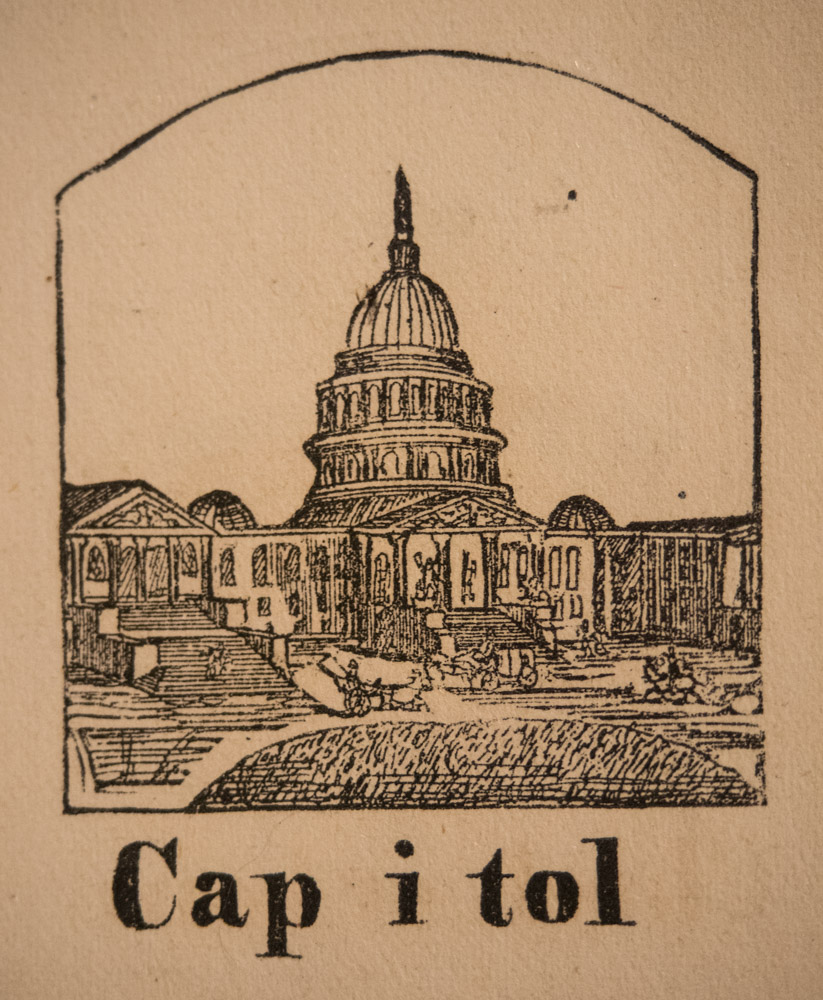
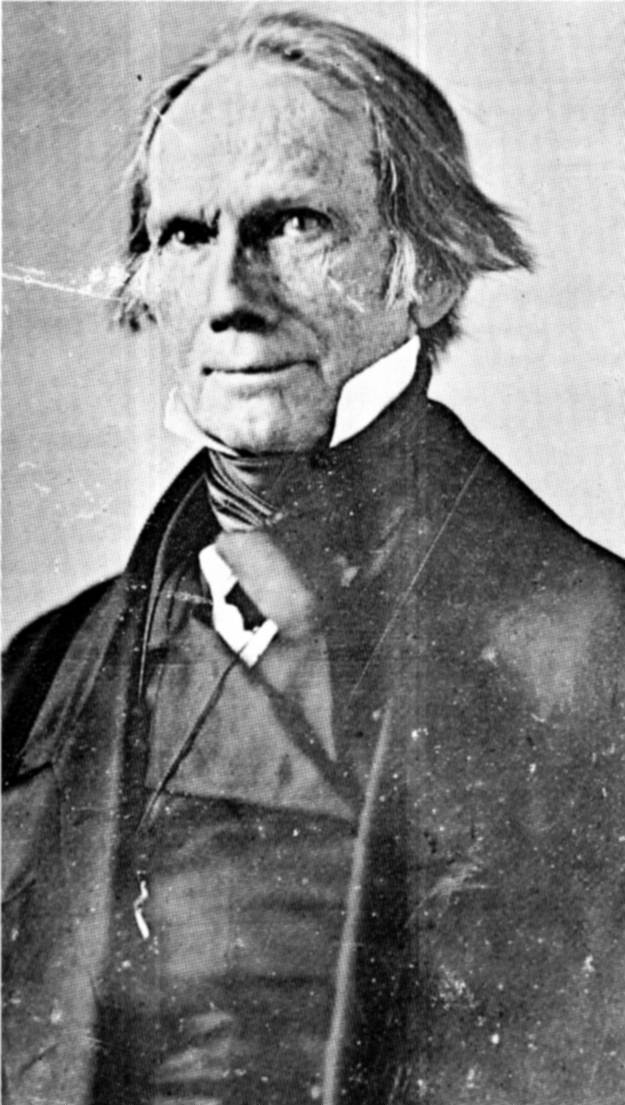
In Washington, D. C., Senator Henry Clay of Kentucky became the first person ever to lie in state in the Capitol rotunda.  A giant in his day, he had served in the House of Representatives, the Senate, and as Secretary of State. He was the man who had created the Whig Party and aspired to the presidency, who always spoke passionately for the Union and was willing to compromise to preserve it. As he himself noted in a speech in 1844, “It has been my invariable role to do all for the Union. If any man wants the key of my heart, let him take the key of the Union, and that is the key to my heart…”* He had dedicated his life to public service and the country thanked him.

The next such person to lie in state in the rotunda would be Abraham Lincoln.

Less august (but no less meaningful to Evelina) events transpired in North Easton today. Evelina, Almira Ames, Sarah Ames and Sarah Witherell “rode to make calls.” This activity marks the first time that Sarah Witherell had ventured out socially since the death of her son, George, six weeks earlier.

Old Oliver made note of the rain that had interrupted Evelina’s early morning work in the garden: “It raind a little last night + there was a little rain this forenoon it was a warm day + cloudy most of the time.”**

*Henry Clay, from 1844 speech, as quoted in “Henry Clay,” by Robert V. Rimini, New York, 1991

** Oliver Ames, Journal, Stonehill College Archives, Arnold Tofias Collection

June 30, 1852

Stage

Wednesday June 30th  Mr Ames left home this morning

for New York and Conn  Mrs James Mitchell

her mother & Grace came to father Ames & I

called into see them  Mrs Mitchell made 

quite a long call in here and at Olivers

Mrs Almira Ames came by the stage

to night from Conn she left New York

about four weeks since

Oakes Ames went to New York and Connecticut today on shovel business, as his father and wife each noted in their diaries. He wasn’t the only Ames on the road, either. Almira Ames, widow of cousin George Ames, arrived in North Easton from Connecticut and New York. Oakes probably went by “the cars,” as they called the railroad, while she definitely traveled in a stagecoach. Their separate modes of travel demonstrate the transformation that was taking place in transportation.

The railroad was moving in and would shortly become the dominant mode for long-distance transportation for the rest of the century and beyond. As Mrs. Penlimmon, a character developed by popular author Fanny Fern, opined only two years later:

‘The days of stage coaches have gone by.  Nothing passes for muster now but comets, locomotives and telegraph wires. Our forefathers and foremothers would have to hold the hair on their heads if they should wake up in 1854. They’d be as crazy as a cat in a shower-bath, at all our whizzing and rushing. Nice old snails!”*

How life was changing.

In more local traffic, Harriet Lavinia Angier Mitchell came to call with her mother and daughter on Old Oliver and Sarah Witherell in the other part of the house, on Evelina, and on Sarah Lothrop Ames next door. Mrs. Mitchell was a cousin of Old Oliver’s late wife, Susannah Angier Ames.

Fanny Fern, Fern Leaves from Fanny’s Port-Folio, ca. 1854, p. 50

June 29, 1852

22633861_126751003919

Henry Clay

(1777 – 1852)

1852

Tuesday June 29th  Have had a quiet […] sick day  have

a bad cold & cough and sick head ache

A gentleman here from Pennsylvania

to dine but I did not go to the table

Mr Bartlett here to tea from Maine

Augusta came in and cut her out a

visite & I have written to Melinda to

get some trimming for it  Ottomans came

from Boston

Evelina was sick and probably spent most of the day in bed. She didn’t eat much, missing midday dinner – with company – and possibly skipping tea, too. Perhaps she took a tray of food in her room. She must have begun to feel a bit better, however, as she eventually roused herself to cut out a “visite” for Augusta Gilmore, who came over at the end of the day.  She even wrote to her friend Melinda Orr, in Boston, to find some trim. She could get animated about a sewing project, though not much else appealed to her today.

It was “a fair warm day + verry dry,”* and probably “verry” good for the haying that was underway. Old Oliver and a team of hands would have been outdoors from sunup to sundown.

In the world beyond North Easton, a consummate, outspoken and controversial politician passed away today: Senator Henry Clay of Kentucky, aged 75, died in Washington D. C., of consumption. The Ameses wouldn’t have known this, however, until they read the next day’s newspapers. But most likely they admired Clay, the “Star of the West,” and the founder of the Whig Party. Clay’s biggest opponent back in the day had been Andrew Jackson, who called Clay “the Judas of the West.”  One imagines that Oakes Ames had probably been on the side of Clay’s admirers.

*Oliver Ames, Journal, Stonehill College Archives, Arnold Tofias Collection

June 28, 1852

Haymaking

1852

Monday June 28th  Have been about the house at

work most of the day  Swept most of the 

house except the parlour.  washed the

front stairs and have the house in pretty

good order  Mrs S Ames came in with her 

work and stoped an hour or two something

unusual for her  Hannah came to spend 

the evening but I had gone into Edwins and

she went in to see Mrs Witherell


Either Evelina felt better this morning, or her habit of working simply wouldn’t let her be idle. In the course of the morning, she swept most of the rooms and washed the stairs while her servant – Hannah Murphy, most likely- did the laundry and prepared the midday dinner. In the afternoon, Evelina at last sat down. Sarah Lothrop Ames came over – “something unusual for her” – and they visited and sewed together. Evelina was usually the one who went next door, not the other way around. In the evening, Evelina even felt well enough to go across the street to see Edwin and Augusta Gilmore.

The highlight of the day, however, had to be the commencement of haying. Old Oliver reported that “this was a fair warm day wind south west + verry dry We begun haying to day.”*  The calendar may have indicated that summer had barely begun, but everyone knew that fall and winter lay ahead. That hay would be essential. And now that haymaking had begun, perhaps Old Oliver would be less irritable with his family members.


Oliver Ames, Journal, Stonehill College Archives, Arnold Tofias Collection

June 27, 1852

??????????

Carl Christian Anton Christensen, “Interior of the Carthage Jail”*

1852

Sunday June 27  Have not been to meeting at all

to day on account of having a bad cough

Alson came here at noon with Mr

Ames  Have been reading most all

day  Augusta made a call this morning

to say she should not got to meeting

Made ice cream this afternoon


Evelina felt ill today and missed church. Other Ames family members, however, attended the Unitarian meeting. Mr. Whitwell probably led the service in the typically thoughtful but unadorned style of this Protestant sect. Other services around town, such as the Catholic mass at the chapel on Pond Street, would have been more elaborate, with communion being taken, for instance, the service in Latin, and a great focus on Christ, the Virgin Mary, and various ancient saints.

In Salt Lake City, many miles to the west, a different service altogether would have been held at the Church of the Latter Day Saints, known to most of us as the Mormon Church. Believers in Jesus Christ, the Mormons were, and are, a truly modern religious group, having only developed in upstate New York during the 1820s from the sayings and visions of their leader, Joseph Smith. Smith and others tried to lead his followers West to settle with more freedom than they had in the East, but ran into many problems and pockets of persecution along the way.

In fact, on this exact date eight years earlier (June 27, 1844), Joseph Smith and his brother Hyrum were killed by a mob while in jail in Carthage, Illinois. The illustration above is a folk painting of that murder by a 19th century artist. Smith’s followers recovered from this tragedy and found a new leader in Brigham Young (and others, known as apostles), who led them to the Great Salt Lake in Utah, where they founded Salt Lake City in 1847.  By 1852, the year that Evelina is recording in her diary, the Mormons were well established there.  In August, 1852, in fact, the elders of the church would approve the practice of polygamy, a choice that would bring them certain notoriety.** They were, and are, a sect unto themselves.

In years to come, Oliver Ames Jr. and Oakes Ames would have extensive dealings with Brigham Young over railroad matters.

Image courtesy of the Brigham Young University Museum of Art

** In 1890, the LDS would renounce the practice of polygamy.

June 26, 1852


  • hentzcl

Caroline Lee Hentz

(1800 – 1856)

1852

June 26th Saturday  Was assisting Hannah about house

most of the forenoon  Made pies & cake baked

in the small new tins  Have been mending

this afternoon and finished Marcus Warland

by Mrs Caroline Lee Hentz

Mr Ames brought home 1/4 lb black sewing

silk from Boston  I have a bad cough

Although her “bad cough” presaged an oncoming cold, Evelina managed to accomplish many domestic tasks today. Perhaps the best part of the day, however, came after the choring, baking and mending. She finished reading Marcus Warland; or, The Long Moss Spring. Tale of the South. by Caroline Lee Hentz.

Caroline Lee Hentz was an immensely popular novelist, “well known and much esteemed.”* In the 1850s, the Boston Library listed her as one of the three top writers of the day. A major literary figure, now largely forgotten, Mrs. Hentz described herself as a “Northerner who traveled and worked throughout the South for nearly thirty years.”** Though born and raised in Lancaster, Massachusetts, only fifty-odd miles from North Easton, Caroline and her teacher husband spent married life in various Southern states, opening and closing schools as they went along. They lived in Chapel Hill, North Carolina; Covington, Kentucky (across the Ohio River from Cincinnati, where they met Harriet Beecher Stowe); Alabama; Georgia; and Florida.

Unlike Mrs. Stowe, Mrs. Hentz was an apologist for slavery. In the Introduction to Marcus Warland, she wrote:

“We believe, if the domestic manners of the South were more generally and thoroughly known at the North, the prejudices that have been gradually building up a wall of separation between these two divisions of our land would yield to the irresistible force of conviction.”*** She believed not only that the institution of slavery was essential to the South’s livelihood, but that blacks were a lesser race who needed to be looked after. She was hardly alone in the latter belief.

After Mrs. Stowe’s Uncle Tom’s Cabin was published to both huge acclaim and vehement dissent, Mrs. Hentz penned a rebuttal novel entitled The Planter’s Northern Bride.  It came out in 1854 and found a wide audience. We can imagine that Evelina might have read it out of curiosity.

But today, while Evelina reclined with Marcus Warland, her old father-in-law was dependably keeping his eye on the sky and his finger to the wind.  The weather entry for today read “the 24 – 25 + 26 were fair cool days for the season + windy drying days wind north west + west most of the time.”**** This bode well for haying.

Anonymous, Southern Quarterly Review, circa 1851, quoted by Karen Tracey, Plots and Propsals, University of Illinois, 2000.

** “Caroline Lee Hentz,” Wikipedia, accessed June 24, 2015

*** Caroline Lee Hentz, Marcus Warland, 1852, p, 2

****Oliver Ames, Journal, Stonehill College Archives, Arnold Tofias Collection


June 25, 1852

hand-sewing-color-grown-cotton-pajama-pants-for-a-toddler

1852

June 25 Friday  Worked about house all the forenoon 

but can scarcely tell what I was doing but

know I wasnt idle. This afternoon have

been mending different articles Hannah

mended the stockings.  I hope she is going 

to be a pretty good girl.  Mr Whitwell called

Called at Edwins this evening  Augustus & wife

Edwin & Elisha Andrews gone to Alsons


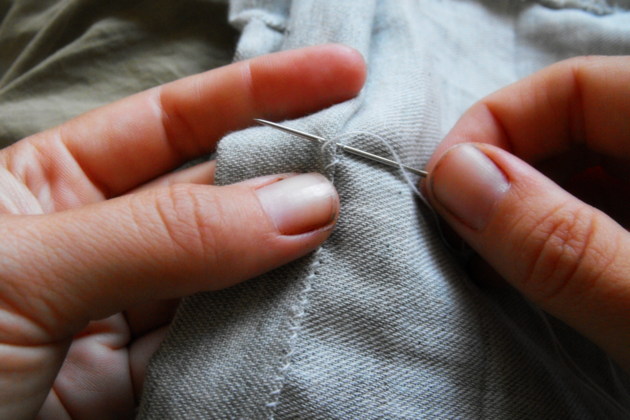
New servant Hannah Murphy was “pretty good” today helping Evelina mend the family stockings. Mending was never Evelina’s favorite duty.  She often put it off, preferring instead to head for the garden or slip next door to chat with one of her sisters-in-law. But what she seemed to prefer most of all was to sew. Cutting cloth for a new dress, or refashioning a waist in an old one, finding just the right trim for her sleeves, or making multiple buttonholes, such was her passion. Evelina loved to sew.

If Evelina had lived today rather than in the 19th century, would sewing still have been her favorite occupation? Freed from her domestic obligations as a 19th century housewife, and no longer in the thrall of the patriarchal laws and mores of the day, what could she have accomplished?  She was so tactile that it’s hard to imagine her abandoning her needle, or not using her hands. Might she have become a textile artist? A craftsperson? Or had a career in fashion?

We know that Evelina was hardworking; as she herself points out, “I wasnt idle.” Whatever career we might imagine for her to excel in, she would have committed to it as surely as she did to her domestic agenda in the 1850s. Yet the fantasy of transporting Evelina to the 21st century ultimately falls flat.  She was too much a creature of her own time and place, as we all tend to be, and not unhappy with her lot in life – even while mending.