July 11, 1852

imgres-1

Luther Sheldon 

(1785 – 1866)


July 11th Sunday  Went to meeting with Mrs A L Ames

this morning to Mr Sheldons church  The

church is just painted and looks nicely.

Their organ is good & fine ringing but they

had a most miserable preacher a stranger.

Communion at our church this afternoon  Mrs

Ames partook with them

Instead of going to her usual Unitarian service in Easton Center this morning, Evelina accompanied Almira Ames to the Easton Evangelical Congregational Society, also known as “Mr. Sheldon’s church.” Luther Sheldon was an orthodox Congregationalist, a man of “good sense and fine character”* who had once been embroiled in a difficult schism in the local church in the 1830s. This was a period when Unitarianism first developed and uprooted many Congregationalists. Sheldon and his congregation not only survived the division but, according to local historian Edmund Hands, were instrumental in keeping local rancor and partisanship to a minimum. The two separate churches settled into peaceful coexistence, and Sheldon and his wife continued to earn general approbation.

Partisanship still existed in a few pockets, however. Evelina often expressed dislike for any man of the cloth other than her own William Whitwell, and today was no exception. She might not have criticized Mr. Sheldon himself, but she had no problem slamming today’s visiting minister at the Congregational church as “a most miserable preacher.” What could he have said to earn such disdain?

For the afternoon service, Evelina and Almira returned to “our church.”

*Edmund C. Hands, Easton’s Neighborhoods, 1995, p. 131

July 10, 1852

DSC_0383

Lace doily

July 10th Saturday  Have finished Susans 5th pair of

pantletts & Mrs Witherell has given her three

more so she is pretty well off in the pantlett line

Have been marking some clothes and Mrs

Witherell marked 6 gentlemans hdkfs & 6 for

me and doylies & other things  Mary has sewed

some but does not accomplish much is better at

housework than sewing  Oakes A has gone to a

sing near Jonas Hartwells with other gentlemen

and ladies

Evelina and her sister-in-law, Sarah Witherell, sewed today: pantletts, handkerchiefs, and an item new to the repertoire: doilies.  A maid named Mary did some sewing, too, but wasn’t up to the standards set by the older women.

In the 21st century, we know doilies as decorative paper mats that are typically used to present special baked goods. Doilies can also be made from cloth or lace, however, and once had a broader range of applications than just accompanying tea cakes. Designed in the 17th century by a London draper named Mr. Doiley, the original item was an inexpensive woolen cloth that was used to ornament a dress. It developed into a napkin used to protect the material under it. It might be seen on a tablecloth, a sideboard, or even on the back of an armchair (where it became known as an antimacassar.) Beautifully-made doilies were a housewife’s source of pride, specially stored in the linen closet.

Old Oliver, no doubt entirely disinterested in the women’s sewing agenda, reported that this “was a a fair warm day wind south west. + has bin all the week.”* Oakes Angier Ames took advantage of the good weather and, after work, headed to Bridgewater to attend a sing near the farm of Jonas Hartwell “with other gentlemen and ladies.” Who were they? Did he run into anyone of interest?

*Oliver Ames, Journal, Stonehill College Archives, Arnold Tofias Collection

July 9, 1852

201000506-lemonpie-500

July 9th Friday  This day I was in hopes to pass quietly

and sew but quite early Mr Jessop & Linds 

from Sheffield and Fullerton from Boston came

and were here to dinner & tea and so

I had to go to cooking instead of sewing  Made

some Lemon & custard pies &c  It has been

excessively warm and the flies have come

in swarms  Frank went to carry the gentleman to

S Bridgewater


“[T]he thermometer was up to 96,”* recorded Old Oliver Ames in his daily journal.  “[E]xcessively warm,” indeed.  It was certainly disagreeable for Evelina to be in the kitchen baking pies on such a day, wearing an apron and a long-sleeved, full-length dress over a chemise and petticoat. Hot.

Many 19th century cookbooks carry recipes for lemon custard, lemon pie, and the like, indicating that lemons were a familiar and reliable ingredient, either imported like coffee, tea and sugar or shipped north from the southern-most states. The Shakers of Ohio, in fact, had a famous recipe for lemon pie that was more or less a tart marmalade within a crust. Evelina probably followed a recipe that was more like lemon custard inside a crust, such as the one suggested by Sarah Josepha Hale:

Boil in water, in a closely covered sauce-pan, two large lemons till quite tender; take out the seeds, and pound the lemon to a paste; add a quarter of a pound of pounded loaf sugar, the same of fresh butter heated to a cream, and three well-beaten eggs; mix all together and bake it in a tin lined with puff paste; take it out, strew over the top grated loaf sugar.*

We can imagine that the pies met the approval of the gentlemen from Sheffield and Boston who came to dinner and tea.

*Oliver Ames, Journal, Stonehill College Archives, Arnold Tofias Collection

**Sarah Josepha Hale, The Good Housekeeper, 1841, p.80

July 8, 1852


IMG_7790

1852

July 8th Thursday  This forenoon cut out a night dress

from Mrs Ames pattern and was busy in my 

chamber made some cake & ginger snaps and 

baked them in Mrs Witherells oven  This

afternoon Mrs Witherell S Ames & A Ames were

here & Helen & Emily  The gentlemen came to 

tea  Mrs Augustus Gilmore passed the evening

This was a hot day for baking, but Evelina nonetheless made “cake & ginger snaps” in her sister-in-law’s brick oven. No doubt she served some of the goodies later in the day when the Ames clan gathered for tea. There didn’t seem to be any special occasion for the tea, except that a cousin, Almira Ames, was visiting. Rather, it was perhaps Evelina’s turn to entertain the family. As Evelina’s grandson, Winthrop Ames, later pointed out, “[e]very week at least, and usually oftener, one household would invite the others and their visitors to tea; and the whole Ames family might assemble…”*

Ginger snaps were pretty standard fare at such occasions. Evelina baked them regularly. In recipes from that time, they’re often referred to as hard gingerbread. Sarah Josepha Hale includes a “receipt” for them in The Good Housekeeper from 1841:

Rub a half a pound of butter into a pound of flour; then rub in half a pound of sugar, two table-spoonfuls of ginger, and a spoonful of rose water; work it well; roll out, and bake in flat pans in a moderate oven. It will take about half an hour to bake. This gingerbread will keep good some time.**


Winthrop Ames, The Ames Family of Easton, Massachusetts, 1937, p. 128

**  Sarah Josepha Hale, The Good Housekeeper, 1841, p, 99


July 7, 1852

Funeral

1852

July 7th Wednesday  Made some muslin bands and 

partialy made a pair of sleeves to wear

with them  This afternoon have attended the 

funeral of H Gilmore  Mr Carver baptized

their child Helen. Mr Sanford made some

remarks and not very good in my opinion.

We returned from the grave to aunt Gilmores

and stopt to tea  Adoniram & wife & Mr & Mrs

Whitwell were there, Mr Carpenter & Jones called

there

Wearing black armbands, Evelina and her family attended the funeral of her cousin, Henry Tisdale Gilmore. Just shy of 36, he had died the day before of the “fits.” We might imagine that Henry was epileptic and died from a sudden seizure. He left behind a 30-year-old widow, Chloe, and a young daughter, Helen.

This branch of the Gilmores lived in Raynham, a town to the south of Easton. Cassander Gilmore, Henry’s older brother, manufactured shoes; Henry had been his partner. Now Cassander’s son, Othniel (one of many with that name), took Henry’s place. Cassander was well-known and well respected in the area, having served as state representative and state senator. He was a first cousin to Evelina on her father’s side, and it was he who summoned the Ames family to the funeral.

Evelina saw various relatives at the funeral, naturally, including her widowed aunt, Sally Gilmore. Reverend William Whitwell and his wife, Eliza, too, attended the funeral, but didn’t participate in the service. The local minister, Robert Carver, baptized the young Helen while another minister, Mr. Sanford, read a eulogy. Ever loyal to her own minister, Evelina found the latter’s remarks were “not very good.”


July 6, 1852

500px-Illinoisoldcapitol

Old State Capitol Building, Springfield, Illinois, built 1839

1852

July 6th Tuesday  Was very busy sewing this forenoon

Mary made the sleeves to my purple cambric

calico and sewed the drugget for the sitting

room  This afternoon have been into Olivers

to tea with Mrs Witherell & Mrs Ames &c &c

Mr Jones from Foxboro called.

Received a note from Cassander Gilmore that 

Henry died this morning requesting us to attend the funeral 


In the statehouse in Springfield, Illinois, a practicing lawyer and former U. S. Representative named Abraham Lincoln gave a eulogy today for Henry Clay, the Senator from Kentucky who had just passed away. Clay had been Lincoln’s idol, his “beau ideal of a statesman.”* In 1832, Lincoln cast his first presidential vote for Clay; in 1844, he campaigned for Clay and served as an elector from Illinois. Clay’s influence on Lincoln would be life-long.

On the occasion of Clay’s death, Lincoln spoke for some time, quoting at length a laudatory editorial which lamented “that never again that majestic form shall rise again in the council-chambers in his country to beat back the storms of anarchy which may threaten, or pour the oil of peace upon the troubled billows as they rage and menace around…” Lincoln then moved on to his own simpler words. He praised Clay for his wisdom, eloquence, and perseverance, noting that “Mr. Clay’s predominant sentiment, from first to last, was a deep devotion to the cause of liberty – a strong sympathy with the oppressed everywhere, and an ardent wish for their elevation.”*

In the town of Easton, Massachusetts, on this same day, Evelina received a letter asking for her presence at a different funeral. Her cousin Henry Gilmore of Raynham had died this very morning, as his brother Cassander Gilmore wrote to say, and she and her family were pressed to attend the funeral the next day.


* henryclay.org

July 5, 1852


Motto_frederick_douglass_2

Frederick Douglass

(1818 – 1895)

1852 July 5th Monday  Orinthia & Lavinia went to Boston with

lots of others this morning  Orinthia is going to Maine 

on a visit  Mary came to sew or to see what she

can do. I have been sewing some to day and hope 

now that I shall be able to [do] more than I have

Have finished my brown muslin.  Augusta

has been here in this afternoon and this evening

we have been to see the fire works at Mr Russels

The nation was 76 years old. The Fourth of July having fallen on a Sunday, however, the celebration of it was deferred to Monday. Thus Evelina and Oakes and, no doubt, their sons and daughter went to Mr. Russell’s tonight to watch some fireworks. Others traveled into Boston, perhaps to see the fireworks there.

Mr. Russell may have been Edwin Russell, a shoemaker. The Ameses knew the family, certainly, as all three sons had attended a funeral back in January for Edwin’s father, Frank. If it was Edwin who hosted the fireworks, his may not have been as elaborate as those that would be seen in Boston, but he was following a tradition established by John Adams at the very beginning of the republic.

In a letter to his wife, Abigail Adams, on July 3, 1776, John Adams described his grand vision for a commemoration of the nation’s birthday.  It was to be celebrated “with Pomp and Parade, with Shews, Games, Sports, Guns, Bells, Bonfires and Illuminations from one End of the Continent to the Other from this Time forward forever more.” His vision was realized by 1777 when both Philadelphia and Boston – and other cities or towns, perhaps – set off Fourth of July Fireworks. A tradition was born.

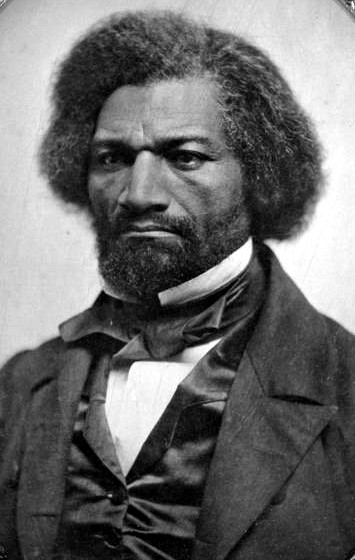
Not everyone celebrated the nation’s birthday, however, as Frederick Douglass, probably the country’s most prominent African-American, pointed out on this date* in a speech now famously known as “What to the Slave is the Fourth of July?”  He said:

“I am not included within the pale of glorious anniversary! Your high independence only reveals the immeasurable distance between us.  The blessings in which you, this day, rejoice are not enjoyed in common. The rich inheritance of justice, liberty, prosperity, and independence, bequeathed by your fathers, is shared by you, not by me.  The sunlight that brought light and healing to you, has brought stripes and death to me. This Fourth July is yours, not mine.  You may rejoice, I must mourn.”**

Douglass eloquently  described the fissure between white lives and black, yet he did “not despair of this country. There are forces in operation which must inevitably work the downfall of slavery…” ** He rightly predicted its elimination, but even he could not have predicted the carnage and destruction that the end of slavery would cost.

Frederick Douglass, “What, to the Slave, is your Fourth of July?,” various dates cited for this speech: July 5, 1852 or 1854.


July 4, 1852

imgres-1

July 4 Sunday  Have been to meeting  Orinthia & Lavinia

came home with us at noon  Orinthia had a 

toothache and did not return in the afternoon

Since meeting Alson & wife came up and brought Lavinia

for her to go to Boston tomorrow  Mr Ames called with Orinthia

and self to see the rock they are splitting for the shop and we all

walked down to see the new shop  Mr Clark of Norton preached two

excellent sermons  Oakes A & Helen went to E. Bridgewater

Oakes Ames “came home from N. York”* today, having been there on shovel business; he was the company salesman. After church was over he, Evelina, and her friend, Orinthia Foss, walked down to the shovel shop to see the progress on the new stone building, the Long Shop. They checked out rock that was being split.

“[T]his was a fair cool day wind south west and a drying day…” according to Old Oliver.  It was probably perfect for haying, but it was Sunday, so no one went out to the fields. It was also the Fourth of July, but again, being Sunday, the celebration was postponed.  Fireworks would be held the next day.

Modern historian Jack Larkin describes the importance of the Fourth of July in the American calendar:

“Despite its notably awkward timing for a nation so agricultural – it came in the midst of haying in the North, corn and cotton cultivation elsewhere – Americans made the Fourth their most universal holiday. In ‘fifty thousand cities, towns, villages and hamlets, spread over the surface of America’ citizens observed rituals that varied little, firing cannons, watching parades of prominent citizens and listening to endless orations in town commons and courthouse squares. Americans probably seized their national day with particular relish because it was the only sanctioned way of taking a break from the intensive labor of midsummer…”**

And just as we read yesterday of the beginning of a courtship between Frank Ames and Catharine Copeland, so today we readers may be privy to the genesis of yet another courtship.Evelina writes that Oakes Angier Ames drove his cousin Helen Angier Ames to E. Bridgewater, but doesn’t say why. Perhaps Helen was visiting a friend from school who lived there: Catherine Hobart. This Catherine, too, was destined to become part of the family as Oakes Angier’s wife. Was this their first meeting?


Oliver Ames, Journal, Stonehill College Archives, Arnold Tofias Collection

**Jack Larkin,The Reshaping of Everyday Life, 1988, p. 275


July 3, 1852


500

Catharine Hayward Copeland Ames and Frank Morton Ames*


July 3d Sat  Was about house the greater part of the 

forenoon.  Made cake Mrs Ames Tumbler rule

After dinner helped do up the work for Hannah

to go to Bridgewater afterwards mending Susans

dresses.  Was expecting Augustus wife here & Orinthia

but they did not come.  About 5 Oclock went

into Mrs Witherells & stoped to tea.  Frank has

gone a ride to Middleboro with Cate Copeland

The bad news today was that “this was a fair cold day wind verry high a verry bad day to git in hay.”** Evelina’s father-in-law, Old Oliver, was clearly not pleased with this year’s haymaking, at least not to date. Not enough rain in the beginning to have the hay grow well and, today, too much cold wind to bring it in properly.

The regular news today included mending and baking. Evelina evidently tried a new cake recipe, using the “Tumbler rule” that she got from Mrs. Ames – probably Almira Ames, who was visiting. A tumbler was a common word for a drinking glass, which suggests that at least one of the cake’s ingredients – flour, perhaps – was measured by filling a tumbler.  Hard to say, but it must have been fun to try a new recipe for an old standard.

We get a peek into the family’s future with Evelina’s notation that her 18-year-old son, Frank Morton, went “a ride” with a girl named Cate Copeland. Cate was Catharine Hayward Copeland, daughter of Hiram Copeland, a farmer, and his wife Lurana – and a future daughter-in-law to Evelina. Cate was all of 15, but not too young to be of interest to Frank. Four years later, the couple would marry. Over the course of their lives together, in North Easton, Canton, and Boston, they would produce seven children, six of whom would survive to adulthood.

* Image of Catharine Hayward Copeland Ames and Frank Morton Ames courtesy of ancestry.com

**Oliver Ames, Journal, Stonehill College Archives, Arnold Tofias Collection


July 2, 1852

VN-24.3L


Friday July 2d  Sewed on Susans clothes & new strung

her coral necklace then went to transplanting

moss pinks and work untill noon  The gardener

has hoed & weeded my flower garden  This afternoon 

went into school with Mrs Witherell.  Mr Brown & Miss 

Clark have closed  The school appeared well.

After school went into Edwins to tea  Augustus

& wife were there came home & made a boquet of flowers


The day was sunny and windy and Evelina took advantage of practically the whole morning to work in her flower beds. She transplanted flowers with relative ease because a hired gardener had “hoed and weeded” everything for her. Wasn’t she lucky! Plus she had blossoms enough at the end of the day to arrange a “boquet” for the house.

Evelina also did some sewing for her daughter. Of particular interest is that Evelina restrung a coral necklace belonging to the girl. Susie was fortunate to own such a necklace; coral was a popular gemstone, and had been for centuries. It was colorful, exotic and could hold a high polish. By this era in fashion, such a necklace was usually sold as part of a set, suggesting that Susie may have owned a pair of coral earrings or a brooch as well. Earrings had increased in popularity as hair styles were lifted off the ears to expose the lobes, but Susie seems a little young to wear a set. Perhaps not. Having jewelry to wear was, obviously, a sign of wealth and status.

Yet Susie was still a schoolgirl, coral necklace or no, and this afternoon, school let out for summer. Susie and her cousin, Emily Witherell, were free of lessons for the time being, and they were probably happy about it. Evelina and Sarah Witherell went to the school, perhaps to get a report from the teachers or simply to acknowledge the occasion with their daughters and bring them home.