December 21, 1851

Toasted rice blancmange


Sunday Dec 21st  My cough and cold is much better but not

well enough for me to go to meeting  Oliver is sick

with the rheumatism there was no one to meeting

from there  All the rest went.  I spent the forenoon

in making ice cream, blanc mange &c  have written

a letter to Brother John & wife.  About 8 Oclock went

into the office with Mr Ames   Mr Swains brother came 

in awhile  Checked over our account since May

A “pritty cold,” quiet Sunday, which Evelina spent productively. She missed church; her cold was better, but her cough wasn’t.  Next door, her brother-in-law Oliver Ames, Jr., was ill with rheumatism.

Evelina had some milk or cream on hand that she needed to use up, so she made not one but two dairy desserts: Ice cream, which seems ill-calculated to please on such a cold day, and blancmange, which was also served chilled.  Blancmange is a traditional, simple dessert made with milk, flour and sugar, poured into a mold to set. Sometimes used medicinally for sore throats, it was a popular treat in the 19th century.

Once the desserts were put away in the coldest area of the house (the shed? the buttery?), Evelina went to her desk and wrote a letter to her oldest brother, John Gilmore, and his wife, Eliza.  She hadn’t seen them since their brief visit back in June.

In the evening, Evelina walked across the yard to the office, where her husband and his brother usually met in the evening to go over the day’s business. On this occasion, however, with Oliver, Jr., under the weather, Oakes Ames was likely there by himself. Husband and wife sat together in rare, private companionship before being joined by an acquaintance.


December 20, 1851

unnamed Dec 20 Saturday  Have been very busy all day working

on different articles  Mended some clothes

for Frank, the stockings and mended the

places that were cut & bound the end of

some pieces of carpeting Jane finished the 

second robin that she has made for Frank

Mr Ames brought home some marble rubber

and lining & ribbon for Susans bonnet   ”


[T]his was a fair day and not verry cold” was the weather report from Old Oliver Ames. It was a normal Saturday at the Ames’s house in all respects. Evelina mended clothes, darned socks and repaired some carpeting.  Jane McHanna sewed, too, having recovered from an acute indisposition caused by coal the day before. She finished a “robin” (which one reader suggests was a kind of tough work pants) for Frank Morton Ames, Evelina’s youngest son.

Oakes Ames went into Boston, as usual, for a weekly check-in with shovel customers, after which he went shopping for his wife. From a list Evelina must have given him, he made his way along Washington Street and around Faneiul Hall, probably knowing just which shop to go to for such-and-such ribbon or a well-priced bolt of flannel. He returned to North Easton laden with parcels wrapped in paper and tied with string.

December 19, 1851

Coal

Dec 19th Friday  After breakfast went to making

my citron made quite a long job of it nearly two before it

was all done had about 14 or 15 lbs  The coal

affected Jane so much that she nearly fainted 

and had to go to bed & I had to get dinner

After I got through with the citron I put

the things back into the store room from the

shed chamber & put it in order  Spent eve at Olivers

Coal was the fuel of choice at the Ames compound, but it had some negative aspects (beyond its environmental impact, a more modern concern.) Dust and smoke from burning coal was noxious, its particulates containing toxins like lead, mercury and arsenic.  Yet much of America was turning to coal for fuel to support the growth of manufacturing and the expanding rail traffic, and to replace the use of wood in homes.

While working in the kitchen making candied citron, Jane McHanna was overcome by the coal smoke and smell.  She went to bed to recover, leaving Evelina at the stove to finish up and make dinner. No doubt Evelina was concerned for the health of her servant, but no doubt she was somewhat peeved to be doing Jane’s job again.

Citron, meanwhile, was the fruit of choice for fruitcake.  Not as familiar to us nowadays as it was in 1850, it was cooked and candied and used for special baking.  Both Evelina and Jane would have known how to cook it down.


December 18, 1851

62834-004-ED8B9BE0


A Delaine Sheep

Dec 18 Thursday  Finished the back of Susans hood

and finished the blue and orange deLaine

for self that Julia cut a new waist for last spring

Mary left this morning said she was going

to Bridgewater for her clothes   It is bitter cold and 

I fear she will suffer  Jane has finished two

prs of cotton flannel drawers for me that she

has been sewing on since she was sick

Another “fair cold day;”* not an ideal time for the servant, Mary, to travel from North Easton to her home in Bridgewater.  Whether she rode or walked, she must have been quite exposed and have become sick, for she didn’t return to the Ames household for the rest of the winter. She only reappears in Evelina’s diary the next July, working by that time for Alson and Henrietta Gilmore at their farm.  What prompted her departure?  Was she homesick for family in Bridgewater, or tired of working at the Ames’s house?

Sewing was today’s occupation of choice for Evelina and her remaining servant, Jane McHanna. Evelina picked up an unfinished project from the previous spring, one that she had nearly finished with help from local dressmaker, Julia Mahoney.  It was a “blue and orange deLaine,” meaning that it was a print or plaid, fine-weave, challis-like wool dress, one that would be of service in this cold weather. The wool itself came from a type of Merino sheep known as a Delaine (as in, “of wool” in French.) Jane, meanwhile, sewed some flannel underclothes for Evelina, who would be warmly dressed once these articles were finished.

Next door, in the other part of the house, a man named Holman Johnson, probably visiting on shovel business, stayed the night.

*Oliver Ames Journal, Stonehill College Archives, Arnold Tofias Collection


December 17, 1851

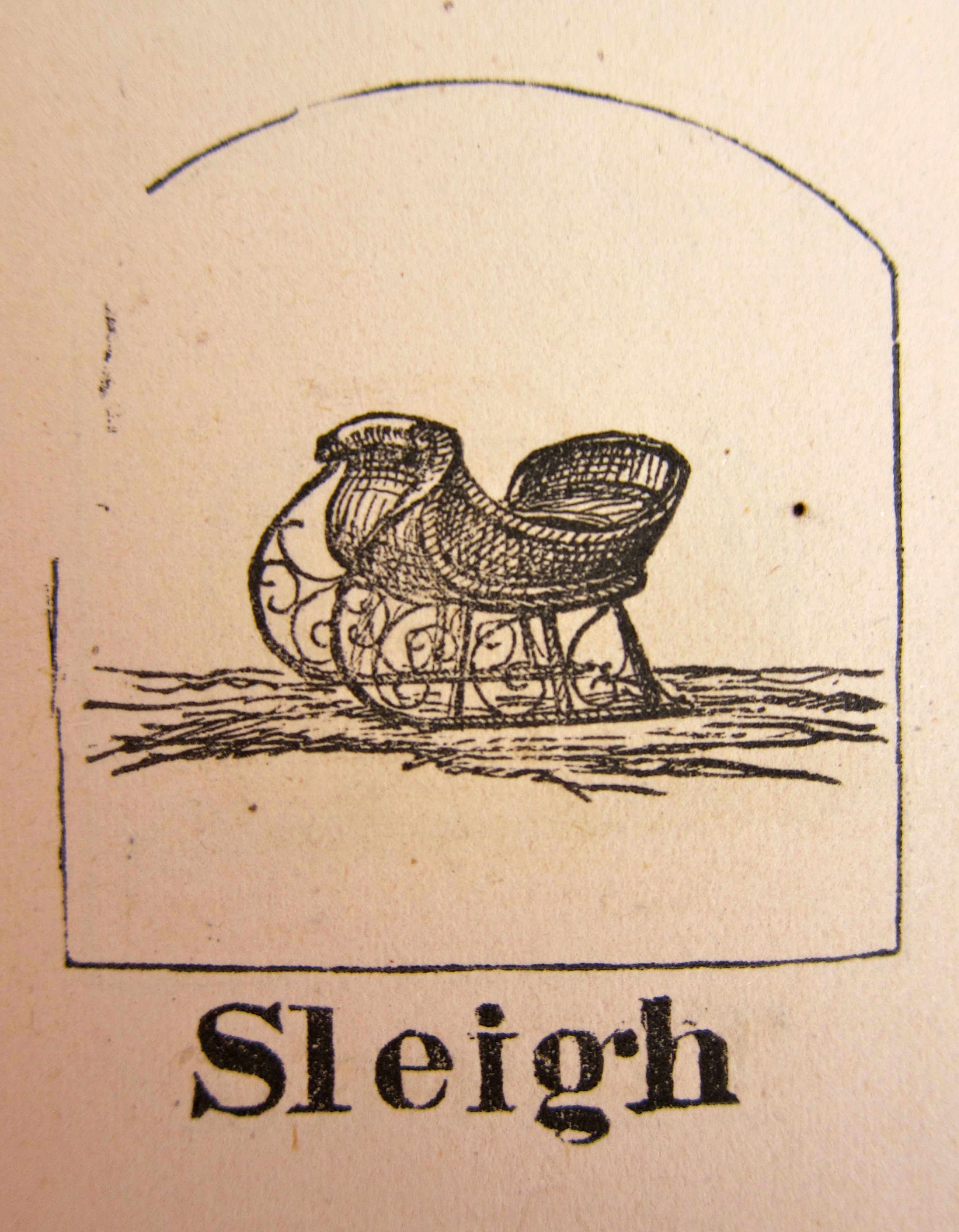
Sleigh

Dec 17th  Wednesday.  Mary went to ironing this

morning and Jane did the housework and I have been

knitting on Susans hood have got the front done and 

commenced the back  Abby spent the afternoon

& Malvina came in past eight  Jane ironed 7

shirts this afternoon  Very cold weather

Old Oliver Ames didn’t always agree with his senior daughter-in-law, but on this day he and she shared the same opinion about the temperature outside. “[T]he coldest day we have had this winter,” he wrote in his journal. Not surprising that Evelina and her servants stayed inside and focused on their indoor domestic responsibilities. All three women seemed to have recovered from their recent colds and illness and they probably wanted to keep it that way.

Some people went outside, though.  Evelina’s nieces, Abby and Malvina Torrey, spent part of their day with her.  They must have walked over from the village – a short walk, fortunately, in the windy, freezing sunshine.  Other Eastonians who were out and about would have moved around best in their sleighs, as a buildup of snow had hardened into a smooth, slick surface on the roadways.  Old Oliver himself may have gotten around that way.  He noted that “light slays run pritty well now.”


December 16, 1851

OLYMPUS DIGITAL CAMERA


From Godey’s Lady’s Book, October, 1851, Outfits for the Fair 

Tuesday Dec 16  Have finished the hood for the fair

Mrs Witherell has made a Dolls hood & half

dozen linen collars.  Mrs Ames a hood & childs apron

Mr & Mrs Reed called on Mrs Witherell for the 

things and made a long call  Mrs S Ames

& self went to see her.  She brought some

things she made such as dolls comforters bonnets &c

Mrs Howard & Miss Jarvis made eight straw hats

How productive the Unitarian women had been lately.  Sarah Witherell, Sarah Ames, Abigail Reed and others had sewn or knitted many small items like collars and doll clothes to sell at what must have been a church fair. Both Sarahs were planning to work, or perhaps preside, at the event.  Why wasn’t Evelina going to work at it? Had she been asked? Had she declined? Did she care particularly?

For whatever reason, Evelina was less involved in the church fair than either Sarah.  Her sisters-in-law had sewn a number of articles between them to donate, while she herself only made one small hood.  Was her small contribution a reflection of disinterest in the event?  Was she too busy at her domestic responsibilities to take the time?  Was it against her inclination to make things to give away?

Evelina admired the pieces that others had made, but it would seem that either the fair itself didn’t interest her or she felt left out of the goings-on. She never mentioned the fair again, which suggests that she didn’t even attend it.


December 15, 1851

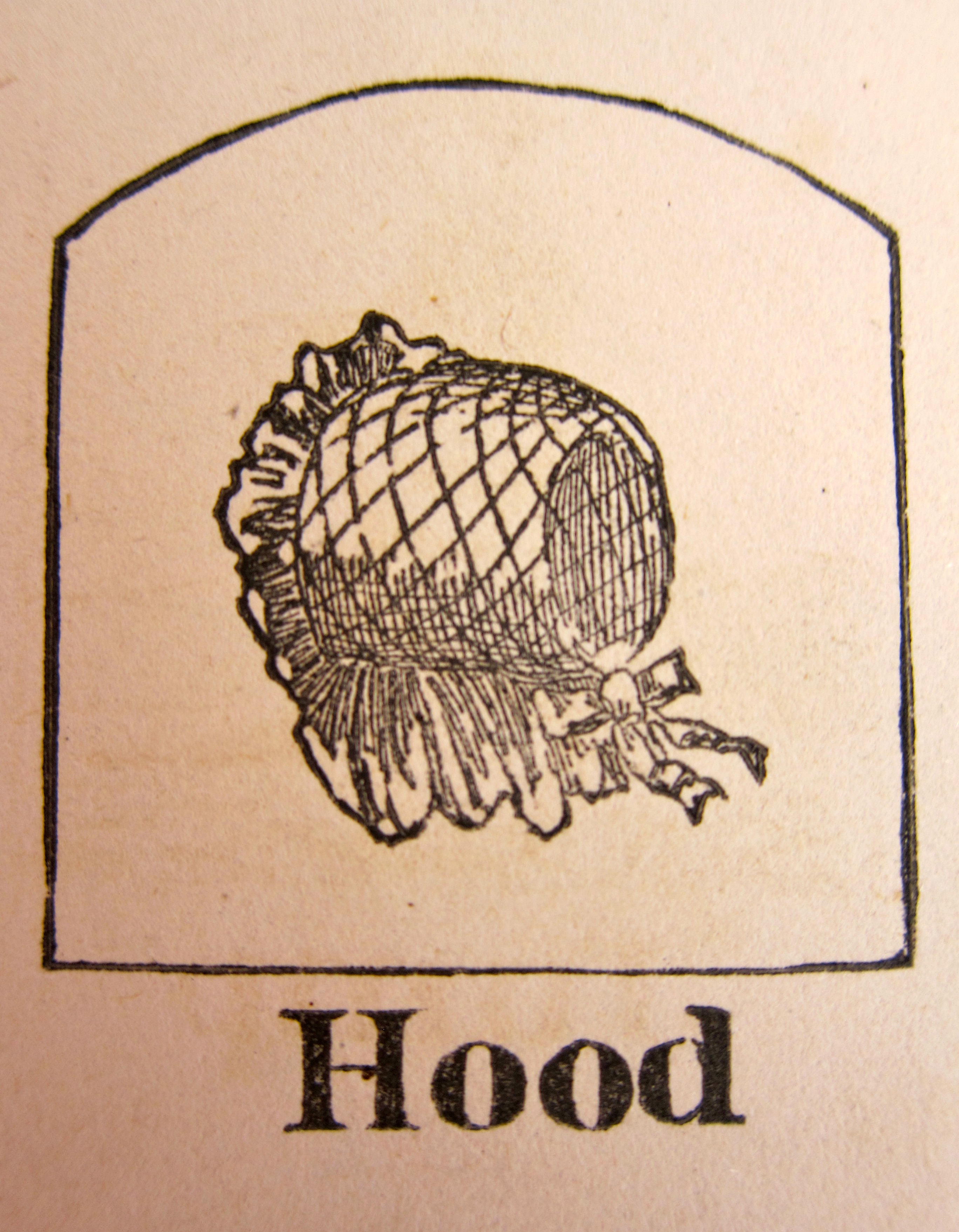
Hood

Monday Dec 15  The girls have both been washing to 

day but it was so windy they could not put their clothes

out  Jane has sewed this afternoon the bags for the

sausages  I knit on Susans hood this morning

and this afternoon commenced knitting on a little

hood for the fair  Mrs Witherell & Ames have been

in awhile and are to work for it

While her servants Jane and Mary struggled with the Monday laundry, Evelina began to knit. Her nephew, Augustus Gilmore, had fetched some yarn – or worsted, as she called it – for her on Saturday while in Boston, and she was finally able to get to it today.

Evelina “knit on” two hoods, one for her daughter Susan and another for a church fair that was coming up. A hood might take a few different shapes, from a fitted piece that covered the top, sides and back of one’s head to one that covered the top and sides only, as in the period illustration above. The one above – which isn’t knitted, but sewn – is really just a variation of a bonnet.

Jane McHanna, too, worked with a needle today once the washing was done. She sewed some cloth bags for the pounds and pounds of sausage that had been produced on Saturday.  Sausage was usually forced into casings made from pig intestines, and this may have been the case with the pork that Evelina and Sarah Witherell produced.  But it may be that an additional cloth covering was desirable for storage or identification.  Hard to know.  Any thoughts from readers who have made their own sausages?


December 14, 1851

330px-Mayor_B_Seaver

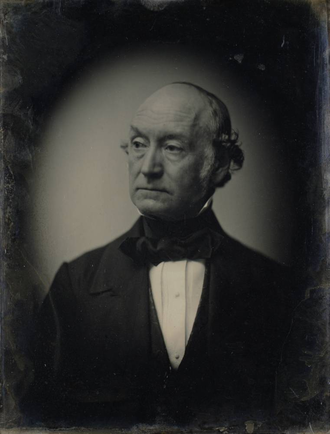
Benjamin Seaver

Mayor of Boston, 1852 – 1854

Sunday 14 Dec  Have not been to meeting to day on

account of my cough.  Jane went to meeting 

at eight Oclock got breakfast before she went.

I have been writing and reading

Mr Swain & wife have spent the evening here

Mr Swains brother has been there a week or two

I have not seen him  The babe grows very 

fast and is a great wonder

In an unusual occurrence for a Sunday in New England in the 19th century, an election – or an announcement of the results of an election – was held on this day.  A new mayor, Benjamin Seaver, was elected to govern the City of Boston, a post he would hold through 1853. He was a Whig, one of that dying breed whose successful election surely gave the Ames men a lonely branch to cling to in the swirling flood of new political parties.

According to modern historian Jim Vrabel, Seaver won with 3,300 votes and defeated Dr. Jerome Smith and Adam Thaxter. (Only men voted in the election, of course.) Seaver was noteworthy for his interest in erecting a public library for the city. During his administration, a committee would be formed, plans (some already in the works) developed, a first librarian hired, and private funding obtained for the project.

At the same time that Seaver came in, “the entire Board of Aldermen” were voted out, “reportedly for refusing Daniel Webster” – a hometown favorite – ” use of Faneuil Hall because an abolitionist group had earlier been denied its use.”* Webster had advocated for passage of the Fugitive Slave Act, something for which abolitionists never forgave him. Just goes to show that the issue of slavery informed all levels of political intercourse in this decade before the Civil War.

On the home front, besotted new parents Ann and John Swain spent the evening with Evelina and Oakes, talking about their son.  Evelina seemed smitten, too, writing that the baby boy was “a great wonder.” Like the new mayor and the Board of Aldermen, however, she and that baby’s parents couldn’t know what sorrow lay ahead.


Jim Vrabel, When in Boston, Boston, p. 157

December 13, 1851

$(KGrHqJHJFMFJusCVdz8BSe+hz0oG!~~60_35

Sat Dec 13th  Have tried my lard cleaned hogs head

and fat and the meat ready choped & seasoned 

for filling  Have been to work all day on them

together with Jane & Mary.  Have 78 lbs meat

Mr Ames & Augustus have been to Boston.

Augustus got me some worsteds for hood

Frank & Oakes chopped my meat & Sarahs, she

had 28 lbs.

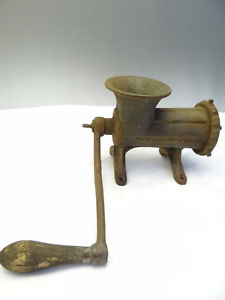
Sarah Witherell and Evelina Ames, sisters-in-law bent on taking care of some pork fresh from the slaughter of a few Ames hogs, had 106 pounds of pork between them to be turned into sausage. In addition to the capable hands of servants Jane McHanna and Mary, they had help from Evelina’s sons Oakes Angier and Frank Morton, who chopped the meat, and probably the fat, too,  into manageable chunks. Together with other ingredients – see below – the meat was forced into a grinder like the one pictured above.

Most likely, the women didn’t need to follow a recipe to make the sausage, having made it countless times before.  But if they did, they could have turned to Sarah Josepha Hale’s instructions in The Good Housekeeper.  They would have had to multiply the recipe times thirty or so:

“TO MAKE SAUSAGE MEAT. — Chop two pounds of lean with one of fat pork very fine – mix with this meat five teaspoonfuls of sale, severn of powdered sage, two of black pepper, and one of cloves.  You can add a little rosemary, if you like it”*

And sausage wasn’t the only product from the pork that Evelina, Sarah, Jane and Mary worked on.  They made lard and dressed a hog’s head. It was a most productive day in the Ames kitchen.

*Sarah Josepha Hale, The Good Housekeeper, Boston, 1841

December 12, 1851

tumblr_n6j6ijphsb1rly06do1_500

Dec 12 Friday  I am no better than yesterday & my cough

is increasing.  Have been mending most all day

Took a piece out of a comforter that the cat

had been on  Hannah called a few minutes

Mr Talbot brought home the sausage chopper

that he borrowed yesterday and Orville borrowed 

it and has brought it home this evening

Mary has been sick most all day talked of leaving

A cat! Today’s entry is the only mention in Evelina’s diary of the existence of a pet at the Ames house. There may have been some feral cats in the Ames barn, keeping the rodent population down, but the way this entry is written suggests that this cat was more of a household pet. And this pet “had been on” (what might that mean!) an old comforter or quilt, and had done enough damage to warrant the piece being removed. While the cat was no doubt indifferent to the fate of the comforter, Evelina was concerned enough to repair it.

Evelina was “mending most of the day,” which meant she was finally sitting down and holding relatively still. For several days, she had been indoors and out, painting and varnishing, kneeling and bending, and challenging herself to ignore her cold. No wonder her cough was “increasing.”  Her newest servant, Mary, had taken sick, too.

Neighbors were making sausage, and Evelina and Sarah Witherell would be doing that, too, in a day or two. Old Oliver had slaughtered four hogs a little over a week earlier, most of which he sold. But some of the pork made its way into the various Ames kitchens, and now the Ames wives and daughters would be putting it away.