April 23, 1851

Thumb

1851

Wednesday April 23d  Julila Mahoney here again to day making

Susans dark plaid print & borage delaine dresses.  I have

been sewing with her but have had many interruptions

Mr Whitwell called, Jane has cut her thumb very

bad, the nail is most off  have done it up in

borax  Carried my work awhile & sat with Mrs S Ames

Susans print dress most done It is quite pleasant

after so much bad weather

Abraham Lincoln coined an adjective that didn’t outlast his use of it, but it seems apt for the kind of day that Evelina had: “interruptious.”  While wanting only to sew, Evelina had to cope with unanticipated diversions throughout the morning. Julia Mahoney, the dressmaker, sat in a chair and sewed, surrounded by various cuts of cloth from two different dresses. Jane McHanna, probably while in the kitchen preparing food, almost cut the nail off her thumb, causing bleeding that would not have been easy to stop, and putting her out of commission for the day, at least. Reverend Whitwell called – probably instantly wishing he had chosen a different day to pay a visit.  The scene would be farcical were it not for the pain Jane obviously suffered with her thumb.

Evelina treated Jane’s thumb with borax, a mineral that we might think more properly used in detergent. To Evelina, borax was evidently a familiar way to stop bleeding and bind a cut.  Other home remedies for cuts, according to Lydia Maria Child, respected author and consummate advisor on household concerns, suggested treatment with an application of salt or molasses. In her book, The American Frugal Housewife, Child also recommended “Balm-of-Gilead buds bottled up in N.E. rum” as “the best cure in the world for fresh cuts and wounds. Every family should have a bottle of it.”

After the domestic drama of the morning, Evelina had a quieter afternoon. She spent some time with her sister-in-law, Sarah Lothrop Ames, who was still quite sick.  She probably took a deep breath of sweet spring air as she walked next door to see the invalid, welcoming the sunny change from all the recent rain.

April 13, 1851

200px-First_Unitarian_Church_in_1886

*

1851

April 13th Sunday.  Have been to church all day Frank

staid at home in the morning Mrs G Ames went

with us to meeting all day and liked Mr Whitwell

I staid at noon with Mother most of the time

Called at Mr Whitwells with Louisa Howard

Mrs Dr Deans & Mrs H Pool. Mrs Whitwell

has no help now & is not very well. rather cold

On this cold spring day, the Ames family, minus Frank Morton, went to church with Almira Ames, widow of Oakes’s cousin George Ames.  Perhaps Almira joined Evelina and her mother during the midday intermission when many women were welcomed into the parsonage by Eliza Whitwell, wife of the minister. Eliza was under the weather but still was under a social obligation to open her house to fellow Unitarians who could not get home and back during the pause between the morning and afternoon services.

Mrs. Dr. Deans, otherwise known as Hannah (Wheaton) Deans, wife of Dr. Samuel Deans, was also present at the Whitwell’s.  The “Dr.” title in front of her name didn’t mean that Hannah was a physician; far from it. It meant that she was married to a physician.  She was a daughter of old Daniel Wheaton who lived out on the Bay Road.

Evelina often admired Rev. Whitwell’s sermons but seldom related their content. In these tumultuous months following the enactment of the Fugitive Slave Law, did Mr. Whitwell ever speak about slavery or abolition? We know that other Unitarian ministers were quite vocal about abolishing slavery.  On this same Sunday in Philadelphia, three hundred miles to the south, Rev. William H. Furness gave a discourse on the Fugitive Slave Law, speaking from the pulpit with all the authority that his robed position could give him.  A graduate of Harvard and friend of Ralph Waldo Emerson, Furness was, like William Whitwell, an accomplished theologian.  He was also a passionate abolitionist; was Reverend Whitwell?


*First Unitarian Church of Philadelphia, ca. 1886

April 6, 1851


800px-Martin_W._Carr_School_-_Somerville,_MA_-_DSC03412

*

1851

April 6 Sunday.  Have been to meeting all day, and 

as usual heard two excellent sermons from

Mr Whitwell.  It rained very hard while

we were going and has rained fast all day.

Edwin called after meeting & Martin Carr &

a Mr Davenport from Attleborough.  Oakes & Oliver

called at Mr Bisbees with them

The Ames family went to both church services today and, as Evelina had come to expect, heard “two excellent sermons” from Rev. Whitwell. Despite the rain, the Ameses had visitors this afternoon. Friends of Oakes Angier and Oliver (3) called: cousin Edwin Williams Gilmore, and friend Martin Carr, who brought a Mr. Davenport with him. The young men all went out together.

Martin W. Carr was the son of “Uncle Caleb” Carr, a long-time employee of the shovel shop, and brother of Lewis Carr, the young man who died back in January from consumption. The family was descended from Robert Carr, an early governor of Rhode Island.

Martin would find his own claim to fame.  A jeweler by profession, he went on to found M. W. Carr and Company, maker of knick-knacks and souvenirs, including “gold and silver jewelry, hairpins, belt and shoe buckles, button hooks and garter belts […] matchbooks, cigarette cases, ashtrays, hatpin holders, letter openers, souvenir spoons, ink stands, magnifying glasses, lamp shades, bud vases, napkin rings and trays with imprints of the homes of American authors such as Emerson, Longfellow and Hawthorne.”**  The factory was a mainstay of Davis Square in the City of Somerville, and Carr himself a prominent citizen involved in many civic activities.  The city honored him in 1898 by naming an elementary school after him. The Easton boy made good.

* Martin W. Carr School, 1898, Somerville, Massachusetts, National Register of Historic Places, now condos.

**Somerville Journal, 1894/Coldwell Banker

April 3, 1851

pork-pie_2180207b

1851

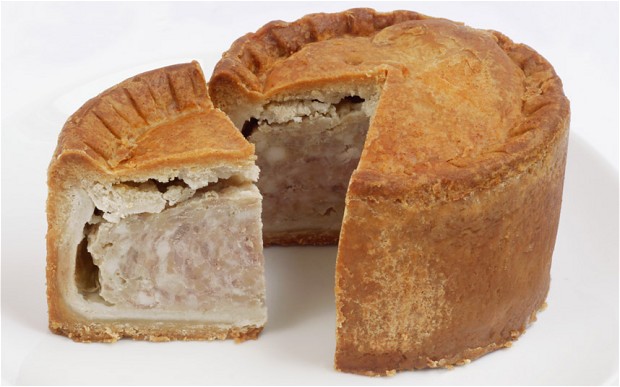
April 3  This morning went quite early to baking in the brick

oven made mince & dried apple pies two custards brown

bread three large pork pies & ginger snaps. Alson here

to dine.  Henrietta & the two little girls dined at Mr Torreys

& were all here to tea  This Evening we all went to the 

dancing school.  Mr Whitwell called a few minutes

this afternoon & Mrs S Ames  Quite Pleasant

Small wonder that pork pies were on the menu, after Evelina and Jane McHanna spent all of yesterday processing a freshly-“kild” pig. Once again in the kitchen with her apron on, Evelina turned today to baking. As usual, she baked a large quantity of goods in the brick oven that she shared with her sister-in-law, Sarah Witherell. About every ten days or two weeks – or every fortnight, as they might describe it – one or both women would bake up a storm of pies, cakes, bread and cookies, enough to last until the next big baking.

Mince meat pies, brown bread and ginger snaps regularly featured in Evelina’s baking. These are the first pork pies to appear, however.  New, too, are the dried apple pies. Gone by now are the apples in the barrel that was delivered in January from the Gilmore farm, the one that was kept locked in the cellar so that the sons of the house wouldn’t eat up the fruit. Any apples that remained were from a group that must have been dried the previous fall for just this purpose, to provide a little fruit in an otherwise barren season.  By this time of year, housewives had to rely on preserves and dried fruit for variety in the family diet.

The Ames had company for tea: another sister-in-law, Henrietta Gilmore, and her two youngest children, little Henrietta and little Helen, made a rare visit from the Gilmore farm. These two youngest nieces of Evelina are about the same age as little Susie, yet they don’t get much mention in the diary.  They probably lived too far away for regular play time. Mr. Whitwell, the highly-regarded Unitarian minister, paid a call today, too.  Pleasant spring weather was bringing people out of the houses to visit.


March 26, 1851

Sweep

1851 March 26 This morning Orinthia & myself gave a thorough

sweeping & dusting to sitting room entry & then I 

went to mending stockings  Mother & myself passed

the afternoon at Olivers with Mr & Mrs Whitwell.

Mrs S Ames & Mrs Witherell spent the evening

here  I finished the shirt that I commenced 

for Oliver on Monday.  It has been a delightful day

Mud season, as they call it in New England, had arrived and thus a daily sweeping of the floor and carpet was essential. Dust and mud entered the house on the bottoms of boots and shoes when anyone came in the door.  Once this messy passage from winter to spring had safely passed, it would be time for spring cleaning.

Meanwhile, the ladies in the Ames compound on Main Street were socializing among themselves. Evelina took her mother next door to Sarah Lothrop Ames’s house in the afternoon and visited with William and Eliza Whitwell, who were calling.  In the evening, both sisters-in-law came over to visit with her.  The ladies sewed – Evelina still working on shirts, this one for her middle son – and chatted.

The men were not present for this girls’ night in.  Oliver Jr. was in New Jersey on business and, if Oakes were in town, he would have been over in the office, as was his wont.  Years later, Winthrop Ames, grandson to Oakes and Evelina, would note in his description of family life in Easton in 1861:

“Usually […] Oakes, Oliver junior and their sons went to the office in the evening to catch up with their correspondence (all letters were written and copied by hand), discuss business together and go over accounts with the head bookkeeper.”

Whether working or playing, the Ames family members spent this quiet evening en famille.

March 9, 1851

Down_in_the_Cave_Church_Pews_Company_Town_Exhibition_Coal_Mine_Beckly_WV_8576_(7536218802)_(2)

/51

March 9  Sunday  Have attended meeting all day.  Mr

Whitwell gave us two excellent sermons particularly the

afternoon  William is here & went to meeting.  came

Friday morning  I spent the intermition with Mrs Elijah

Howard at the meeting house very pleasantly indeed.

After meeting looked over some of the old Saturday

Couriers  Edwin made a call is about sick with a cold

It is quite pleasant, but snow on the ground & bad

traveling

Evelina and Oakes saw Oakes’s younger brother William at church, probably for the first time since William had returned to town. The relationship between the two brothers was not cordial, but the families sat together in the same pew (or set of pews, given the size of the extended family) and could hardly have avoided one another.

As usual, Evelina enjoyed listening to Mr. Whitwell’s sermons.  She enjoyed the “intermition” between the morning and afternoon service at the church, too.  She spent it sitting with Nancy Howard, mother of Ellen Howard on whom Evelina had called earlier in the week.  The formality of the times shows in Evelina’s referring to Nancy not by her first, or Christian, name, but by her husband’s name. Even in her own journal, writing of friends, Evelina maintained the nomenclature of “Mr.” and “Mrs.”  Formality of address was second nature to her, as it was to most well-bred people of the day.  Even husbands and wives typically referred to one another as “Mr.” and “Mrs.” when speaking in the third person.

Oakes Ames must not have gone into Boston the day before or, if he did, he failed to return with the latest magazines.  For her reading that night, Evelina opted to look over old issues of  The Saturday Courier .  Where was this paper published?  Not in Easton, not in Boston.  Bridgewater? Canton? Stoughton? Taunton? Does any reader know about this newspaper?

It also may be that Oakes was away from Easton this week.  He often traveled to other nearby states for the shovel company, taking orders and collecting accounts, a task that his middle son, Oliver (3), would eventually take on.

*Photo from Down in the Caves Church Pew Company.

March 2, 1851

Church

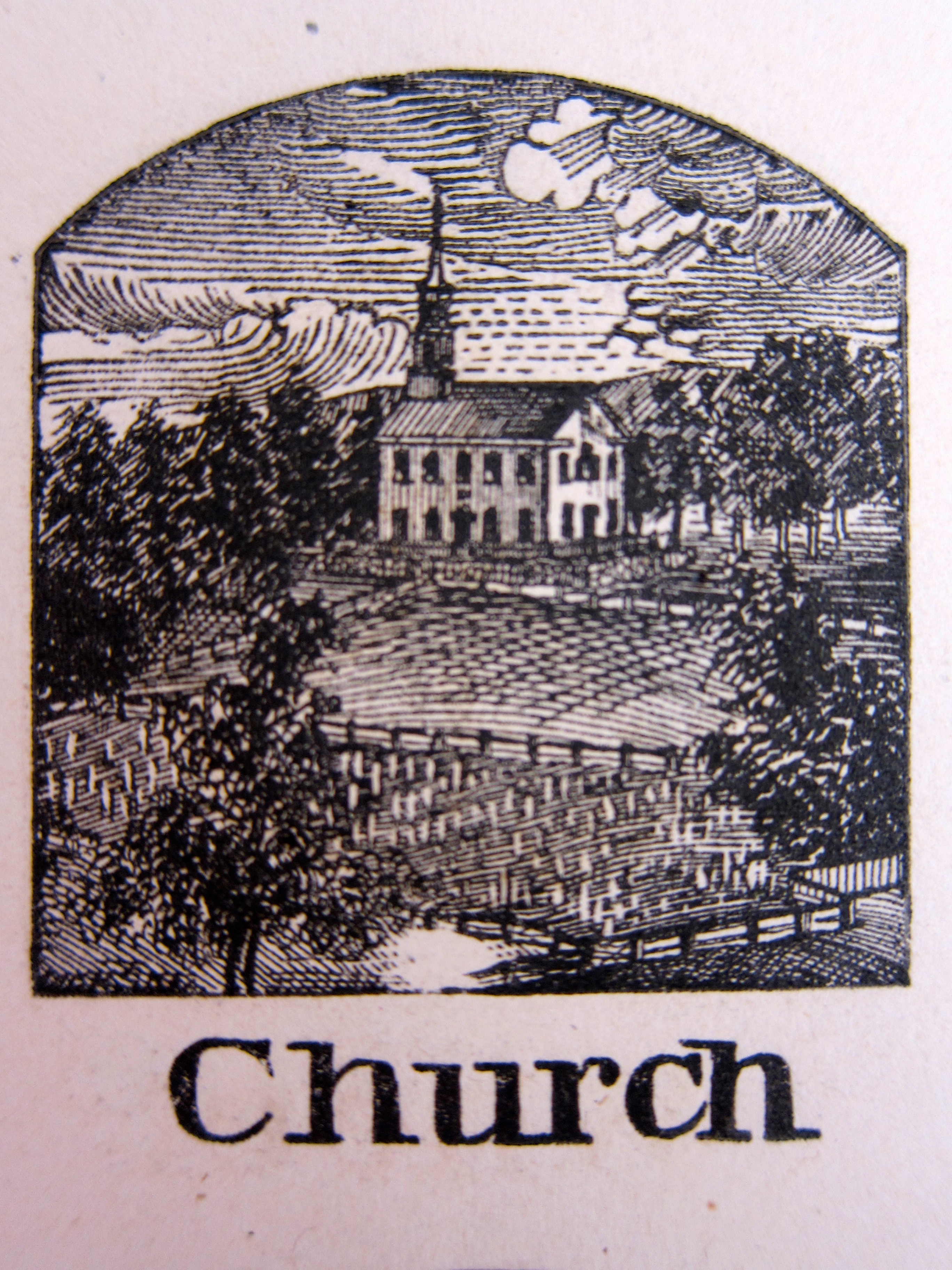
March 2nd  Sunday.  Have been to meeting all day.  Mr Whitwell read

notes for Mr Guilds family  His text in the morning was

I would not live alway  It was an excellent sermon.

In the afternoon his sermon was for the male part

of the congregation.  The good man of the house.

An excellent sermon for my dirty boys if they

would only profit by it.  This evening commenced

reading Woman’s Friendship.  Rather pleasant but cold

Evelina went back to church today for the first time in three weeks.  She had been absent since February 10, the week that she hosted a Unitarian Sewing Circle meeting to which no one came.  To her diary she cited a bad cough as reason for her absence.   On this Sunday, she had finally recovered from that cold.  She had also, evidently, regained her dignity.  Back to church she went and sat right down in the family pew.

Her attention was focused on Reverend Whitwell and his thoughtful words.  She wouldn’t live “alway,” and in the meanwhile she had to work on her sons to become better people.  What did she think of her sons to describe them as “dirty boys?” What did Mr. Whitwell mean, “the good man of the house?”  Did her own good man of the house, Oakes, pay attention to this sermon?

Oakes Ames was actually known for sleeping in church, according to town historian, Reverend William Chaffin.  Chaffin charitably suggested that “Mr. Ames was so hardened with business affairs that he invariably went to sleep in church during the sermon.”  Chaffin also remembered that Oakes Ames stayed awake during his own maiden sermon in North Easton.  Used to seeing Oakes with his eyes closed, someone in the congregation that day chided him about it, to which Oakes replied with typical bonhomie, “Well, I knew Mr. Chaffin was here as a candidate for settlement, and I had to keep awake the first Sunday to see if his preaching was safe enough to sleep under.”


February 26, 1851

exps42325_TH1443683D45C

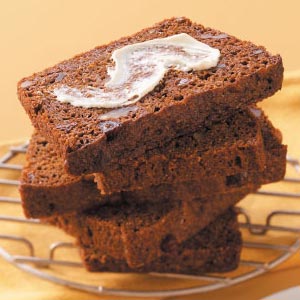
Feb 26  Wednesday.  Have been baking  Heat the oven twice

made 18 mince pies.  Cake brown bread & ginger snaps

Mr Whitwell called & brought home some books.

I called to see Miss Eaton this afternoon she has failed

very much since I saw her nearly two weeks since.  Mrs. 

Wright is sick with the pleurisy & lung fever, both have watches

Abby & Malvina spent this evening here   The boys have

all gone to the meeting house to a sing  Pleasant & mild

A[u]gustus here to dine

Eighteen mincemeat pies! Hard to fathom a domestic pantry, pie safe or cold shelf  that could hold 18 mince meat pies all at once, let alone an oven that would bake even half that number at one time.  Cake, cookies, and bread, too.

The brown bread that Evelina baked today was a staple of the New England kitchen, and was made from some combination of Indian (corn) meal and rye.  While other geographic areas of the United States, like the south, the mid-Atlantic and the expanding west, had turned to wheat as their preferred grain for baking bread, Yankee housewives, “who valued and esteemed brown bread as the food of their Puritan ancestors,*” held to the familiar cornmeal and rye.  So it was in Evelina’s kitchen.

According to Sarah Josepha Hale, who published The Good Housekeeper in 1841, brown bread was “an excellent article of diet for the dyspeptic and the costive.”   Mary Peabody Mann, in Christianity in the Kitchen pronounced brown bread to be “a nutritive bread, though inferior in this respect to wheat,” and agreed that it produced “a laxative effect upon the system.”  Lydia Maria Child, author of The American Frugal Housewife, liked brown bread for its economy and tradition.  She advised that it “be put into a very hot oven, and baked three or four hours.”

After she got away from the cook room, Evelina was visited by Reverend Whitwell who either borrowed some books from her or lent some to her – the passage is unclear. Both of their homes must have housed a collection of books, and borrowing and sharing was common.  A decade or so earlier, Easton had boasted of two or three lending libraries but these institutions had pretty well ceased to operate.  Other, better organized libraries would be formed later that century, but in 1851, if someone wanted a book to read, he or she borrowed it from a friend or bought the publication.

In the neighborhood, Miss Eaton was still failing and now, under the same roof,  Mrs. Wright, mother of Harriet Holmes, was believed to be dying, also.  Neighbors were helping Mrs. Holmes with the care and feeding of the two invalids.

*Judith Sumner, American Household Botany, 2004, p. 48

February 21, 1851

Bed

1851  Feb 21  Friday  It stormed so hard & so dark that Mr & Mrs

Whitwell spent last night with us & returned

home about 8 Oclock this morning  Lavinia &

myself have been sitting quietly sewing.

Susan is all engaged making Labels for the shop

has cut quite steady all day.  Helen brought her work in, and staid two

or three hours but I could not prevail on her to stop to tea

Bridget has hired a bed & bedstead

The family business, O Ames and Sons (as it had been known since 1844 when Old Oliver handed over two-thirds of the reins to his sons Oakes and Oliver Jr.) was just that: a family business.  The Ames men all had rolls to play in its operation, from manufacturing to sales to management.  On this day in 1851, it appears that an Ames female had a roll to play, too.  Little eight-year old Susie Ames spent the day making labels for the shop.  Presumably, this meant she was cutting out printed labels to be affixed to individual shovels.  Did she sit at a table in the kitchen or the dining room, paper and scissors in hand?  Was she paid for this effort, or was this just a rainy day game for her?  Who thought this up?

While Susie wielded scissors, the women wielded needles, of course.  Evelina and her niece, Lavinia Gilmore, kept each other company as they sewed and were joined for a few hours by Helen Ames from next door.  Although Lavinia, aged 19, lived in the country and Helen, aged 14, lived in town, the two young women, distantly related by marriage, were friends.

Lavinia was in town visiting her aunt Evelina.  Last night, Mr. and Mrs. Whitwell stayed over, unable to return home because of bad weather.  A new servant, Bridget, had just ordered a bed and bedstead for herself. In a two-family house already filled with ten people, not including servants, where did everybody sleep? People surely doubled up; Oakes Angier and Oliver (3), for instance, shared a bedroom and probably a bed. Although this practice, too, was disappearing, many houses of the period still kept beds in their parlors; apparently the Ames did this, so perhaps that was where the Whitwells spent the night.

The difference between a bed and a bedstead was simply that the former included only the mattress and linens (also known as bedding), while the latter was the frame on which to put the mattress.  This verbal distinction was beginning to disappear at the time, but it was still useful in an era when some people – servants, particularly – only had bedding on which to sleep.  A mattress could be rolled up and moved around, a wooden frame could not.  Bridget showed hope or confidence in her place in the household when she ordered a bedstead as well as a bed.

February 20, 1851


images-1

Feb 20th  Thursday  This morning sat down to sewing quite

early with Lavinia.  worked for Susan and she

sewed some with us  Sent George after Mr & Mrs

Whitwell about one Oclock.  Mr Whitwell attended 

the funeral of James Wells child  Commenced 

raining quite hard & this evening is very dark

The boys & Lavinia & Susan have gone to the 

dancing school at Lothrop Hall

The Thursday evening assemblies, or dancing school, continued. On this occasion, Oakes Angier, Oliver (3) and Frank Morton took their cousin, Lavinia Gilmore, and little sister, Susie, with them.  How exciting for Susan to go along to watch the young men and women dance; probably exciting for Lavinia, too.  She was at the marriageable age of nineteen and, in the manner of the day, was probably hoping to marry soon.  Getting off the farm for a week to stay with her aunt Evelina in the village of North Easton was an opportunity to socialize and perhaps meet someone special.  Did anyone ask her to dance?  Did her male cousins watch out for her?  Did she like what she wore?

Elsewhere in Easton life was not so light-hearted.  Reverend Whitwell officiated at a funeral for the infant son of James and Celia Wells.  James and his brother John, for whom the little boy was named, worked at the shovel factory.  They were originally from Maine.

And, being February, the weather took a dive for the worse.  The young people’s ride home from Lothrop Hall must have been disagreeably wet.  Mr. and Mrs. Whitwell, who had evidently stayed for tea after the funeral, were unable to get home and had to spend the night at the Ames’s house. Young George Witherell was spared the challenge of carrying them back to the parsonage in the dark, windy downpour.