November 2, 1851

IMG_0540

1851

Sunday Nov 2d  This has been a stormy day, but this evening

has cleared off pleasant  I have been to meeting all

day & went to Mrs John Howards at noon with

Lavinia & Mother  Mr Ames came home at noon and it rained

so hard that he did not go back.  Mr Whitwell

gave us two fine sermons.  Mr Ames & self passed

the evening at Augustus.  Have made an agreement

which I hope we shall both be careful to keep.

At the end of this rainy, chilly Sunday at the start of November, “the most disagreeable month in the whole year,” according to the fictional Margaret March, eldest of Louisa May Alcott’s four sisters in “Little Women,” our non-fictional Evelina and her husband, Oakes, reached an important decision.  Unfortunately, we don’t know what that decision was.

Surely this entry is one of the most tantalizing in Evelina’s diary. She and Oakes “made an agreement” that she hoped they’d “both be careful to keep.”  What did they decide? What promises did they exchange? Oakes had been away from home a great deal lately; did their discussion stem from that? Was this the moment when Oakes determined to become involved in regional politics? Would he have needed Evelina’s approval?  If this was the case, what might he have asked of her, or offered her in exchange?

Or was the decision less historic and more pedestrian? Did their discussion have anything to do with domestic arrangements or the recent spending on the house? Were they going to exercise more prudent care of their “accounts,” as Evelina calls them? Did their agreement have something to do with their children? Did it stem from something Reverend Whitwell said in one of his “fine sermons”? What was this agreement?

And were they able to keep it?
 

October 26, 1851

1421516038_22078acff3

*

Sunday Oct 26.  John Ames from Springfield is here at

fathers came last night.  We have all been

to meeting  Mr Whitwell preached two

excellent sermons.  Went at intermission

into Mr John R Howards with Mother and several

others  The first time I have called since

they moved.  It has rained since eleven this

morning, quite hard.

For the first time since September 21, Evelina attended church; even the “hard” rain couldn’t keep her away. She surely was pleased to be back in the family pew, head tilted up to listen to Reverend Whitwell’s “excellent” sermons, happy to visit with friends and acquaintances at intermission. The opportunity to congregate at church was central to Evelina’s social life, and she was quick to catch up.  Her visit at intermission with John and Caroline Howard was her first visit to their new home.

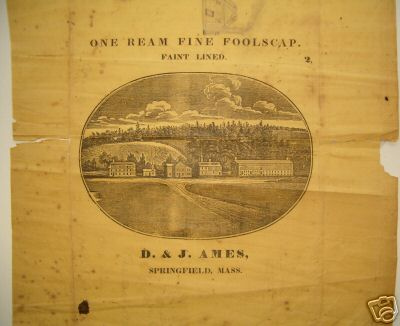
A cousin from Springfield, John Ames, was visiting in the other part of the house. There were several relatives named John Ames with close ties to Old Oliver, including his father and a brother. This John Ames was, most likely, a nephew of Old Oliver, the son of Old Oliver’s much older brother David. His dates were 1800-1890. He was famous for certain inventions pertaining to the manufacture of paper and with a brother, also named David, ran the Ames Paper Company in Springfield. According to one 20th century historian, “[f]rom the outset the firm, which became known as D. and J. Ames, prospered wonderfully, making money rapidly and growing until it was one of the largest and most powerful in the country.”**

A life-long bachelor, John Ames lived with a sister, Mary, and the two managed the family farm well into their old age. Oliver Jr. writes of visiting them in Springfield in 1871. The families stayed in touch.Yet Old Oliver made no mention of his nephew’s visit.  Instead, in his journal, he noted only that “it was cloudy all day to day + raind some in the day time + in the evening + night ther was considerable.” He was more interested in the rain which, given the fact that rain meant more water and more water meant more power for the factory, was perhaps understandable.

Image courtesy Benjamin L. Clark, Massachusetts Book Trade

**Lyman Horace Weeks, The History of Paper-manufacturing in the United States, 1690-1916, New York, 1916, p. 125

October 19, 1851

OLYMPUS DIGITAL CAMERA

Sunday Oct 19  Last night was very stormy, rained very fast

and heavy wind.  This evening is very pleasant

but it has rained all day so that none of the 

family went to meeting  Alson came after Lavinia

about three Oclock  I have been reading most

all day “Olive”  It is rather interesting but wish 

I had spent the day more profitably

Evelina’s father-in-law, Old Oliver Ames, also recorded the day’s bad weather in his daily journal: “it began to rain last night + this morning there is a north eas[t] storm + the wind blows verry hard. it stormed nearly all day but was clear at night – there was an inch + a half of water fell”

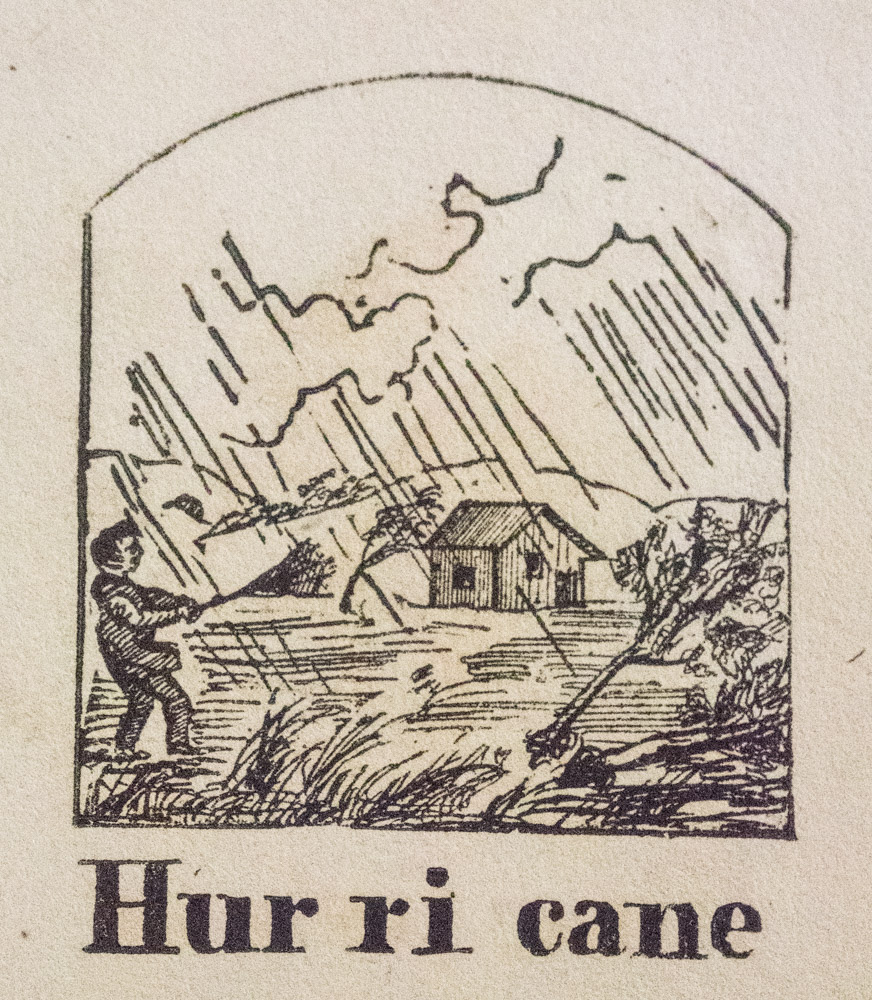
According to the weather record for 1851 – the first year that Atlantic hurricanes were officially tracked – the storm that Evelina and Old Oliver describe was Tropical Storm #6. It made landfall in Rhode Island, thus its impact on nearby North Easton would have been severe. Despite the rain and wind, the buildings in the Ames complex appear to have come through fine. Old Oliver would have mentioned it otherwise.

For the fourth week in a row, Evelina missed church. One Sunday, there had been no service; on two other Sundays, she had been ill and today, weather prevented attendance. She was probably missing her weekly dose of religious direction from Reverend Whitwell and social interaction with her fellow Unitarians.  She occupied herself by reading “Olive,” which was most likely a domestic novel in the genre that she often read.  It would have been the kind of book that Old Oliver called “love trash.”

October 5, 1851

Letter

Oct 5th Sunday  Mr Whitwell has gone to Philadelphia and

we have no meeting and Mr Ames self & Susan

staid at home  Oakes A & Charles Mitchell went

to N Bridgewater to meeting  Wm & Mr B Scott

came to the other part of the house this morning.

Mrs Latham & Aaron Hobart this afternoon.  I have

been writing most all day  Am not at all well

It has been a beautiful day.

Feeling as poorly as she did, Evelina was probably grateful not to attend church. Her rash was so irritating that she had trouble sitting still, yet lacked the vigor to move around much. Too, she had worked hard the day before putting up fruit preserves and may have felt tired from the effort. She wasn’t “at all well.”

Letter writing occupied her, and probably helped take her mind off her discomfort, just as playing with dolls had distracted little Susie when she was ill. Evelina often corresponded with several female friends and relatives, like Louisa Mower and Orinthia Foss in Maine, cousin Harriet Ames in Vermont and Pauline Dean, whose home address we don’t know. Which friends did she write to today?

Other family members were more active, despite the cancellation of the usual church service. Son Oakes Angier Ames rode over to North Bridgewater with Charles Mitchell (a younger brother-in-law of Harriett Ames Mitchell) to attend meeting there. Old Oliver and Sarah Ames Witherell, in the other part of the house, received several visitors, including Aaron Hobart.  Susan Orr was still visiting there, and may have been the draw for some of the new visitors.

September 23, 1851

phototake-rm-hives_urticaria_skin_rash

*

Tues Sept 23d  Susan has passed a dreadful night has not slept

any at all and this morning we sent for the Doctor

and he pronounces it the nettle rash  She has suffered 

very much to day would not let me leave her for

one moment  Mr & Mrs Whitwell are spending the 

day at the other part of the house  Oakes A & Mrs

H Mitchell called there last evening and visited them

She called in to see Susan

Little Susie Ames was in agony.  She had nettle rash, a 19th century term for hives, an acute, raised rash that erupts from the skin in painful splotches. It can appear in many places on the body; Susie’s landed on her backside and spread from there. Known medically as urticaria, the condition is often symptomatic of an allergic reaction, but it can have viral or idiopathic origins, too. It’s hard to say what might have caused the nine-year old’s sudden breakout.

The poor girl’s skin itched, stung and burned, making her unable to rest or sleep without discomfort. Tending her daughter all night and day, Evelina didn’t get any rest, either, and the regular domestic pattern of the day was disrupted. A quick visit from Harriett Ames Mitchell must have been helpful, at least, in capturing Susie’s attention for a few minutes.

In the house next door, Sarah Lothrop Ames turned 39 years old today. Given the recent death of one of her brothers, it’s doubtful that any great fuss was made over the occasion. Sarah and her immediate family were probably still wearing some form of mourning apparel at this point.


*www.webmd.com


September 15, 1851

Peach

Monday Sept 15th  Mrs Stevens & I made our plan

to go to North Bridgewater this afternoon but

could not get a horse in season  Augustus

rode up to his house with us and we brought

Miss Eddy home with us.  Called at Mr Reeds

and got some peaches.  Mr & Mrs Whitwell

called before we went away Ruth & Louisa

Swan called at the other part of the house

Plans to go to North Bridgewater had to be cancelled today when Evelina couldn’t get a horse in time, or “in season,” as she says. The morning hours had been spent on housework and laundry, certainly, and the planned trip to Bridgewater must have been a sweet incentive to get the choring done.  No doubt Evelina and Mrs Stevens were disappointed not to go.

Evelina and Mrs. Stevens did get to call on Evelina’s nephew, Alson Augustus Gilmore and his wife, Hannah Lincoln Gilmore.  Hannah had recently given birth to her second son, Willie, and might well have welcomed the company. The women also secured some peaches at one of the Reeds’ homes, no doubt with plans to make some preserves. Reverend William Whitwell and his wife Eliza called on them and two of Dr. Caleb Swan’s offspring, Ruth and Louisa, called to see Sarah Witherell.  Ruth was about to be married. The social comings and goings of summer continued despite the light frost overnight, a sure sign of approaching autumn.

August 28, 1851

17 Alexander Jackson Davis (American architect, 1803-1892),  Harvard University, Cambridge, Mass. 1850

*

Thursday Aug 28th  Have done but very little sewing to day.

Mrs Fullerton Abby & Malvina here to tea.  Mr & Mrs

Whitwell called.  Mr Whitwell walked up and sent

Mr Tilden with a carriage for his wife.  Mrs Hyde

Mrs James Mitchell & Mrs Watson came from E Bridgewater

& Mrs Watson & Peckham to the other part of the house

to tea. Alson here to dinner & tea

Frederick left for Cambridge this morning

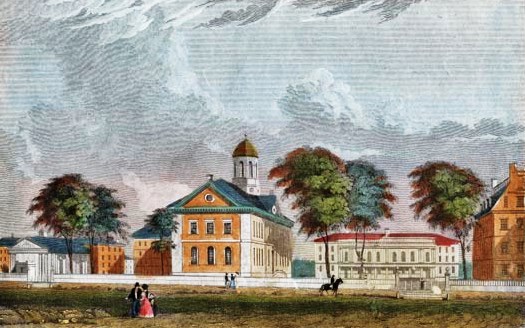
There was much socializing in North Easton today, but it paled in importance when compared to the departure of Frederick Lothrop Ames for college. Though only 16 years old, Fred  was entering Harvard College as a sophomore, making him a member of the class of 1854.

A notable nineteenth-century commentator would arrive at Harvard just after Fred had graduated.  Henry Adams, Class of 1858, would have this to say about the college in Cambridge before the Civil War:

“Harvard College, as far as it educated at all, was a mild and liberal school, which sent young men into the world with all they needed to make respectable citizens, and something of what they wanted to make useful ones. Leaders of men it never tried to make. Its ideals were altogether different. The Unitarian clergy had given to the College a character of moderation, balance, judgment, restraint, what the French call mesure, excellent traits, which the College attained with singular success, so that its graduates could commonly be recognised by the stamp, but such a type of character rarely lent itself to autobiography. In effect, the school created a type, but not a will. Four years of Harvard College, if successful, resulted in an autobiographical blank, a mind on which only a water-mark had been stamped.”**

Was Fred Ames stamped by his time at Harvard? He certainly appreciated his years there, and became “warmly interested in everything that pertained to the welfare of Harvard, as evinced by his well-known liberal gifts to several of its departments.”***


* Alexander Jackson Davis, “Harvard University,” Cambridge, Massachusetts, 1850

** Henry Adams, Education of Henry Adams

*** Harvard “Report for Class of 1854,” 1894

August 24, 1851

Road

Sunday 24th Aug  We turned out to church pretty well for us

to day 9 from here 7 from the other part of the 

house 5 from Olivers.  Mr Whitwell preached

Cousin Jerry, Warren, Orinthia Lavinia & Rachel

came at noon  Alson & wife Edwin & Lavinia came

after meeting.  Lavinia will spend the night.

This evening Cousin J & W went with me to call at Willards

Twenty-one people attended church today from the Ames family compound.  Immediate and extended family members and their guests rode down Centre Street to the Unitarian meeting house to listen to Reverend William Whitwell preach. How many carriages rolled down the road?  Did any of them walk, or did they all ride? Did they all fit into the family pews?  Some returned home after the first service.

Adding to the crowd after church, Evelina’s brother Alson, sister-in-law Henrietta, and two of their offspring, Edwin Williams Gilmore and his sister Lavinia, came to the house as well. The gathering spoke to the warmth and closeness of the extended family.  It also spoke to the relative ease of travel at this time of year. Traveling between the homes of friends and family had been marked this month, with everyone taking advantage of the good weather – and good roads – before winter.

The visiting continued in the evening when Evelina took Jerry and Warren Lothrop to visit Willard Lothrop, a local spiritualist, shovel shop worker, and likely relative.


August 20, 1851

Scales

Weds 20th Aug  Rachel, Lavinia and Augusta Pool spent

the day here  Mr Ames and Augustus went to Boston

Pauline Dean came to night in the stage

appears the same as she did when she left

Went to the store & was weighed  148 lbs

called at the factory to see Edwin work and he came to

tea  Mr Whitwell called while we were gone

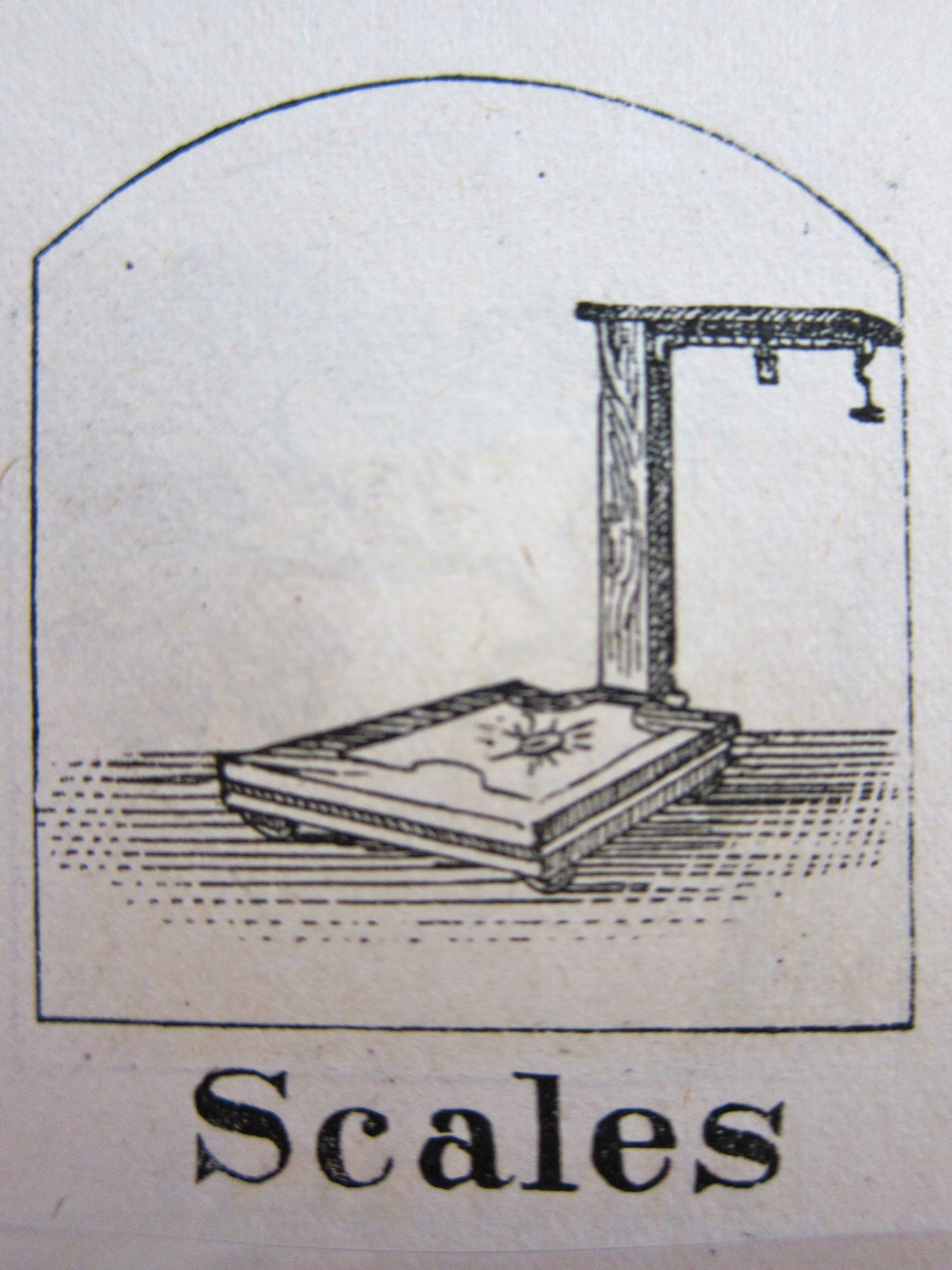
Not shy, Evelina stepped on the scale at the company store.  Fully clothed in the voluminous fashion of the day, she weighed 148 pounds. Given that her dress was full-skirted and worn over a chemise, undersleeves and petticoats, and that she wore a bonnet and most likely kept her hose and shoes on, her actual weight was probably several pounds less than she reported.  She likely weighed closer to 140.

Evelina missed a visit from Reverend Whitwell today, as she was out and about with young female company.  Two nieces, Lavinia Gilmore and Rachel Gilmore Pool, came over with Rachel’s sister-in-law, Augusta Pool.  They were ages 19, 21, and 22, respectively. They visited the store, shopped, perhaps, and watched their aunt get weighed. Perhaps they got weighed themselves. It might have been a lively time as they chatted and moved back and forth.

From the store the group traipsed to the shovel factory to watch Evelina’s nephew and Lavinia and Rachel’s brother, Edwin Williams Gilmore, work – an unusual visit to say the least, and one that could only have been accomplished in the company of the boss’s wife. What did the workmen think?

Edwin, nearly 23, would not work at the shovel shop for long. By 1854 he would be manufacturing hinges along with business partners Oakes and Oliver Ames Jr., whom he would eventually buy out. All that was in his future; today he would join his sisters and their friend Augusta for tea at his aunt’s.

August 17, 1851


Marriage

Sunday 17 Aug  Went to meeting all day  At noon I went

with Henrietta to Mr Whitwells passed a very

pleasant intermission  Mother was at meeting

went home with Mrs Curtis  Orinthia came

home having a severe toothache  Frank carried

her back to Mr Howards and staid untill

nearly ten  It is very dark & stormy to night

has stormed all day.  Margaret Norton married.

As on so many other Sundays, the Ames family went to church.  Evelina stayed for both services and spent the intermission with her sister-in-law, Henrietta Williams Gilmore at the parish house. Eliza Whitwell, the minister wife, no doubt offered them a cup of tea and other refreshments. Evelina’s mother probably sat with them, too, before leaving for the Gilmore farm.

Old Mrs. Gilmore and her daughter-in-law, Henrietta, may have been privy to a marriage ceremony later in the day, when a servant of the Gilmores named Margaret Norton was married. Before the Civil War, it was customary for marriages to take place at home. As historian Jack Larkin has noted, “Most American couples were wed by a clergyman at the home of the bride, in […an] informal ceremon[y] of republican simplicity.”* But Margaret, besides having no home of her own, was from Ireland and thus probably Catholic. She may have been obliged by Catholic practice to marry in the church, possibly the new church that had just been built.

Orinthia Foss did not have such a pleasant day. She came down with a “severe toothache” and had to go home.  Frank Morton Ames offered his services as driver and stayed out late, his mother noted. Lively young man that he was, he wasn’t inclined to turn in early. Was it the stormy weather or the company of Ellen Howard and Orinthia that held him at the Howards’s house? Did Evelina wait up for him?  Or did his father wait up for him?  How did that go?

*Jack Larkin, The Reshaping of Everyday Life: 1790 – 1840, New York, 1988, p. 63.