June 13, 1851

Auction


June 13 Friday.  Miss Eaton left this morning.  Mr

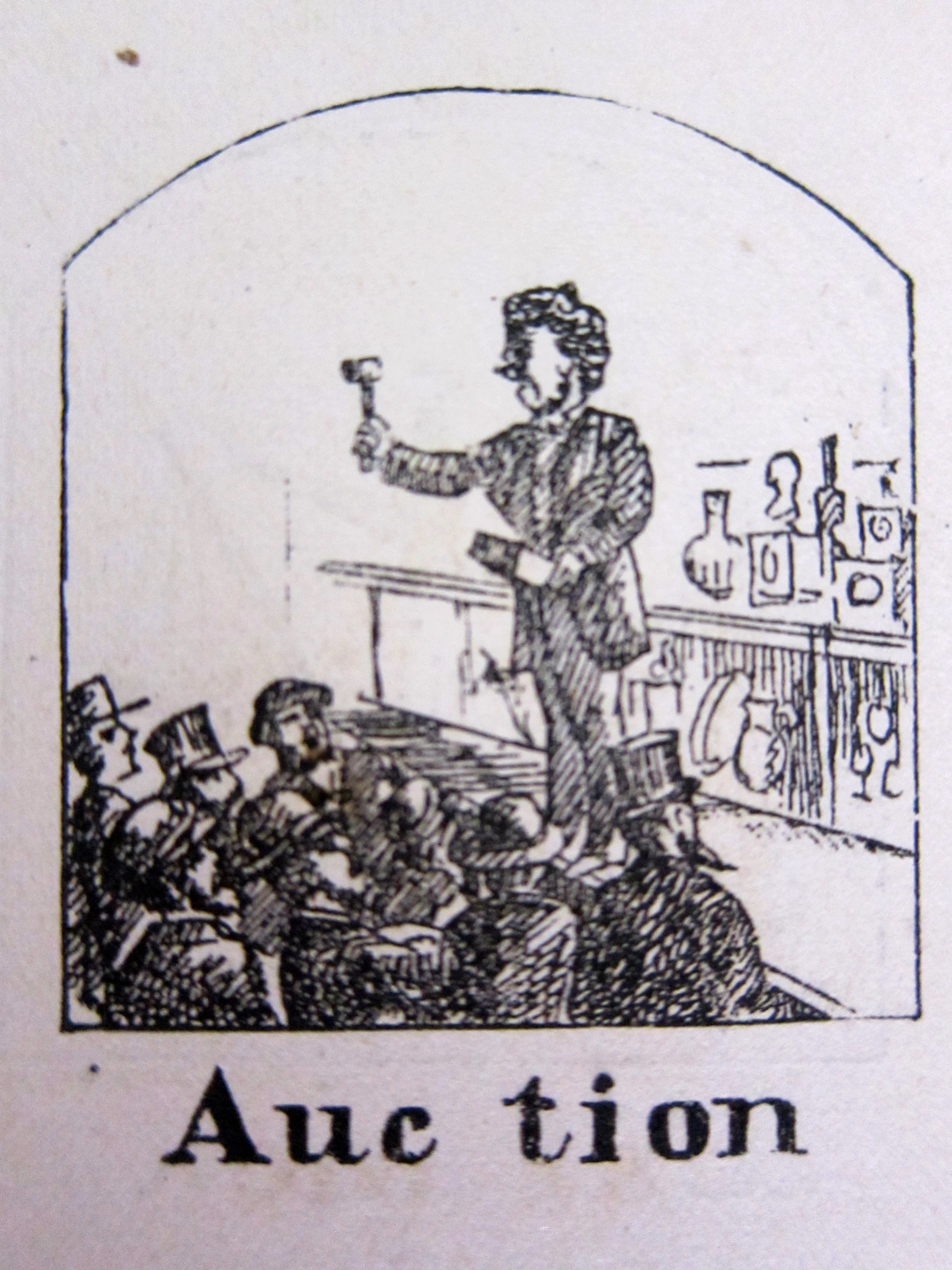
Ames attended Mr Thayers auction bought the place

While he was gone I mended his coat

I have finished Susans green borage Delaine

Harriet & Lucia Mitchell & Mrs Reed came

to the other part of the house about ten &

stoped till about two Oclock – I have spent 

most of the afternoon there.  Bridget here to work

Went in the evening to hear Willard preach


Oakes Ames bought a “place” today at auction, an event that must have been somewhat informal given that Oakes didn’t wear his coat.  The property he bought may have belonged to a shoemaker named Charles Thayer who died around this time.  There were many Thayers in Easton, however, and had been for generations.  Where was this property?  And what did Oakes do with it?

Although the date was Friday the 13th, Evelina would have had no concern about bad luck as our modern superstition that the date is unfavorable was not yet established. In the 19th century and before, some cultures did consider 13 to be an unlucky number, coming as it does after the number 12, which tends to be auspicious.  Others thought that Friday was an unpromising day of the week, not a good day to start a trip, for instance.  But it wasn’t until the late 1860s that the two bad omens merged and became an ominous symbol unto itself.

Interesting that Willard Lothrop, Easton resident, shovel worker and Spiritualist, spoke this evening to a group – and that Evelina went to listen. Spiritualism (which, Chaffin* reminds us, is “not, strictly speaking, a religious denomination,”) had a foothold in Easton and would for years to come. In a curious juxtaposition, a later officer of the “First Spiritual Society of Easton,” would be Fred Thayer, son of the very Charles Thayer whose property we think was sold today.

William Chaffin, History of Easton, 1886


January 12, 1851

Preach

/51 Jan 12 Sunday  Have been to church all day and heard two

excellent sermons from Mr Whitwell.  The afternoon text was

“Train up a child in the way he should go and when he is old

he will not depart from it”  Passed this evening at Mr Willard

Lothrop with Mr Ames & met with Minister Norris & Mr Torrey

This noon I stopped to hear Mr Whitwells class in the Sabbath

School afterwards went into Mr Daniel Reeds with Mother

Very warm + pleasant for the time of the year

The Ames family, Unitarians all, attended meeting today and stayed for both services, which encompassed a morning program, an intermission, and an afternoon program.  In their family pew, Evelina, Oakes, Oakes Angier, Oliver (3), Frank Morton and Susan sat with or near Old Oliver, Sarah Witherell and her children, George and Emily.  Also nearby, if not in the same pew, sat Oliver Jr, Sarah Lothrop Ames and their children, Fred and Helen, faces upturned to hear Reverend Whitwell deliver the day’s two sermons.  Eight-year old Susie may have squirmed in her seat; she wasn’t inclined to sit still for the second service.  And Oakes Ames was known to fall asleep, however inspiring Mr. Whitwell’s words were to Evelina.

In 1851, the Unitarians congregated at a church in Easton Centre, a few miles south of the village of North Easton (but still within the boundaries of the Town of Easton, Massachusetts.)  Like many families, the Ameses had to travel by carriage or sleigh to attend Sunday service.  The adults would have ridden, or “been carried,” as the expression went,  but the children may have had to walk the distance.  Children walking to church, regardless of distance, was common.  If this was true for the Ames family, we might imagine that cousins Oliver (3) and Fred walked together, as they were close friends.

At intermission, children went into Sunday School and the adults socialized.  Winthrop Ames, a grandson-to-be, described the scene in his family history (from 1937):

“They tethered their horses in a long, open shed and stayed through both morning and afternoon services, eating the luncheons they had brought and gossiping with the townsfolk during the intermission.”

On this winter Sunday Evelina and her mother, Hannah Lothrop Gilmore visited at the nearby home of Daniel and Mary Reed.  Socializing continued in the evening as Evelina and Oakes called on Willard Lothrop.

January 11, 1851

Workbox

/51 Jan 11 Saturday.  Made a haircloth back & cushion for one

of my rocking chairs.  Mrs Witherell brought in her work

and staid about two hours.  Willard Lothrop made

quite a long call.  Told Mrs W that he did think at one

time of coming to see her but she looked so dignified &c that

he could hardly muster courage &c &c  This evening have been

mending stockings & reading the papers.  Mr Ames has been

to Boston bought him a pr of Robbins.  Brought home watch

Very warm, pleasant but sloppy.  Bought 5 3/4 lbs Beef of C Lothrop

While Oakes made his usual Saturday trip into Boston, Evelina and Sarah Witherell sat together in the Ames’s front room, sewing. Evelina was completing a horsehair back and cushion for a rocking chair.  Horsehair upholstery was common in the 19th century, the haircloth being both durable and lustrous, plus relatively inexpensive.  Evelina, accomplished housewife that she was, would naturally have undertaken to do this work herself.

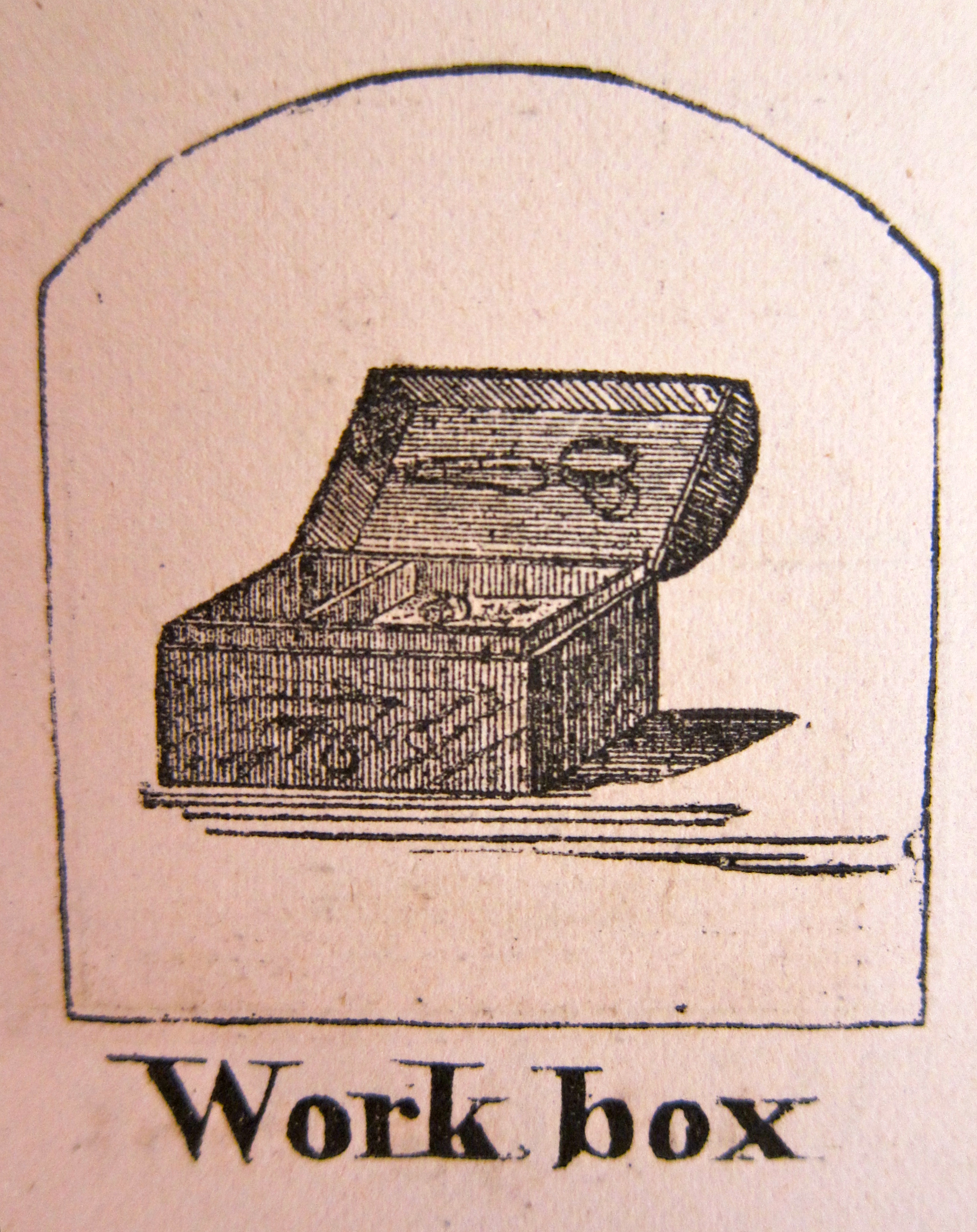
With their work boxes at hand, the two sisters-in-law sat, sewed and conversed until the arrival of a visitor, Willard Lothrop.  Mr. Lothrop, an employee at the shovel shop, was something of a character.  He was a self-declared medium and an impassioned advocate of spiritualism. (He may also have been related to both Evelina and her other sister-in-law, Sarah Lothrop Ames, through the Lothrop family line.  There were many Lothrops in the area.)

Spiritualism was a practice that claimed, in Reverend William Chaffin’s words, “that there is a vital connection between the seen and the unseen worlds by which communication between the two can be maintained.”  Though hardly a new concept, this American iteration took root in the mid-19th century and gained strength for a time after the Civil War.  Many in North Easton, especially those living along the Bay Road, were interested in it.

Lothrop, the purpose of whose call at the Ames house is not disclosed, focused his attention on Sarah Witherell, confessing that he found her unapproachable.  No mention of Evelina being inaccessible!  Lothrop offers us a rare, backdoor insight into the character, or the bearing at least, of the Ames sister of whom we know the least.  Except for her presence in Evelina’s diary, Sarah Witherell left almost no trace behind, no diary, no stories, no grandchildren, no legacy.  In a powerful, visible, active family, she may simply have been its most private member.

After Lothrop left, what did the ladies talk about?  And what are the “Robbins” that Oakes Ames bought in Boston?