March 22, 1852

Sweep


1852

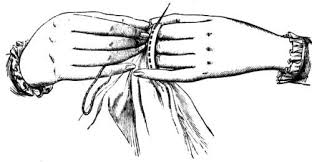
March 22  Monday  Have been sweeping dusting &

cleaning all day  Have put in order parlour

entries, parlour & sitting room chambers and back

& shed chamber, nearly dusk before I got through

Orinthia & Susan washed the dishes in the 

morning  Orinthia has written another two or three 

letters has not done much  beside  Ain’t she lazy?

It was Monday. Evelina spent her day “sweeping dusting & cleaning,” and Jane McHanna washed tubs of clothes and hung them out to dry, but “lazy” Orinthia only helped wash the breakfast dishes and wrote a couple of letters. In comparison to quiet, helpful Amelia Gilmore, whose visit Evelina had enjoyed, Orinthia Foss and her spirited but indolent company was a come-down.  We should remember that Orinthia was single and only in her early twenties (although in that era, some would have said she was already a spinster) while Amelia, a widow, was in her early thirties and Evelina, a matron, in her early forties. The age gap between Evelina and Orinthia was beginning to wear thin on Evelina’s part, and perhaps on Orinthia’s as well.

Spring had officially arrived two days earlier on March 20. No buds or blossoms were yet in evidence, however, and more snow had yet to fall. The industry that Evelina demonstrated today with her broom and dust rag suggests that she was rehearsing for spring cleaning, perhaps wanting to get it out of the way so that the moment anything came up in her flower beds, she’d be free to go outside and garden. Perhaps she looked at the still-frozen ground and imagined her flowers in full bloom. It was getting to be that time.



March 21, 1852

9291031-apples-are-stored-in-the-cellar-to-keep-fresh

1852

March 21 Sunday  Have all been to meeting except

Susan who is not very well  George carried

Amelia home at noon  I had a very pleasant

visit from her of nearly two weeks.  Orinthia

called with me into Edwins after church & we

helped ourselves to apples from the cellar.  Augusta

sent us one filled with sand and cheese.

Called at Mr Whitwells at noon & at Mrs J Howard a moment

Spring had arrived; Amelia Gilmore left the Ames’s home and hospitality and headed back to her own quarters in southeastern Easton. George Oliver Witherell, 14-year old son of Sarah Ames Witherell, obligingly carried her home in a carriage during the intermission at church. Evelina, meanwhile, visited with the Whitwells and the Howards.

After church Evelina and Orinthia went to the home of Edwin and Augusta Gilmore and helped themselves to “apples from the cellar.” That the young couple still had apples from the previous fall suggests that the harvest had been good and the storage arrangements even better. We presume that Evelina and Orinthia took the apples with the permission of the Gilmores; Augusta sending over a barrel “filled with sand and cheese,” corroborates that. But why is a barrel with cheese also filled with sand? Any thoughts, readers?


March 17, 1852

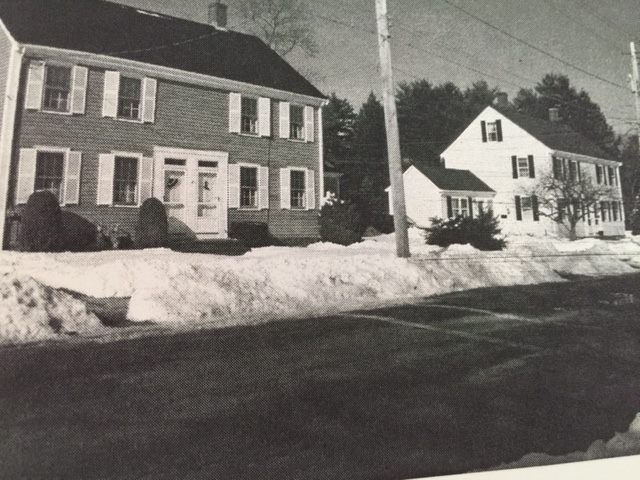
 IMG_0085Modern photograph of two private homes on Oliver Street in Easton, originally built in 1852 as part of the temporary structure for the shovel factory.*

March 17

1852  Wednesday.  Passed the day at Mothers with Amelia

and Susan   Carried Augusta to her fathers

and afternoon she and Rachel came down

to see us  Miss Foss closed her school Sat.

Came to Mothers this morning and to

night came home with us.  Carried cloth

and cut out a bleached shirt  Amelia worked

on the sleeves.

Evelina spent a pleasant day with her mother and several relatives. Her friend Orinthia Foss came to stay for a time. Evelina’s father-in-law, Old Oliver Ames, was completely focused on the rebuilding of the shovel shops. He seemed pleased to report:

“this was a cloudy day wind northeast. + in the afternoon it was cold + chilly. the roof is on the stone shop + the windows are in + the down stream end finisht- + the piece from that to the water shop is up + the roof shingled + the walls are boarded – one hundred + eight feet of the handeling shop is up and part of it clapboarded. the polishing shop is up and the roof shingled and the sides boarded + partly clapboarded the hammer shop is up + the sides + ends boarded and the roof and two thirds sleighted”**

This is one of the longest entries that Old Oliver ever wrote in his journal. He was clearly proud of the progress that had been made in the two weeks since the fire that destroyed almost all. The factory would soon be back on its feet, and planning for more permanent stone buildings could move forward. The wooden buildings that went up so fast would have another use after the stone buildings were erected, that of housing for some of the shovel workers. They would be moved from the original site by the pond and become residences. As you can see from the illustration, some of them are still used today.


* Image taken by Gregory Galer, Forging Ahead, MIT, 2001, Figure 50

** Oliver Ames, Journal, Stonehill College Archives, Arnold Tofias Collection

March 15, 1852


PENTAX Image


1852

March 15th Monday  Gave the sitting room & entry

a thourough sweeping & dusting and then

went to sewing.  Susan washed the dishes

Amelia & self carried our work into Edwins but did 

not stop to tea, are invited there tomorrow.  We called

at Mrs Bucks  She has 41 schollars and 5 or 6 boarders


After “considerable rain” over night, Monday broke “cloudy in the morning but fair + warm in the afternoon and in the evening there was some rain + it grew colder [.] Mr Arnold came to day to sleight the hammer shop”* Thus wrote Old Oliver.

After Sunday’s respite, work on the rebuilding of the shovel shops picked right back up.  A slate roof was going up on the hammer shop, thanks to the expertise of John Arnold, a local man who had done roofing for the Ameses before.  Old Oliver seemed pleased.

At the Ames home, Amelia Gilmore continued her visit with Evelina. Once the morning chores were complete, with Susie washing dishes and trusted Jane McHanna doing the laundry, and midday dinner consumed, Evelina and Amelia walked across the way to visit Augusta Pool Gilmore, carrying their sewing with them. They must have spent several hours there, but didn’t stay for tea. Instead they headed home, stopping off to see another neighbor, Polly Buck.  Evidently, Mrs. Buck was running a private school with day students and boarders. One imagines that the ruckus there might have been equivalent to the bustle of workers at the building site.


*Oliver Ames, Journal, Stonehill College Archives, Arnold Tofias Collection

March 6, 1852

Whitewash

1852

March 6th Saturday  Mr Scott whitewashed the parlour

& sitting room chamber this morning and I

varnished the front entry oil cloth.  Lavinia

came at eleven and Augusta this afternoon

Alson came after Lavinia and stopt to tea

Charles Pool came up and carried Edwin

and Augusta home to stay till Monday

I have been to work on a stiched pink apron

for Susan

A full moon shone down on North Easton this night, highlighting the charred ruins of the shovel factory.  Before it rose, however, Old Oliver took the opportunity of “a fair day”* to travel to Bridgewater, quite probably on shovel business.  He and his sons were developing plans to rebuild the factory, and some help for that would be found in Bridgewater.

Evelina’s way of coping after the devastating fire appears to have been to keep the domestic front moving smoothly. Redecorating continued, social calls were made and enjoyed, and sewing continued without a blink of an eye. Daughter Susan would soon have a new pink apron.

Years later, Evelina and Oakes’s grandson, Winthrop Ames, would credit his grandmother and other Ames wives with exerting a positive influence on his male ancestors. “They made the homes, reared the many children, saved their husbands’ money, encouraged their undertakings, and steadied them in failure and misfortune,”** he said. Evelina’s evident steadiness during this challenging period is one such instance of positive influence. Oakes Ames had come home from the fire “more cheerful” than Evelina had expected; she seems to have behaved with equal optimism. Though naturally sanguine, Oakes’ bright outlook and ability to cope in the aftermath must also have been bolstered by his wife’s unflappable focus on home and (redecorated) hearth. Together, they maintained continuity.

Charles Pool, Augusta’s eldest brother, drove up from southeastern Easton today and fetched his sister and her husband, Edwin Williams Gilmore, “home to stay” for a few days. Perhaps this visit had been prearranged, or perhaps it was an effort by the young couple to get out of the way of remnant smoke and disruption from the fire.

*Oliver Ames, Journal, Stonehill College Archives, Arnold Tofias Collection

**Winthrop Ames, The Ames Family of North Easton, Massachusetts, 1937, p. vi.


February 23, 1852

Looking glass

Monday 23d Feb 1852  Worked about the house this forenoon

dusted the chambers and washed around the

windows &  doors.  Susan washed the dishes. Am

trying to have her learn to knit, improves some

but rather slowly  This afternoon have been mending

some and have put one new sleeve into my

blue & orange Delaine  The looking glass came

out from Boston to night

We might call it a mirror, but Evelina and most of her contemporaries called her new purchase a looking glass. (Think of “Through the Looking Glass and What Alice Found There,” Lewis Carroll’s 1871 sequel to his 1865 “Alice’s Adventures in Wonderland.”) Like the framed prints Evelina had recently bought for her walls, the looking glass was a fashionable piece of decor. She must have been tickled to have one hanging in her parlor.

New “methods of mass-producing large, flat panes of glass had been perfected and, by combining them with heatless, chemical-coating technologies,”* mirrors had become easy to manufacture – and affordable.  At mid-century they became stylish and ubiquitous, symbolic of the new taste and purchasing power of the middle class. In a home like Evelina’s which, 50 years earlier, might have boasted no more than a small, courting-type mirror, a big, new looking glass, hung on braided silk roping from molding above it, had become de rigeur.

Other than this exciting upgrade in the parlor, today was a Monday like any other. Jane McHanna did the laundry, Susie Ames washed the breakfast dishes, and Evelina took to her needlework.  She was teaching her daughter to knit.


*Wikipedia, Mirrors, accessed February 19, 2015.

February 19, 1852

images-1


1852

Thursday Feb 19th  Have been to work on Olivers clothes getting

them ready to go back to school  Have spent the

whole afternoon mending a coat for him which he

has spoiled wearing it in the shop  Augusta was

here this afternoon did not stop to tea.  Lavinia called

came up to bring Mrs Lothrop & son to Willards

Susan & self have spent the evening at Willards

Oliver came after us about nine Oclock

Finally, Oliver Ames (3) was going back to Brown. He had been home in North Easton, on a break, since January 21st. Evelina had her hands full mending a coat “which he has spoiled” so he could take it back to Providence. He wore it while working at the shovel factory and damaged it somehow. There was no time – and probably little inclination – to get a new one made for him. His mother had to fix it.

As Caroline Healey Dall, a contemporaneous female in Boston during this era, commented at one point in her mid-19th century diary, it was “a lonely, dull day – stitch, stitch, stitch.”* For most of the 19th century, all women sewed, and sewed often. Sometimes sewing was fun or companionable or rewarding; sometimes it wasn’t.  It was more often a necessity, a chore, and for Evelina today, the uninteresting and obligatory side of sewing prevailed.

Fortunately, Evelina had a few visits today from her younger female friends and relatives to help the time pass. Augusta Pool Gilmore visited in the afternoon – possibly with her own needle in hand – and niece Lavinia Gilmore called, having come into town from the family farm. In the evening, Evelina and her daughter Susan spent the evening with one of Easton’s more eccentric characters,Willard Lothrop, a medium. Oliver Ames (3) “came after” them after dark, probably anxious that all was ready for his return to college in the morning.

*Caroline Healey Dall, Daughter of Boston: The Extraordinary Diary of a Nineteenth Century Woman , ed. Helen R. Deese, Boston, 2005, p. 314

February 18, 1852

Hoof


1852

Wednesday 18 Feb  Augusta Emily Susan & self have

spent the day at Rachels.  Mother Henrietta & Lavinia

were there  Had a pleasant visit.  Went to

carry mother home with Charley had some trouble

with him about starting it was so cold.  Mrs Solomon

Lothrop & son Willard came to Alsons this afternoon 

Made two dickeys for Mr Ames and cut out two more


Just like the day before,”this was a fair day wind north west + cold”* as Old Oliver, family patriarch, noted in his daily journal. It was so cold that one of the family horses, Charley, didn’t want to leave the premises. But Evelina needed to take her elderly mother, Hannah Lothrop Gilmore, back to the family farm, so Charley was harnessed up and made to trot out. Evelina and her mother probably didn’t enjoy the frigid temperatures, either, but at least they could cover themselves with blankets or robes.

Evelina spent most of the day in the company of female relatives at the home of her niece, Rachel Gilmore Pool, who lived near the Gilmore farm.  Her daughter, Susan, and niece, Emily Witherell, were with her, as was new bride Augusta Pool Gilmore.**  Rachel’s unmarried sister, Lavinia, was there, along with their mother, Henrietta.  It was a multi-generational gathering of women from ages 9 to 79.

The women must have spent some time sewing as they all sat together, for Evelina managed to complete two dickeys, or shirt fronts, for her husband. The companionship would have made the handiwork fun to do.

*Oliver Ames, Journal, Stonehill College Archives, Arnold Tofias Collection

**Rachel Gilmore Pool was married to Augusta’s brother, John Pool, while Augusta Pool Gilmore was married to Rachel’s brother, Edwin Gilmore. One family’s sister and brother married a neighboring family’s brother and sister.

February 16, 1852

Picture frame

Monday Feb 16th

1852

Susan washed the dishes this morning and I was

at work about the house most of the forenoon

Mrs Mary Williams came about eleven Oclock and 

staid to dinner  Called into Olivers and Edwins

with her  She returned to Joshua C Wm about three

and went home in the stage  Oliver tried to get

the coloured engraving smooth in the frame but could 

not  Mended Oakes Angier a vest


The new week opened with the usual domestic arrangements: Jane McHanna doing laundry, Susie Ames washing dishes and Evelina choring “about the house” in the morning.  A visitor, Mary Williams, arrived and stayed for midday dinner, then departed mid-afternoon on the local stagecoach .

With her son Oliver’s help, Evelina finished hanging the prints she had bought the week before in Boston. The new pieces of art were quite au courant; etchings, lithographs, and engravings were appearing on parlor walls across the country.  New printing technology – the same that promoted the appearance of so many new periodicals and serial novels – made the production and distribution of art prints easy. The subject matters varied from historical (like the famous image by Emanuel Gottlieb Leutze of Washington Crossing the Delaware, first painted in 1851) to religious to geographical to sentimental.  They were decorative and affordable, and the middle class flocked to buy them.

Subject matter, of course, was important; Evelina had purchased one print about Halloween (or All Hallows Eve as it was known). The prints had to be attractive and look handsome on the wall. But the decorative frames that went around the art work counted, too, and “were often considered more important than the prints themselves.”* It’s too bad that Oliver was having difficulty making one new print fit properly in its frame.

* Pierre-Lin Renie, The Image on the Wall: Decoration in the Nineteenth Century Interior, Nineteenth Century Art Worldwide

January 28, 1852

Sleighing

1852

Jan 28 Wednesday  Mother went to Augustus this morning and I went

this afternoon. Mr Ames sent Frank after me in the sleigh

this evening  Mr Ames & Oliver went to West Bridgewater

this afternoon  I have been to work on Susans flannel

skirt have got most of it done.  Susan spent the afternoon

and evening with Malvina.  Mr Brown spent two

nights at Augustus, returned to Boston this morning.


The morning was fair, the afternoon cloudy and warm enough so that the snow on the ground “thawd some.”* Sleighing (or “slaying,” as Old Oliver occasionally spelled it) would have been good, the top crust of the snow-packed roads slick with ice and fast to travel.

Despite being out and about today in a sleigh, Evelina accomplished some sewing. The flannel skirt she was making for her daughter was probably a petticoat that Susie could wear under her dress, rather than an outer skirt. Full dresses and jackets were indeed made from wool flannel around this time, but the flannel underskirt was more common. Known for its insulating capability, the cloth would have kept Susie extra warm on the cold, cold days.

Flannel was also inexpensive. It would really come into its own during the Civil War, when soldiers wore undershirts and even simple coats made from the material. Flannel became the go-to cloth for long underwear. In 1889, a man named Hamilton Carhartt opened a factory in Detroit to manufacture flannel work clothes which became popular with railroad and construction workers.**


*Oliver Ames Journal, Stonehill College Archives, Arnold Tofias Collection

** http://www.gearpatrol.com, January 26, 2015