October 2, 1851

9904548_1_l


*


Oct 2d Thursday  Helped Ellen quilt some this forenoon 

She seems to do pretty well at it

Mrs Elijah & Ellen Howard & Mrs Abba Leach

spend the day and evening in the other part

of the house  I was there at tea.  Oliver &

wife have been to her fathers  Mr Ames has been

to Boston   Lavinia Williams came in the stage

with him but he did not speak to her

Evelina and her servant, Ellen, worked on the new quilt this morning .  Evelina had set the quilt up in the sitting room using a frame that could be dismantled and stored. The frame would have had four wooden legs at the corners, such as those in the illustration above.  Long boards around which the quilt edge was wrapped would have been fastened into the corners, creating an adjustable rectangle on which the women could work.  When finished the pieces of wood would be stowed away until needed again.

In the other part of the house, Sarah Witherell welcomed Nancy Howard, her daughter Ellen Howard, and Mrs. Abba Leach for the day. The women made a social visit that lasted all day and into the evening. Did they bring any needlework or sewing with them, or was conversation the only occupation? Evelina dropped in for tea, but Sarah Lothrop Ames from next door didn’t join them. She and her husband Oliver Jr were calling on her parents, the Hon. Howard Lothrop and his wife Sally. The Lothrop family may still have been wrestling over how to manage the family farm since the death of Clinton Lothrop, Sarah’s younger brother.

From Boston, where he was probably collecting orders for shovels, Oakes Ames returned home on the stagecoach where he sat with an acquaintance of Evelina, Lavinia Williams.  Mrs. Williams was the wife of Cyrus Williams, a local farmer of some means. Evelina seemed surprised that Oakes and Lavinia didn’t converse en route.

Even as Evelina was looking back at the day’s small social exchanges, she was beginning to feel unwell, something she wouldn’t report for another few entries.


September 21, 1851

1525-105430-a-flumere

*

Sunday Sept 21st  Have been to meeting  Mr Ames & self came

home at noon and Horace Pool came with us

and they rode up to the great pond where they are

building a new floom.  Brought Abby Torrey from

meeting & carried her back  She & Malvina are spending 

a week at Alsons  Miss Latham & her brother Edward

came to our meeting this morning and to the other 

part of the house after  I called into see them

The new flume going in at Great Pond was attracting local attention. After church, Oakes Ames and Horace Pool rode up to see it. Oakes had been in Boston when his father, Old Oliver, had begun the work, and no doubt he was curious to see the progress.  No one would have been working on it today, as it was Sunday.

The flume was intended to harness water power for the shovel factory. It was basically an inclined ditch lined with stones and boulders to shunt the water along. Some flumes – such as those used in lumbering – are lined with wood, but that wasn’t likely to be the case here, given the scarcity of wood, the availability of stones, and the expectation of longevity. Old Oliver’s oxen must have been used to haul the many stones, and man-power used to put each one in place.  The channel itself would have been dug with Ames shovels, naturally.

Evelina, perhaps moving about slowly on sore feet, went to church and caught up with various friends and family members, including nieces Abby and Malvina Torrey. She popped into the other part of the house – the section lived in by Old Oliver and his daughter Sarah Witherell – to greet some visitors there.  She was settling back into her routine after the Boston holiday.

Photograph of an old flume, blogoteca.com/afonsoxavier, courtesy of Hadrian


September 20, 1851

Train

Sat Sept 20th  Was out shopping all day purchased a number

of articles among the rest a Cashmere & french print

dress paper for my parlour brought home two chairs

from Bigelowes  We all returned home this evening

Frank came to Stoughton after us & rode back

on the stage.  Went into Olivers awhile this evening.

Have had a great deal of trouble with my feet while

I have bee[n] gone & to night they are very sore.

The Boston spree continued for most of the day as Evelina walked and shopped for everything from fabric to wallpaper to furniture.  She and Oakes brought their purchases home on the train (or “in the cars” as they might have said) to Stoughton. It was, finally, time to return to North Easton.  Son Frank Morton Ames met them at the depot with a carriage – or wagon –  but rode home by himself on the local stagecoach. The conveyance he brought to the group getting off the train was, perhaps, too crowded with goods from town to fit everyone in.

Perhaps not wanting to let go of the many sensations that three exciting days in the city had produced, Evelina went next door to Oliver Jr and Sarah Lothrop Ames’s house. They had returned the day before, and so missed the fireworks. Surely they compared notes on their experiences at various events at the Railroad and Steamship Jubilee.  They may have compared blisters and sore shanks, too.  They did much walking and standing during their junket, and Evelina at least was feeling the effects. Her feet hurt.

Meanwhile, never having bothered to go into town for the celebration, Old Oliver was moving ahead on improvements for the shovel shop.  In his journal he noted that “this was a fair day wind south west and quite warm we put in the bottom stone for the floom at the great pond to day and the 5 foot one on the east side of it.” A flume for the factory was going in at Great Pond.

September 13, 1851

OLYMPUS DIGITAL CAMERA

Sept 13  Mrs Stevens & self sat down quietly to

sewing this morning but it was so warm that

we could not do much  There is quite a

change in the weather this morning.  Had

quite a heavy tempest this afternoon.

Carried our work into the other part of

the house this evening.  Mrs S Ames & Helen

passed the afternoon there

No matter how still Evelina and her guest, Mrs. Stevens, sat this morning, they found themselves enervated by the extreme heat.  They tried to sew but “could not do much,” heavy as the extra cloth must have felt on their laps as they hemmed or mended. Surely they wore their lightest cotton dresses (which were likely to have been somewhat plainer than the morning attire suggested in the illustration above from Godey’s Lady’s Magazine) and probably eschewed wearing caps indoors. Even in their coolest attire, however, they still would have “glowed,” as the old saying goes. Horses sweat, men perspire, women glow.

An afternoon rainstorm – “two showers before sunsett” noted Old Oliver in his daily jounal  – helped clear the air and by evening, Evelina and Mrs. Stevens had joined Sarah Ames Witherell in the other part of the house.  Did Old Oliver sit with them, or was he over in the office with Oakes and Oliver Jr.?  Assuming that Oakes spent the day in Boston on the usual shovel business, did he get caught in the downpour on his way home?

September 7, 1851


Ames Home and Office, North Easton, Massachusetts ca. 1852 - 1862

Ames Home and Office, North Easton, Massachusetts
ca. 1852 – 1862

*

Sunday 7th  Have been to meeting all day  Mother

Mrs Stevens & I went to Mr Whitwells at

intermission Mrs Whitwell made a cup of tea

for us, brought mother home with us from meeting

at night  Mr Ames & I called at Mr Swains

Mr & Mrs Peckham are to leave tomorrow for

Taunton & the children & Mrs Metcalf  Thursday

The weather is very warm  Gave Mrs Stevens

some cuff pins it being her birth day.

Despite today’s heat, Evelina and her guest Mrs Stevens, and others of the Ames family, presumably, attended both morning and afternoon sessions of church. When the last service was over, they carried Evelina’s 79-year-old mother, Hannah Lothrop Gilmore, to North Easton to stay for a few days.

An important transition was taking place this week at the shovel works.  John Peckham, former clerk, and his family were leaving for Taunton.  His place in the Counting Office was being taken by John Swain, whom Oakes and Evelina went to visit late in the day.  Swain and his wife, Ann Meader Swain, probably hailed from Nantucket.  They had connections in North Easton, but the move to a new abode was still a big change for the young couple. Oakes, with his wide-armed jocularity and Evelina with her easy, approachable manners, must have made the Swains feel welcome.  Over the years, their friendship would solidify.

Many decades later, when Ann Swain was the only one of the foursome still alive, she told historian and minister William Chaffin about the special relationship between John Swain and Oakes Ames:

“…[H]er husband had his regular salary supplemented by an addition from Mr. Ames. Mr. Swain did more or less work for him, besides the regular office work when he was head clerk. Mr. Ames was not very methodical and his transactions for the day in Boston, jotted down in a notebook rather hastily, would sometimes be in a tangle when he came to the office in the evening (office work in those days always going on in the evening), and he would say to Mr. Swain, ‘Come, John, you help me straighten out these things.’ In common with all the persons who served him Mr. Swain had a strong affection for Mr. Ames.”**


*Ames Homestead with Counting Office on far left.  Residence demolished in 1951.

**William Chaffin, Oakes Ames, private publication                                   


August 23, 1851

Mayflower

The Mayflower

Sat 23d Aug  The two Mr Lothrops went to the shop after

breakfast and I baked Cake & ginger snaps in

Mrs Witherells oven  This afternoon I went with

them to Mothers to tea, called at Mr Seba Howard

and took Orinthia with us and brought her here

at night  The Miss Tolmans are still at the 

Howards  Evening Mrs Mitchell came in.  Pauline

passed the afternoon in the other part of the house

Even in the hot weather, baking had to be done.  After breakfast, Evelina saw cousins Warren and Jerry Lothrop head off with the men to the shovel shop.  Pauline Dean, another guest, didn’t accompany them, but neither did she hang around the kitchen with her hostess. She spent part of the day, at least, in the other part of the house. By herself, Evelina baked cake and ginger snaps.

In the afternoon, once again laden with company, Evelina went down to the Gilmore farm with the young Lothrop men to visit Evelina’s elderly mother. Hannah Lothrop Gilmore was probably pleased to get a visit from these two male relatives. How closely related Mrs. Gilmore was to Warren and Jerry is uncertain; the Lothrop clan was extensive, and had been settled in Plymouth and Bristol Counties (and on into Maine) for generations.

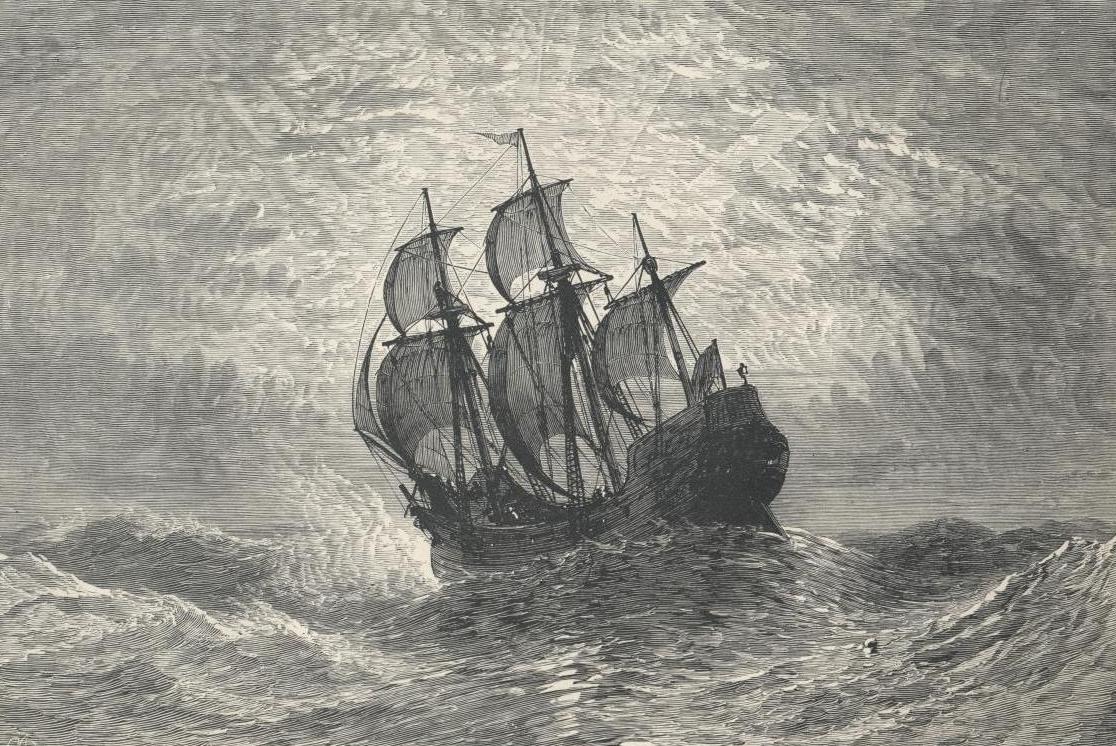
What is certain is that if “cousin” Jerry and Warren were related to Evelina through the Lothrop line, they were also probably related to Sarah Lothrop Ames, as the two women themselves were second cousins. Evelina’s grandmother, Hannah (Howard) Lothrop, and Sarah’s grandmother, Betty (Howard) Lothrop, were sisters.*  They were descended from John Alden and Priscilla Mullins of Mayflower fame.

On the way home, Evelina picked up her young friend, Orinthia Foss, who ended up spending the night.  Where did everyone fit? How did everyone sleep?

* Winthrop Ames, The Ames Family of Easton, 1937, pp. 230-231


August 20, 1851

Scales

Weds 20th Aug  Rachel, Lavinia and Augusta Pool spent

the day here  Mr Ames and Augustus went to Boston

Pauline Dean came to night in the stage

appears the same as she did when she left

Went to the store & was weighed  148 lbs

called at the factory to see Edwin work and he came to

tea  Mr Whitwell called while we were gone

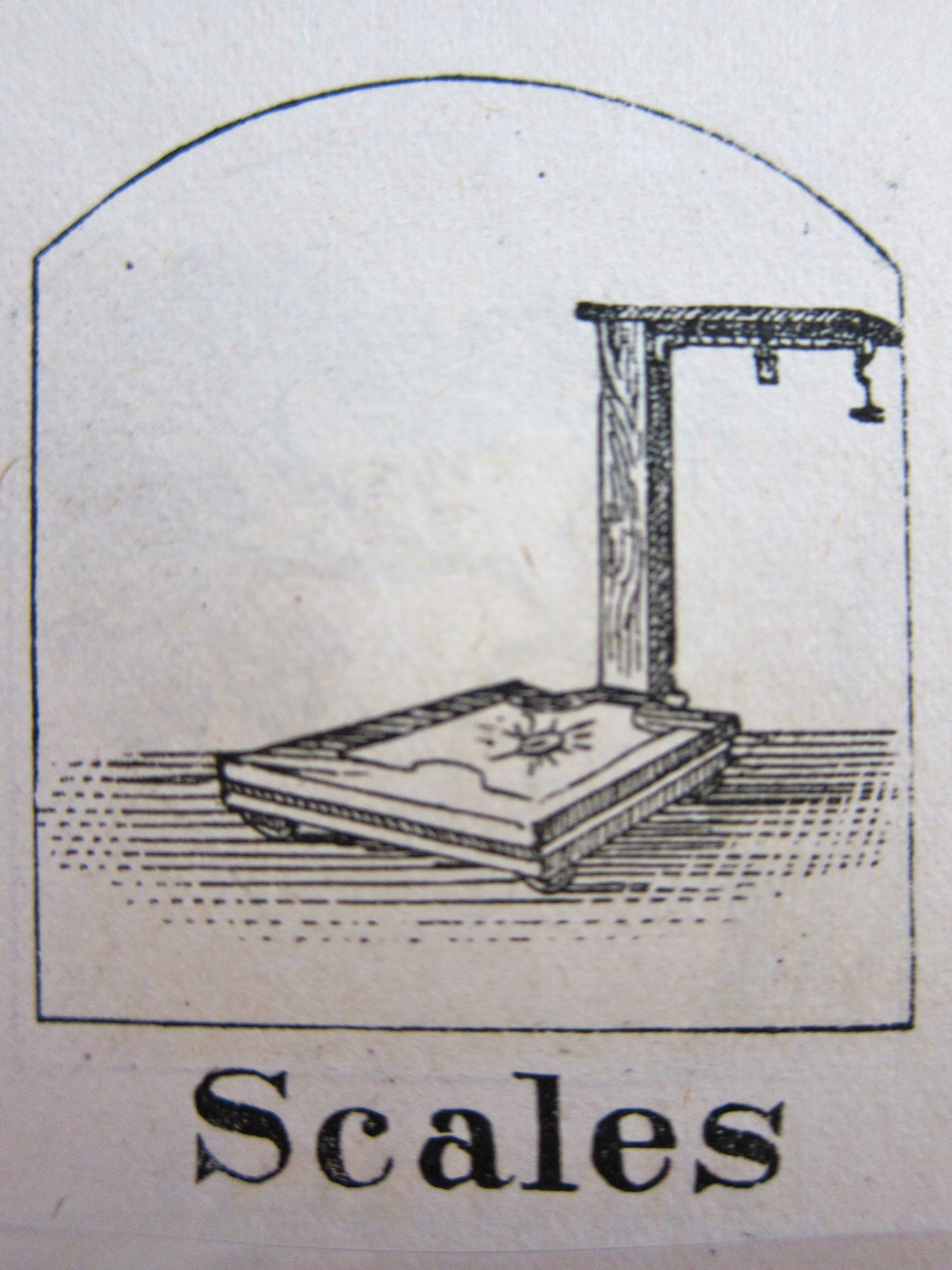
Not shy, Evelina stepped on the scale at the company store.  Fully clothed in the voluminous fashion of the day, she weighed 148 pounds. Given that her dress was full-skirted and worn over a chemise, undersleeves and petticoats, and that she wore a bonnet and most likely kept her hose and shoes on, her actual weight was probably several pounds less than she reported.  She likely weighed closer to 140.

Evelina missed a visit from Reverend Whitwell today, as she was out and about with young female company.  Two nieces, Lavinia Gilmore and Rachel Gilmore Pool, came over with Rachel’s sister-in-law, Augusta Pool.  They were ages 19, 21, and 22, respectively. They visited the store, shopped, perhaps, and watched their aunt get weighed. Perhaps they got weighed themselves. It might have been a lively time as they chatted and moved back and forth.

From the store the group traipsed to the shovel factory to watch Evelina’s nephew and Lavinia and Rachel’s brother, Edwin Williams Gilmore, work – an unusual visit to say the least, and one that could only have been accomplished in the company of the boss’s wife. What did the workmen think?

Edwin, nearly 23, would not work at the shovel shop for long. By 1854 he would be manufacturing hinges along with business partners Oakes and Oliver Ames Jr., whom he would eventually buy out. All that was in his future; today he would join his sisters and their friend Augusta for tea at his aunt’s.

August 15, 1851

Vintage Ames Shovel

Vintage Ames Shovel

Friday 15th Aug  Julia here to work to day cutting me

a purple loos dress & cutting a pink french

calico for Susan.  Made a childs waist to it.

Oakes Frank & Oliver went this afternoon

to Robbins pond in E Bridgewater to a party.

Oakes A is to go from there to Boston tomorrow

I have passed the afternoon at Mr Peckhams

had a pleasant visit

Robbins Pond, where the Ames sons and their Aunt Harriett went today for a party, is in Bridgewater and is known today for its bass fishing.  Who hosted the party there in 1851 isn’t known, but all the Ameses, including Evelina, were invited.  Evelina declined, however, suggesting yesterday that she might enjoy herself too much if she went. She went to call on the Peckhams instead.

On a much more serious note, today marks the one year anniversary of a terrible accident at the shovel factory. According to Old Oliver, an employee named William Loftis “was hurt so bad yesterday by leting a shovel catch in the polishing wheel that he dyed.” Loftis was an illiterate laborer in his late twenties. Like the Middleton and Maccready families with whom he lived, he had immigrated from Ireland.

Old Oliver seemed to blame Loftis for getting caught in the machinery, perhaps through inattention or carelessness. He doesn’t suggest that the factory was at all at fault, or that the machinery could be reconfigured in a way to make it less dangerous. As far as Old Oliver and most factory owners at the time were concerned, employment carried a certain level of risk, risk that was assumed by any man who received a pay check.

It’s doubtful that the Ames family was indifferent to the fate of William Loftis, however. It’s likely that Evelina or one of her sisters-in-law sewed a shroud for the body for a proper burial. Knowing Oakes Ames’s instinctive kindness to strangers and employees, he probably would have reached out to Loftis’s family. The absence of a widow and children, however, suggests that Loftis was simply buried and simply forgotten.


July 29, 1851

HD_Boston1851Z.preview-1

*

Tues 29 July  Mr Ames Susan & self were going to Boston

to day but it rains pouringly.  I am glad to see

it rain hard so that we know what to do about

going  I do not feel as disappointed as I did last 

week when it cleared off so pleasant  Have been

sewing and mending

Another trip to Boston called off by weather. Not only were Evelina’s plans put aside, but Old Oliver’s plans must have been challenged, too.  Haying had begun the day before and the rain not only obviated any further haying today, but also endangered the hay that had already been cut.

Evelina experienced an odd satisfaction today, pleased that the weather proved to be as bad as she had anticipated because it justified her choice not to go to town. Perhaps she wasn’t pleased so much as vindicated. As she had done last week, she turned to sewing and mending to fill the time that otherwise would have been spent in Boston.  Oakes Ames, meanwhile, presumably went on into the city to conduct business with various store owners who sold Ames shovels.

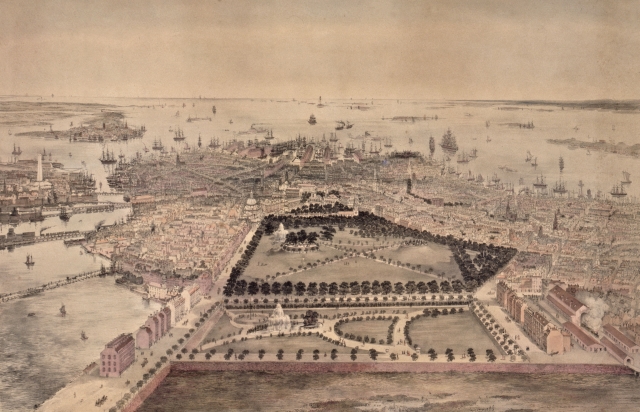
As the illustration above shows, Boston at this time had a much smaller perimeter than the city we know today. Back Bay was still a small bay of water, and the line of trees at the bottom of the illustration formed the western edge of the city, along the line that is now Arlington Street. The filling in of the water that would create the Back Bay grid of streets wouldn’t begin for another five or six years.

* Birds-eye view of Boston, 1851 


July 16, 1851


Shovel Storage_1 Nov 2010

*

1851

July 16th  Wednesday  Mrs H Ames left this morning.  Will stop

a day or two at Mr Hinckleys and then venture

home  Gustavus was to meet her in Boston

Have been to work on my silk muslin dress

Julia has been here cutting the waist and it

is so near done that it will not take long 

to finish it.  Edwin & Oliver went to S. Bridgewater

to get patterns for shovel press & Back strap Machine

Evelina seldom referred to the shovel business in her diary.  The factory, the employees, the machines, the products, the day-long sounds that emanated from the shovel shops right across the street from her home went essentially unmentioned. Despite the fact that six days a week, life in North Easton revolved around O. Ames and Sons, the factory that her husband, father-in-law, and brother-in-law owned, and at which her three sons worked, Evelina was mum about the business.

Instead, she kept her attention on the domestic and social events of her own life, recording the tame goings-on of the household, which was, naturally, her sphere of interest and influence. Her focus begs the question, however, of how much of her record was consciously restricted to the quotidian. Did she hear about events at the shovel shop and choose not to include them, or were business details never discussed at the dinner table?  Were shovels excluded from pillow talk at day’s end? Or was she so familiar with the many facets of the shovel business that she took them for granted, dismissed them and looked solely at her own concerns? Was she disinterested or discrete?

That aside, shovel-making slipped into Evelina’s record today.  Her middle son, Oliver (3), and his cousin, Edwin Williams Gilmore, headed to South Bridgewater to fetch patterns and a back-strap machine for the shovel factory. The patterns were probably “dies used in a drop hammer/press that give the curved shape to the previously flat, partially formed blade.”**  The back strap was an object that facilitated the process of attaching the handle to the blade. Oliver and Edwin must have used a wagon to tote the goods back to North Easton.

* Ames shovels, Stonehill College Archives, with thanks to Nicole Casper, CRM, Director of Archives and Historical Collections

** Per Gregory Galer, PhD.