March 15, 1852


PENTAX Image


1852

March 15th Monday  Gave the sitting room & entry

a thourough sweeping & dusting and then

went to sewing.  Susan washed the dishes

Amelia & self carried our work into Edwins but did 

not stop to tea, are invited there tomorrow.  We called

at Mrs Bucks  She has 41 schollars and 5 or 6 boarders


After “considerable rain” over night, Monday broke “cloudy in the morning but fair + warm in the afternoon and in the evening there was some rain + it grew colder [.] Mr Arnold came to day to sleight the hammer shop”* Thus wrote Old Oliver.

After Sunday’s respite, work on the rebuilding of the shovel shops picked right back up.  A slate roof was going up on the hammer shop, thanks to the expertise of John Arnold, a local man who had done roofing for the Ameses before.  Old Oliver seemed pleased.

At the Ames home, Amelia Gilmore continued her visit with Evelina. Once the morning chores were complete, with Susie washing dishes and trusted Jane McHanna doing the laundry, and midday dinner consumed, Evelina and Amelia walked across the way to visit Augusta Pool Gilmore, carrying their sewing with them. They must have spent several hours there, but didn’t stay for tea. Instead they headed home, stopping off to see another neighbor, Polly Buck.  Evidently, Mrs. Buck was running a private school with day students and boarders. One imagines that the ruckus there might have been equivalent to the bustle of workers at the building site.


*Oliver Ames, Journal, Stonehill College Archives, Arnold Tofias Collection

March 13, 1852

frank-bellew_thumb3b12885r

                    Frank Bellew                            “Raising the Wind; or, Both Sides of the Story”*    


1852 March 13th  Saturday  Have been mending &

sewing on my waists  Have passed the afternoon

in the other part of the house with

Amelia  Mr Ames came to tea  There has been fifty or 

more carpenters to work on the shops the past week

and it has been pleasant weather.

Good weather was a boon to the rapid rebuilding of the shovel shops after the devastating fire of March 2d. Although she remained in the house sewing for much of the day, Evelina and her visiting sister-in-law, Amelia Gilmore, would have been able to hear the hammering and shouting from scores of carpenters hustling to rebuild O. Ames & Sons.

In New York City today, a political cartoon appeared in a weekly newspaper, The New York Lantern. The subject of the cartoon had to do with a request before Congress to augment funding for overseas mail delivery.  Two shipping lines, one American, one British, were competing for the mail trade. The American Collins Line, which was losing money, was subsidized by the U.S. Post Office; the British Cunard Line was also assisted by its own government and was way ahead; its faster, larger fleet was eating into the American market.

In the cartoon, figures representing the two lines faced off over toy ships in a tub. Cunard is represented by John Bull helping a small boy work a bellows. The Collins Line is represented by a small boy, cheeks puffed, blowing at the water by himself. Behind him stands an aloof, apparently disinterested “Uncle Sam.”

Today was Uncle Sam’s first appearance as an illustration. He had existed in name since about 1810, but on this day, a young cartoonist named Frank Bellew turned Uncle Sam into a recognizable American icon. Bellew, whose parents were English, worked his trade as an illustrator and cartoonist in New York City for publications such as Frank Leslie’s Illustrated, but eventually resettled in New Orleans. Charles Dickens knew his work and admired it: “Frank Bellew’s pencil is extraordinary. He probably originated more, of a purely comic nature, than all the rest of the artistic brethren put together.”**

Uncle Sam lives today, thanks to Frank Bellew. The Cunard Line is alive and well, too, now owned by The Carnival Corporation.  The Collins Line, however, ever faltering, failed to survive the Financial Panic of 1857 and went bankrupt the following year.


The New York Lantern, March 13, 1852, Courtesy of the Library of Congress

** Wikipedia, accessed March 6, 2015

March 11, 1852

Build

1852

March 11 Thursday.  Cut out another waist of stout

bleached cotton cloth  Have been to Mr

Horace Pools with Mrs Witherell & Mrs

S Ames.  Met Henrietta Rachel & Mrs Harrison

Pool there, got home about eight Oclock

finished writing a letter to Harriet Ames.

Amelia went to Mr Torreys.

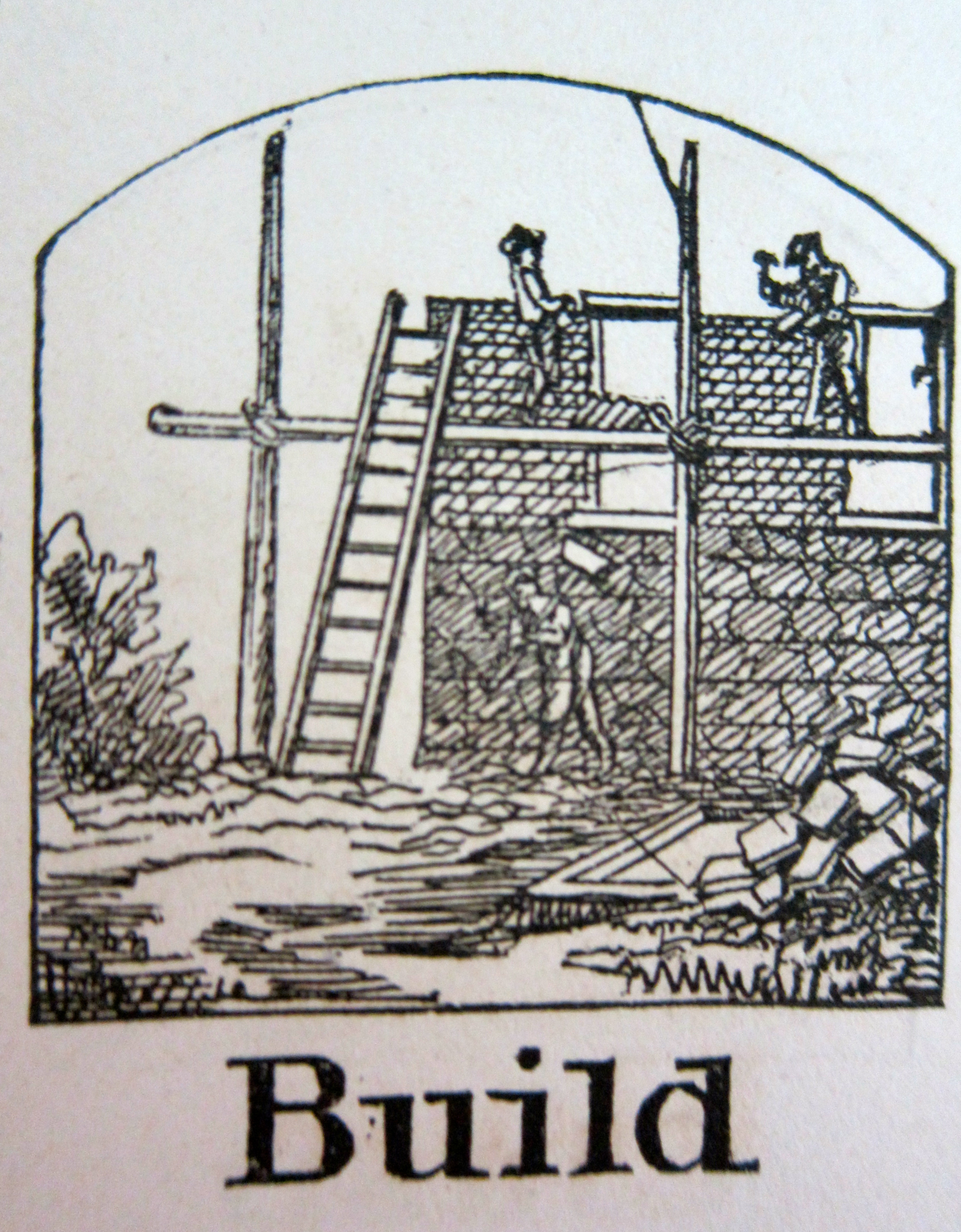
Old Oliver made his daily report:“the ground froze pritty hard last night – wind north in the morning butt southerly in the afternoon + pritty warm. it was a still day butt little wind – we began to rais the hammer shop to day.”  If ever there was an instance of Yankee industry, this cold, windy March in North Easton was it. Whatever the weather, all hands were on deck for the rebuilding of the shovel shops, which had burned to the ground less than ten days earlier.

While the men hammered, the women sewed – at least at the Ames compound. Evelina, anticipating warmer weather, worked on a new cotton dress. She had been fiddling with the waist lines on her dresses lately, suggesting that her waist might have altered. Larger or smaller?

With her sisters-in-law, Sarah Ames and Sarah Witherell, Evelina rode to the home of Horace and Abby Pool, where they met Henrietta Gilmore, Rachel Pool, and Mary Pool. This sounds like a gathering of the Sewing Circle, which we haven’t heard about since December when they temporarily disbanded. Now that spring had arrived, they might have started meeting again.

March 10, 1852

Handkerchief

1852

March 10th  Wednesday  Early part of the day

was sewing on a waist or rather cutting

it out and getting it to fit.  Augusta

came in this afternoon but as Amelia

& self were invited into Olivers she went

with us and Edwin.  Mr Ames came to tea

Amelia trimmed some pocket handkerchiefs

for me that Mrs Ames got in New York

The rebuilding of the shovels shops was moving along well. They “put the roof on the stone shop to day,”* according to Old Oliver, who watched each day’s progress carefully. It had been a full week since fire had destroyed most of the factory buildings. The response and reconstruction had been immediate!

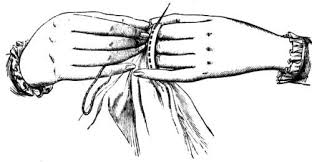
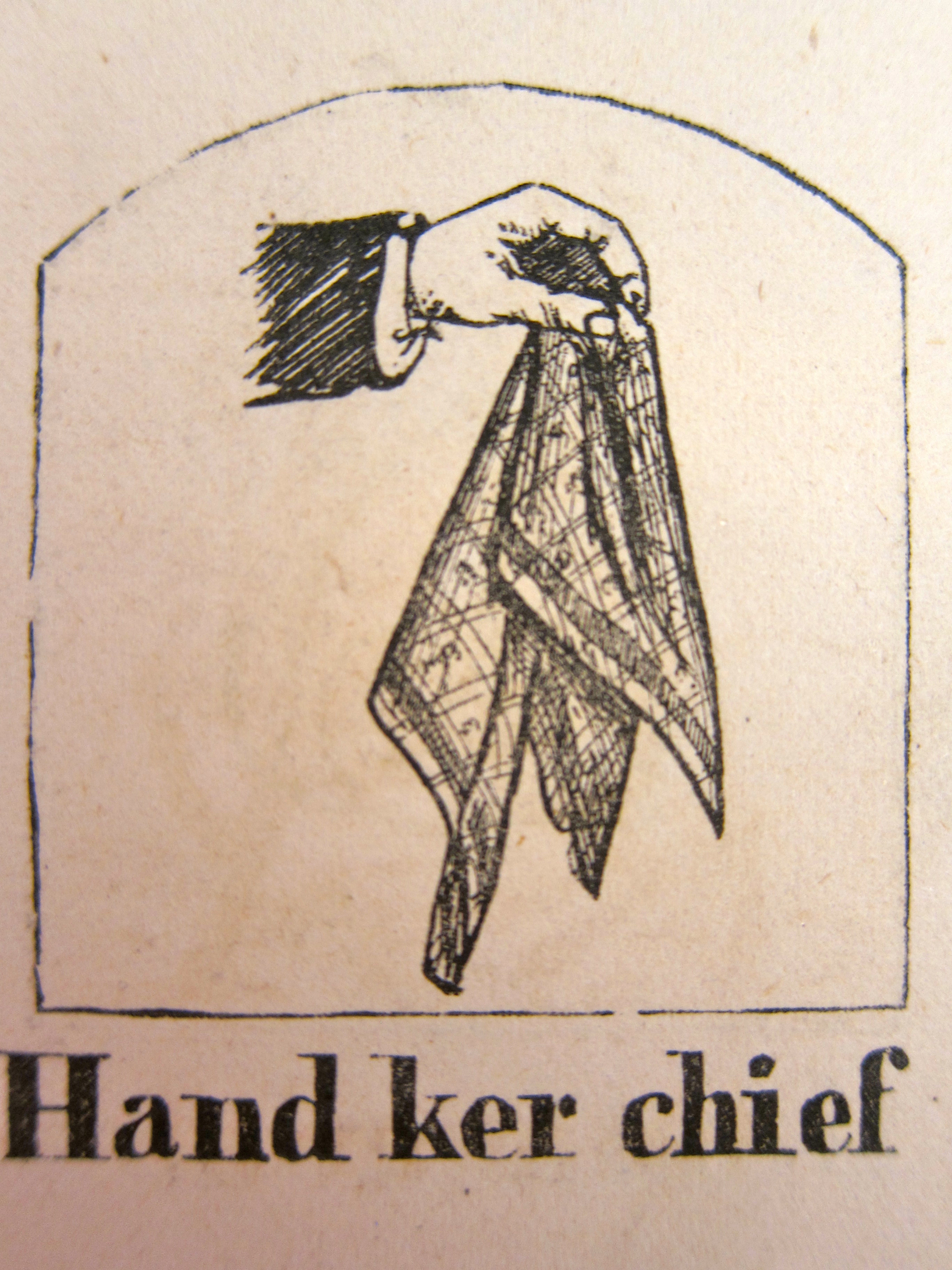
Amelia Gilmore, the widow of Evelina’s younger brother, Joshua Gilmore, Jr., was visiting for several days.  She undertook the hemming of some handkerchiefs – essential components of a lady’s outfit – that Almira Ames had brought Evelina from New York City. The purpose of a handkerchief, a personal item dating back to antiquity, was primarily hygenic, used to wipe one’s nose or brow and cover one’s cough. In a time of contagious diseases such as tuberculosis, cloth handkerchiefs were essential.  Their ubiquity necessitated their incorporation into the fashion profile.

Late in the day, the two went next door to Oliver Jr.’s and Sarah Lothrop Ames’ home for tea.  Oakes Ames went, too, and the newlyweds, Augusta and Edwin Gilmore, tagged along.


*Oliver Ames, Journal, Stonehill College Archives, Arnold Tofias Collection


March 9, 1852

OLYMPUS DIGITAL CAMERA

19th century oil lantern

1852

March 9th  Tuesday  This morning finished putting

the sitting room chamber in order

Mrs Witherell came in with her work

for an hour or two. I sent for Hannah

Augusta & Abby this afternoon.  Abby

came in this evening  Augustus called  his

wife has the canker and was not able to come


Today “was a fair good day + pritty warm,” * accommodating weather for the carpenters working on the shovel shops. According to modern town historian, Ed Hands, the repair would be rapid enough to allow a resumption of manufacturing “in less than three weeks.” But what happened to the shovel makers during the hiatus? Were they kept on payroll? Or were they given unpaid furlough?

What happened to Patric Quinn? An Irish immigrant with a young wife and two small children, he was the watchman who had dropped his lantern into the varnish on the night of March 2d. He started the fire. Was he injured? Was he held accountable?  Did he stay on payroll? He and his wife Elisa, who sometimes did sewing for Evelina, remained in North Easton. They lived on Elm Street in one of the workers’s houses.

At the Ames compound, Evelina put the sitting room and parlor back in order. She and her sister-in-law, Amelia Gilmore sat and sewed.  They were joined for a time by Sarah Ames Witherell who was followed by young Abbey Torry and Augusta Pool Gilmore. Hannah Lincoln Gilmore was too sick to attend.


*Oliver Ames, Journal, Stonehill College Archives, Arnold Tofias Collection
**Edmund C. Hands, Easton’s Neighborhoods, 1995, p. 163

March 6, 1852

Whitewash

1852

March 6th Saturday  Mr Scott whitewashed the parlour

& sitting room chamber this morning and I

varnished the front entry oil cloth.  Lavinia

came at eleven and Augusta this afternoon

Alson came after Lavinia and stopt to tea

Charles Pool came up and carried Edwin

and Augusta home to stay till Monday

I have been to work on a stiched pink apron

for Susan

A full moon shone down on North Easton this night, highlighting the charred ruins of the shovel factory.  Before it rose, however, Old Oliver took the opportunity of “a fair day”* to travel to Bridgewater, quite probably on shovel business.  He and his sons were developing plans to rebuild the factory, and some help for that would be found in Bridgewater.

Evelina’s way of coping after the devastating fire appears to have been to keep the domestic front moving smoothly. Redecorating continued, social calls were made and enjoyed, and sewing continued without a blink of an eye. Daughter Susan would soon have a new pink apron.

Years later, Evelina and Oakes’s grandson, Winthrop Ames, would credit his grandmother and other Ames wives with exerting a positive influence on his male ancestors. “They made the homes, reared the many children, saved their husbands’ money, encouraged their undertakings, and steadied them in failure and misfortune,”** he said. Evelina’s evident steadiness during this challenging period is one such instance of positive influence. Oakes Ames had come home from the fire “more cheerful” than Evelina had expected; she seems to have behaved with equal optimism. Though naturally sanguine, Oakes’ bright outlook and ability to cope in the aftermath must also have been bolstered by his wife’s unflappable focus on home and (redecorated) hearth. Together, they maintained continuity.

Charles Pool, Augusta’s eldest brother, drove up from southeastern Easton today and fetched his sister and her husband, Edwin Williams Gilmore, “home to stay” for a few days. Perhaps this visit had been prearranged, or perhaps it was an effort by the young couple to get out of the way of remnant smoke and disruption from the fire.

*Oliver Ames, Journal, Stonehill College Archives, Arnold Tofias Collection
**Winthrop Ames, The Ames Family of North Easton, Massachusetts, 1937, p. vi.


February 25, 1852

Cart

1852 Feb 25 Wednesday Was at work about the house untill

about ten and had just got seated at my sewing

when Mother & Alson came  They were here to 

dinner and this afternoon mother & self spent

at Willards. The young folks had company

Oakes & Frank are there this evening and were

having a lively time when we came away  Elizabeth

Williams was here this forenoon.  She & Susan went to

Emeline Haleys party this afternoon & evening


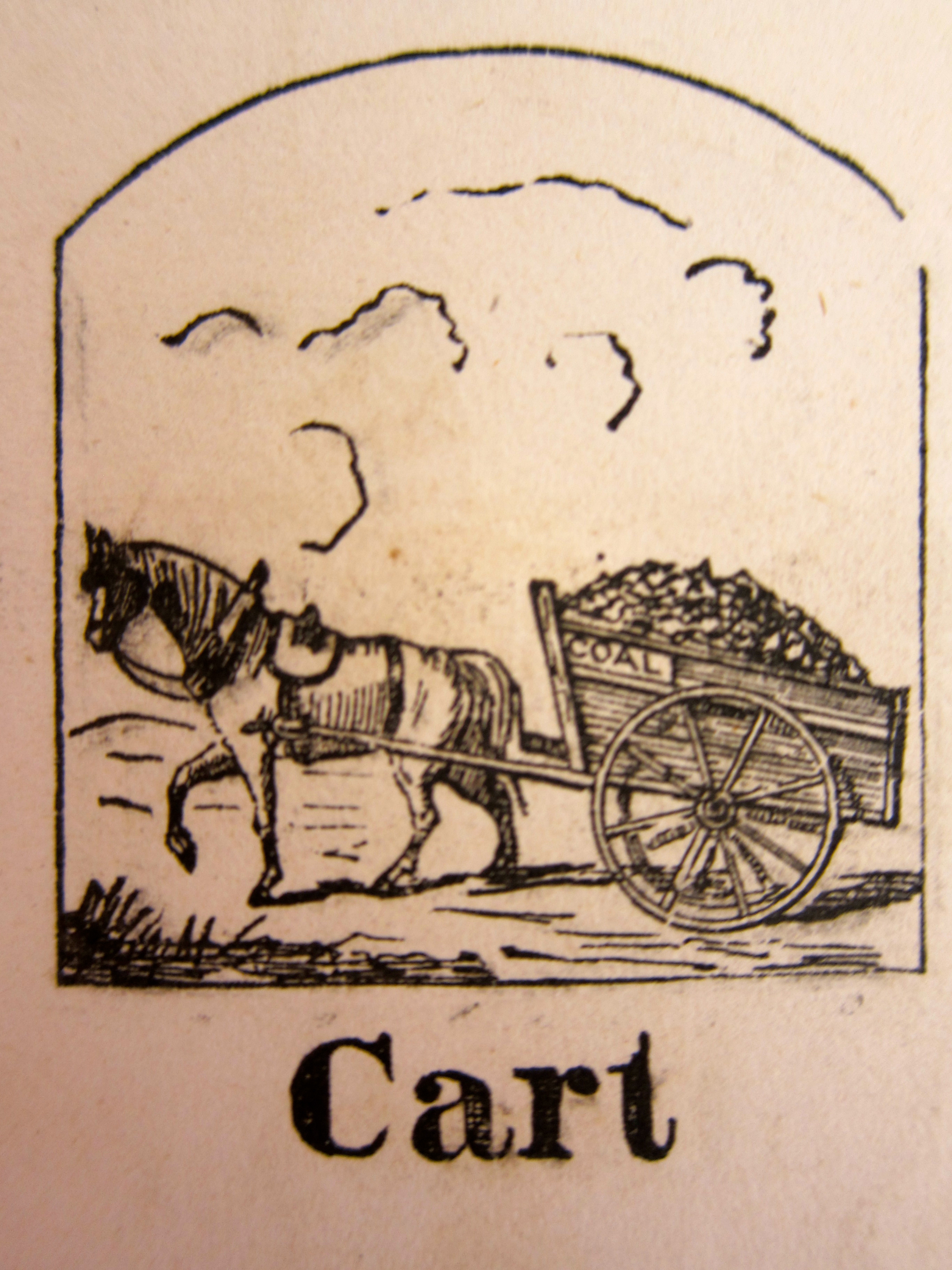
“[T]his was a warm day and thawd so much that it made the carting bad,” grumbled Old Oliver in his daily journal.  Despite the soft road bed, however, Evelina’s brother Alson Gilmore traveled by wagon or carriage to bring their mother into town from the family farm. The two came to midday dinner at the Ames’, after which Alson presumably went on his way. Mother and daughter went on to visit Willard Lothrop – Evelina had been seeking his company quite a bit lately. Under his influence, was she becoming a Spiritualist?

While the notion of communicating with the dead intrigued her, Evelina’s interest in Willard Lothrop may have been more sociable than religious.  She comments on the “young folks,” – her sons Oakes Angier and Frank Morton Ames among them – “having a lively time.” All ages seemed to be moving around today attending various gatherings that must have helped dispel some mid-winter gloom. Never mind the mud; the hint of warmth in the air must have been preferable to more snow.

February 23, 1852

Looking glass

Monday 23d Feb 1852  Worked about the house this forenoon

dusted the chambers and washed around the

windows &  doors.  Susan washed the dishes. Am

trying to have her learn to knit, improves some

but rather slowly  This afternoon have been mending

some and have put one new sleeve into my

blue & orange Delaine  The looking glass came

out from Boston to night

We might call it a mirror, but Evelina and most of her contemporaries called her new purchase a looking glass. (Think of “Through the Looking Glass and What Alice Found There,” Lewis Carroll’s 1871 sequel to his 1865 “Alice’s Adventures in Wonderland.”) Like the framed prints Evelina had recently bought for her walls, the looking glass was a fashionable piece of decor. She must have been tickled to have one hanging in her parlor.

New “methods of mass-producing large, flat panes of glass had been perfected and, by combining them with heatless, chemical-coating technologies,”* mirrors had become easy to manufacture – and affordable.  At mid-century they became stylish and ubiquitous, symbolic of the new taste and purchasing power of the middle class. In a home like Evelina’s which, 50 years earlier, might have boasted no more than a small, courting-type mirror, a big, new looking glass, hung on braided silk roping from molding above it, had become de rigeur.

Other than this exciting upgrade in the parlor, today was a Monday like any other. Jane McHanna did the laundry, Susie Ames washed the breakfast dishes, and Evelina took to her needlework.  She was teaching her daughter to knit.


*Wikipedia, Mirrors, accessed February 19, 2015.

February 21, 1852

 21621-004-0B1C48DE

Angelina Grimke (1805-1879)

1852

Feb 21st Sat  Spent all the forenoon mending Mr Ames

shopcoat.  Cut Susan a pink long sleeve apron and

Orinthia sewed on it  Have finished Mr Ames another

dickey which makes seven that I have made lately

This afternoon carr[i]ed Mrs Solomon Lothrop &

Orinthia to mothers.  Orinthia stopt at a sing at

the Schoolhouse near Doct Swans  Frank went and

brought her back.  Mrs S Ames called this evening to 

settle and paid me 1,70 cts which makes us even

Normal wintertime activities went on under a sky that Old Oliver described as “fair in the fornoon + cloudy afternoon + much warmer.”*  Evelina mended, sewed and socialized with her friend and former boarder, Orinthia Foss; she also settled accounts with her sister-in-law, Sarah Lothrop Ames. Per usual, Oakes Ames went into Boston.

It was in Boston, in fact, on this date fourteen years earlier that for the first time ever in the United States, a woman addressed a legislative body. On February 21, 1838, abolitionist Angelina Grimke presented the Massachusetts Legislature with an anti-slavery petition signed by 20,000 Massachusetts women. In a speech that was lauded by abolitionists, deplored by traditionalists and parsed by all, she not only called for the abolition of slavery, but declared the right of women to act politically. “We are citizens of this republic and as such our honor, happiness, and well-being are bound up in its politics, government and laws.”**

Daughter of a southern slave-holder, Angelina (known as “Nina” in her family) and her older sister, Sarah Grimke, also an active abolitionist, faced predictable opposition as they transgressed convention. Angelina’s speeches in Boston and elsewhere drew taunts, outrage, disbelief, and disrespect. The Congregational clergy of Massachusetts condescended together one Sunday and, across pulpits, accused Grimke of jeopardizing “the female character with widespread and permanent injury.” Others – men and women – were impressed. One member of the audience at the statehouse said, “Angelina Grimke’s serene, commanding eloquence [she spoke for two hours] enchained attention, disarmed prejudice and carried her hearers with her.”**

How might the Ames clan have reacted?


*Oliver Ames, Journal, Stonehill College Archives, Arnold Tofias Collection

**www.massmoments.org


February 19, 1852

images-1


1852

Thursday Feb 19th  Have been to work on Olivers clothes getting

them ready to go back to school  Have spent the

whole afternoon mending a coat for him which he

has spoiled wearing it in the shop  Augusta was

here this afternoon did not stop to tea.  Lavinia called

came up to bring Mrs Lothrop & son to Willards

Susan & self have spent the evening at Willards

Oliver came after us about nine Oclock

Finally, Oliver Ames (3) was going back to Brown. He had been home in North Easton, on a break, since January 21st. Evelina had her hands full mending a coat “which he has spoiled” so he could take it back to Providence. He wore it while working at the shovel factory and damaged it somehow. There was no time – and probably little inclination – to get a new one made for him. His mother had to fix it.

As Caroline Healey Dall, a contemporaneous female in Boston during this era, commented at one point in her mid-19th century diary, it was “a lonely, dull day – stitch, stitch, stitch.”* For most of the 19th century, all women sewed, and sewed often. Sometimes sewing was fun or companionable or rewarding; sometimes it wasn’t.  It was more often a necessity, a chore, and for Evelina today, the uninteresting and obligatory side of sewing prevailed.

Fortunately, Evelina had a few visits today from her younger female friends and relatives to help the time pass. Augusta Pool Gilmore visited in the afternoon – possibly with her own needle in hand – and niece Lavinia Gilmore called, having come into town from the family farm. In the evening, Evelina and her daughter Susan spent the evening with one of Easton’s more eccentric characters,Willard Lothrop, a medium. Oliver Ames (3) “came after” them after dark, probably anxious that all was ready for his return to college in the morning.

*Caroline Healey Dall, Daughter of Boston: The Extraordinary Diary of a Nineteenth Century Woman , ed. Helen R. Deese, Boston, 2005, p. 314