January 12, 1851

Preach

/51 Jan 12 Sunday  Have been to church all day and heard two

excellent sermons from Mr Whitwell.  The afternoon text was

“Train up a child in the way he should go and when he is old

he will not depart from it”  Passed this evening at Mr Willard

Lothrop with Mr Ames & met with Minister Norris & Mr Torrey

This noon I stopped to hear Mr Whitwells class in the Sabbath

School afterwards went into Mr Daniel Reeds with Mother

Very warm + pleasant for the time of the year

The Ames family, Unitarians all, attended meeting today and stayed for both services, which encompassed a morning program, an intermission, and an afternoon program.  In their family pew, Evelina, Oakes, Oakes Angier, Oliver (3), Frank Morton and Susan sat with or near Old Oliver, Sarah Witherell and her children, George and Emily.  Also nearby, if not in the same pew, sat Oliver Jr, Sarah Lothrop Ames and their children, Fred and Helen, faces upturned to hear Reverend Whitwell deliver the day’s two sermons.  Eight-year old Susie may have squirmed in her seat; she wasn’t inclined to sit still for the second service.  And Oakes Ames was known to fall asleep, however inspiring Mr. Whitwell’s words were to Evelina.

In 1851, the Unitarians congregated at a church in Easton Centre, a few miles south of the village of North Easton (but still within the boundaries of the Town of Easton, Massachusetts.)  Like many families, the Ameses had to travel by carriage or sleigh to attend Sunday service.  The adults would have ridden, or “been carried,” as the expression went,  but the children may have had to walk the distance.  Children walking to church, regardless of distance, was common.  If this was true for the Ames family, we might imagine that cousins Oliver (3) and Fred walked together, as they were close friends.

At intermission, children went into Sunday School and the adults socialized.  Winthrop Ames, a grandson-to-be, described the scene in his family history (from 1937):

“They tethered their horses in a long, open shed and stayed through both morning and afternoon services, eating the luncheons they had brought and gossiping with the townsfolk during the intermission.”

On this winter Sunday Evelina and her mother, Hannah Lothrop Gilmore visited at the nearby home of Daniel and Mary Reed.  Socializing continued in the evening as Evelina and Oakes called on Willard Lothrop.

January 8, 1851

Collar

/51

Jan 8th Wednesday

Made some cambric cuffs & collars and

starched & ironed some.  Worked on them most of the

day.  Jane ironed the coloured & coarse clothes

Head aches this evening trying to sew on fine work   gave

it up & went to reading a Thanksgiving story that

Mr Whitwell brought me to read.  Bought 25 cts worth Crackers

Settled with Sarah Ames she paid me for Cheese &c

Have been looking over my expense account  Pleasant

Evelina was an excellent needlewoman.  Like most women in the days before “ready-bought” apparel, she made her own clothes.  She made clothes for everyone in her family, in fact.  By. Hand.  No sewing machine was yet on the market; Isaac Singer and Elias Howe had each invented one but a drawn-out patent dispute was holding up its production.  By the advent of the Civil War, however, and the consequent need for mass production of uniforms, the sewing machine would come into its own, and the production of clothing would become an industry.  The three Ames sisters-in-law would eventually acquire a machine to share.

In the meanwhile, in the last decade before this change, Evelina sewed almost every day.  She occasionally relied on the help of a dressmaker – all the sisters-in-law did.  But Evelina easily made dresses, aprons, and underclothes for herself and her daughter, as well as work shirts and underclothes for her husband and sons.  Collars, handkerchiefs, sheets, linens and more were cut out, run together, fitted, taken up, untucked, hemmed, mended, refitted and re-mended.  The projects were endless, especially as the children were growing, but fortunately, sewing was an occupation that Evelina appeared to enjoy.  She spent more time at it than any other chore – certainly more than doing laundry, which she relegated to Jane McHanna, and probably more than cooking, which she typically undertook only when short-handed.  Sewing was her primary responsibility.

The “Pleasant” at the end of today’s entry describes Evelina’s take on the day’s weather, by the way, and not the prospect of looking over her expense account.  Other Ames diarists of this period followed the practice of describing the day’s weather, Old Oliver especially, but Oliver Jr, too.  Practiced agrarians, they all watched the sky.

January 6, 1851

Ox

/51 Monday Jan 6

Jane commenced washing this morning but was taken sick

and had to leave it.  And I had to do the housework again

Father killed two oxen & gave us the tripe  Went to North

Bridgewater this afternoon in a sleigh with S A, Helen 

and E Quinn.  A A Gilmore here to tea had business in

the office  Bought patch for a quilt for Susans bed   run

it together this evening  Received a letter from 

O Foss  She says Roland A has come from California

Jane McHanna was under the weather this Monday morning – perhaps from yesterday’s drive in the frigid air – and unable to manage the laundry and housework.  In the kitchen, something had to be done with the fresh tripe that arrived from Evelina’s father-in-law. Considered a delicacy, the tripe would soon be served at the midday dinner table.

As was typical for this time of year, Old Oliver slaughtered a yoke of oxen and distributed the meat and offal among the family. As he described it, “we kilt a yoke of oxen to day I had of Charles Gurney the off one weighed 1475 and the other 1330.”  Now 71 and retired from the shovel business, Old Oliver spent much of his time raising oxen. (Farming, too, as we’ll see later.)  He was evidently quite fond of them, and they were extremely useful in the family business for transporting raw material and finished shovels.  Oxen were a common sight in North Easton in 1851; anyone inside the Ames house would have heard ox carts rumbling by on the road.

The weather had improved and  housework couldn’t keep Evelina at home this afternoon.  Off in a sleigh to North Bridgewater she went with Sarah Ames, Sarah’s daughter Helen and a neighborhood dressmaker, Elisa Quinn.  The women were most likely on the hunt for fabric.  Evelina found quilting material, and after tea was over that night, began to put together a quilt for her daughter, Susan.

January 5, 1851

Thermometer

Sun Jan 5   Had to do my own housework to day and did not get

it done in season to go to church  Our Lazy boys did not

rise untill nearly nine Oclock.  No meeting this afternoon

Mr Whitwell attended the funeral of Asa Howards child

Mrs McHanna came home in season to get tea.  Went

with S A to see Miss Eaton found her able to sit up 

most of the day.  She has a bad cough & is failing.

After I came back made a call in the other part of the house

There was no church for the Ames family today.  Without the help of their servant, Jane McHanna, Evelina had to get breakfast and dinner by herself, and didn’t finish the preparations in time to get to morning service at the meeting house.   Oakes Angier, Oliver (3) and Frank Morton, perhaps seizing a rare opportunity, slept late despite their mother’s evident disapproval. The afternoon service, which the family also usually attended, was cancelled.

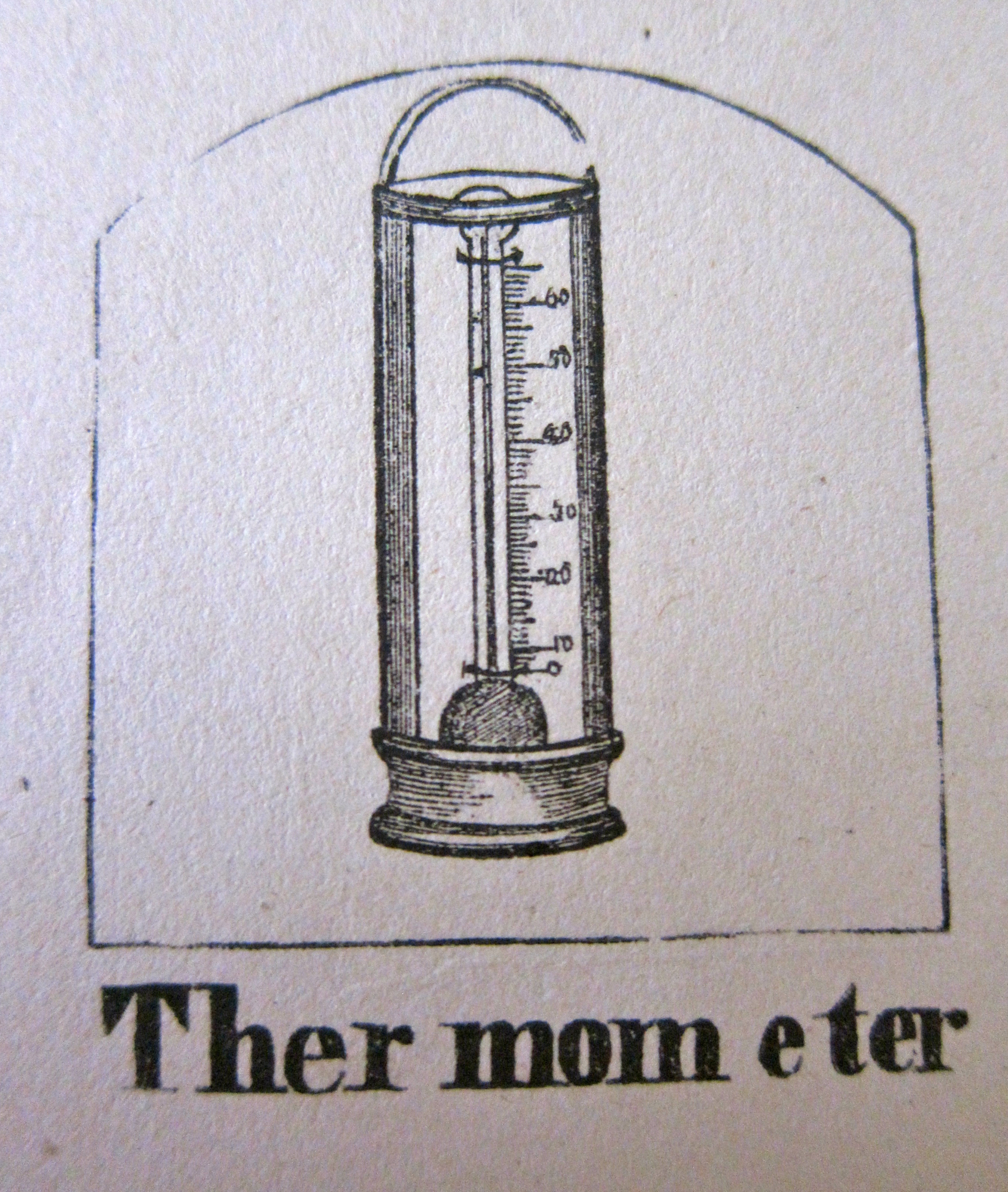
Truth told, Evelina may have been grateful not to make the two mile ride to church. The weather that day, according to Old Oliver, continued “verry cold,” reported at 14 below zero by “the Mr Pools” who lived several miles south of the Ameses. The Pools would know; they manufactured thermometers. Jane McHanna, meanwhile, had to bear the cold on her drive back from Mansfield, returning to North Easton in time to prepare tea.

Despite the cold, Evelina and  Sarah Ames paid a visit to a sick woman in the neighborhood. Calling on the sick was something that Evelina and her sisters-in-law often did. Although there were doctors in town, there was no hospital, nor was there a habit of placing the seriously ill in a hospital.  People were taken care of at home, by family, friends, and townspeople like the Ames women.  Miss Eaton was suffering from tuberculosis or consumption, as it was known.  Evelina, Sarah Ames, and Sarah Witherell visited her often, taking food and helping the family with whom Miss Eaton was living.

Sarah Ames and Sarah Witherell are sisters-in-law.  Sarah Ames is married to Oakes’s brother Oliver, Jr.  Sarah Witherell is Oakes’s sister.  Both women are younger than Evelina; all three women live in close proximity.