September 16, 1851

Cake


Tuesday Sept 16th  Mrs Witherell Emily & Cousin H Mitchell

went into Boston this morning and are going to stop the

remainder of the week  I made some cake

this morning & had to be away from Miss Eddy

more than I could wish  Mrs S Ames & Helen &

Oliver here to tea  Harriet came in but did not stop

long  Miss Eddy will stop the night here

A visit from Miss Eddy, a woman who has been staying with various friends – or relatives – in Easton, may have been the impetus for Evelina to bake a cake this morning to serve at tea.  It’s worth noting that despite having collected peaches and grapes during the last few days, Evelina didn’t make a fruit pie or tarts to serve. She was saving that fruit to put up for the winter, and wouldn’t have wanted to waste any of it on a tiny social occasion. Cake it was.

The Ames family from next door, Oliver Jr., Sarah Lothrop Ames, and their daughter Helen came for tea, ate some cake and presumably chatted with Miss Eddy.  Sister-in-law Harriett Ames Mitchell stopped by briefly, too. Not making an appearance in the front parlour, however, was Sarah Witherell and her daughter from the other part of the house. They had departed that morning for a planned week in Boston, traveling with a Mitchell cousin.

Sarah Witherell had headed to Boston in anticipation of a special event, The Great Railroad and Steamship Jubilee. The Jubilee was to be a “celebration commemorative of the opening of railroad communication” to Canada.”*  It recognized the creation of a railroad line from Boston to Burlington, Vermont that connected with a steamship to Canada via Lake Champlain. Travel in the United States had become international. The celebration would go on for three days, and many members of the Ames family would strive to attend some part of it.


*The Railroad Jubilee: an account of the celebration commemorative of the opening of railroad communication between Boston and Canada, Sept. 17th, 18th and 19th, 1851.


September 13, 1851

OLYMPUS DIGITAL CAMERA

Sept 13  Mrs Stevens & self sat down quietly to

sewing this morning but it was so warm that

we could not do much  There is quite a

change in the weather this morning.  Had

quite a heavy tempest this afternoon.

Carried our work into the other part of

the house this evening.  Mrs S Ames & Helen

passed the afternoon there

No matter how still Evelina and her guest, Mrs. Stevens, sat this morning, they found themselves enervated by the extreme heat.  They tried to sew but “could not do much,” heavy as the extra cloth must have felt on their laps as they hemmed or mended. Surely they wore their lightest cotton dresses (which were likely to have been somewhat plainer than the morning attire suggested in the illustration above from Godey’s Lady’s Magazine) and probably eschewed wearing caps indoors. Even in their coolest attire, however, they still would have “glowed,” as the old saying goes. Horses sweat, men perspire, women glow.

An afternoon rainstorm – “two showers before sunsett” noted Old Oliver in his daily jounal  – helped clear the air and by evening, Evelina and Mrs. Stevens had joined Sarah Ames Witherell in the other part of the house.  Did Old Oliver sit with them, or was he over in the office with Oakes and Oliver Jr.?  Assuming that Oakes spent the day in Boston on the usual shovel business, did he get caught in the downpour on his way home?

September 6, 1851

shopping

Sat Sept 6th  Alson brought Mrs Stevens before we

were up this morning left his carriage here

while he went to Boston.  We went into Olivers

& passed the afternoon with Mrs Latham & Mrs W & Mrs

Mitchell I called on Mrs Peckham while the others

went to Mr Manly’s garden  Mr Ames brought home

some cuff pins for Alsons wife & Mrs Stevens

Evelina was probably pleased today to lapse back into a sociable, summer agenda.  Family friend Mrs. Stevens arrived at dawn, it would seem, delivered by Evelina’s brother Alson Gilmore on his way into Boston. The two women later went next door to call on Sarah Lothrop Ames and were joined by sisters-in-law Sarah Ames Witherell and Harriett Ames Mitchell and the former’s houseguest, Mrs. Latham.  Chat, chat, chat.

As they had done occasionally throughout the summer, many of the women went up to look at the flowers in Edwin Manley’s garden. The blooms they saw would be among the last for this year.  Evelina eschewed that walk (or ride) and went instead to call on Susan Peckham, wife of John Peckham, clerk for the shovel company.  The Peckhams were about to move, so perhaps Evelina went to see what help she could be, or to say goodbye. Susan Peckham must have been packing things up, a chore that would have made Evelina, who was lately familiar with the bustle of departure, feel right at home.

Oakes Ames spent the day in Boston, as he did almost every Saturday.  He went on business for the shovel company, often returning with orders or payments.  Just as often, he carried out particular errands for his wife.  Yet it’s not clear whether she or he or both, perhaps, suggested the purchase of cuff pins (perhaps what we call cuff links) for Mrs. Stevens and Henrietta Williams Gilmore.  Both women had birthdays around this time.

September 5, 1851

Pentax Digital Camera

*

Friday Sept 5th  Expected to be alone to day and was in

hopes to do some sewing but about ten Oclock

concluded to invite Mrs Latham (who came yesterday

to Father Ames,) to tea and all from the other part

of the house.  Jane made a great fuss about getting

tea having some short biscuit to make and I

got very nervous.  Mrs S Ames staid awhile but

went home to tea


The house on Main Street was relatively empty today.  Son Oliver had left for college and friends Pauline Dean and Orinthia Foss had departed as well.  Her husband Oakes and other sons, Oakes Angier and Frank Morton, were at work and little Susie was at school.  How quiet the house must have seemed, even with the sounds from the factory ringing from across the road. Evelina sat down in solitude to sew and found she wanted something more.

A little tea party was what was needed, she “concluded,” although her servant, Jane McHanna, evidently disagreed.  Jane probably had her own agenda of tidying up after yesterday’s whirlwind of departures and so “made a great fuss” about the extra work. Jane’s irritation ran counter to Evelina’s hopes, and some kind of verbal tussle must have ensued. No wonder that Sarah Lothrop Ames, who had come over from next door, didn’t stay around.

The party must have happened, however, else Evelina would have written otherwise. Jane prepared the meal. Late in the afternoon, family from the other part of the house and their guest, Mrs. Latham, were treated to tea and “short biscuit” and, perhaps, other refreshments.

Short bread or short biscuit or short cake – all names for the same, crumbly finger food – was a typical offering at tea parties, and simple enough to make that many cooks wouldn’t even need a recipe, or “receipt.” Using some of the butter that Evelina had bought just one week earlier, Jane McHanna would have followed a process similar to that described by Lydia Maria Child in her book The American Frugal Housewife:

“When people have to buy butter and lard, short cakes are not economical food. A half pint of flour will make a cake large enough to cover a common plate.  Rub in thoroughly a bit of shortening as big as a hen’s egg; put in a tea-spoonful of dissolved pearlash; wet it with cold water; knead it stiff enough to roll well, to bake on a plate, or in a spider.  It should bake as quick as it can, and not burn.  The first side should stand longer to the fire than the last.”


*http://britishfoodhistory.wordpress.com/2012/06/10/shortbread/


August 27, 1851

2004-D03-395

Wedns Aug 27th  This morning filled the vases with flowers and worked

some about the house and about nine went to Mr

Lothrops with Mrs S Ames to put on the shrouds

Got home about twelve.  Went to the funeral

and to the cemetery  He is the second one that 

has been laid there.  Mrs Fullerton and Abb[y] Torrey

called this evening & Malvina with her bloomer

hat that I gave her

“[A] fair, cool day,” Old Oliver noted in his journal. “Clinton Lothrop buried.” Brother of Sarah Lothrop Ames, a young husband, father, and farmer, Clinton had died of typhus fever. Evelina helped Sarah, Clinton’s only sister, place a shroud on the corpse. In the afternoon, with her husband and family, Evelina attended the funeral service, which would have been at the Lothrop home, and the burial.  Clinton was buried in the new cemetery.

Despite the somber events of the day, Evelina managed to brighten her home with flowers from her garden.  In the evening, her nieces Abby and Malvina Torrey made a call with their relative, Mrs. Fullerton. Malvina wore a “bloomer hat” that Evelina had given her.

The bloomer costume – seen above in the Currier print –  was a fashion phenomenon in 1851. Originally developed by readers of a health publication called The Water-Cure Journal, “Turkish pants” were touted as a healthful alternative to the heavy-skirted dresses and constrictive bodices that women typically wore. They became known as “bloomers” when Amelia Bloomer of Seneca Falls, New York, told the readership of her temperance periodical, The Lily, that she had adopted the style to wear.  She published instructions for making the outfit, and the curious style became a craze.

Although the bloomer costume was admired at first as being healthful, it soon became politicized as women’s reform became prominent in the headlines. To many, the free-flowing bloomers became symbolic of the suffrage movement. Publications that initially praised bloomers recanted as the outfit became more controversial. The fashion held its own through the decade, however, but disappeared after the Civil War, only to revive in the 1890s.

Evelina, sewing maven that she was, had been following the fashion news, but hadn’t opted to make a bloomer costume for herself. With a nod to the trend, however, she acquired a bloomer hat, probably like the one in the Currier print, to give to her ten-year old niece, Malvina.

*Nathaniel Currier, The Bloomer Costume, 1851

August 23, 1851

Mayflower

The Mayflower

Sat 23d Aug  The two Mr Lothrops went to the shop after

breakfast and I baked Cake & ginger snaps in

Mrs Witherells oven  This afternoon I went with

them to Mothers to tea, called at Mr Seba Howard

and took Orinthia with us and brought her here

at night  The Miss Tolmans are still at the 

Howards  Evening Mrs Mitchell came in.  Pauline

passed the afternoon in the other part of the house

Even in the hot weather, baking had to be done.  After breakfast, Evelina saw cousins Warren and Jerry Lothrop head off with the men to the shovel shop.  Pauline Dean, another guest, didn’t accompany them, but neither did she hang around the kitchen with her hostess. She spent part of the day, at least, in the other part of the house. By herself, Evelina baked cake and ginger snaps.

In the afternoon, once again laden with company, Evelina went down to the Gilmore farm with the young Lothrop men to visit Evelina’s elderly mother. Hannah Lothrop Gilmore was probably pleased to get a visit from these two male relatives. How closely related Mrs. Gilmore was to Warren and Jerry is uncertain; the Lothrop clan was extensive, and had been settled in Plymouth and Bristol Counties (and on into Maine) for generations.

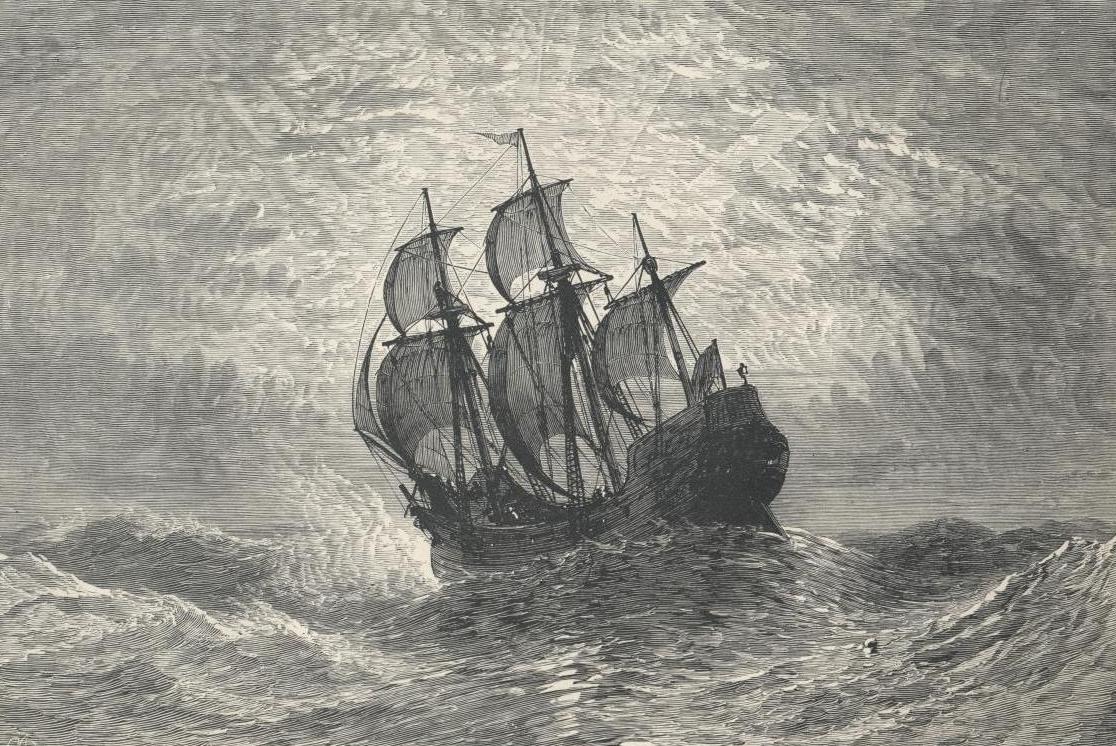
What is certain is that if “cousin” Jerry and Warren were related to Evelina through the Lothrop line, they were also probably related to Sarah Lothrop Ames, as the two women themselves were second cousins. Evelina’s grandmother, Hannah (Howard) Lothrop, and Sarah’s grandmother, Betty (Howard) Lothrop, were sisters.*  They were descended from John Alden and Priscilla Mullins of Mayflower fame.

On the way home, Evelina picked up her young friend, Orinthia Foss, who ended up spending the night.  Where did everyone fit? How did everyone sleep?

* Winthrop Ames, The Ames Family of Easton, 1937, pp. 230-231


August 13, 1851

OLYMPUS DIGITAL CAMERA

Wednesday 13th  Went to Mrs Holmes early this morning to

make her bed & tie her hair and was there most

of the forenoon.  Passed the afternoon at Major

Seba Howards with Mrs S Ames.  Met a Mr & Miss

Howard from Philadelphia two Miss Tolmans from

New Bedford & Henrietta & Mrs Lewis Keith.  Mr & Miss

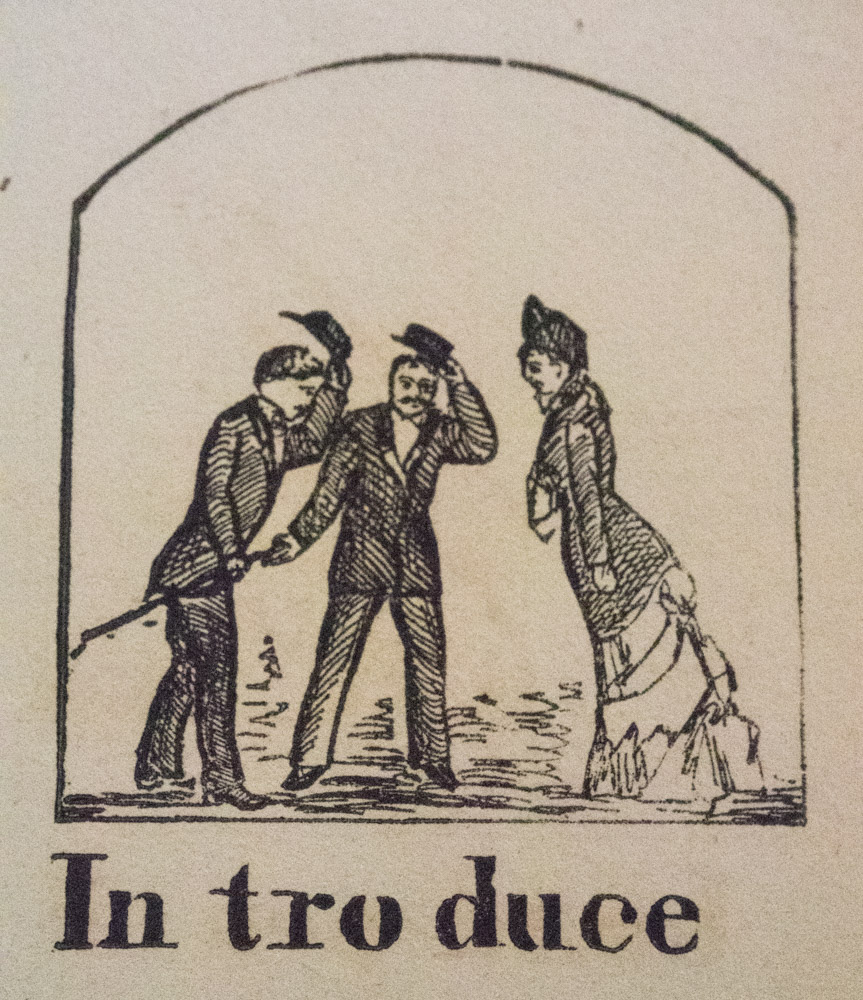
Howard are very pleasant.  Had an introduction

to Mr Brett

First thing after breakfast, Evelina went to see Harriet Holmes, a neighbor who was seriously ill.  As she had done on other days, she made Harriet’s bed and tied up her hair. She spent the morning there, probably giving others in the household – specifically Harriet’s mother-in-law, Mrs. Holmes – some time off.  Presumably Mrs. Holmes or her son, Bradford, had kept watch the night before.

Everyone’s vigilance was rewarded, as Harriet Holmes began to improve. Whatever it was that had made her sick began to abate. This would be the last visit that Evelina made to the house or, at least, the last one she made note of. Harriet would recover.

Evelina must have been relieved. She was certainly optimistic enough to set aside her care-giving and dedicate the afternoon to socializing.  She and her sister-in-law, Sarah Lothrop Ames, called on Major Seba Howard and his wife, Eleutheria. There they were introduced to several guests, some of whom were “very pleasant.”  The afternoon was a much needed change of pace after the worry of the past several days.


July 23, 1851

7505761_119709544472

*

Wednesday July 23  Have been sewing before noon to day working on

different articles among the rest have made

Susan a pair of short cuffs of cambric

trimed with a wide insertion and edging

Aaron Hobart & Charles Mitchell came to the other part

of the house & dined When they returned Mrs Witherell

Mitchell, Mrs S Ames & self went to Mr James Mitchells to tea

Met Mr & Mrs Judge Mitchell Mrs & Miss Hyde & Aunt Orr there

Sewing was in the forefront of Evelina’s activities lately while gardening seemed to disappear.  Perhaps the heat and the weeding were too much, perhaps her favorite blooms had gone by and she had lost interest. Then, too, she simply may have neglected to record the time she did spend in the flower beds. Whatever the cause, Evelina was back indoors in the mornings, needle in hand.

Her social life, always a little more active in the summer, continued to thrive. She noted that Charles Mitchell, younger brother-in-law of Harriett Mitchell, and Aaron Hobart dined with Old Oliver and Sarah Witherell. This entry is the first mention of the Hobarts, a family that would become intimately involved with the Ameses in the future.  Aaron was the eldest son and namesake of Judge Hobart, a former congressman, and his wife Maria, who lived in East Bridgewater. Recently returned from working in New Orleans, Aaron became “actively identified” with the local Carver Cotton Gin Company**. His youngest sister, Catherine, was at school with Helen Angier Ames in Dorchester.

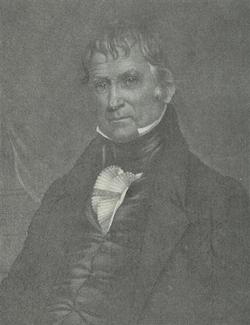
It was to East Bridgewater that the ladies went today for tea. Evelina and her sisters-in-law met with Judge Nahum Mitchell, also a former congressman and a contemporary of Old Oliver, his wife Nabby, and others.  The Mitchells were related to the Orr family, and one of their daughters (Mary Orr Mitchell Ames) was married to an Ames cousin in Springfield. Needless to say, many of the long-established families in southeastern Massachusetts had intermarried over time and thus were related in long-distance ways.

*Judge Nahum Mitchell
** Plymouth County Massachusetts Archives


July 18, 1851

large-1053

1851

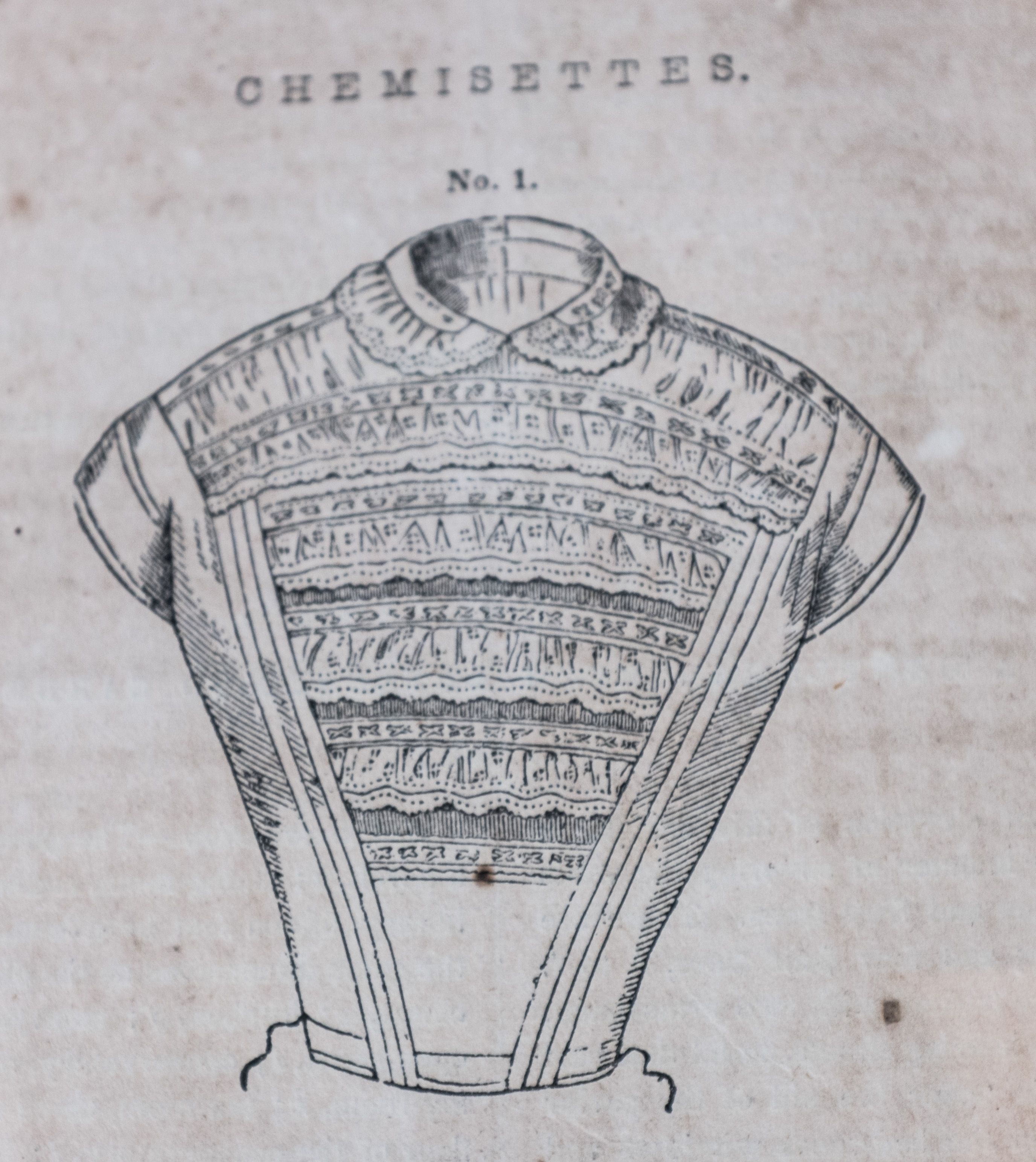
Friday July 18  This forenoon finished my Silk Muslin dress

made a chimisette for it  Mother is not at all well

and is not easy cannot stay in one place a great while

Oliver went with Mrs S Ames after Helen.  Got to

Dorchester about 5 Oclock and home about half past nine

The weather is hot and uncomfortable.  Fred returned

to night having passed a good examination


Fred Ames was accepted at Harvard!  He shared the good news with his relatives when he returned to North Easton this evening. He did well on his examination, which perhaps constituted some combination of interview and oral or written test of the depth of his knowledge. How proud his parents must have been, and what relief he must have felt to have the entrance hurdle behind him.

Fred’s life was now moving in a fresh direction but otherwise, things in North Easton were much the same as he had left them the day before. Under a hot and humid sky, Evelina was sewing and looking after her mother, Hannah Lothrop Gilmore, who wasn’t feeling well.  Fred’s parents, Oliver Jr. and Sarah Lothrop Ames, meanwhile, had driven off to fetch his sister, Helen, from school in Dorchester.

Today’s sewing project was a chemisette for Evelina’s newest dress, the silk muslin that she and dressmaker Julia Mahoney had been working on this week.  The chemisette was a light blouse designed to be worn under the jacket bodice of the dress.  Hers probably wasn’t as elaborate as the chemisette in the illustration.


July 17, 1851

imgres


1851

July 17  Mother & myself have had a very quiet forenoon

Some expected Cassander Gilmore here but they

have set so many times that Im thinking they will 

not come at all.  About 4 Oclock I went to N. Bridge

water with Mrs Sarah Ames & Mrs Mitchell to carry

Fred to the cars for Cambridge to be examined for

the Sophomore year

Cassander Gilmore, the relative who was mentioned as a “no-show” visitor today, was a prominent shoe manufacturer in Raynham, Massachusetts.  His failed visit was incidental to the bigger news of the day: Frederick Lothrop Ames’s departure for Cambridge.

Barely sixteen years old, Fred Ames visited Harvard College today “to be examined” for acceptance. He had just completed a year (or more) at Phillips Exeter Academy and, despite his young age, was seeking entrance to college.  Harvard was the place for just such a bright fellow.

Fred seemed both prepared and motivated for college, and his parents, Sarah Lothrop Ames and Oliver Ames Jr., supported the idea of higher education for him, perhaps for a variety of reasons. This was an age, according to Henry Adams, when parents “began sending their children to Harvard for the sake of its social advantages.”* Sarah and Oliver Jr. were ambitious for their only son, but the question remains why they – or he – requested entry for the sophomore rather than the freshman year.

With his future riding on the examination ahead of him, Fred must have been at least a little anxious about the trip. His mother and  Aunts Evelina and Harriett may have sensed some apprehension on his part, and tried to bolster his spirits as they rode along to the train station in North Bridgewater. They may also have simply been exercising their right to behave as many fond relatives behave when their young ones leave for school: with overt affection. Fred may have been relieved, actually, to wave goodbye to them at the depot.

* Ronald Story, The Forging of an Aristocracy: Harvard and the Boston Upper Class, 1800-1870, Wesleyan University Press, 1980.