January 22, 1851

Chillblains

Chillblains

1851 Jan 22 Wednesday  Commenced working on the sack again this

morning quite early.  Went to Elisas about ten

to get her to make a dress for Susans doll staid

untill twelve and left her to finish it

Got ready to go to the sewing Circle at Mr Whitwells

But it commenced snowing very fast which prevented

our going.  This evening have finished Susans sack

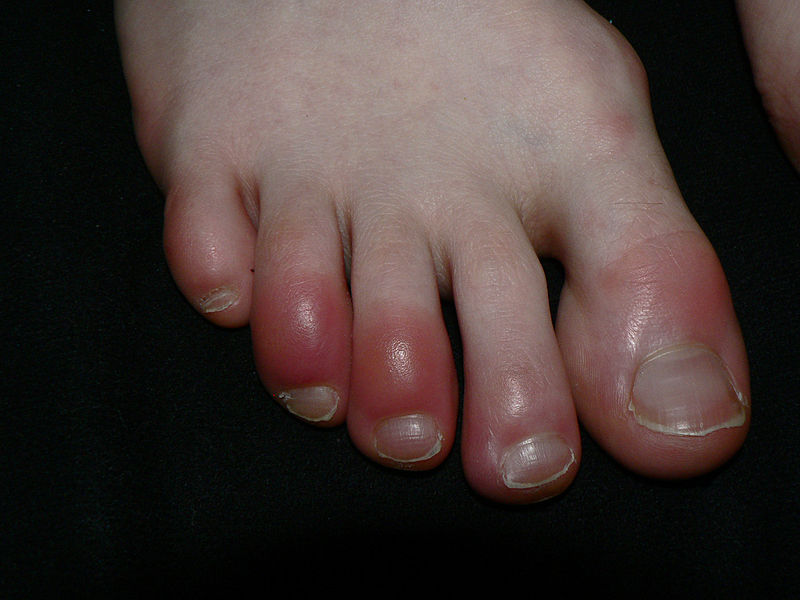
Oliver poor fellow sits here almost crying with the chillblains

Evelina finished sewing a sack (a kind of apron) for her daughter that she’d been working on for several days, and turned to another ongoing project, doll clothes.  At mid-morning she left the house and went to Elisa and Patric Quinn’s home along Stoughton Road (today’s Elm Street).  Elisa was a dressmaker while Patric was employed at the shovel factory.  Like so many employees in that period, they had emigrated from Ireland.  Elisa was going to help Evelina finish two dresses for Susie’s new doll.

Leaving the little dresses in Elisa’s capable hands, Evelina returned home for midday dinner, just before snow began to fall.  She and her sisters-in-law had planned to go to the monthly meeting of the Sewing Circle, held this afternoon at the parsonage where the Whitwells lived, but poor visibility put an end to their travel.  The ladies stayed home.

Oliver Ames (3), Evelina and Oakes’ middle son, was suffering from chillblains, an unsightly and uncomfortable affliction of extremities: toes, fingers and ears.  Cousin to frostbite, chillblains are an itchy, painful inflammation brought on by exposure to moist cold air.  Some say it’s caused by too-rapid warming of skin and tissue after exposure to cold.  Different treatments were offered: poultices, soaking or rubbing with salt.  Lydia Maria Child, author of The American Frugal Housewife, offered a specific remedy:

“The thin white skin, which comes from suet, is excellent to bind upon the feet for chillblains.  Rubbing with Castille soap, and afterwards with honey, is likewise highly recommended.  But, to cure the chillblains effectually, they must be attended to often, and for a long time.”

It appears that Oliver (3) was in for several days of discomfort.

January 16, 1851

Muff & Tippet B & W

1851

Jan 16 Thursday  Went to Boston with S Ames.  Oakes A carried 

us over to the stage.  We found it very bad walking 

could scarcely cross the street without going over

shoe in snow & water but otherwise a delightful day

We bought some druggett & Sarah a muff & tippet

for herself & cuff & tippet for Helen.  We got us some

oysters at Vintons.  Called at Mr Orrs about four thirty

that we should have time to reach the cars but we were left.

Boys went to an assembly at Canton

Alson & Augustus dined here.

O, joy, a trip to Boston, an event that Evelina typically finds “delightful” no matter what the weather.  After two days of sadness about the death of Lewis Carr, Evelina and Sarah Lothrop Ames headed into the city via stage coach on a shopping excursion.  The railroad, which they called “the cars,” did not yet reach North Easton, but did stop in Stoughton.  The women intended to return by train at nightfall, and be carried home from Stoughton by one son or other, but missed the train and had to stay overnight.  They may not have been disappointed to have to stay in town.

Sloppy weather didn’t prevent the successful acquisition of goods.  Evelina bought some drugget, or carpeting, while Sarah found accessories for herself and her daughter.  Muffs and tippets, naturally, were very much in fashion for winter wear.  Dining on oysters was another highlight, as was a visit to an old family connection, Mr. Orr.

The homefront in Easton was busy, too.  Evelina’s brother, Alson, and his oldest son, Augustus, took midday dinner with Oakes and his children.  Little Susie would have been the only girl at the table.  In the evening, Oakes Angier, Oliver (3) and Frank Morton headed to Canton to a dance.  Everyone’s spirits seemed brighter today.

Photo of muff and tippet, ca. 1840,  from Minnesota Historical Society

January 13, 1851

Washing

/51 Jan 13  Washing day of course, and I have been

about house in the morning as usual.  A Augustus dined

with us, come up in the stage.  Made a hair cloth back to

another rocking chair  Went to Mr Whitwells with Mr

Ames this evening, met with Alson & wife.  It is a

beautiful moonshiny evening and we have had a

pleasant ride and have enjoyed myself very much.  Mr &

Mrs Whitwell I like very much  Father killed another

yoke of oxen to day and we have a quarter & the tripe.

Boiled that we had last week to day.

Monday is Wash Day.  This might be a Yankee commandment, were there a written code.  History has it that the first day the Pilgrims got off the Mayflower was a Monday, and the first thing the women did after all those weeks at sea was to wash their clothes.  The timing stuck, and remained a custom for centuries.  On Mondays at the Ames house, Jane McHanna washed the family clothes and linens while Evelina did almost everything else in terms of housework and cooking.  Evelina was not fond of putting her hands into soapy water.

The roads around town must have improved.  This evening, Evelina and Oakes finally got over to the Whitwells’ house, presumbly for a delayed acknowledgment of Mr. Ames and Mr. Whitwell’s shared birthday.  Evelina clearly enjoyed herself.  Another couple was there: Alson and Henrietta Gilmore. Alson is Evelina’s older brother.  He owns the old family farm in the southeast corner of Easton, just north of the town of Raynham.  He and his wife have six children together, as well as a son from Alson’s first marriage.  This is Alson “Augustus” Gilmore, who had midday dinner at the Ames house today.  Augustus lives in Boston as the year opens but will soon move back to North Easton.  He does courier work for the Ames brothers.

Evelina is close to her nieces and nephews; their presence in her life, and her affection for them, is evident throughout the diary.  Less certain is the regard that other members of the Ames family held for the Gilmores; family lore has it that the two families moved in different social circles and that even into the 20th century, the Gilmore clan was looked down on by members of the Ames clan. From Evelina’s happy description of the day, however, we can surmise that she was unaware, on this lovely, “moonshiny” night, anyway, of any discrimination.

January 12, 1851

Preach

/51 Jan 12 Sunday  Have been to church all day and heard two

excellent sermons from Mr Whitwell.  The afternoon text was

“Train up a child in the way he should go and when he is old

he will not depart from it”  Passed this evening at Mr Willard

Lothrop with Mr Ames & met with Minister Norris & Mr Torrey

This noon I stopped to hear Mr Whitwells class in the Sabbath

School afterwards went into Mr Daniel Reeds with Mother

Very warm + pleasant for the time of the year

The Ames family, Unitarians all, attended meeting today and stayed for both services, which encompassed a morning program, an intermission, and an afternoon program.  In their family pew, Evelina, Oakes, Oakes Angier, Oliver (3), Frank Morton and Susan sat with or near Old Oliver, Sarah Witherell and her children, George and Emily.  Also nearby, if not in the same pew, sat Oliver Jr, Sarah Lothrop Ames and their children, Fred and Helen, faces upturned to hear Reverend Whitwell deliver the day’s two sermons.  Eight-year old Susie may have squirmed in her seat; she wasn’t inclined to sit still for the second service.  And Oakes Ames was known to fall asleep, however inspiring Mr. Whitwell’s words were to Evelina.

In 1851, the Unitarians congregated at a church in Easton Centre, a few miles south of the village of North Easton (but still within the boundaries of the Town of Easton, Massachusetts.)  Like many families, the Ameses had to travel by carriage or sleigh to attend Sunday service.  The adults would have ridden, or “been carried,” as the expression went,  but the children may have had to walk the distance.  Children walking to church, regardless of distance, was common.  If this was true for the Ames family, we might imagine that cousins Oliver (3) and Fred walked together, as they were close friends.

At intermission, children went into Sunday School and the adults socialized.  Winthrop Ames, a grandson-to-be, described the scene in his family history (from 1937):

“They tethered their horses in a long, open shed and stayed through both morning and afternoon services, eating the luncheons they had brought and gossiping with the townsfolk during the intermission.”

On this winter Sunday Evelina and her mother, Hannah Lothrop Gilmore visited at the nearby home of Daniel and Mary Reed.  Socializing continued in the evening as Evelina and Oakes called on Willard Lothrop.

January 10, 1851

tcrr_ames

/51

Jan 10th Friday.  Have been baking most all day  Heat

the oven three times.  It rained very hard last night

and carried off most all the snow and it is very wet

and sloppy.  Margaret Keighan here to see Jane.

This is Mr Ames & Mr Whitwells birth day  both

of the same age 47 years.  Have been expecting Mr & Mrs

Whitwell here this afternoon and as they did not come

would have rode there this evening but Mr Ames is engaged

If Evelina and Oakes had been able to visit the Whitwells tonight, they would have had to take the carriage rather than the sleigh because of recent heavy rain.  According to Old Oliver, the sudden wet and warm weather has “took the snow of[f] so much that it spoilt the slaying.”  Evelina, meanwhile, was so tied to the brick oven all day, baking mince meat pies and such , that she had a right to be a little disappointed not to go out this evening.

The Ames family, Puritan stock that they are, don’t overly celebrate anyone’s birthday.  Yet Evelina notes the shared birthday of her husband and the minister.  Oakes Ames was born in North Easton on this day in 1804.  He was the first child of an eventual eight to be born to Oliver Ames and Susannah Angier Ames.  The others to follow would be Horatio, Oliver Jr., Angier (d. in infancy) William Leonard, Sarah, John and Harriett.

Besides Oakes, Oliver Jr. and Sarah are the only siblings who still live in North Easton in 1851.  Except for a stint away at school, Oliver Jr. never moved away.  He and his wife live next door.  Sarah, on the other hand, left for New York in 1836 when she married Nathaniel Witherell, Jr.  Now a widow, she returned to North Easton in the late 1840s and moved back into the old homestead to care for her father after the death of her mother in 1847.

The absentee siblings are away but never forgotten; among the brothers, especially, business deals are ongoing.  Horatio, the black sheep of the clan, lives in Connecticut and runs a forge.  William Leonard had been in New York City and Albany, working as a merchant who sold, among other items, Ames shovels.  When those enterprises failed, he switched to managing a blast furnace, in keeping with the family talent for manufacturing.  But this proved unprofitable, too. By 1851, William Leonard was making his way as a cattleman on the Minnesota frontier.  John, who had also moved to New York City, died in 1844 of a chronic lung ailment.  Harriett is married to a man from Bridgewater named Asa Mitchell, and at this time lives in western Pennsylvania.

As a boy, Oakes moved with his parents to Plymouth while his father worked at various manufacturing efforts, although shovel making predominated.  The family moved back to North Easton in 1813, after the conclusion of the War of 1812, whereupon Old Oliver threw himself into the manufacture of shovels. After that, the family stayed put.

January 6, 1851

Ox

/51 Monday Jan 6

Jane commenced washing this morning but was taken sick

and had to leave it.  And I had to do the housework again

Father killed two oxen & gave us the tripe  Went to North

Bridgewater this afternoon in a sleigh with S A, Helen 

and E Quinn.  A A Gilmore here to tea had business in

the office  Bought patch for a quilt for Susans bed   run

it together this evening  Received a letter from 

O Foss  She says Roland A has come from California

Jane McHanna was under the weather this Monday morning – perhaps from yesterday’s drive in the frigid air – and unable to manage the laundry and housework.  In the kitchen, something had to be done with the fresh tripe that arrived from Evelina’s father-in-law. Considered a delicacy, the tripe would soon be served at the midday dinner table.

As was typical for this time of year, Old Oliver slaughtered a yoke of oxen and distributed the meat and offal among the family. As he described it, “we kilt a yoke of oxen to day I had of Charles Gurney the off one weighed 1475 and the other 1330.”  Now 71 and retired from the shovel business, Old Oliver spent much of his time raising oxen. (Farming, too, as we’ll see later.)  He was evidently quite fond of them, and they were extremely useful in the family business for transporting raw material and finished shovels.  Oxen were a common sight in North Easton in 1851; anyone inside the Ames house would have heard ox carts rumbling by on the road.

The weather had improved and  housework couldn’t keep Evelina at home this afternoon.  Off in a sleigh to North Bridgewater she went with Sarah Ames, Sarah’s daughter Helen and a neighborhood dressmaker, Elisa Quinn.  The women were most likely on the hunt for fabric.  Evelina found quilting material, and after tea was over that night, began to put together a quilt for her daughter, Susan.

January 5, 1851

Thermometer

Sun Jan 5   Had to do my own housework to day and did not get

it done in season to go to church  Our Lazy boys did not

rise untill nearly nine Oclock.  No meeting this afternoon

Mr Whitwell attended the funeral of Asa Howards child

Mrs McHanna came home in season to get tea.  Went

with S A to see Miss Eaton found her able to sit up 

most of the day.  She has a bad cough & is failing.

After I came back made a call in the other part of the house

There was no church for the Ames family today.  Without the help of their servant, Jane McHanna, Evelina had to get breakfast and dinner by herself, and didn’t finish the preparations in time to get to morning service at the meeting house.   Oakes Angier, Oliver (3) and Frank Morton, perhaps seizing a rare opportunity, slept late despite their mother’s evident disapproval. The afternoon service, which the family also usually attended, was cancelled.

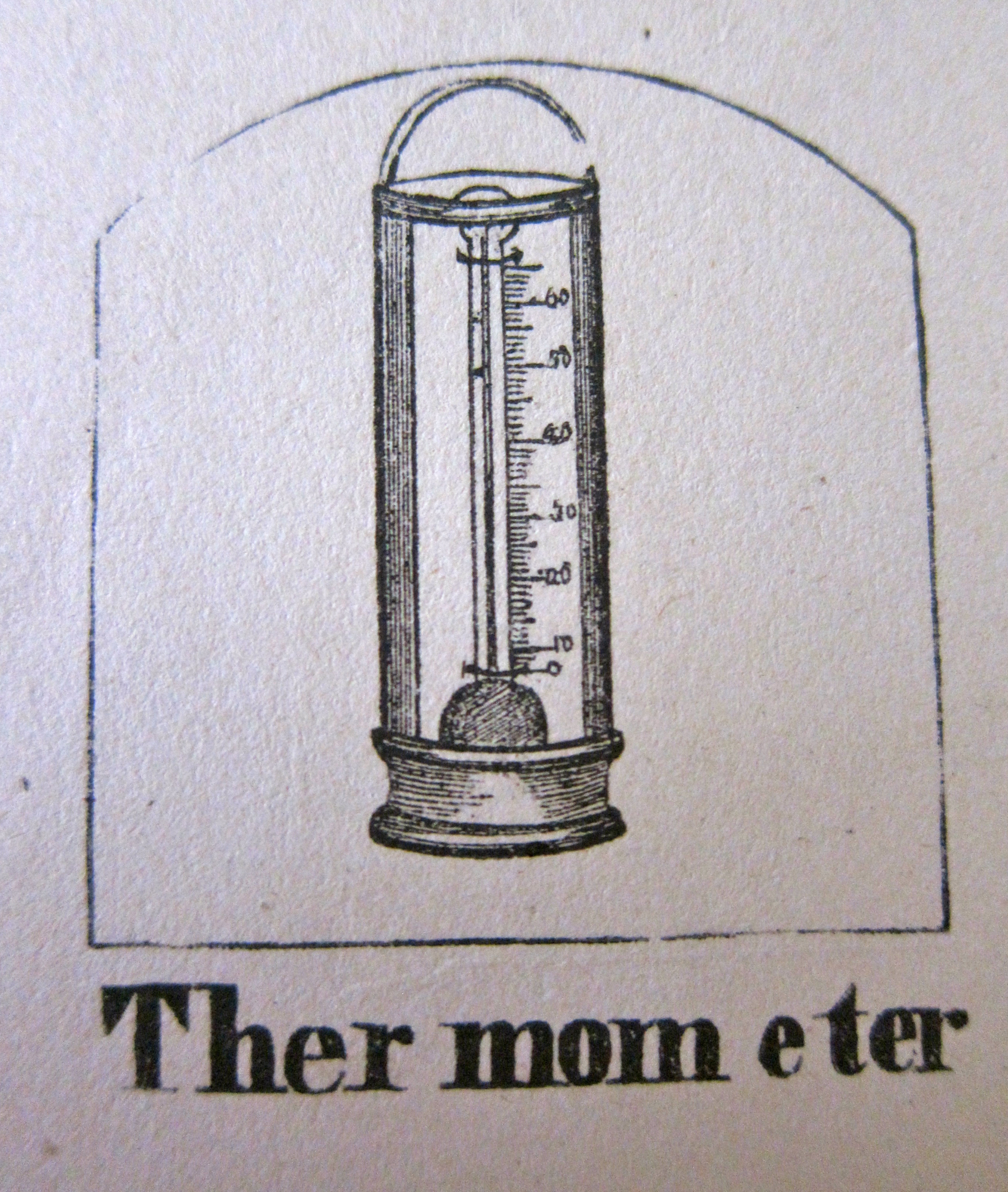
Truth told, Evelina may have been grateful not to make the two mile ride to church. The weather that day, according to Old Oliver, continued “verry cold,” reported at 14 below zero by “the Mr Pools” who lived several miles south of the Ameses. The Pools would know; they manufactured thermometers. Jane McHanna, meanwhile, had to bear the cold on her drive back from Mansfield, returning to North Easton in time to prepare tea.

Despite the cold, Evelina and  Sarah Ames paid a visit to a sick woman in the neighborhood. Calling on the sick was something that Evelina and her sisters-in-law often did. Although there were doctors in town, there was no hospital, nor was there a habit of placing the seriously ill in a hospital.  People were taken care of at home, by family, friends, and townspeople like the Ames women.  Miss Eaton was suffering from tuberculosis or consumption, as it was known.  Evelina, Sarah Ames, and Sarah Witherell visited her often, taking food and helping the family with whom Miss Eaton was living.

Sarah Ames and Sarah Witherell are sisters-in-law.  Sarah Ames is married to Oakes’s brother Oliver, Jr.  Sarah Witherell is Oakes’s sister.  Both women are younger than Evelina; all three women live in close proximity.

January 2, 1851

Evelina Gilmore Ames

Evelina Gilmore Ames

1851

Jan 2 Thursday  I sit down to my sewing pretty early this morning.  Had

some squash pies made   Quinn & wife carried Mrs McHanna

to Mansfield about 2 Oclock PM soon after Mrs Peckham

came & passed the afternoon & evening.  I had to get my own

tea.  Isabel washed dishes.  Mr P[eckham] came in about eight

Thomas Davidson & wife at Olivers [Jr] this evening  Frank went

to A A Gilmores with Quinn  Not able to work  Looked 

over a barrell of Apples & locked them up from the boys

Evelina had to do without her servant, Jane McHanna, this afternoon and thus made her own tea.   Isabel Orel, who usually worked for Sarah Witherell and “Father Ames” (known today as the original Ames patriarch, Old Oliver), helped Evelina by washing dishes.  Jane McHanna, meanwhile, was driven to nearby Mansfield where she may have had family.  Jane came from Ireland, originally, as did Isabel Orel, Patrik Quinn, and most of the domestic employees in the village.

John Peckham worked in the counting house at O. Ames and Sons shovel factory; he and his wife Susan would move away from North Easton this year.  Thomas Davidson, a merchant and the town’s  postmaster, spent the evening with his wife Betsey at the next-door home of Evelina’s brother-in-law Oliver Ames Jr and his wife Sarah Lothrop Ames.

And “the boys,” from whom Evelina had to safeguard the winter’s supply of apples?  They were the sons of Evelina and Oakes Ames: Oakes Angier Ames (often referred to as “O A”), Oliver Ames (the third of that name, who, for the purposes of clarity, will be identified with a “3” after his name), and Frank Morton Ames, the youngest and wildest brother of the three.   OA is 21 as the year opens, Oliver is a month shy of turning 20, and Frank is 17; he spent part of this day with his older cousin Augustus Gilmore.  Strapping young men, they work at the shovel shop six days a week.  Small wonder that they have prodigious appetites, thus causing their mother to lock up the apple barrel to protect the supply.