January 2, 1852

Tea


1852

Jan 2d Friday  Seated myself quite early this morning to work

on Susans hood & finished item about ten Oclock

then ripped my old blue hood and washed the

lining & turned the outside have got it nearly done

We all went into the other part of the house to tea

Mr & Mrs Oliver & Helen there  Frank has a sore

ankle as [sic] does not go to the shop  Dr Swan called there

to see Helen & left Jane some medicine

The family gathered for tea today in “the other part of the house,” meaning that Evelina, Oakes, and their children, Oakes Angier, Frank and Susan went into the southern half of the shared house where Old Oliver and his widowed daughter, Sarah Witherell, lived with her two children, George and Emily. Joining them was the family next door: Oliver Ames, Jr, his wife Sarah and their daughter, Helen Angier Ames, who made an appearance despite being home from school with a cold. Other than missing Oliver (3) and Frederick Lothrop, the sons who were off at college, the group was a normal configuration for a gathering at the homestead.

Evelina’s grandson, Winthrop Ames, would one day describe such a family gathering from less than a decade later, by which time daughters-in-law and grandchildren had arrived:

“Supper, always called Tea, at seven, was the sociable occasion. It usually consisted of cold meats, hot biscuits, preserves and cakes – an easy menu to expand for unexpected guests.  Every week at least, and usually oftener, one household would invite the others and their visitors to tea; and the whole Ames family might assemble, even infant children being brought along and tucked into bed upstairs.  Fifteen or twenty was not at all an unusual gathering.”*

The family was as tightly-knit as any of Evelina’s knitted worsted hoods.

One other note about today’s entry: Dr. Swan left some medicine off for Jane McHanna, the servant, who had been ailing for much of the fall and winter. What did she suffer from?

* Winthrop Ames, The Ames Family of Easton, Massachusetts, privately printed, 1937, p.128


December 28, 1851

CEM2250808_135321565571


Sunday Dec 28th A very stormy day but all went to meeting

except Oakes A & self, came home at noon so few

there that Mr Whitwell thought best not to have one in the afternoon.

Mr Swains brother went with them  Capt Johnathan Pratts wife

was buried this afternoon  Have written to Miss Foss and

partly written a letter to Lucy Norris


The “stormy day” kept most folks home from church; it had snowed overnight and the snow had turned to rain.  According to the family’s indefatigable weather man, Old Oliver, it “raind by spells all day but there was not more than ½ an inch fell.”

It was dreadful weather for a burial, but the frozen ground and cold precipitation didn’t prevent the funeral of Sophia Pratt, who had died the day before of consumption. Fifty-seven years old, she was the mother of four sons and the wife of Capt. Jonathan Pratt, a farmer and former member of the local militia. The Pratt family had been settled in Easton for several generations; their farm was not very far from the Gilmore spread in the southeastern section of town.

In common with any human community, the people of Easton had ceremonies for dealing with death. Protestant or Catholic, a dead person’s body was placed in a coffin and buried as soon as practicable, for reasons of hygiene, convenience and respect. As historian Drew Gilpin Faust explains: “Redemption and resurrection of the body were understood as physical, not just metaphysical realities, and therefore the body, even in death and dissolution, preserved ‘a surviving identity.’ […][T]he body and its place in the universe mandated attention even when life had fled; it required what always seemed to be called ‘decent’ burial, as well as rituals fitting for the dead.”*

As her coffin was lowered into a plot in Pine Grove Cemetery, Sophia Pratt would have received a fitting funeral.


*Drew Gilpin Faust, This Republic of Suffering, New York, 2008, p. 62


December 27, 1851

imgres-1

Sat Dec 27th  Have put more sugar lemon & ginger to the syrup

of the citron  swept and dusted the rooms got

the lining ready to quilt to Susans hood quilted

the lining to Susans bonnet and fixed the collar

to my cloak  A[u]gustus Lothrop brought me a 

bushel of cranberries.  A Augustus called to bring

soap shoes &c that he got me in Boston


The cold temperature continued, Old Oliver noting in his diary that “the thermometer according to the papers was down to 8 in some places.”* Such temperatures wouldn’t have harmed the bushel of cranberries that Evelina received today. As author Mrs. Cornelius advised in her 1846 household guide, “cranberries keep well in a firkin of water. If they freeze, so much the better.”**

Cranberries were common in New England.  There is debate over whether they were served at the earliest Thanksgiving dinners, but there’s no debate that both Native Americans and English settlers consumed the fruit in season. Botanist Judith Sumner notes that: “Wild cranberries were originally hand-picked, but efficient New-Englanders soon crafted scoops that could be used to rake the berries from the lax stems.  During the nineteenth century, bogs carpeted with wild cranberries transformed into cultivated sites that were raked systematically each fall.”***  Augustus Lothrop, the youngest brother of Sarah Lothrop Ames, evidently cultivated cranberries at his farm in Sharon.

Henry David Thoreau enjoyed cranberries, finding them in the wild and eating them raw.  He considered them “a refreshing, cheering, encouraging acid that literally puts the heart in you and sets you on edge for this world’s experiences.”***

*Oliver Ames, Journal, Stonehill College Archives, 1848-1863

**Mrs. Cornelius, The Young Housekeeper’s Friend, New York, 1846

*** Judith Sumner, American Household Botany, Portland, Oregon, 2004, p. 124


Ed. note:  Horace “Augustus” Lothrop was the youngest brother of Sarah Lothrop Ames.  He lived in Sharon.

Alson “Augustus” Gilmore was a nephew of Evelina Gilmore Ames, son of her brother Alson. He lived in Easton.

December 26, 1851

Stove

Dec 26th Friday  Mr Scott has been here to day and

painted the back entry chamber & stairs leading to my

room & Janes bedroom,  I have been knitting the border

to Susans hood and sewed it together ready for the 

lining  It is a bitter cold day  Augustus called this 

evening to get the direction for things to get me

tomorrow  Came down stairs after I went to bed and

made a fire in the air tight so that my plants should not

freeze


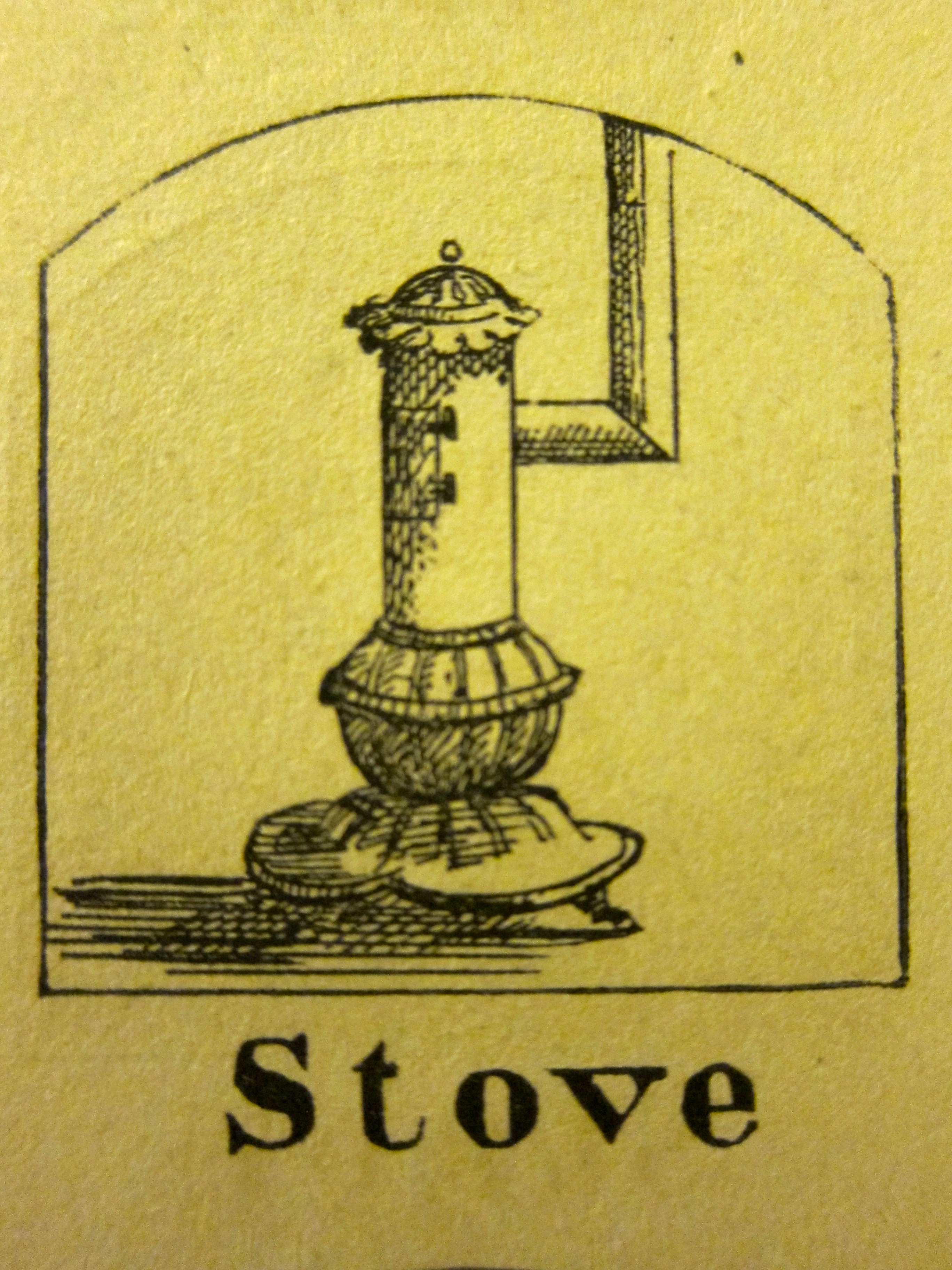
With the wind out of the north “[i]t was a cold day all day,” noted Old Oliver.  So “bitter cold” was it that after bedtime, Evelina slipped downstairs in her nightgown to check on the indoor plants. Determined that they “should not freeze,” she lit a fire in the “airtight” to keep them warm.

The airtight was another word for stove, in this case a coal stove. People often used the words stove and furnace interchangeably, so the air tight that Evelina speaks of may be the same furnace that is often lit by one of the servants. As was customary in many New England homes, it would have been allowed to burn down every night and started fresh each morning. Yet this evening was too cold to risk Evelina’s herbs and other plants being killed off, so the stove was kept going over night.

The presence of this and perhaps other stoves in the house tells us that the Ameses no longer burned wood fires in the original fireplaces, a transition in heating technology that had happened since the 1830s over most of industrialized New England. The change had provided a better, more even heating system, but at a cost. Many lamented the loss, for “the hearth had been the warm, bright center of the household, the provider of cooked food, heat and light and a symbol of the family’s shared life.”* Others, however, of whom Evelina was likely one, cheered for the added warmth and convenience of the furnace.

Jack Larkin, The Reshaping of Everytday Life, New York, 1988, p. 141

December 23, 1851

4-currier-ives-winter-scene-granger


Tuesday Dec 23  Julia has been here to day to make Susans cotton

& wool Delaine  I have not sewed much with her

was choring about the house most all the forenoon

painted over some boxes for Mr Scott to grain.  made

the skirt & cuffs to Susans dress then went to knitting

on my hood which I commenced last evening.  Julia

cut and made and gathered the skirt and basted 

it on to the waist, the sleeves are not made


Old Oliver’s wintry weather report for this day suggests a scene worthy of Currier & Ives:”[T]his was a cloudy day + a verry little fine snow. wind north west it cleard of[f] about sunsett. what snow fell to day + last night was 1 ½ inch.” The countryside was covered with snow, appropriate enough for the first full day of winter.  And winter was a season much illustrated by the 19th century printmakers, Nathaniel Currier and James Ives.  Working out of New York, the firm produced enormously popular hand-colored lithographs of mostly American scenes. Currier began the prints in 1835 and was joined by Ives, who had been the firm’s bookkeeper, in 1856. The men soon developed a stable of artists and produced prints through the rest of the 19th century and into the early 20th. Evelina would have been familiar with Currier & Ives images, in the same way that many mid-20th century Americans were familiar with the illustrations of Norman Rockwell. The images were everywhere.

Many, if not most, Currier & Ives prints were scenes of the outdoors. On this day at the Ames’s, however, the action was all indoors, as the women chored, painted, sewed and knitted. Dressmaker Julia Mahoney was at the house to sew a wool dress for nine-year-old Susan Ames. That a child Susie’s age was having a dress made by a “professional” rather than her own mother was certainly a sign of the Ames’s wealth. Helen Ames, Susie’s fifteen-year-old cousin next door, often had her dresses made by Julia. Evelina was keeping up with her sister-in-law, Sarah Lothrop Ames, in providing the best for her daughter.


December 20, 1851

unnamed Dec 20 Saturday  Have been very busy all day working

on different articles  Mended some clothes

for Frank, the stockings and mended the

places that were cut & bound the end of

some pieces of carpeting Jane finished the 

second robin that she has made for Frank

Mr Ames brought home some marble rubber

and lining & ribbon for Susans bonnet   ”


[T]his was a fair day and not verry cold” was the weather report from Old Oliver Ames. It was a normal Saturday at the Ames’s house in all respects. Evelina mended clothes, darned socks and repaired some carpeting.  Jane McHanna sewed, too, having recovered from an acute indisposition caused by coal the day before. She finished a “robin” (which one reader suggests was a kind of tough work pants) for Frank Morton Ames, Evelina’s youngest son.

Oakes Ames went into Boston, as usual, for a weekly check-in with shovel customers, after which he went shopping for his wife. From a list Evelina must have given him, he made his way along Washington Street and around Faneiul Hall, probably knowing just which shop to go to for such-and-such ribbon or a well-priced bolt of flannel. He returned to North Easton laden with parcels wrapped in paper and tied with string.

December 18, 1851

62834-004-ED8B9BE0


A Delaine Sheep

Dec 18 Thursday  Finished the back of Susans hood

and finished the blue and orange deLaine

for self that Julia cut a new waist for last spring

Mary left this morning said she was going

to Bridgewater for her clothes   It is bitter cold and 

I fear she will suffer  Jane has finished two

prs of cotton flannel drawers for me that she

has been sewing on since she was sick

Another “fair cold day;”* not an ideal time for the servant, Mary, to travel from North Easton to her home in Bridgewater.  Whether she rode or walked, she must have been quite exposed and have become sick, for she didn’t return to the Ames household for the rest of the winter. She only reappears in Evelina’s diary the next July, working by that time for Alson and Henrietta Gilmore at their farm.  What prompted her departure?  Was she homesick for family in Bridgewater, or tired of working at the Ames’s house?

Sewing was today’s occupation of choice for Evelina and her remaining servant, Jane McHanna. Evelina picked up an unfinished project from the previous spring, one that she had nearly finished with help from local dressmaker, Julia Mahoney.  It was a “blue and orange deLaine,” meaning that it was a print or plaid, fine-weave, challis-like wool dress, one that would be of service in this cold weather. The wool itself came from a type of Merino sheep known as a Delaine (as in, “of wool” in French.) Jane, meanwhile, sewed some flannel underclothes for Evelina, who would be warmly dressed once these articles were finished.

Next door, in the other part of the house, a man named Holman Johnson, probably visiting on shovel business, stayed the night.

*Oliver Ames Journal, Stonehill College Archives, Arnold Tofias Collection


December 17, 1851

Sleigh

Dec 17th  Wednesday.  Mary went to ironing this

morning and Jane did the housework and I have been

knitting on Susans hood have got the front done and 

commenced the back  Abby spent the afternoon

& Malvina came in past eight  Jane ironed 7

shirts this afternoon  Very cold weather

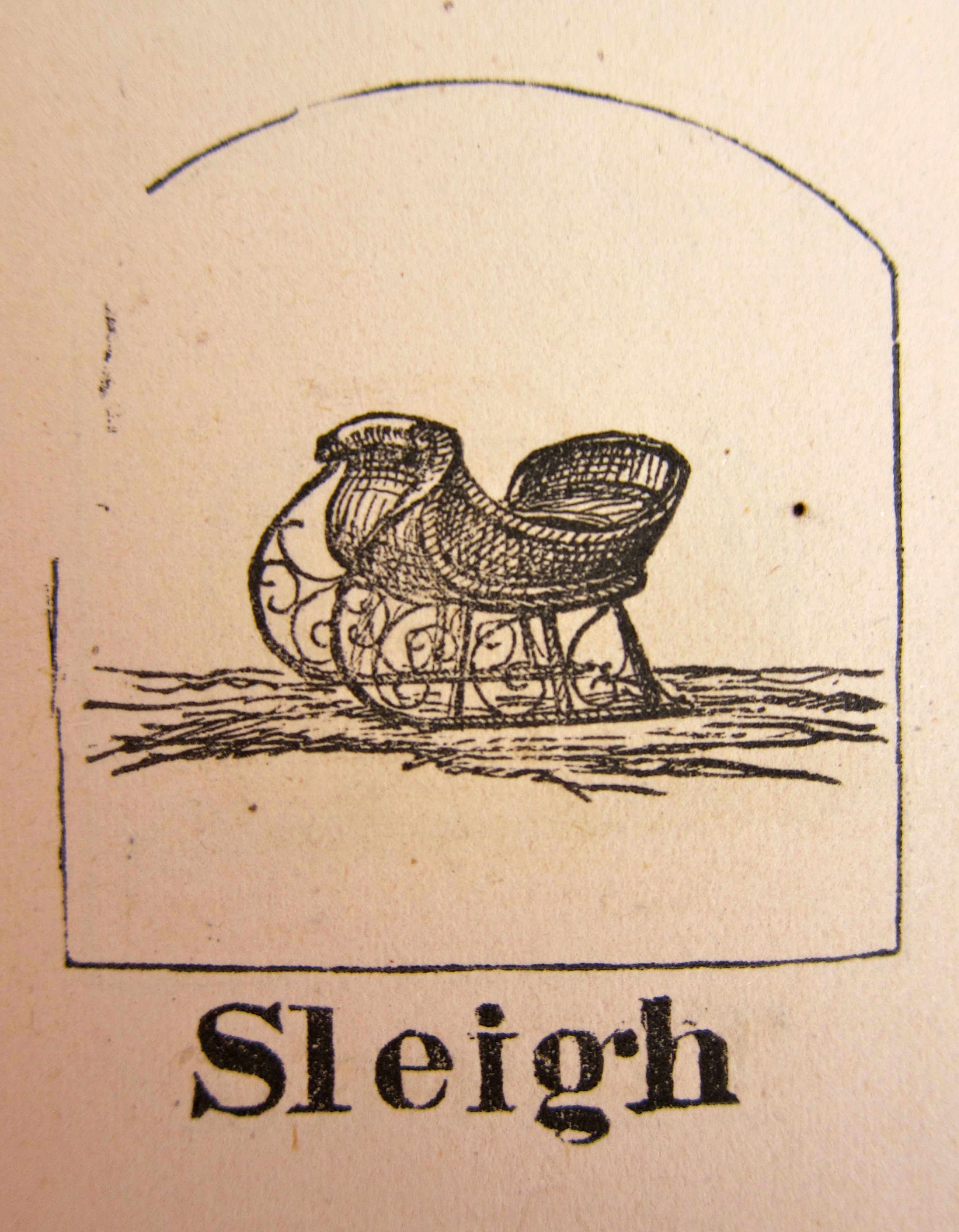
Old Oliver Ames didn’t always agree with his senior daughter-in-law, but on this day he and she shared the same opinion about the temperature outside. “[T]he coldest day we have had this winter,” he wrote in his journal. Not surprising that Evelina and her servants stayed inside and focused on their indoor domestic responsibilities. All three women seemed to have recovered from their recent colds and illness and they probably wanted to keep it that way.

Some people went outside, though.  Evelina’s nieces, Abby and Malvina Torrey, spent part of their day with her.  They must have walked over from the village – a short walk, fortunately, in the windy, freezing sunshine.  Other Eastonians who were out and about would have moved around best in their sleighs, as a buildup of snow had hardened into a smooth, slick surface on the roadways.  Old Oliver himself may have gotten around that way.  He noted that “light slays run pritty well now.”


December 12, 1851

tumblr_n6j6ijphsb1rly06do1_500

Dec 12 Friday  I am no better than yesterday & my cough

is increasing.  Have been mending most all day

Took a piece out of a comforter that the cat

had been on  Hannah called a few minutes

Mr Talbot brought home the sausage chopper

that he borrowed yesterday and Orville borrowed 

it and has brought it home this evening

Mary has been sick most all day talked of leaving

A cat! Today’s entry is the only mention in Evelina’s diary of the existence of a pet at the Ames house. There may have been some feral cats in the Ames barn, keeping the rodent population down, but the way this entry is written suggests that this cat was more of a household pet. And this pet “had been on” (what might that mean!) an old comforter or quilt, and had done enough damage to warrant the piece being removed. While the cat was no doubt indifferent to the fate of the comforter, Evelina was concerned enough to repair it.

Evelina was “mending most of the day,” which meant she was finally sitting down and holding relatively still. For several days, she had been indoors and out, painting and varnishing, kneeling and bending, and challenging herself to ignore her cold. No wonder her cough was “increasing.”  Her newest servant, Mary, had taken sick, too.

Neighbors were making sausage, and Evelina and Sarah Witherell would be doing that, too, in a day or two. Old Oliver had slaughtered four hogs a little over a week earlier, most of which he sold. But some of the pork made its way into the various Ames kitchens, and now the Ames wives and daughters would be putting it away.


December 11, 1851

Unpack

Dec 11th Thursday.  Have had a bad head ache and

very bad cold  Called into the other part of the

house with Mrs S Ames.  Mrs Witherell had bound

the quilt that we quilted yesterday  Mrs R Pool

called & I went into Edwins house with her.  She & her

husband have spent the day at Augustus  I varnished

store room stairs & porch.  Mr Ames came from New York

Mr Clarke put the inside windows in sitting room

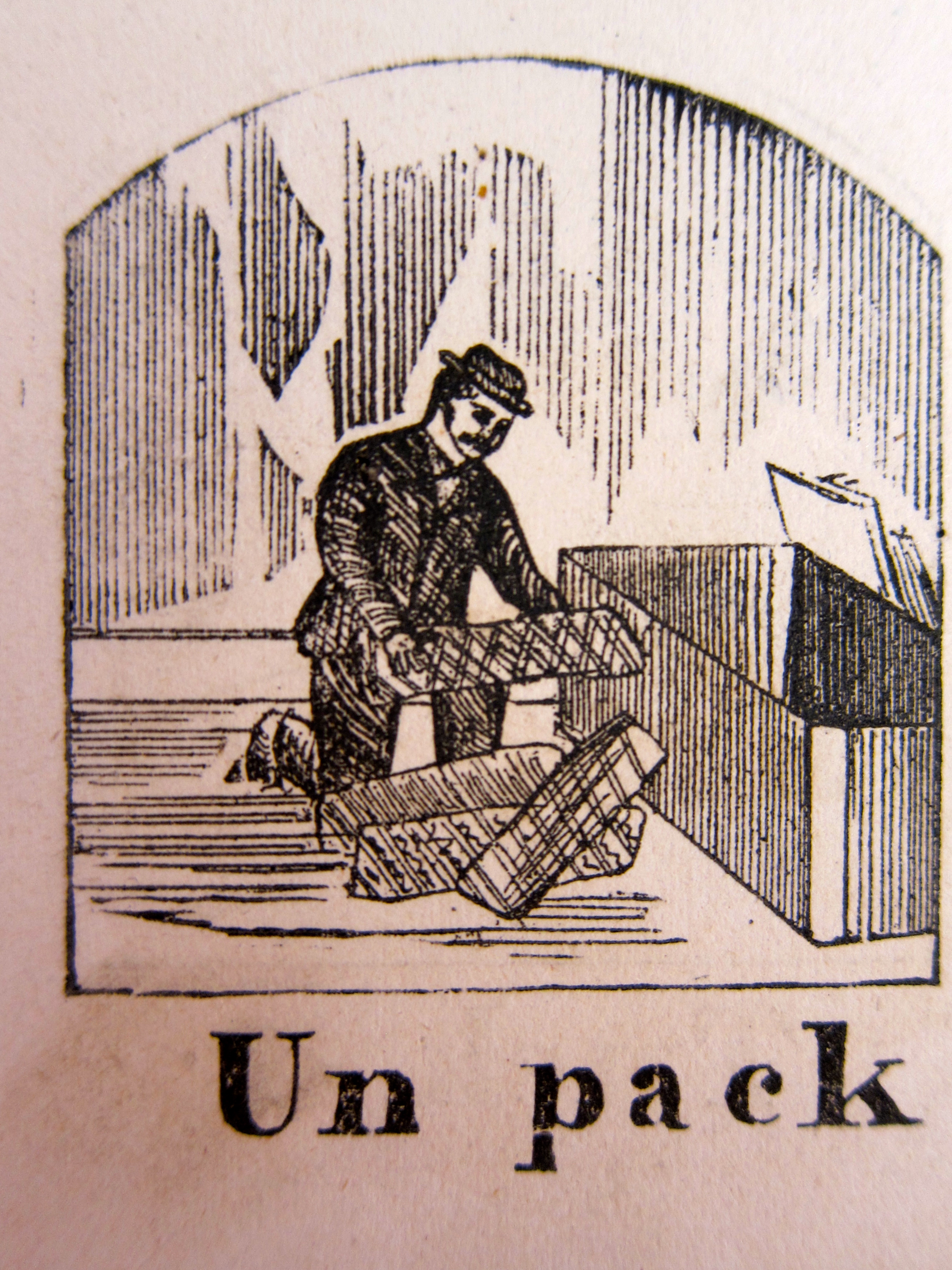
Both Evelina and Old Oliver noted that Oakes Ames “came from New York” today after having been away eight days. He was probably glad to be home; he confessed late in his life that he didn’t enjoy travel. And family dynamics, if they had altered at all in his absence, would have reverted to normal once his “stalwart and rugged”* self returned to his own place as the head of the household.

Evelina’s cold, which had been hovering since Sunday, finally landed with vehemence, although Evelina continued to be up and around. She sat with both sisters-in-law, Sarah Ames and Sarah Witherell, and went over to Edwin Gilmore’s new house with her niece (and Edwin’s sister) Rachael Gilmore Pool. In addition to socializing, Evelina varnished her porch and storeroom stairs. The strong smell from the varnish wouldn’t have helped her “bad head ache,” at all; in fact, it probably made it worse. What was she thinking? Was she too economical to let Mr. Scott complete the job? And did she know that she was spreading her cold everywhere she went?

*William L. Chaffin, Oakes Ames, 1804/1873, Easton Historical Society, North Easton, 1996, p. 1