June 7, 1852

Washing

June 7th

1852 Monday  Mrs Patterson went to Bridgewater

to see about her things that she left

there and returned this afternoon  Jane has

done the washing and I have been very busy

about house all day.  Mr Scott  Holbrook

and another painter have been here painting

the back entry chamber & Franks chamber

Scott has grained the stairway & painted the stairs


Dry weather continued, which was bad for the crops but good for the laundry. The white sheets and shirts must have dried quickly in the “midling warm”* sunshine and light southern breeze.  Today would prove to be Jane McHanna’s last turn at washing the Ames family’s clothes.

Old Oliver, meanwhile, spent part of his day, at least, observing someone’s construction project, as “Capt Monk began to move the hous[e] where Tilden lived to day.”* We don’t know who Capt. Monk was, but we do know that a team of oxen had to be assembled for that task. Were any of Oliver’s oxen used?  Did he lend a hand? It’s doubtful that he would have observed in silence, his instinctive leadership and irrefutable expertise too compelling not to use, or be asked for.

The Tilden whose house was being moved was probably Francis Tilden, a teamster who worked for the Ameses. He looked after the oxen. When an Old Colony Railroad line was extended to North Easton a few years later, in 1855, Mr. Tilden would become the expressman.  He would trade in his oxen for a rail car and spend the rest of his life conducting the train back and forth between Boston and North Easton. Oliver Ames Jr. often rode it, calling it “Tilden’s train.”

*Oliver Ames, Journal, Stonehill College Archives, Arnold Tofias Collection

June 6, 1852

FullSizeRender

Office of Ames Shovels, ca. mid-to-late 1850s

1852

Sunday June 6th  Have been to meeting as usual

Mr Whitwell preached  Came home alone

with Mr Ames at noon Have read

but very little partly written a letter

to Oliver.  Mr Ames said he would go 

with me to Augustus’ to make a call but

he did not come from the office in season

Sermons, reading and writing filled Evelina’s day. She began a letter to Oliver (3), off at college.

It may have been the Sabbath, but that didn’t preclude Oakes and Oliver Jr spending time in the office next door to the house. The two men often met there at the end of each workday “to catch up with their correspondence (all letters were written and copied by hand), discuss business together and go over accounts with the head bookkeeper.”* That they met on a Sunday evening seems unusual, but it may not have been. The shovel firm was about to build a new, stone factory, one that would be more fire-resistant than the old one that burned down in March. These plans were being developed even as the business was in swing, making shovels and filling orders. Oakes and Oliver Jr. were extra busy.

As had happened before, Oakes Ames forgot to take Evelina out as promised, or came home too late to go, so she missed a visit to her nephew Augustus Gilmore and his family. Was Oakes’s chronic oversight just absent-mindedness, or was he more consciously choosing to ignore social obligations when they proved inconvenient? And how did he make it up to his wife?

Winthrop Ames, The Ames Family of Easton, Massachusetts, 1938, p. 129


June 5, 1852

tbl00064-2

1852

Sat June 5th  Mr Scott has been tinkering around in 

one place and another to day  has worked part

of the day here and this afternoon Holbrook

and another man came and put a coat of

paint on the plastering in the entry chamber

and whitewashed Franks chamber & painted

the closet I cut out two of the shelves and 

the shelves in my chamber closet.

Mrs Patterson here

Consul & slab came

and Olivers furniture


The dependable Mrs Patterson was on hand again today, as workmen tinkered, plastered and whitewashed different areas of the house. Evelina herself tinkered with the shelves of her closet in the master bedroom, cutting away two of them, perhaps to make room to hang clothes rather than fold them.

The arrival of new furniture from Boston was exciting for both Evelina and Sarah Lothrop Ames. Evelina and Oakes were to have a new console table – probably for the parlor – with a slab of stone – probably marble – on top. The Oliver Ameses next door got a delivery of new furniture, too.  The families were upgrading. It must have taken an industrial-strength wagon pulled by oxen to bring the pieces out from the city.

The delivery wagon had a “fair day”* for its route, and Old Oliver Ames had a good day to watch the new sills “for the cariage hous”* being laid down. He did enjoy building things, and his daughters-in-law enjoyed furnishing them.


*Oliver Ames, Journal, Stonehill College Archives, Arnold Tofias Collection

May 31, 1852

Woodhouse

1852

May 31st Monday  Mrs Patterson & Jane have done

the washing and I have been about house

all day  Mr Scott has painted the dining

room over the second time  Jane will

go against the door in spite of all that I

can do  Shall I ever get settled again so that

I can sew some  Have got an Ice closet in the 

wood house

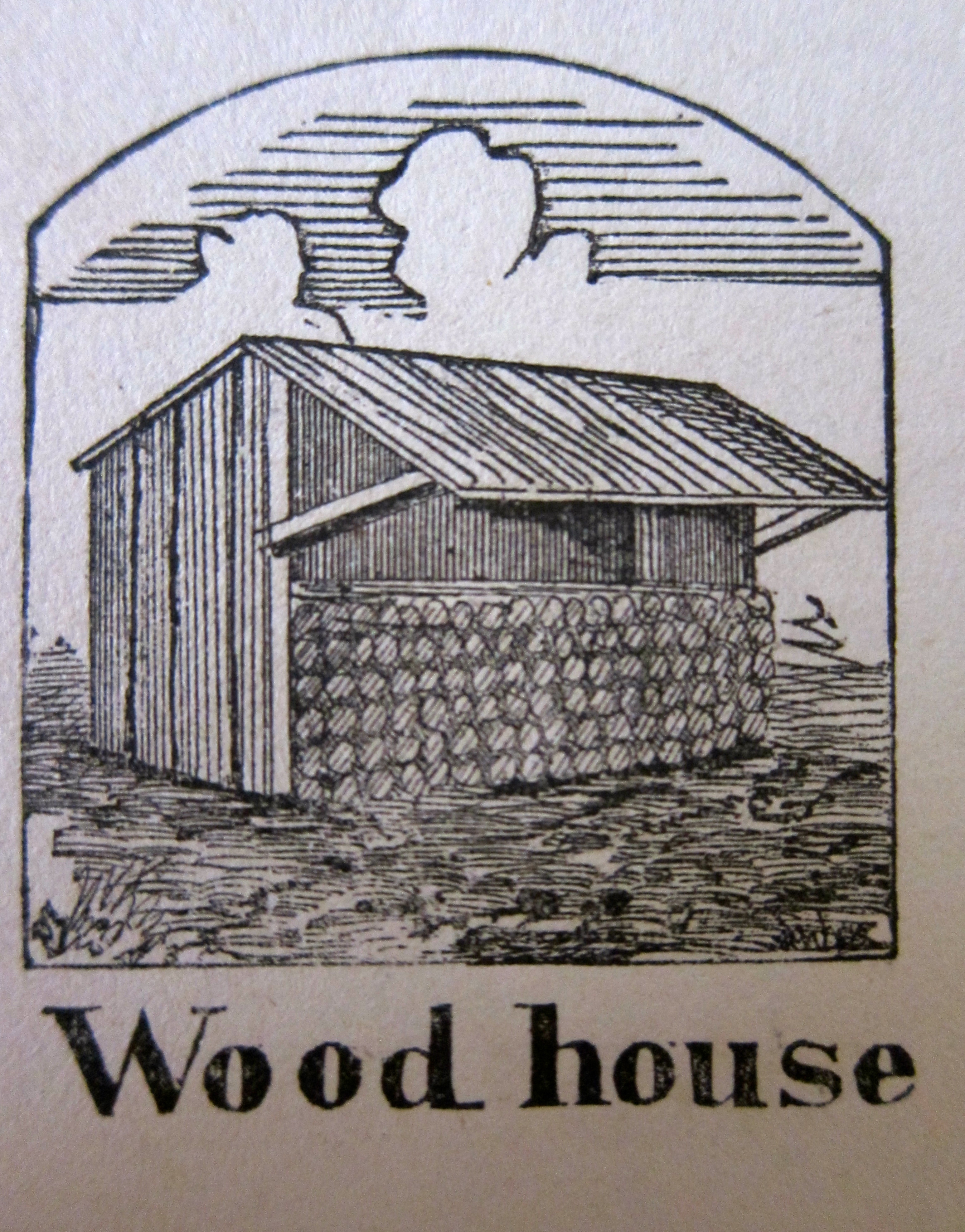
Spring cleaning was almost finished, and Evelina sounded ready to have it be done. Mr Scott had to paint a second coat in the dining room, perhaps because Jane McHanna kept banging the door against the wall. Evelina was irritated with Jane and longed to get back to her sewing.

The weather had been dry for some time.  Old Oliver, uncharacteristically, hadn’t written in his daily journal for nine days.  When he finally picked up his pen, he noted that the fair skies had been “verry drying.” Being without rain at the start of the growing season endangered the crops and put him in an ill humor.  Perhaps Evelina was feeling some of that, too.  And, perhaps, she was still grieving.

One thing that pleased Evelina, though, was getting a new ice closet at the back of the house, in the wood shed. And one thing that pleased Old Oliver was that “Mr Seve began to frame the Cariage hous”* on this day.  This building was going up on Ames property off of Main Street, on land behind the residence of Oliver Ames Jr and his wife, Sarah Lothrop Ames.

Oliver Ames, Journal, Stonehill College Archives


May 30, 1852

OLYMPUS DIGITAL CAMERA

Alson Gilmore  (1798 – 1888)*

 1852

May 30  Sunday  Have been to church as usual  Mr Briggs

of Boston gave us two very excellent sermons

Alson mother & Helen came home with us

at noon.  Augusta has gone home on a 

visit and is going to Foxboro before she returns

Have been reading since meeting and 

called in Olivers and on Mrs Witherell


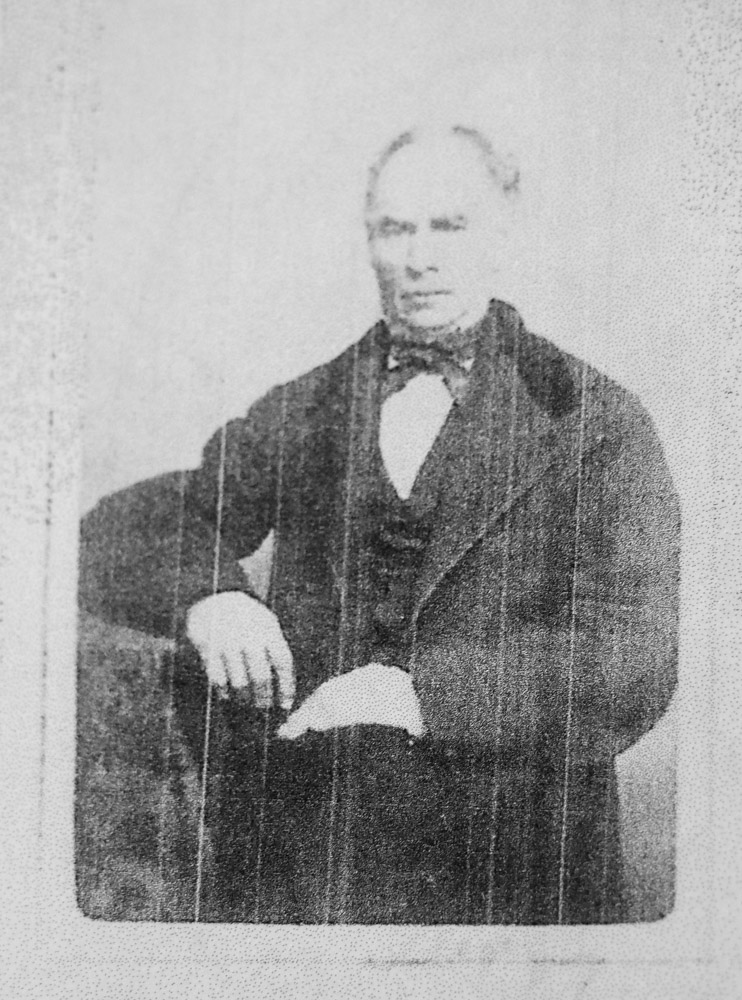
Evelina’s older brother, Alson Gilmore, turned 54 years old today. He was a farmer – a good one – in the southeastern section of Easton.  He had inherited the property from his father Joshua, probably when the older man passed away in 1836. By that time, older brothers had moved away or passed on, so even as the fourth of five sons, Alson was the heir who took over from his father.

Other than being a productive farmer, Alson was not the most high-profile man in town,  His eldest son, Alson “Augustus” Gilmore, a perennial moderator for town meetings, was more active in civic matters, and his second son, Edwin Williams Gilmore, matured to become the outstanding entrepreneur of a hinge factory. His third son, Francis E. Gilmore, would, in time, take over the family farm as his father had. Alson’s daughters, Rachel, Lavinia, Helen and Hattie, would live theirs lives in Easton, too, two of them marrying.

Alson did play a civic role now and again. For fifteen years, he served as clerk for the Taunton- North Purchase Company, a complicated affiliation based on a seventeenth century acquisition of land that became the towns of Norton, Easton and Mansfield.** He was a selectman for one term in 1849-1850 and also was one of the last treasurers of a toll road that ran between Boston and Taunton, a road that was close to his property. That turnpike, unpopular at best, had only recently closed down.

On occasion, Alson Gilmore ran up against the Ames clan.  His sister may have been been married to one of its most popular and powerful members, but that didn’t prevent Alson from disagreeing with them in a divisive argument over church politics in the 1830s. Alson had been on the side of preserving the familiar Congregational service and Calvinist beliefs, while the Ameses had argued for Unitarianism. With one or two other parishioners, Alson had been threatened with having to bear the cost of paying the minister, Luther Sheldon, while the controversy wore on. In Chaffin’s words, “the situation was very peculiar,”* and ultimately, it was resolved to no one’s complete satisfaction.

With Evelina, Alson shared the responsibility for looking after their elderly mother. It was a duty they both took seriously. He seems to have been a decent man.

Image of Alson Gilmore courtesy of the Easton Historical Society

** William Chaffin, History of Easton, Massachusetts, 1886, pp. 19 – 38

**Ibid., p. 354.

May 18, 1852

Dianthus.2474433_std

Pinks


1852 Tuesday 18 May  Have accomplished but a very little work

to day  Made a long call in Olivers & the other

part of the house talking over my visit yesterday

Set out some pink slips &c that I got there

About three started for N Bridgewater met

Alson & wife turned about and came back

Spent the rest of the afternoon at Edwins.  called

at Augustus,  her sister Elizabeth there

The visit to the Kinsley family that Evelina had made the day before lingered in her mind. She talked about it with both sisters-in-law, no doubt describing the family, the conversation, and the twelve pots of flowers she got to bring home. Was she bragging or sharing? Were Sarah Ames and Sarah Witherell interested or only tolerant? The Kinsleys were well-to-do, prominent citizens of Canton, so one suspects that both sisters-in-law had some curiosity about them. Yet it had only been a week since George Witherell had died, so Sarah Witherell may have had limited attention for Evelina’s gadding about.

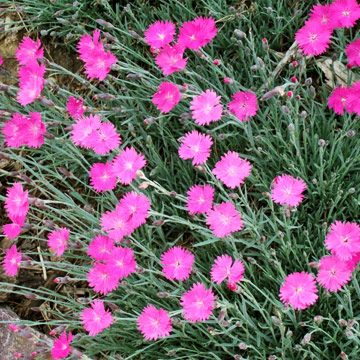
After her “long call” with her relatives, Evelina spent time in her garden planting “some pink slips &c” that she got in Canton.  Pinks are bright little flowers that we know better as carnations and more formally as dianthus.  The name comes from the “pinked” or serrated edge of the petals, as if trimmed with pinking shears. Pinks are a traditional flower for a cottage garden; botanist Joseph Breck declared that “There is no flower more desirable in the flower-garden that the Carnation. A well-grown, superior variety, cannot be surpassed, in elegance, beauty, or odor, by any other flower.”*

The pretty little flowers in Evelina’s garden must have brightened up the yard of a home whose occupants needed cheering up.


Joseph Breck, The Flower Garden or Breck’s Book of Flowers, Boston, 1851, p. 111


May 1, 1852

Wreath

1852

Sat May 1st  The children were hoping to have a fine

time maying this morning had their wreaths

all made but it rained which prevented

their taking a walk but they had a nice time

in the old tool house. I dined in Edwins

John came there last night  Lavinia & Helen

here.  They were all here to tea to night

S E Williams called at Olivers  I gave her some plants


Rain spoiled the annual outing that Susan, Emily and other children had planned for May Day. They had made special wreaths for the occasion, probably to deliver to the homes of friends. To get out of the weather and save the pleasure of the day, they gathered instead in the “old tool house,” which seemed to make for an agreeable substitute.  Readers from the Easton area, does anyone know the probable whereabouts of this building?

Rain may have spoiled the children’s walk, but it helped soften the ground in the garden.  Old Oliver reported that today the garden was “spaded up and manured.”  He was most likely describing the family vegetable and herb garden, as opposed to Evelina’s flower beds, which were already under cultivation and probably out of Old Oliver’s immediate purview as well as beneath his notice.

Evelina, meanwhile, had her midday meal at Edwin’s and Augusta’s house, seemingly while the rest of the family ate at home. She went over to visit their mutual relative, her brother John Gilmore, who rarely came to town.


April 25, 1852.

Lilac_bush-2edq3ho

Sunday April 25th  A very pleasant day and have

all been to meeting.  Came home at noon

with Hannah & sister and Susan, all returned

in the afternoon.  After meeting called at

Olivers to see Mr & Mrs A Lothrop and rode to

Mr Manley to speak for some plants

Augustus & Hannah rode with us as far as

Mr Swains  Emily & Susan went also to Mr Manlys

Lilacs, a fragrant favorite for gardeners and civilians alike, were among the plants that Evelina selected at Edwin Manley’s today. In the 19th century, many a New England farmhouse featured lilacs close to the door, as American poet Walt Whitman famously describes in When Lilacs Last in the Dooryard bloom’d, his elegy for Abraham Lincoln:

…In the dooryard fronting an old farm-house near the white-wash’d palings,

Stands the lilac bush tall-growing with heart-shaped leaves of rich green,

With many a pointed blossom rising delicate, with the perfume strong I love,

With every leaf a miracle – and from this bush in the dooryard,

With delicate-color’d blossoms and heart-shaped leaves of rich green,

A sprig with its flower I break…

Today after church, the sermons and small social obligations dispensed with, Evelina thought about her flower beds. The day was “fair” and “some warmer,”* so with niece Sarah Emily Witherell and daughter Susan Eveline Ames, she rode up to visit her go-to gardener “to speak for some plants.”  Mr. Manley indicated he would bring the plants by the next day.  Evelina wouldn’t have been able to plant anything today, it being the Sabbath, but she could imagine where she would put the plants, and how they would look, the anticipation of which added to her delight.

*Oliver Ames, Journal, Stonehill College Archives, Arnold Tofias Collection


April 22, 1852

Cobbler

1852

Thursday April 22  Worked a very little in the garden

not very pleasant but looks more like fair weather

Sewed a little on my black silk dress

Called with Augusta on Hannah & her sister

Sarah, Abby and at Willard Lothrop, Sampsons

A Pratts Holmes and at the store.  afterwards at

Olivers & Edwins carried a pr shoes to mend

A little sewing, a little gardening, and a great deal of socializing filled the hours of Evelina’s day today. After being pretty well pent up by several days of stormy weather, Evelina was ready to go out.

With her niece-in-law, Augusta Pool Gilmore, she called on another niece-in-law, Hannah Williams Gilmore. There they met Hannah’s sister, Sarah Lincoln, who was visiting from Hingham. They went on to see yet another niece, Abby Torrey, then to the homes of Willard Lothrop (one of Easton’s most active spiritualists), Joel and Martha Sampson, and others.

The Sampsons were a younger couple from Maine with five little children aged eight and under, including three-year-old twins. Joel Sampson worked at the shovel shop and was evidently devoted to Oakes Ames. Twenty years later, on hearing of Oakes’ death, “Joel Sampson, teamster and farmer of the company came home when he heard the sad news, threw himself upon his sofa and announced to his wife that the head and soul of the business was dead, that every thing would go to smash now, and told her to make ready to go back to their old farm and home in Maine, as it was no use to live here any more.”**

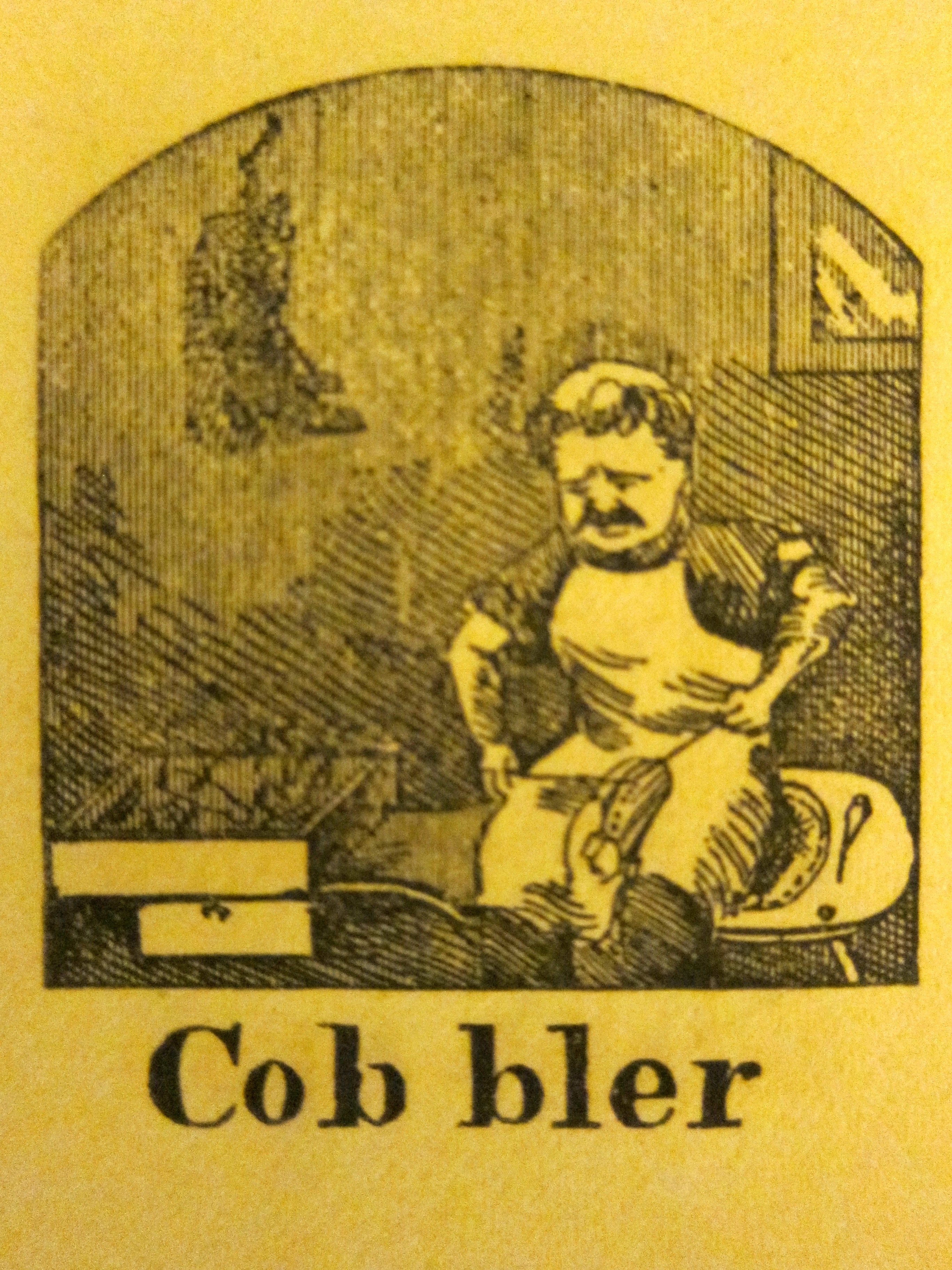
Throughout her travels today, Evelina carried a pair of shoes to be mended. In an area of the country well known for its shoe manufacturing, there must have been a good cobbler somewhere in town.


* Oliver Ames, Journal, Stonehill College Archives, Arnold Tofias Collection
**William Chaffin, “Oakes Ames,” p. 2

April 18, 1852


paul-revere-1

1852

April 18 Sunday.  Another unpleasant sabbath but we have

all been to meeting.  Oliver & wife staid at home

this afternoon.  Mr Whitwell gave us two short but

good sermons of about 20 minutes  At intermission

went into Mrs J Howards with Mrs E Howard

Mrs L Howard & Mrs Dr. Deans    called a few moments

on Mrs Whitwell.  Have finished Night & Morning

As was their custom, the Ameses attended church today en masse, at least in the morning. They drove separate carriages to the meeting house through the “cloudy, cold + misty”* morning. Oliver Jr. and his wife Sarah Lothrop Ames rode home at noon, but Evelina and her family, presumably, busied themselves at intermission with various opportunities to socialize.

Oakes Ames most likely slept through the sermons, even though they were “short.” Evelina, however, liked Reverend Whitwell’s sermons today, as she often did. Would he have made any allusion to the historic date?  April 18 was the anniversary of the 1775 ride of Paul Revere and William Dawes to warn “every Middlesex village and farm” of the approach of British forces.  It was a date that American schoolchildren once had to memorize.

Less than a decade later, poet Henry Wadsworth Longfellow would immortalize the historic date in Paul Revere’s Ride:

Listen my children and you shall hear

Of the midnight ride of Paul Revere,

On the eighteenth of April in Seventy-Five;

Hardly a man is now alive

Who remembers that famous day and year…

Longfellow, one of the most popular American poets of the 19th century, wrote Paul Revere’s Ride some eighty-five years after the dramatic events in Concord and Lexington that opened the Revolutionary War. It was published in The Atlantic Monthly in January, 1861, on the eve of the Civil War.  Many believe that the poet, an adamant abolitionist, wrote the piece to remind American citizens of the historic principles and great bravery that shaped the formation of the United States.


Oliver Ames, Journal, Stonehill College Archives, Collection of Arnold Tofias