July 18, 1852

Church

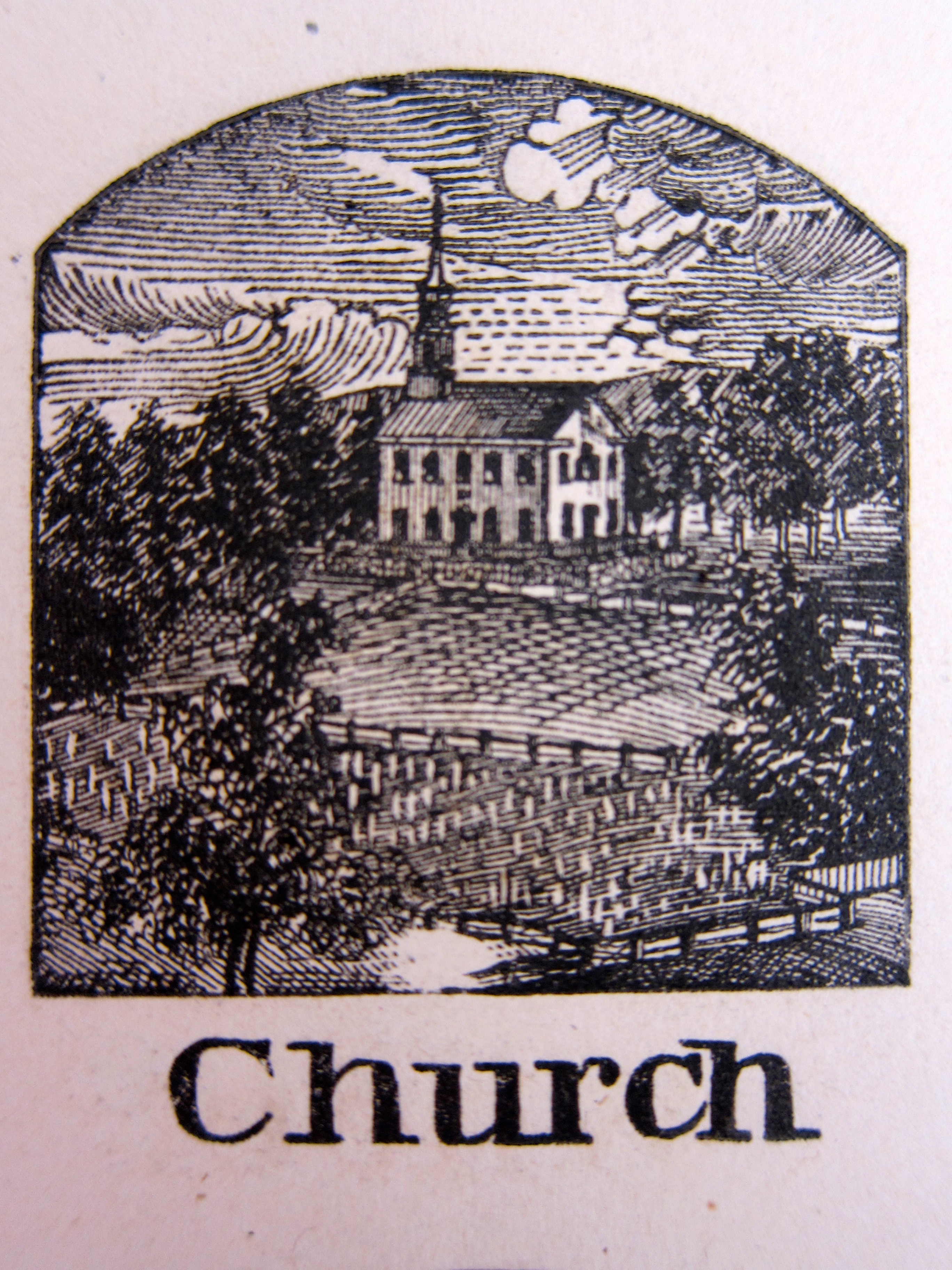
July 18th Sunday  Have been to meeting as usual

Mr Whitwell preached well.  Went to Mr

Whitwells with Mother & Henrietta at noon

When we came from church Mr Ames

& self rode up to the ponds, found Oliver &

Fred there  Called this evening with Mr

Ames at Augustus found him threatened

with a fever & quite unwell.  Called on Lavinia

Williams a moment and Mrs Savage who is quite ill.

The good news today was that Evelina was comfortably back in her own pew at her own church, listening to her favorite minister preach. During the intermission between sermons, she even took her mother and sister-in-law, Henrietta Williams Gilmore, to the parsonage for tea. After church she and Oakes “rode up to the ponds,” meaning that they may have ridden not just to Shovel Shop Pond, but also beyond to Flyaway or Great Pond. There they ran into Oliver (either their son or Oakes’s brother-in-law) and Fred Ames.*

The not-so-good news was a run of illness among family and friends. Evelina’s nephew, Alson “Augustus” Gilmore, was suffering from some kind of fever. This was not an uncommon ailment during the hottest weeks of summer; many infants, especially, were prone to dehydration when the thermometer went up. Evelina had to be concerned that Augustus was so ill so suddenly. Hannah Savage (her near neighbor for whom her old servant, Jane McHanna, was now working) had been ill for some time. Hannah was thought to be dying; a watch would soon begin for her.

*It seems likely that it was Oliver (3) and not Oliver Jr with  Fred “up to the ponds.”  If it had been Oliver Jr., it’s probable that Sarah Lothrop Ames would have been with them.  She wasn’t. And it’s equally likely that the two young college men would be enjoying their familiar camaraderie, now that each was home from school.

July 17, 1852

Wine glass

July 17th Sat  Hannah & Mary picked some currants

yesterday and to day I have made some

currant wine had four quarts of juice

Have done but very little sewing. Have

mended some.  Oliver returned from

school to night He is not looking very well

He brought home his pictures & all his things

is in hopes to go back again but it is uncertain

Evelina’s diary entry today poses two questions for us readers. First, why was she, wife of a strict tee-totaler, making wine? The answer is that from time to time, even a temperance household needed wine for medicinal purposes. It may be, also, that the occasional dish, such as mincemeat, required some alcohol as an ingredient. Even Lydia Maria Child, who abhorred liquor, nonetheless included a recipe for currant wine in her household guide:

Break and squeeze the currants, put three pounds and a half of sugar to two quarts of juice and two quarts of water. Put in a keg or barrel. Do not close the bung tight for three or four days, that the air may escape while it is fermenting.  After it is done fermenting, close it up tight…It should not be used under a year or two. Age improves it.*

The second question is almost unanswerable. Why wasn’t Oliver (3) able to return to Brown University? He wanted to, but clearly the decision wasn’t his to make, nor did it appear to be the school’s choice. Rather, the decision to cease attendance lay with Oliver (3)’s father, Oakes Ames, who had been against his son attending college in the first place. Oakes was once described as having “inherited some measure of that Puritanical contempt for the liberal arts…”**. He had first put his foot down against Oliver going, finally relented for one year, and now was again saying no.

If we can move past Oakes’s prejudice against higher education, we can imagine that he wanted his middle son back at the factory. So much had happened at the shovel works during Oliver (3)’s absence. The old factory had burned down and a temporary one had been quickly rebuilt. A new, state-of-the-art stone factory was being raised, requiring extra supervision. And the manufacture and sale of shovels had had to continue as if nothing had happened. Quite likely, Oakes needed his son’s help. Studying was over.

It’s also possible that an additional factor may have influenced Oakes’s decision, a factor that he couldn’t yet share – at least not with Evelina. Oakes may have been privy to a concern about his son Oakes Angier’s health, a condition that would soon be apparent to all.


*Lydia Maria Child, The American Frugal Housewife, p. 59

** Hon. Hosea M. Knowlton, Address at the Dedication Ceremony for the Oliver Ames High School, December 12, 1896, published  Boston, 1898, p.98


July 13, 1852

Hay


1852

Tuesday July 13  Julia Mahoney came to work this

morning and cut the waist to my borage

dress and went home at noon.  Mr Ames

went to Canton and I begged the chance

to go with him & we called at Mr Kinsleys

Saw the ladies of the family & two Mr Peabodys

of Boston  Called on Mrs Atherton

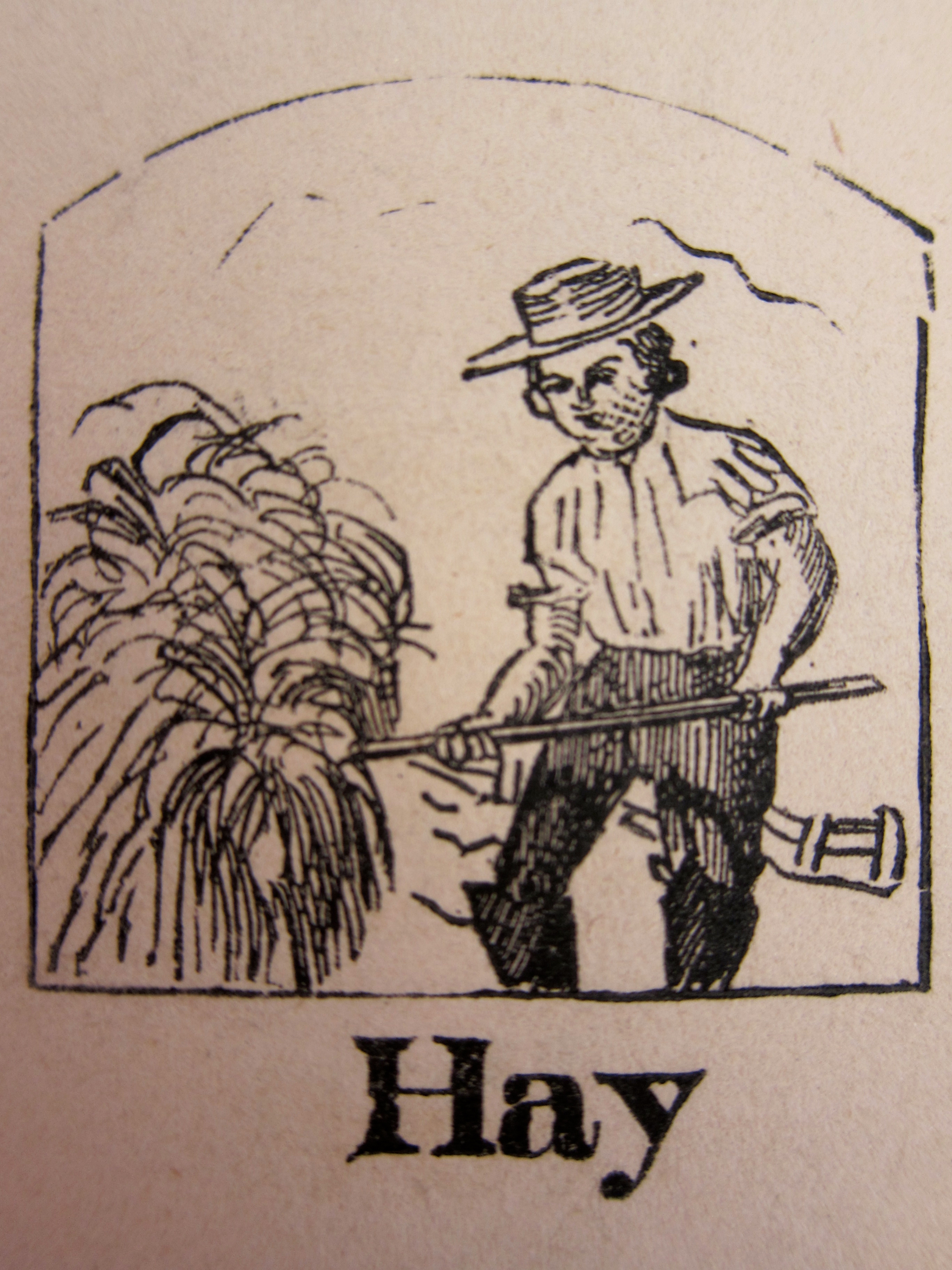
The first few days of this particular week were proving be “verry warm days. + pritty good hay days.”* Old Oliver had to be pleased.

After a morning of sewing a new barege dress with her dressmaker, Evelina “begged the chance” to ride east and north with her husband to Canton, where they visited Lyman and Louisa Kinsley. The Kinsleys, of course, were business associates but also friends, and they and their twenty-one year-old daughter, Lucy, happened to be entertaining visitors from Boston, “two Mr Peabodys.”

The Peabody brothers had called on the Kinsleys to be sociable, certainly, but one of them had a romantic motive. Francis Howard Peabody, also aged twenty-one, was courting Miss Lucy; the two would wed in 1854. They would have three children, a boy followed by two girls. Their little boy, Frank Everett Peabody, would become a founding member of a famous Boston brokerage firm, Kidder and Peabody.

*Oliver Ames, Journal, Stonehill College Archives, Arnold Tofias Collection

July 4, 1852

imgres-1

July 4 Sunday  Have been to meeting  Orinthia & Lavinia

came home with us at noon  Orinthia had a 

toothache and did not return in the afternoon

Since meeting Alson & wife came up and brought Lavinia

for her to go to Boston tomorrow  Mr Ames called with Orinthia

and self to see the rock they are splitting for the shop and we all

walked down to see the new shop  Mr Clark of Norton preached two

excellent sermons  Oakes A & Helen went to E. Bridgewater

Oakes Ames “came home from N. York”* today, having been there on shovel business; he was the company salesman. After church was over he, Evelina, and her friend, Orinthia Foss, walked down to the shovel shop to see the progress on the new stone building, the Long Shop. They checked out rock that was being split.

“[T]his was a fair cool day wind south west and a drying day…” according to Old Oliver.  It was probably perfect for haying, but it was Sunday, so no one went out to the fields. It was also the Fourth of July, but again, being Sunday, the celebration was postponed.  Fireworks would be held the next day.

Modern historian Jack Larkin describes the importance of the Fourth of July in the American calendar:

“Despite its notably awkward timing for a nation so agricultural – it came in the midst of haying in the North, corn and cotton cultivation elsewhere – Americans made the Fourth their most universal holiday. In ‘fifty thousand cities, towns, villages and hamlets, spread over the surface of America’ citizens observed rituals that varied little, firing cannons, watching parades of prominent citizens and listening to endless orations in town commons and courthouse squares. Americans probably seized their national day with particular relish because it was the only sanctioned way of taking a break from the intensive labor of midsummer…”**

And just as we read yesterday of the beginning of a courtship between Frank Ames and Catharine Copeland, so today we readers may be privy to the genesis of yet another courtship.Evelina writes that Oakes Angier Ames drove his cousin Helen Angier Ames to E. Bridgewater, but doesn’t say why. Perhaps Helen was visiting a friend from school who lived there: Catherine Hobart. This Catherine, too, was destined to become part of the family as Oakes Angier’s wife. Was this their first meeting?


Oliver Ames, Journal, Stonehill College Archives, Arnold Tofias Collection

**Jack Larkin,The Reshaping of Everyday Life, 1988, p. 275


June 30, 1852

Stage

Wednesday June 30th  Mr Ames left home this morning

for New York and Conn  Mrs James Mitchell

her mother & Grace came to father Ames & I

called into see them  Mrs Mitchell made 

quite a long call in here and at Olivers

Mrs Almira Ames came by the stage

to night from Conn she left New York

about four weeks since

Oakes Ames went to New York and Connecticut today on shovel business, as his father and wife each noted in their diaries. He wasn’t the only Ames on the road, either. Almira Ames, widow of cousin George Ames, arrived in North Easton from Connecticut and New York. Oakes probably went by “the cars,” as they called the railroad, while she definitely traveled in a stagecoach. Their separate modes of travel demonstrate the transformation that was taking place in transportation.

The railroad was moving in and would shortly become the dominant mode for long-distance transportation for the rest of the century and beyond. As Mrs. Penlimmon, a character developed by popular author Fanny Fern, opined only two years later:

‘The days of stage coaches have gone by.  Nothing passes for muster now but comets, locomotives and telegraph wires. Our forefathers and foremothers would have to hold the hair on their heads if they should wake up in 1854. They’d be as crazy as a cat in a shower-bath, at all our whizzing and rushing. Nice old snails!”*

How life was changing.

In more local traffic, Harriet Lavinia Angier Mitchell came to call with her mother and daughter on Old Oliver and Sarah Witherell in the other part of the house, on Evelina, and on Sarah Lothrop Ames next door. Mrs. Mitchell was a cousin of Old Oliver’s late wife, Susannah Angier Ames.

Fanny Fern, Fern Leaves from Fanny’s Port-Folio, ca. 1854, p. 50

June 29, 1852

22633861_126751003919

Henry Clay

(1777 – 1852)

1852

Tuesday June 29th  Have had a quiet […] sick day  have

a bad cold & cough and sick head ache

A gentleman here from Pennsylvania

to dine but I did not go to the table

Mr Bartlett here to tea from Maine

Augusta came in and cut her out a

visite & I have written to Melinda to

get some trimming for it  Ottomans came

from Boston

Evelina was sick and probably spent most of the day in bed. She didn’t eat much, missing midday dinner – with company – and possibly skipping tea, too. Perhaps she took a tray of food in her room. She must have begun to feel a bit better, however, as she eventually roused herself to cut out a “visite” for Augusta Gilmore, who came over at the end of the day.  She even wrote to her friend Melinda Orr, in Boston, to find some trim. She could get animated about a sewing project, though not much else appealed to her today.

It was “a fair warm day + verry dry,”* and probably “verry” good for the haying that was underway. Old Oliver and a team of hands would have been outdoors from sunup to sundown.

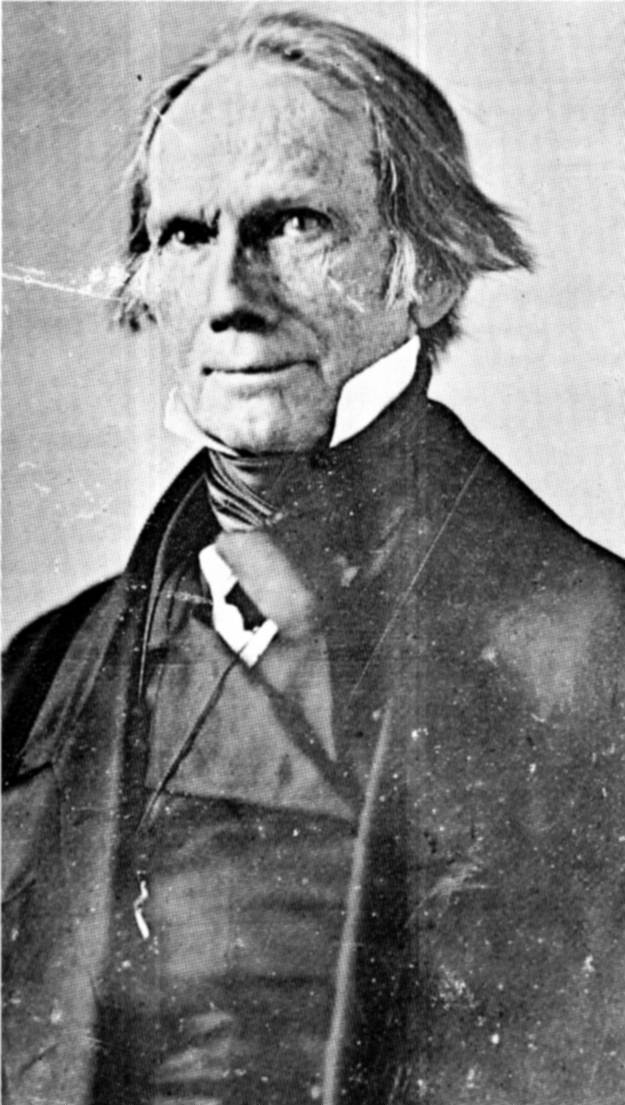
In the world beyond North Easton, a consummate, outspoken and controversial politician passed away today: Senator Henry Clay of Kentucky, aged 75, died in Washington D. C., of consumption. The Ameses wouldn’t have known this, however, until they read the next day’s newspapers. But most likely they admired Clay, the “Star of the West,” and the founder of the Whig Party. Clay’s biggest opponent back in the day had been Andrew Jackson, who called Clay “the Judas of the West.”  One imagines that Oakes Ames had probably been on the side of Clay’s admirers.

*Oliver Ames, Journal, Stonehill College Archives, Arnold Tofias Collection

June 27, 1852

??????????

Carl Christian Anton Christensen, “Interior of the Carthage Jail”*

1852

Sunday June 27  Have not been to meeting at all

to day on account of having a bad cough

Alson came here at noon with Mr

Ames  Have been reading most all

day  Augusta made a call this morning

to say she should not got to meeting

Made ice cream this afternoon


Evelina felt ill today and missed church. Other Ames family members, however, attended the Unitarian meeting. Mr. Whitwell probably led the service in the typically thoughtful but unadorned style of this Protestant sect. Other services around town, such as the Catholic mass at the chapel on Pond Street, would have been more elaborate, with communion being taken, for instance, the service in Latin, and a great focus on Christ, the Virgin Mary, and various ancient saints.

In Salt Lake City, many miles to the west, a different service altogether would have been held at the Church of the Latter Day Saints, known to most of us as the Mormon Church. Believers in Jesus Christ, the Mormons were, and are, a truly modern religious group, having only developed in upstate New York during the 1820s from the sayings and visions of their leader, Joseph Smith. Smith and others tried to lead his followers West to settle with more freedom than they had in the East, but ran into many problems and pockets of persecution along the way.

In fact, on this exact date eight years earlier (June 27, 1844), Joseph Smith and his brother Hyrum were killed by a mob while in jail in Carthage, Illinois. The illustration above is a folk painting of that murder by a 19th century artist. Smith’s followers recovered from this tragedy and found a new leader in Brigham Young (and others, known as apostles), who led them to the Great Salt Lake in Utah, where they founded Salt Lake City in 1847.  By 1852, the year that Evelina is recording in her diary, the Mormons were well established there.  In August, 1852, in fact, the elders of the church would approve the practice of polygamy, a choice that would bring them certain notoriety.** They were, and are, a sect unto themselves.

In years to come, Oliver Ames Jr. and Oakes Ames would have extensive dealings with Brigham Young over railroad matters.

Image courtesy of the Brigham Young University Museum of Art

** In 1890, the LDS would renounce the practice of polygamy.

June 26, 1852


  • hentzcl

Caroline Lee Hentz

(1800 – 1856)

1852

June 26th Saturday  Was assisting Hannah about house

most of the forenoon  Made pies & cake baked

in the small new tins  Have been mending

this afternoon and finished Marcus Warland

by Mrs Caroline Lee Hentz

Mr Ames brought home 1/4 lb black sewing

silk from Boston  I have a bad cough

Although her “bad cough” presaged an oncoming cold, Evelina managed to accomplish many domestic tasks today. Perhaps the best part of the day, however, came after the choring, baking and mending. She finished reading Marcus Warland; or, The Long Moss Spring. Tale of the South. by Caroline Lee Hentz.

Caroline Lee Hentz was an immensely popular novelist, “well known and much esteemed.”* In the 1850s, the Boston Library listed her as one of the three top writers of the day. A major literary figure, now largely forgotten, Mrs. Hentz described herself as a “Northerner who traveled and worked throughout the South for nearly thirty years.”** Though born and raised in Lancaster, Massachusetts, only fifty-odd miles from North Easton, Caroline and her teacher husband spent married life in various Southern states, opening and closing schools as they went along. They lived in Chapel Hill, North Carolina; Covington, Kentucky (across the Ohio River from Cincinnati, where they met Harriet Beecher Stowe); Alabama; Georgia; and Florida.

Unlike Mrs. Stowe, Mrs. Hentz was an apologist for slavery. In the Introduction to Marcus Warland, she wrote:

“We believe, if the domestic manners of the South were more generally and thoroughly known at the North, the prejudices that have been gradually building up a wall of separation between these two divisions of our land would yield to the irresistible force of conviction.”*** She believed not only that the institution of slavery was essential to the South’s livelihood, but that blacks were a lesser race who needed to be looked after. She was hardly alone in the latter belief.

After Mrs. Stowe’s Uncle Tom’s Cabin was published to both huge acclaim and vehement dissent, Mrs. Hentz penned a rebuttal novel entitled The Planter’s Northern Bride.  It came out in 1854 and found a wide audience. We can imagine that Evelina might have read it out of curiosity.

But today, while Evelina reclined with Marcus Warland, her old father-in-law was dependably keeping his eye on the sky and his finger to the wind.  The weather entry for today read “the 24 – 25 + 26 were fair cool days for the season + windy drying days wind north west + west most of the time.”**** This bode well for haying.

Anonymous, Southern Quarterly Review, circa 1851, quoted by Karen Tracey, Plots and Propsals, University of Illinois, 2000.

** “Caroline Lee Hentz,” Wikipedia, accessed June 24, 2015

*** Caroline Lee Hentz, Marcus Warland, 1852, p, 2

****Oliver Ames, Journal, Stonehill College Archives, Arnold Tofias Collection


June 13, 1852

Lobster

June 13

1852 Sunday  Went to meeting this morning & returned

at noon and mother came with me to make

a visit  Did not go back this afternoon on

account of getting tea  Mr Patterson is here

came last night  Edwin & wife stoped to 

tea from meeting had lobster.  Read to

mother in  [entry incomplete]


The Sabbath was another “fair day + pritty warm + verry dry.”* Old Oliver had to be getting edgy about the prospects for this year’s hay crop, not to mention the potentially poor output from the cornfields and the crop gardens all around town.

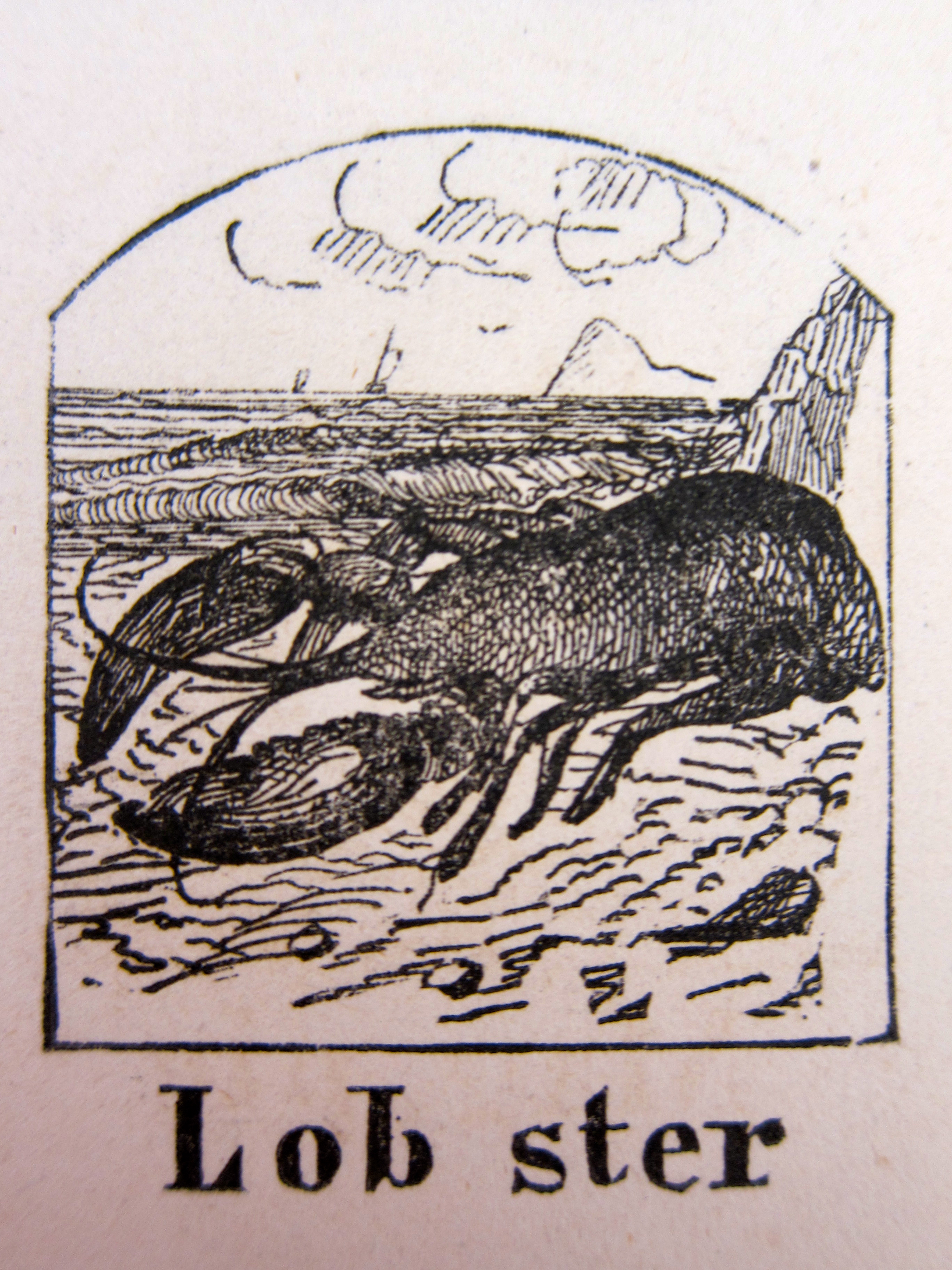
The family all trooped to church for the morning service, but Evelina, bringing her eighty-year old mother home with her, skipped the afternoon sermon “on account of getting tea.” She had to prepare lobster for Edwin and Augusta Gilmore. We might assume that on the previous day, Oakes Ames picked up a lobster (probably quite fresh, although cooked and canned were available) in Boston on his usual Saturday visit. Lobsters were plentiful, inexpensive and, as a rule, larger than those we dine on today. He was probably familiar enough with the crustacean to buy one that was fresh.

The well-known household advisor Lydia Maria Church approved of lobsters, and offered advice on buying them:

‘A female lobster is not considered so good as a male.  In the female, the sides of the head, or what look like cheeks, are much larger, and jut out more than those of the male. The end of the lobster is surrounded with what children call ‘purses,’ edged with a little fringe.  If you put your hand under these to raise it, and find it springs back hard and firm, it is a sign the lobster is fresh; if they move flabbily, it is not a good omen.’

Moving flabbily could never be considered a good omen.


*Oliver Ames, Journal, Stonehill College Archives, Arnold Tofias Collection

** Lydia Maria Church, The American Frugal Housewife 


June 9, 1852


IMG_0582


Example of bonnet frame


June 9th  Wednesday  Mr & Mrs Orr  Mr Ames & self dined

in Olivers and Oakes & Frank came to tea

with us.  Mrs Davidson & two daughters there

Mr Ames & Mr Orr rode to Canton

Mrs Orr brought me a frame for a lace

bonnet and I have fitted it to my head ready

for the trimming

With their guests, Robert and Melinda Orr, Evelina and Oakes ate midday dinner next door. It was a rare occasion to be invited to dine at Oliver Jr.’s and Sarah’s, an indication of how important the houseguests were.  At tea time, they were joined by Betsy Davidson, wife of the postmaster, and her little girls Lizzie and Julia. Oakes Angier and Frank Morton Ames joined the group, too, after finishing work at the shovel shops.

Evelina was given a special bonnet frame by Melinda and got right to the pleasant task of creating a new bonnet, “ready for the trimming.” The two friends probably sat and chatted as Evelina worked on it. Perhaps Melinda had brought some lapwork with her, or perhaps Evelina gave her something to sew. Neither woman would have been apt to sit idly while the other worked.

After dinner, Oakes and Robert rode over to Canton, probably to visit the Kinsley iron works. Back at home, Old Oliver Ames was breathing a bit easier after the much-needed rainfall of the previous day and night, reporting that “the plowd land is wett down considerable.” Just what the farmer asked for.