July 25, 1852


images

Massapoag Pond

July 25th  Have been to meeting and at intermission

went into Mrs John Howards with Mother

Had a very pleasant call met a number 

of ladies carried Miss Jarvis a boquet

of flowers  After meeting rode to Mashpog 

pond with Mr Ames & Susan.  Came home

through Sharon & went by Col Tisdales

a very pleasant ride but feel much fatigued


Evelina had a “very pleasant” time at church today. She carried some flowers from her garden with her and gave them to a friend, Miss Jarvis, at intermission. She was worn out by the end of the day, however, because after church, she, her husband, and daughter drove up to Massapoag Pond in Sharon. The day was sunny and warm and the drive along the woods may have been pleasant, especially as they drew near the water. There were old iron works in the area; perhaps they were what interested Oakes in the outing.

On the way home, the threesome drove by the home of the late Col. Israel Tisdale. Frank Mennino, curator at the Easton Historical Society, tells us that:

“The Tisdale family was well known in the area from colonial days, once operating an inn on Bay Road. Later, the family built two farmhouses and ran a large farm on Mountain Road. One of the houses was the house that Oakes and Blanche [Ames] stayed in while Borderland was being built, and was lived in for many years by the Manning and Kent families. It burned in the early 1980’s after being empty for some time. Mountain Road was ‘party central’ back then.”

Oakes, Evelina and Susie did no partying as they ventured home, but they did have “a very pleasant ride,” nonetheless.

 

July 22, 1852

Fly

July 22 Thursday.  this has been a hot uncomfortable

day and the flies are quite too plenty

dead ones laying on the floor in any

quantity.  Hannah is not neat at all

and does not keep the house in any order

Julia has got my skirt to the borage so

much one side that it will have to be taken

of[f]. She says she will come Saturday and do it


Oh, dear. Today was “allso a verry warm day verry much like yesterday.” * Evelina appears to have been affected by the “uncomfortable” heat. She had nothing agreeable to report. Her maid was sloppy, her dressmaker was inept, and there were dead flies all around the house. Probably not even her flower garden offered solace.

As for the flies, we modern readers must remember that window screens were in their infancy, so that when Evelina and other housewives pulled up the window sashes in their homes to try to cool the air inside, they let in flies and other bugs “in any quantity.”

Flypaper hadn’t been invented yet, either, but it would come along in another decade when a baker in the small town of Waiblingen, Germany, fed up with the flies that landed on his cakes and tortes, had the idea to coat a strip of paper with molasses and hang it in his window. The flies went for it, so to speak, and a universal aggravation was successfully addressed. Customers began to want the strips of flypaper even more than the baked goods, so much so that the baker eventually gave up baking and took up the manufacturing of his product. (He would soon replace the molasses with arsenic, but that’s another story.)

The German baker’s invention, unfortunately, came too late to help the disgruntled Evelina or the hapless Hannah on this warm, warm day in Easton.


*Oliver Ames, Journal, Stonehill College Archives, Arnold Tofias Collection

July 14, 1852

1852

P1070606-X2

High water (flood level) mark in canal in Lowell, Massachusetts


Wedns July 14th  Julia came again this morning

but we have not got along very fast

on my dress  Have no trimming for the

sleeves have written for Mrs Stevens to

get me some   There is a great deal to

do to finish my dress  Hannah & Mary 

have both been ironing all day and 

have it all done

Evelina was indoors, sewing a new dress with the help of dressmaker Julia Mahoney. Old Oliver was out haying, “jawing” orders at local men gathering up this year’s meager crop. Oakes Angier, Frank Morton and probably Oliver (3), now that he was home from college, were each posted in some area of the factory, making shovels alongside the workers. Oakes and Oliver Jr. were supervising, perhaps striding around the shovel complex watching the new building go up or sitting in the office looking at accounts.

If we modern readers want to find a day that typifies life in North Easton in the middle of the 19th century, we couldn’t do better than this ordinary summer day in 1852. In other years and in other places, July 14th has hosted more momentous events: the storming of the Bastille, the first ascent of the Matterhorn, the shooting of Billy the Kid, the day Jane Goodall arrived in Tanzania to study chimpanzees. Nonesuch in North Easton; according to Old Oliver’s record, July 14, 1852 was simply a “warm good hay”* day. Routine ruled.

This is not to say that history wasn’t happening. It was. Yet as Evelina noted, “we have not got along very fast,” a phrase that is applicable to so much of history. Change often quietly accumulates, transforming what we know in a stealthy fashion. Evelina’s hand-sewing, Old Oliver’s oxen-driven hay-wagons, Oakes’ and Oliver Jr.’s water-powered shovel machinery: all have since disappeared, replaced by modern equipment invented over time. The life that the Ameses lived was already altering, irrevocably, bit by bit.

Oliver Ames, Journal, Stonehill College Archives, Arnold Tofias Collection


July 12, 1852

Furnace

July 12th Monday  Mary & Hannah both washed and I

was about house most of the forenoon 

Have cut the sleeves & skirt to my borage

dress and cut a waist for Susan

Carried my work into Olivers and stopt

some time  Edwin & Augusta rode to the

furnace & carried my pot to Mr Harveys to

get some butter but it was not ready for me

When Edwin and Augusta Gilmore “rode to the furnace,” they probably went south to an area of Easton known as Furnace Village or Easton Furnace. This was one of the oldest areas in town, its early homes today recognized as a National Historic District. First settled around 1715, it was a site for industry in a landscape that was otherwise quite agrarian. Using Mulberry Brook to turn its wheel, a sawmill was established there well before the American Revolution. Later industries included a tannery and a blast furnace for ironmaking, the latter giving the area its name. Historian Edmund Hands notes, “Once Easton Furnace possessed the highest degree of industrialization in town, but that industry never grew large enough to transform Furnace Village the way the Shovel Shop created the urbanized landscape of North Easton.”*

Back in the urbanized landscape to the north of Furnace Village, Evelina’s servants, Hannah Murphy and a woman named Mary, were doing the weekly laundry. Evelina was choring, sewing and waiting for Edwin and Augusta to return with some butter, which they were unable to do.  In the fields around North Easton, Old Oliver and his men were cutting hay. The agrarian life still held sway despite mills, foundries and factories.

*Edmund C. Hands, Easton’s Neighborhoods, 1995, p. 105

July 6, 1852

500px-Illinoisoldcapitol

Old State Capitol Building, Springfield, Illinois, built 1839

1852

July 6th Tuesday  Was very busy sewing this forenoon

Mary made the sleeves to my purple cambric

calico and sewed the drugget for the sitting

room  This afternoon have been into Olivers

to tea with Mrs Witherell & Mrs Ames &c &c

Mr Jones from Foxboro called.

Received a note from Cassander Gilmore that 

Henry died this morning requesting us to attend the funeral 


In the statehouse in Springfield, Illinois, a practicing lawyer and former U. S. Representative named Abraham Lincoln gave a eulogy today for Henry Clay, the Senator from Kentucky who had just passed away. Clay had been Lincoln’s idol, his “beau ideal of a statesman.”* In 1832, Lincoln cast his first presidential vote for Clay; in 1844, he campaigned for Clay and served as an elector from Illinois. Clay’s influence on Lincoln would be life-long.

On the occasion of Clay’s death, Lincoln spoke for some time, quoting at length a laudatory editorial which lamented “that never again that majestic form shall rise again in the council-chambers in his country to beat back the storms of anarchy which may threaten, or pour the oil of peace upon the troubled billows as they rage and menace around…” Lincoln then moved on to his own simpler words. He praised Clay for his wisdom, eloquence, and perseverance, noting that “Mr. Clay’s predominant sentiment, from first to last, was a deep devotion to the cause of liberty – a strong sympathy with the oppressed everywhere, and an ardent wish for their elevation.”*

In the town of Easton, Massachusetts, on this same day, Evelina received a letter asking for her presence at a different funeral. Her cousin Henry Gilmore of Raynham had died this very morning, as his brother Cassander Gilmore wrote to say, and she and her family were pressed to attend the funeral the next day.


* henryclay.org

July 5, 1852


Motto_frederick_douglass_2

Frederick Douglass

(1818 – 1895)

1852 July 5th Monday  Orinthia & Lavinia went to Boston with

lots of others this morning  Orinthia is going to Maine 

on a visit  Mary came to sew or to see what she

can do. I have been sewing some to day and hope 

now that I shall be able to [do] more than I have

Have finished my brown muslin.  Augusta

has been here in this afternoon and this evening

we have been to see the fire works at Mr Russels

The nation was 76 years old. The Fourth of July having fallen on a Sunday, however, the celebration of it was deferred to Monday. Thus Evelina and Oakes and, no doubt, their sons and daughter went to Mr. Russell’s tonight to watch some fireworks. Others traveled into Boston, perhaps to see the fireworks there.

Mr. Russell may have been Edwin Russell, a shoemaker. The Ameses knew the family, certainly, as all three sons had attended a funeral back in January for Edwin’s father, Frank. If it was Edwin who hosted the fireworks, his may not have been as elaborate as those that would be seen in Boston, but he was following a tradition established by John Adams at the very beginning of the republic.

In a letter to his wife, Abigail Adams, on July 3, 1776, John Adams described his grand vision for a commemoration of the nation’s birthday.  It was to be celebrated “with Pomp and Parade, with Shews, Games, Sports, Guns, Bells, Bonfires and Illuminations from one End of the Continent to the Other from this Time forward forever more.” His vision was realized by 1777 when both Philadelphia and Boston – and other cities or towns, perhaps – set off Fourth of July Fireworks. A tradition was born.

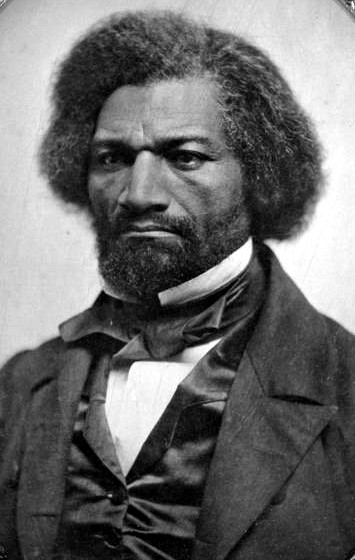
Not everyone celebrated the nation’s birthday, however, as Frederick Douglass, probably the country’s most prominent African-American, pointed out on this date* in a speech now famously known as “What to the Slave is the Fourth of July?”  He said:

“I am not included within the pale of glorious anniversary! Your high independence only reveals the immeasurable distance between us.  The blessings in which you, this day, rejoice are not enjoyed in common. The rich inheritance of justice, liberty, prosperity, and independence, bequeathed by your fathers, is shared by you, not by me.  The sunlight that brought light and healing to you, has brought stripes and death to me. This Fourth July is yours, not mine.  You may rejoice, I must mourn.”**

Douglass eloquently  described the fissure between white lives and black, yet he did “not despair of this country. There are forces in operation which must inevitably work the downfall of slavery…” ** He rightly predicted its elimination, but even he could not have predicted the carnage and destruction that the end of slavery would cost.

Frederick Douglass, “What, to the Slave, is your Fourth of July?,” various dates cited for this speech: July 5, 1852 or 1854.


June 30, 1852

Stage

Wednesday June 30th  Mr Ames left home this morning

for New York and Conn  Mrs James Mitchell

her mother & Grace came to father Ames & I

called into see them  Mrs Mitchell made 

quite a long call in here and at Olivers

Mrs Almira Ames came by the stage

to night from Conn she left New York

about four weeks since

Oakes Ames went to New York and Connecticut today on shovel business, as his father and wife each noted in their diaries. He wasn’t the only Ames on the road, either. Almira Ames, widow of cousin George Ames, arrived in North Easton from Connecticut and New York. Oakes probably went by “the cars,” as they called the railroad, while she definitely traveled in a stagecoach. Their separate modes of travel demonstrate the transformation that was taking place in transportation.

The railroad was moving in and would shortly become the dominant mode for long-distance transportation for the rest of the century and beyond. As Mrs. Penlimmon, a character developed by popular author Fanny Fern, opined only two years later:

‘The days of stage coaches have gone by.  Nothing passes for muster now but comets, locomotives and telegraph wires. Our forefathers and foremothers would have to hold the hair on their heads if they should wake up in 1854. They’d be as crazy as a cat in a shower-bath, at all our whizzing and rushing. Nice old snails!”*

How life was changing.

In more local traffic, Harriet Lavinia Angier Mitchell came to call with her mother and daughter on Old Oliver and Sarah Witherell in the other part of the house, on Evelina, and on Sarah Lothrop Ames next door. Mrs. Mitchell was a cousin of Old Oliver’s late wife, Susannah Angier Ames.

Fanny Fern, Fern Leaves from Fanny’s Port-Folio, ca. 1854, p. 50

June 26, 1852


  • hentzcl

Caroline Lee Hentz

(1800 – 1856)

1852

June 26th Saturday  Was assisting Hannah about house

most of the forenoon  Made pies & cake baked

in the small new tins  Have been mending

this afternoon and finished Marcus Warland

by Mrs Caroline Lee Hentz

Mr Ames brought home 1/4 lb black sewing

silk from Boston  I have a bad cough

Although her “bad cough” presaged an oncoming cold, Evelina managed to accomplish many domestic tasks today. Perhaps the best part of the day, however, came after the choring, baking and mending. She finished reading Marcus Warland; or, The Long Moss Spring. Tale of the South. by Caroline Lee Hentz.

Caroline Lee Hentz was an immensely popular novelist, “well known and much esteemed.”* In the 1850s, the Boston Library listed her as one of the three top writers of the day. A major literary figure, now largely forgotten, Mrs. Hentz described herself as a “Northerner who traveled and worked throughout the South for nearly thirty years.”** Though born and raised in Lancaster, Massachusetts, only fifty-odd miles from North Easton, Caroline and her teacher husband spent married life in various Southern states, opening and closing schools as they went along. They lived in Chapel Hill, North Carolina; Covington, Kentucky (across the Ohio River from Cincinnati, where they met Harriet Beecher Stowe); Alabama; Georgia; and Florida.

Unlike Mrs. Stowe, Mrs. Hentz was an apologist for slavery. In the Introduction to Marcus Warland, she wrote:

“We believe, if the domestic manners of the South were more generally and thoroughly known at the North, the prejudices that have been gradually building up a wall of separation between these two divisions of our land would yield to the irresistible force of conviction.”*** She believed not only that the institution of slavery was essential to the South’s livelihood, but that blacks were a lesser race who needed to be looked after. She was hardly alone in the latter belief.

After Mrs. Stowe’s Uncle Tom’s Cabin was published to both huge acclaim and vehement dissent, Mrs. Hentz penned a rebuttal novel entitled The Planter’s Northern Bride.  It came out in 1854 and found a wide audience. We can imagine that Evelina might have read it out of curiosity.

But today, while Evelina reclined with Marcus Warland, her old father-in-law was dependably keeping his eye on the sky and his finger to the wind.  The weather entry for today read “the 24 – 25 + 26 were fair cool days for the season + windy drying days wind north west + west most of the time.”**** This bode well for haying.

Anonymous, Southern Quarterly Review, circa 1851, quoted by Karen Tracey, Plots and Propsals, University of Illinois, 2000.

** “Caroline Lee Hentz,” Wikipedia, accessed June 24, 2015

*** Caroline Lee Hentz, Marcus Warland, 1852, p, 2

****Oliver Ames, Journal, Stonehill College Archives, Arnold Tofias Collection


June 15, 1852

LongShop

Recent image of Long Shop 

June 15th  Tuesday  Julia here and I have been sewing

some but have not had much time […] I

t’s very hot weather mother spent the

day at Edwins I called there awhile and 

ripped my green gingham dress to have 

it made over.  had quite a heavy shower 

this morning which was needed very much

Everyone agreed that this day was “verry warm” and that rain was needed.* Evelina, looking up from her sewing, reported that they had “quite a heavy shower.” Her father-in-law, however, described the rain as “a small shower in the forenoon about an eighth of an inch.” Her glass was half-full, his was half-empty when it came to considering the benefit bestowed by this particular rainfall.

Such quick rain wouldn’t have been enough to interfere with the building of the new stone shops at the factory. Workers had begun to arrive on Saturday and, surely, some initial construction was already underway.  Old Oliver would have made sure of that. This first building on the new site, which was much closer to where the Ames family lived, was dubbed the Long Shop.

Industrial historian Greg Galer describes the Long Shop as “a simple, narrow, gable-roofed, two story building 525 feet long and 35 feet wide with a 60 by 50 foot ell and an additional 30 by 10 foot engine house. “**  This sturdy, less flammable facility would be up and running by the end of the year, and soon include a 60 hp steam engine.

Residents of North Easton today know the Long Shop as one of several shovel factory buildings repurposed for residential use. Along with others, Mr. Galer was instrumental in the successful effort to preserve the historic character of the Long Shop as the site was developed.

* Oliver Ames, Journal, Stonehill College Archives, Arnold Tofias Collection

** Gregory Galer, Forging Ahead, 2002, p. 150

June 14, 1852

FullSizeRender

June 14th

1852 Monday  Am 43 this day quite an old woman

Julia Mahoney came to work on my dresses

Hannah Murphy commenced working for me

this day & Mrs Patterson is here and it

has been about as much as I can attend to

to wait upon the rest  If I had two or 

three more it would be all I could attend to


Hannah Murphy, replacing the departed Jane McHanna, donned an apron this morning and “commenced working.”  Mrs. Patterson was still on the premises and the three women proceeded with the Monday chores, laundry included. Evelina was very busy tending to it all.

Yet today was Evelina’s birthday and she felt old.  We in the U.S. might scoff at the notion that 43 feels old; our current life expectancy for females is 81.  In Massachusetts in 1850, however, it was no more than 45. Who knew how long Evelina would live?  While she had the hopeful example of her hardy, octogenarian mother to emulate, she also would have remembered her two older sisters, both dead in their thirties. She may have considered the possibility that, like her mother, she could live to an advanced age. In fact, she would live to be 73; on this birthday, she had thirty more years in front of her.

At the shovel factory, Oliver Ames took his mind off his concern for the crops and focused instead on the arrival of Clark S. Manchester, who “came here to day from Fall River to build our stone shop.”* Mr. Manchester, 37 years old, was a native of Little Compton, Rhode Island, who had only recently moved to Fall River with his wife and two children. His expertise with stone work had led him to the Ameses, or they to him.

So the new building began, on the west side of Shovel Shop Pond. This location was different from the original and recently rebuilt factory, which sat at a lower edge of the pond in order to maximize the drop in water level. Water still powered the factory machines, and the new location to the west would still rely on water power from “just above where the Queset entered Shovel Shop Pond.”** But different from the old factory, this new Long Shop would accommodate a modern steam engine, a huge advance in technology. A new era in production was waiting to begin, and the stone buildings would reflect the change.

Oliver Ames, Journal, Stonehill College Archives, Arnold Tofias Collection

** Gregory Galer, Forging Ahead, 2002, p. 250