January 5, 1851

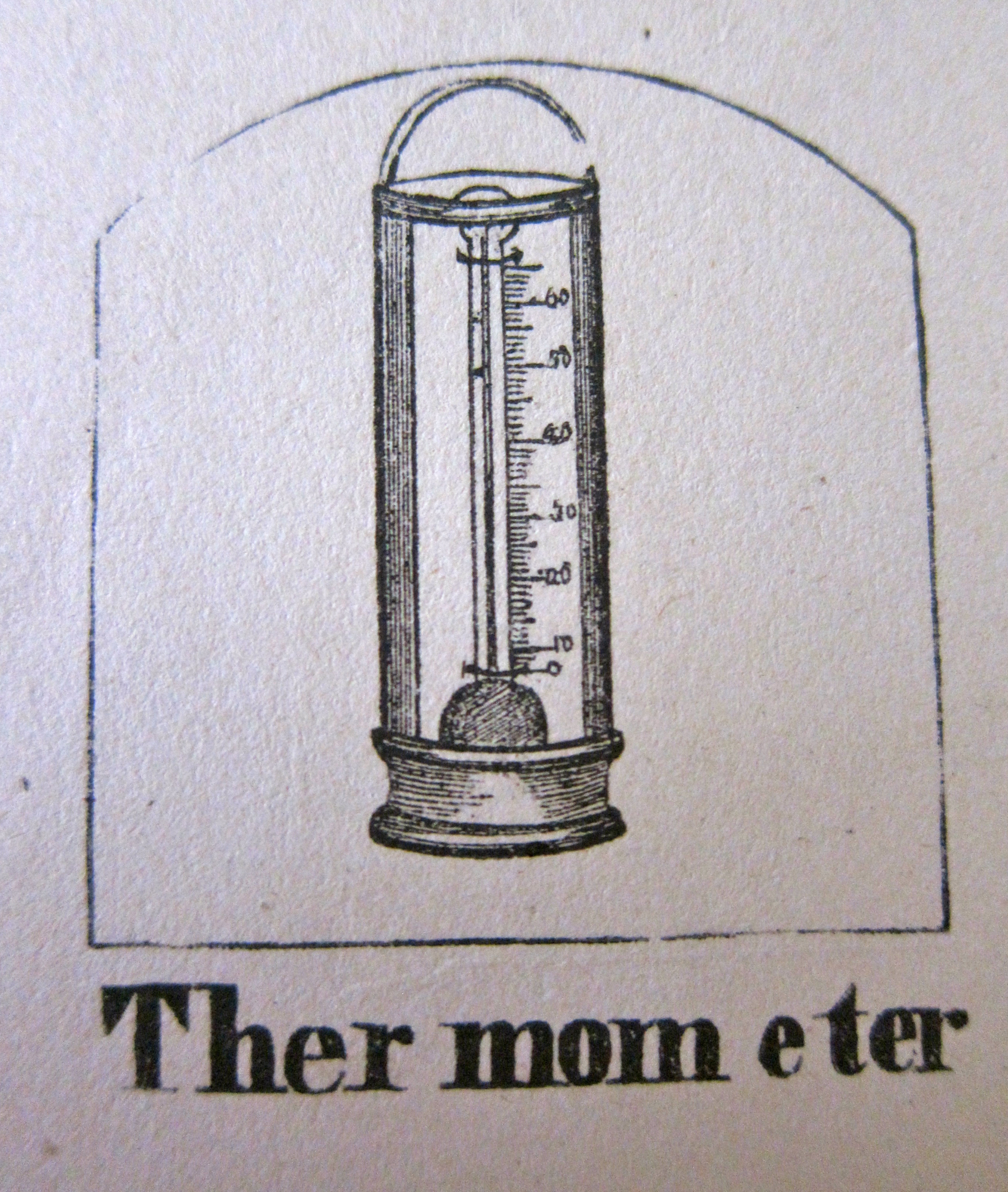
Thermometer

Sun Jan 5   Had to do my own housework to day and did not get

it done in season to go to church  Our Lazy boys did not

rise untill nearly nine Oclock.  No meeting this afternoon

Mr Whitwell attended the funeral of Asa Howards child

Mrs McHanna came home in season to get tea.  Went

with S A to see Miss Eaton found her able to sit up 

most of the day.  She has a bad cough & is failing.

After I came back made a call in the other part of the house

There was no church for the Ames family today.  Without the help of their servant, Jane McHanna, Evelina had to get breakfast and dinner by herself, and didn’t finish the preparations in time to get to morning service at the meeting house.   Oakes Angier, Oliver (3) and Frank Morton, perhaps seizing a rare opportunity, slept late despite their mother’s evident disapproval. The afternoon service, which the family also usually attended, was cancelled.

Truth told, Evelina may have been grateful not to make the two mile ride to church. The weather that day, according to Old Oliver, continued “verry cold,” reported at 14 below zero by “the Mr Pools” who lived several miles south of the Ameses. The Pools would know; they manufactured thermometers. Jane McHanna, meanwhile, had to bear the cold on her drive back from Mansfield, returning to North Easton in time to prepare tea.

Despite the cold, Evelina and  Sarah Ames paid a visit to a sick woman in the neighborhood. Calling on the sick was something that Evelina and her sisters-in-law often did. Although there were doctors in town, there was no hospital, nor was there a habit of placing the seriously ill in a hospital.  People were taken care of at home, by family, friends, and townspeople like the Ames women.  Miss Eaton was suffering from tuberculosis or consumption, as it was known.  Evelina, Sarah Ames, and Sarah Witherell visited her often, taking food and helping the family with whom Miss Eaton was living.

Sarah Ames and Sarah Witherell are sisters-in-law.  Sarah Ames is married to Oakes’s brother Oliver, Jr.  Sarah Witherell is Oakes’s sister.  Both women are younger than Evelina; all three women live in close proximity.
New Year’s Day, 1851

IMG_2728

January 1st 1851

Did not rise as early as I ought to commence a new year …

it being about 7 Oclock before we had our breakfast   All wide

awake to get the start of wishing Happy New Year.  Finished

our ironing, and swept the chambers   A A Gilmore & wife

called P M stoped about two hours.  Mrs Witherell finished 

the underclothes for Susans doll.  Elisa at Olivers [Jr] cutting

Helens dress  Commenced a letter to Pauline in answer to one

received last night  Pleasant but very cold.

Most of the people named in Evelina Ames’s first diary entry are family members.  A. A. Gilmore, for instance, is her 30-year old nephew Augustus.  Mrs. Witherell is her sister-in-law, Sarah, busy with doll clothes for Evelina’s youngest child, Susan.  Oliver, Jr. is Evelina’s brother-in-law; his daughter Helen is having a dress made.  They all live in the small, industrial village of North Easton, Massachusetts.  Most live within the Ames family’s substantial compound.

Evelina herself is 42 years old.  Raised on a farm several miles south of the center of town, she has been married to Oakes Ames, a shovel-maker, since 1827.  With three sons and one daughter, she and Oakes live in the family homestead that they share with Evelina’s father-in-law and his aforementioned, widowed daughter, Sarah Witherell, along with her two children.  The Ames men work at the shovel shop, the younger children go to school, and the women tend the home.  Everyone is occupied.

The diary that Evelina kept during 1851 and 1852 offers a modest but illuminating window on daily family life in New England in the ten years before the American Civil War, which they will call “The Great Rebellion.”  It was a decade that marked the end of much of what had come before.  Evelina’s remote, quotidian and predictable life was changing as the railroads moved in, travel became expedited, goods became more accessible and plentiful, and religious thinking was challenged.  As far as her personal circumstances are concerned, much more will change for the family in the years ahead than anyone could have imagined on that cold New Year’s day in 1851.  Of course, we know this now, looking back with perspective, but Evelina didn’t.  She only knew about each day as it happened – which is much of the charm of reading her record.

Hope you will enjoy following along.