February 16, 1852

Picture frame

Monday Feb 16th

1852

Susan washed the dishes this morning and I was

at work about the house most of the forenoon

Mrs Mary Williams came about eleven Oclock and 

staid to dinner  Called into Olivers and Edwins

with her  She returned to Joshua C Wm about three

and went home in the stage  Oliver tried to get

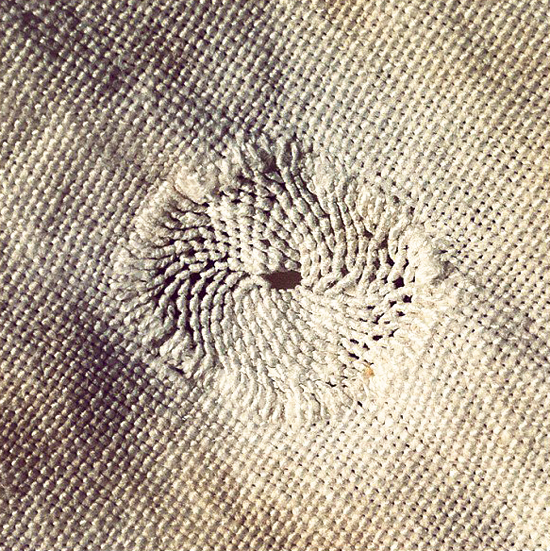
the coloured engraving smooth in the frame but could 

not  Mended Oakes Angier a vest


The new week opened with the usual domestic arrangements: Jane McHanna doing laundry, Susie Ames washing dishes and Evelina choring “about the house” in the morning.  A visitor, Mary Williams, arrived and stayed for midday dinner, then departed mid-afternoon on the local stagecoach .

With her son Oliver’s help, Evelina finished hanging the prints she had bought the week before in Boston. The new pieces of art were quite au courant; etchings, lithographs, and engravings were appearing on parlor walls across the country.  New printing technology – the same that promoted the appearance of so many new periodicals and serial novels – made the production and distribution of art prints easy. The subject matters varied from historical (like the famous image by Emanuel Gottlieb Leutze of Washington Crossing the Delaware, first painted in 1851) to religious to geographical to sentimental.  They were decorative and affordable, and the middle class flocked to buy them.

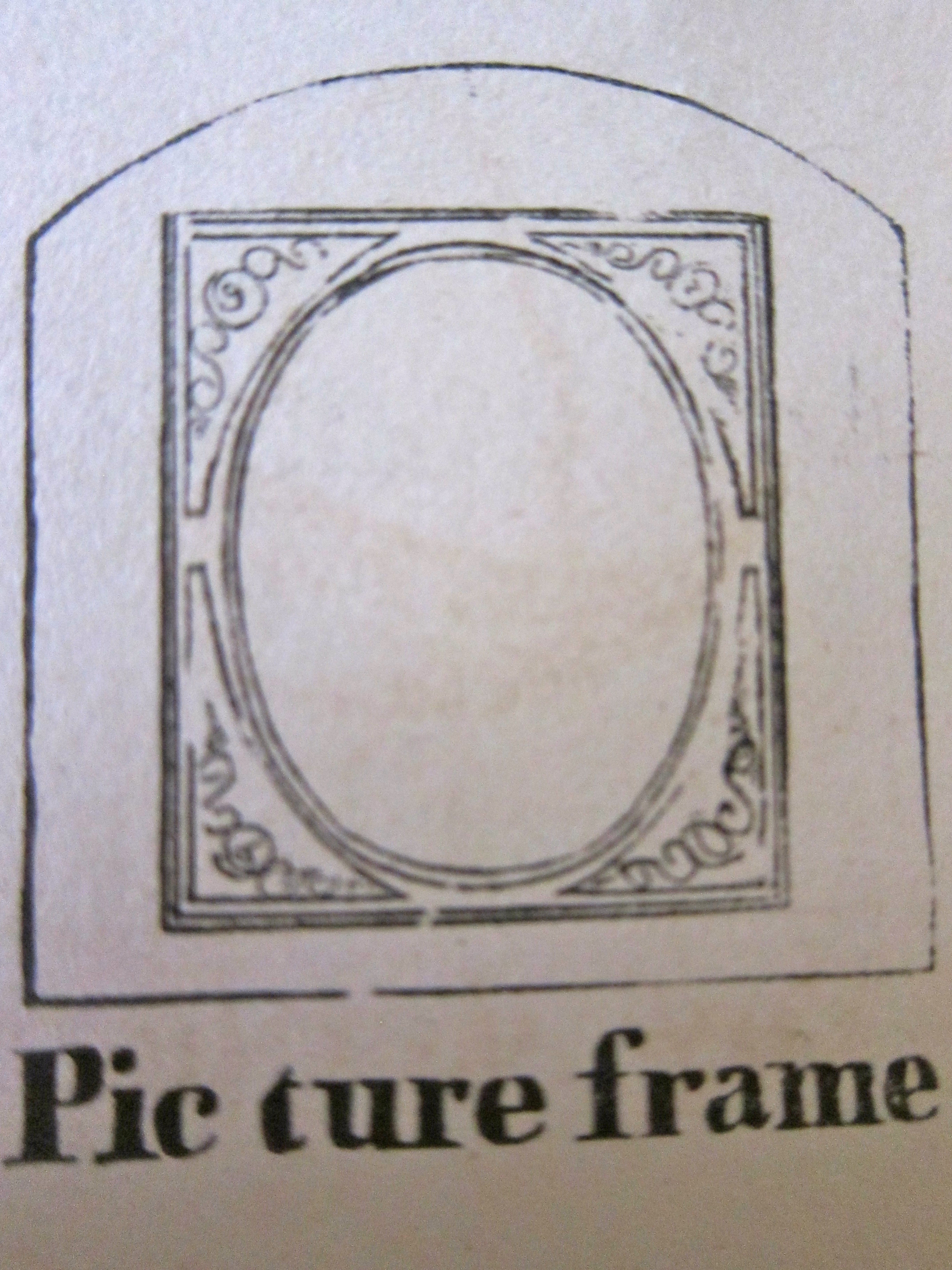
Subject matter, of course, was important; Evelina had purchased one print about Halloween (or All Hallows Eve as it was known). The prints had to be attractive and look handsome on the wall. But the decorative frames that went around the art work counted, too, and “were often considered more important than the prints themselves.”* It’s too bad that Oliver was having difficulty making one new print fit properly in its frame.

* Pierre-Lin Renie, The Image on the Wall: Decoration in the Nineteenth Century Interior, Nineteenth Century Art Worldwide
February 4, 1852

8mmIdeas_instagram

Mending

1852

Wednesday 4th Feb  Have been mending shirts and have

done up some collars & sleeves &c This evening

have been to Alsons with Mr Ames, met the 

Pools Mr & Mrs A Howard & Harvey  had a 

pretty lively time.  Edwin & Augustus with their

wives were also there  It is a beautiful moonshiny

night and have had a pleasant ride.  O A & Oliver

went to a ball to Canton.

Evelina sat with her sewing and mending for most of the day, catching up on some of the more ordinary aspects of keeping her family well-clothed. She was motivated in part by the need to prepare her son Oliver (3)’s clothes for his return to college.  Her diligence was rewarded; she got a lot of work done, and at the end of the day she and Oakes went out for the evening. Right next door, in the other part of the house, Oakes’s youngest brother William Leonard was visiting, yet Evelina doesn’t mention him.

She and Oakes rode south to her brother’s farm, where they met with family and friends for “a pretty lively time.” They saw some of the Pools, an extended family in the area, and Asa and Henrietta Howard, another farming family. (A year earlier, Evelina had sewn a shroud for one of the Howard’s children.) The Harveys, from whom Evelina bought butter, were present as well.

The beautiful moon, not quite full, shone down from a starry sky on other winter gatherings.  Oliver Ames (3) turned 21 years old today, after all; he celebrated the occasion with his older brother, Oakes Angier, by attending a dance in Canton. One imagines that they had a good time, too.


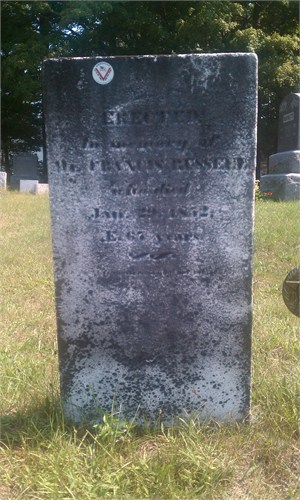
February 3, 1852


playingcards

Union soldiers playing whist, circa 1861

1852 Feb

Tuesday 3d Have been looking over the boys shirts and 

have mended some of them.  Fred carried me

to call on Augustus’s wife, called at Mr Torreys

an[d] Mrs J Williams engaged her to make some shirts

for Oliver  Mr & Mrs Williams passed the evening

here.  Have done but very little sewing

The boys & Joshua played cards.

Chess wasn’t the only game that people played in the 19th century.  As Evelina noted today, her sons and a friend named Joshua played cards. Perhaps Fred Ames played, too. The game they preferred was whist, a precursor of today’s contract bridge.

Whist was played according to rules established by the accepted authority, Edmond Hoyle, an Englishman in the 18th century who had codified explicit guidelines for various card games.  Whist followed “a rigid set of rules, etiquette and techniques.”** Like bridge, it required four players, one deck of 52 cards (then known as a French deck), a bidding process, and trick taking.  Trump was determined by the last card laid down and, unlike bridge, there was no dummy hand.

The Ames family loved playing whist.  Oliver (3) often writes in his early journals of playing whist with his grandfather, Old Oliver. Night after wintry night, the men would play, the grandsons occasionally beating their grandfather.  Evelina seldom writes of playing herself; she and her sisters-in-law usually sat to the side, conversing, sewing or reading.


www13thmass.org/1861/williamsport

** http://www.kristenkoster.com/2012/02/a-regency-primer-on-how-to-play-whist/

January 31, 1852

500

Jan 31st  1852

Saturday  have been choring about house & mending most

all day.  Made a robe for Mitchell Willis child with

Mrs S Ames assistance  Edwin & wife here to tea  Mrs S

Ames has been here about three hours with her work

Mrs Witherell here awhile this afternoon.  Mr Frank

Russell was buried this afternoon.  My three sons went

to the funeral.  Quite a hard snow storm  Mr Ames to Boston

Inclement weather didn’t keep the Ames men from moving around today. Oakes Ames traveled into Boston on business, as he usually did on Saturdays. His sons, Oakes Angier, Oliver (3) and Frank Morton, rode to Easton Center for the funeral of Frank Russell, a 67-year-old blacksmith and veteran of the War of 1812. Russell had died two days earlier from pleurisy, and, despite the “hard snow storm,” he was buried at the Seth Pratt Cemetery with friends and family in attendance.  What had been his connection to the Ames’s sons? Had he worked for the shovel company?

Evelina, too, was tending to a death outside the family.  She and her sister-in-law, Sarah Lothrop Ames, sewed a burial robe for Luella Willis, the two-year old daughter of Mitchell and Amanda Willis.  Like Frank Russell, little Luella would have to be buried in cold ground during snowy weather. Once the services were over, the living would carry on with their chores, their commitments and their lives.  Evelina would turn to “mending most all day.”

January 17, 1852

IMG_2480

John Ames Mitchell

1852

Jan 17 Saturday  Finished Susans morino hood and mended

stockings & some other things  Finished Susans Delaine

dress that Julia Mahoney cut Dec 23  Mr Ames brought

Sarah W some fitch cuffs from Boston  Frederick

came home to night  Ruth Swan that was and

her husband came home to night  Heard of Mrs

Colin Harlowes death

Some months back Evelina’s sister-in-law, Harriett Ames Mitchell, had departed Easton with her three children to join her husband, Asa, in Erie, Pennsylvania  One of those children was John Ames Mitchell, who turned seven years old on this date.

John Ames Mitchell would lead an irregular childhood, moving around western Pennsylvania but eventually landing back in Massachusetts, in Bridgewater. His father, a coal trader who had worked for the Ames family, would succumb to mental illness or dementia and spend out his days in the Taunton Hospital for the Insane, his residence there supported by his brother-in-law, Oliver Ames Jr..  John’s mother, Harriett, and older brother, Frank Ames Mitchell, a Civil War veteran, would also live lives greatly indebted to the financial support of family; John, too, looked to his uncle for support on occasion.

John attended Harvard, but didn’t graduate, and studied abroad. Endowed with artistic and literary talent, he became an architect.  Under the guiding patronage of his Uncle Oliver Jr., John designed the Unitarian Church on Main Street in Easton in 1875, and worked on other projects in the Boston area before returning to Europe again, this time to study at the Beaux Arts. When he finally returned to the States, he used his ample talent to write novels, draw illustrations and, most lasting of all, create Life magazine.

With a racehorse owner named Andrew Miller, John started publishing Life in 1883. John and his staff, which included the Harvard grad and founder of Harvard Lampoon, Edward Sandford Martin,  saw Life as a publication that would “have something to say about religion, about politics, fashion, society, literature, the state, the stock exchange, and the police station.” He vowed “to speak out what is in our mind as fairly, as truthfully, and as decently as we know how.”* He also worked to bring wonderful illustrators on board, most famously Charles Dana Gibson, whose Gibson Girl would come to life in Life.

John also was a co-founder with Horace Greeley of the Fresh Air Fund.  He married but never had children of his own. His 75% ownership of Life lasted until his death in 1917.

January 3, 1852

OLYMPUS DIGITAL CAMERA

*

1852

Jan 3d Saturday 

Finished my old hood and ripped Susans

old one & washed the lining and have partly quilted

it once again  Have spent all the afternoon in 

mending Franks shop coat.  Sewed this evening

untill nearly ten have not read at all

Mrs Witherell received news last night that her

father Witherell is not expected to live and she has gone

to see him.

Three-and-a-half years earlier, Sarah Ames Witherell had lost her husband, Nathaniel Witherell, Jr.  Now, she had the sad duty of traveling to Boston to say goodbye to her husband’s father, Nathaniel Witherell, Sr. Someone must have written a letter to tell her he was ill and, ever dutiful, Sarah Witherell responded quickly to the news.  Off she went.

Better news was that today was the birthday of one of Evelina’s many nieces, Mary “Melvina” (or “Malvina” as Evelina spelled it) Torrey. The youngest daughter of Evelina’s late older sister, Hannah Howard Gilmore Torrey, Melvina turned 11. Her father was Col. John Torrey, a high-profile personage in North Easton, of whom Evelina often writes. Melvina and her sister, Abby Torrey, were great favorites of Evelina; Melvina is the niece to whom Evelina gave a bloomer hat the previous summer.

In another ten years, Melvina would marry an older man, Sanford Blake Strout, who also lived in the village of North Easton, on Center Street. She would bear two sons, Byron Howard Strout and Havilen Torrey Strout.


Illustration from Godey’s Lady’s Magazine, 1851


December 20, 1851

unnamed Dec 20 Saturday  Have been very busy all day working

on different articles  Mended some clothes

for Frank, the stockings and mended the

places that were cut & bound the end of

some pieces of carpeting Jane finished the 

second robin that she has made for Frank

Mr Ames brought home some marble rubber

and lining & ribbon for Susans bonnet   ”


[T]his was a fair day and not verry cold” was the weather report from Old Oliver Ames. It was a normal Saturday at the Ames’s house in all respects. Evelina mended clothes, darned socks and repaired some carpeting.  Jane McHanna sewed, too, having recovered from an acute indisposition caused by coal the day before. She finished a “robin” (which one reader suggests was a kind of tough work pants) for Frank Morton Ames, Evelina’s youngest son.

Oakes Ames went into Boston, as usual, for a weekly check-in with shovel customers, after which he went shopping for his wife. From a list Evelina must have given him, he made his way along Washington Street and around Faneiul Hall, probably knowing just which shop to go to for such-and-such ribbon or a well-priced bolt of flannel. He returned to North Easton laden with parcels wrapped in paper and tied with string.

December 12, 1851

tumblr_n6j6ijphsb1rly06do1_500

Dec 12 Friday  I am no better than yesterday & my cough

is increasing.  Have been mending most all day

Took a piece out of a comforter that the cat

had been on  Hannah called a few minutes

Mr Talbot brought home the sausage chopper

that he borrowed yesterday and Orville borrowed 

it and has brought it home this evening

Mary has been sick most all day talked of leaving

A cat! Today’s entry is the only mention in Evelina’s diary of the existence of a pet at the Ames house. There may have been some feral cats in the Ames barn, keeping the rodent population down, but the way this entry is written suggests that this cat was more of a household pet. And this pet “had been on” (what might that mean!) an old comforter or quilt, and had done enough damage to warrant the piece being removed. While the cat was no doubt indifferent to the fate of the comforter, Evelina was concerned enough to repair it.

Evelina was “mending most of the day,” which meant she was finally sitting down and holding relatively still. For several days, she had been indoors and out, painting and varnishing, kneeling and bending, and challenging herself to ignore her cold. No wonder her cough was “increasing.”  Her newest servant, Mary, had taken sick, too.

Neighbors were making sausage, and Evelina and Sarah Witherell would be doing that, too, in a day or two. Old Oliver had slaughtered four hogs a little over a week earlier, most of which he sold. But some of the pork made its way into the various Ames kitchens, and now the Ames wives and daughters would be putting it away.


November 29, 1851

frontcover_500

Nov 29th  Sat.  This forenoon have been mending

Olivers (3) clothes and putting them in order to 

carry back Monday.  Have been with Oliver

to spend the afternoon at Mothers. Came

home by Mr Lothrops to bring Sarah Lothrop

Fred & Helen home  Alson has been quite 

unwell a week or more & is not able to work

Evelina was enjoying the company of her middle son, Oliver (3), today. Like many a modern child, he had brought his clothes home from college to be put “in order” (but not washed – it wasn’t laundry day.) Evelina mended what she could and then the two of them rode south to visit old Mrs. Gilmore and the family on the farm. They found that Alson Gilmore, Evelina’s brother, had been “quite unwell.” He was evidently bed-ridden, which suggests that their Thanksgiving had been less celebratory than the Ames’s.

Unlike the shovel laborers in the village, Alson did work that didn’t follow a schedule set by a bell.  He labored according to the demands of the season, weather and livestock. How had he managed to run his farm this past week when he was too ill to work? Most likely his fifteen-year-old son, Francis, took over responsibility for any livestock. And if the Gilmores had any dairy cows, it was typically the women of the house – in this case, daughter Lavinia or wife Henrietta – who would typically have done the milking. Because it was November, and after the harvest, there was otherwise not much work that demanded attention.

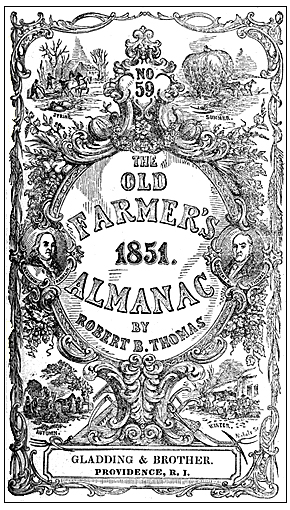
The Old Farmer’s Almanac, seen above, would have been full of advice for Alson and other farmers. We don’t know if Alson consulted it. (Like Old Oliver Ames, he might have consulted instead an agricultural newspaper called The Massachusetts Ploughman.)  The almanac was just featuring its new “Four Seasons” cover, first used in October of 1851 and still in use in 2014. It was designed by Hammatt Billings, a Boston architect and artist who also did the original illustrations for Uncle Tom’s Cabin, and engraved by Henry Nichols of Cambridge, who name appears on the lower right.  The editor was Robert B. Thomas, whose portrait is featured on the right side of the cover, opposite Benjamin Franklin.

October 11, 1851


Hog

Sat Oct 11th  Baked in the brick oven  brown bread cake & seed

cakes Squash & apple pies  Miss S. Orr, Mrs Witherell

and her children here to tea  Helen came home last

night and Julia is at Olivers making her silk dress.

Mrs Elizabeth Lothrop is there assisting them.  I have

mended Mr Ames a vest and made the skirt

to Susans striped Delaine dress


Today many baked goods came out of the brick oven that Sarah Witherell and Evelina shared. It was getting to be pie season, so Evelina made squash and apple pies, along with more usual fare like brown bread and cake. Special on the menu was seed cake, something that Evelina hasn’t mentioned baking before.  She probably used caraway seeds from some roots she “set out” last April.

Next door Helen Angier Ames, briefly home from boarding school, met with the family’s favorite dressmaker, Julia Mahoney. Only fourteen, Helen was having a silk dress made; perhaps it was a party dress she might use in Boston. Helping Helen and her mother, Sarah Lothrop Ames, was Sarah’s young sister-in-law, Elizabeth Howard Lothrop. Only 22-years-old, Elizabeth was the mother of two very young sons and the recent widow of Sarah’s brother Clinton.

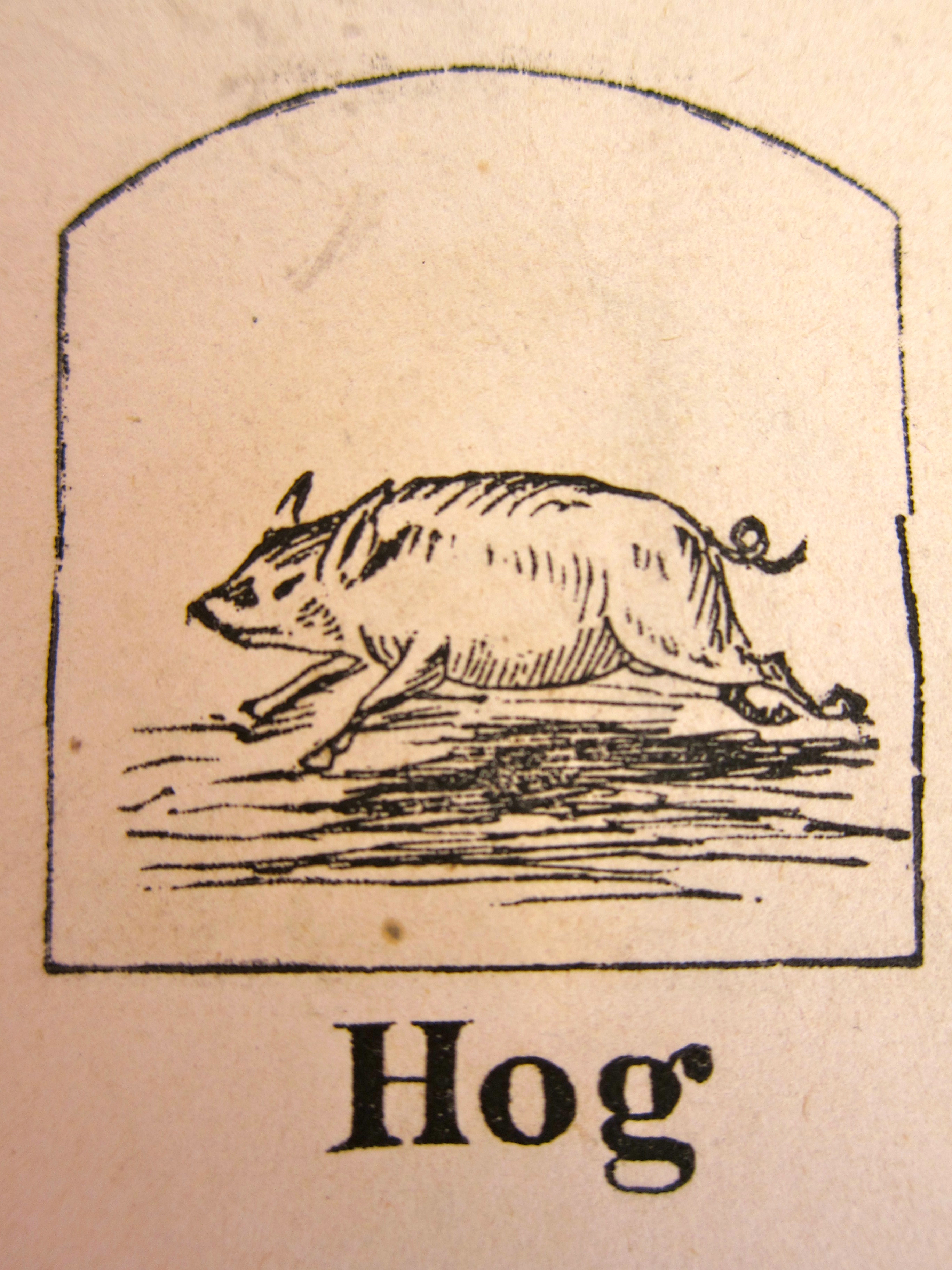
Old Oliver had to be pleased with life at this particular time. Only the day before, “Mr Phillips finisht his work at the great pond,” meaning that the new flume at Great Pond was in place. This was a good achievement for the shovel business which relied on water power to run the factory. Old Oliver was still active in the business he had started and passed on to his sons, yet never took his eye off of the family farm, either. Today he “bought 12 pigs that weighd 1330 pound at 6 ½ cents a lb average weight 112 pounds – cost $86:45.” He would raise those pigs, eventually selling some and slaughtering others to feed his large family. The factory and the farm continued to engage Old Oliver as he grew old.