October 12, 1851

OLYMPUS DIGITAL CAMERA

Sunday Oct 12th  Had a Catholic meeting at 8 Oclock  Jane went

Have not been to meeting to day on account of the

humour was affraid that I could not sit still.  Susan

went & all the rest of the family  Read in Goodeys

Ladys Book .  Quite stormy & could not go to

Augustus’ as I intended  Have had a very quiet 

day

For the third Sunday in a row, Evelina missed church.  Her nettlerash, or “humour,” still bothered her to such an extent that she had trouble sitting still. She stayed home and by her own admission, “had a very quiet day” while the rest of her family went to meeting. Even the servant, Jane McHanna, left the house to go to a service in the new Catholic Church on Pond Street.

Her father-in-law, Old Oliver Ames, who kept a daily record of the weather, reported that “this was a cloudy warm day and there was 2 or 3 small showers in all about one 4th or 3/8 of an inch southerly.” Evelina evidently studied the raindrops from her perch in the house and decided to postpone her intended visit to the village to see her nephew and his family. Instead she read from Godey’s Lady’s Book, the popular monthly periodical to which she subscribed.

Published in Philadelphia by Louis Godey and edited by Sarah Josepha Hale (a high-profile writer who, among many other accomplishments, wrote Mary Had a Little Lamb), Godey’s Lady’s Book was, as its title suggests, targeted at women. It featured domestic fiction and household hints, sentimental poetry and architectural plans.  It showcased contemporary writing by authors such as Nathaniel Hawthorne and Washington Irving, yet also published three editions in which women, and only women, wrote the articles.  A testy Hawthorne actually complained to his publisher about the influx of female authors, calling them “a damned mob of scribbling women.”

By 1855, the magazine even carried a feature entitled Employment for Women. Each monthly volume of Godey’s contained various illustrations and at least one fashion plate, imperative for home-seamstresses everywhere who wanted to stay abreast of the styles in dress. It was a magazine perfectly aimed at Evelina, and she followed it loyally.
October 9, 1851

IMG_1057

Thursday Oct 9th  Jane has been sick to day went to bed directly

after washing the breakfast dishes and I had to get

dinner  After dinner she was much better and was

able to […do] the dishes  This afternoon I have passed

in Olivers with Miss S. Orr.  Mrs Witherell & Mitchell

Mr Ames & William there to tea Have trimmed

Susans bonnet with dark ribbon


Jane McHanna was sick.  The domestic team at the Oakes Ames house was barely operational, what with Evelina herself still feeling the effects of a mean case of nettlerash. But between them, the two women, servant and mistress, managed to make meals appear on the dinner table in a timely fashion. Did the men of the house appreciate the extra effort going on behind the kitchen door?

Tea was a special event today, served next door at Oliver, Jr. and Sarah Lothrop Ames’s. Present were five of Old Oliver’s six surviving children: Sarah Witherell, Harriett Mitchell, Oakes Ames, William Leonard Ames, and the host, Oliver Ames, Jr. William was visiting, if not from New Jersey, then from his current way station on his journey to Minnesota. Harriett, too, held visitor status;  she and her children were about to return to her husband in Pennsylvania. Only Sarah Witherell, Oakes, and Oliver Jr. lived in North Easton and saw one another regularly.

Missing from the group was Horatio Ames, who lived down in Connecticut. No one’s favorite sibling, some – Oakes, particularly – may even have appreciated his absence. Interesting that Old Oliver himself isn’t mentioned as being present.

Another guest who was also there at this rare gathering of the clan was Miss Susan Orr, a long-time family friend (or relative?) who had known the group when they were children. She could remember Oakes Ames as a baby. Susan had been staying with Sarah Witherell and Old Oliver for about ten days. Meanwhile, a different Susan, only nine-years-old, got her bonnet trimmed with a new ribbon.


October 8, 1851

03615

*

Wednes Oct 8th  Have been sewing pretty steady to day have finished

my dark french print dress and have worn it this

evening  This afternoon called at Mrs Swains with

Mrs S Ames  Her brothers wife is there from Nantucket

with two children & her nurse is there and with her

father & mother made quite a family, nine of them

Mrs Swain said  She appears quite smart

She doesn’t mention her condition in her journal today, but Evelina was still afflicted with nettlerash, and would continue to be for another several days.  Why was her version of this troublesome condition so much more severe than her daughter’s had been?  Did the two, in fact, even have the same illness?

The only way to cope was to keep moving forward.  As least Evelina seemed able to sit and sew, enough to complete a “dark french print dress” she had been working on for some time. (Perhaps the fabric was not unlike the example of a 19th century French print fabric in the above illustration.) She even changed into the new dress for the evening.  Sarah Lothrop Ames may have stopped in from next door for the two sisters-in-law went to call on Ann Swain, wife of John Swain, the new bookkeeper and clerk at the shovel company.

Ann Swain was pregnant, almost at full term and doing well, appearing “quite smart.” She was surrounded by relatives – “nine of them” – who had evidently traveled from Nantucket in order to assist at the birth. The baby would be Mrs. Swain’s first, and her parents as well as others were on hand to help. Neither Sarah nor Evelina would be needed.

Courtesy of http://www.french-treasures.blogspot.com


October 7, 1851

Broom

Tuesday Oct 7th  Have been at work on the dark french

print  This forenoon swept the chambers and put Franks

chamber in order that he left.  Carried my work

into the other part of the house while  My humour

troubles me so that I can scarcely sit still.  Was quite 

sick awhile this evening  We have had very cold

weather for the season for a number of days


Whatever powdered medicine Dr. Swan gave Evelina on Sunday wasn’t working. Her “humour” troubled her all day and she was especially ill in the evening. Her nettlerash made her uncomfortable and sick. With some asperity, she noted the recent “very cold weather,” which wouldn’t have helped her frame of mind.  It’s interesting to note that her father-in-law, Old Oliver described this very same day as “a fair warm day wind northerly part of the day + southerly part of the day.” It’s likely that Evelina’s perception was colored by her overwhelming personal discomfort.

Does any reader think Evelina that might be suffering from shingles?

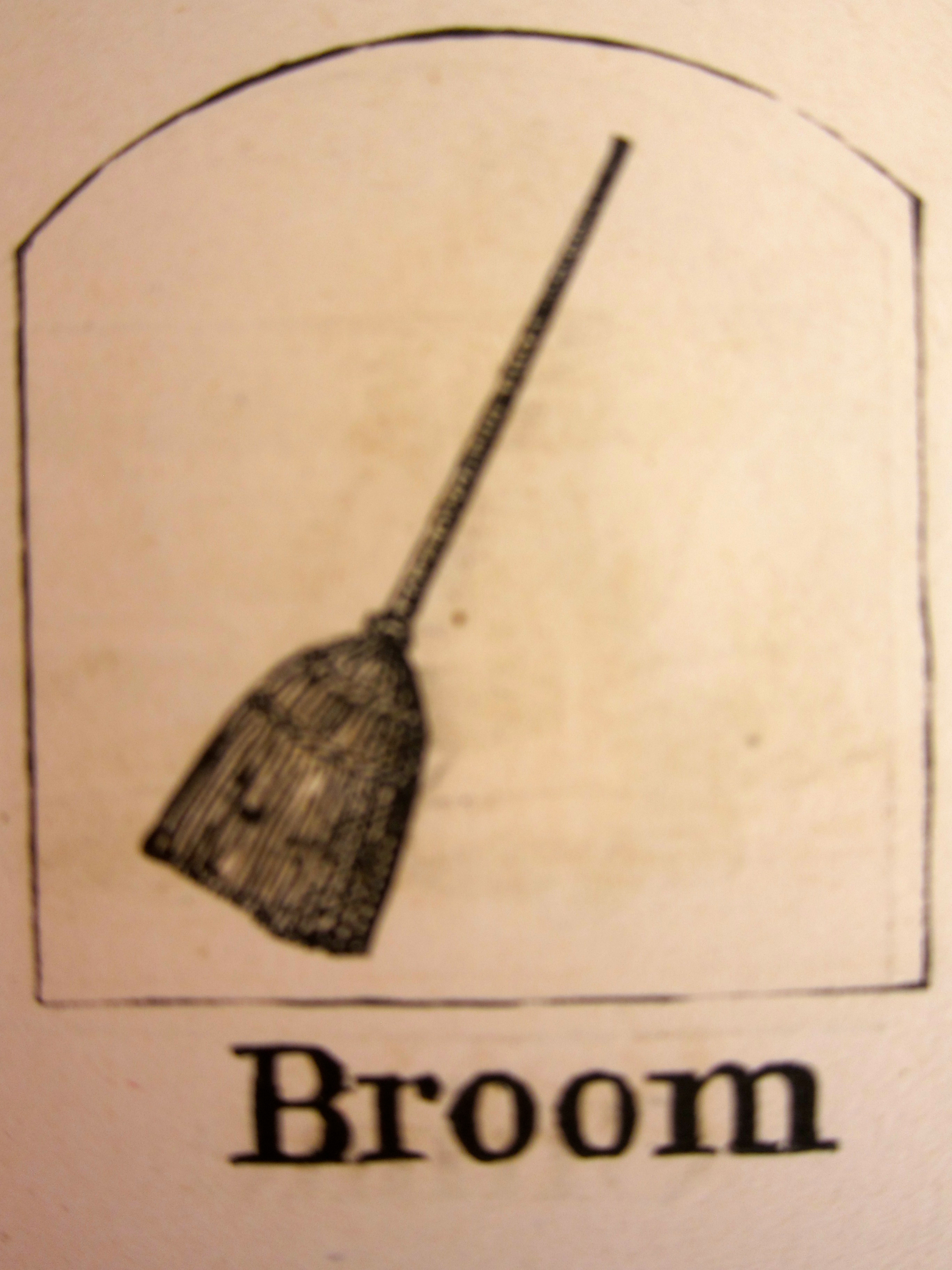
Nonetheless, she kept busy.  She swept the house and tidied up after her youngest son, Frank. She sat down to sew, though must have found it difficult to concentrate when her skin itched and burned.  She went into the other part of the house, where Miss Susan Orr, an elderly friend (or relative?) from Bridgewater was visiting. No doubt she sought conversation to take her mind off of her own troubles. Perhaps she wished her nephew, George Oliver Witherell, a happy birthday. He turned 14 on this date.


October 6, 1851

OLYMPUS DIGITAL CAMERA

*

Monday Oct 6th  Went down to Dr Swans before 7 or 8 Oclock

so that I might find him at home and he has given

me some powders  When I came back found the

dishes washed and put away  Jane has been remarkable

smart  I have finished my striped french print

and have worn it this afternoon  Mr Brown

commenced school again to day  Passed the evening

at Mr Holmes with Susan


Evelina sought help today from Dr. Caleb Swan, who gave her “some powders” for her nettlerash. She would have mixed a dosage with water and swallowed it.  What was the actual medicine that she ingested? Did it contain the laudanum that was often dispensed to women in that era? Whatever it was, it seemed to make Evelina feel a bit better.

Jane McHanna, the Ames’s servant, washed the breakfast dishes for Evelina while she was at the doctor’s. Jane usually did the cooking and Evelina typically did the washing up, but in this case Jane must have recognized how sick Evelina was.  Evelina was grateful for the assistance and praised Jane for being “remarkable smart.”

The day progressed well afterwards. Little Susie returned to school where Eratus Brown was her teacher. Did she miss her old teacher, Orinthia Foss? Evelina sewed and finished making a “striped french print” dress. Stripes were in fashion that fall, as the illustration above from Godey’s Lady’s Book shows. The illustration also shows that distortion of the female figure for advertising purposes was every bit as popular in 1851 as it is in 2014. The length of the woman’s legs in the drawing is improbable, unless she is standing on stilts under that full skirt. Look at her tiny foot sticking out from the hem!

Evelina even felt well enough to go out in the evening with her daughter.  They went over to the Holmes’s where they probably visited with Harriet Holmes, the neighbor who had been so ill earlier in the summer. The Holmeses had a daughter, Mary, who was about Susie’s age.


Fashion plate from Godey’s Lady’s Magazine, September 1851

October 5, 1851

Letter

Oct 5th Sunday  Mr Whitwell has gone to Philadelphia and

we have no meeting and Mr Ames self & Susan

staid at home  Oakes A & Charles Mitchell went

to N Bridgewater to meeting  Wm & Mr B Scott

came to the other part of the house this morning.

Mrs Latham & Aaron Hobart this afternoon.  I have

been writing most all day  Am not at all well

It has been a beautiful day.

Feeling as poorly as she did, Evelina was probably grateful not to attend church. Her rash was so irritating that she had trouble sitting still, yet lacked the vigor to move around much. Too, she had worked hard the day before putting up fruit preserves and may have felt tired from the effort. She wasn’t “at all well.”

Letter writing occupied her, and probably helped take her mind off her discomfort, just as playing with dolls had distracted little Susie when she was ill. Evelina often corresponded with several female friends and relatives, like Louisa Mower and Orinthia Foss in Maine, cousin Harriet Ames in Vermont and Pauline Dean, whose home address we don’t know. Which friends did she write to today?

Other family members were more active, despite the cancellation of the usual church service. Son Oakes Angier Ames rode over to North Bridgewater with Charles Mitchell (a younger brother-in-law of Harriett Ames Mitchell) to attend meeting there. Old Oliver and Sarah Ames Witherell, in the other part of the house, received several visitors, including Aaron Hobart.  Susan Orr was still visiting there, and may have been the draw for some of the new visitors.

October 4, 1851

Pick

Oct 4th Sat.  Preserved 25 pounds of peaches and 16 lbs

barbaries & about 23 lbs Apples with them.  Have

been about sick all day  Expect I have taken

the nettlerash from Susan have been troubled

with it three or four days.  Called this afternoon

at Augustus find them quite comfortably settled

Harriet trimmed my Bonnet with the ribbon I

wore last fall  Charles Mitchell came to see Mrs Mitchell


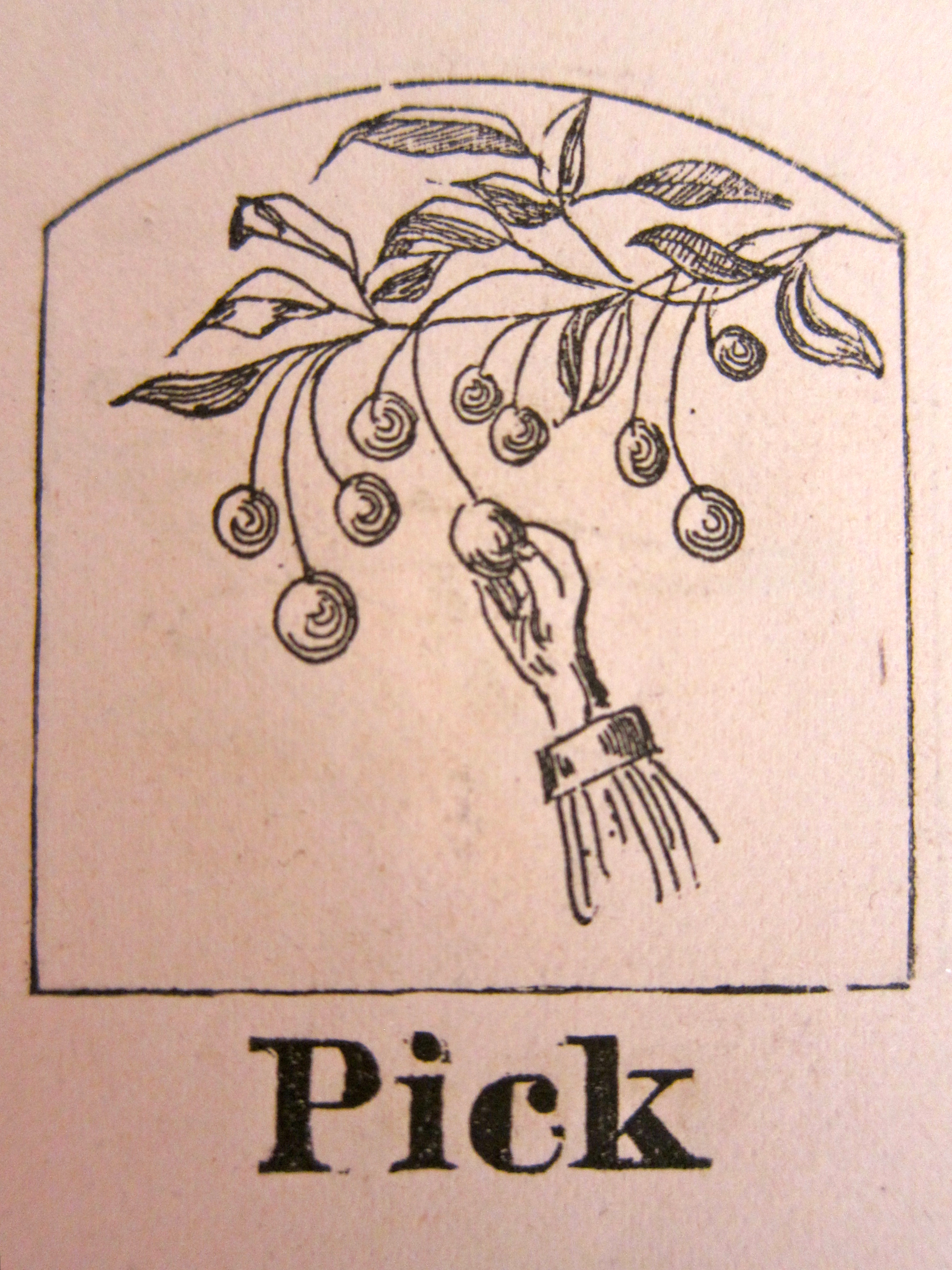
Evelina hadn’t felt very well for several days and began to feel even worse today. She believed she had “taken the nettlerash from Susan,” meaning that she now had hives, just as her daughter had had a week earlier. It made her feel “about sick” yet she stayed upright and worked in the kitchen most of the day. The fruit they had picked or gathered from friends and family wouldn’t keep, so the cooking had to get done.

In the kitchen, Evelina, probably with significant help from Jane McHanna, put up 64 pounds of fruit. She didn’t make jam, which would have consisted of cooked fruit pulp, nor did she make jelly, which would have been made from fruit juice.  She made preserves, which in this instance were pared peaches and apples, the latter mixed with barberries, that were placed whole or in chunks in sugar – lots of sugar – and then boiled down. And because “ingredients in […] loaf sugar are not always very clean,”* most cookbooks of the day strongly urged that the sugar be clarified.

Mrs. Cornelius, in her 1846 The Young Housekeeper’s Friend,* noted that “[t]he chief art in making nice preserves, and such as will keep, consists in the proper preparation of the syrup.  All sugars are better for being clarified.”* Mary Tyler Peabody Mann, more than ten years later in her cookbook, Christianity in the Kitchen, agreed with the necessity of clarifying the sugar The process was labor intensive; even with the help of Jane McHanna, Evelina would have had hours of work if she followed Mrs. Mann’s “receipt”:

“Put half a pint of water to every pound of sugar.  Stir in the white of an egg for every five pounds of sugar, and let it boil; when it rises, put in half a teacup of water and let it boil again, and repeat this process two or three times.  Set the kettle aside for fifteen minutes, then take the scum from the top.  Pout off the syrup; wash the kettle, and put in the fruit you wish to preserve.”**

After sitting at the kitchen table paring the fruit, or standing over the stove clarifying the sugar, or placing the fruit into the stoneware or glass jars, Evelina needed a break. She took a walk to the village to see her nephew Augustus and his family. Even if she wasn’t feeling well, the fresh air must have felt good after the heat and bustle of the kitchen.


Mary Hooker Cornelius, The Young Housekeeper’s Friend, 1846

** Mary Peabody Mann, Christianity in the Kitchen, 1858

September 28, 1851

149

*

Sunday, Sept 28  Having a bad cold and headache I did not attend church

to day have not read as much as I should had I been

well  Susan has got quite smart and has been

reading the wide wide world  It has been very 

quiet here all day  I have been looking at

my accounts book have neglected it sadly

of late but hope to do better for the future


The excitement and strain of the last week or so – the return from Boston, the plunge into redecorating and her daughter’s sudden and demanding illness – may have taken their toll. Evelina came down with a cold and was too ill to go to meeting.  That she was too sick to “read much” indicates just how crummy she must have felt. She generally enjoyed reading on Sundays after church. The only activity that seemed to interest her today was looking at her “accounts book,” but that didn’t cheer her up much. Perhaps she suddenly reckoned with the money she and Oakes had recently spent.

Little Susie Ames, who had been so sick with nettle rash, was definitely on the mend.  She may not have gone to church either, but she was deep into reading The Wide, Wide World, a popular, famously sentimental novel by Susan Warner (published under the pen name of Elizabeth Wetherell.) This pious classic tells the story of little Ellen Montgomery, a girl about Susan’s age who is separated from her mother and sent to live with distant relatives. She struggles among strangers – kind and mean – to accept her fate and learn to trust God. A best-seller in its day, it clearly appealed to Susan, and Evelina, too, presumably.


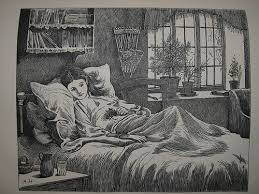
* Ellen Montgomery, the young heroine of The Wide, Wide World, is often in tears, as this period illustration from the popular novel shows.

September 25, 1851

DSCF1693small

Thursday Sept 25th  Julia has been here to day and has

cut two french print dresses.  She had but

very little trouble with them and I think they

sett very well  she also cut Susans doll a frock

Susan had a very comfortable night & appears

quite smart to day  The Dr came here to day

which makes the third visit says it is not necessary

for him to come again

Julia Mahoney, a young dressmaker who had recently immigrated from Ireland, worked at Evelina’s today.  She immediately set about cutting sections for two dresses to be made from the French print fabric that Evelina had just bought in Boston. Evelina was pleased with Julia’s work today, which wasn’t always the case.  To help keep little Susie Ames occupied as she recovered from a terrible case of nettle rash, Julia cut “a frock” for Susie’s doll.

The doctor – we don’t know which one in Easton had been called – visited today and confirmed Susie’s imminent recovery.  The little girl was appearing “quite smart,” a phrase that Evelina occasionally used to note marked improvement in someone’s appearance, health, or wits.

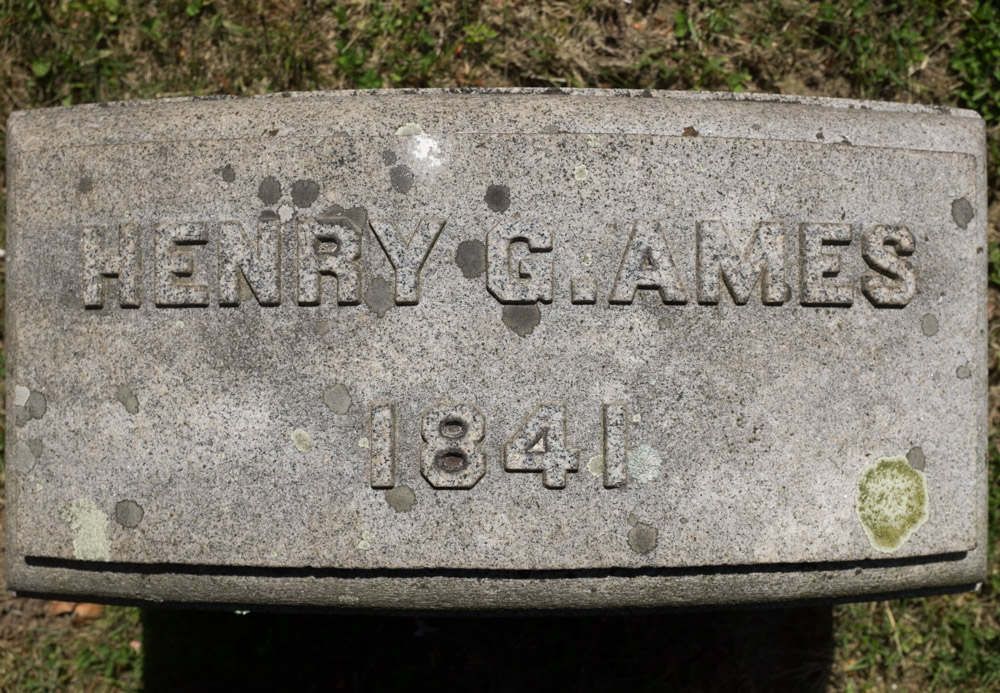
There was no question that fall had arrived.  Not only had the autumnal equinox occurred, officially ushering in the season, but Old Oliver had recorded several small frosts recently, including “a large frost last night.”  Daylight was shrinking slightly every day. As she quilted today, Evelina must have been turning her thoughts toward winter.  She may also have paused to remember that ten years ago on this date, her fourth son, Henry Gilmore Ames, had died at age 2 1/2.

September 24, 1851

imgres

Wedns Sept 24th  Susan has had another night of

suffering and has not slept but little if any but this

morning she appeared better and has had a more

comfortable day than I expected she would have  Helen

brought in her doll for her to play with and she

has had three to play with which has taken […] her

mind from her sickness in a great measure.

Francis dined here carried home Mr & Mrs Whitwell


The nettle rash, or hives, that had attacked Susie Ames began to subside this morning, surely bringing relief not only to the little girl, but to her mother and everyone else interested in her welfare. As Susie began to feel better, she became agreeably occupied with an extra doll brought in for her to play with by her older cousin from next door, Helen Angier Ames.

Helen’s mother, Sarah Lothrop Ames, and Harriett Ames Mitchell left Easton today to go into Boston and Cambridge for a night. Perhaps they visited Sarah’s sixteen-year-old son Fred Ames at Harvard, where he was a new sophomore. Fifteen-year-old Francis E. Gilmore, the youngest son of Evelina’s brother Alson Gilmore, came to the Ames’s for midday dinner.  Was he visiting the construction site of his older brother, Edwin Williams Gilmore, who was building a home close to Ames compound? Francis lived down on the family farm, and was able to give a ride south to William and Eliza Whitwell, who had been visiting Sarah Witherell.

Meanwhile, focused and persistent, Old Oliver continued to supervise construction of a new flume from Great Pond near Stoughton south to the waterflow in North Easton. He noted in his daily journal that “this was a fair day with a strong wind from the north west and pritty cold. we got on the top stone to our floom to day.”