July 7, 1852

Funeral

1852

July 7th Wednesday  Made some muslin bands and 

partialy made a pair of sleeves to wear

with them  This afternoon have attended the 

funeral of H Gilmore  Mr Carver baptized

their child Helen. Mr Sanford made some

remarks and not very good in my opinion.

We returned from the grave to aunt Gilmores

and stopt to tea  Adoniram & wife & Mr & Mrs

Whitwell were there, Mr Carpenter & Jones called

there

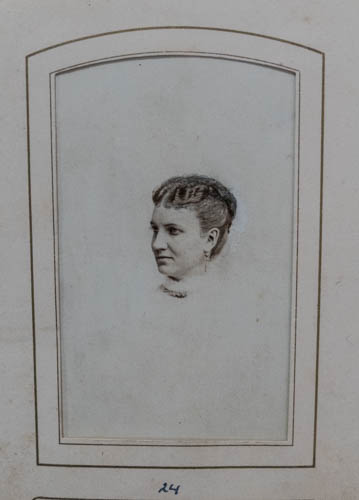
Wearing black armbands, Evelina and her family attended the funeral of her cousin, Henry Tisdale Gilmore. Just shy of 36, he had died the day before of the “fits.” We might imagine that Henry was epileptic and died from a sudden seizure. He left behind a 30-year-old widow, Chloe, and a young daughter, Helen.

This branch of the Gilmores lived in Raynham, a town to the south of Easton. Cassander Gilmore, Henry’s older brother, manufactured shoes; Henry had been his partner. Now Cassander’s son, Othniel (one of many with that name), took Henry’s place. Cassander was well-known and well respected in the area, having served as state representative and state senator. He was a first cousin to Evelina on her father’s side, and it was he who summoned the Ames family to the funeral.

Evelina saw various relatives at the funeral, naturally, including her widowed aunt, Sally Gilmore. Reverend William Whitwell and his wife, Eliza, too, attended the funeral, but didn’t participate in the service. The local minister, Robert Carver, baptized the young Helen while another minister, Mr. Sanford, read a eulogy. Ever loyal to her own minister, Evelina found the latter’s remarks were “not very good.”
 

June 29, 1852

22633861_126751003919

Henry Clay

(1777 – 1852)

1852

Tuesday June 29th  Have had a quiet […] sick day  have

a bad cold & cough and sick head ache

A gentleman here from Pennsylvania

to dine but I did not go to the table

Mr Bartlett here to tea from Maine

Augusta came in and cut her out a

visite & I have written to Melinda to

get some trimming for it  Ottomans came

from Boston

Evelina was sick and probably spent most of the day in bed. She didn’t eat much, missing midday dinner – with company – and possibly skipping tea, too. Perhaps she took a tray of food in her room. She must have begun to feel a bit better, however, as she eventually roused herself to cut out a “visite” for Augusta Gilmore, who came over at the end of the day.  She even wrote to her friend Melinda Orr, in Boston, to find some trim. She could get animated about a sewing project, though not much else appealed to her today.

It was “a fair warm day + verry dry,”* and probably “verry” good for the haying that was underway. Old Oliver and a team of hands would have been outdoors from sunup to sundown.

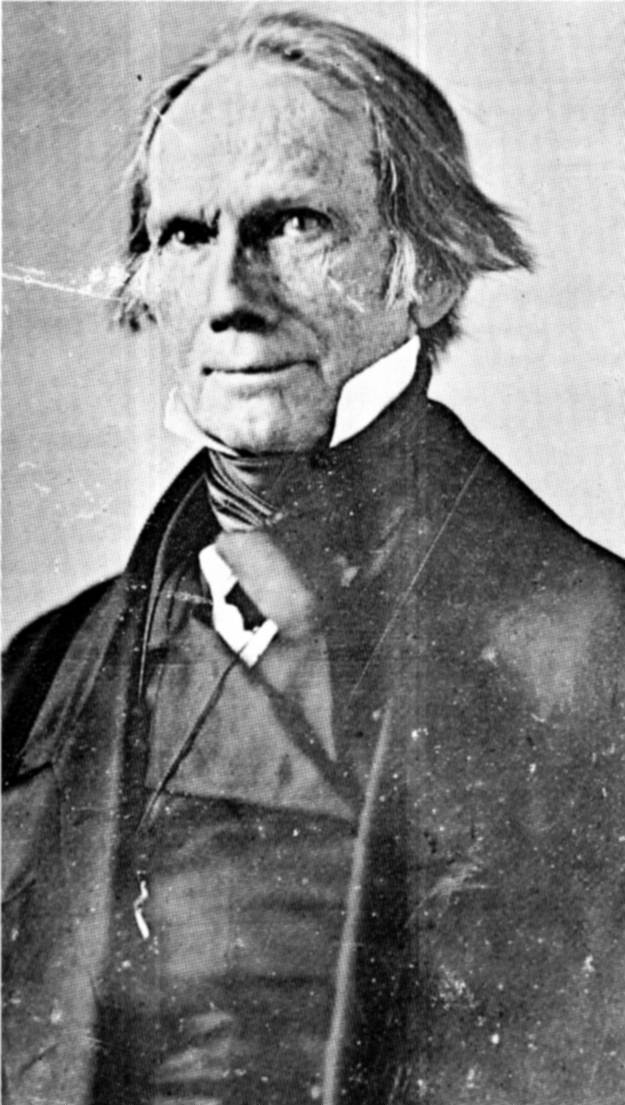
In the world beyond North Easton, a consummate, outspoken and controversial politician passed away today: Senator Henry Clay of Kentucky, aged 75, died in Washington D. C., of consumption. The Ameses wouldn’t have known this, however, until they read the next day’s newspapers. But most likely they admired Clay, the “Star of the West,” and the founder of the Whig Party. Clay’s biggest opponent back in the day had been Andrew Jackson, who called Clay “the Judas of the West.”  One imagines that Oakes Ames had probably been on the side of Clay’s admirers.

*Oliver Ames, Journal, Stonehill College Archives, Arnold Tofias Collection

June 10, 1852

 FullSizeRenderOld view of Gilmore house near Foundry and Washington Streets*

June 10th Thursday  This morning worked a few moments

on my bonnet and about half past ten Mr &

Mrs Orr Mr Ames & self went to Alsons to

spend the day  Mr Ames Orr & Alson rode

to W Bridgewater after noon  Mother is most 

sick with a cold  Called at Mr Copelands

to get Susans hat & Lavinia mended it where

it was burned

The Orrs of Boston continued their visit with Evelina and Oakes. The rain showers – too brief to satisfy area farmers – receded and the sunshine returned, along with wind that was “strong and verry dusty.”** The Ameses and the Orrs took to the road, traveling a few miles south to spend the day with Evelina’s mother at the Gilmore farm.

After midday dinner with the Gilmores, Oakes Ames, Robert Orr and Alson Gilmore rode east to West Bridgewater. What was their business? Evelina and Melinda stayed behind with elderly Mrs. Gilmore who was poorly. Evelina managed to go over to the Copelands to pick up a hat she had left there for Susan, which Lavinia proceeded to mend for her little cousin.

Old Oliver, meanwhile, was looking ahead to bringing in the hay, assuming it hadn’t been ruined by the lack of rain.  He “bought a yoke of cattle from Howard Lothrop,”** the latter a well-known man in Easton who, according to a 19th c. history of Plymouth County, “styled himself a farmer, yet did much business of a partially legal character [..] for which work his superior business qualities and excellent judgment especially fitted him.” The Honorable Mr. Lothrop was also a former town clerk, state senator, member of the Governor’s Council, and father of Sarah Lothrop Ames. Between the two strong men, seller Howard and buyer Oliver, who got the best deal?

*Image from Howard Gilmore Papers, Courtesy of Easton Historical Society

**Oliver Ames, Journal, Stonehill College Archives, Arnold Tofias Collection

***usgwarchives.org

May 20, 1852


Mattress

1852

Thursday May 20th  Went to Bridgewater quite early this

morning and did not get back until

after four Oclock  Bought an oilcloth

carpet for the dining room,  Straw carpet

for O Angiers chamber and engaged some

husk mattress  Called into Edwins after 

I returned  Have a bad head ache.  Very pleasant

Today’s shopping objective: new floor coverings for the dining room and a bedroom, as well as “some husk mattress.”  At least one of the mattresses of the house was due to be restuffed or entirely made over.

By the mid-nineteenth century, mattresses were stuffed with various materials, including cotton batting, wool, horsehair or corn husks. As they had been for centuries, mattresses were placed within a wooden bed frame and set atop a latticed support of rope or leather or wire. The box-spring that we use today would come along a few decades later.

It’s a little curious that Evelina “engaged some husk” for a mattress, when she could have selected cotton or something finer, like down. Feathers would have required poultry, however, which the Ameses didn’t keep, and were expensive to purchase. The husks, probably harvested the previous fall from a corn harvest and dried over the winter, would have been less expensive.

By the end of the day, Evelina had a headache. Perhaps her long day of shopping or a bumpy ride to and from Bridgewater set her off.  With so much time spent outside, a high pollen count could have been the culprit, too, and might also account for Susie Ames’s recent nose bleeds.

May 15, 1852

IMG_0156_1

May 1852

Saturday 15th  Have been mending a lot of stockings

that have bee[n] put by for a week or two  Spend

too much time in the garden  Gave Mrs Gilmore

Augusta & Abby some plants & flower seeds

Abby stoped a couple of hours  Gave Susan a bath

and took one myself and the afternoon thus passed

Spent the evening   Helen is much better she has

had a sorry time of it  Quite pleasant


Today was “cloudy all day but a little warmer,”* according to Old Oliver. The bath water that Evelina and her daughter Susie used was in no danger of freezing, as it had earlier in the year when Oakes had planned to bathe but forgot and left the the water to freeze in the pail.  The water in the pail should have been poured into a tub not unlike the one in the illustration above, copper-lined, claw-footed, and rimmed in oak.  That Evelina mentioned taking a bath suggests that bathing was not a regular event; personal hygiene operated under a different set of standards in the 19th century.

The baths, taken in the Ames’s indoor bathing room, probably felt quite relaxing, even therapeutic after the stress and grief of the week gone by. For Evelina, even just mending the hose that had sat untended would have been a welcome return to normalcy after the death of young George Witherell.  Working in the garden, too, would have been a pleasure.  Her plants were doing so well, in fact, that she had plenty to spare and give away to some of her female relatives.

Next door,  fifteen year old Helen Angier Ames was finally recovering from an infection on her face, an abscess or boil, that had  been lanced the day before.  The procedure had been successful, and the family’s health concerns seemed to be put away, at least for now.

May 14, 1852

Susan Eveline Ames French

Susan Eveline Ames (French)

1852

May 14th  Susan ten years old to day.  Her father & 

I have promised her 10 dollars each if she will

be a good girl and keep herself neat till her

next birth day.  Have been to work some on

Susans delaine dress altering it The gardener

laid out my verbena and I set out some slips

From the house  Malvina came to stop the night

Helen had her face lanced  Not pleasant


Last year for her birthday, Susie Ames had a little party.  Not so this year, her birthday coming too close on the heels of the death of her cousin George Witherell. Instead, her parents made her a generous promise of “10 dollars each,” if she behaved well and kept “herself neat” for the next year. Those were high expectations for a child, even a Victorian one.

Next door, Helen Angier Ames was still suffering from her own difficult ailment, that of a swollen face. Was it an abscess, or a boil, or something else? The doctor came again to see her and this time lanced her face. Not a pleasant procedure, one imagines. Otherwise, in the main house, family members seemed to be settling back into the normal domestic routine.  Eveline sewed and gardened; her verbena and more went into the ground, despite the continued stormy weather.


May 12, 1852

Corpse

Wednesday May 12th  Helped Mrs Witherell make Georges robe

Planted some seeds that Mrs Howard gave me

and African rose sent from Andover.  Have ripped

the skirt from Susans borage delaine to lengthen

it Swept & dusted my chamber &c &c Jane had

finished the ironing  Have not felt very well

have not got over being broken of my rest.  It has

rained since nine Oclock quite fast

A new gardener commenced work today

What sad sewing went on today. Sarah Ames Witherell, a thoughtful, dutiful woman who had sewn so many things for friends and family, now sat and made a shroud for her first-born child, George. Only fourteen years-old, he had died the day before after a painful bout of rheumatic fever. Of the three children Sarah had borne, only her middle child, Emily, was still alive.

The steady rain must have enhanced the gloom. Old Oliver wrote that “it began to rain before noon wind north east and it grew cold and raind all the afternoon.”* Evelina must have done her planting first thing in the morning, after which she helped Sarah with the robe for George. She also worked on a skirt for Susan, and swept and dusted while Jane McHanna ironed. She was probably not the only family member who was recovering from “being broken of my rest.” Everyone was trying to return to a normal routine after the disruption and sorrow of George’s illness, although next door, Helen Angier Ames was still suffering from a case of blisters and facial swelling.

*Oliver Ames, Journal, Stonehill College Archives, Arnold Tofias Collection


May 11, 1852

Abbott H. Thayer, Angel, 1887, oil Smithsonian American Art Museum Gift of John Gellatly

Abbott H. Thayer, Angel, 1887, oil
Smithsonian American Art Museum
Gift of John Gellatly

Tuesday May 11th  George died this morning about eleven

Has not spoken so that we could understand

since yesterday noon.  died at last very easy

without a struggle or groan.  Mrs S Ames & self

laid him out,  His mother has slept but about

two hours for two days and nights. Have trimmed

my straw bonnet. Miss Copeland sewed it over  Spent

about two hours in Olivers this afternoon.  Helen has a 

blister on her arm  The gardener set out some rose plants.

Prairie Rose Baltimore bell and Fraxinella sent

from Boston

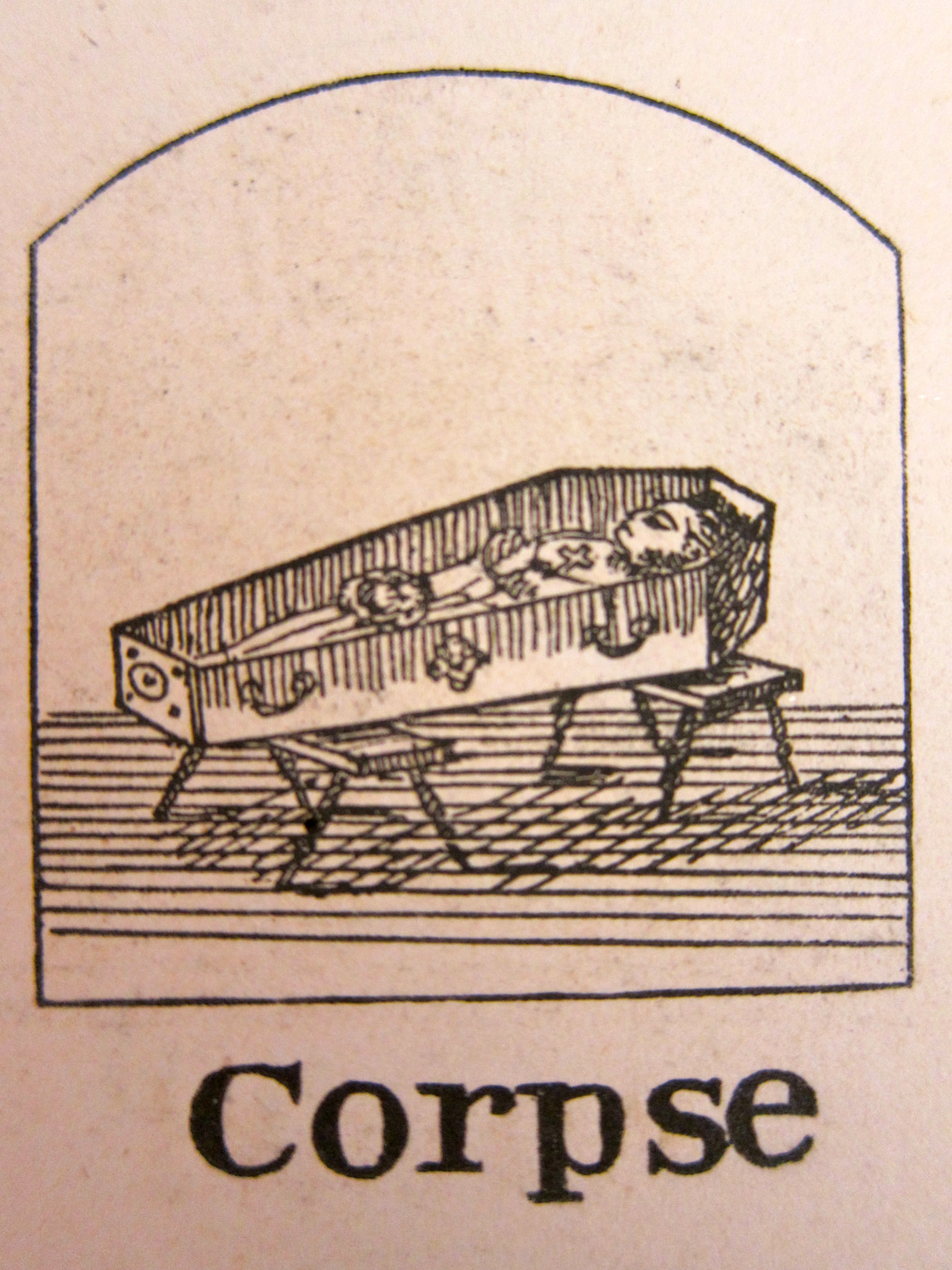
George Oliver Witherell, aged fourteen, died on this day from rheumatic fever.  He had been suffering for many days, but “died at the last very easy.”  His Aunt Evelina had been with him for much of the illness, spelling his exhausted mother, Sarah Ames Witherell. She and her other sister-in-law, Sarah Lothrop Ames (who had her own sick child at home), laid out the corpse.

The family must have expected George’s death by this stage of his illness; certainly the attending physician had already predicted it. But anticipation is not the same as actuality, and the death of the young man would have hit everyone hard. Evelina dwelt in her diary on George’s last few minutes, but then added a few mundane notes about her summer bonnet, her niece Helen’s continued battle with an unnamed infection, and some new additions to the flower garden. She might have wished to move on to less painful concerns.

George’s grandfather, Old Oliver, noted his grandson’s death succinctly: “George Witherell dyed to day about eleven O clock.” Oliver rarely included personal items in his daily record; that he wrote of George’s death is a sign of regard, however minimal we might consider it. His grief would have been real.

Of Sarah Ames Witherell’s feelings, we’re told nothing, and must imagine her utter exhaustion and complete sorrow.

May 10, 1852

Doctor

Monday May 10th  Do not feel very well to day.  Slept in

the light bedroom so as to assist Sarah in taking

care of George.  He knows everyone but otherwise 

is not conscious and since noon does not notice

all all.  The Dr has given up all hopes of him

I planted most of my flower seeds this

afternoon felt sorry to do so but it is getting late

The women in the Ames compound were becoming exhausted with tending to two very sick young people, George Oliver Witherell and Helen Angier Ames.  It was George, however, who had entered a dangerous phase. He had been suffering from rheumatic fever for many days and was now unconscious. His doctor had finally “given up all hopes of him.” How terrified the family must have been; no doubt prayers were being lifted in the hope that George might yet recover.

Evelina broke away from her nephew’s bedside to work in her garden. She “felt sorry to do so,” but the seeds needed to be planted. To wait too long would be to lose the best timing for the flowers. She might have felt relieved to kneel down in the soil and push little seeds into place, each seed a hopeful gesture in the face of helplessness.


May 9, 1852

wetsheet


Sunday May 9th  Our own family all went to meeting

& Oliver  George is much worse and we fear

will never be any better is very much out of his

head  Helen is quite sick with her face

had the Dr  Went into Mrs John Howards

at noon & carried her some flower seeds.

Mr & Mrs Swain made a long call this afternoon 

after they left I went to sit with George to assist

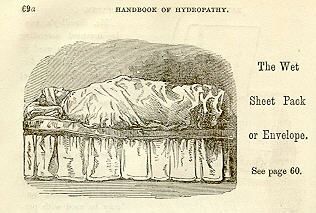
Sarah  They are laying a wet sheet once an hour


George Witherell was getting sicker and sicker. Perhaps to lower his temperature and reduce the involuntary spasms in his limbs and face, his family and physician were “laying a wet sheet once an hour.” They wrapped his body in a cold, wet sheet, and covered him with wool blankets to make him sweat. Everyone was trying to bring down his fever, soothe his nervous system and help him sleep. It was a desperate measure, but in the absence of effective medicines, it was the only option.

A wet-sheet wrap is a form of hydrotherapy, a controversial treatment meant to quiet a violent or agitated person. Opponents of this form of hydrotherapy feel that it’s been misused in certain psychiatric institutions, some patients attesting to being tied up for ten to twelve hours in icy sheets, an application that seems more punitive than restorative. Yet others in the medical profession, such as alternative care-givers in our modern age, tout wet-sheets – if applied properly – as a healthful therapy that induces sleep and calms the nervous system. Its effectiveness seems tied to the intention of the person applying the therapy and the nature of the illness of the person being wrapped.

Helen Angier Ames next door was also “quite sick.”  No wet sheets for her, but she was having her swollen face attended to. It sounds as if she might have had a bad abscess, also a dangerous condition in the era before antibiotics. Dr. Swan, if it was he who was attending the Ameses, was being kept busy.  His little gig would have been pulling up to the Ames compound at all hours of the day and night. Few in the family were getting any rest.  Evelina left the house briefly, to take some flower seeds to Caroline Howard, but returned home to help her sister-in-law.