August 5, 1851

Haymaking

1851

August 5th Tuesday  Have been sewing part of the day

This afternoon took my work and went to Mr

Torreys with the intention of stopping an hour or two

Abby left this morning for Pembroke & I had a 

long chat with Mr Torrey heard all the news.

On my return called on Mrs Lake found her

about house & quite smart.  Heard that Mrs Holmes

was sick

Haying continued, as Old Oliver noted yesterday in his journal:

“in the morning the wind was south west + there was a verry little sun shine untill about 10 – O – clock when the wind shifted to the north east. + it raind in the afternoon but not butt little we mowd the thin part of the Flyaway and brought it home well. + put it out in small heaps”

Evelina worked on her sewing, as usual, and even carried it with her in the afternoon into the village where she visited Col. John Torrey for “a long chat.”  John Torrey was a widower twice over. He had been married first to an Abigail Williams who died quite young. They had no children. In 1828, Torrey married Evelina’s older sister, Hannah Howard Gilmore, and they had three children, of whom two survived infancy:  Abigail “Abby” Williams Torrey, named for the first wife, and Mary Malvina Torrey. Both girls were close to their Aunt Evelina who seems to have served as a maternal figure after Hannah died sometime in the 1840s.

Col. Torrey was a controversial figure in Easton of whom we know only enough to be curious, and not enough to have that curiosity satisfied. (He should not be confused with another John Torrey who was a prominent botanist in New York in the same era.) Listed as a “Trader” in the census, he earned the title of Colonel by years of service in the local militia. Somewhere along the way Torrey invoked the enmity of a local character and lampoonist named James Adams who wrote a derogatory poem about him. Historian William Chaffin recorded this information without including the piece in question.  Chaffin only said that “Our Hero: A Descriptive Poem,” was published in a sixteen-page pamphlet and was “not merely satirical, but derisive and scathing.”*

* William Chaffin, History of Easton, 1886, pp. 764-765


August 2, 1851

65eb3ab64b1e3e383ab7982a18ea85a1

*

/51 

Saturday Aug 2d  Mrs James Mitchell, Cousin & sister Harriett

Mitchell came to the other part of the house to day

Sister Harriet returned to E Bridgewater with them

Frank went to Boston to see a Dr about his

throat got him a white hat.  We were all 

invited into Mr Bucks to see Miss Lothrop from

Boston  Orinthia & Helen went  Mrs Witherell

& I called after tea the boys went in the evening


Evelina felt better. She was back in the social swing today, going out after tea with her sister-in-law Sarah Witherell to meet a Miss Lothrop. Earlier in the day, Sarah Witherell had entertained two or three women named Harriet in her parlor in “the other part of the house”: sister Harriett Ames Mitchell, friend Harriet Angier Mitchell (Mrs. James Mitchell) and, possibly, cousin Harriet Ames. It’s also possible that Evelina, in writing the word “cousin,” meant to identify Harriet Angier Mitchell as a cousin which, by a stretch of several “removeds,” she was. In the latter case, there was no cousin Harriet Ames present. Confusing to us, certainly, and, perhaps, confusing to them.  Who was visiting in the parlor?

Old Oliver, meanwhile, was in the thick of haying season.  He noted that “this was a fair good hay day wind south west and we got in all the hay we had out some of it had bin out over a week and all of it since last Monday –“

One young man who was neither outside with a pitchfork helping his grandfather nor inside the factory fashioning a shovel was almost-eighteen year old Frank Morton Ames. Frank had been suffering from a sore throat that he evidently couldn’t get the better of, so he took off to Boston to have it looked at. When he returned to Easton, he reported nothing alarming.  Rather, he arrived with a startling new white hat, looking perhaps like one of the young men in the illustrated daguerrotype above. According to some sources, white beaver hats enjoyed a short vogue at this period. Frank must have stood out in the gathering at the Bucks’ house that evening.


* Image from Daguerreian Society, Mark Koenigsberg Collection

August 1, 1851

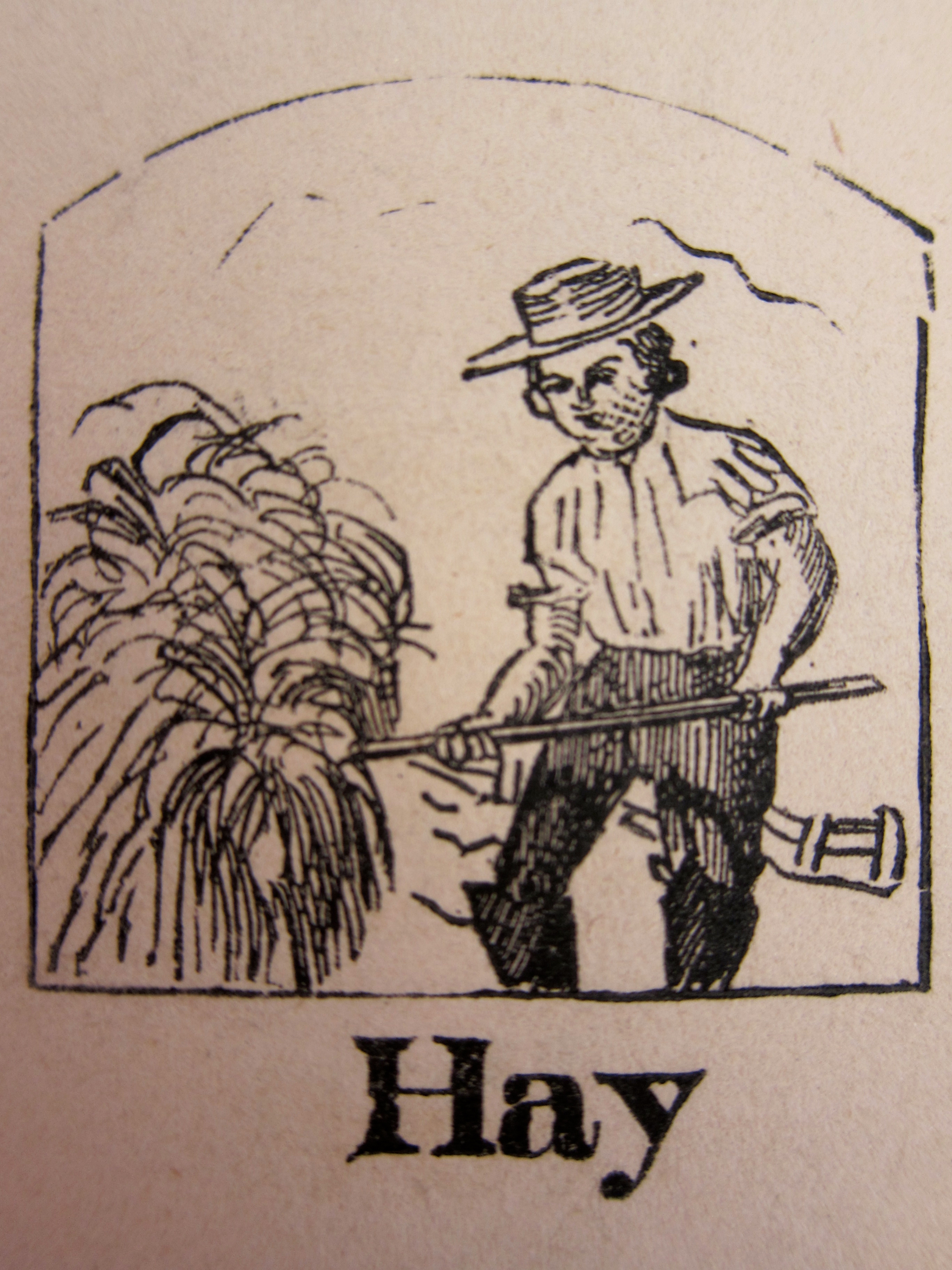
Hay


Friday August 1st  Feel very lazy as usual after a jaunt of

shopping  Have done but very little of any

thing and am too lazy to write and may as

well give it up


Tired after her “jaunt” into town, Evelina was “too lazy” to write an entry in her diary. She often felt that way after a day or two in the city. Considering the distance she had traveled in a rustic conveyance that hadn’t been designed for comfort, behind a horse that jogged along too fast for sightseeing, her fatigue was understandable.

While Evelina had been shopping and sightseeing in Boston, folks back in Easton had been engrossed in one of the most important chores of the year: Haying. Only two days earlier, Old Oliver had noted in his journal: “this was a cloudy day most of the time + pritty cold for the time of year. we had a good deal of hay laying in swath for 2 days past – we opend it + dryed it a little + cockt it up”.

For days to come, haying would be the focus of most of the householders in Easton.  “[Yesterday] was fair in the morning but it clouded up by ten O clock. and there was hardly any sun shine afterwards wind easterly + cold we have 4 or 5 ton of hay out now + 2 ton in the barn to go out again”  Before the haying season had ended, Old Oliver and his workmen would pull in as much as eight tons of hay.  It would be stored to feed the oxen and horses over the winter.


July 12 1851

54-02

*

July 12 Saturday  Have been very much engaged to day

in putting my house in order & have been to work

on the cushion to the lounge, and put the cover

on to the arm.  called in Olivers awhile.  Mrs

H Ames and Mrs Mitchell spent the day there

Mr Norris came in the stage to night & Mr & Mrs

Harris Mrs Norris from Bridgewater, Miss Foss

came with Oakes A who had been that way on an errand

Company! From Boston by way of Bridgewater came the Orr daughters and their husbands. Melinda Orr Norris with her husband Caleb, who had visited Easton just the other day, and Julianne Orr Harris and her husband, Benjamin Winslow Harris, arrived for an overnight stay with the Ameses.  Evelina spent much of the day “very much engaged” in getting the house ready for the two young couples, although she did manage to slip next door to sit with her sisters-in-law. The whole Ames property was full to the rafters.

Everyone had tasks to do today, which wasn’t unusual in that hard-working family. Old Oliver and a crew were outdoors:

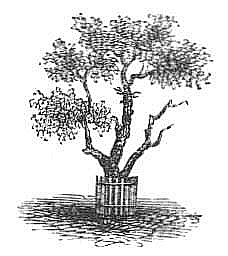
“it was cloudy half the fore noon but the afternoon was pritty fair wind north part of the time + south west a part we mowd the high land back of the Factory pond and that on this side of the old pair trees. to day”  Was this mowing a forerunner of haying season?

* Pear tree


July 8, 1851

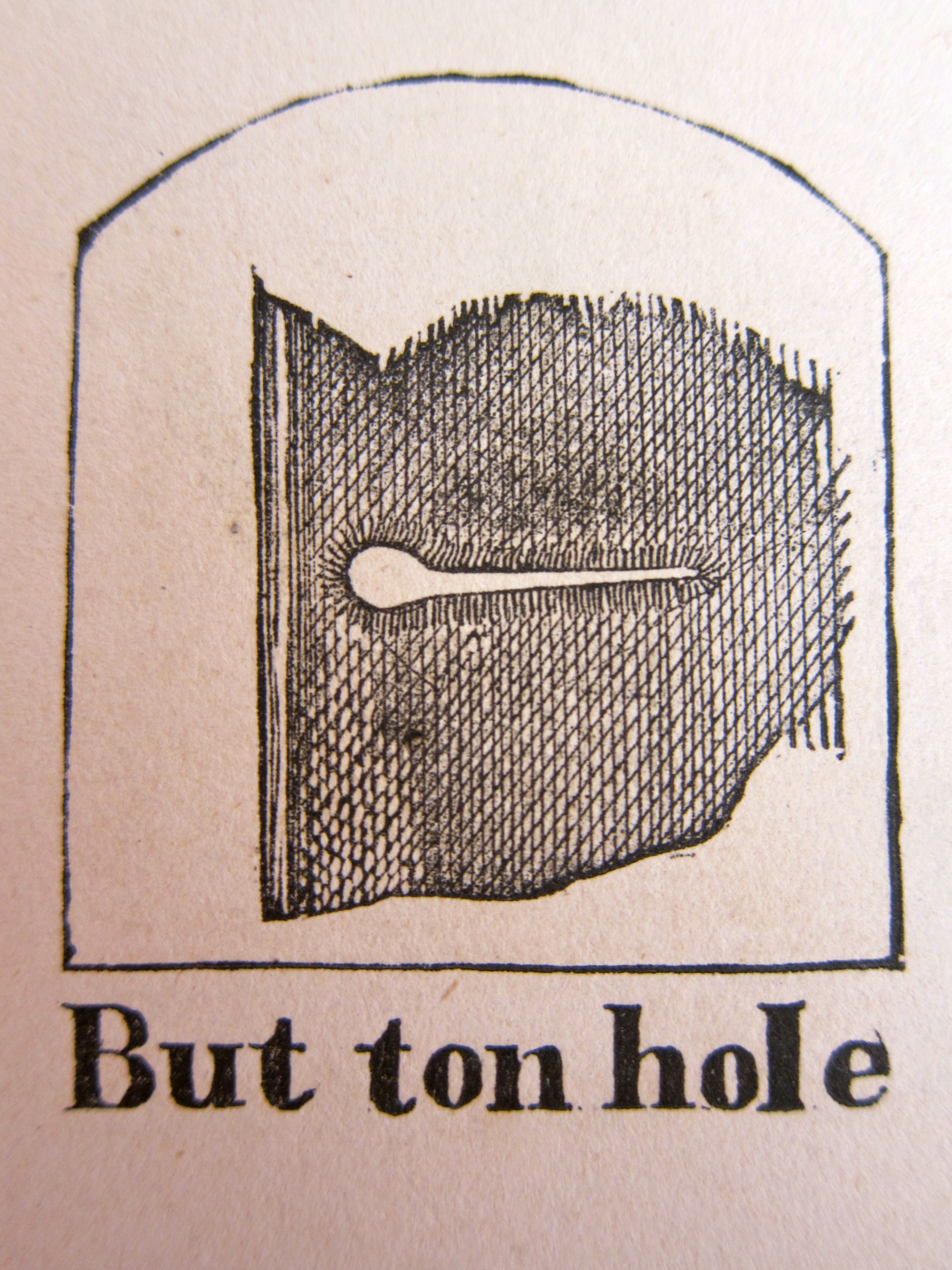
Buttonhole


1851

July 8th Tuesday  Julia has been here to day and we

have been to work on my borage Delaine  Have worked

very slowly  Julia has been to work on the waist

all day and it is not near done yet.  The waist

is made plain & I have made the button holes myself

This dressmaking is discouraging business with such

slow dressmakers.

Evelina was none too pleased with Julia Mahoney, the dressmaker whose fingers never flew as fast as her own when it came to stitching.  She wanted the new dress finished, and Julia was working too slowly for Evelina’s taste – and wallet, perhaps.

It’s worth noting that Evelina didn’t garden today or, if she did, she didn’t mention it. Her focus was not on her pinks and petunias, it was indoors on her barege delaine. Perhaps the weather was too warm to spend much time outside in her yard.

What was going on outdoors, beyond the flower beds?  On the larger canvas of the town, the vegetable crops, the corn and the hayfields should have been growing well, the latter two important food for the oxen and other domestic animals over the next winter. Haying was due to begin soon.  No doubt Old Oliver and other farmers were paying close attention to the weather and the readiness of all their crops.