November 2, 1851

IMG_0540

1851

Sunday Nov 2d  This has been a stormy day, but this evening

has cleared off pleasant  I have been to meeting all

day & went to Mrs John Howards at noon with

Lavinia & Mother  Mr Ames came home at noon and it rained

so hard that he did not go back.  Mr Whitwell

gave us two fine sermons.  Mr Ames & self passed

the evening at Augustus.  Have made an agreement

which I hope we shall both be careful to keep.

At the end of this rainy, chilly Sunday at the start of November, “the most disagreeable month in the whole year,” according to the fictional Margaret March, eldest of Louisa May Alcott’s four sisters in “Little Women,” our non-fictional Evelina and her husband, Oakes, reached an important decision.  Unfortunately, we don’t know what that decision was.

Surely this entry is one of the most tantalizing in Evelina’s diary. She and Oakes “made an agreement” that she hoped they’d “both be careful to keep.”  What did they decide? What promises did they exchange? Oakes had been away from home a great deal lately; did their discussion stem from that? Was this the moment when Oakes determined to become involved in regional politics? Would he have needed Evelina’s approval?  If this was the case, what might he have asked of her, or offered her in exchange?

Or was the decision less historic and more pedestrian? Did their discussion have anything to do with domestic arrangements or the recent spending on the house? Were they going to exercise more prudent care of their “accounts,” as Evelina calls them? Did their agreement have something to do with their children? Did it stem from something Reverend Whitwell said in one of his “fine sermons”? What was this agreement?

And were they able to keep it?
 

November 1, 1851

OLYMPUS DIGITAL CAMERA

*

1851

Sat Nov 1st  This morning I patched the paper in the

bedroom that Mr Robinson papered last spring

Henrietta came about ten Oclock and left mother 

and her little girls at Augustus.  I went there this P.M.

and staid a couple of hours.  Mr & Mrs Peckham came

to the other part of the house  Mr Scott has finished

painting the parlour and has done here for the present

I paid him 12 dols, 25 cts for graining


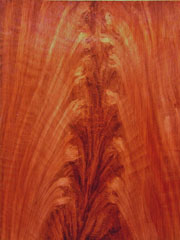
The graining of the woodwork and doors in the downstairs of the house was completed today. As noted earlier, graining is the painting of a surface to resemble wood.  In 1851, popular taste dictated that wood trim from simple pine or ash or other tree be grained to resemble a dressier wood such as mahogany, or curly maple. The illustration above, from a modern decorating company that offers “faux bois,” as graining is also known, shows a hand-painted example of flame mahogany.

The talented Mr. Scott finished his work today, for which Evelina paid him $12.25.  In today’s dollars, the “labor value” of that compensation is $2,680, according to one economic source.** That value is computed using a wage index for unskilled labor; the computation for a production worker compensation would be even higher. That Evelina made note of the expenditure in her personal journal suggests that she thought it was noteworthy – in her own opinion, she either paid too much or she got a good deal.  I suspect the former!

Social life went on as usual today. John and Susan Peckham were back in town and stopped in to see Old Oliver and Sarah Witherell. Evelina’s sister-in-law, Henrietta Williams Gilmore, came into the village from the farm and brought old Mrs. Gilmore to Mr. Torrey’s to visit Alson “Augustus” and Hannah Gilmore.  Henrietta also brought along her two youngest children, eight-year-old Henrietta Hall Gilmore and six-year-old Helen Jane Gilmore.  The two girls were actually half-sisters of 29-year-old Augustus. Their mutual parent, Alson Gilmore, had a spread of seven children from two wives.


Image of mahogany-style graining, Courtesy of http://www.statusfaux.com, Great Neck, New York.

** http://www.measuringworth.com/uscompare/relativevalue.php


September 10, 1851

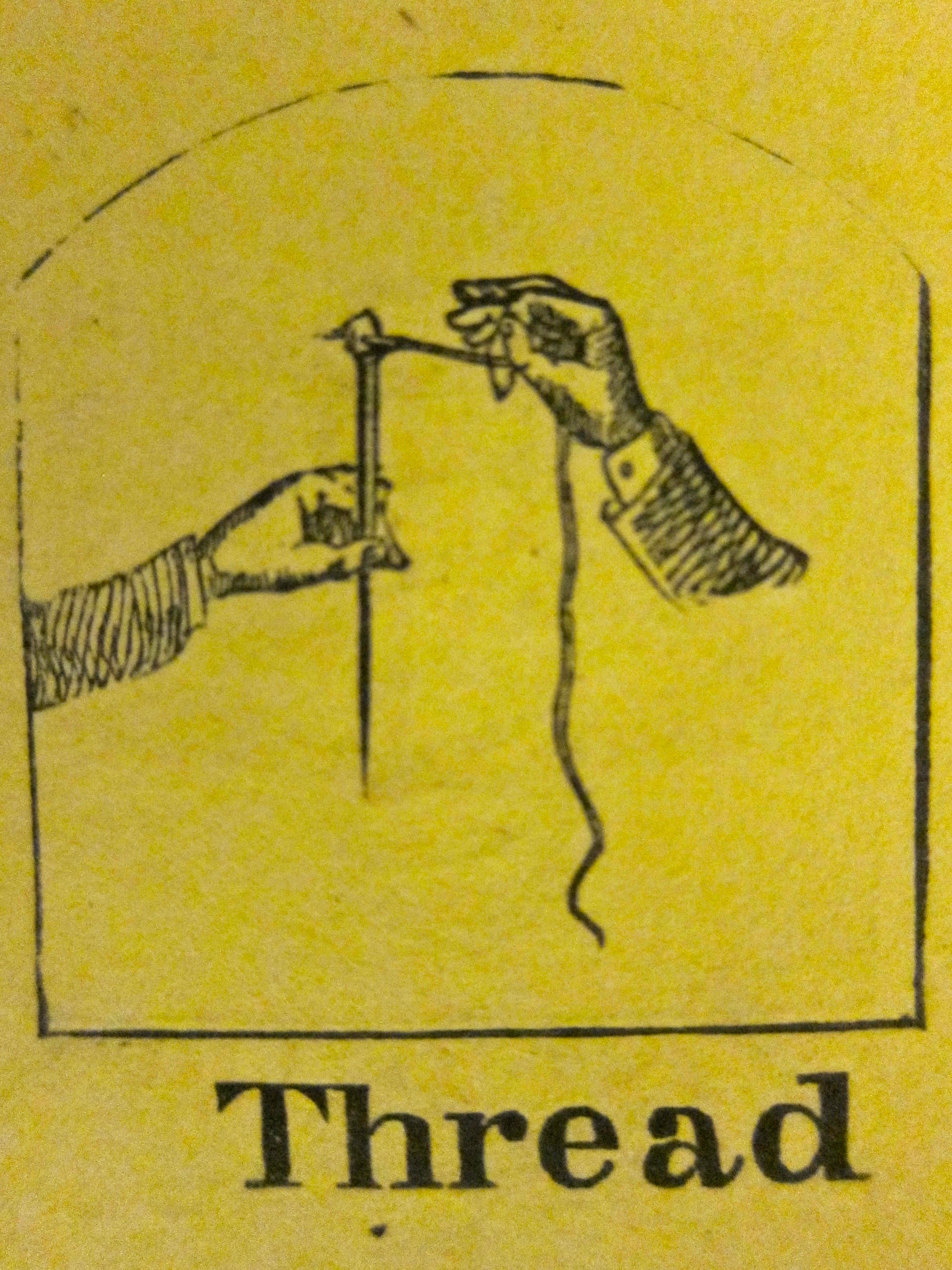
Thread

Wednes Sept 10th  Cousin Harriet spent the forenoon with

us & dined here.  I cut some shirts this

forenoon for Mr Ames, carried two to be made

at the sewing circle.  Met at John R

Howards this afternoon quite a number

there.  Carried mother down and she went 

home with Henrietta.  Mrs Stevens went into

Olivers with H. Mitchell


The monthly Sewing Circle, a gathering of women from the Unitarian congregation, met at the home of Caroline Howard, wife of John R. Howard, a book agent who lived near the geographic center of Easton.  Half a year had gone by since Evelina had had her turn hosting the group, back on February 12, when bad weather – and bad feelings, perhaps – prevented anyone from attending. By this time, she seemed to have forgotten that embarrassment and forgiven the friends who had failed to show up.

There was plenty of attendance at today’s meeting, however, including Evelina’s mother, Hannah Gilmore and sister-in-law, Henrietta Gilmore. The Ames sisters-in-law, both named Sarah, probably were there as well. All the women, as the saying went, set great store by these regular gatherings. Did they dress up for the meetings? They might well have, knowing that their fellow females would recognize and appreciate good sewing and fine material better than the men at home were likely to.

The only other regular gathering where women might pay particular attention to their attire would be church, where one’s “Sunday best,” was expected. Surely the Ames women were susceptible to this practice, even if one of the Ames men – Oakes – was not. Yet Evelina, for all the sewing she did, rarely described what she wore on any given day. Did she save her best outfits for Sewing Circle, or church, or both?

September 8, 1851

1856_tea_BostonAlmanac


Monday Sept 8th  Mother Mrs Stevens & self sat down

to work in my chamber  The weather is very

hot  After dinner we went into the other

part of the house awhile it being so much

cooler  Abby came here to tea. Oakes A

Frank & Mrs Mitchell went to a party to Mr

Cushing Mitchells this Evening & are to spend the night

Tea had been on the serving tray very much of late, with or without short biscuits. Evelina served tea to her niece, Abby Torrey, today while yesterday she took tea at the parsonage during intermission. Three days ago, she hosted a small tea party for a guest, Mrs. Latham, her sister-in-law, Sarah Ames Witherell, and others. Evelina’s grandson, Winthrop Ames, described the importance of tea time some eighty years later:

“Supper, always called Tea, at seven was the sociable occasion.  It was usually consisted of cold meats, hot biscuits, preserves and cakes – an easy menu to expand for unexpected guests. Every week at least, and usually oftener, one household would invite the others and their visitors to tea; and the whole Ames family might assemble…”*

Although the Ameses grew and raised much of their own food, tea was a commodity that had to be purchased. Coffee and sugar, too.  As the above advertisement from 1856 indicates, tea and coffee could be purchased in bulk in Boston (not surprisingly, given Boston’s long history of importing tea into its harbor!) Black tea was the general favorite and, as the ad suggests, could be obtained in different grades of excellence.  Did the Ameses order in bulk?  Did they acquire a chest of tea at the family rate? Their careful use of money would imply that whichever Ames did the purchasing got the best product for the lowest price possible.

The weather, meanwhile, continued to be very hot. It didn’t prevent brothers Oakes Angier and Frank Morton and their youngest aunt, Harriett Ames Mitchell, from traveling to Bridgewater for a party and an overnight. Social goings-on continued.  No doubt, tea was served.

*Winthrop Ames, The Ames Family of Easton, Massachusetts, 1938, p. 128

September 7, 1851


Ames Home and Office, North Easton, Massachusetts ca. 1852 - 1862

Ames Home and Office, North Easton, Massachusetts
ca. 1852 – 1862

*

Sunday 7th  Have been to meeting all day  Mother

Mrs Stevens & I went to Mr Whitwells at

intermission Mrs Whitwell made a cup of tea

for us, brought mother home with us from meeting

at night  Mr Ames & I called at Mr Swains

Mr & Mrs Peckham are to leave tomorrow for

Taunton & the children & Mrs Metcalf  Thursday

The weather is very warm  Gave Mrs Stevens

some cuff pins it being her birth day.

Despite today’s heat, Evelina and her guest Mrs Stevens, and others of the Ames family, presumably, attended both morning and afternoon sessions of church. When the last service was over, they carried Evelina’s 79-year-old mother, Hannah Lothrop Gilmore, to North Easton to stay for a few days.

An important transition was taking place this week at the shovel works.  John Peckham, former clerk, and his family were leaving for Taunton.  His place in the Counting Office was being taken by John Swain, whom Oakes and Evelina went to visit late in the day.  Swain and his wife, Ann Meader Swain, probably hailed from Nantucket.  They had connections in North Easton, but the move to a new abode was still a big change for the young couple. Oakes, with his wide-armed jocularity and Evelina with her easy, approachable manners, must have made the Swains feel welcome.  Over the years, their friendship would solidify.

Many decades later, when Ann Swain was the only one of the foursome still alive, she told historian and minister William Chaffin about the special relationship between John Swain and Oakes Ames:

“…[H]er husband had his regular salary supplemented by an addition from Mr. Ames. Mr. Swain did more or less work for him, besides the regular office work when he was head clerk. Mr. Ames was not very methodical and his transactions for the day in Boston, jotted down in a notebook rather hastily, would sometimes be in a tangle when he came to the office in the evening (office work in those days always going on in the evening), and he would say to Mr. Swain, ‘Come, John, you help me straighten out these things.’ In common with all the persons who served him Mr. Swain had a strong affection for Mr. Ames.”**


*Ames Homestead with Counting Office on far left.  Residence demolished in 1951.

**William Chaffin, Oakes Ames, private publication                                   


August 23, 1851

Mayflower

The Mayflower

Sat 23d Aug  The two Mr Lothrops went to the shop after

breakfast and I baked Cake & ginger snaps in

Mrs Witherells oven  This afternoon I went with

them to Mothers to tea, called at Mr Seba Howard

and took Orinthia with us and brought her here

at night  The Miss Tolmans are still at the 

Howards  Evening Mrs Mitchell came in.  Pauline

passed the afternoon in the other part of the house

Even in the hot weather, baking had to be done.  After breakfast, Evelina saw cousins Warren and Jerry Lothrop head off with the men to the shovel shop.  Pauline Dean, another guest, didn’t accompany them, but neither did she hang around the kitchen with her hostess. She spent part of the day, at least, in the other part of the house. By herself, Evelina baked cake and ginger snaps.

In the afternoon, once again laden with company, Evelina went down to the Gilmore farm with the young Lothrop men to visit Evelina’s elderly mother. Hannah Lothrop Gilmore was probably pleased to get a visit from these two male relatives. How closely related Mrs. Gilmore was to Warren and Jerry is uncertain; the Lothrop clan was extensive, and had been settled in Plymouth and Bristol Counties (and on into Maine) for generations.

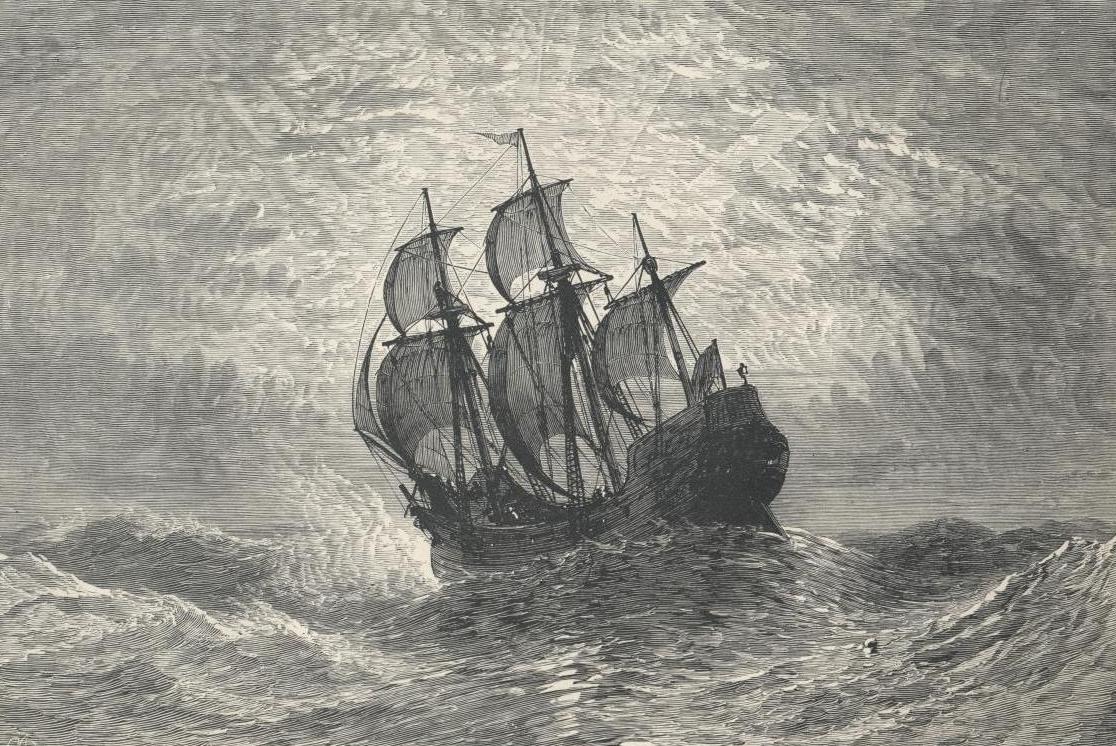
What is certain is that if “cousin” Jerry and Warren were related to Evelina through the Lothrop line, they were also probably related to Sarah Lothrop Ames, as the two women themselves were second cousins. Evelina’s grandmother, Hannah (Howard) Lothrop, and Sarah’s grandmother, Betty (Howard) Lothrop, were sisters.*  They were descended from John Alden and Priscilla Mullins of Mayflower fame.

On the way home, Evelina picked up her young friend, Orinthia Foss, who ended up spending the night.  Where did everyone fit? How did everyone sleep?

* Winthrop Ames, The Ames Family of Easton, 1937, pp. 230-231


August 9, 1851

Early-Tornado-Drawing_GrazulisBook


*

Aug 9th Sat  Was mending most of the forenoon after doing

my chamber work  This afternoon Helen & I have

been to Mothers found her quite sick with a cold

so that she could not speak aloud.  Called for

Orinthia to carry her with us but she did not go

Brought her home with us at night  Just as we 

got to Mr Howards there came up a tempest &

we stoped untill it was over

Helen Angier Ames, aged 14, accompanied her Aunt Evelina this afternoon to the Gilmore farm, perhaps to see Evelina’s niece, Lavinia Gilmore, aged 19. The two young women were friends. The schoolteacher, Orinthia Foss, was invited to go along as well but declined. Instead, she joined Evelina and Helen on their return trip.

As she often did, Evelina went to visit her mother and family at the farm where she grew up. Hannah Lothrop Gilmore, aged 79, lived most of the time with her son Alson. She was usually in good health, but today she was “quite sick” with a summer cold and laryngitis.  Illness seemed to be all around Evelina in these dog days of summer.

On their ride home, the women encountered a storm violent enough to make them stop off at the Howards’ house. The outburst was, in fact, part of a squall line that produced a tornado in Hartford, Connecticut.  A “tempest,” Evelina called it, using a word that nowadays isn’t often heard in American English.  Modern usage might describe the storm less poetically as a “weather event.”

*U.S. Tornado Early History, http://www.ustornadoes.com  

July 19, 1851

Lightning


1851

July 19 Saturday  To day I have been sitting with mother

sewing on muslin & cambric insertion mending &c

It has been very showery accompanied with heavy

thunder and very sharp lightning  Oakes Angier

went to Mr Algers after some butter to night and

carried Mother home  Orinthia is here to day

called this afternoon to see Abby Torrey 

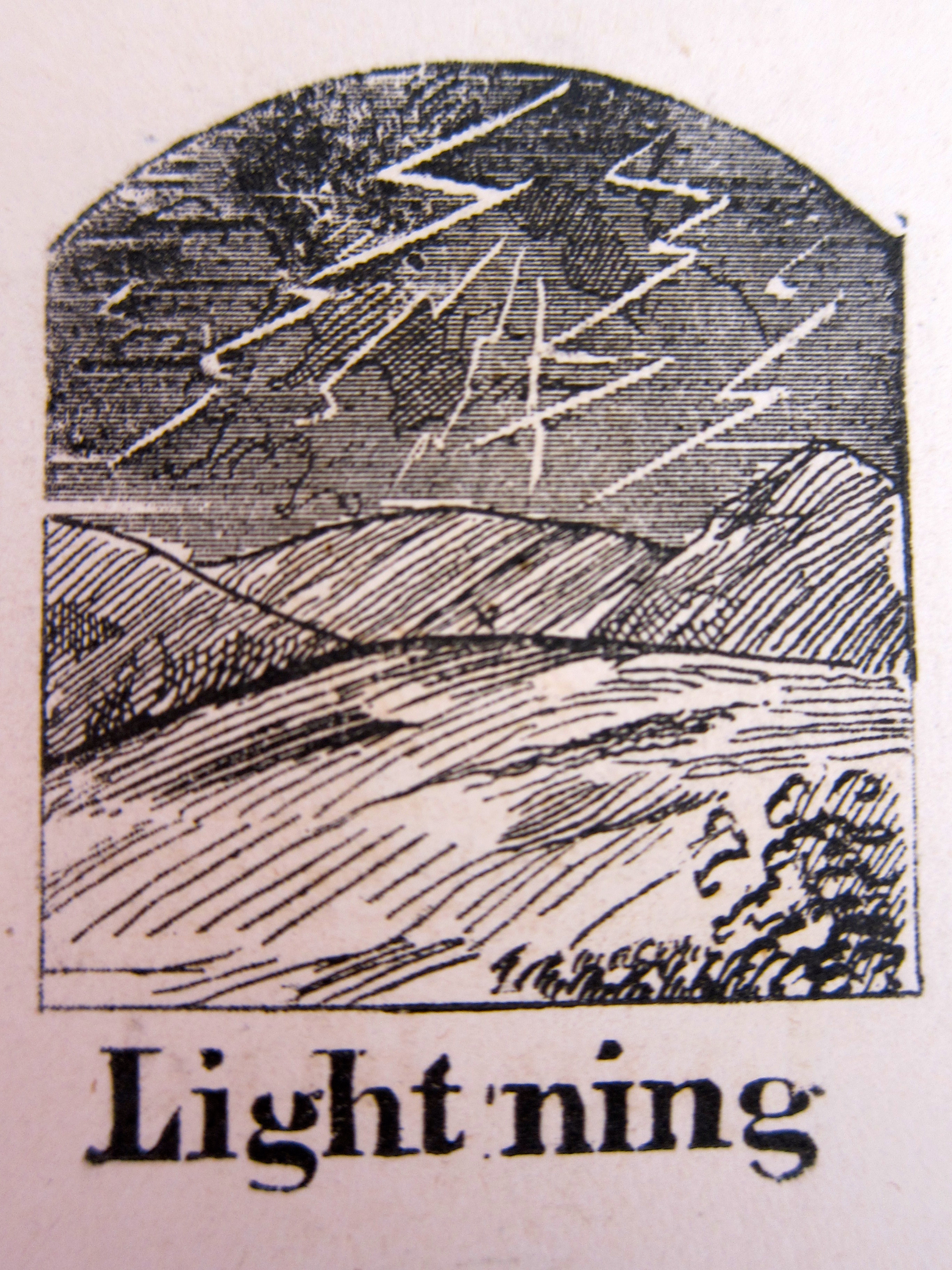
Yesterday’s hot, sticky weather gave way to thunderstorms today, with “very sharp lightning.”

Hannah Lothrop Gilmore returned to the family farm, driven there by her grandson Oakes Angier Ames.  He went on to pick up some butter at the farm of Bernard and Vesta Alger, who lived not far from the Gilmores on the turnpike road.  It’s curious that Evelina was buying butter this summer, because earlier in the year she had been selling it.

Orinthia Foss was back at the Ames’s for a visit, up from the home of Elijah and Nancy Howard where she was boarding. She went into the village to pay a call on Evelina’s niece, Abigail Williams Torrey. Evelina, meanwhile, spent her Saturday mending everyone’s clothes, and working on an “insertion” for one of her dresses.

July 18, 1851

large-1053

1851

Friday July 18  This forenoon finished my Silk Muslin dress

made a chimisette for it  Mother is not at all well

and is not easy cannot stay in one place a great while

Oliver went with Mrs S Ames after Helen.  Got to

Dorchester about 5 Oclock and home about half past nine

The weather is hot and uncomfortable.  Fred returned

to night having passed a good examination


Fred Ames was accepted at Harvard!  He shared the good news with his relatives when he returned to North Easton this evening. He did well on his examination, which perhaps constituted some combination of interview and oral or written test of the depth of his knowledge. How proud his parents must have been, and what relief he must have felt to have the entrance hurdle behind him.

Fred’s life was now moving in a fresh direction but otherwise, things in North Easton were much the same as he had left them the day before. Under a hot and humid sky, Evelina was sewing and looking after her mother, Hannah Lothrop Gilmore, who wasn’t feeling well.  Fred’s parents, Oliver Jr. and Sarah Lothrop Ames, meanwhile, had driven off to fetch his sister, Helen, from school in Dorchester.

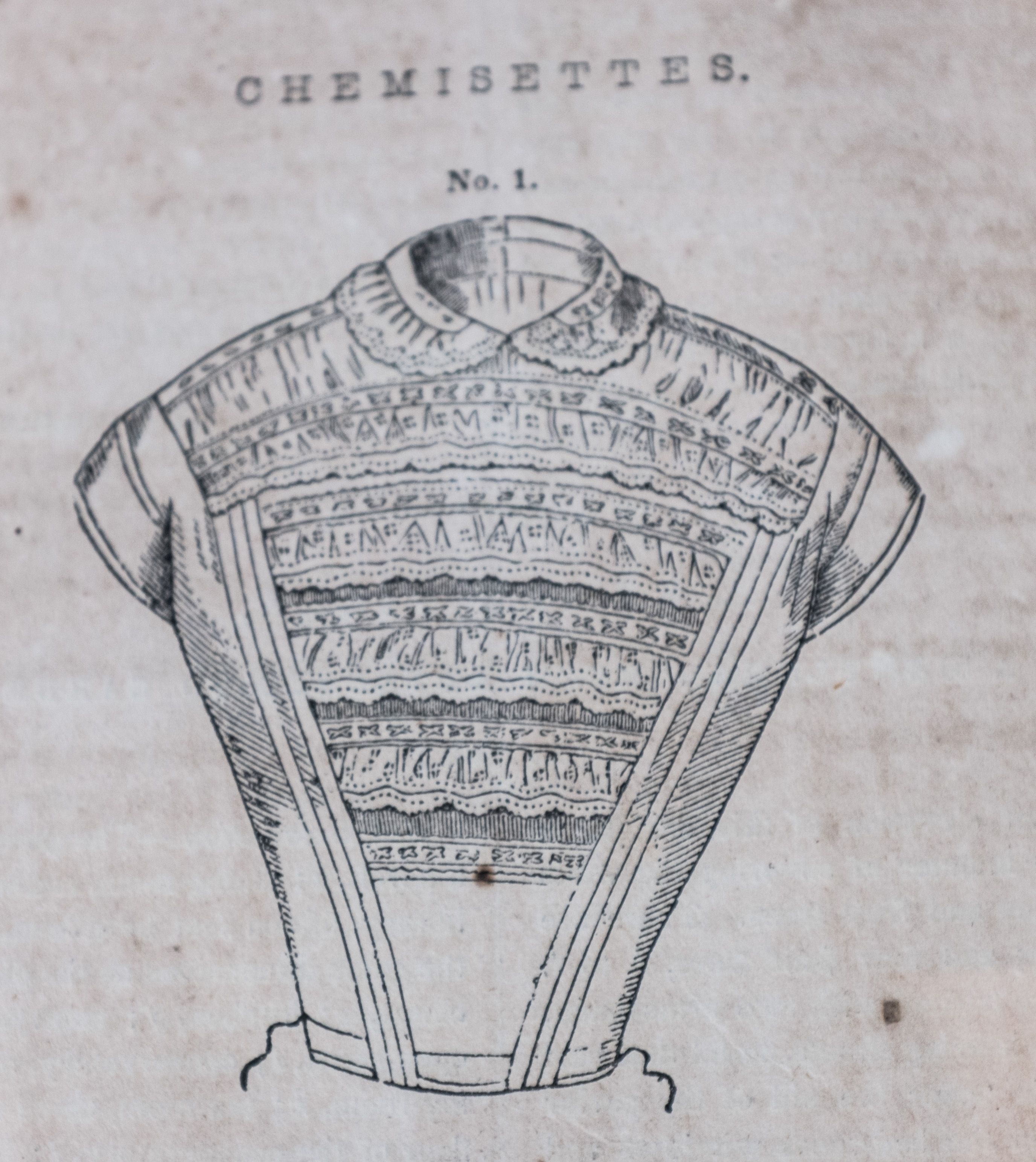
Today’s sewing project was a chemisette for Evelina’s newest dress, the silk muslin that she and dressmaker Julia Mahoney had been working on this week.  The chemisette was a light blouse designed to be worn under the jacket bodice of the dress.  Hers probably wasn’t as elaborate as the chemisette in the illustration.


July 17, 1851

imgres


1851

July 17  Mother & myself have had a very quiet forenoon

Some expected Cassander Gilmore here but they

have set so many times that Im thinking they will 

not come at all.  About 4 Oclock I went to N. Bridge

water with Mrs Sarah Ames & Mrs Mitchell to carry

Fred to the cars for Cambridge to be examined for

the Sophomore year

Cassander Gilmore, the relative who was mentioned as a “no-show” visitor today, was a prominent shoe manufacturer in Raynham, Massachusetts.  His failed visit was incidental to the bigger news of the day: Frederick Lothrop Ames’s departure for Cambridge.

Barely sixteen years old, Fred Ames visited Harvard College today “to be examined” for acceptance. He had just completed a year (or more) at Phillips Exeter Academy and, despite his young age, was seeking entrance to college.  Harvard was the place for just such a bright fellow.

Fred seemed both prepared and motivated for college, and his parents, Sarah Lothrop Ames and Oliver Ames Jr., supported the idea of higher education for him, perhaps for a variety of reasons. This was an age, according to Henry Adams, when parents “began sending their children to Harvard for the sake of its social advantages.”* Sarah and Oliver Jr. were ambitious for their only son, but the question remains why they – or he – requested entry for the sophomore rather than the freshman year.

With his future riding on the examination ahead of him, Fred must have been at least a little anxious about the trip. His mother and  Aunts Evelina and Harriett may have sensed some apprehension on his part, and tried to bolster his spirits as they rode along to the train station in North Bridgewater. They may also have simply been exercising their right to behave as many fond relatives behave when their young ones leave for school: with overt affection. Fred may have been relieved, actually, to wave goodbye to them at the depot.

* Ronald Story, The Forging of an Aristocracy: Harvard and the Boston Upper Class, 1800-1870, Wesleyan University Press, 1980.