September 4, 1852

seal

Sat Sept 4th  Made Sponge cake & gingerbread

and about ten Started to go to Mothers

Dined there and after dinner went to 

Raynham after Mrs Stevens.  Stopt at

her brothers awhile and called at the door

at Aunt John Gilmores & Aunt Othniels

found Widow Henry Gilmore there.  Came

back to tea at Alsons. Stopt at Sam Wilbers

and got some cooking apples

After some early morning baking, Evelina traveled south to Raynham, stopping along the way to have midday dinner at the family farm with her mother, Hannah Lothrop Gilmore.  It was “a fair day + little cooler,”* so a pleasant day to be out for a carriage ride. Evelina rode on to the home of her friend, Mrs. Stevens, whose company she had enjoyed previously over the course of this diary, and picked her up to return to Easton for a visit.

Before driving north, Evelina and her friend visited more relatives. They went to see Mrs. Steven’s brother, then stopped off to see a few Gilmore relatives, all widows. Aunt John Gilmore and Aunt Othniel (Sally Buffington Gilmore) were the elderly, long-time widows of Evelina’s father Joshua’s brothers, while young Mrs. Henry Gilmore (Adaline Bramen Gilmore) had lost her husband unexpectedly only a few months earlier. Members of this Gilmore clan were descendants of James and Thankful Gilmore who had settled in the area in the 1700’s.

The day not through, the ladies rode back to the farm and had tea with Alson and his family. A last stop was made for cooking apples.  It was the start of apple harvest.


*Oliver Ames, Journal, Stonehill College Archives, Arnold Tofias Collection
August 17, 1852

Flatiron

Aug 17th Tuesday  Starched my clothes and about

eleven Oclock was setting the table to iron

when Mother & Alsons wife came and

I put them by.  Have ironed them this after

noon in the dining room with Mrs Stevens

Henrietta Augusta & Abby sitting around

Mrs Ames & Witherell called

The Ameses had made a decision to send Oakes Angier to Vermont for a rest, and Evelina was to accompany him on the trip. Also accompanying them would be Sarah Lothrop Ames and her two teenaged children, Fred and Helen, as well as the visiting Almira Ames.

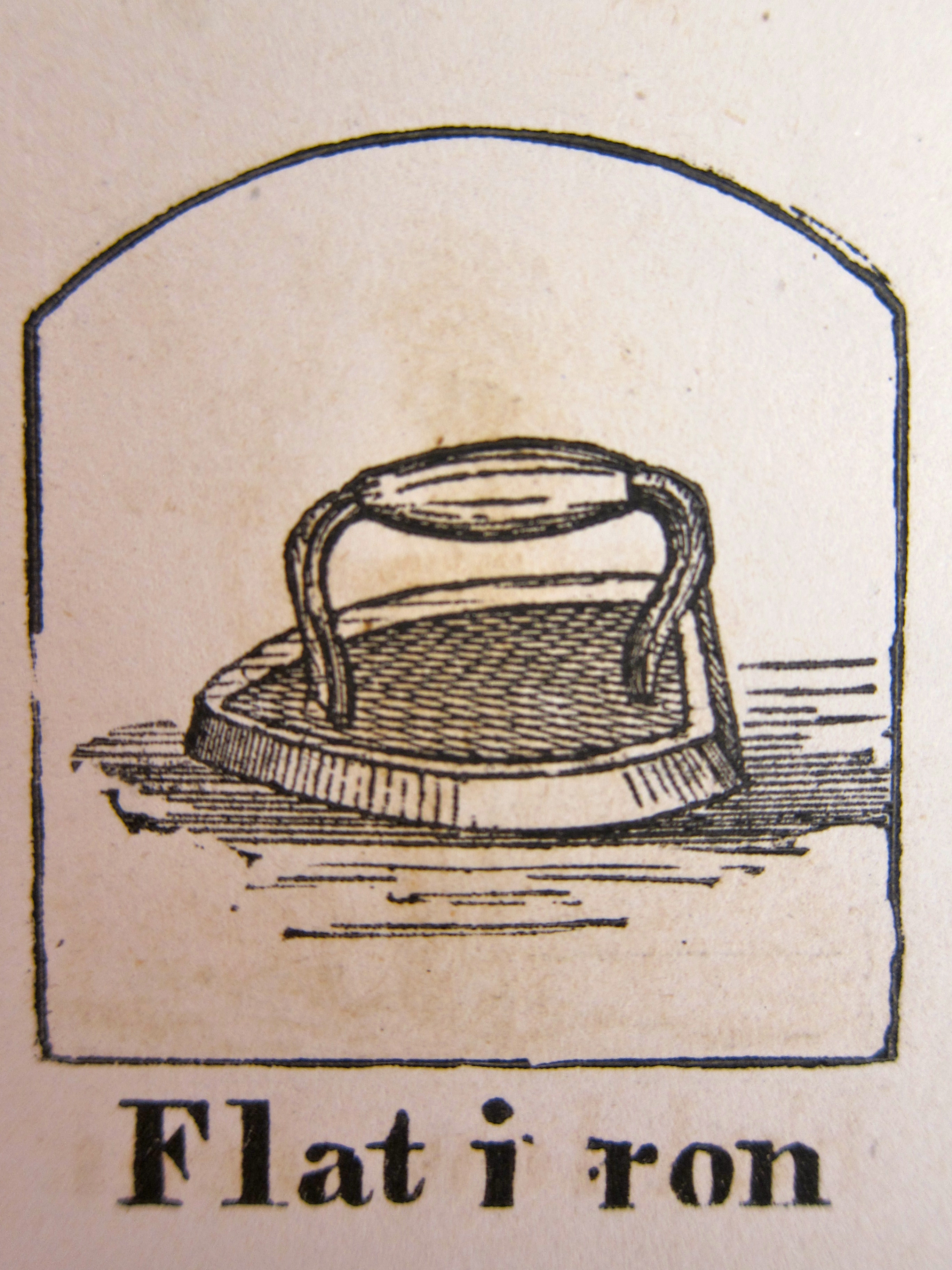
Gathered around Evelina in the afternoon were many of her usual companions: her sister-in-law Henrietta Williams Gilmore, her nephew’s wife, Augusta Pool Gilmore, her niece Abigail Williams Torrey, her guest Mrs. Stevens, and her nearest sisters-in-law, Sarah Witherell and Sarah Ames. The looming expedition must have been the topic of conversation among the women as they sat and watched Evelina iron her clothes on the dining room table. (No ironing boards yet!) The conversation might have roamed from concern for Oakes Angier to curiosity about the travel arrangements.

That the travel ahead of Evelina was serious is indisputable; it involved the well-being of her eldest son. Yet there had to be an element of adventure in the plans.  They’d be traveling across Vermont, visiting places that Evelina may never have seen. They’d be seeing relatives and friends, too, which may be the element that enticed Sarah Lothrop Ames and her two children to join the expedition.

July 25, 1852


images

Massapoag Pond

July 25th  Have been to meeting and at intermission

went into Mrs John Howards with Mother

Had a very pleasant call met a number 

of ladies carried Miss Jarvis a boquet

of flowers  After meeting rode to Mashpog 

pond with Mr Ames & Susan.  Came home

through Sharon & went by Col Tisdales

a very pleasant ride but feel much fatigued


Evelina had a “very pleasant” time at church today. She carried some flowers from her garden with her and gave them to a friend, Miss Jarvis, at intermission. She was worn out by the end of the day, however, because after church, she, her husband, and daughter drove up to Massapoag Pond in Sharon. The day was sunny and warm and the drive along the woods may have been pleasant, especially as they drew near the water. There were old iron works in the area; perhaps they were what interested Oakes in the outing.

On the way home, the threesome drove by the home of the late Col. Israel Tisdale. Frank Mennino, curator at the Easton Historical Society, tells us that:

“The Tisdale family was well known in the area from colonial days, once operating an inn on Bay Road. Later, the family built two farmhouses and ran a large farm on Mountain Road. One of the houses was the house that Oakes and Blanche [Ames] stayed in while Borderland was being built, and was lived in for many years by the Manning and Kent families. It burned in the early 1980’s after being empty for some time. Mountain Road was ‘party central’ back then.”

Oakes, Evelina and Susie did no partying as they ventured home, but they did have “a very pleasant ride,” nonetheless.


July 18, 1852

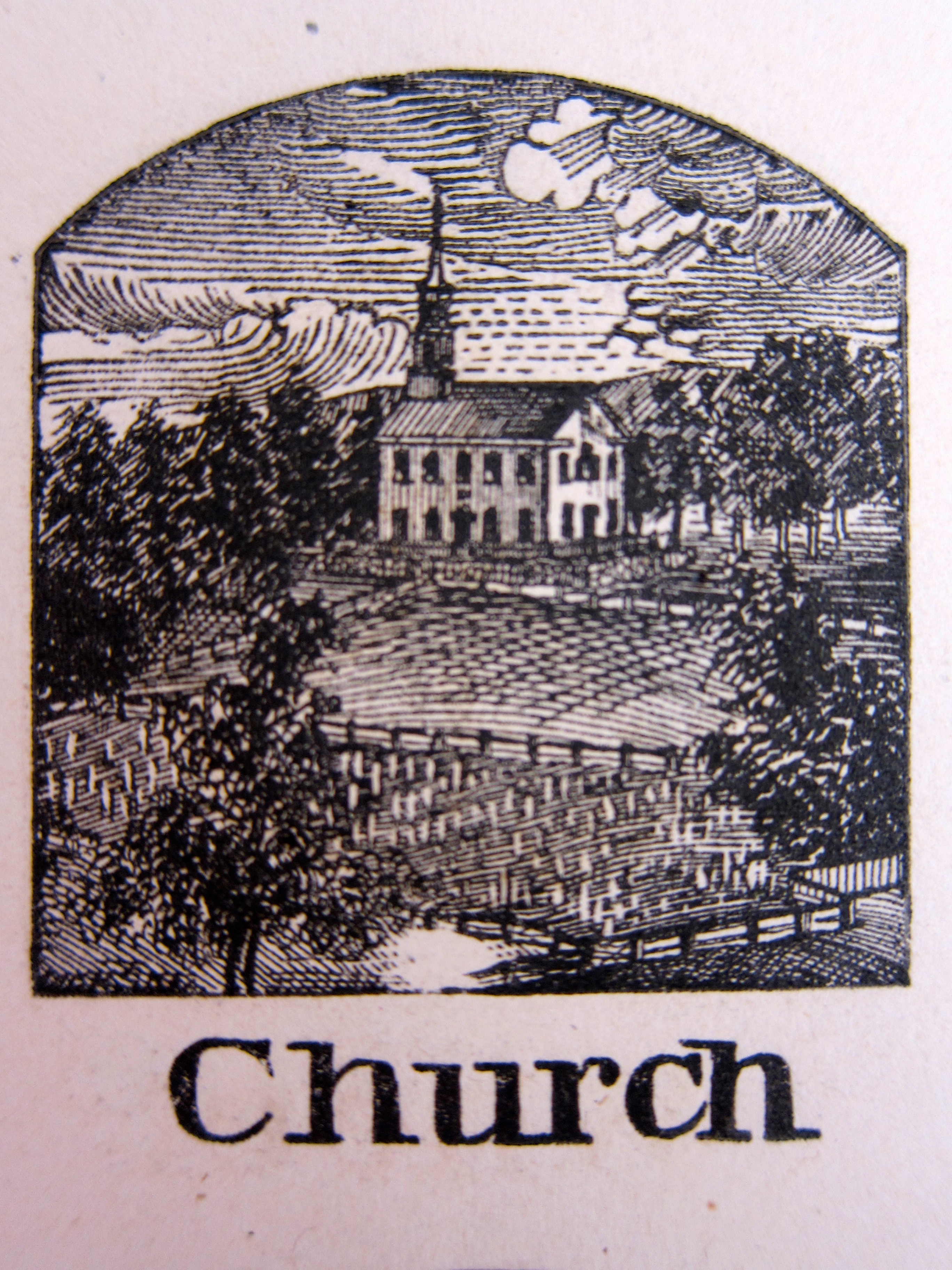
Church

July 18th Sunday  Have been to meeting as usual

Mr Whitwell preached well.  Went to Mr

Whitwells with Mother & Henrietta at noon

When we came from church Mr Ames

& self rode up to the ponds, found Oliver &

Fred there  Called this evening with Mr

Ames at Augustus found him threatened

with a fever & quite unwell.  Called on Lavinia

Williams a moment and Mrs Savage who is quite ill.

The good news today was that Evelina was comfortably back in her own pew at her own church, listening to her favorite minister preach. During the intermission between sermons, she even took her mother and sister-in-law, Henrietta Williams Gilmore, to the parsonage for tea. After church she and Oakes “rode up to the ponds,” meaning that they may have ridden not just to Shovel Shop Pond, but also beyond to Flyaway or Great Pond. There they ran into Oliver (either their son or Oakes’s brother-in-law) and Fred Ames.*

The not-so-good news was a run of illness among family and friends. Evelina’s nephew, Alson “Augustus” Gilmore, was suffering from some kind of fever. This was not an uncommon ailment during the hottest weeks of summer; many infants, especially, were prone to dehydration when the thermometer went up. Evelina had to be concerned that Augustus was so ill so suddenly. Hannah Savage (her near neighbor for whom her old servant, Jane McHanna, was now working) had been ill for some time. Hannah was thought to be dying; a watch would soon begin for her.

*It seems likely that it was Oliver (3) and not Oliver Jr with  Fred “up to the ponds.”  If it had been Oliver Jr., it’s probable that Sarah Lothrop Ames would have been with them.  She wasn’t. And it’s equally likely that the two young college men would be enjoying their familiar camaraderie, now that each was home from school.

June 19, 1852

manx40rimwh


A “Visite”

Sat June 19th  Have been weeding in the garden and

transplanting   Spent the afternoon in 

Olivers with Mother  Mrs Witherell & Augusta

were there awhile  Finished Susans visite

quite late in the evening  It has not been

much of a job to make if I could have sat

down steady

Evelina worked in her garden today, weeding and moving some of her plants around. After midday dinner, she and her mother, who was visiting, “spent the afternoon” next door “in Olivers,” meaning at Sarah Lothrop Ames’s. In citing Oliver rather than Sarah as the owner of the house, Evelina was only following the norm of the time, whose patriarchal laws prevented women from owning property. Sarah and Evelina lived in homes that belonged solely to the males in the family.

Old Oliver, Ames patriarch above all the rest, reported that “this was a fair day wind southerly + quite warm we have bought two yoke of cattle this weeke one yoke of N Warrin of Stoughton, 6 years old for $110 and one yoke of Thomas Ames 9 or 10 years old for $100.” He was probably buying cattle to help with the approaching hay harvest.

Once indoors, perhaps even after others had gone to bed, Evelina finished a mantle for her daughter Susie. Also known as a visite or paletot or pardessus, a mantel (or mantilla, as Evelina labeled it the previous day) was a three-quarter length cloak with pagoda or cape-like sleeves. It was often adorned with lace, ruching, and especially fringe, which was very big about this time. Many visites were unlined, which no doubt simplified the process of making them. That may be why Evelina thought the garment had “not been much of a job.”


June 16, 1852

Calamanco2-1

Calamanco fabric

June 16th Wednesday  The hottest day we have had

Julia has been here again to day have

finished Susans brilliant dress and cut

my muslin & purple cambric print and altered

the waist to green gingham and now they are

to finish  when will they be done  Mother has

gone to Augustus.  Catharine Middleton came

about nine or ten to sew for me

gentleman from New York to dine


The mercury rose to 96 degrees, and the women stayed inside out of the heat.  Even out of direct sunlight, however, the indoor air had to be stifling, so the women are to be admired for working with layers of fabric in their laps as they sewed. The ladies weren’t nearly as warm, however, as the men outside on the building lot, moving stones, or the men making shovels inside the factory. Everyone baked.

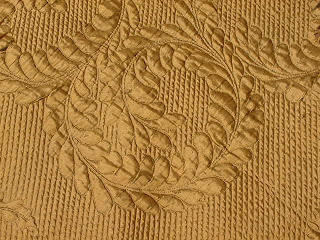
A new servant, Catherine Middleton, arrived to help with the sewing and, as she had been for the past few days, dressmaker Julia Mahoney was present to help Evelina. The women worked on several projects, including a “brilliant” dress for young Susie Ames. Brilliant was a pretty, shiny cloth, recognizable for its glazed and, often, patterned surface. It was a fabric that had been especially popular in the 18th century, but still had its admirers in the 19th.

Known by other names, including calamanco, the cloth originated in Norwich, England,  a center for textiles. Its origins make us wonder if the cloth Evelina was using had been made locally, in Lowell, Mass., say, or Rhode Island, or had been imported.


June 13, 1852

Lobster

June 13

1852 Sunday  Went to meeting this morning & returned

at noon and mother came with me to make

a visit  Did not go back this afternoon on

account of getting tea  Mr Patterson is here

came last night  Edwin & wife stoped to 

tea from meeting had lobster.  Read to

mother in  [entry incomplete]


The Sabbath was another “fair day + pritty warm + verry dry.”* Old Oliver had to be getting edgy about the prospects for this year’s hay crop, not to mention the potentially poor output from the cornfields and the crop gardens all around town.

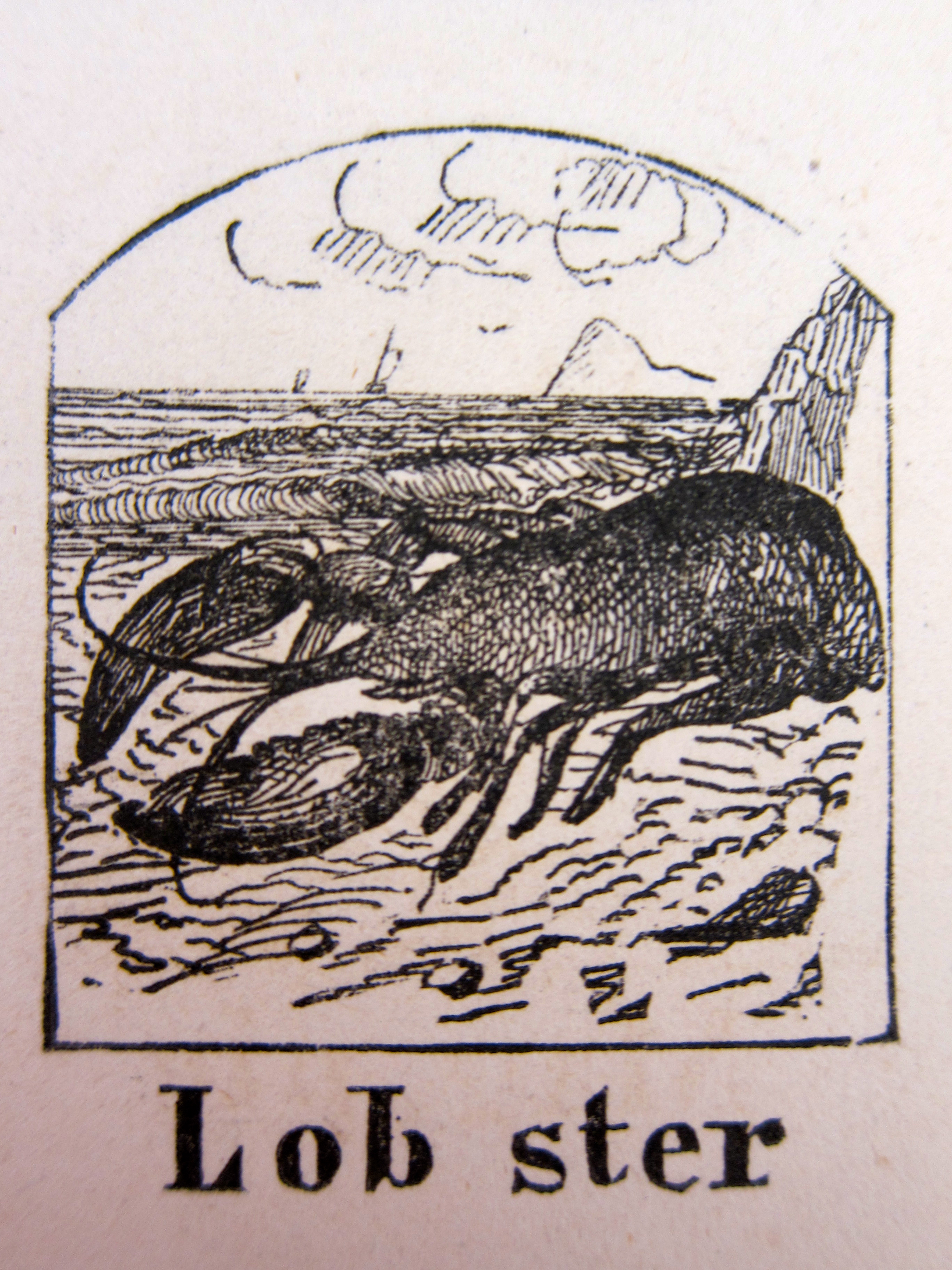
The family all trooped to church for the morning service, but Evelina, bringing her eighty-year old mother home with her, skipped the afternoon sermon “on account of getting tea.” She had to prepare lobster for Edwin and Augusta Gilmore. We might assume that on the previous day, Oakes Ames picked up a lobster (probably quite fresh, although cooked and canned were available) in Boston on his usual Saturday visit. Lobsters were plentiful, inexpensive and, as a rule, larger than those we dine on today. He was probably familiar enough with the crustacean to buy one that was fresh.

The well-known household advisor Lydia Maria Church approved of lobsters, and offered advice on buying them:

‘A female lobster is not considered so good as a male.  In the female, the sides of the head, or what look like cheeks, are much larger, and jut out more than those of the male. The end of the lobster is surrounded with what children call ‘purses,’ edged with a little fringe.  If you put your hand under these to raise it, and find it springs back hard and firm, it is a sign the lobster is fresh; if they move flabbily, it is not a good omen.’

Moving flabbily could never be considered a good omen.


*Oliver Ames, Journal, Stonehill College Archives, Arnold Tofias Collection

** Lydia Maria Church, The American Frugal Housewife 


June 10, 1852

 FullSizeRenderOld view of Gilmore house near Foundry and Washington Streets*

June 10th Thursday  This morning worked a few moments

on my bonnet and about half past ten Mr &

Mrs Orr Mr Ames & self went to Alsons to

spend the day  Mr Ames Orr & Alson rode

to W Bridgewater after noon  Mother is most 

sick with a cold  Called at Mr Copelands

to get Susans hat & Lavinia mended it where

it was burned

The Orrs of Boston continued their visit with Evelina and Oakes. The rain showers – too brief to satisfy area farmers – receded and the sunshine returned, along with wind that was “strong and verry dusty.”** The Ameses and the Orrs took to the road, traveling a few miles south to spend the day with Evelina’s mother at the Gilmore farm.

After midday dinner with the Gilmores, Oakes Ames, Robert Orr and Alson Gilmore rode east to West Bridgewater. What was their business? Evelina and Melinda stayed behind with elderly Mrs. Gilmore who was poorly. Evelina managed to go over to the Copelands to pick up a hat she had left there for Susan, which Lavinia proceeded to mend for her little cousin.

Old Oliver, meanwhile, was looking ahead to bringing in the hay, assuming it hadn’t been ruined by the lack of rain.  He “bought a yoke of cattle from Howard Lothrop,”** the latter a well-known man in Easton who, according to a 19th c. history of Plymouth County, “styled himself a farmer, yet did much business of a partially legal character [..] for which work his superior business qualities and excellent judgment especially fitted him.” The Honorable Mr. Lothrop was also a former town clerk, state senator, member of the Governor’s Council, and father of Sarah Lothrop Ames. Between the two strong men, seller Howard and buyer Oliver, who got the best deal?

*Image from Howard Gilmore Papers, Courtesy of Easton Historical Society

**Oliver Ames, Journal, Stonehill College Archives, Arnold Tofias Collection
***usgwarchives.org

May 30, 1852

OLYMPUS DIGITAL CAMERA

Alson Gilmore  (1798 – 1888)*

 1852

May 30  Sunday  Have been to church as usual  Mr Briggs

of Boston gave us two very excellent sermons

Alson mother & Helen came home with us

at noon.  Augusta has gone home on a 

visit and is going to Foxboro before she returns

Have been reading since meeting and 

called in Olivers and on Mrs Witherell


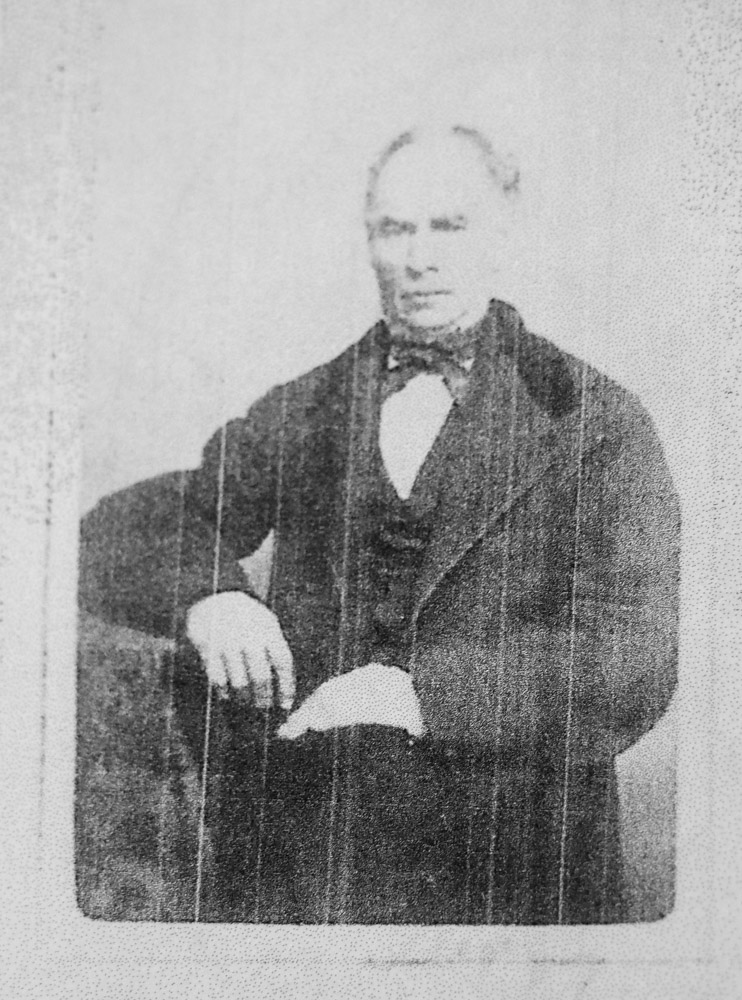
Evelina’s older brother, Alson Gilmore, turned 54 years old today. He was a farmer – a good one – in the southeastern section of Easton.  He had inherited the property from his father Joshua, probably when the older man passed away in 1836. By that time, older brothers had moved away or passed on, so even as the fourth of five sons, Alson was the heir who took over from his father.

Other than being a productive farmer, Alson was not the most high-profile man in town,  His eldest son, Alson “Augustus” Gilmore, a perennial moderator for town meetings, was more active in civic matters, and his second son, Edwin Williams Gilmore, matured to become the outstanding entrepreneur of a hinge factory. His third son, Francis E. Gilmore, would, in time, take over the family farm as his father had. Alson’s daughters, Rachel, Lavinia, Helen and Hattie, would live theirs lives in Easton, too, two of them marrying.

Alson did play a civic role now and again. For fifteen years, he served as clerk for the Taunton- North Purchase Company, a complicated affiliation based on a seventeenth century acquisition of land that became the towns of Norton, Easton and Mansfield.** He was a selectman for one term in 1849-1850 and also was one of the last treasurers of a toll road that ran between Boston and Taunton, a road that was close to his property. That turnpike, unpopular at best, had only recently closed down.

On occasion, Alson Gilmore ran up against the Ames clan.  His sister may have been been married to one of its most popular and powerful members, but that didn’t prevent Alson from disagreeing with them in a divisive argument over church politics in the 1830s. Alson had been on the side of preserving the familiar Congregational service and Calvinist beliefs, while the Ameses had argued for Unitarianism. With one or two other parishioners, Alson had been threatened with having to bear the cost of paying the minister, Luther Sheldon, while the controversy wore on. In Chaffin’s words, “the situation was very peculiar,”* and ultimately, it was resolved to no one’s complete satisfaction.

With Evelina, Alson shared the responsibility for looking after their elderly mother. It was a duty they both took seriously. He seems to have been a decent man.

Image of Alson Gilmore courtesy of the Easton Historical Society

** William Chaffin, History of Easton, Massachusetts, 1886, pp. 19 – 38

**Ibid., p. 354.

May 23, 1852

Preach

Sunday May 23d  Mr Rogers of Canton preached to day

I did not like him any better than Mr Whitwell

Alson Mother & Helen came home with us

at noon.  Oakes A carried Miss Foss to the 

sing and home  Ellen H & Rebecca White went

with them  Mr Ames & self made a long call

at Mr Swains  Mr Rogers made a short call

as he was going to church

Robert P. Rogers, the Unitarian pastor from Canton, led the service in Easton today, presumably switching places with the regular minister, William Whitwell, as the clergy often did in those days. Rogers was only twenty-seven or twenty-eight years old; his post in Canton was his very first.  As yet unmarried, and certainly younger and less seasoned than Mr. Whitwell, Rogers did not impress Evelina. He paid her the compliment of making “a short call” before church, but she was partial to the Whitwells.

Young Mr. Rogers would soon leave Canton for a pulpit in Gloucester where he would serve as minister for the remainder of his ministerial life.  He must have done well there, or they wouldn’t have kept him around for so long. Decades later, however, Mr. Rogers would return to Canton to live out his last days.

Between and after today’s services, folks were moving around town quite a bit. Old Oliver noted that it was “some cloudy” but also “pritty warm,” so it was pleasant to visit.  The dry roadbeds, though dusty, would have been relatively smooth. Evelina brought her brother and mother home after the morning service, Oakes Angier carried three young women to a sing after church, and Evelina and Oakes went over to see John and Ann Swain in the late afternoon. Everyone socialized.