May 12, 1852

Corpse

Wednesday May 12th  Helped Mrs Witherell make Georges robe

Planted some seeds that Mrs Howard gave me

and African rose sent from Andover.  Have ripped

the skirt from Susans borage delaine to lengthen

it Swept & dusted my chamber &c &c Jane had

finished the ironing  Have not felt very well

have not got over being broken of my rest.  It has

rained since nine Oclock quite fast

A new gardener commenced work today

What sad sewing went on today. Sarah Ames Witherell, a thoughtful, dutiful woman who had sewn so many things for friends and family, now sat and made a shroud for her first-born child, George. Only fourteen years-old, he had died the day before after a painful bout of rheumatic fever. Of the three children Sarah had borne, only her middle child, Emily, was still alive.

The steady rain must have enhanced the gloom. Old Oliver wrote that “it began to rain before noon wind north east and it grew cold and raind all the afternoon.”* Evelina must have done her planting first thing in the morning, after which she helped Sarah with the robe for George. She also worked on a skirt for Susan, and swept and dusted while Jane McHanna ironed. She was probably not the only family member who was recovering from “being broken of my rest.” Everyone was trying to return to a normal routine after the disruption and sorrow of George’s illness, although next door, Helen Angier Ames was still suffering from a case of blisters and facial swelling.

*Oliver Ames, Journal, Stonehill College Archives, Arnold Tofias Collection

 

May 11, 1852

Abbott H. Thayer, Angel, 1887, oil Smithsonian American Art Museum Gift of John Gellatly

Abbott H. Thayer, Angel, 1887, oil
Smithsonian American Art Museum
Gift of John Gellatly

Tuesday May 11th  George died this morning about eleven

Has not spoken so that we could understand

since yesterday noon.  died at last very easy

without a struggle or groan.  Mrs S Ames & self

laid him out,  His mother has slept but about

two hours for two days and nights. Have trimmed

my straw bonnet. Miss Copeland sewed it over  Spent

about two hours in Olivers this afternoon.  Helen has a 

blister on her arm  The gardener set out some rose plants.

Prairie Rose Baltimore bell and Fraxinella sent

from Boston

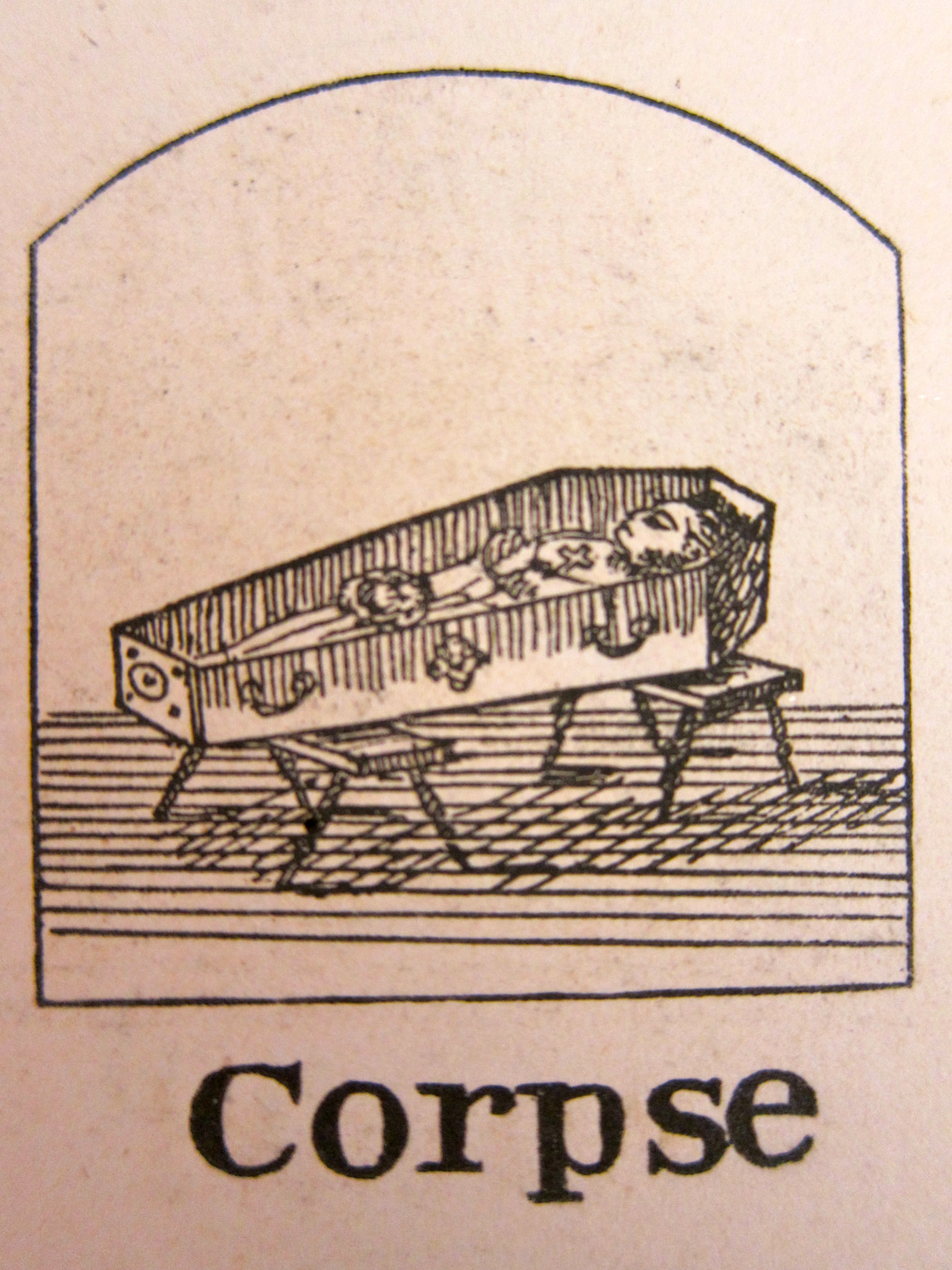
George Oliver Witherell, aged fourteen, died on this day from rheumatic fever.  He had been suffering for many days, but “died at the last very easy.”  His Aunt Evelina had been with him for much of the illness, spelling his exhausted mother, Sarah Ames Witherell. She and her other sister-in-law, Sarah Lothrop Ames (who had her own sick child at home), laid out the corpse.

The family must have expected George’s death by this stage of his illness; certainly the attending physician had already predicted it. But anticipation is not the same as actuality, and the death of the young man would have hit everyone hard. Evelina dwelt in her diary on George’s last few minutes, but then added a few mundane notes about her summer bonnet, her niece Helen’s continued battle with an unnamed infection, and some new additions to the flower garden. She might have wished to move on to less painful concerns.

George’s grandfather, Old Oliver, noted his grandson’s death succinctly: “George Witherell dyed to day about eleven O clock.” Oliver rarely included personal items in his daily record; that he wrote of George’s death is a sign of regard, however minimal we might consider it. His grief would have been real.

Of Sarah Ames Witherell’s feelings, we’re told nothing, and must imagine her utter exhaustion and complete sorrow.

May 10, 1852

Doctor

Monday May 10th  Do not feel very well to day.  Slept in

the light bedroom so as to assist Sarah in taking

care of George.  He knows everyone but otherwise 

is not conscious and since noon does not notice

all all.  The Dr has given up all hopes of him

I planted most of my flower seeds this

afternoon felt sorry to do so but it is getting late

The women in the Ames compound were becoming exhausted with tending to two very sick young people, George Oliver Witherell and Helen Angier Ames.  It was George, however, who had entered a dangerous phase. He had been suffering from rheumatic fever for many days and was now unconscious. His doctor had finally “given up all hopes of him.” How terrified the family must have been; no doubt prayers were being lifted in the hope that George might yet recover.

Evelina broke away from her nephew’s bedside to work in her garden. She “felt sorry to do so,” but the seeds needed to be planted. To wait too long would be to lose the best timing for the flowers. She might have felt relieved to kneel down in the soil and push little seeds into place, each seed a hopeful gesture in the face of helplessness.


May 9, 1852

wetsheet


Sunday May 9th  Our own family all went to meeting

& Oliver  George is much worse and we fear

will never be any better is very much out of his

head  Helen is quite sick with her face

had the Dr  Went into Mrs John Howards

at noon & carried her some flower seeds.

Mr & Mrs Swain made a long call this afternoon 

after they left I went to sit with George to assist

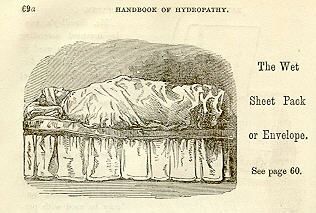
Sarah  They are laying a wet sheet once an hour


George Witherell was getting sicker and sicker. Perhaps to lower his temperature and reduce the involuntary spasms in his limbs and face, his family and physician were “laying a wet sheet once an hour.” They wrapped his body in a cold, wet sheet, and covered him with wool blankets to make him sweat. Everyone was trying to bring down his fever, soothe his nervous system and help him sleep. It was a desperate measure, but in the absence of effective medicines, it was the only option.

A wet-sheet wrap is a form of hydrotherapy, a controversial treatment meant to quiet a violent or agitated person. Opponents of this form of hydrotherapy feel that it’s been misused in certain psychiatric institutions, some patients attesting to being tied up for ten to twelve hours in icy sheets, an application that seems more punitive than restorative. Yet others in the medical profession, such as alternative care-givers in our modern age, tout wet-sheets – if applied properly – as a healthful therapy that induces sleep and calms the nervous system. Its effectiveness seems tied to the intention of the person applying the therapy and the nature of the illness of the person being wrapped.

Helen Angier Ames next door was also “quite sick.”  No wet sheets for her, but she was having her swollen face attended to. It sounds as if she might have had a bad abscess, also a dangerous condition in the era before antibiotics. Dr. Swan, if it was he who was attending the Ameses, was being kept busy.  His little gig would have been pulling up to the Ames compound at all hours of the day and night. Few in the family were getting any rest.  Evelina left the house briefly, to take some flower seeds to Caroline Howard, but returned home to help her sister-in-law.


May 8, 1852

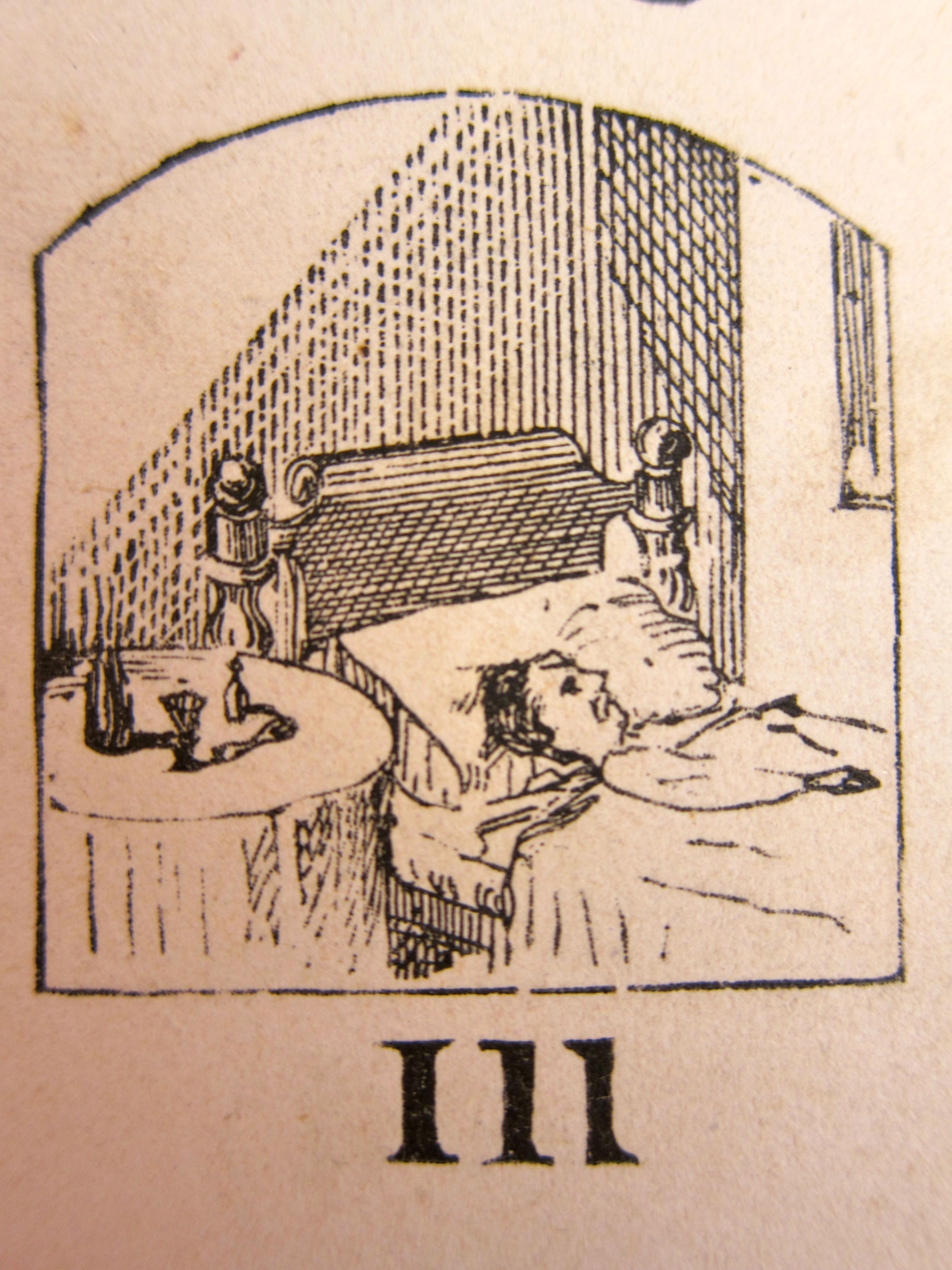
Ill

1852

Saturday May 8th  Mrs Witherell has finished working

my Delaine sleeves and I have put them in

and have finished the dress which I think

is about time.  I sit with George for Mrs Witherell

to lay down this afternoon  He is very sick and 

suffers very much.  Mr Manly brought me some

more plants & I paid him 1,58 cts.  Oliver &

Brown returned this morning

George Witherell, fourteen years old,  was ill with rheumatic fever. In the age before antibiotics, the “rheumatics,” as Evelina called it, was a serious illness. It was a complication of strep throat, which George must have had three or four weeks earlier. Its symptoms, many of which George manifested, were fever; a flat rash; involuntary twitching in the hands, feet and face; painful, tender and swollen joints; chest pain; palpitations and fatigue. As Evelina noted, George suffered a great deal, for rheumatic fever was extremely uncomfortable and unsettling. It was also often fatal.

Sarah Ames Witherell had been nursing her son for several days now.  She took a rest in the afternoon and let Evelina sit with George.  All the family was helping, although George wasn’t the only sick child. Helen Angier Ames next door was down, too, with a somewhat mysterious ailment in her face. Family members were worried about both young people.

Despite the concern everyone must have been feeling, normal routines in this season of planting had to be adhered to. Old Oliver reported that “we began to plow the hill back of the shovel shop pond to day.”


May 7, 1852

il_340x270.517720740_i0s3

Polyanthus

Friday May 7th  Was in the garden to work a short

time transplanted some pinks but worked on

Olivers clothes most of the time.  Mr Brown &

Oliver rode to Mr Copelands and got me a polyanthus

and to the furnace in the afternoon to Canton 

and Sharon.  Mrs S Ames returned from Boston to

night & Helen with her  Helens face is very

swollen has not been to school for a week


With her middle son Oliver home from Brown, Evelina had a great deal of mending to tend to. She might have preferred to be in her flower garden, but she only had a short window in which to repair her son’s shirts, hose, and coats. Oliver, meanwhile, rode out with his college roommate, Mr. Brown. They roamed from Easton to Canton and Sharon and in the process picked up a polyanthus, or primrose, for Evelina. They got the latter from a Mr. Copeland, who was perhaps Josiah Copeland, an elderly resident of Easton who lived with his wife and unmarried daughter.

George Witherell continued to be ill in the other part of the house, but he wasn’t the only family member who was ailing.  Helen Angier Ames had to come home from boarding school because of a swollen face. Perhaps she had an infection – an abcess of some sort – or perhaps she was having an allergic reaction to an insect bite or other allergen. Whatever was ailing her, she hadn’t attended class for a week, and her mother had to fetch her home.


May 5, 1852

Thread

Wednesday May 5th  Worked about house & got my sleeves for Delaine ready

for Mrs Witherell to work  The sewing circle met

at Mrs Nahum Pools.  Mrs S Ames gone to Boston

George quite sick with the rheumatics Augusta gone

to N Bridgewater and so poor I should have had to

go alone.  Preferred to stay at home  Mr Peckham +

family all at Mr Swains.  called to see them & after they

left Mr & Mrs Swain went with me to Edwins garden got

two Gladiolus bulbs.  A beautiful pleasant day

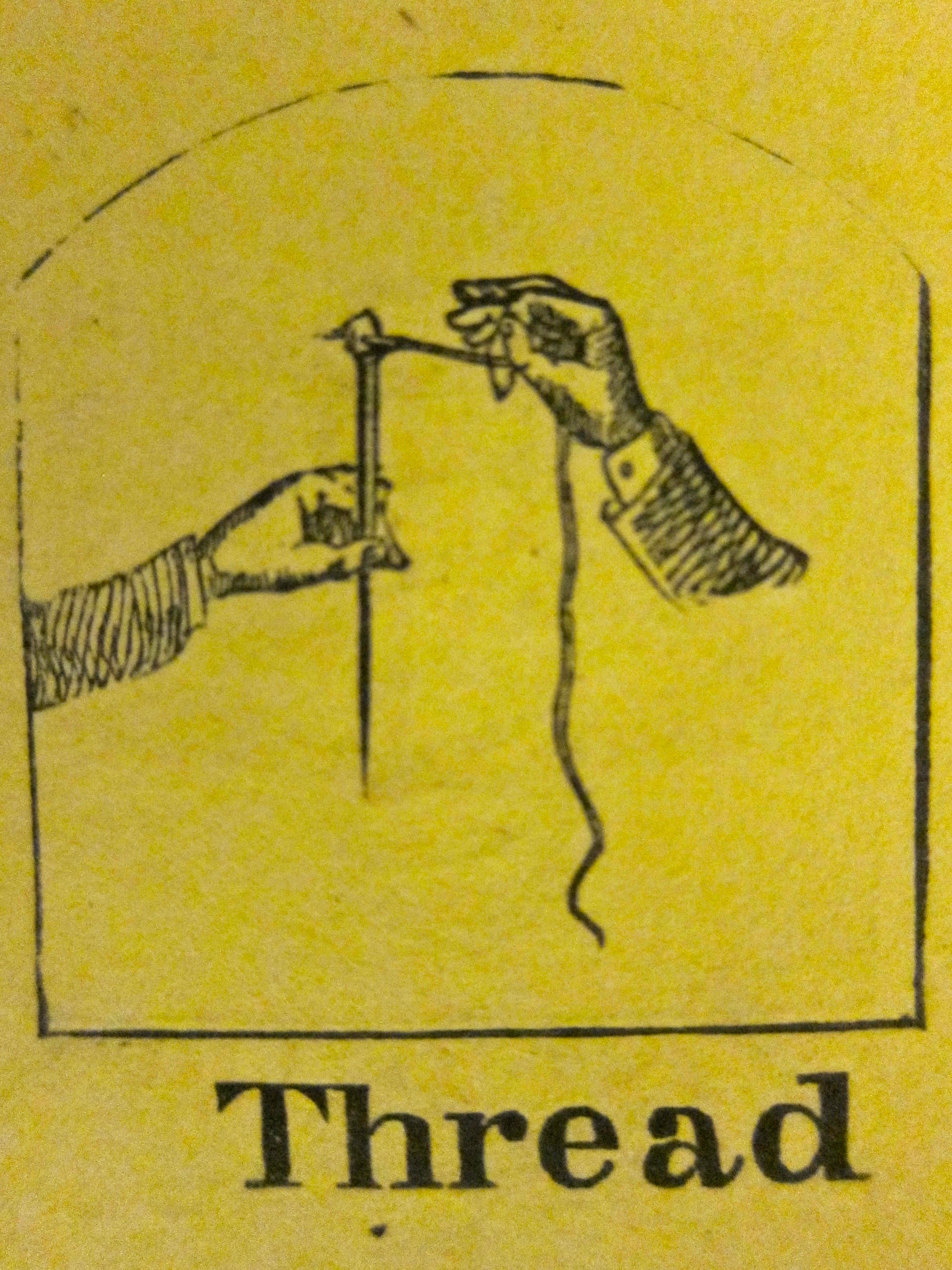
The Sewing Circle met today at the home of Nahum and Lidia Pool, but Evelina didn’t attend. Her usual companions from the village were otherwise occupied, and “poor” she didn’t want to go by herself. She stayed home, or at least she stayed in North Easton. She parcelled out some sewing to her sister-in-law, Sarah Witherell, to work on, and headed out. Perhaps Sarah sat and sewed near her son George, who was “quite sick.”

The day was beautiful, and Evelina seemed to be in fine spirits despite missing the sewing circle, or perhaps because of missing it. She went to see John and Ann Swain and there encountered the Peckham family, who had moved away from North Easton the previous year. They must have been back for a visit.  When they left, Evelina and the Swains went up to the garden of Edwin Manley and bought two Gladiolus bulbs.

March 21, 1852

9291031-apples-are-stored-in-the-cellar-to-keep-fresh

1852

March 21 Sunday  Have all been to meeting except

Susan who is not very well  George carried

Amelia home at noon  I had a very pleasant

visit from her of nearly two weeks.  Orinthia

called with me into Edwins after church & we

helped ourselves to apples from the cellar.  Augusta

sent us one filled with sand and cheese.

Called at Mr Whitwells at noon & at Mrs J Howard a moment

Spring had arrived; Amelia Gilmore left the Ames’s home and hospitality and headed back to her own quarters in southeastern Easton. George Oliver Witherell, 14-year old son of Sarah Ames Witherell, obligingly carried her home in a carriage during the intermission at church. Evelina, meanwhile, visited with the Whitwells and the Howards.

After church Evelina and Orinthia went to the home of Edwin and Augusta Gilmore and helped themselves to “apples from the cellar.” That the young couple still had apples from the previous fall suggests that the harvest had been good and the storage arrangements even better. We presume that Evelina and Orinthia took the apples with the permission of the Gilmores; Augusta sending over a barrel “filled with sand and cheese,” corroborates that. But why is a barrel with cheese also filled with sand? Any thoughts, readers?


March 8, 1852

Carpenter

March 8th

1852 Monday  To day is town meeting.  George brought

sister Amelia here this afternoon  Have got

the carpet down in the front entry and 

the chamber carpet partly down

S Ames sent for the entry lamp for fear

I suppose that I should keep it but

she […] might not been alarmed

Carpenters have come to rebuild the shops

A new week signaled a fresh start. It had only been six days since the fire at the shovel factory, but the clean-up had gone quickly. The ruins were “dismal,” as Evelina noted yesterday, but the debris was mostly gone, hacked down, shoveled up and carted away. Carpenters had arrived to begin rebuilding, as Old Oliver, too, noted in his diary:  “some of the carpenters came on to day to build up our shops + Mr Phillips + his son came.”*

Life in the village was returning to normal.  Housewives, some with servants, tended to washing day. Children went to school and men went to town meeting.  As at church, the fire must have been part of the conversation as the men gathered to decide on town affairs and expenditures for the coming year. People must have wondered how soon the shovel shop would be up and running.

At the meeting, a new moderator, Alson Augustus Gilmore, presided. Not yet thirty years old, it was his first time holding the gavel; he would repeat the performance twenty-four times over the coming decades.  According to William Chaffin, Gilmore and his predecessor, Elijah Howard, Jr., “served with signal ability.”**

Evelina and her sister-in-law, Sarah Lothrop Ames, had a minor set-to over “the entry lamp,” which appears to have been a luminary that was shared by both houses. Sarah was evidently skittish about not having it, and Evelina was annoyed to have it commanded away.  No cause for alarm, she might have said. She wouldn’t have been annoyed for long, however, as a favorite family member, Amelia Gilmore, arrived for a visit. Amelia was the young widow of Evelina’s younger brother, Joshua Gilmore, Jr. She had lately been working as a private nurse.

*Oliver Ames, Journal, Stonehill College Archives, Arnold Tofias Collection.

**William Chaffin, History of Easton, 1886, p. 637

January 29, 1852

Teeth

1852

Jan 29th Thursday  Mrs Witherell Oliver 3rd & Fred & George went

to Bridgewater this morning for Mrs Witherells temporary

set of teeth.  Father & Mrs S Ames & Emily here to dine

Mrs S Ames came about half past eleven and spent

the rest of the day.  Have written a letter to Harriet

Ames [of] Burlington.  Went after mother in a sleigh to night

Augustus & wife spent the evening Three evenings this week


Sarah Ames Witherell traveled to Bridgewater today to pick up a “temporary set of teeth” to replace the real ones that had been pulled out earlier this month. It turned out that they weren’t ready, so she had to return home without them. As before, she was accompanied by several family members including her son George Oliver Witherell and two of her nephews, first cousins and good friends Oliver (3) and Frederick Lothrop Ames, who were still home on a recess from college.

Evelina, meanwhile, fed midday dinner to all the family members who stayed behind in Easton.  Sarah’s daughter, Emily, didn’t go with her mother this time; unlike Oliver and Fred, she and Susie Ames may well have been back in school. Evelina may have been feeling the strain of so much company.  She notes that her nephew Augustus and his wife, Hannah Lincoln Gilmore, had come to call “Three evenings this week.” Augustus, who did a lot of work for Oakes and Oliver Jr., often made himself at home at the Ames’s.

Harriet Ames of Burlington, Vermont, to whom Evelina wrote today, was a spinster cousin. Her mother was the widow of Old Oliver’s brother, John.*

*not the same John Ames who manufactured paper in Springfield